
Phylum Echinodermata Starfish sea urchins sand dollars sea
- Slides: 11
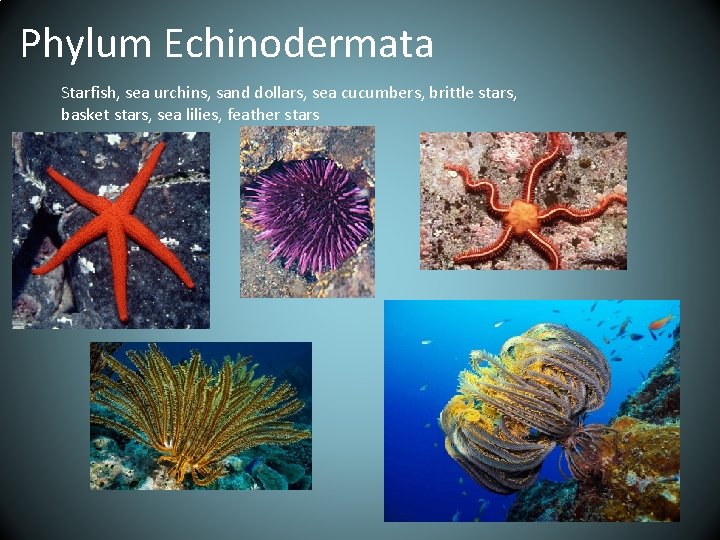
Phylum Echinodermata Starfish, sea urchins, sand dollars, sea cucumbers, brittle stars, basket stars, sea lilies, feather stars
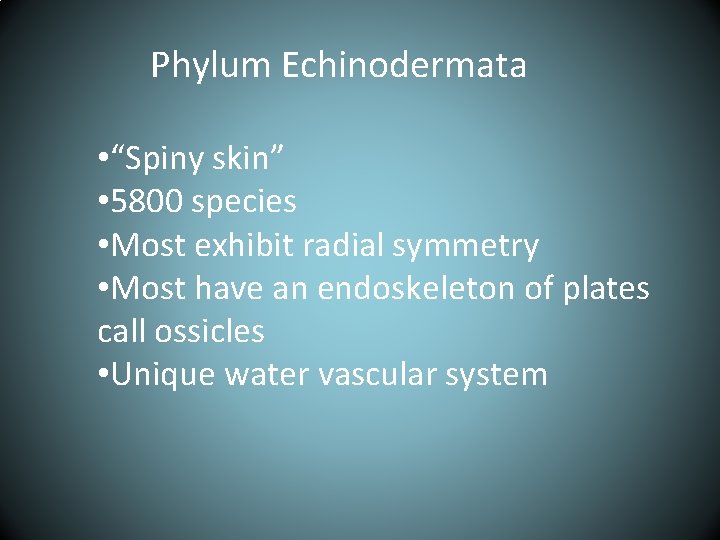
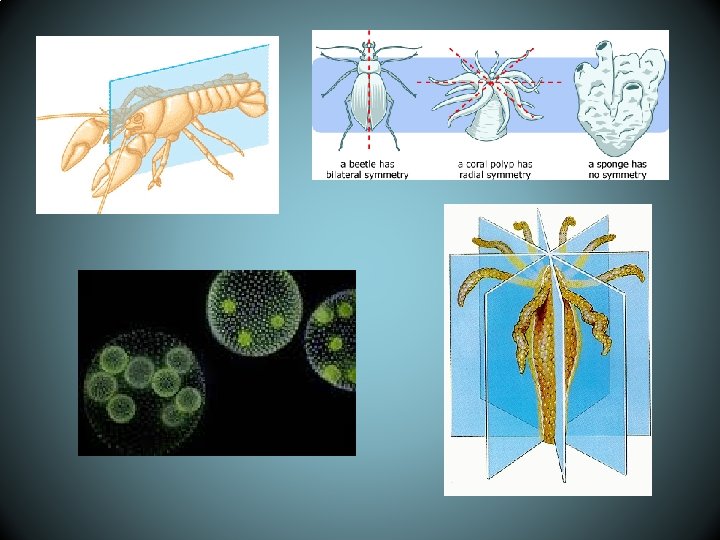
Phylum Echinodermata • “Spiny skin” • 5800 species • Most exhibit radial symmetry • Most have an endoskeleton of plates call ossicles • Unique water vascular system
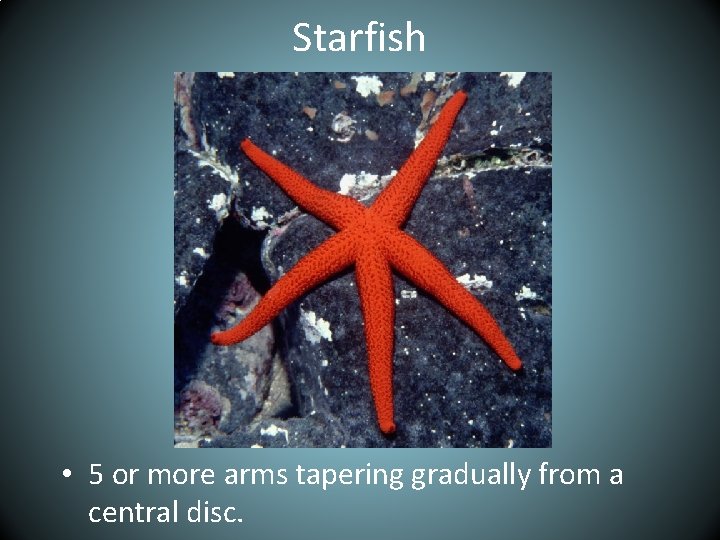
Starfish • 5 or more arms tapering gradually from a central disc.
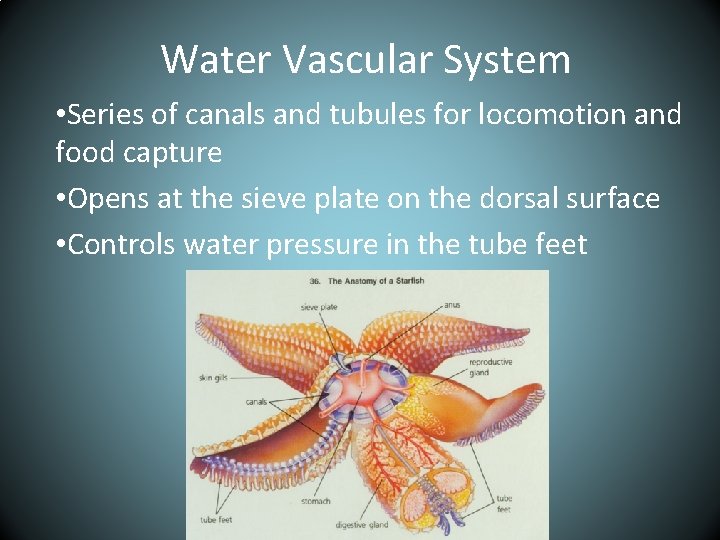
Water Vascular System • Series of canals and tubules for locomotion and food capture • Opens at the sieve plate on the dorsal surface • Controls water pressure in the tube feet
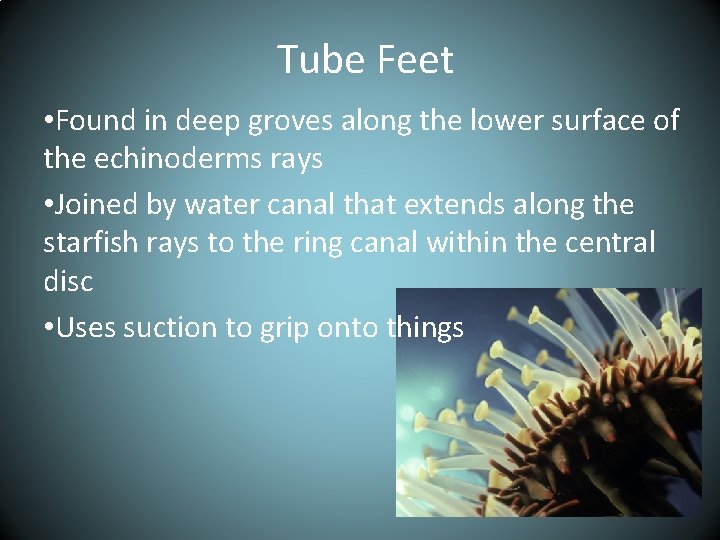
Tube Feet • Found in deep groves along the lower surface of the echinoderms rays • Joined by water canal that extends along the starfish rays to the ring canal within the central disc • Uses suction to grip onto things
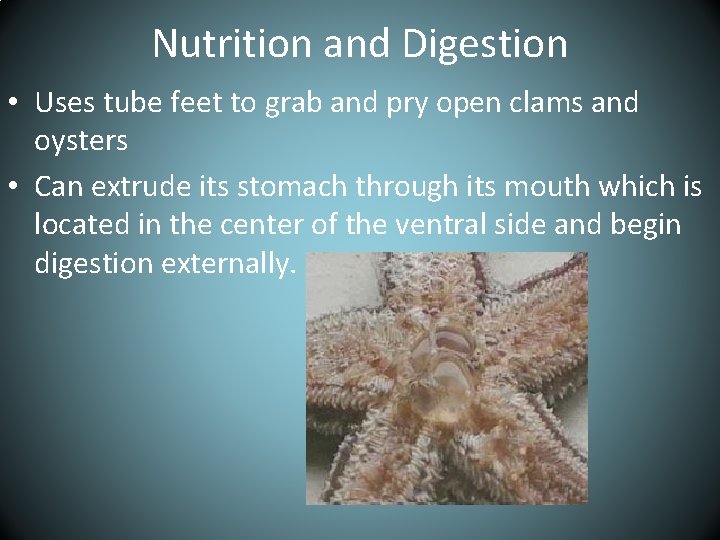
Nutrition and Digestion • Uses tube feet to grab and pry open clams and oysters • Can extrude its stomach through its mouth which is located in the center of the ventral side and begin digestion externally.
Repiration/Circulation and Excretion • Skin gills, which are projections of the coelom, allow oxygen to be exchanged through the skin and waste to diffuse out. • Amoebocytes move through the fluid filled coelom and pick up waste. Amoebocytes leave through the skin gills carrying the waste with them.
Reproduction • Separate sexes • Sexual reproduction through external fertilization • Regeneration – Regenerates lost rays – A ray can grow into a whole new starfish as long as it contains a small portion of the central disc • Ciliated larvae has bilateral symmetry
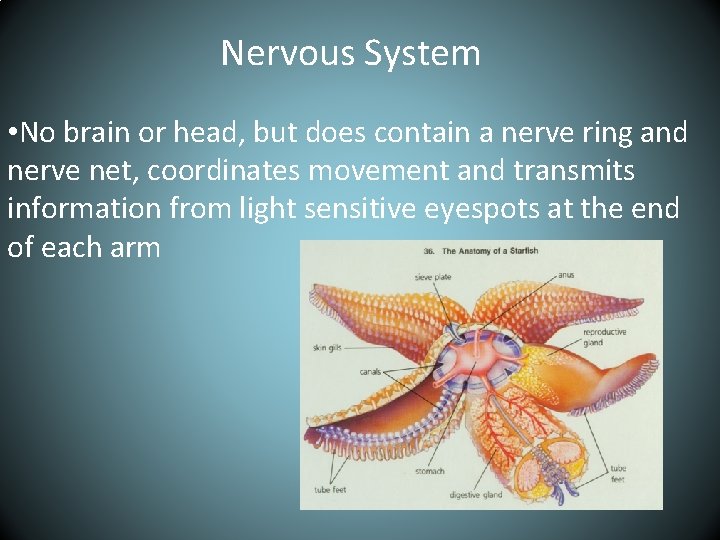
Nervous System • No brain or head, but does contain a nerve ring and nerve net, coordinates movement and transmits information from light sensitive eyespots at the end of each arm
Ecological Impact • Hard to control • Can destroy a commercial shellfish bed in a short time • Some species eat coral polyps http: //www. youtube. com/watch? v=D 3 W 4 OCn. Hy. Cs http: //www. youtube. com/watch? v=HG 17 Tsg. V_q. I