
Phylum Echinodermata Spiny Skinned animals Echinoderms echin spiny
- Slides: 20
Phylum Echinodermata Spiny Skinned animals
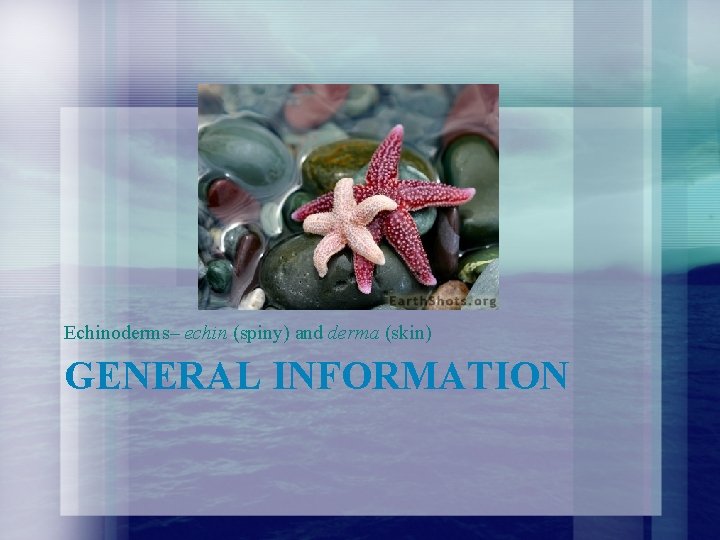
Echinoderms– echin (spiny) and derma (skin) GENERAL INFORMATION
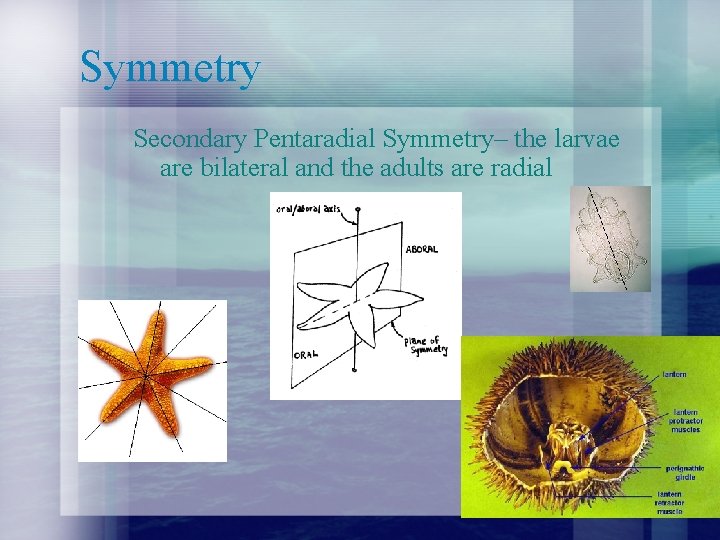
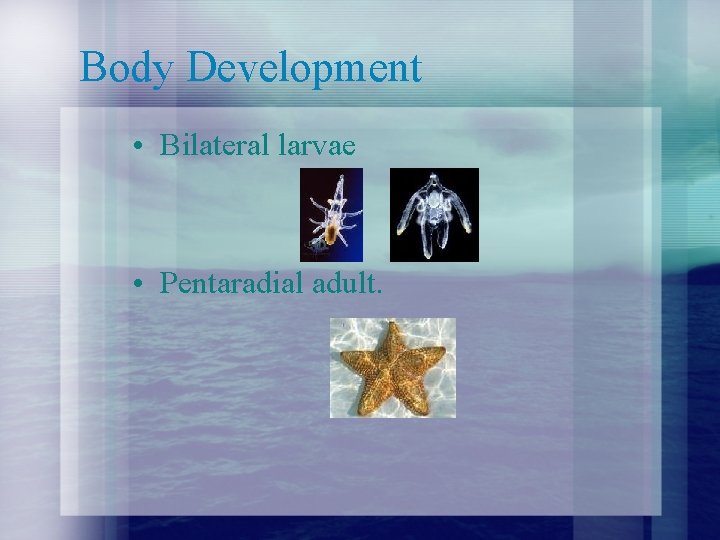
Symmetry Secondary Pentaradial Symmetry– the larvae are bilateral and the adults are radial
Videos: http: //www. youtube. com/watch? v=A 100 m 5 Epf. FI starfish eating http: //www. youtube. com/watch? v=6 IP_I 6 IVy. JQ&feature=relat ed starfish http: //www. youtube. com/watch? v=E 1 t-Dz 4 u 4 u 0 brittle star moving
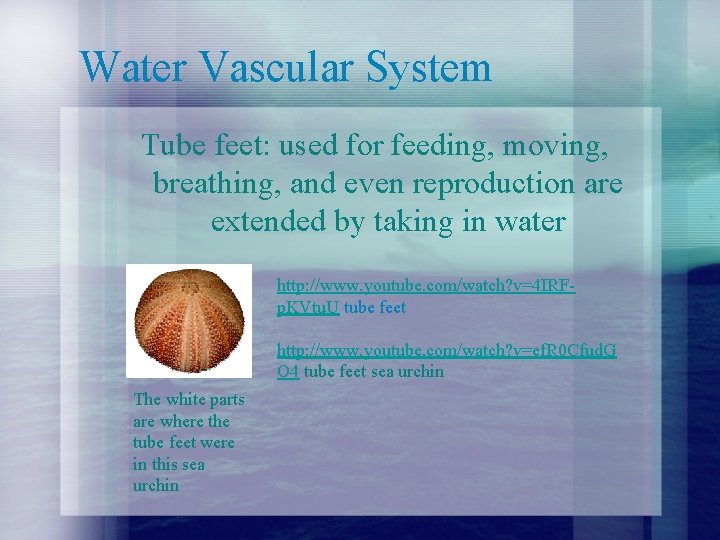
Water Vascular System Tube feet: used for feeding, moving, breathing, and even reproduction are extended by taking in water http: //www. youtube. com/watch? v=4 IRFp. KVtu. U tube feet http: //www. youtube. com/watch? v=ef. R 0 Cfud. G O 4 tube feet sea urchin The white parts are where the tube feet were in this sea urchin
Body Development • Bilateral larvae • Pentaradial adult.
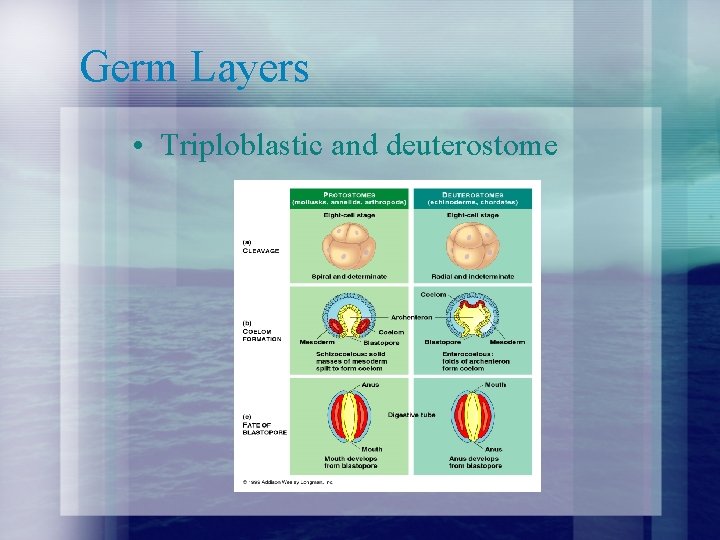
Germ Layers • Triploblastic and deuterostome
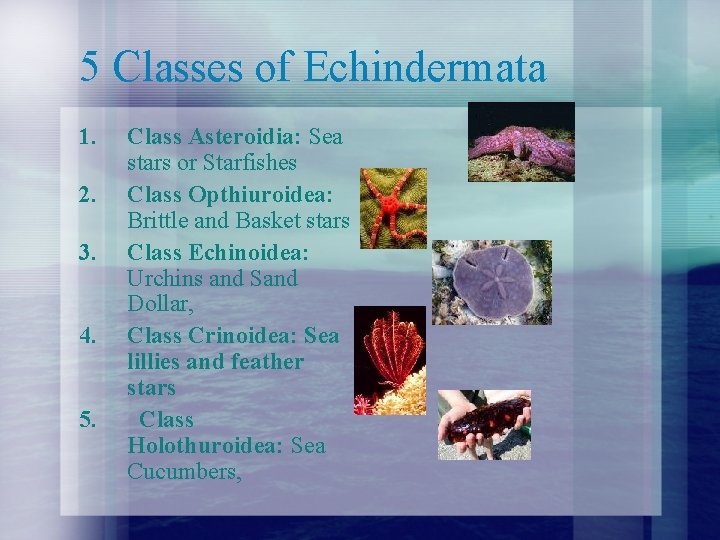
5 Classes of Echindermata 1. 2. 3. 4. 5. Class Asteroidia: Sea stars or Starfishes Class Opthiuroidea: Brittle and Basket stars Class Echinoidea: Urchins and Sand Dollar, Class Crinoidea: Sea lillies and feather stars Class Holothuroidea: Sea Cucumbers,
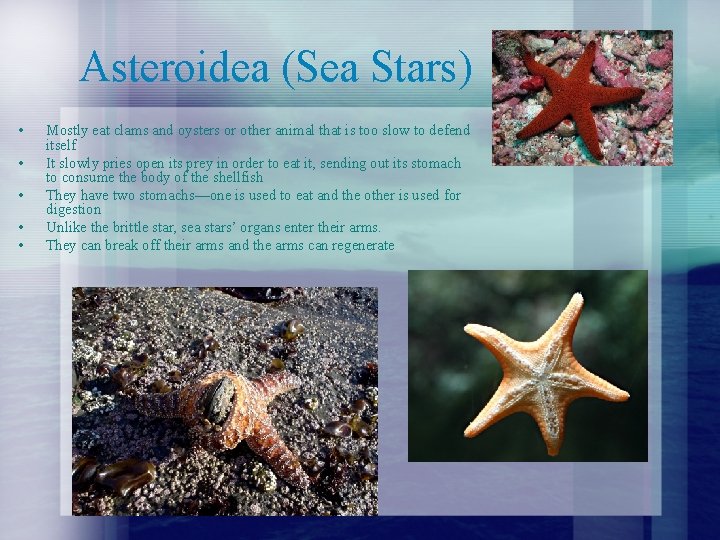
Asteroidea (Sea Stars) • • • Mostly eat clams and oysters or other animal that is too slow to defend itself It slowly pries open its prey in order to eat it, sending out its stomach to consume the body of the shellfish They have two stomachs—one is used to eat and the other is used for digestion Unlike the brittle star, sea stars’ organs enter their arms. They can break off their arms and the arms can regenerate
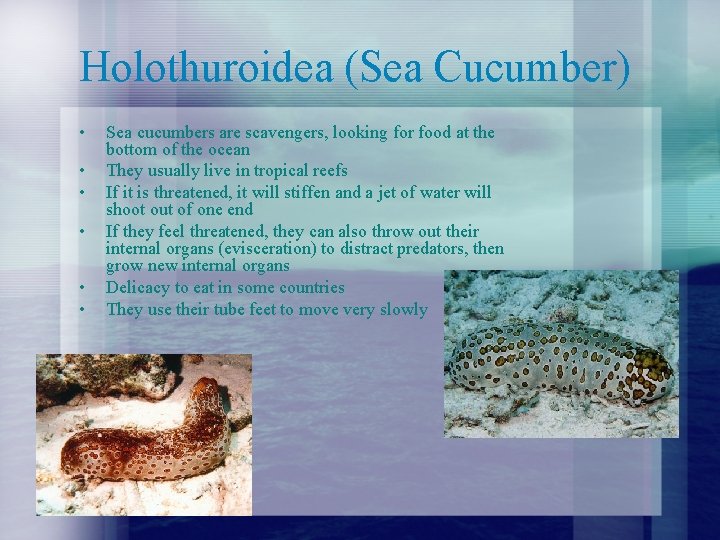
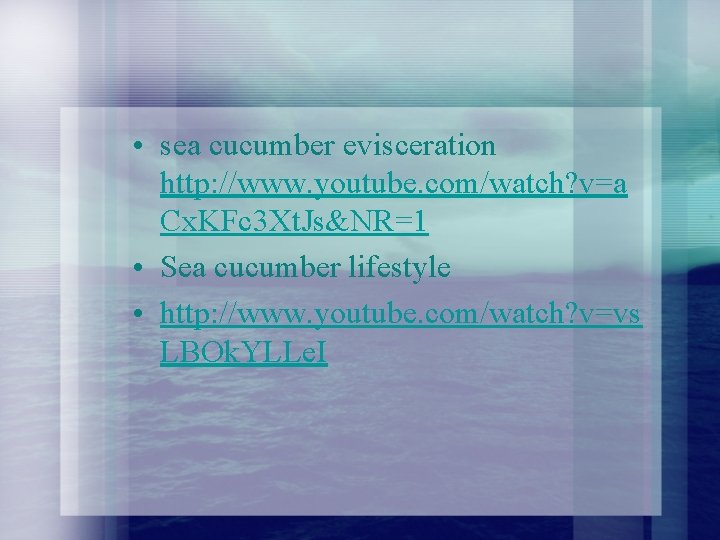
Holothuroidea (Sea Cucumber) • • • Sea cucumbers are scavengers, looking for food at the bottom of the ocean They usually live in tropical reefs If it is threatened, it will stiffen and a jet of water will shoot out of one end If they feel threatened, they can also throw out their internal organs (evisceration) to distract predators, then grow new internal organs Delicacy to eat in some countries They use their tube feet to move very slowly
• sea cucumber evisceration http: //www. youtube. com/watch? v=a Cx. KFc 3 Xt. Js&NR=1 • Sea cucumber lifestyle • http: //www. youtube. com/watch? v=vs LBOk. YLLe. I
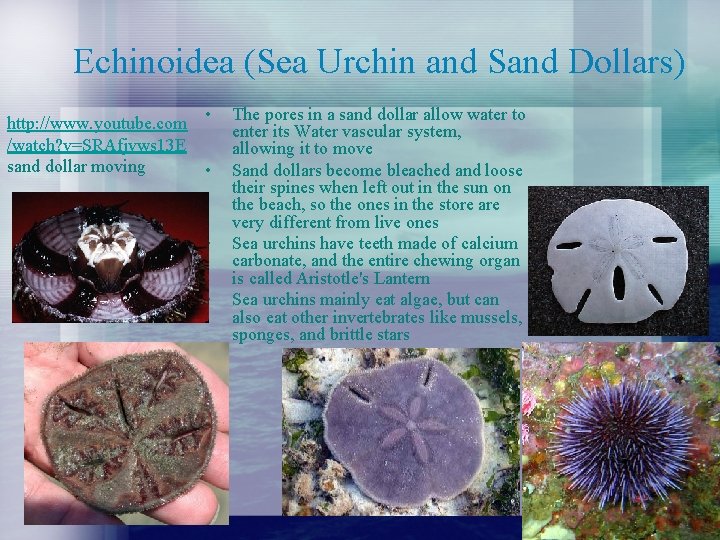
Echinoidea (Sea Urchin and Sand Dollars) • http: //www. youtube. com /watch? v=SRAfjvws 13 E sand dollar moving • • • The pores in a sand dollar allow water to enter its Water vascular system, allowing it to move Sand dollars become bleached and loose their spines when left out in the sun on the beach, so the ones in the store are very different from live ones Sea urchins have teeth made of calcium carbonate, and the entire chewing organ is called Aristotle's Lantern Sea urchins mainly eat algae, but can also eat other invertebrates like mussels, sponges, and brittle stars
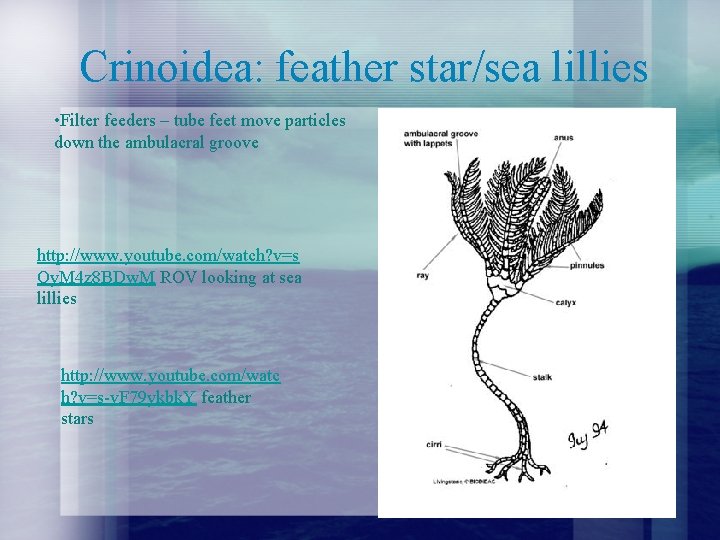
Crinoidea: feather star/sea lillies • Filter feeders – tube feet move particles down the ambulacral groove http: //www. youtube. com/watch? v=s Oy. M 4 z 8 BDw. M ROV looking at sea lillies http: //www. youtube. com/watc h? v=s-v. F 79 ykbk. Y feather stars
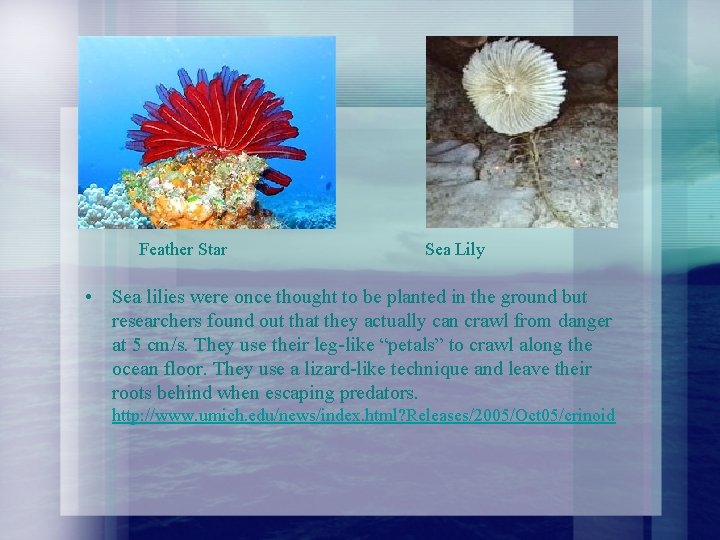
Feather Star Sea Lily • Sea lilies were once thought to be planted in the ground but researchers found out that they actually can crawl from danger at 5 cm/s. They use their leg-like “petals” to crawl along the ocean floor. They use a lizard-like technique and leave their roots behind when escaping predators. http: //www. umich. edu/news/index. html? Releases/2005/Oct 05/crinoid
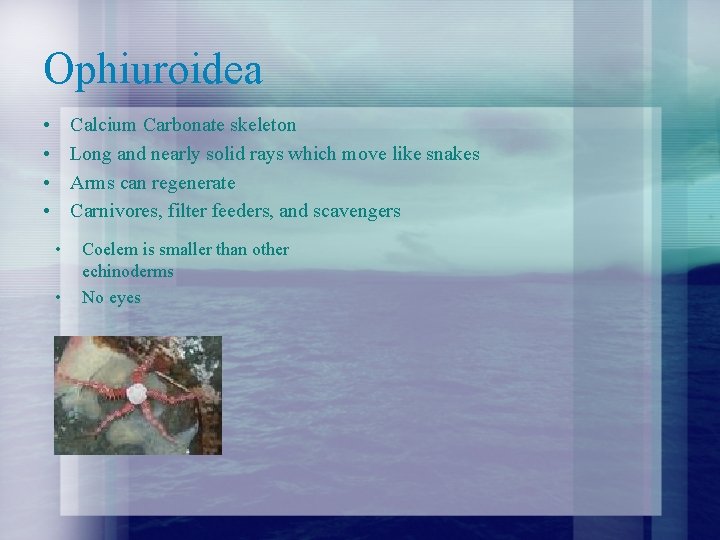
Ophiuroidea • • Calcium Carbonate skeleton Long and nearly solid rays which move like snakes Arms can regenerate Carnivores, filter feeders, and scavengers • • Coelem is smaller than other echinoderms No eyes
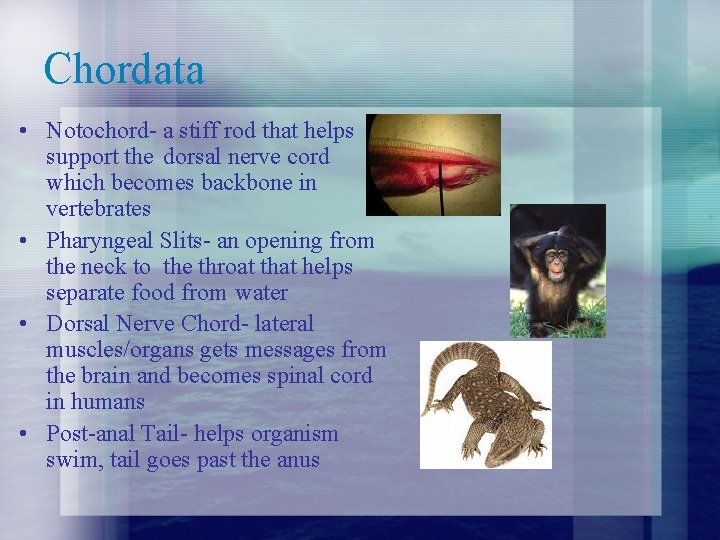
Chordata • Notochord- a stiff rod that helps support the dorsal nerve cord which becomes backbone in vertebrates • Pharyngeal Slits- an opening from the neck to the throat that helps separate food from water • Dorsal Nerve Chord- lateral muscles/organs gets messages from the brain and becomes spinal cord in humans • Post-anal Tail- helps organism swim, tail goes past the anus
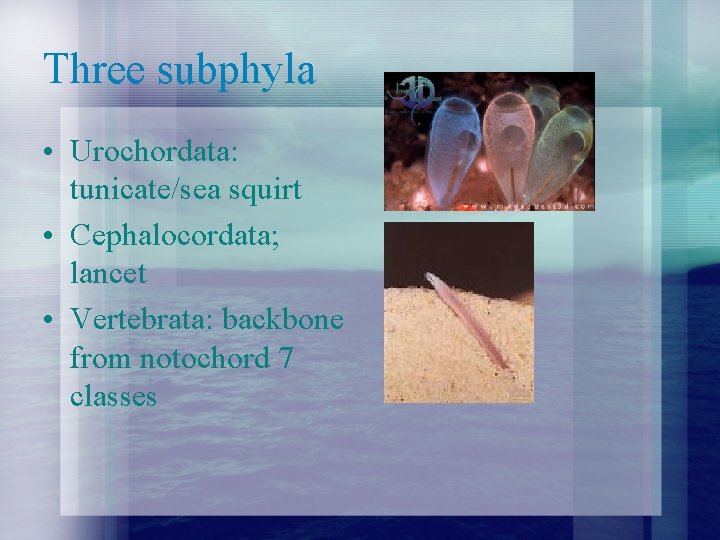
Three subphyla • Urochordata: tunicate/sea squirt • Cephalocordata; lancet • Vertebrata: backbone from notochord 7 classes
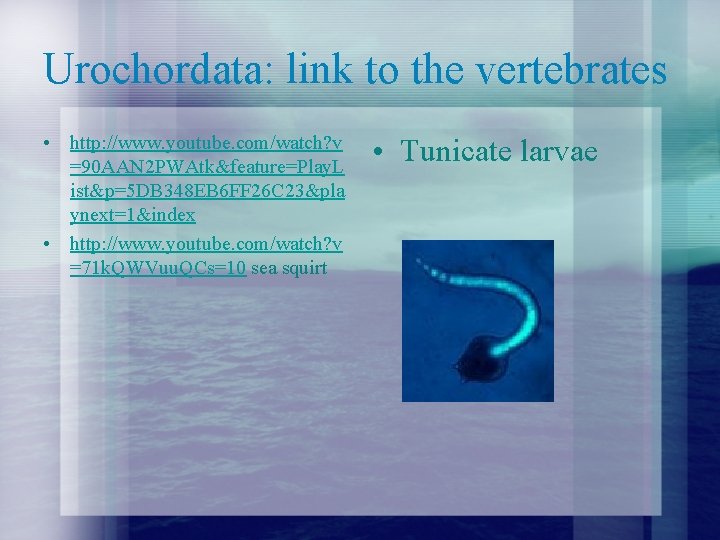
Urochordata: link to the vertebrates • http: //www. youtube. com/watch? v =90 AAN 2 PWAtk&feature=Play. L ist&p=5 DB 348 EB 6 FF 26 C 23&pla ynext=1&index • http: //www. youtube. com/watch? v =71 k. QWVuu. QCs=10 sea squirt • Tunicate larvae
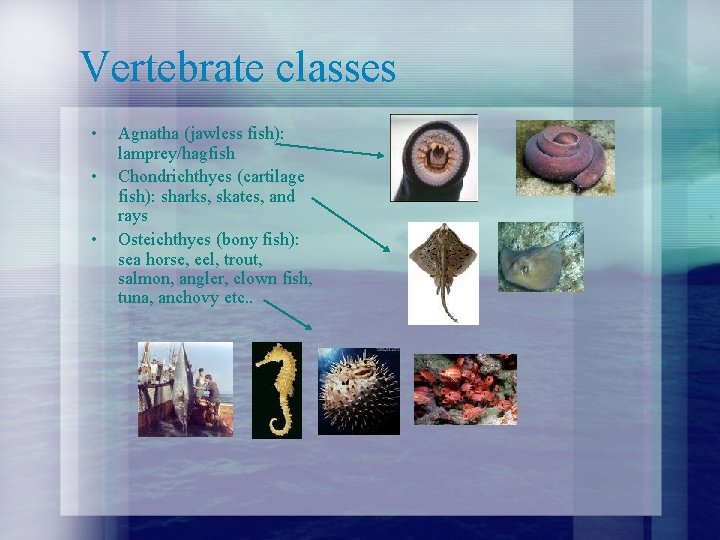
Vertebrate classes • • • Agnatha (jawless fish): lamprey/hagfish Chondrichthyes (cartilage fish): sharks, skates, and rays Osteichthyes (bony fish): sea horse, eel, trout, salmon, angler, clown fish, tuna, anchovy etc. .
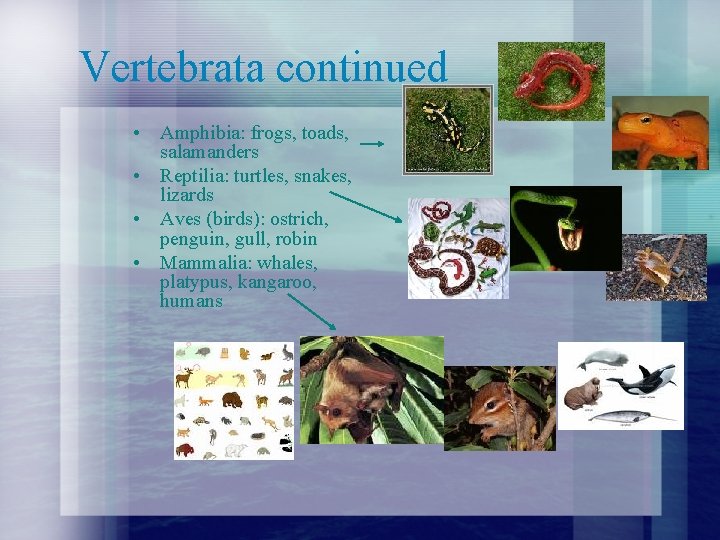
Vertebrata continued • Amphibia: frogs, toads, salamanders • Reptilia: turtles, snakes, lizards • Aves (birds): ostrich, penguin, gull, robin • Mammalia: whales, platypus, kangaroo, humans