
Phylum Echinodermata Echinoderms FiveWay Symmetry 1 2 I


- Slides: 37
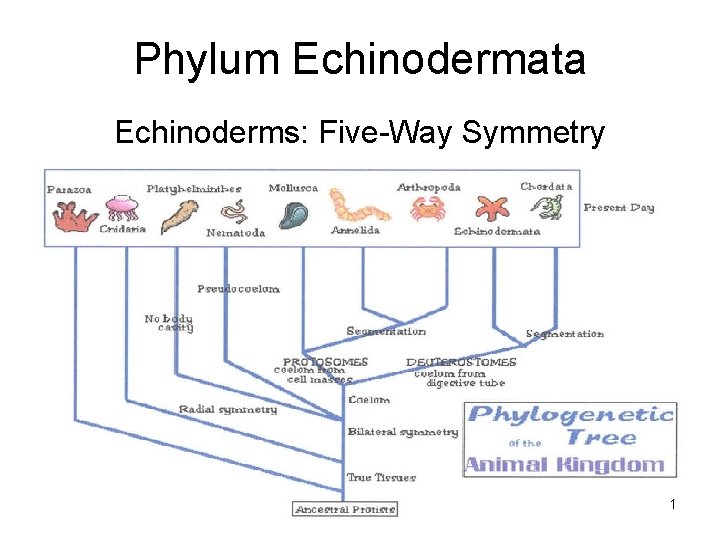
Phylum Echinodermata Echinoderms: Five-Way Symmetry 1
2
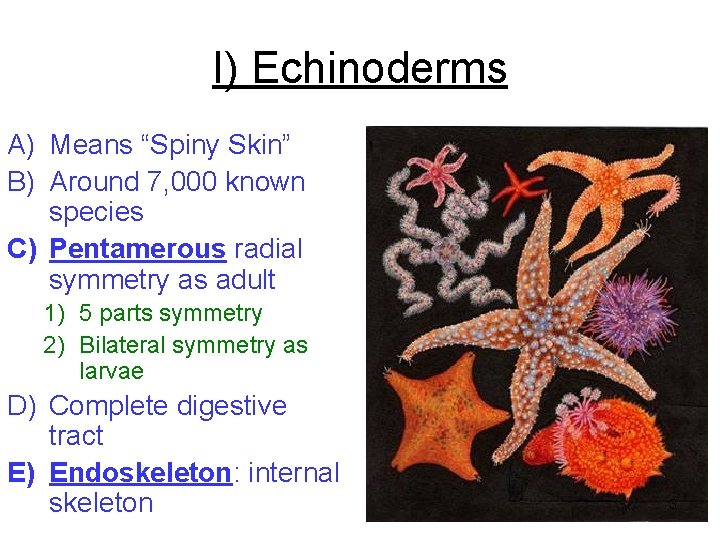
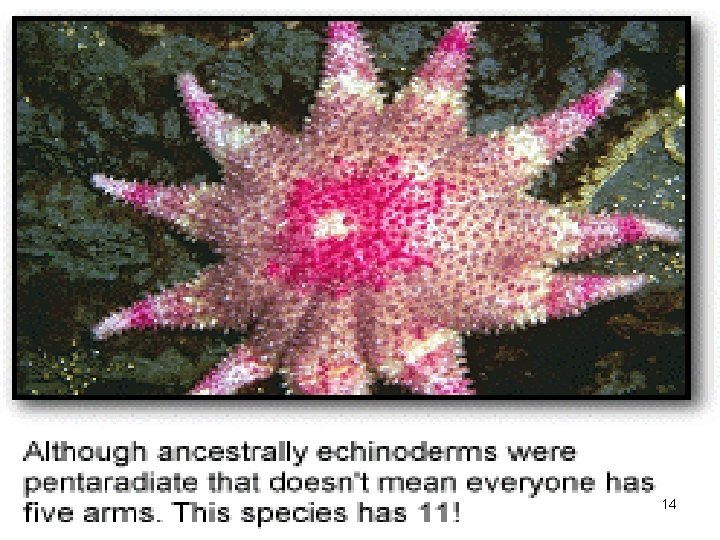
I) Echinoderms A) Means “Spiny Skin” B) Around 7, 000 known species C) Pentamerous radial symmetry as adult 1) 5 parts symmetry 2) Bilateral symmetry as larvae D) Complete digestive tract E) Endoskeleton: internal skeleton 3
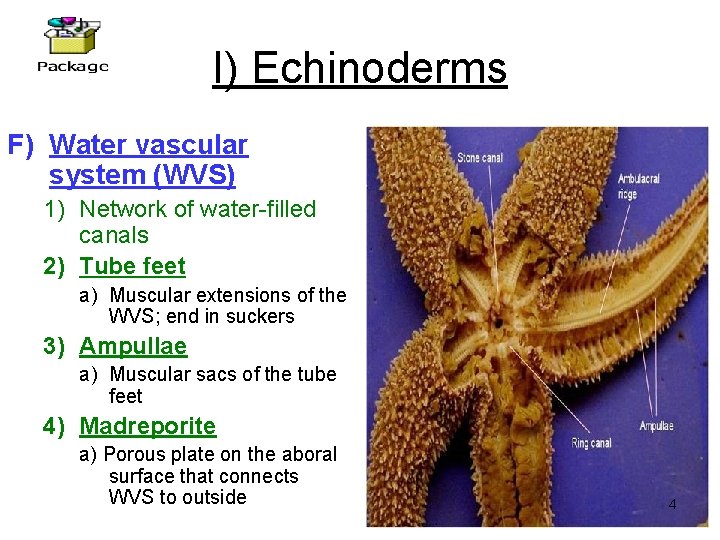
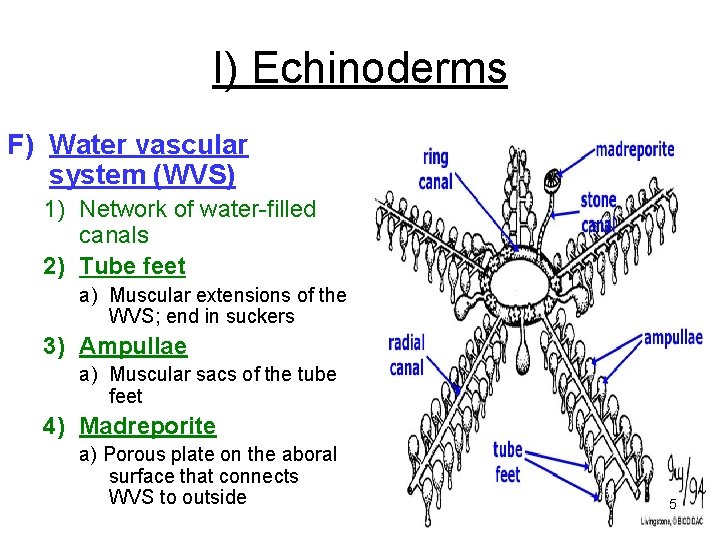
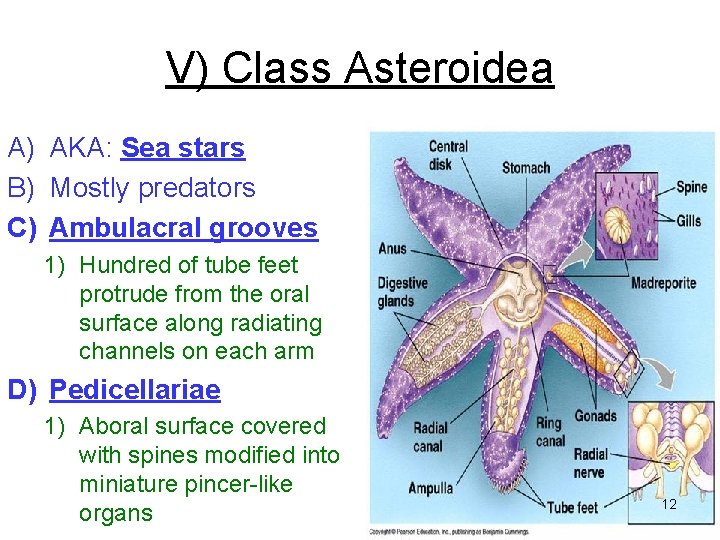
I) Echinoderms F) Water vascular system (WVS) 1) Network of water-filled canals 2) Tube feet a) Muscular extensions of the WVS; end in suckers 3) Ampullae a) Muscular sacs of the tube feet 4) Madreporite a) Porous plate on the aboral surface that connects WVS to outside 4
I) Echinoderms F) Water vascular system (WVS) 1) Network of water-filled canals 2) Tube feet a) Muscular extensions of the WVS; end in suckers 3) Ampullae a) Muscular sacs of the tube feet 4) Madreporite a) Porous plate on the aboral surface that connects WVS to outside 5
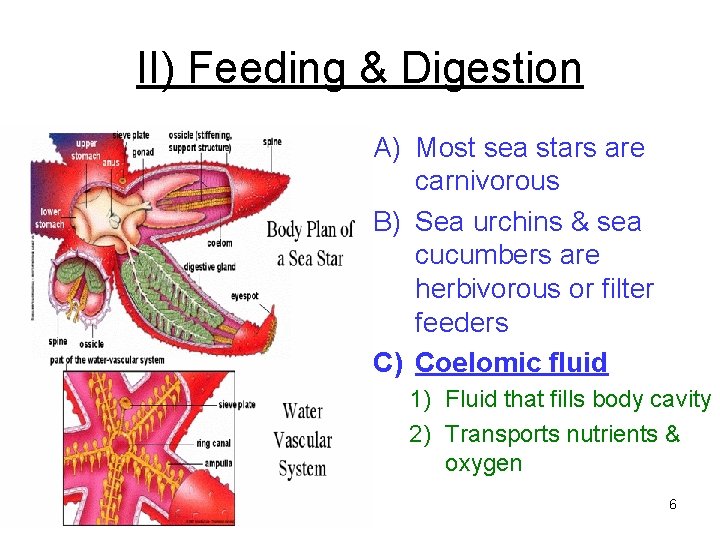
II) Feeding & Digestion A) Most sea stars are carnivorous B) Sea urchins & sea cucumbers are herbivorous or filter feeders C) Coelomic fluid 1) Fluid that fills body cavity 2) Transports nutrients & oxygen 6
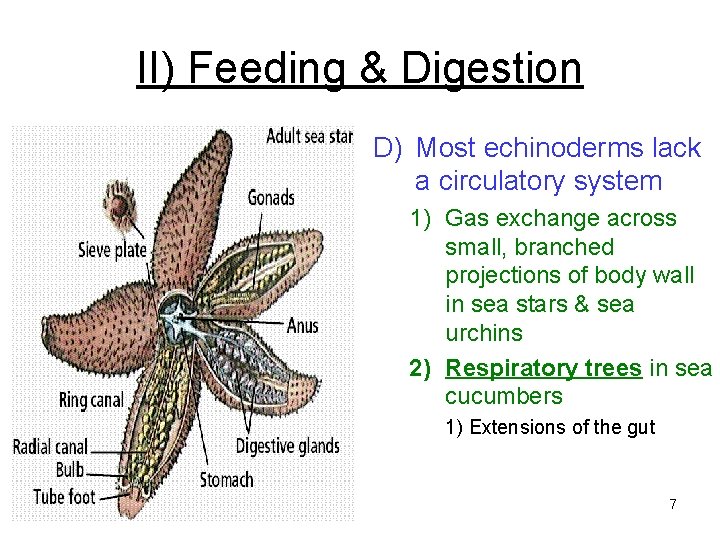
II) Feeding & Digestion D) Most echinoderms lack a circulatory system 1) Gas exchange across small, branched projections of body wall in sea stars & sea urchins 2) Respiratory trees in sea cucumbers 1) Extensions of the gut 7
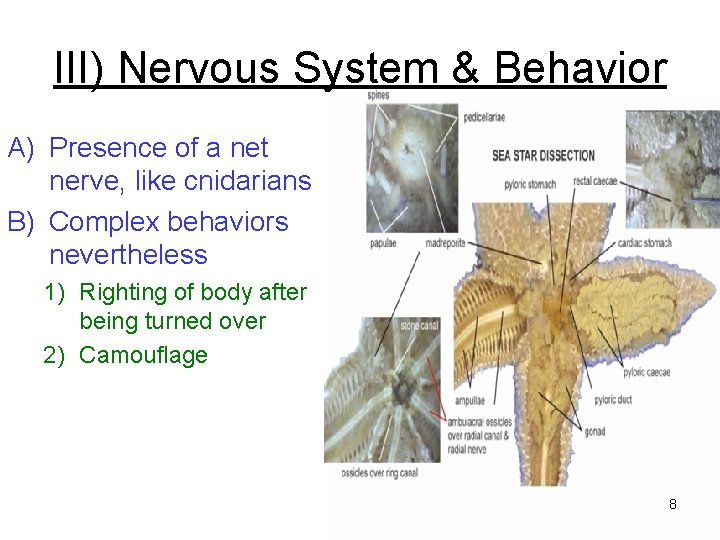
III) Nervous System & Behavior A) Presence of a net nerve, like cnidarians B) Complex behaviors nevertheless 1) Righting of body after being turned over 2) Camouflage 8
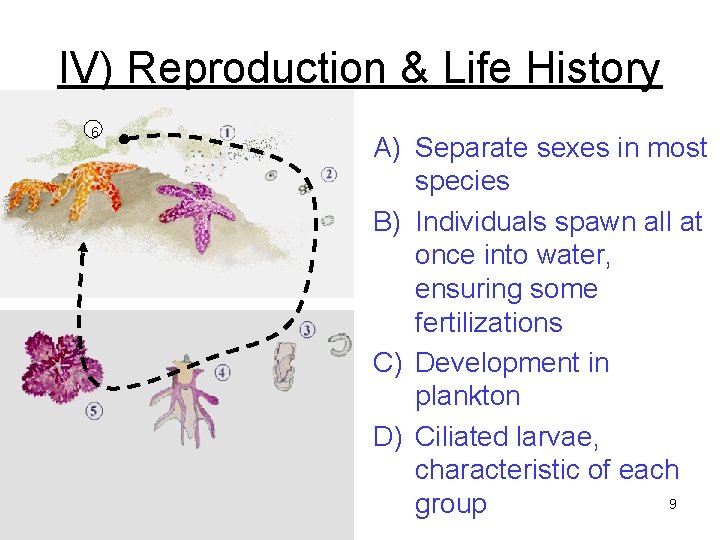
IV) Reproduction & Life History 6 A) Separate sexes in most species B) Individuals spawn all at once into water, ensuring some fertilizations C) Development in plankton D) Ciliated larvae, characteristic of each 9 group
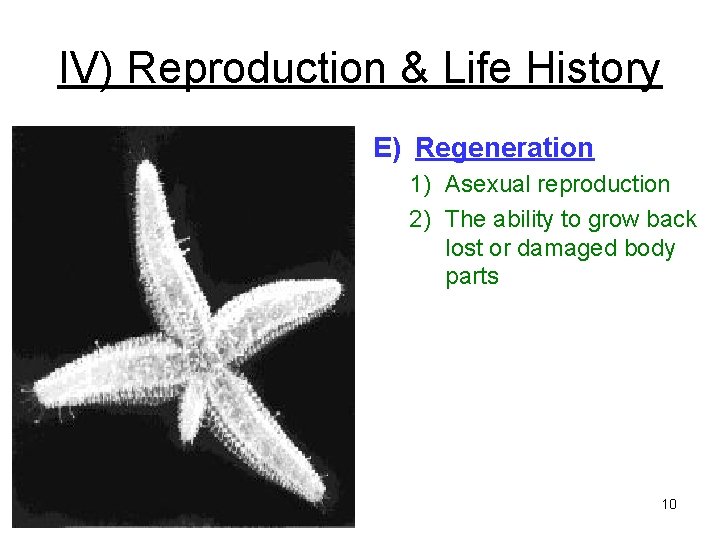
IV) Reproduction & Life History E) Regeneration 1) Asexual reproduction 2) The ability to grow back lost or damaged body parts 10
11
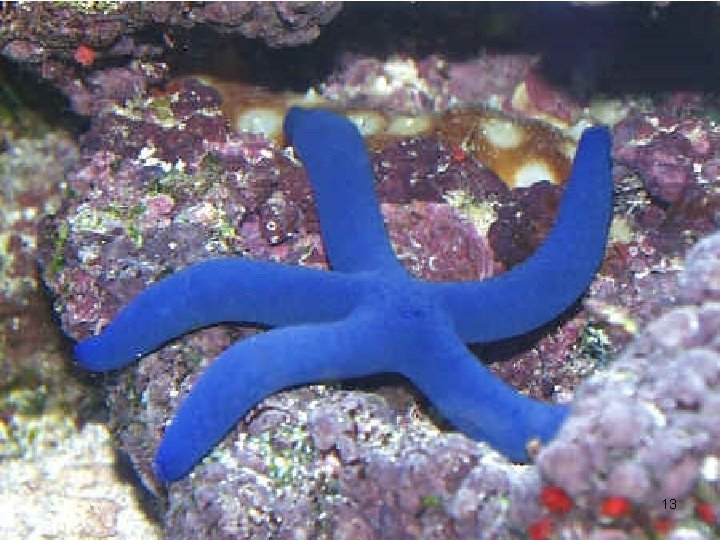
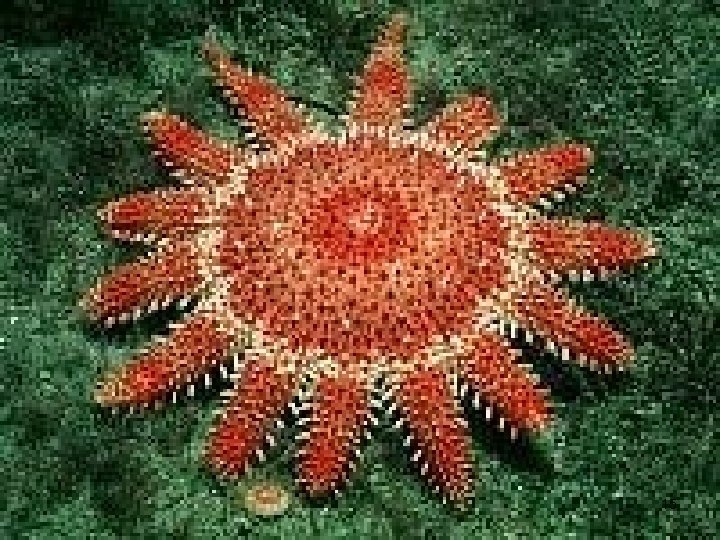
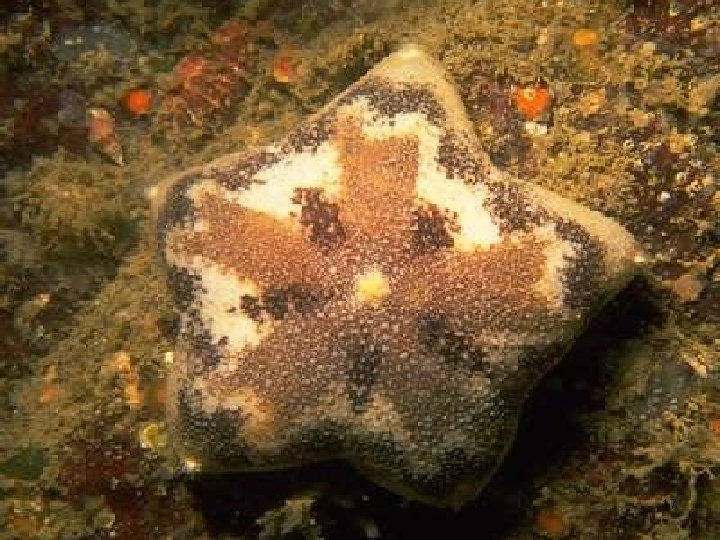
V) Class Asteroidea A) AKA: Sea stars B) Mostly predators C) Ambulacral grooves 1) Hundred of tube feet protrude from the oral surface along radiating channels on each arm D) Pedicellariae 1) Aboral surface covered with spines modified into miniature pincer-like organs 12
13
14
15
16
17
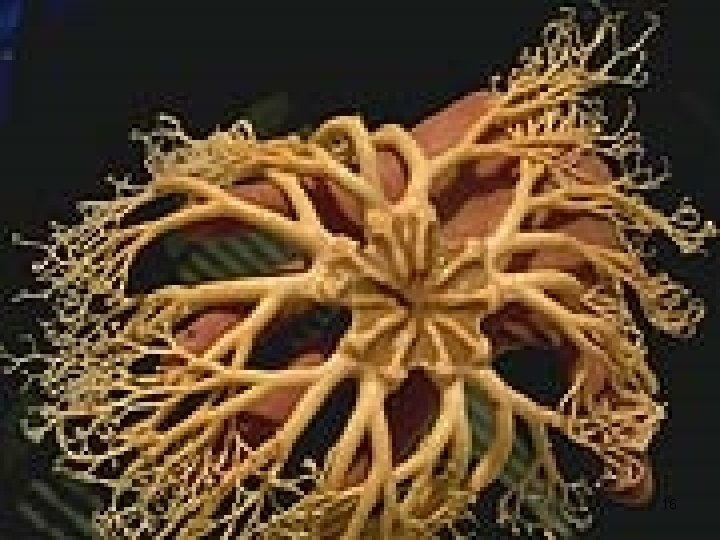
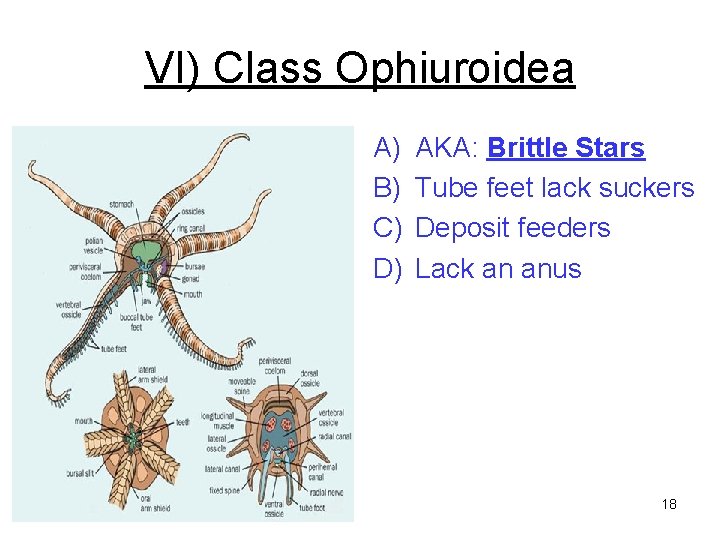
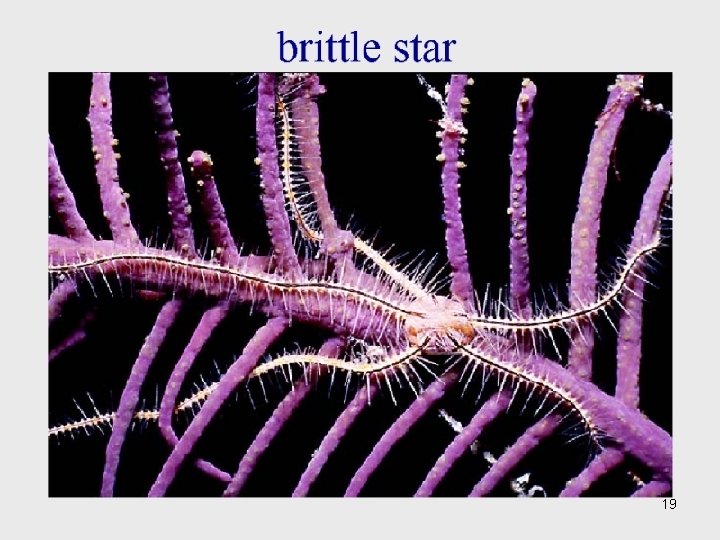
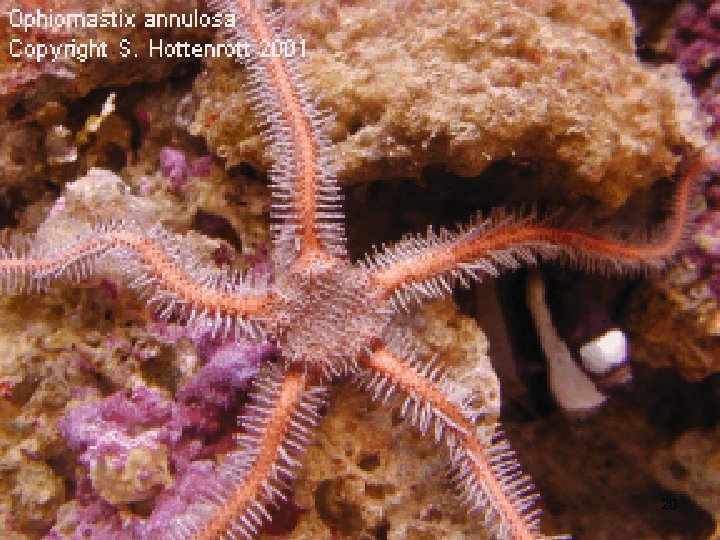
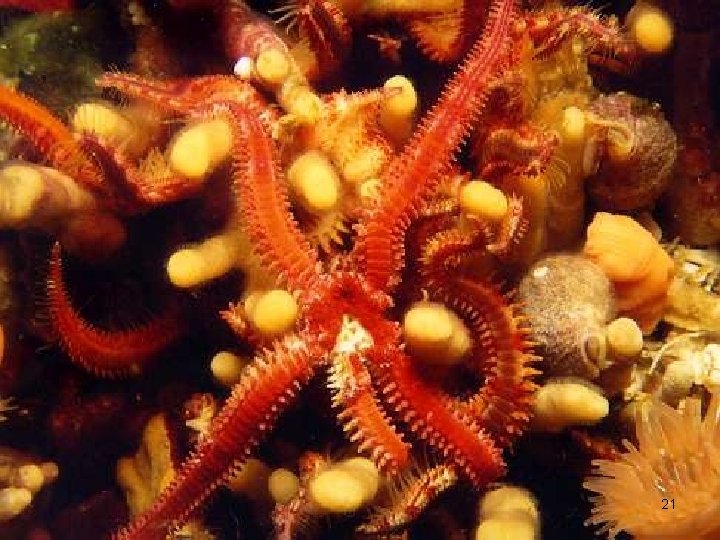
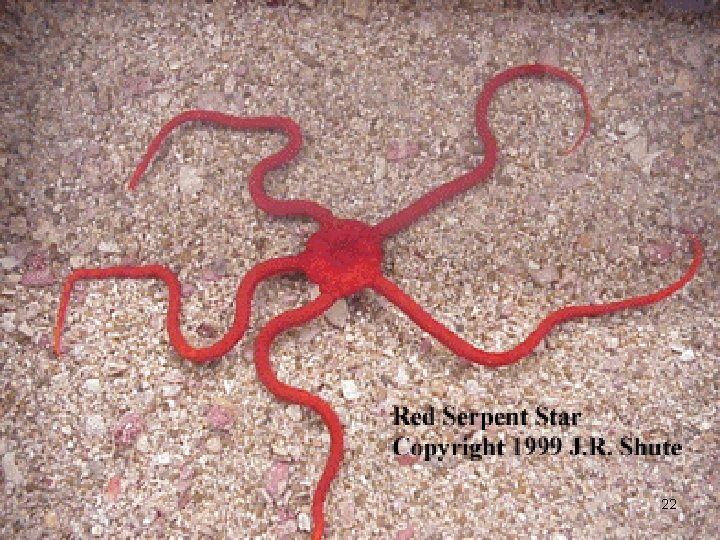
VI) Class Ophiuroidea A) B) C) D) AKA: Brittle Stars Tube feet lack suckers Deposit feeders Lack an anus 18
19
20
21
22
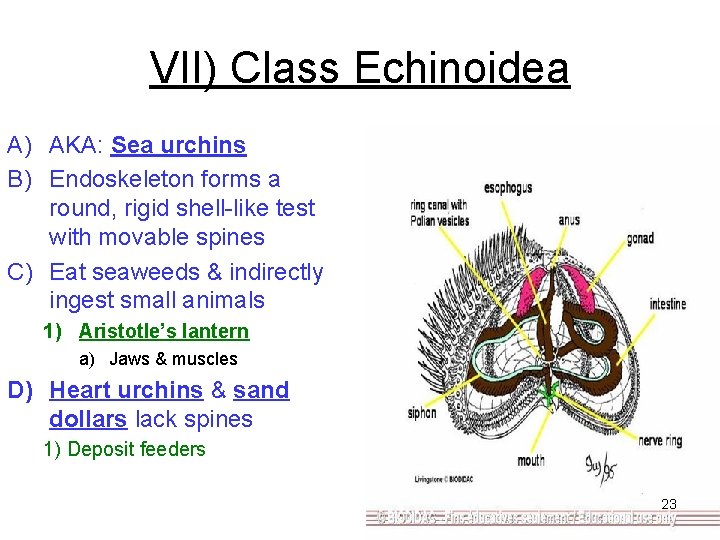
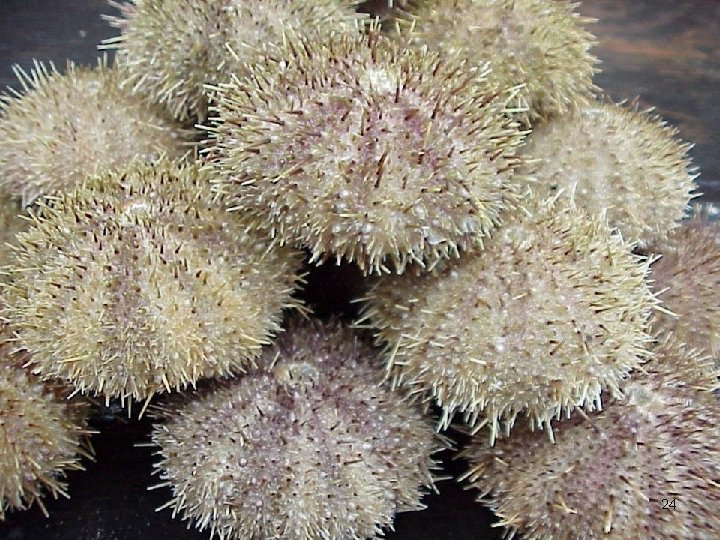
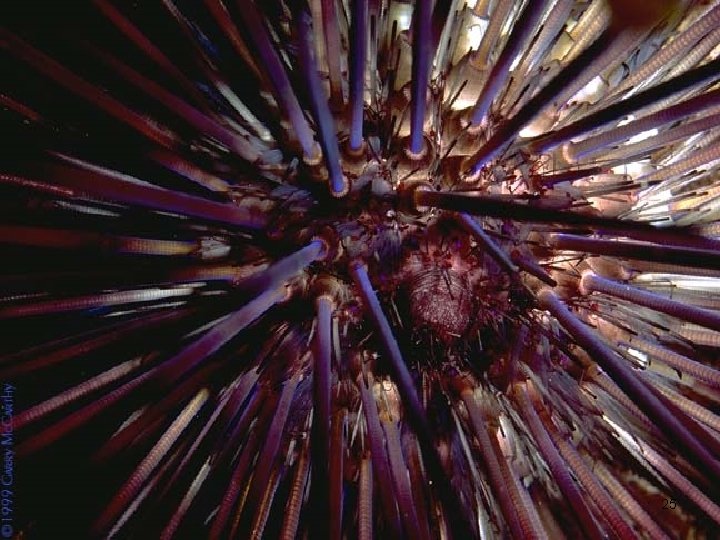
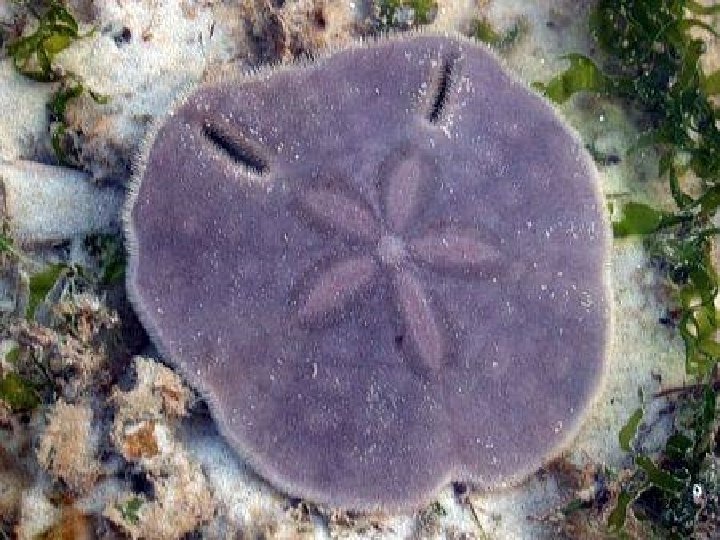
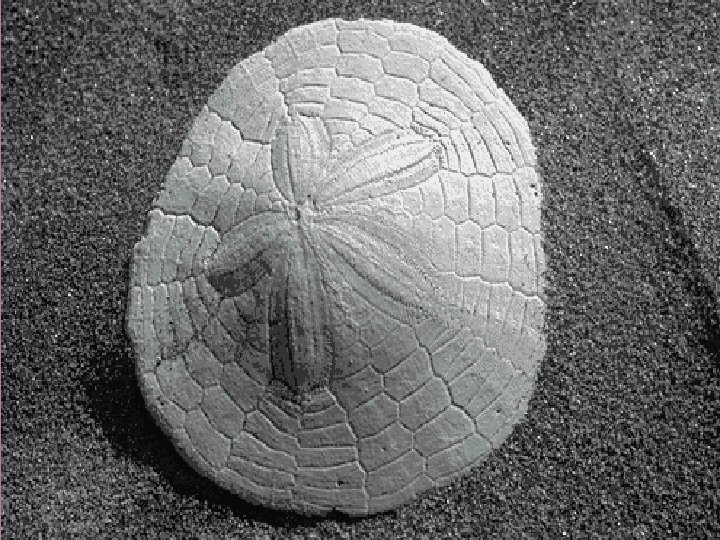
VII) Class Echinoidea A) AKA: Sea urchins B) Endoskeleton forms a round, rigid shell-like test with movable spines C) Eat seaweeds & indirectly ingest small animals 1) Aristotle’s lantern a) Jaws & muscles D) Heart urchins & sand dollars lack spines 1) Deposit feeders 23
24
25
26
27
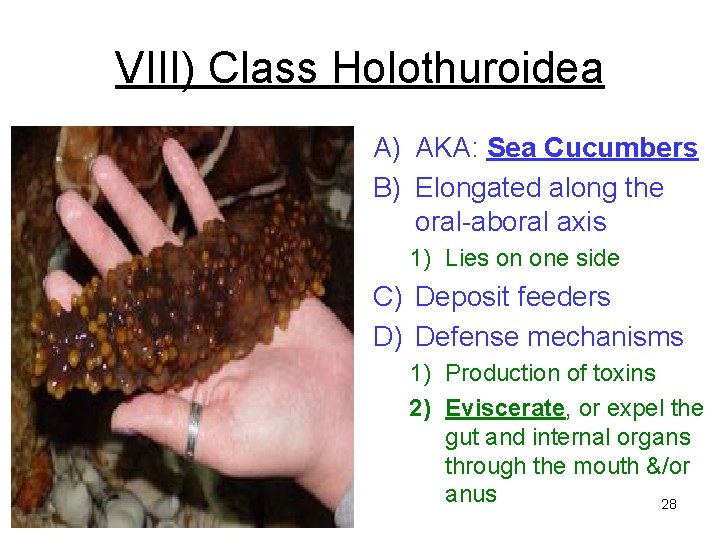
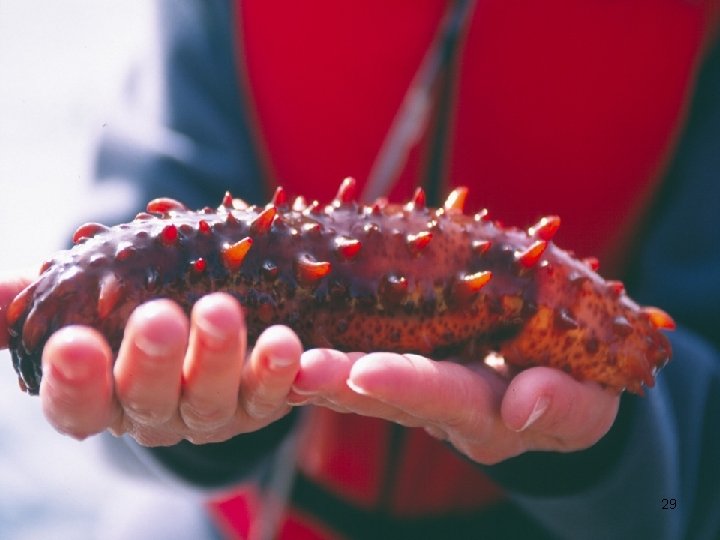
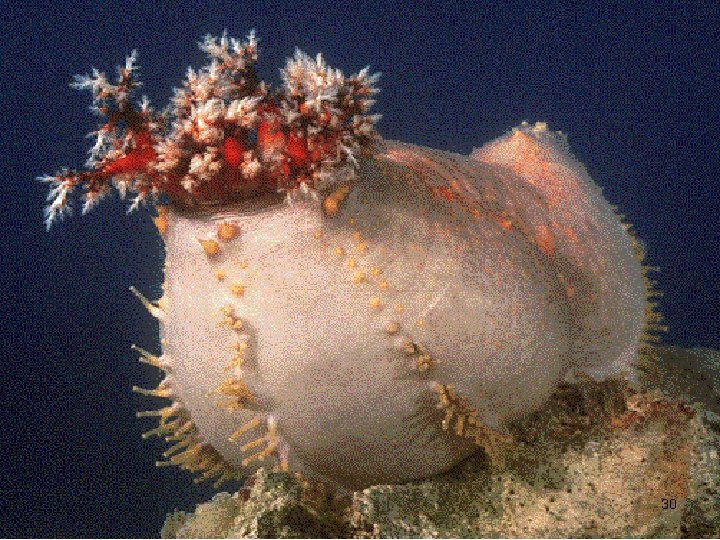
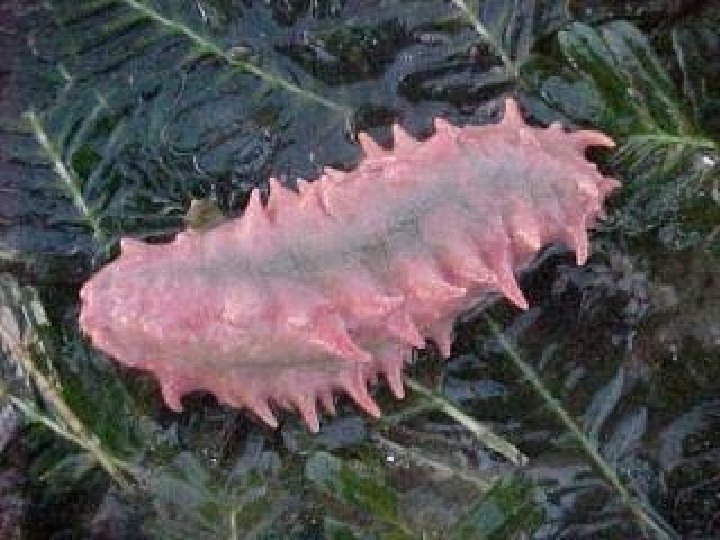
VIII) Class Holothuroidea A) AKA: Sea Cucumbers B) Elongated along the oral-aboral axis 1) Lies on one side C) Deposit feeders D) Defense mechanisms 1) Production of toxins 2) Eviscerate, or expel the gut and internal organs through the mouth &/or anus 28
29
30
31
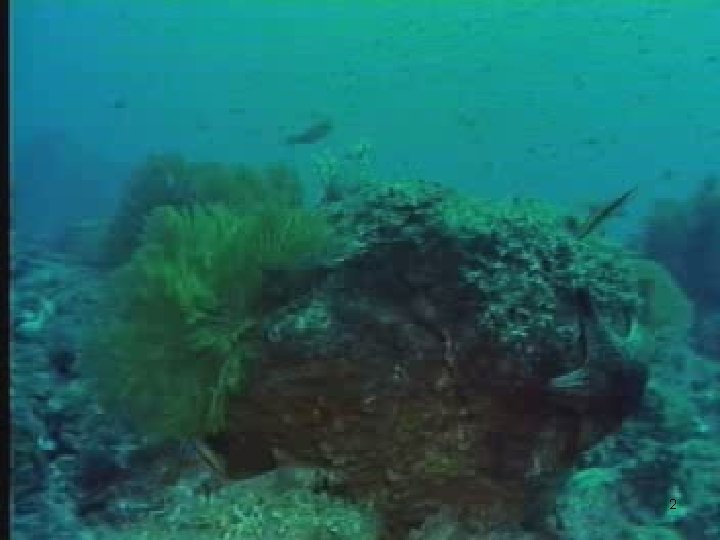
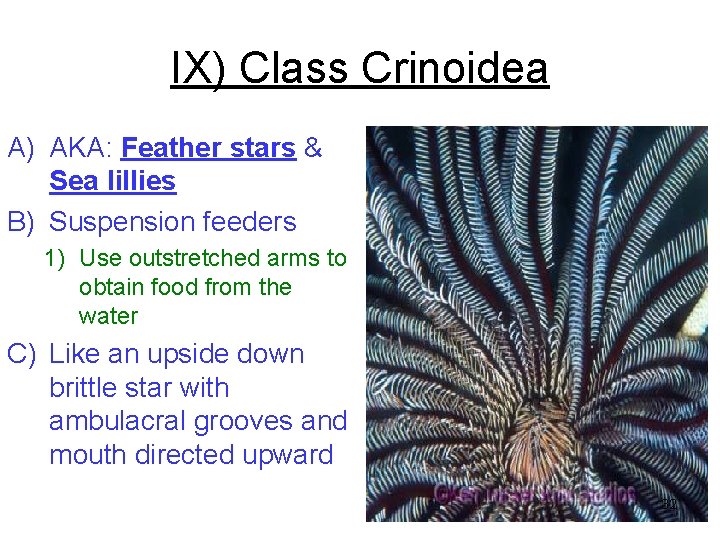
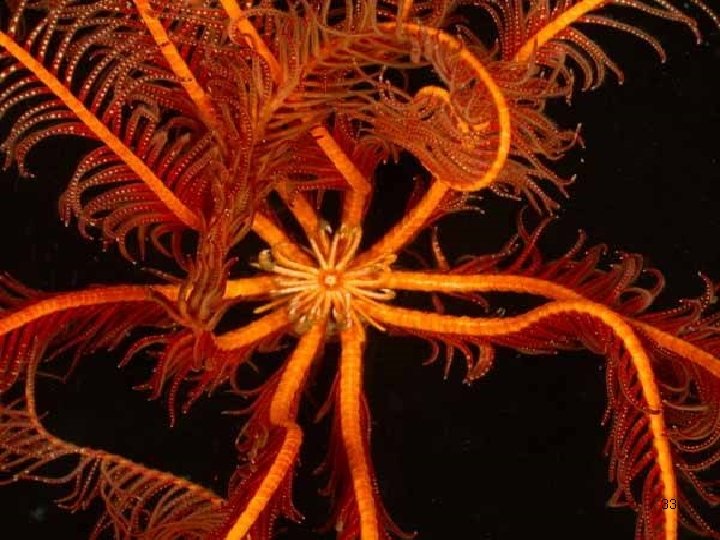
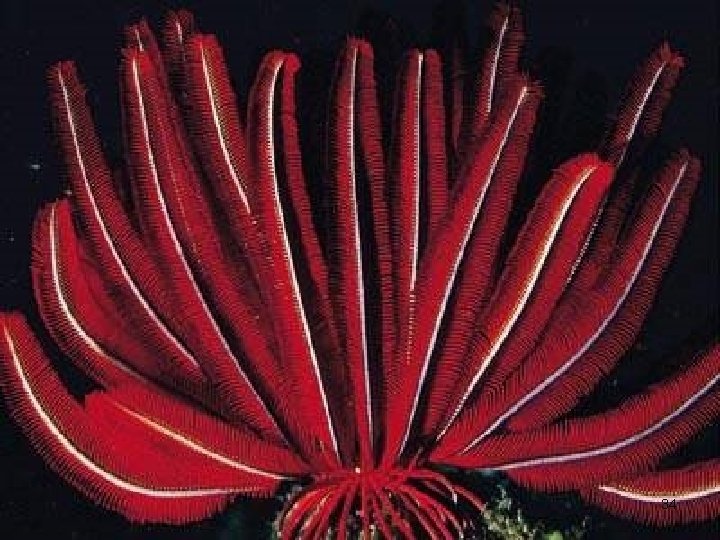
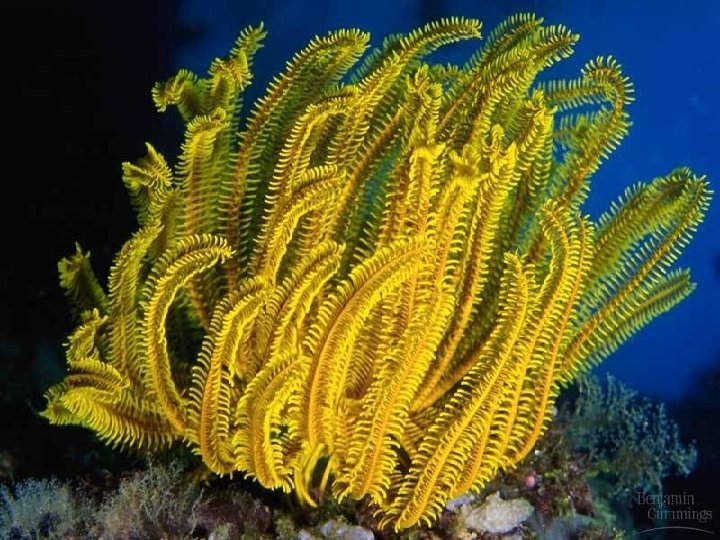
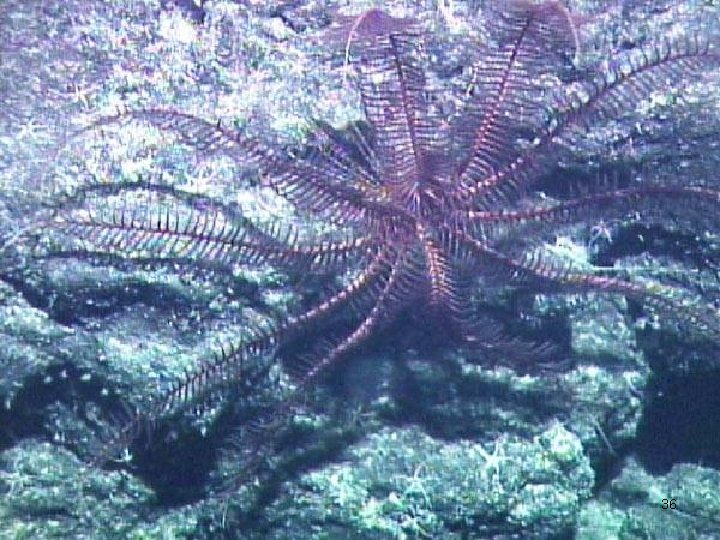
IX) Class Crinoidea A) AKA: Feather stars & Sea lillies B) Suspension feeders 1) Use outstretched arms to obtain food from the water C) Like an upside down brittle star with ambulacral grooves and mouth directed upward 32
33
34
35
36
37