
Phylum Echinodermata echino spiny derm skin Echinoderms have

- Slides: 21
Phylum Echinodermata - echino = spiny - derm = skin
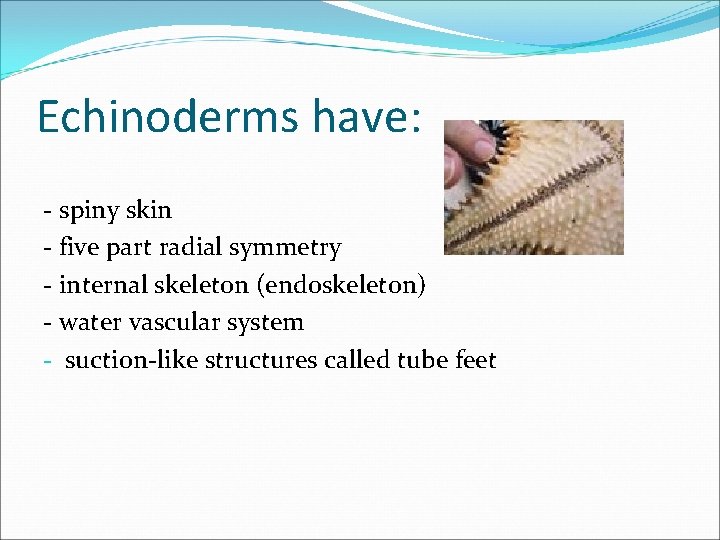
Echinoderms have: - spiny skin - five part radial symmetry - internal skeleton (endoskeleton) - water vascular system - suction-like structures called tube feet
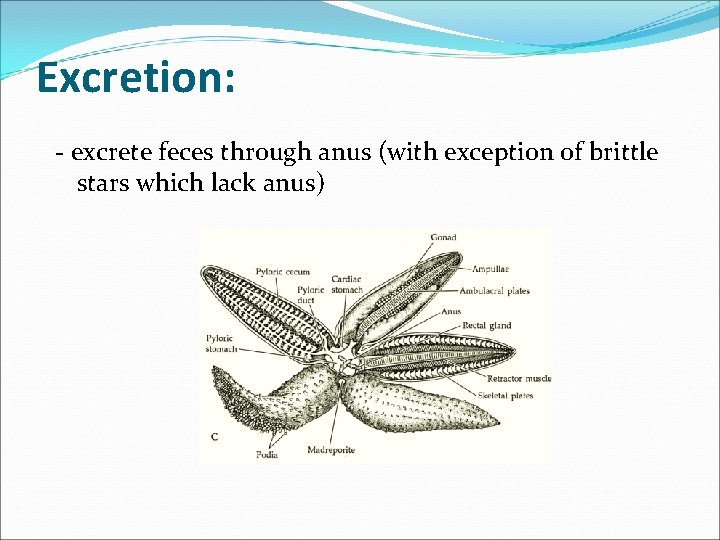
Form and Function: - five part body plan organized around a centre - typically do not have anterior or posterior ends no brain - instead have oral surface (side with mouth) and aboral surface - water vascular system = internal tubes which opens to outside through the madreporite - controls the suction in the tubed feet and movement of the animal
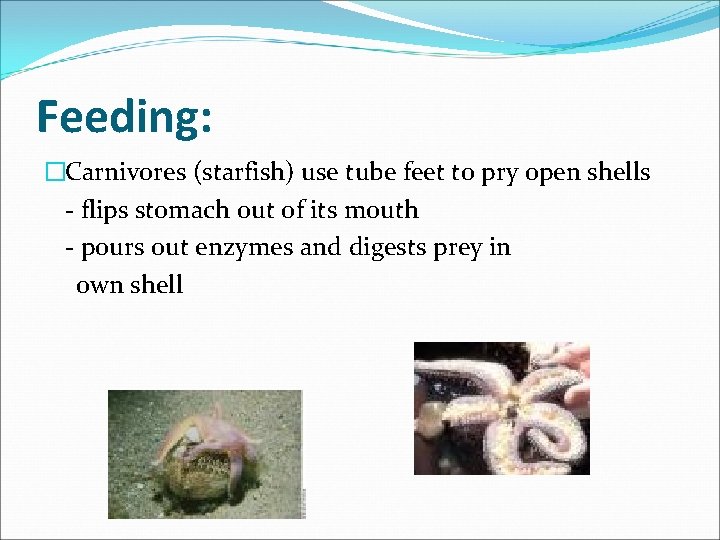
Feeding: �Carnivores (starfish) use tube feet to pry open shells - flips stomach out of its mouth - pours out enzymes and digests prey in own shell
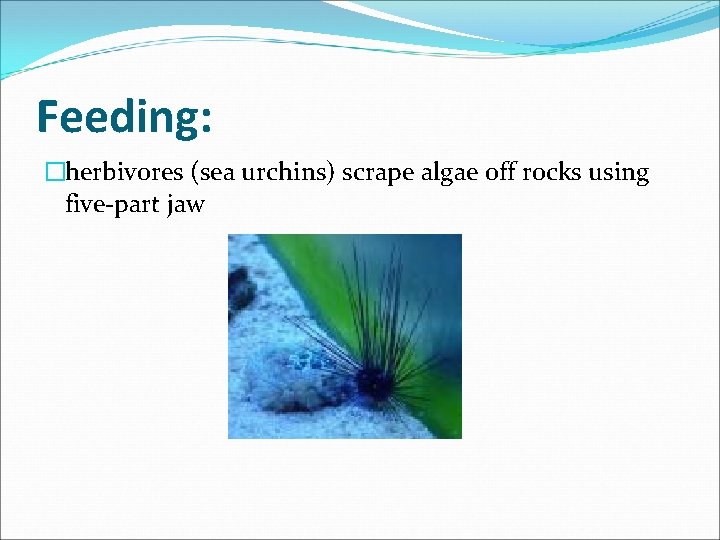
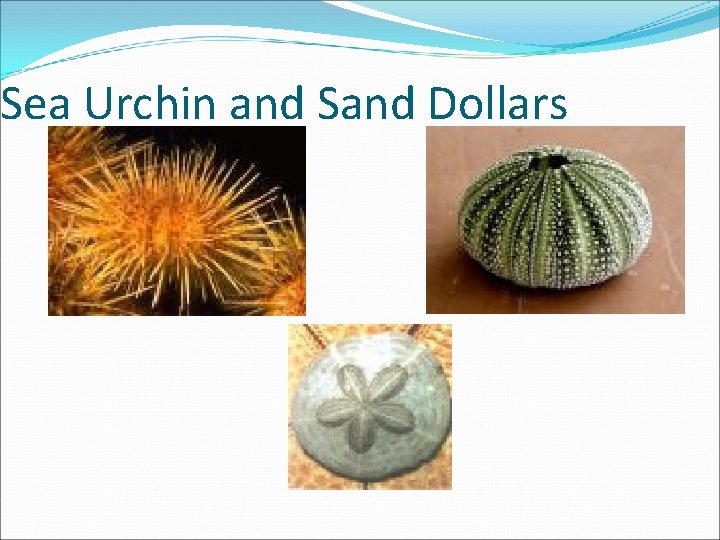
Feeding: �herbivores (sea urchins) scrape algae off rocks using five-part jaw
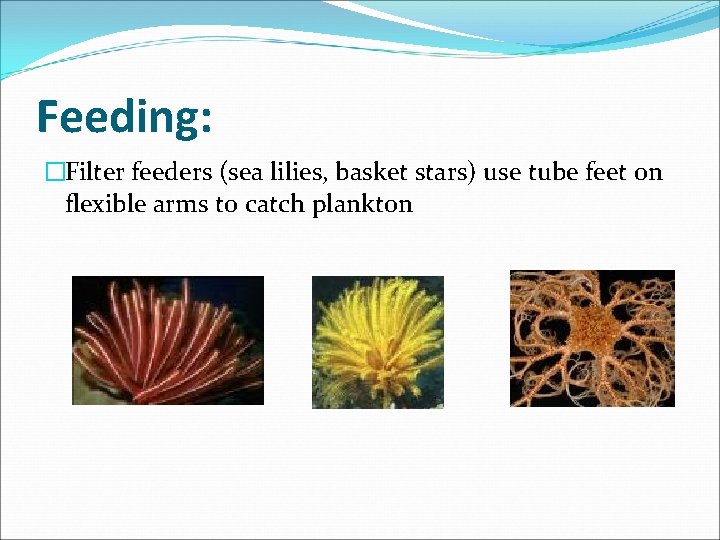
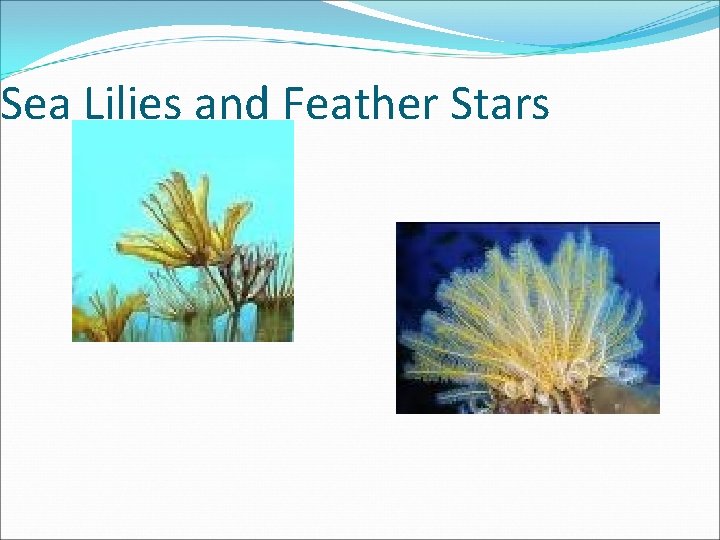
Feeding: �Filter feeders (sea lilies, basket stars) use tube feet on flexible arms to catch plankton
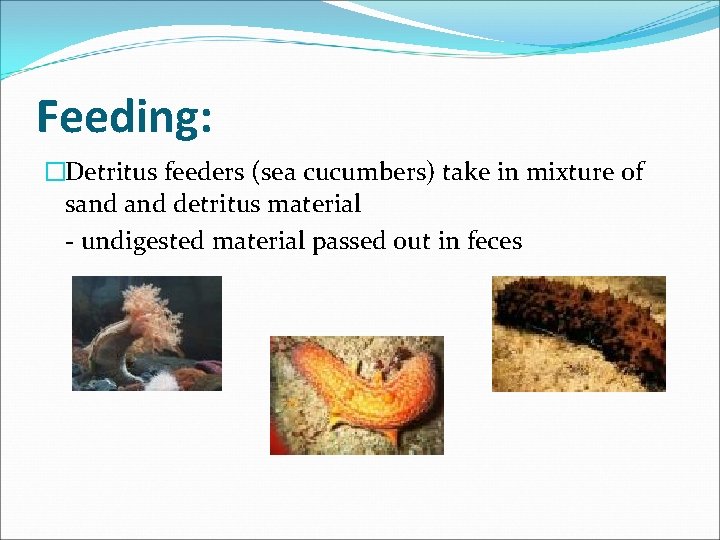
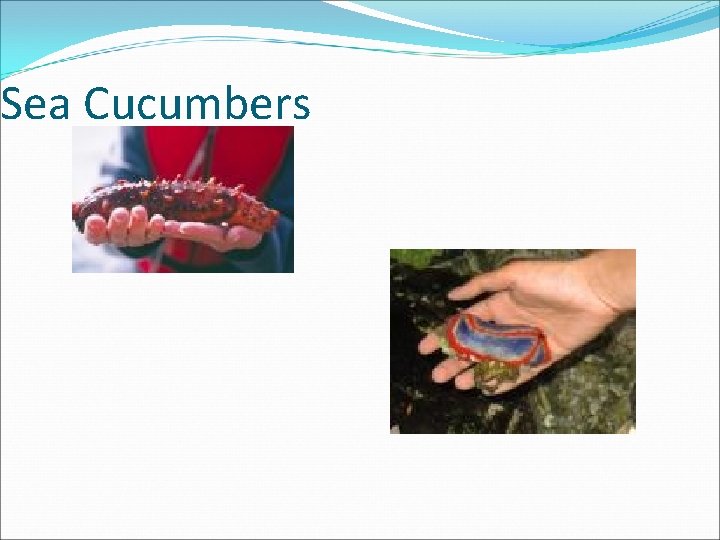
Feeding: �Detritus feeders (sea cucumbers) take in mixture of sand detritus material - undigested material passed out in feces
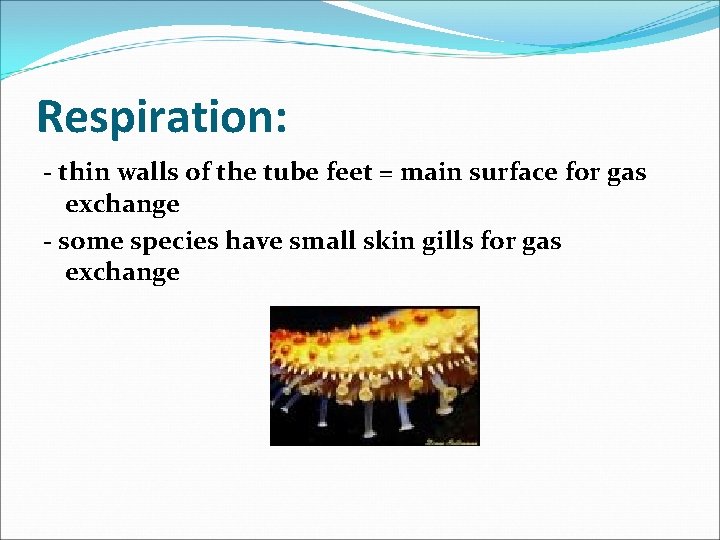
Respiration: - thin walls of the tube feet = main surface for gas exchange - some species have small skin gills for gas exchange
Internal Transport: - gas exchange and metabolic waste disposal occurs through tube feet and skin gills - distribution of nutrients = digestive glands and internal fluids
Excretion: - excrete feces through anus (with exception of brittle stars which lack anus)
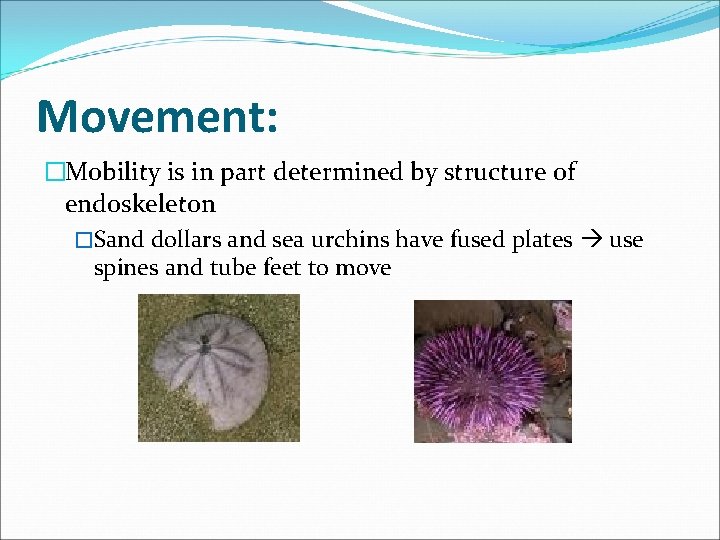
Movement: �Mobility is in part determined by structure of endoskeleton �Sand dollars and sea urchins have fused plates use spines and tube feet to move
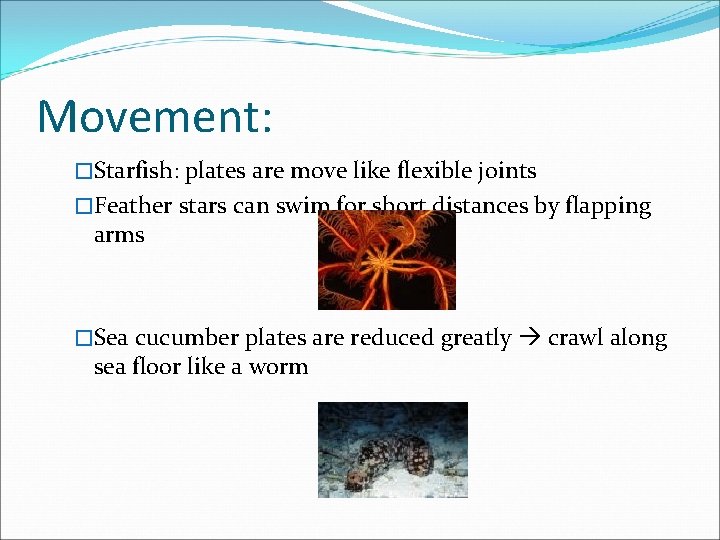
Movement: �Starfish: plates are move like flexible joints �Feather stars can swim for short distances by flapping arms �Sea cucumber plates are reduced greatly crawl along sea floor like a worm
Reproduction: �Most are either male or female (some hermaphrodites) �Starfish can reproduce asexually by regeneration when ripped apart (Must include some portion of central ring!) �Starfish release sperm and eggs into the water �Larvae have bilateral symmetry �Metamorph into adult with radial symmetry
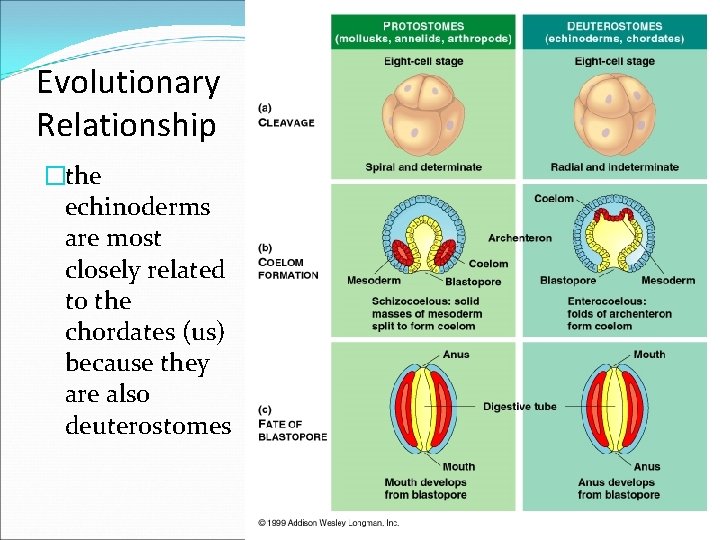
Evolutionary Relationship �the echinoderms are most closely related to the chordates (us) because they are also deuterostomes
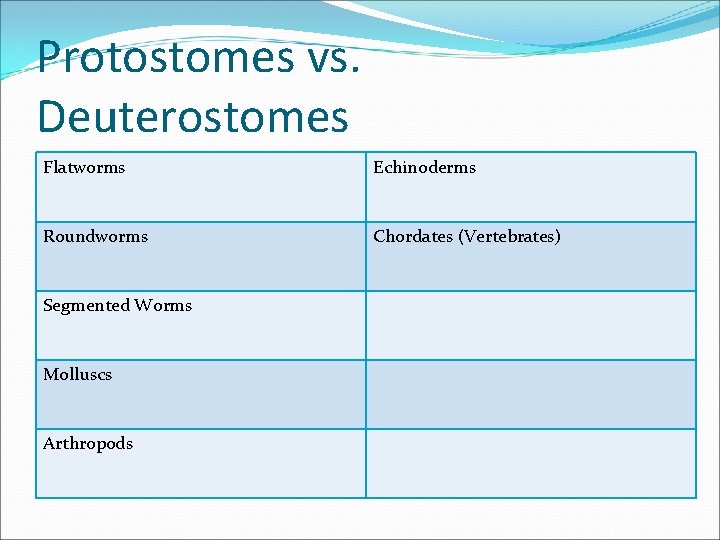
Protostomes vs. Deuterostomes Flatworms Echinoderms Roundworms Chordates (Vertebrates) Segmented Worms Molluscs Arthropods
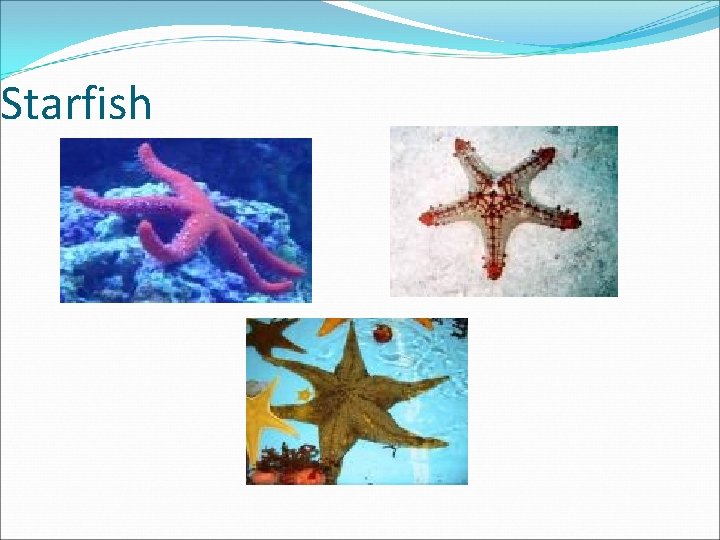
Starfish
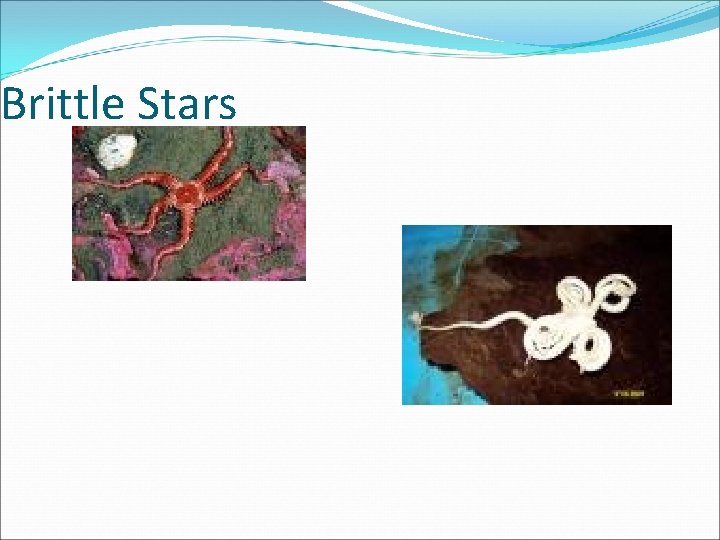
Brittle Stars
Sea Urchin and Sand Dollars
Sea Cucumbers
Sea Lilies and Feather Stars
Echinoderm Questions: • What characteristic is shared by all echinoderms? • Why are echinoderms considered to be most closely related to chordates? • What kind of symmetry do echinoderms have? • What is the purpose of the water vascular system in starfish? • • Do starfish have internal or external fertilization? What is a required part for a piece of a starfish to regenerate successfully?