
Phylum Cnidarians Include Hydras jellyfish sea anemones corals





- Slides: 12
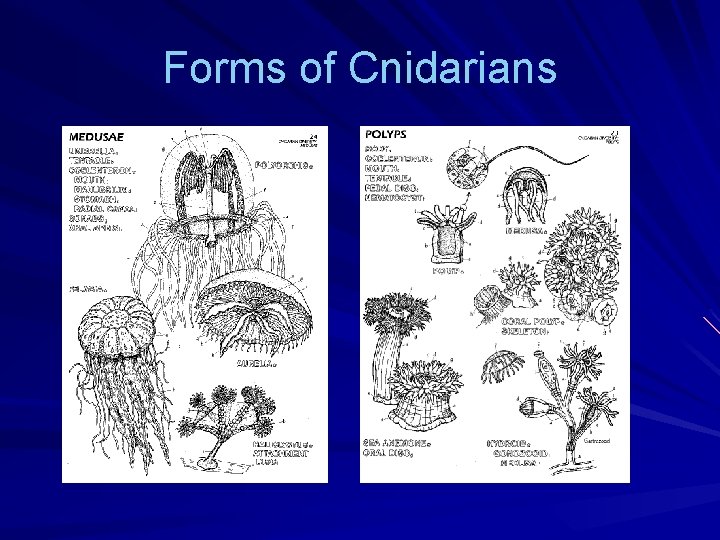
Phylum Cnidarians Include Hydras, jellyfish, sea anemones & corals Radially symmetrical Two basic forms: –Polyp: Cylindrical form which attach bases to substratum –Medusa: Flattened, mouth down version of the polyp. Moves freely
Forms of Cnidarians
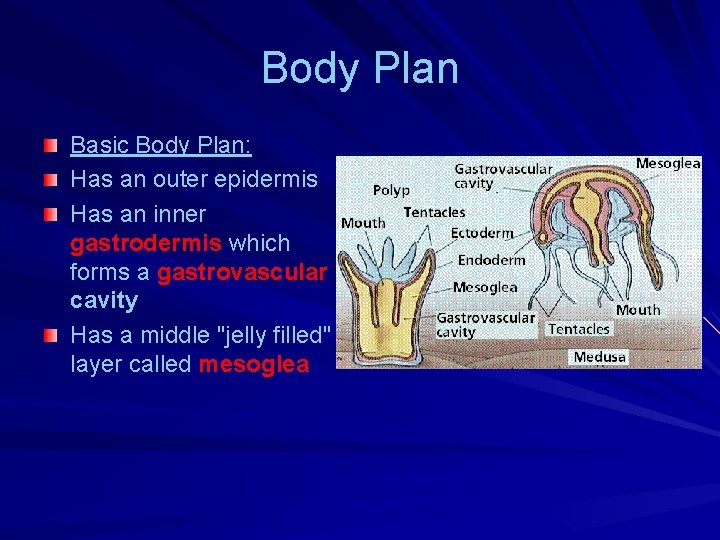
Body Plan Basic Body Plan: Has an outer epidermis Has an inner gastrodermis which forms a gastrovascular cavity Has a middle "jelly filled" layer called mesoglea
Cnidocytes Cnidarians are predators which have tentacles possessing batteries of special cells called Cnidocytes contain special stining capsules called nematocysts. When triggered, these cells shoot out a discharge thread which can entangle and/or poison it's intended prey
Reproduction – Reproduction can occur sexually by fertilization of egg and sperm forming larvae, which for jellyfish is called a planula (during medusa stage) – Reproduction can also occur asexually through budding (during polyp stage) 4 Major classes – Class Hydrozoa: Hydras – Class Scyphozoa: Jellyfish – Class Anthozoa: Anemones and corals – Class Cubozoa: box jellyfish
Class Hydrozoa: The Hydras Mostly polyp form during their life Generally microscopic, found in intertidal zones Do not display senescence (they do not age/deteriorate) Example: Portuguese Man-o-war, Fire coral!
Class Scyphozoa: The Jellies Generally referred to as jellyfish Medusa stage is dominant Can alternate between sexual/asexual reproduction Aggressive predators, and can be dangerous to humans Jelly
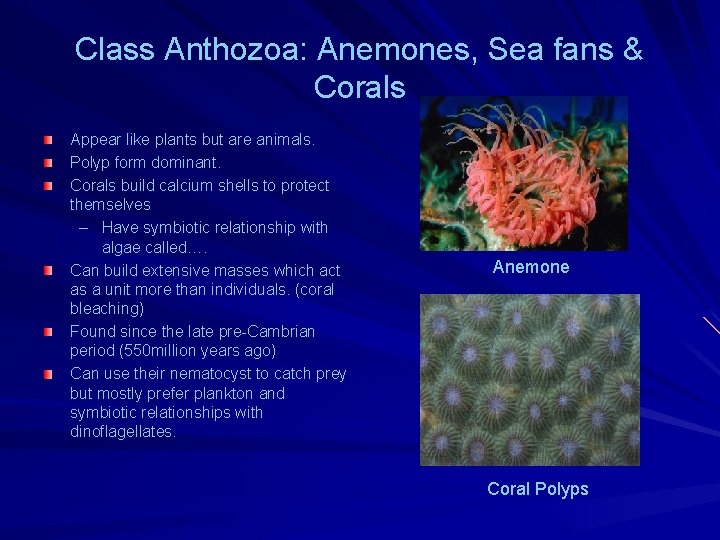
Class Anthozoa: Anemones, Sea fans & Corals Appear like plants but are animals. Polyp form dominant. Corals build calcium shells to protect themselves – Have symbiotic relationship with algae called…. Can build extensive masses which act as a unit more than individuals. (coral bleaching) Found since the late pre-Cambrian period (550 million years ago) Can use their nematocyst to catch prey but mostly prefer plankton and symbiotic relationships with dinoflagellates. Anemone Coral Polyps
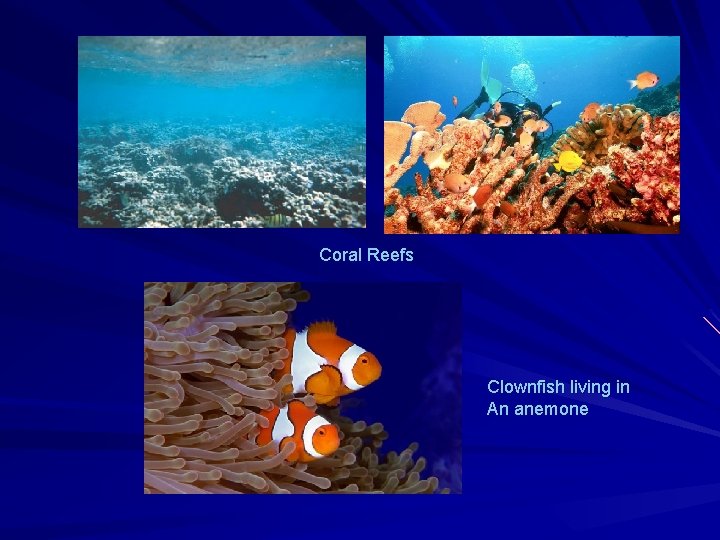
Coral Reefs Clownfish living in An anemone
Cubozoans Similar to scyphozoan except they have 4 tentacles, swim a bit faster, and have “seeing” ability. Get their name from their box-like appearance. Most deadly jellyfish, can be lethal.
Cassiopea Upside down jellyfish (scyphozoan) Very common in FL, often in mangrove ecosystems Mostly rely on zooxanthellae Easily confused for anemones Some crabs carry them on their back for defense.