
Phylum Cnidaria SYMMETRY Radial or Biradial Advantageous because
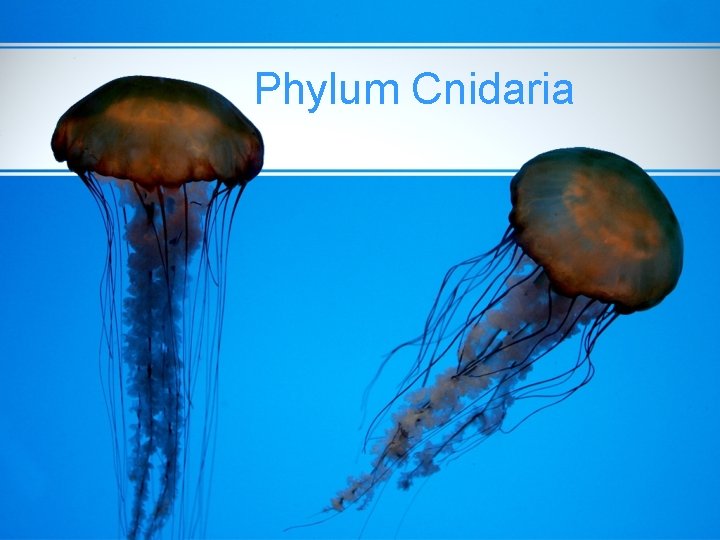
Phylum Cnidaria

SYMMETRY • Radial or Biradial – Advantageous because it allows for sensory structures are evenly distributed around the body.
DIPLOBLASTIC • Tissue level of organization • Ectoderm forms epidermis (outer layer) • Endoderm forms gastrodermis (inner layer) • Mesoglea contains some cells but does not have true tissues.
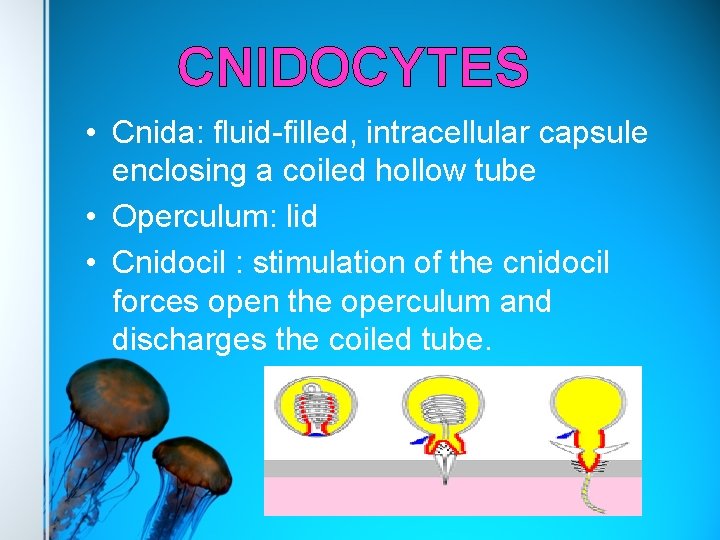
CNIDOCYTES • Cnida: fluid-filled, intracellular capsule enclosing a coiled hollow tube • Operculum: lid • Cnidocil : stimulation of the cnidocil forces open the operculum and discharges the coiled tube.
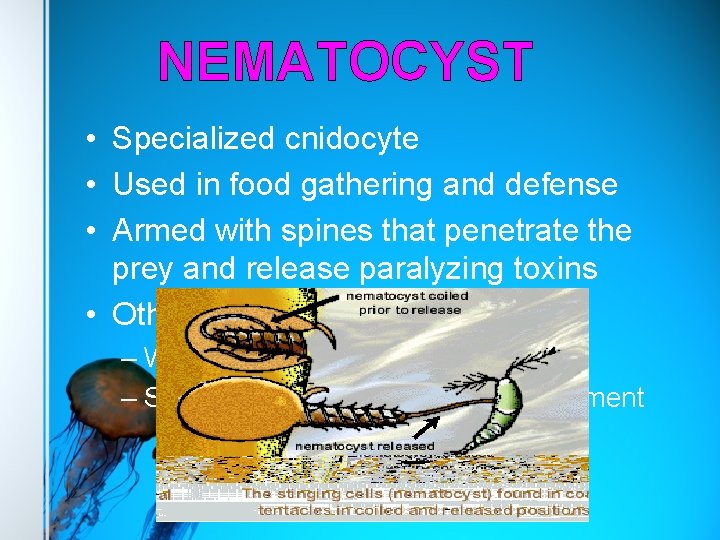
NEMATOCYST • Specialized cnidocyte • Used in food gathering and defense • Armed with spines that penetrate the prey and release paralyzing toxins • Other cnidocytes – Wrap around prey – Sticky secretions that help in attachment
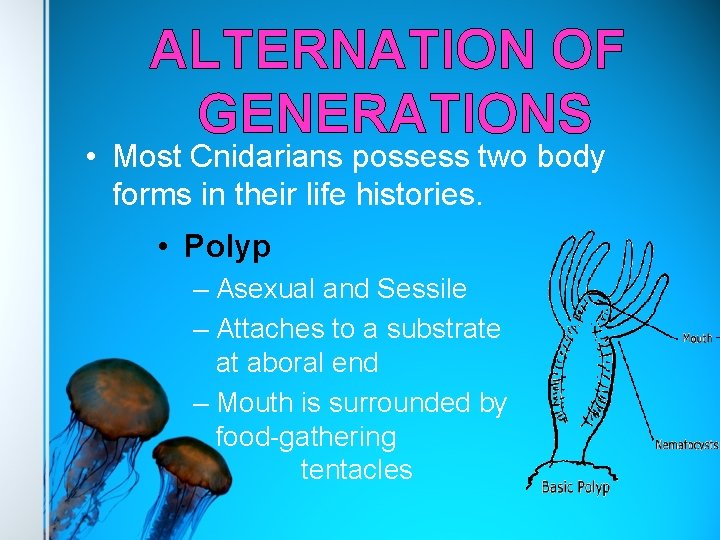
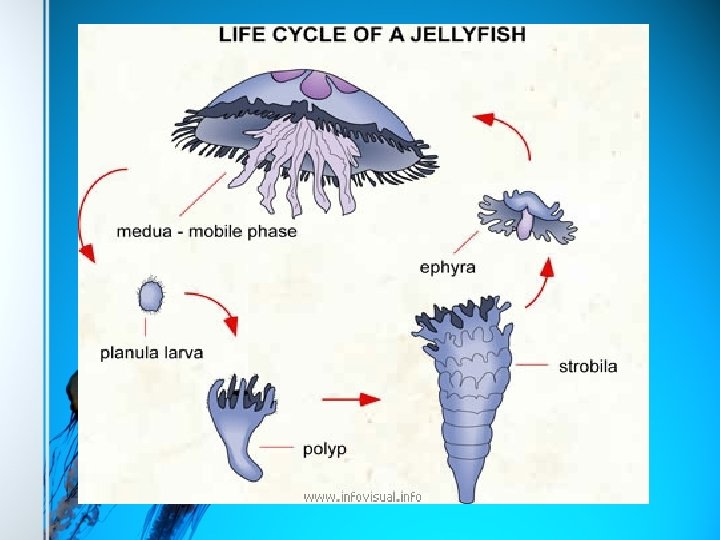
ALTERNATION OF GENERATIONS • Most Cnidarians possess two body forms in their life histories. • Polyp – Asexual and Sessile – Attaches to a substrate at aboral end – Mouth is surrounded by food-gathering tentacles
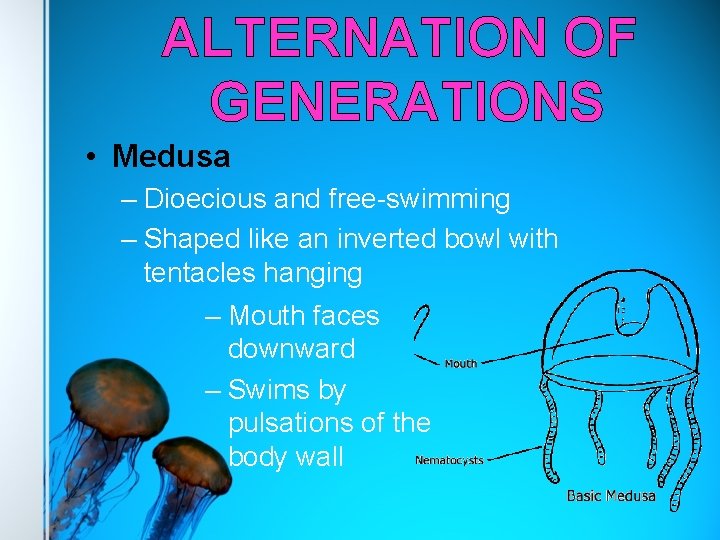
ALTERNATION OF GENERATIONS • Medusa – Dioecious and free-swimming – Shaped like an inverted bowl with tentacles hanging – Mouth faces downward – Swims by pulsations of the body wall
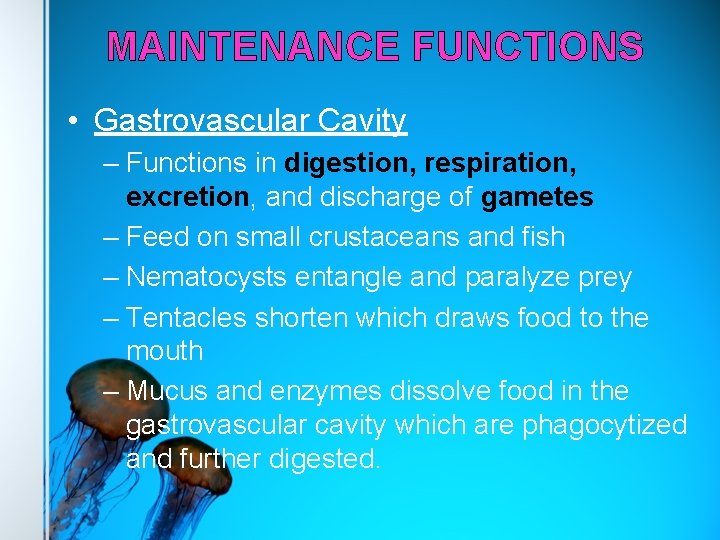
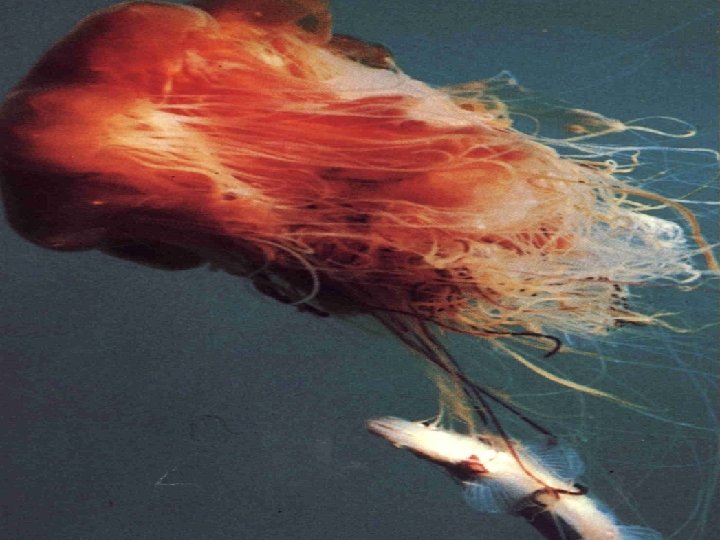
MAINTENANCE FUNCTIONS • Gastrovascular Cavity – Functions in digestion, respiration, excretion, and discharge of gametes – Feed on small crustaceans and fish – Nematocysts entangle and paralyze prey – Tentacles shorten which draws food to the mouth – Mucus and enzymes dissolve food in the gastrovascular cavity which are phagocytized and further digested.

MAINTENANCE FUNCTIONS • Hydrostatic skeleton – Water or fluids in body cavity and against which contractile elements of the body wall act. – Think of a balloon – Polyps: somersault, glide or inch across the substrate – Medusa: swim or float
MAINTENANCE FUNCTIONS • Nerve Net – Simple nervous system – Nerve cells located below epidermis and interconnect…this creates a nerve net. – The net conducts impulses around the body in response to a localized stimulus. – Response changes due to stimulus strength.
REPRODUCTION • Most are separate sexes • Eggs and sperm are released into gastrovascular cavity • Free swimming larva called planula • Can also bud (become medusa)
KINGDOM: Animalia PHYLUM: Cnidaria CLASSES: • • • Hydrozoa Scyphozoa Staurozoa Cubozoa Anthozoa
CLASS HYDROZOA • • Small, relatively common Mostly marine, some freshwater Alternation of generations Nematocysts are only in the epidermis • Gametes are released to the outside • Mesoglea does not contain cells
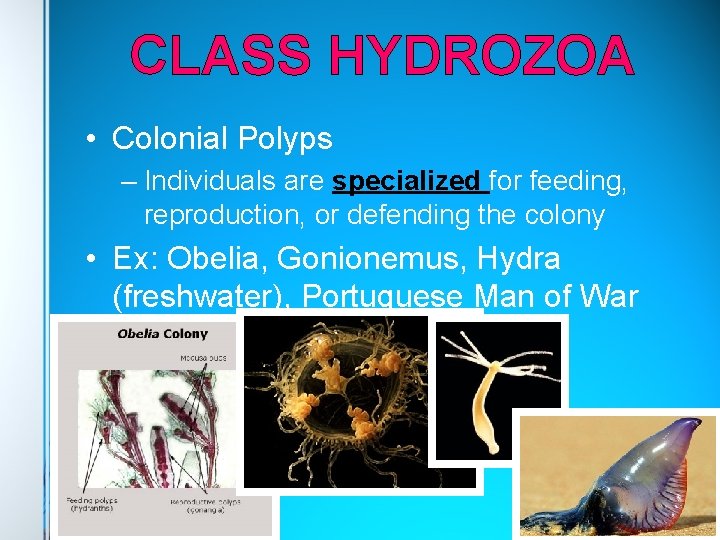
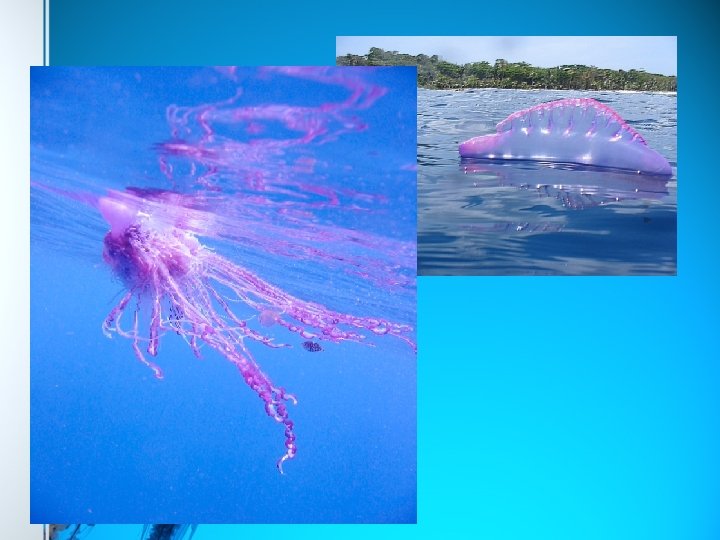
CLASS HYDROZOA • Colonial Polyps – Individuals are specialized for feeding, reproduction, or defending the colony • Ex: Obelia, Gonionemus, Hydra (freshwater), Portuguese Man of War
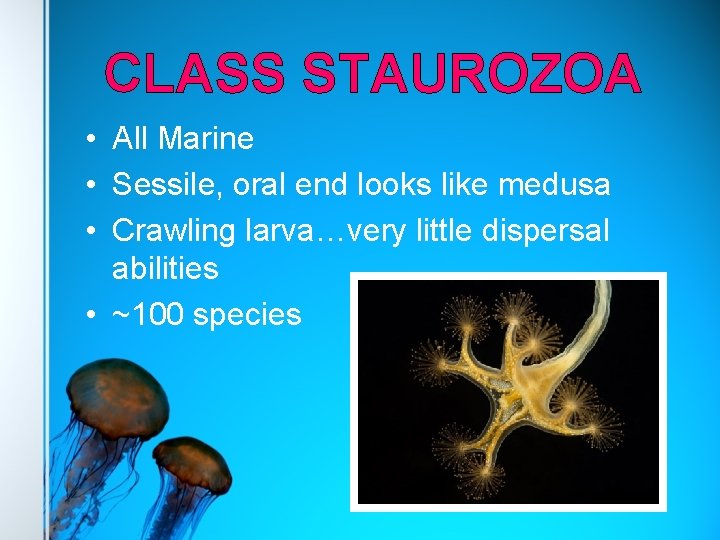
CLASS STAUROZOA • All Marine • Sessile, oral end looks like medusa • Crawling larva…very little dispersal abilities • ~100 species
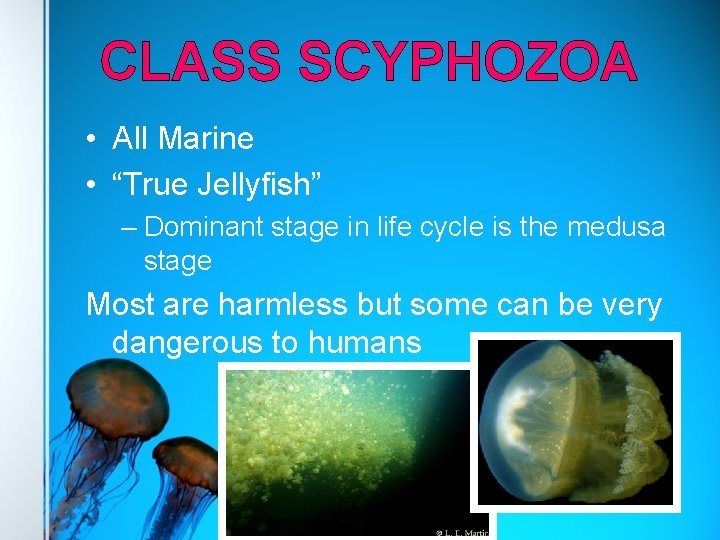
CLASS SCYPHOZOA • All Marine • “True Jellyfish” – Dominant stage in life cycle is the medusa stage Most are harmless but some can be very dangerous to humans
Page Title • Note 1 • Note 2 • Note 3
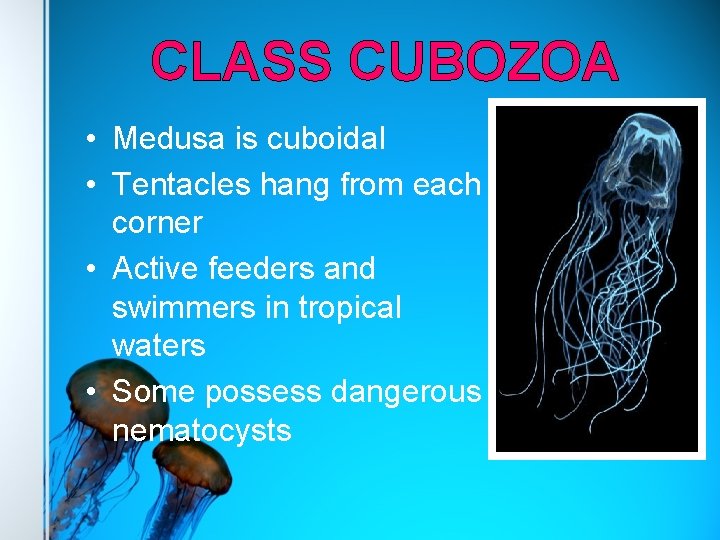
CLASS CUBOZOA • Medusa is cuboidal • Tentacles hang from each corner • Active feeders and swimmers in tropical waters • Some possess dangerous nematocysts
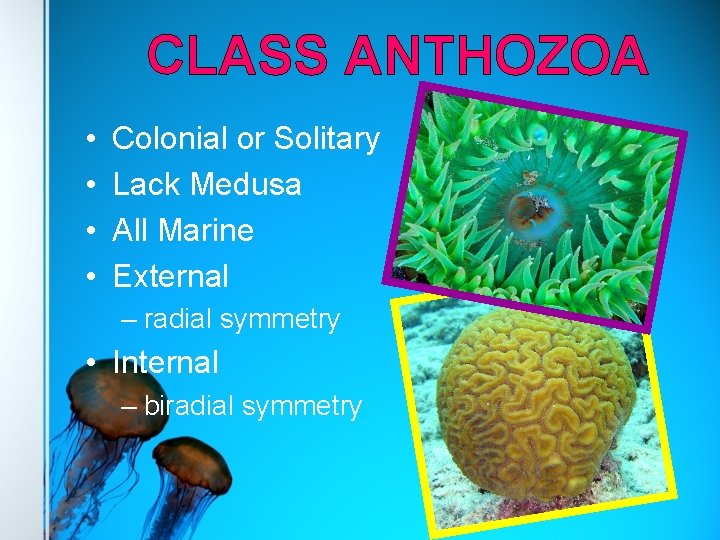
CLASS ANTHOZOA • • Colonial or Solitary Lack Medusa All Marine External – radial symmetry • Internal – biradial symmetry
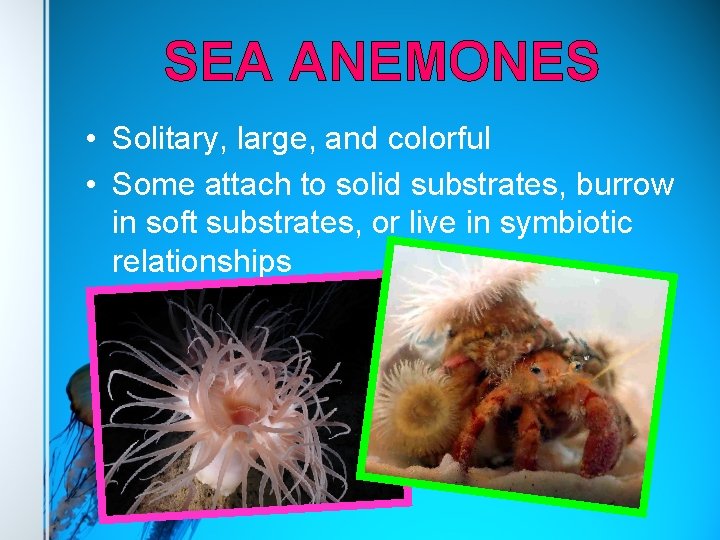
SEA ANEMONES • Solitary, large, and colorful • Some attach to solid substrates, burrow in soft substrates, or live in symbiotic relationships
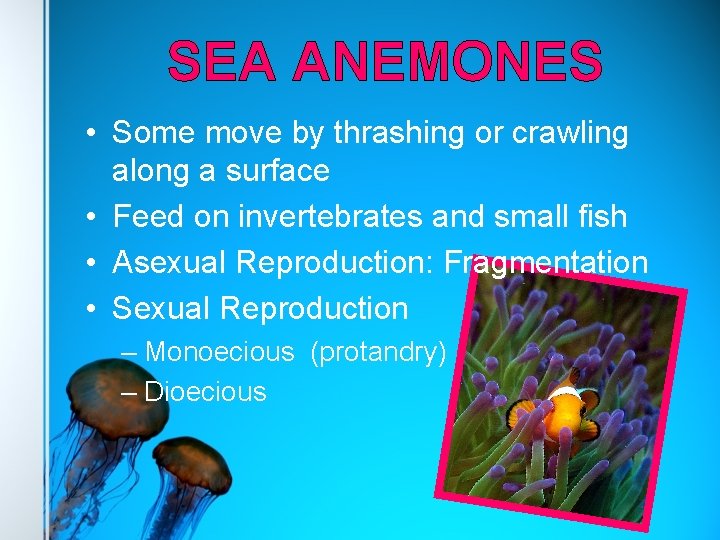
SEA ANEMONES • Some move by thrashing or crawling along a surface • Feed on invertebrates and small fish • Asexual Reproduction: Fragmentation • Sexual Reproduction – Monoecious (protandry) – Dioecious
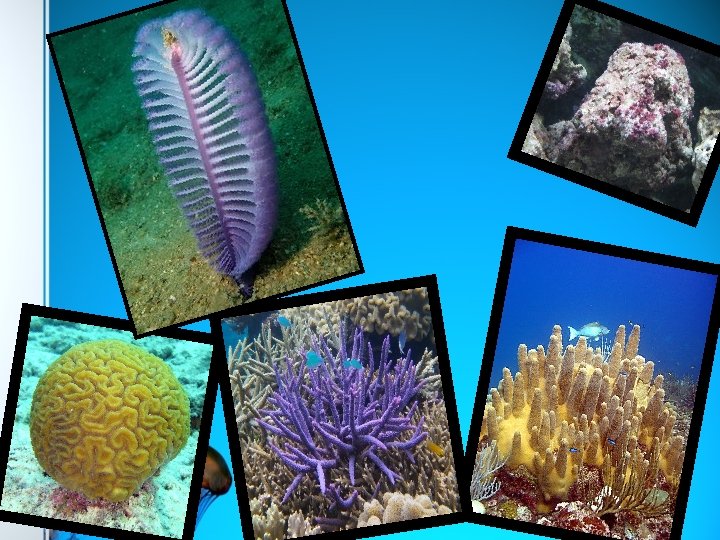
CORAL • Stony Coral – Look like anemones – Have a calcium carbonate exoskeleton that they can retract into when threatened • Soft Coral – Do not have the Ca. CO 3 exoskeleton
SYMBIOTIC RELATIONSHIPS • Sea anemone/Clownfish • Coral/Zooxanthellae – Protists that undergo photosynthesis and give the coral their color – Also release carbon to build exoskeletons
- Slides: 26