
Phylum Cnidaria Phylum Cnidaria stinging cell A k
- Slides: 17
Phylum Cnidaria
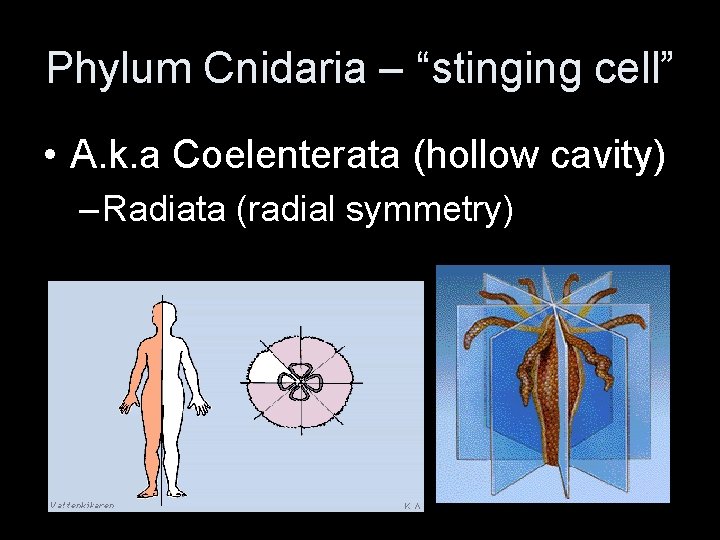
Phylum Cnidaria – “stinging cell” • A. k. a Coelenterata (hollow cavity) – Radiata (radial symmetry)
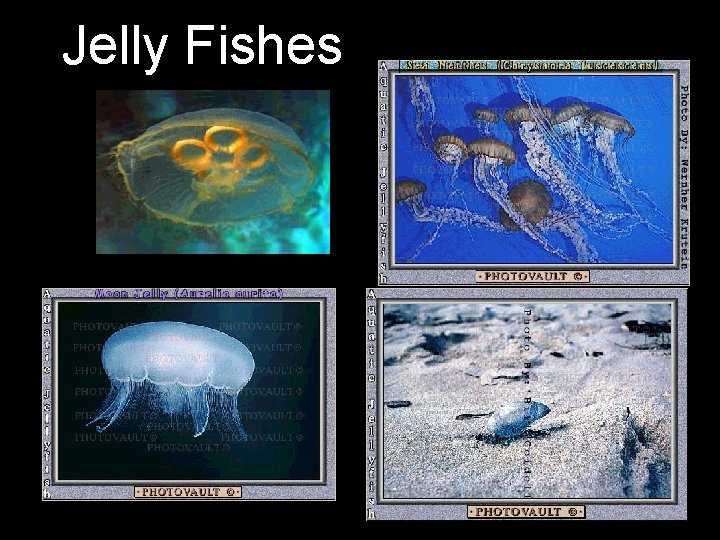
Jelly Fishes
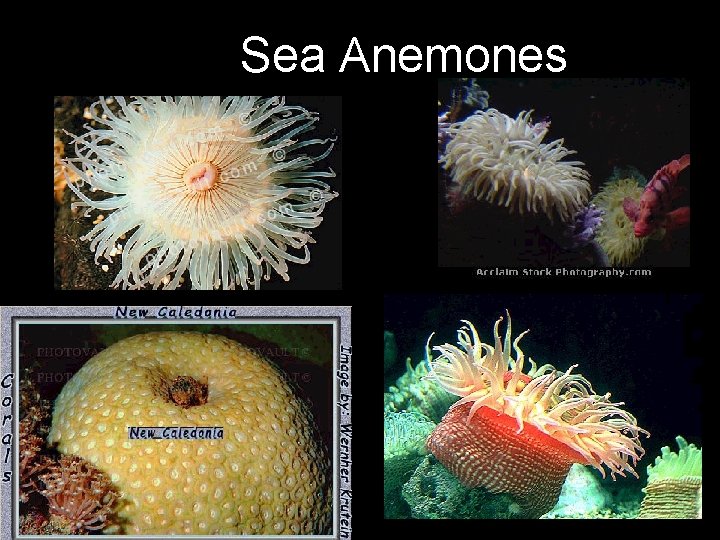
Sea Anemones
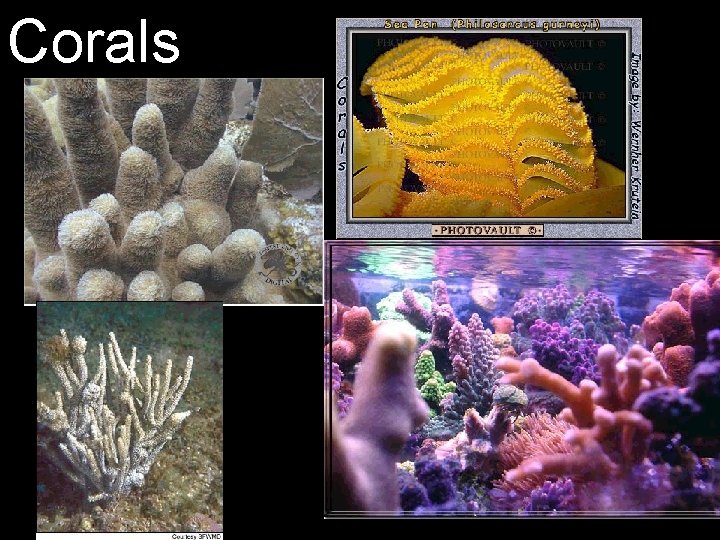
Corals
One step above sponges… • Differ from sponges - have rudimentary organs • Incomplete digestive & excretory systems • No blood or circulatory system
Classification • 3 Classes – Hydrozoa = Hydra – Scyphozoa = Jellyfish – Anthozoa = Sea anemones & coral
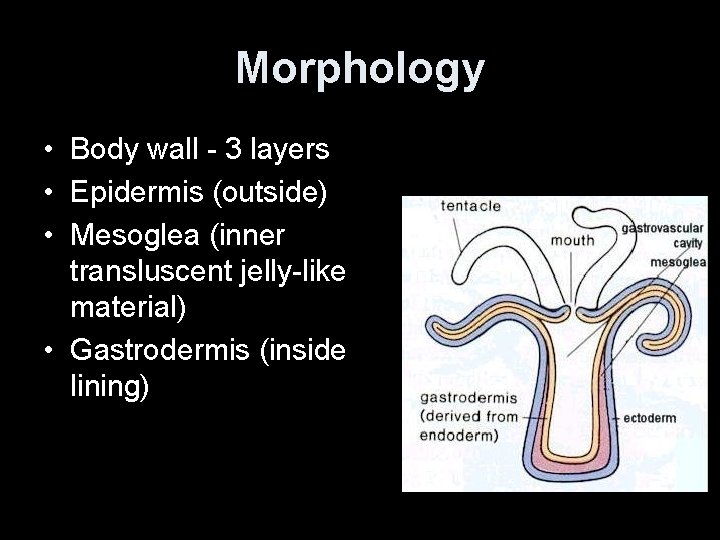
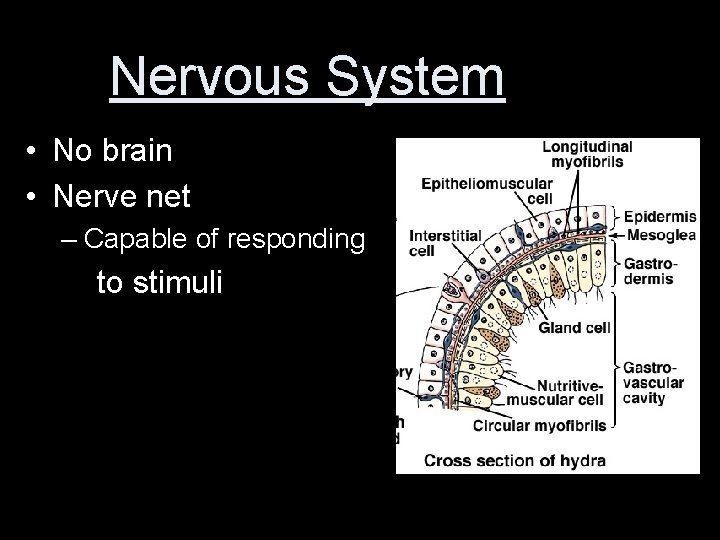
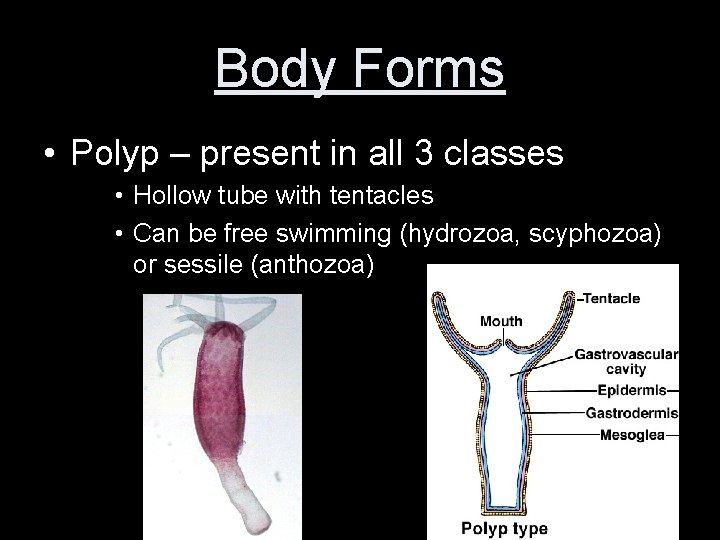
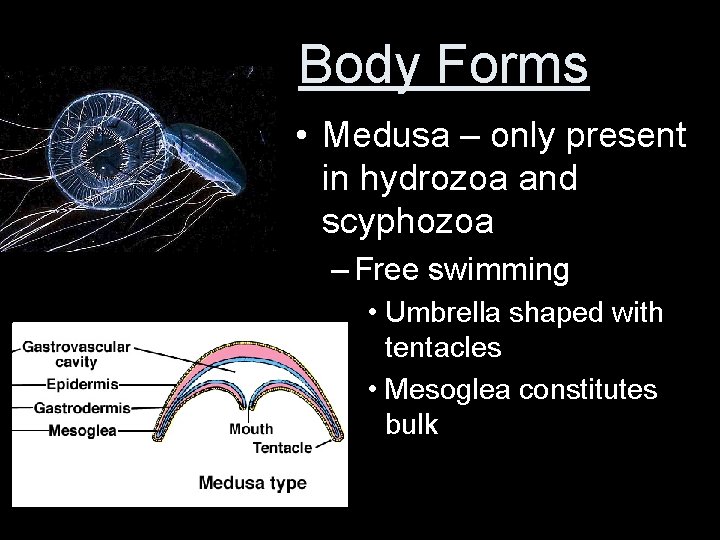
Morphology • Body wall - 3 layers • Epidermis (outside) • Mesoglea (inner transluscent jelly-like material) • Gastrodermis (inside lining)
Skeletal Structure • Corals secrete calcium carbonate to build exoskeleton • Most sea anemones and hydra use water pressure from inside body cavity (hydrostatic pressure) to maintain body form
Body Features • Mouth usually surrounded by tentacles (radial symmetry) – Tentacles covered in cnidocytes = specialized stinging cells • Nematocysts = Shoots like a harpoon from cnidocyte. Contains deadly toxin. • Gastrovascular cavity – Hollow digestive cavity – Mouth serves as entrance/exit point
Nervous System • No brain • Nerve net – Capable of responding to stimuli
Habitat • Aquatic, mostly marine – Hydra – Freshwater, independent, free swimming – Jellyfish – Marine, independent, free swimming – Coral & Anemone – Marine, sessile, colonial
Body Forms • Polyp – present in all 3 classes • Hollow tube with tentacles • Can be free swimming (hydrozoa, scyphozoa) or sessile (anthozoa)
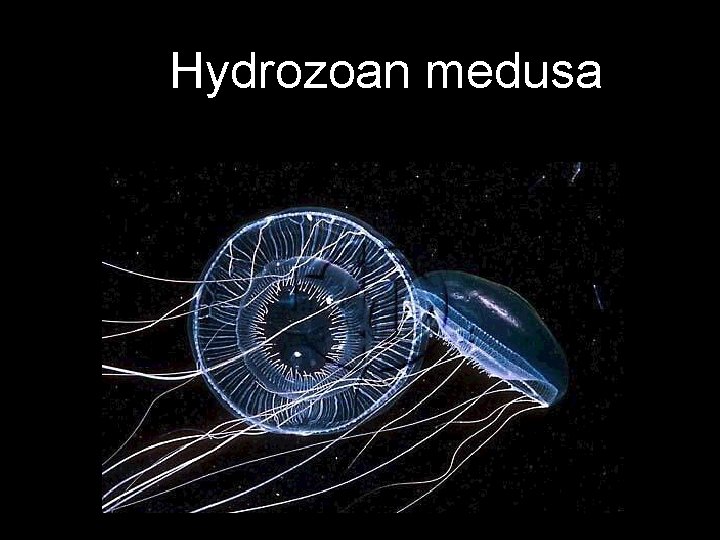
Body Forms • Medusa – only present in hydrozoa and scyphozoa – Free swimming • Umbrella shaped with tentacles • Mesoglea constitutes bulk
Reproduction • Hydrozoa & Scyphozoa – – Asexual reproduction in polyp form by budding – Sexual reproduction in medusa form • Anthozoa – – No medusa form, but can reproduce asexually (budding) or sexually
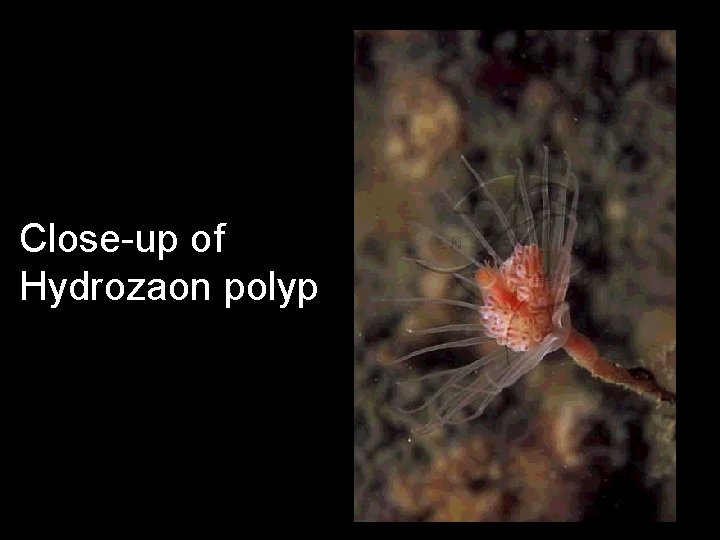
Close-up of Hydrozaon polyp
Hydrozoan medusa