
Phylum Cnidaria Hydra jellyfish coral sea anemones Phylum
- Slides: 73
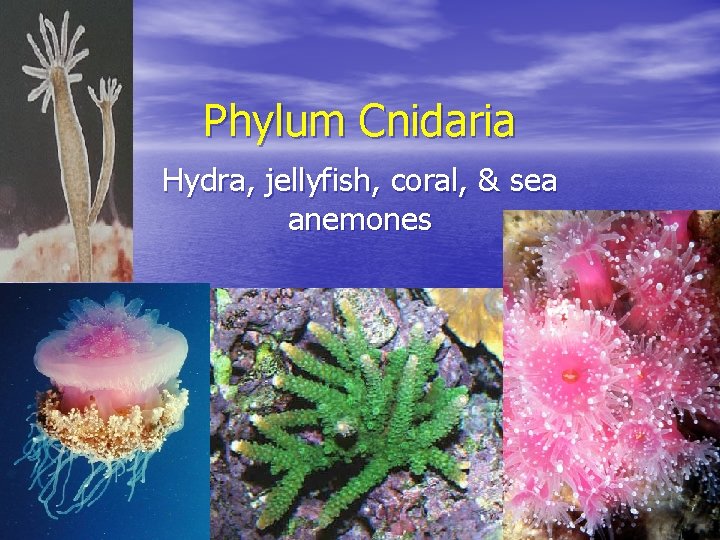
Phylum Cnidaria Hydra, jellyfish, coral, & sea anemones
Phylum Cnidaria Examples? • Sea anemones • Corals • Sea Pen • Sea Fan • Sea Plume • Hydra • Jelly fish • Portuguese Man o’ War • Box Jelly Fish
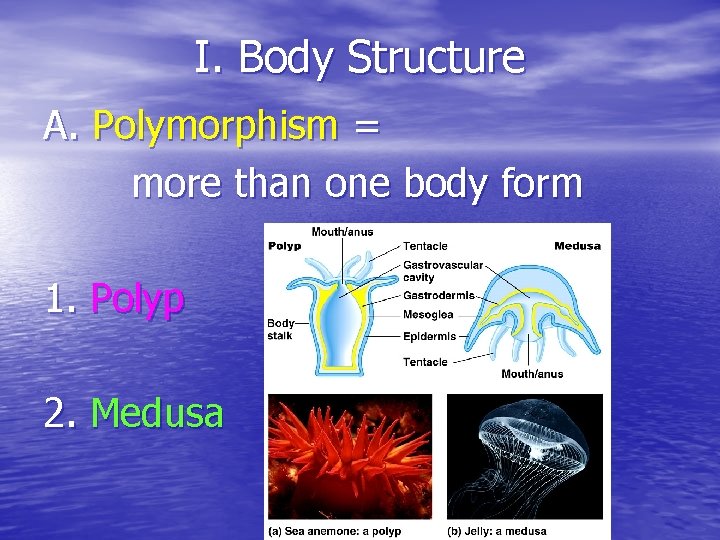
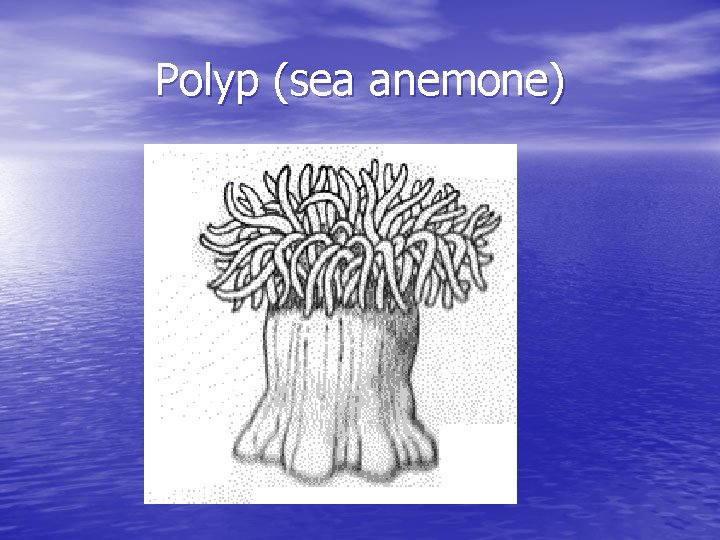
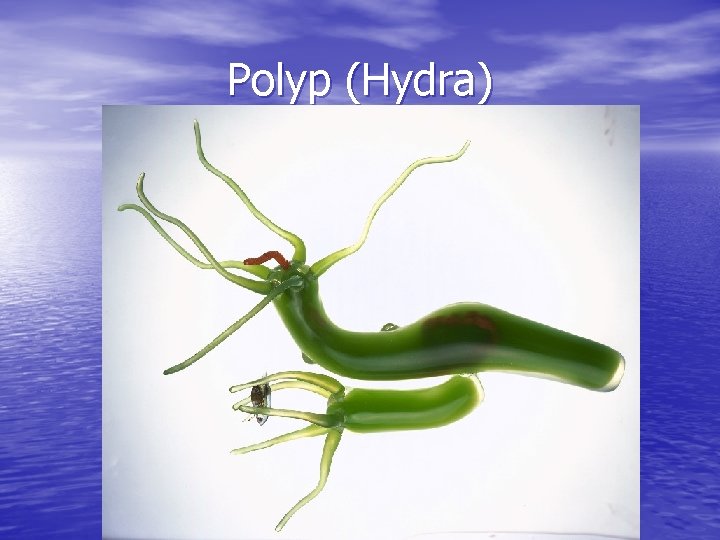
I. Body Structure A. Polymorphism = more than one body form 1. Polyp 2. Medusa
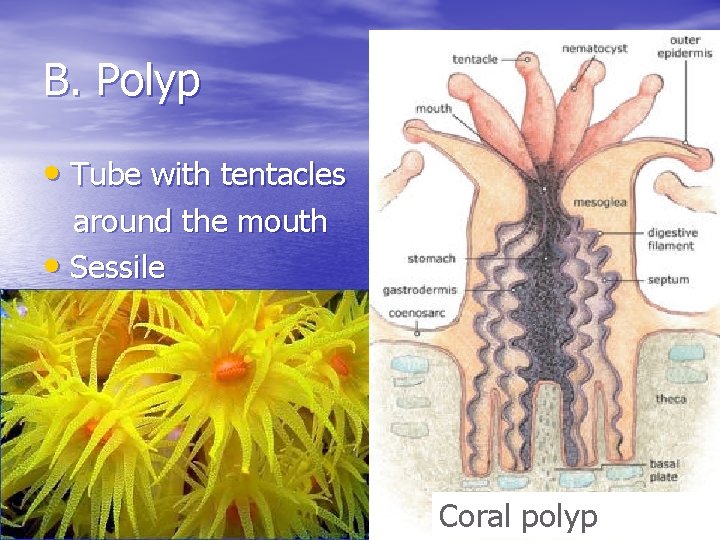
B. Polyp • Tube with tentacles around the mouth • Sessile Coral polyp
Polyp (sea anemone)
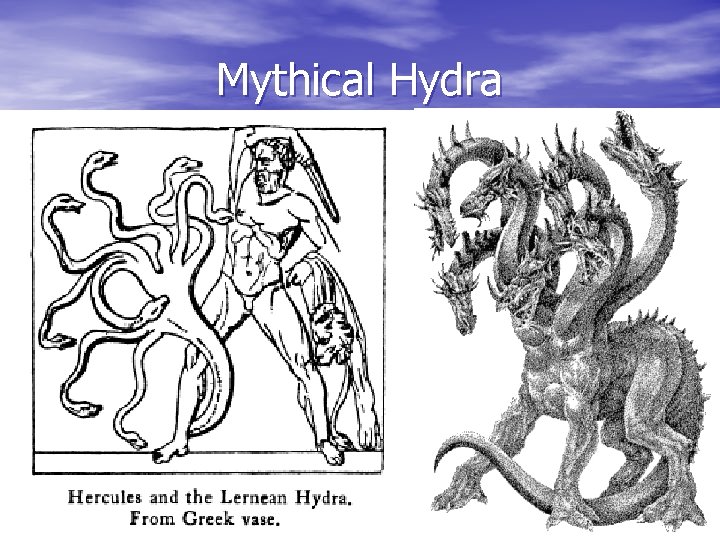
Mythical Hydra
Polyp (Hydra)
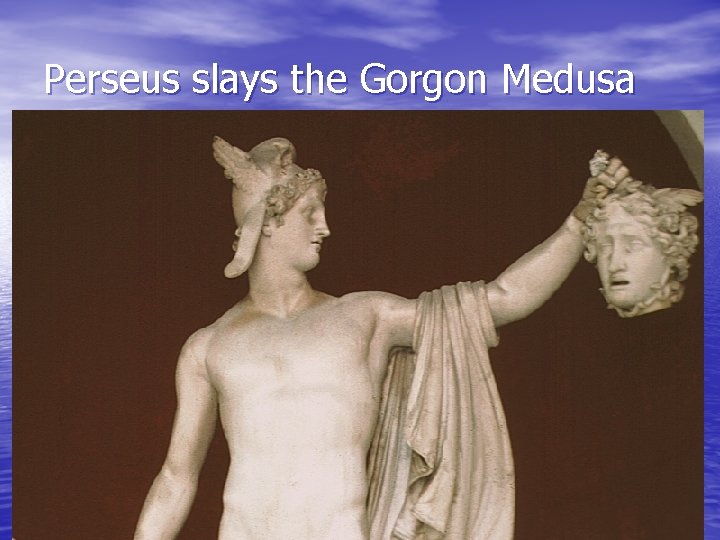
Perseus slays the Gorgon Medusa
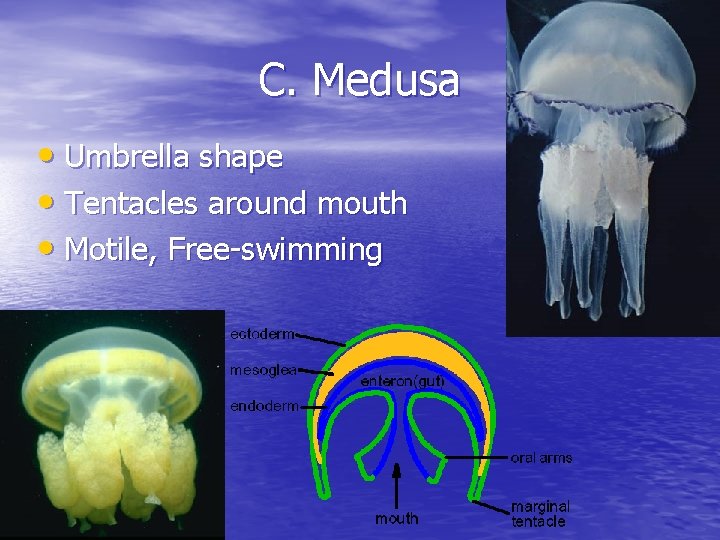
C. Medusa • Umbrella shape • Tentacles around mouth • Motile, Free-swimming
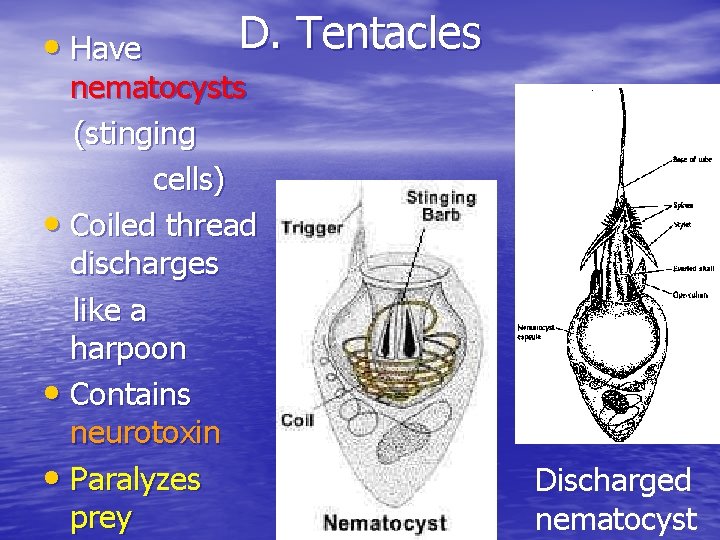
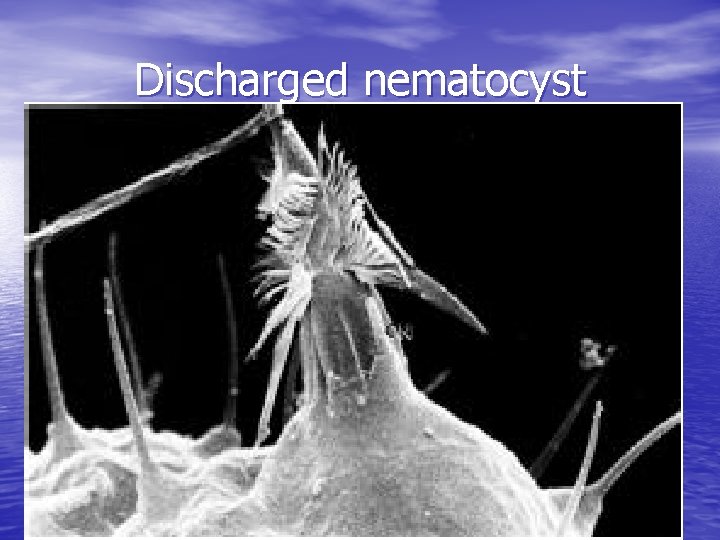
• Have D. Tentacles nematocysts (stinging cells) • Coiled thread discharges like a harpoon • Contains neurotoxin • Paralyzes prey Discharged nematocyst
Discharged nematocyst
II. Level of Organization A. Tissue B. No organs
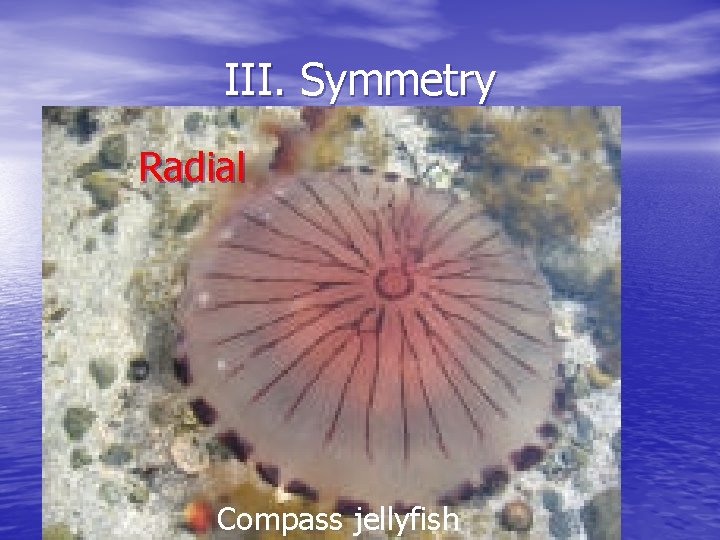
III. Symmetry Radial Compass jellyfish
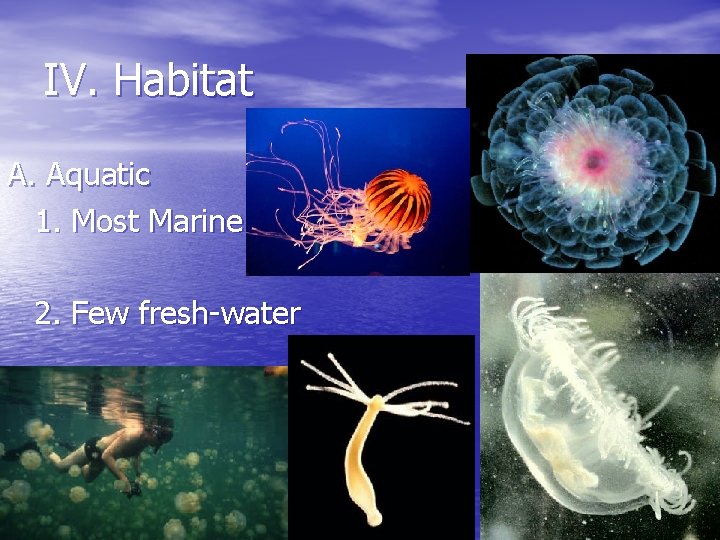
IV. Habitat A. Aquatic 1. Most Marine 2. Few fresh-water
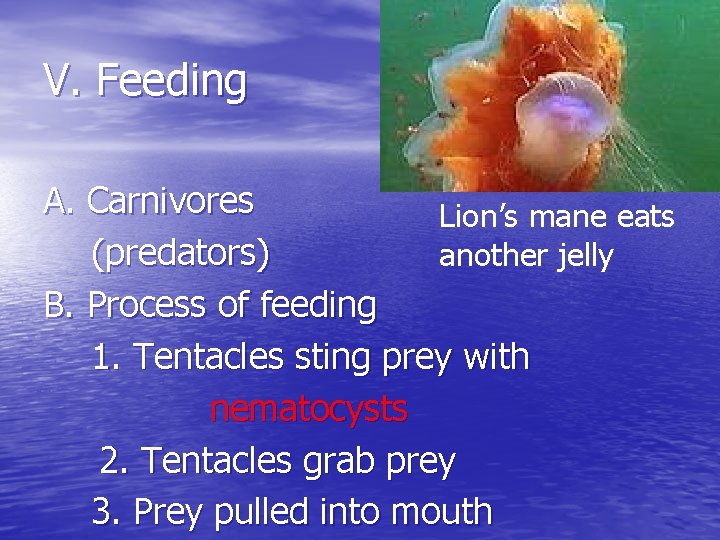
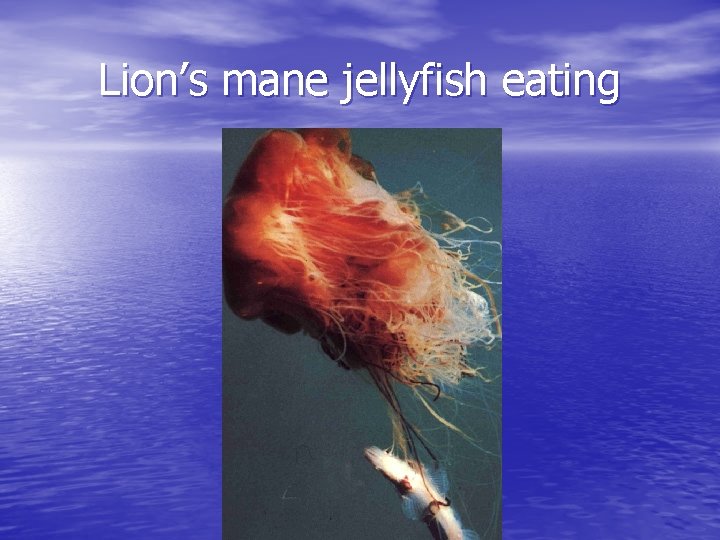
V. Feeding A. Carnivores Lion’s mane eats (predators) another jelly B. Process of feeding 1. Tentacles sting prey with nematocysts 2. Tentacles grab prey 3. Prey pulled into mouth
Process of feeding 4. Prey stuffed into gastro-vascular cavity (GVC)* 5. GVC makes enzymes, extracellular digestion 6. Undigested food back out mouth *incomplete digestive tract (no anus)
Lion’s mane jellyfish eating
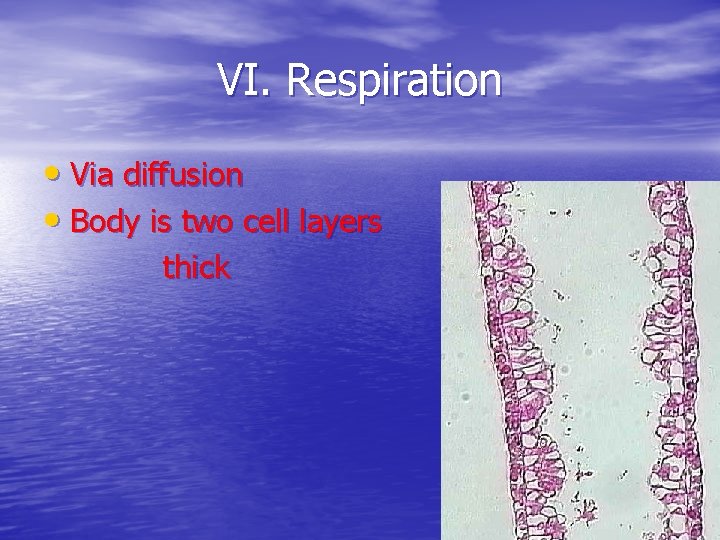
VI. Respiration • Via diffusion • Body is two cell layers thick
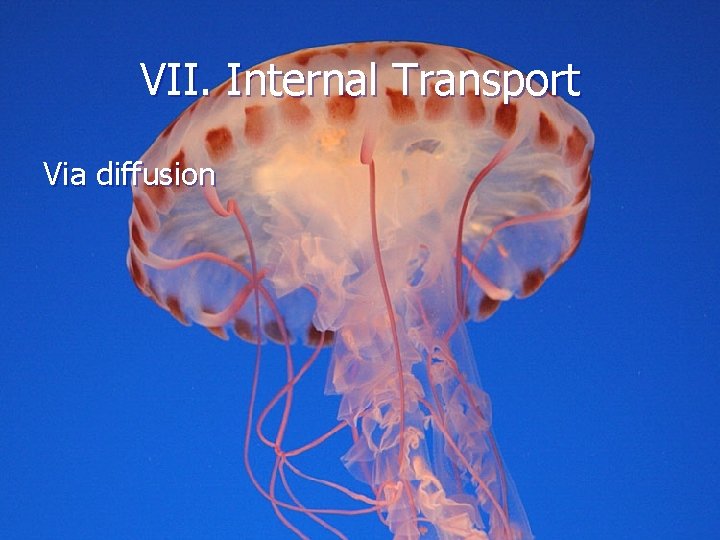
VII. Internal Transport Via diffusion
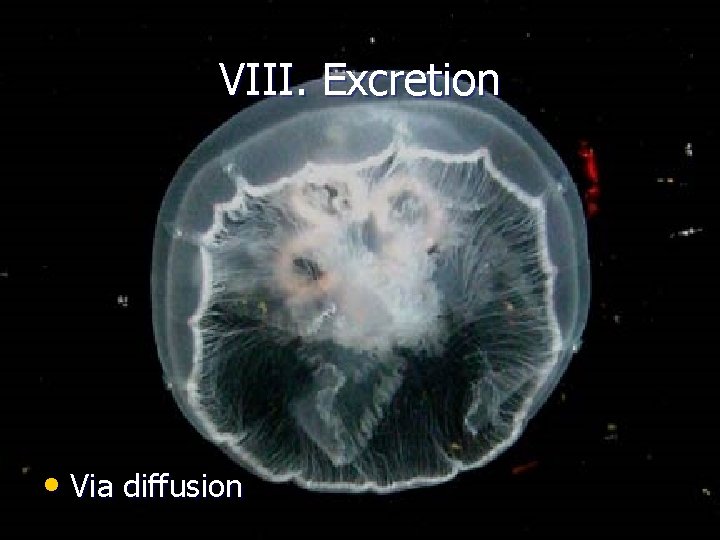
VIII. Excretion • Via diffusion
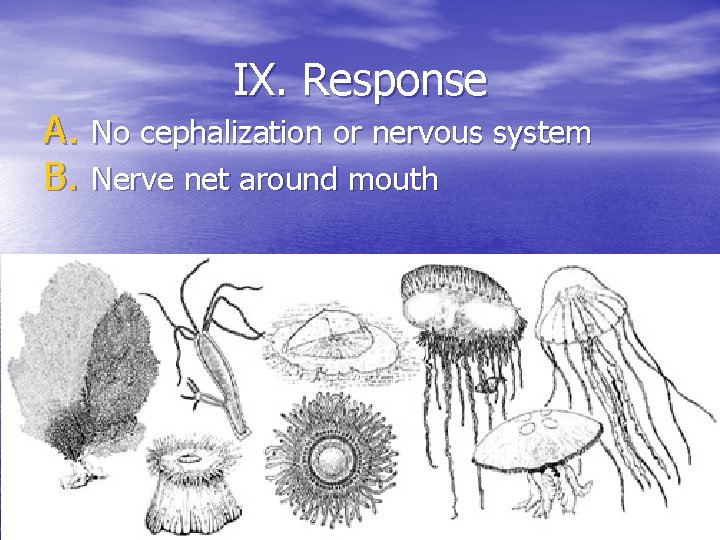
IX. Response A. No cephalization or nervous system B. Nerve net around mouth
IX. Response C. Sensory cells 1. Chemoreceptors (chemicals) 2. Thigmoreceptors (touch) 3. Photoreceptors (light) Ocelli (eyespots) 4. Statocysts (balance)
X. Locomotion A. Medusa motile, free-swimming B. Polyps sessile Exceptions: 1. Hydra tumbles on tentacles 2. Sea anemones glide on pedal disc
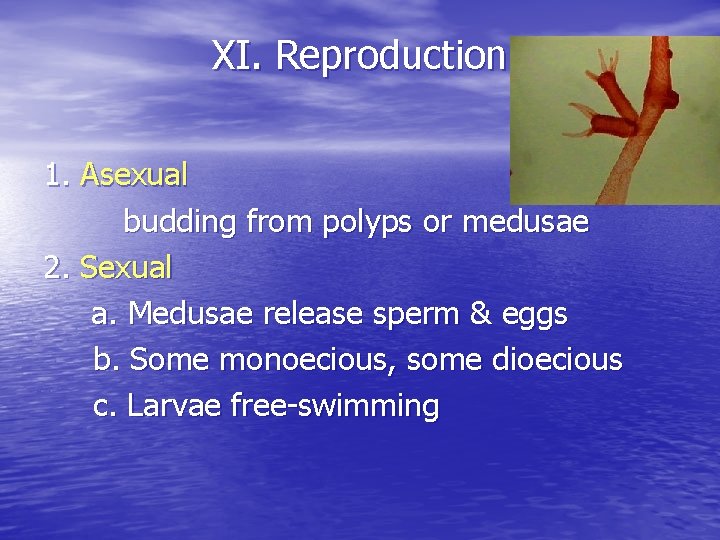
XI. Reproduction 1. Asexual budding from polyps or medusae 2. Sexual a. Medusae release sperm & eggs b. Some monoecious, some dioecious c. Larvae free-swimming
XII. Ecological Role A. Predators and prey B. Neurotoxins in medical research C. Coral – jewelry, building, reefs (surfing!) D. Coral reefs - habitat for many -great biodiversity - protect coastline E. Symbiosis with other organisms
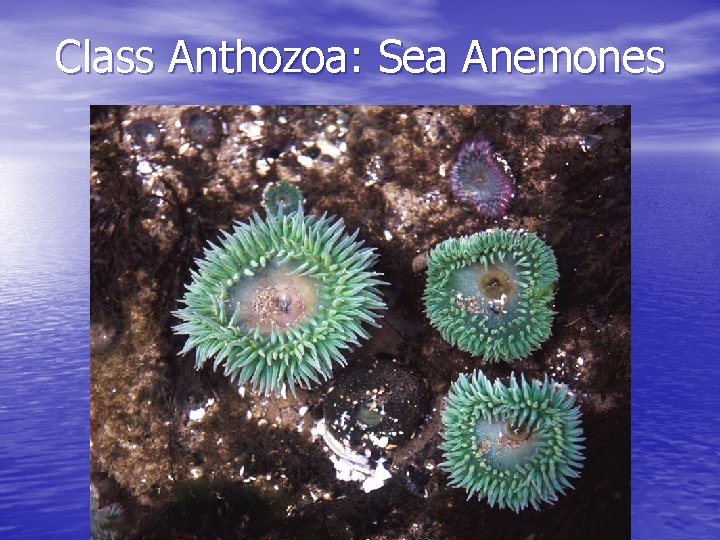
Class Anthozoa: Sea Anemones
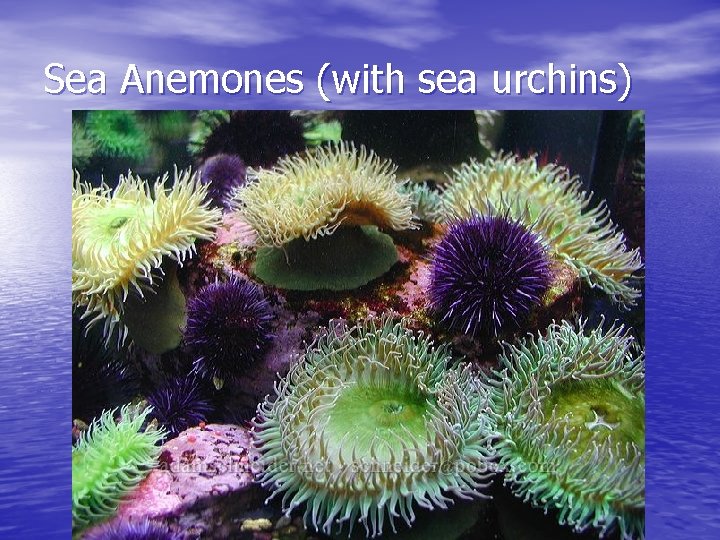
Sea Anemones (with sea urchins)
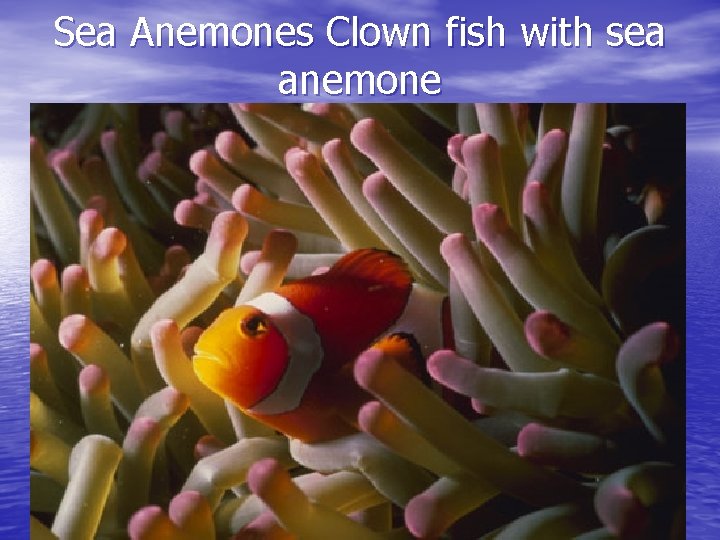
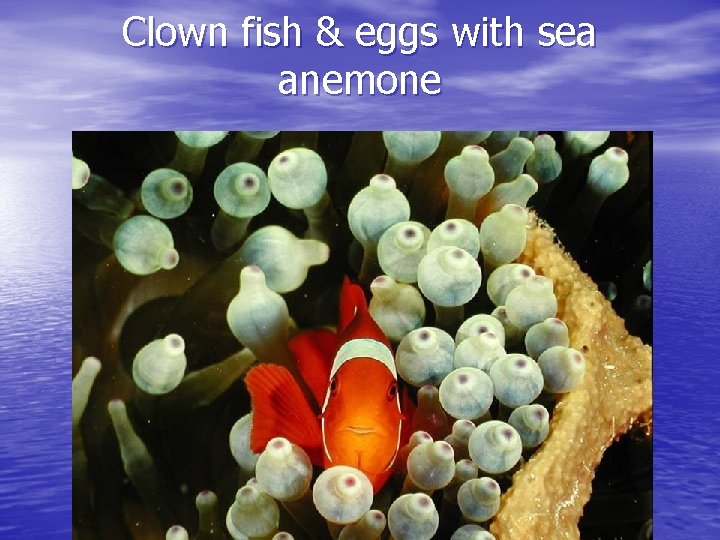
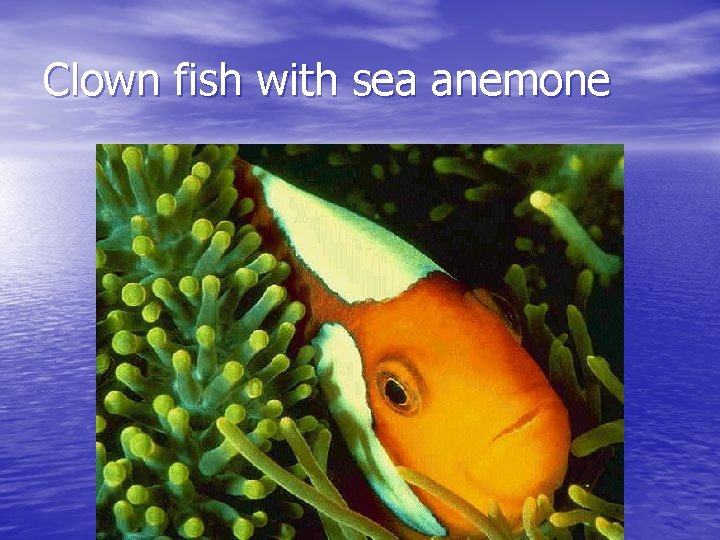
Sea Anemones Clown fish with sea anemone
Clown fish & eggs with sea anemone
Clown fish with sea anemone
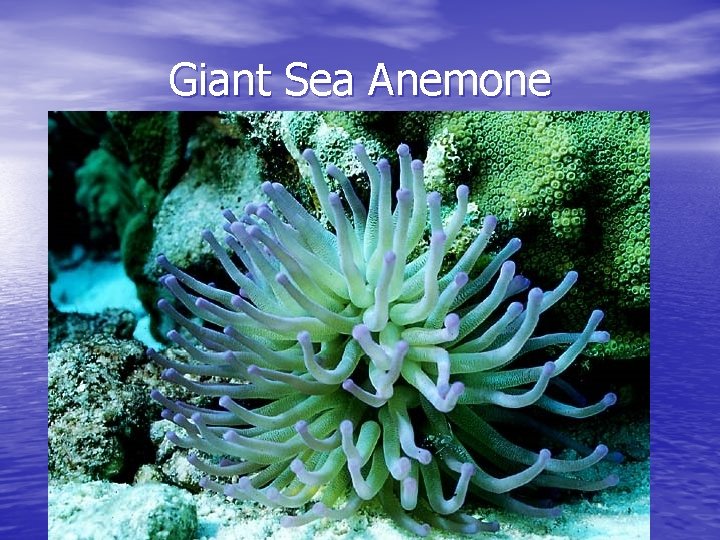
Giant Sea Anemone
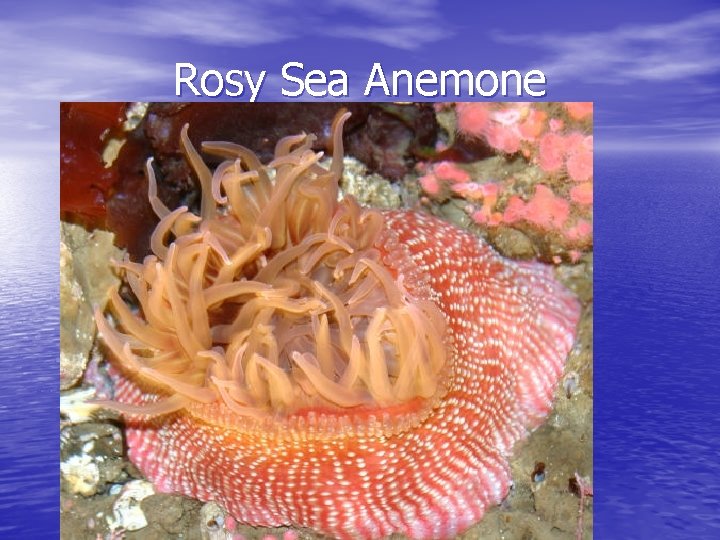
Rosy Sea Anemone
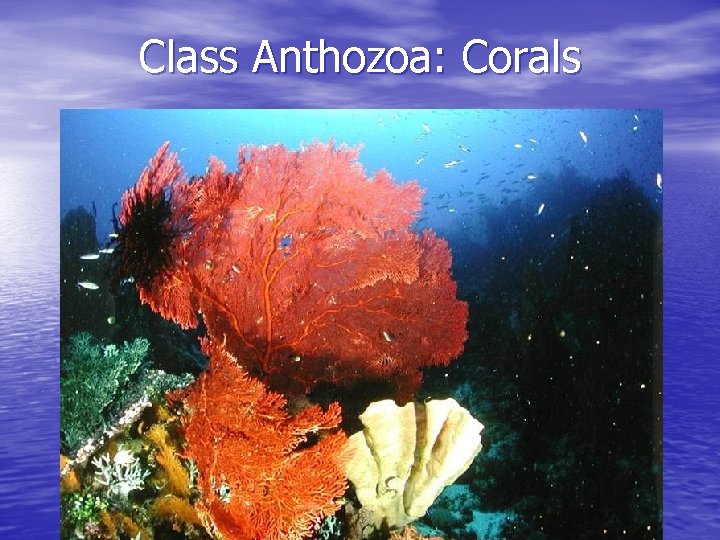
Class Anthozoa: Corals
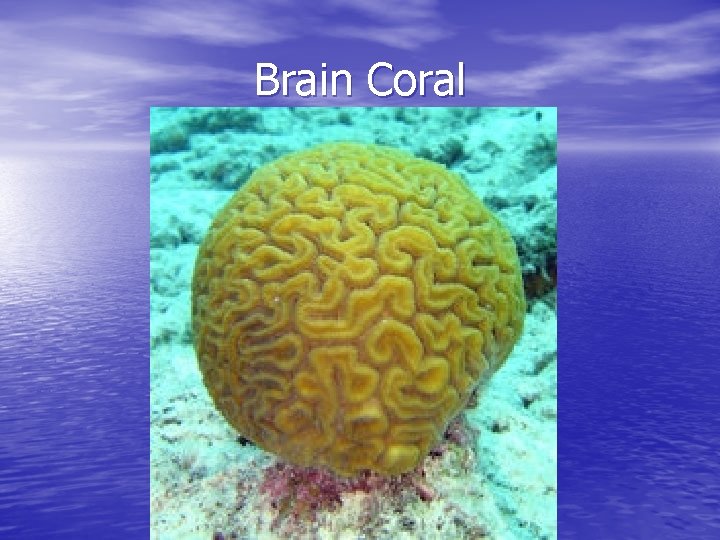
Brain Coral
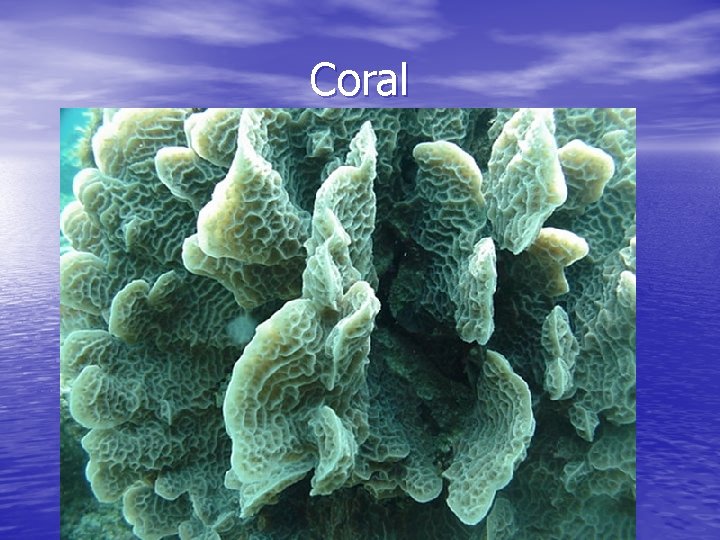
Coral
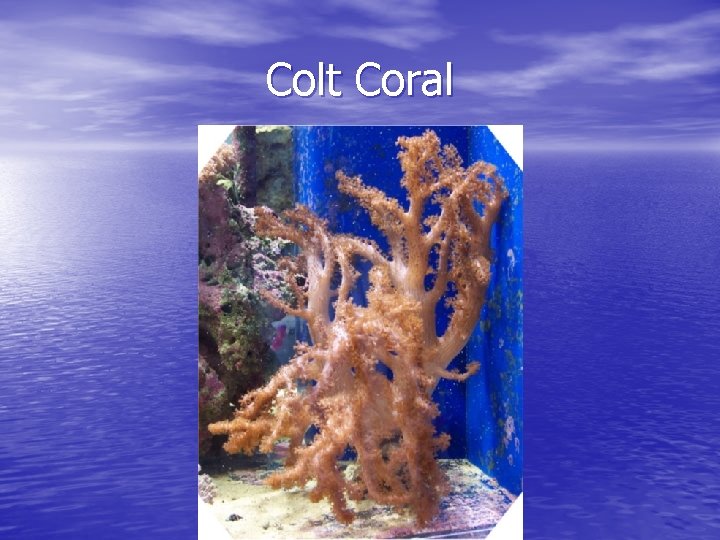
Colt Coral
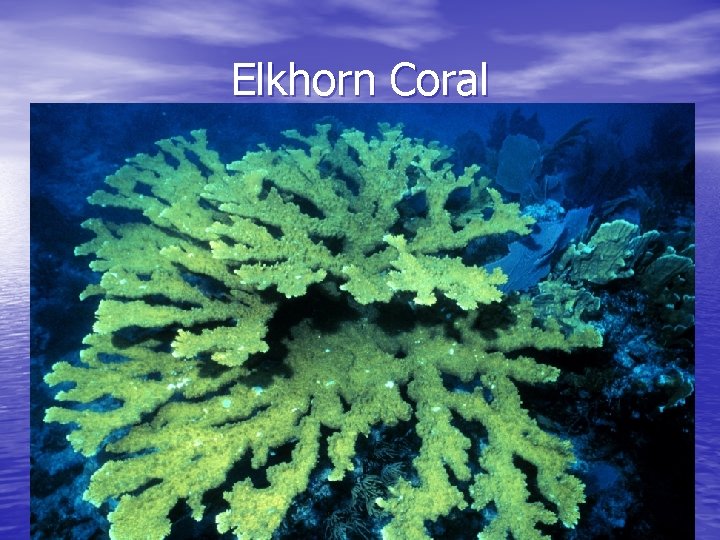
Elkhorn Coral
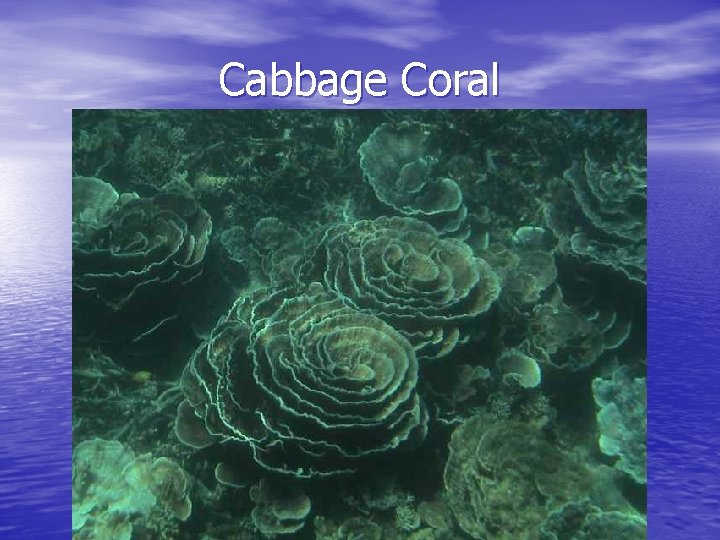
Cabbage Coral
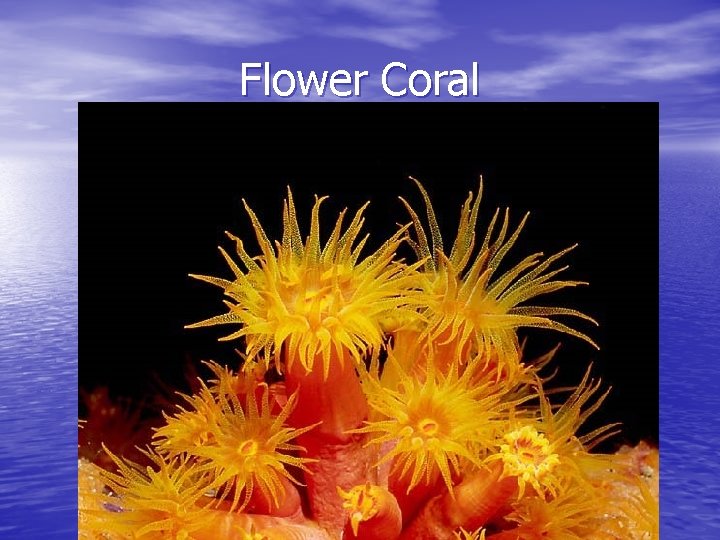
Flower Coral
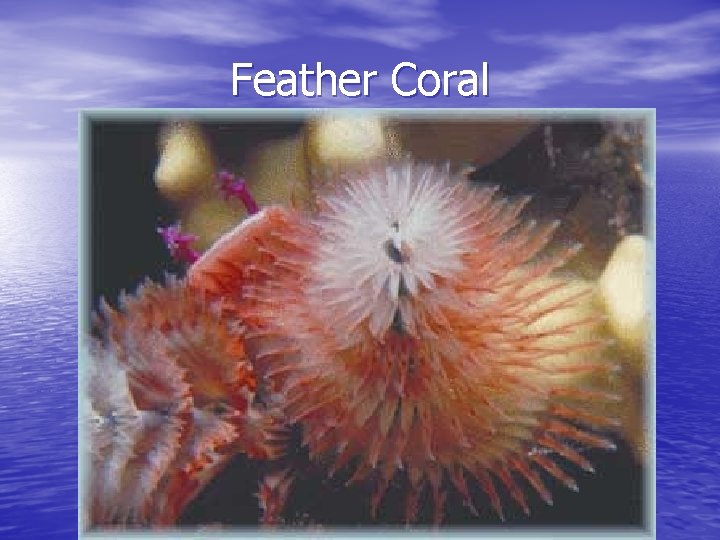
Feather Coral
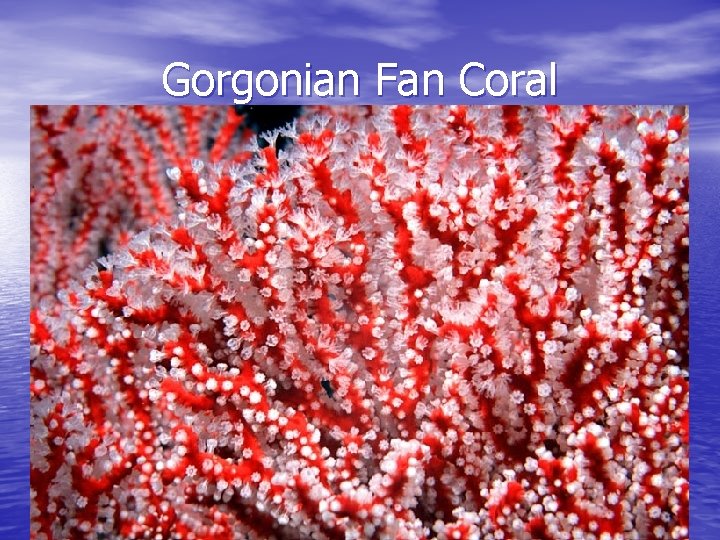
Gorgonian Fan Coral
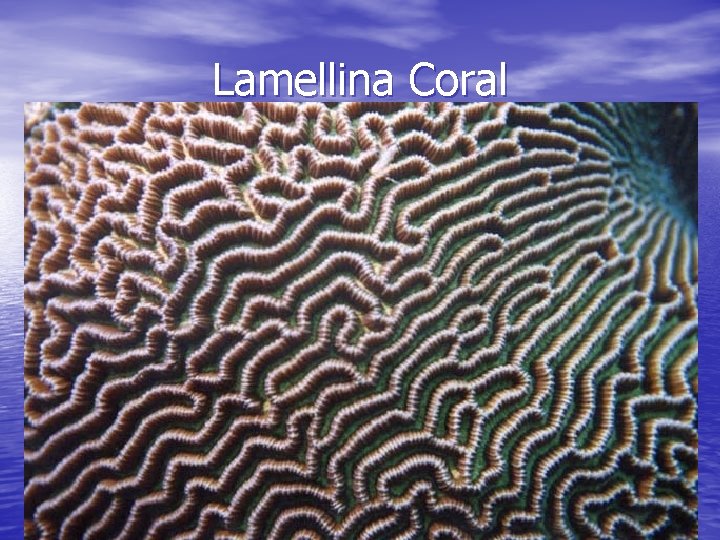
Lamellina Coral
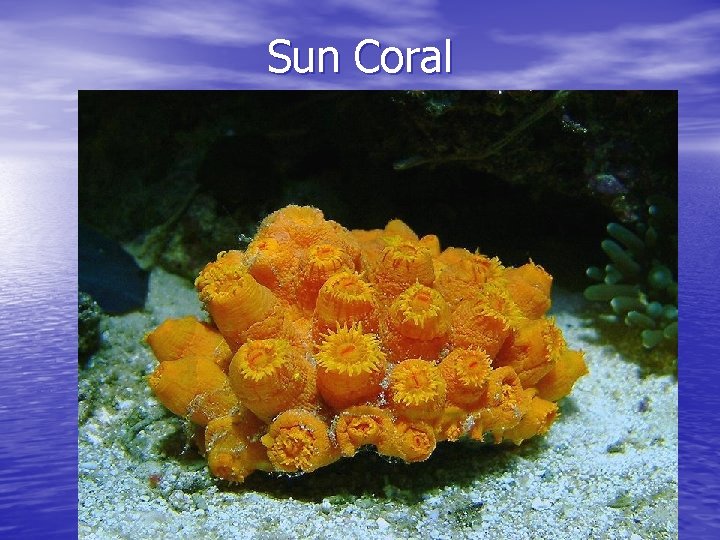
Sun Coral
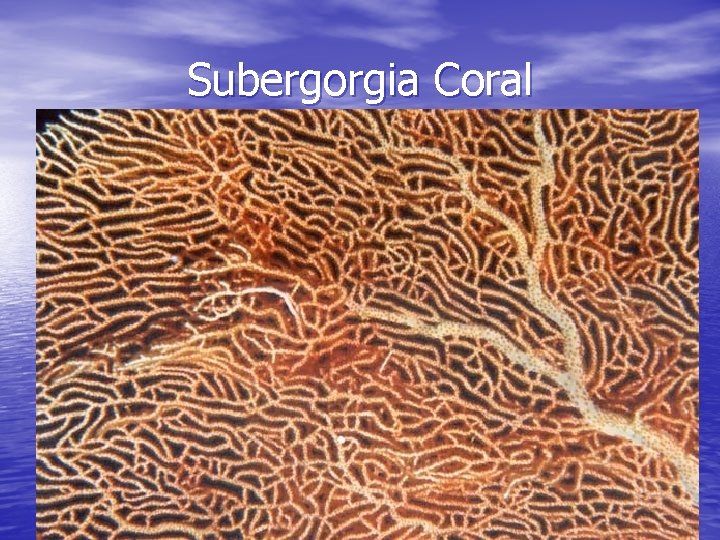
Subergorgia Coral
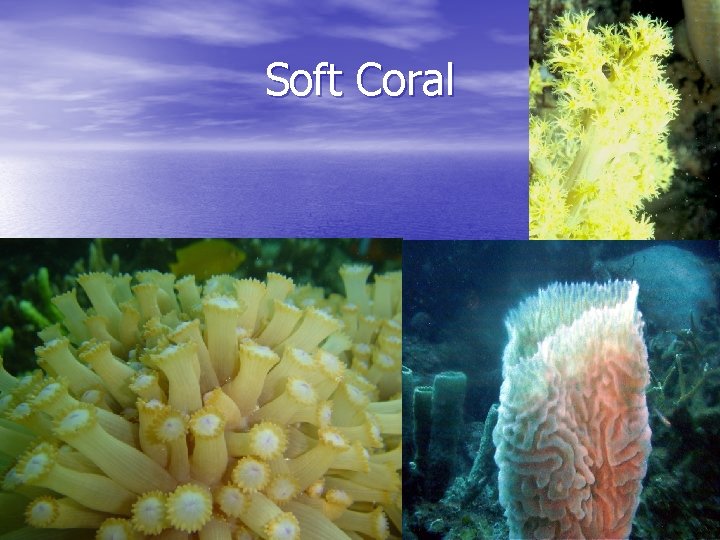
Soft Coral
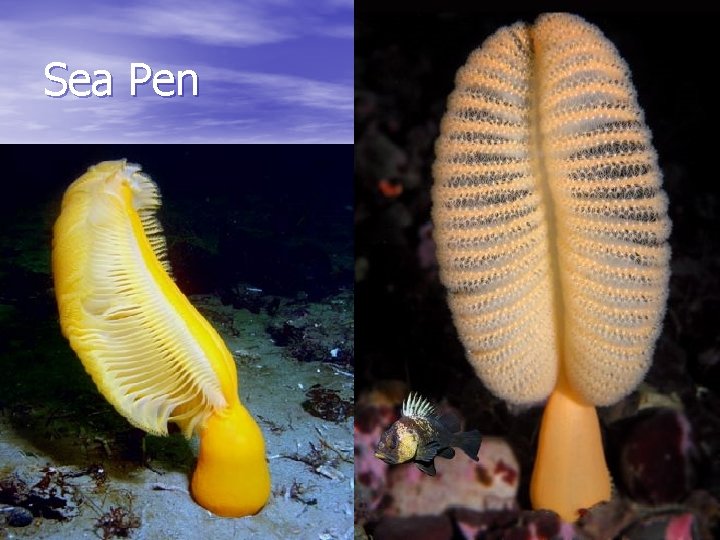
Sea Pen
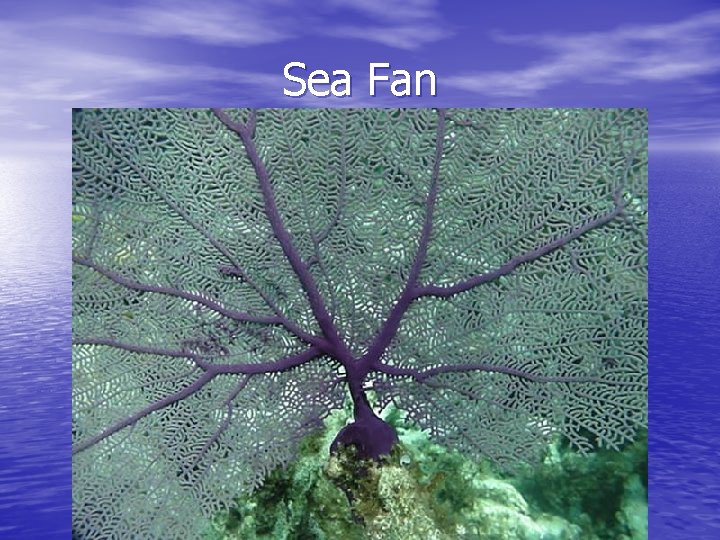
Sea Fan
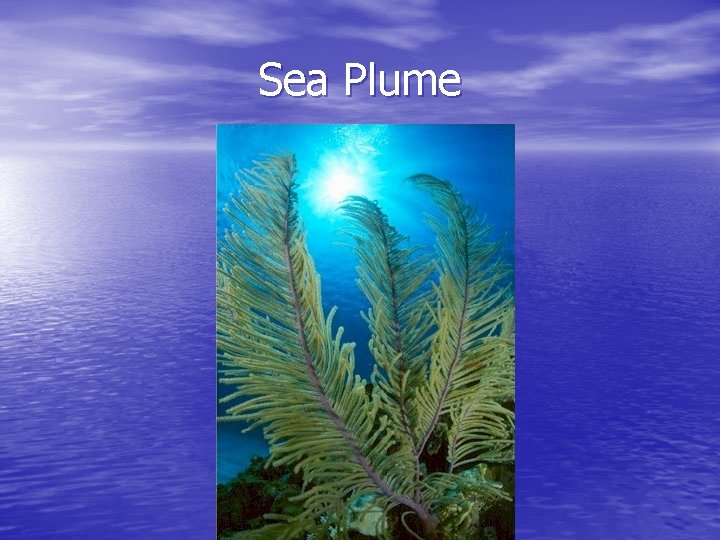
Sea Plume
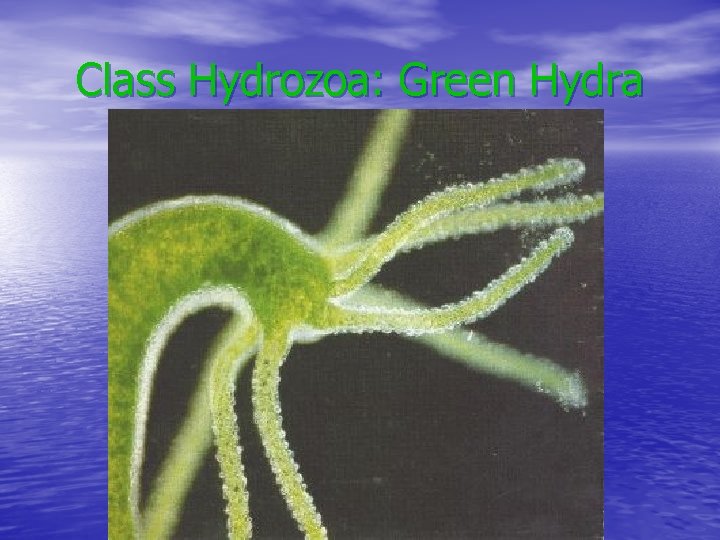
Class Hydrozoa: Green Hydra
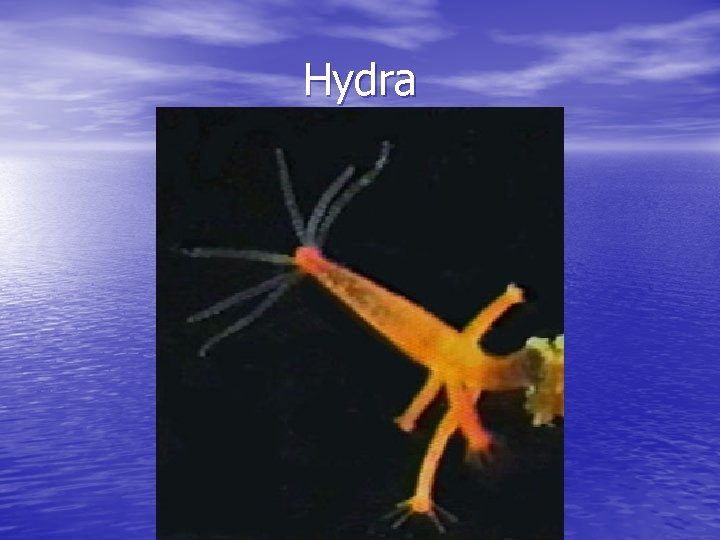
Hydra
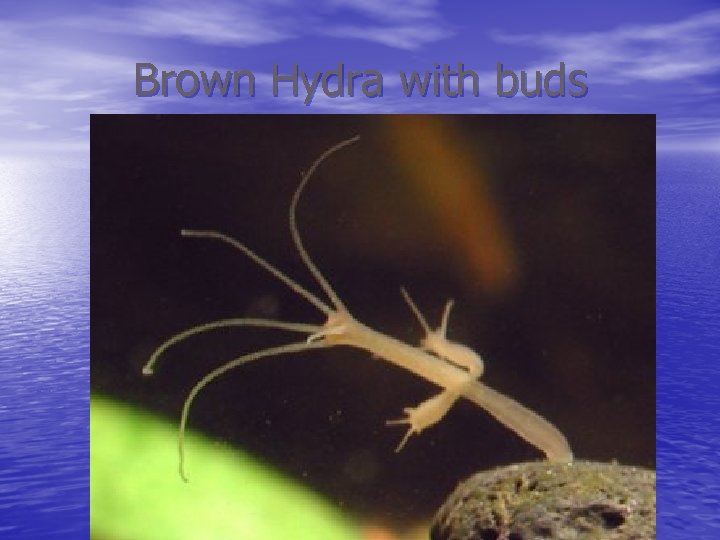
Brown Hydra with buds
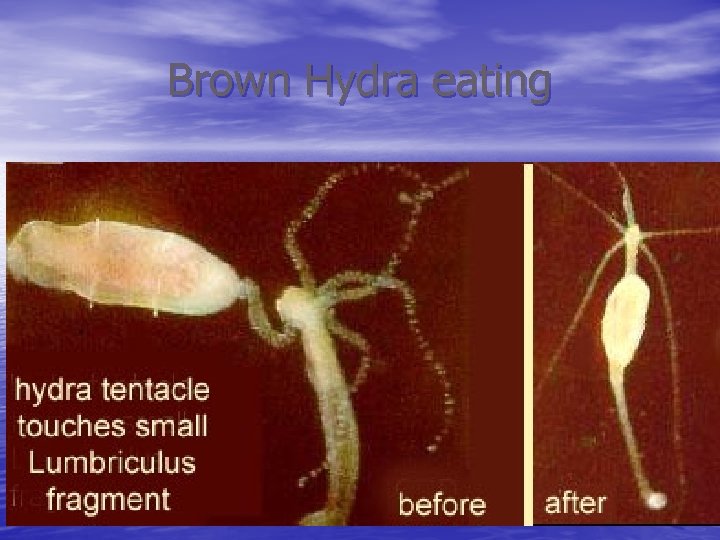
Brown Hydra eating
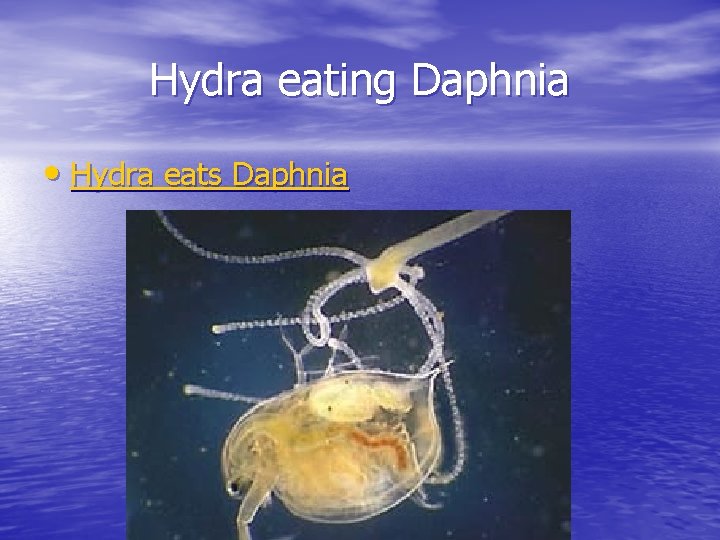
Hydra eating Daphnia • Hydra eats Daphnia
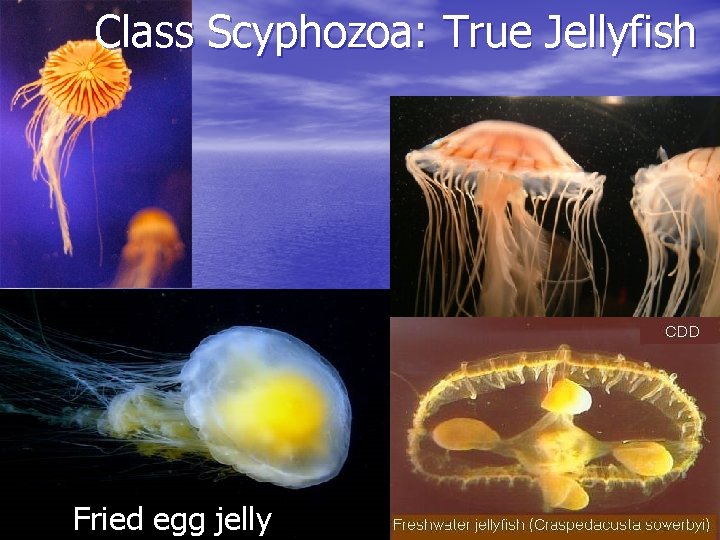
Class Scyphozoa: True Jellyfish Fried egg jelly
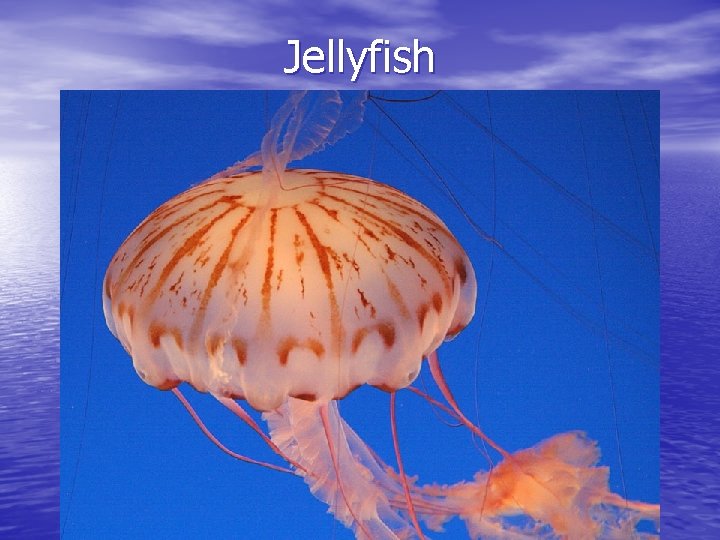
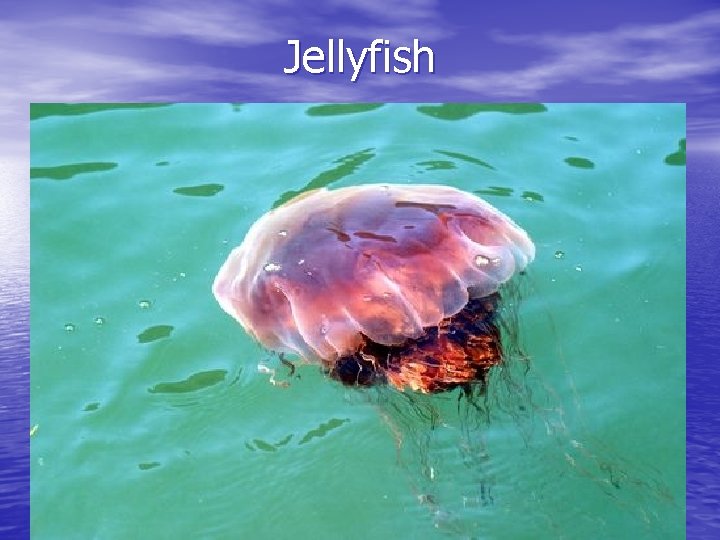
Jellyfish
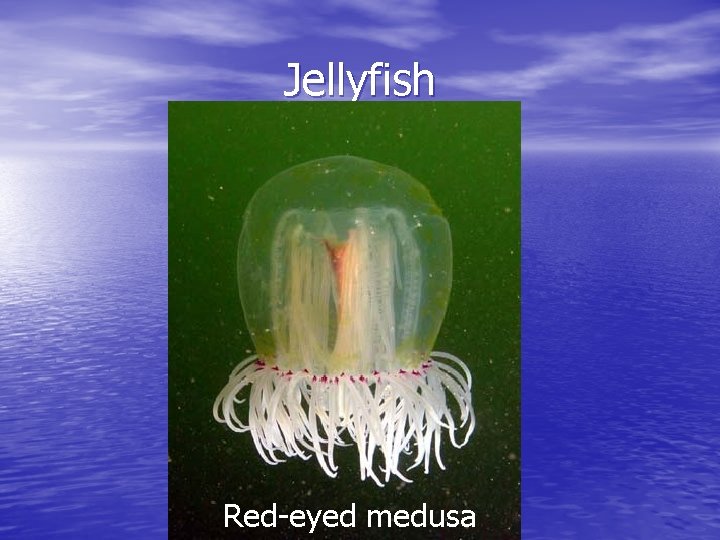
Jellyfish Red-eyed medusa
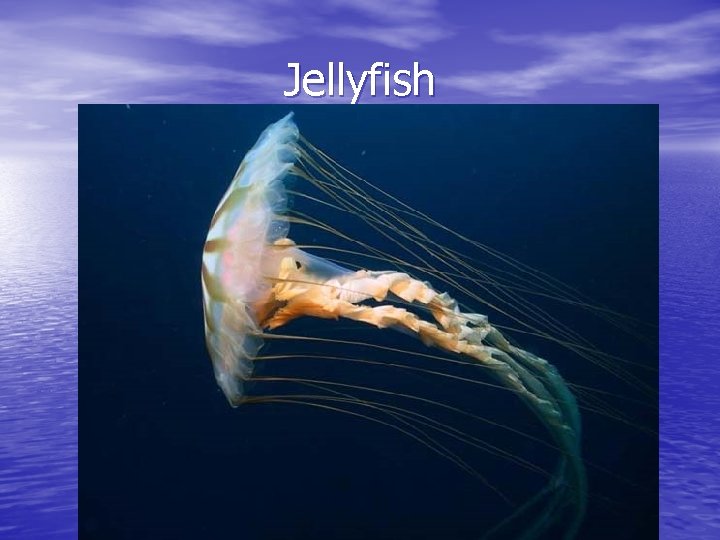
Jellyfish
Jellyfish
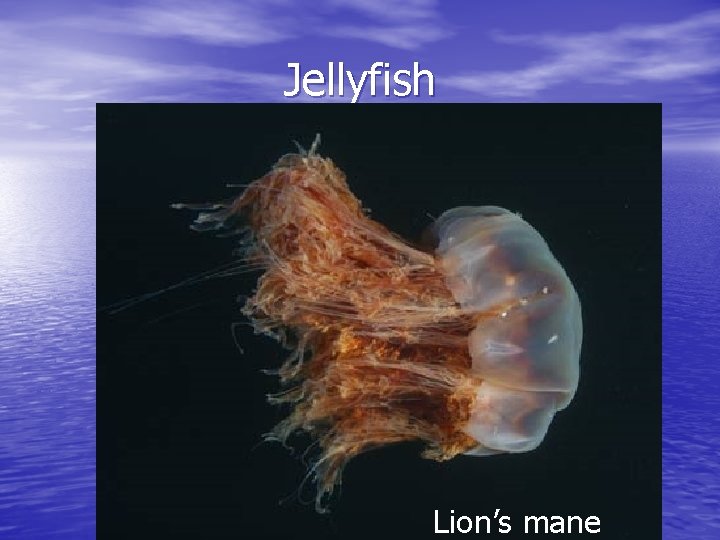
Jellyfish Lion’s mane
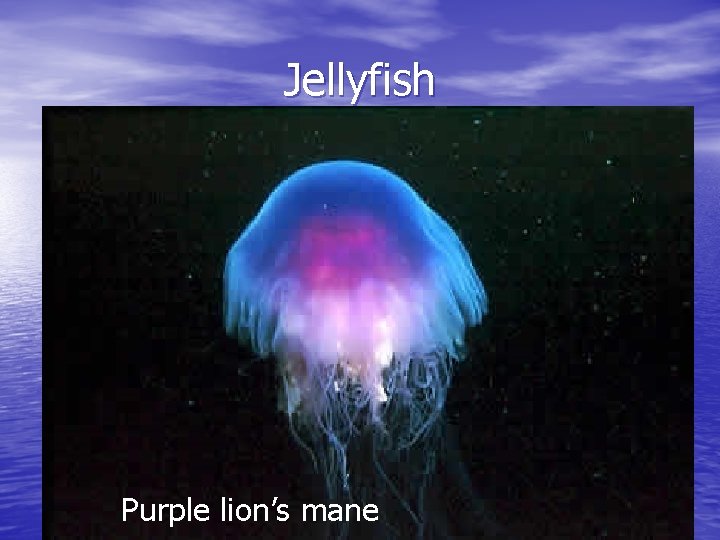
Jellyfish Purple lion’s mane
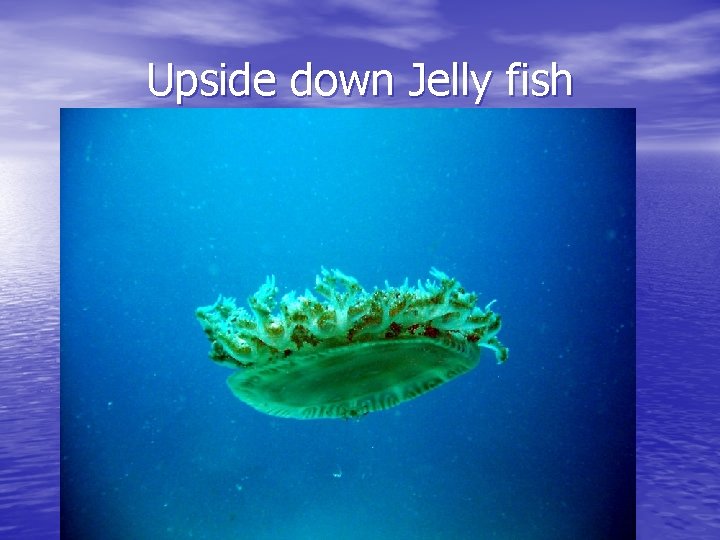
Upside down Jelly fish
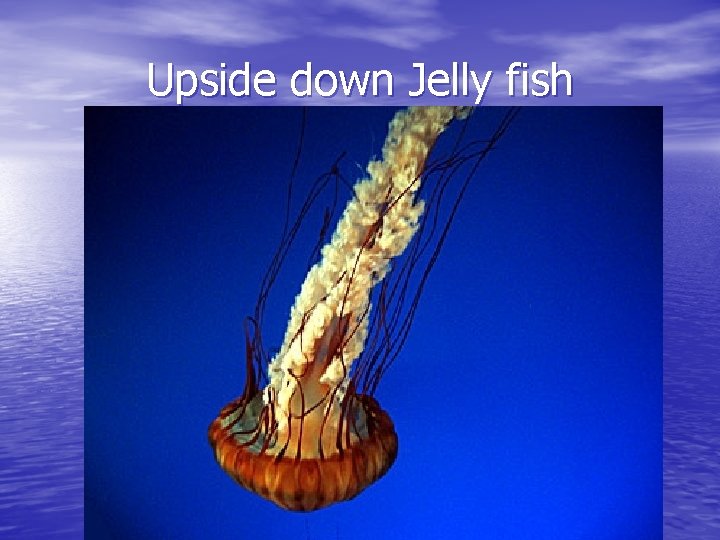
Upside down Jelly fish
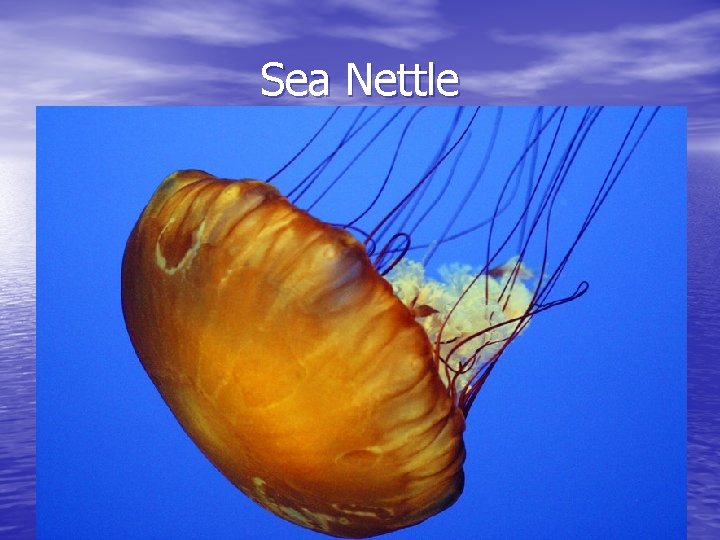
Sea Nettle
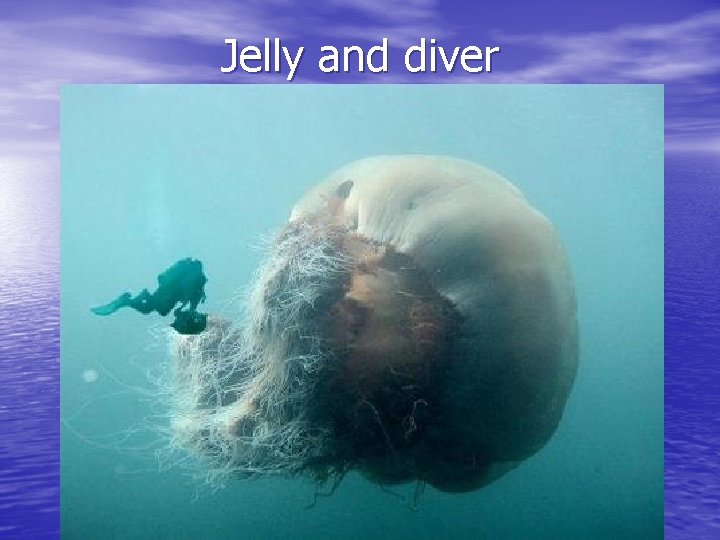
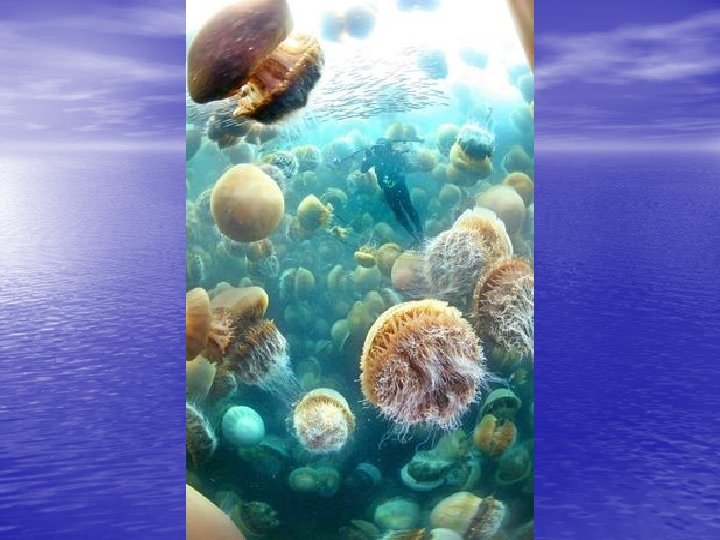
Jelly and diver
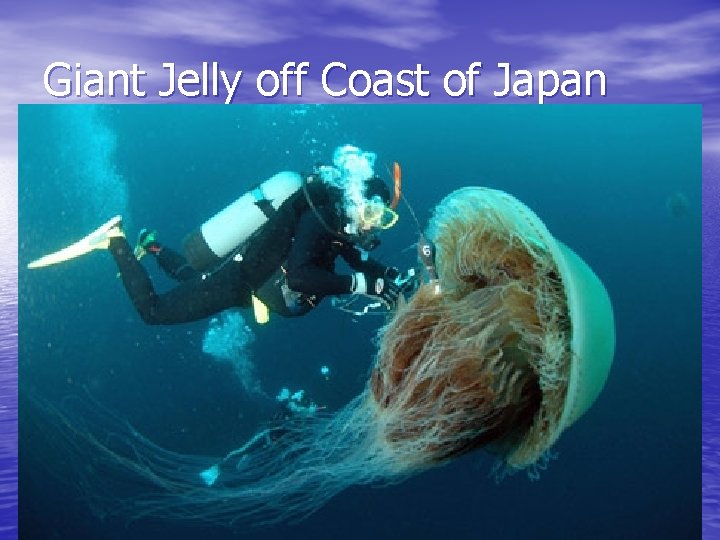
Giant Jelly off Coast of Japan
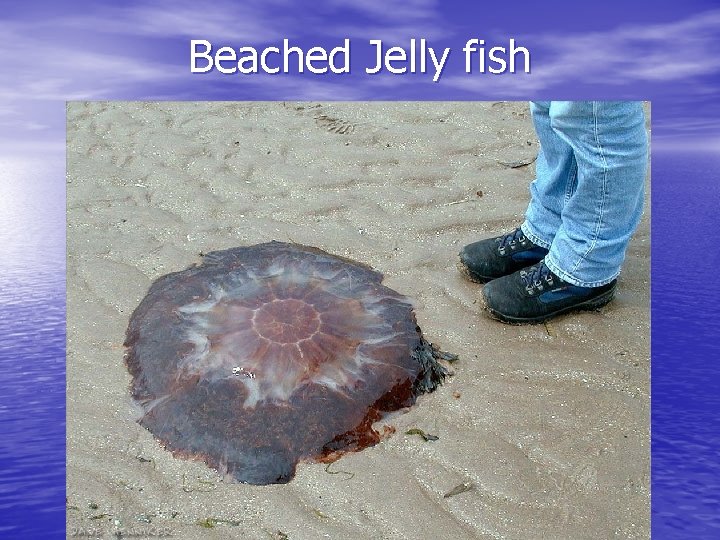
Beached Jelly fish
Jelly fish Humor
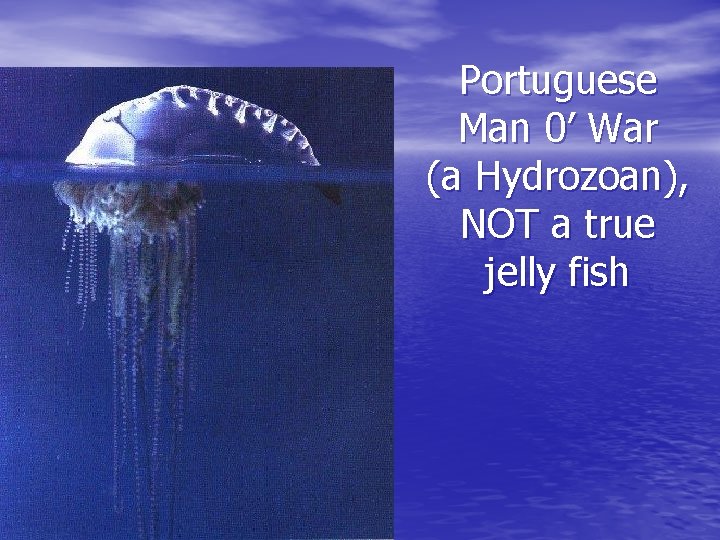
Portuguese Man 0’ War (a Hydrozoan), NOT a true jelly fish
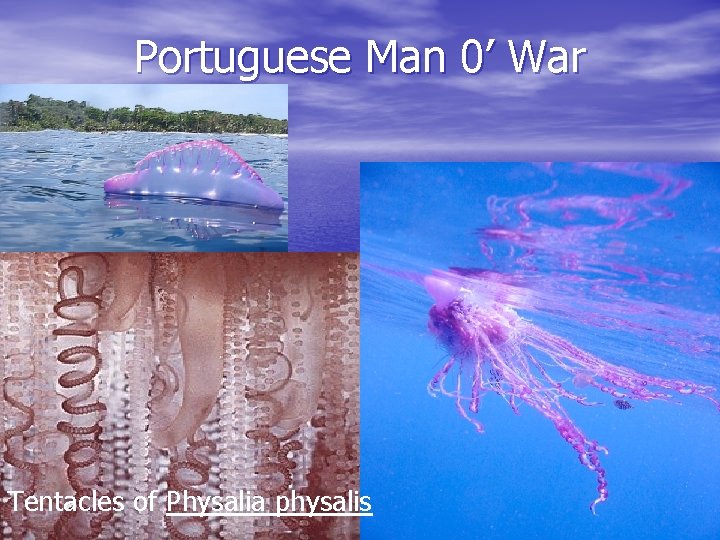
Portuguese Man 0’ War Tentacles of Physalia physalis
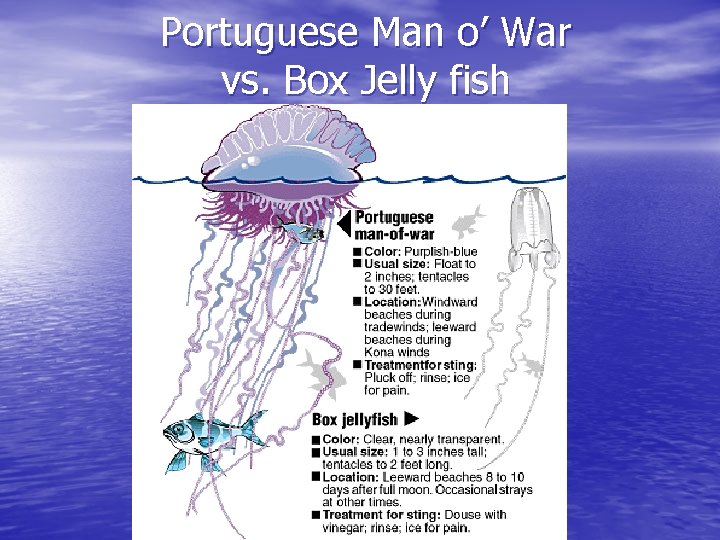
Portuguese Man o’ War vs. Box Jelly fish
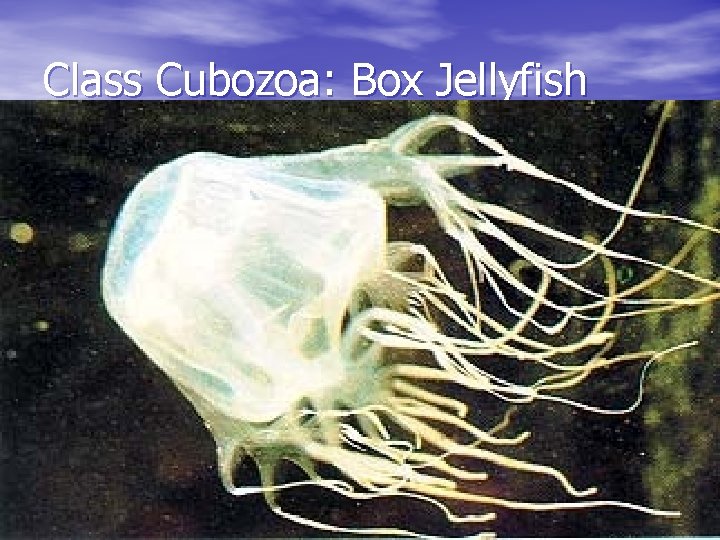
Class Cubozoa: Box Jellyfish
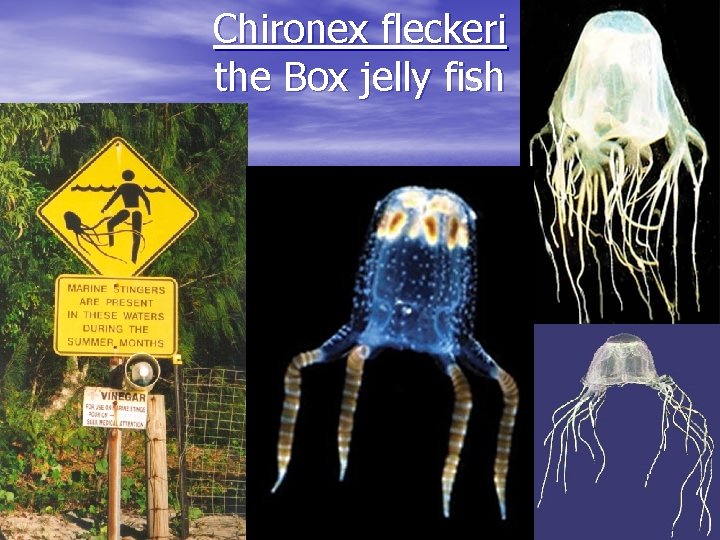
Chironex fleckeri the Box jelly fish