
Phylum Cnidaria General Characteristics Over 9000 species Jellyfish
- Slides: 11
Phylum Cnidaria
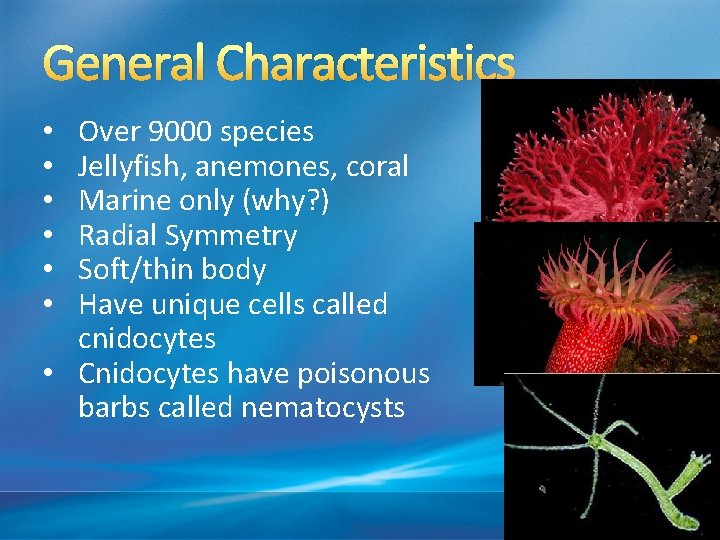
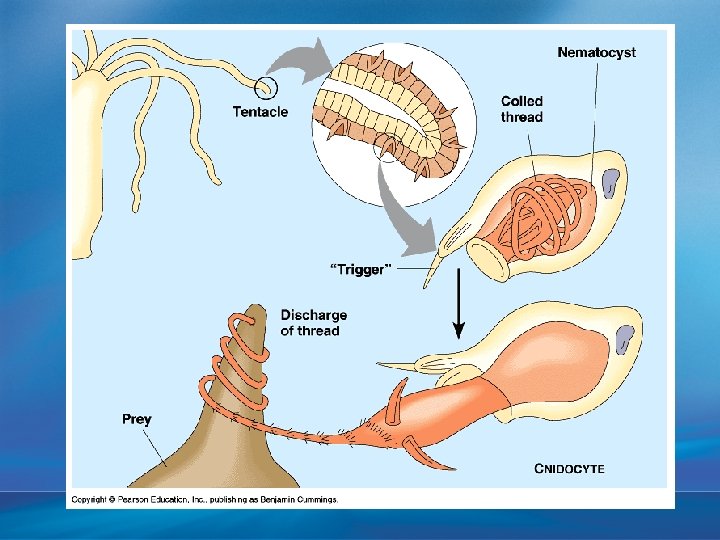
General Characteristics Over 9000 species Jellyfish, anemones, coral Marine only (why? ) Radial Symmetry Soft/thin body Have unique cells called cnidocytes • Cnidocytes have poisonous barbs called nematocysts • • •
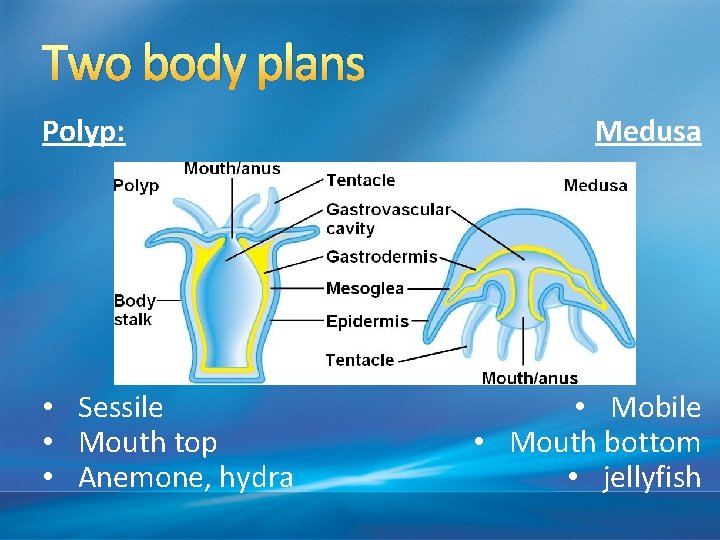
Two body plans Polyp: • Sessile • Mouth top • Anemone, hydra Medusa • Mobile • Mouth bottom • jellyfish
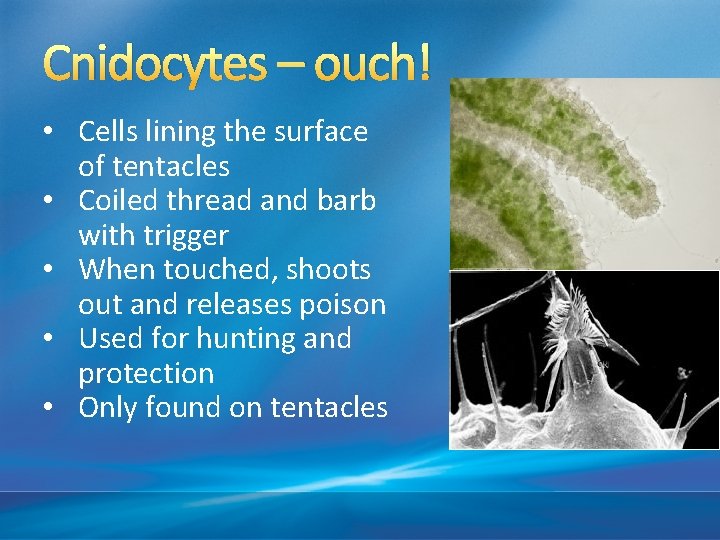
Cnidocytes – ouch! • Cells lining the surface of tentacles • Coiled thread and barb with trigger • When touched, shoots out and releases poison • Used for hunting and protection • Only found on tentacles
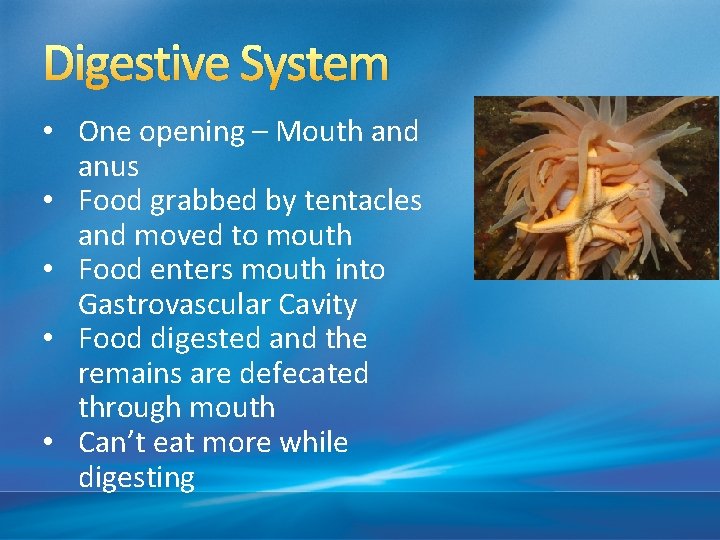
Digestive System • One opening – Mouth and anus • Food grabbed by tentacles and moved to mouth • Food enters mouth into Gastrovascular Cavity • Food digested and the remains are defecated through mouth • Can’t eat more while digesting
Respiratory “System” • Diffusion of oxygen in cells and carbon dioxide out of cells since it’s always surrounded by water with thin epidermis Nervous “System” • Simple nerve coordination to allow polyp to open and close and medusa to pulsate and swim • No brain – can’t think – but have a nerve “net” which allows them coordinate
Ciculatory “System” • No heart or blood vessels • Mesoglea fluid filled layer allows for nutrients and wastes to be exchanged at different parts of the body. Reproductive System • Sexual- external fertilization – egg and sperm released in water where fertilization occurs - internal fertilization – sperm travels to female and fertilizes the egg inside • Asexual – various ways – cloning, budding
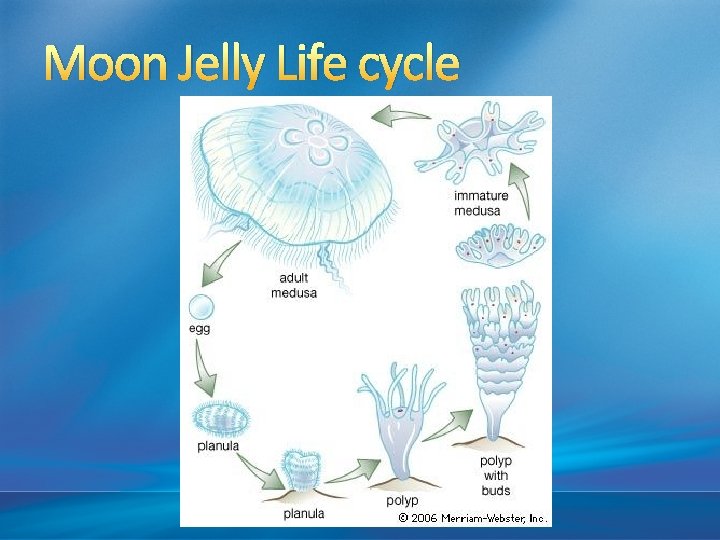
Moon Jelly Life cycle
1. Medusa produces egg and sperm. 2. Sperm fertilizes the egg 3. Zygote settles at the bottom produces polyp 4. Polyp clones itself (asexually) 5. New medusas detach from polyp and grow to become mature medusas
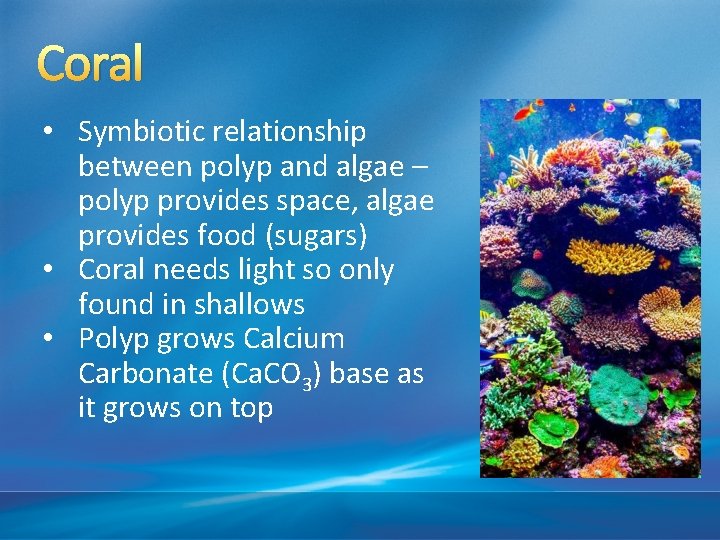
Coral • Symbiotic relationship between polyp and algae – polyp provides space, algae provides food (sugars) • Coral needs light so only found in shallows • Polyp grows Calcium Carbonate (Ca. CO 3) base as it grows on top