
Phylum Cnidaria BIO 2215 Oklahoma City Community College
Phylum Cnidaria BIO 2215 Oklahoma City Community College Dennis Anderson 1
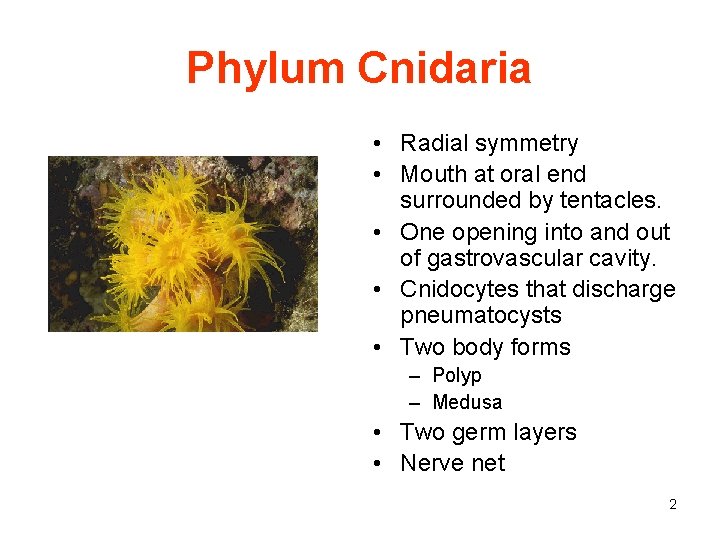
Phylum Cnidaria • Radial symmetry • Mouth at oral end surrounded by tentacles. • One opening into and out of gastrovascular cavity. • Cnidocytes that discharge pneumatocysts • Two body forms – Polyp – Medusa • Two germ layers • Nerve net 2
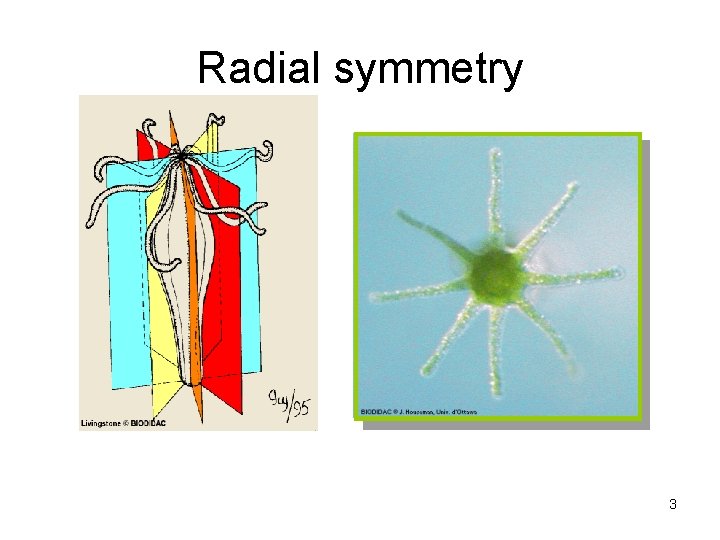
Radial symmetry 3
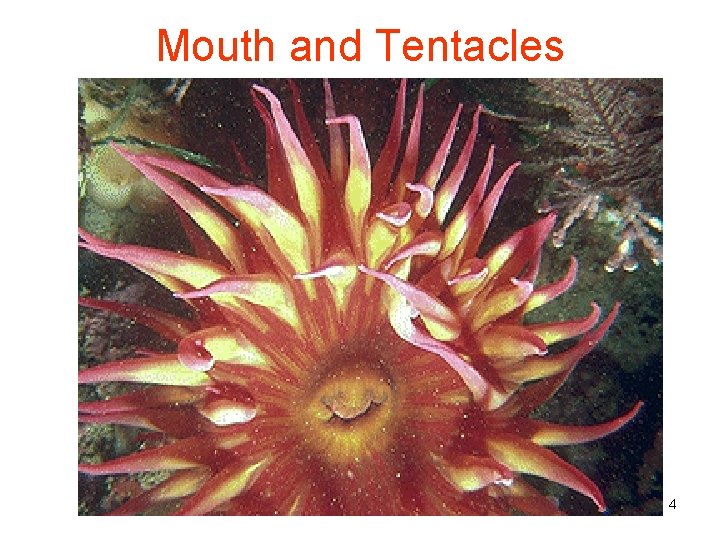
Mouth and Tentacles 4
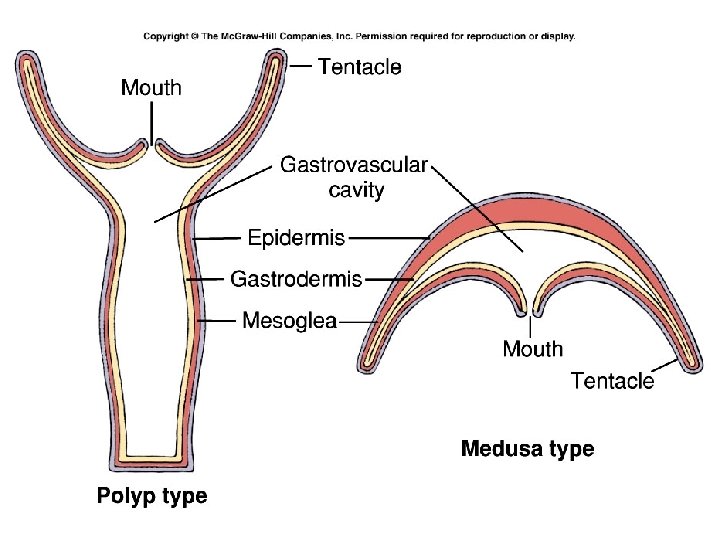
Fig. 13. 2 5
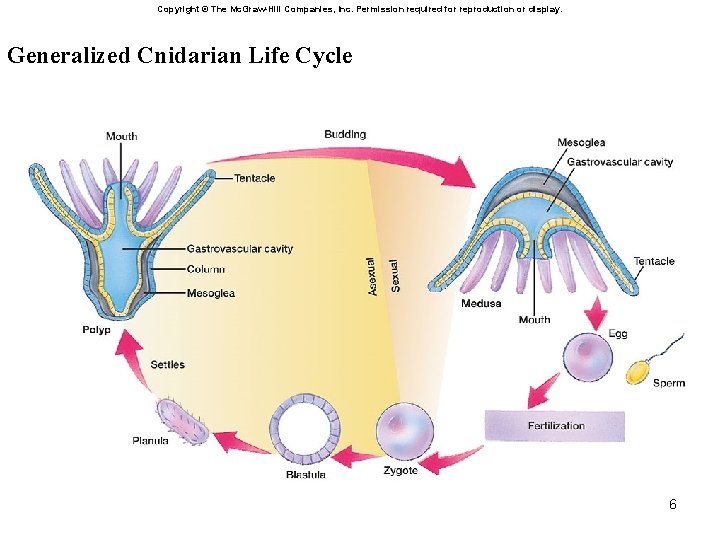
Copyright © The Mc. Graw-Hill Companies, Inc. Permission required for reproduction or display. Generalized Cnidarian Life Cycle 6
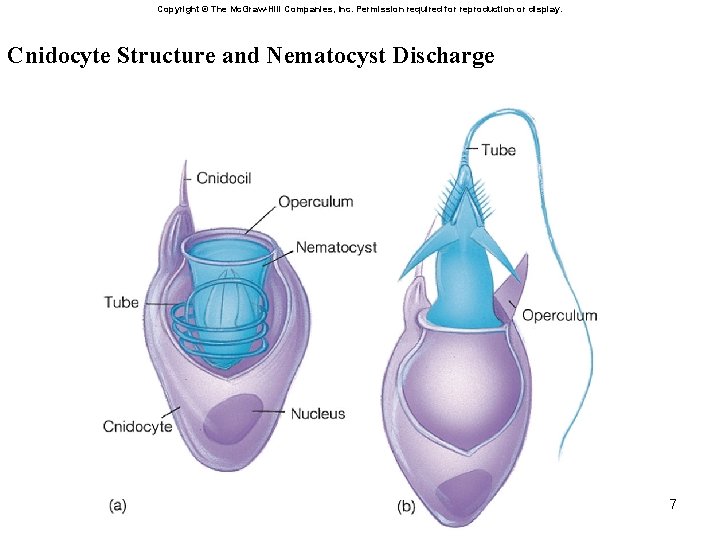
Copyright © The Mc. Graw-Hill Companies, Inc. Permission required for reproduction or display. Cnidocyte Structure and Nematocyst Discharge 7
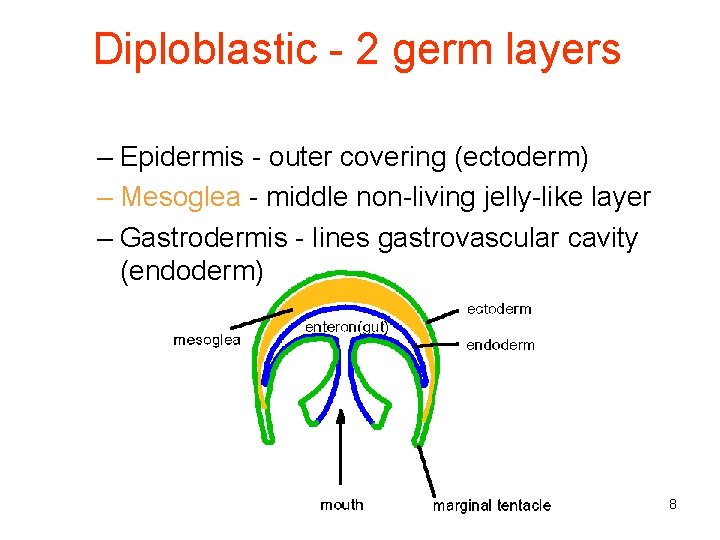
Diploblastic - 2 germ layers – Epidermis - outer covering (ectoderm) – Mesoglea - middle non-living jelly-like layer – Gastrodermis - lines gastrovascular cavity (endoderm) 8
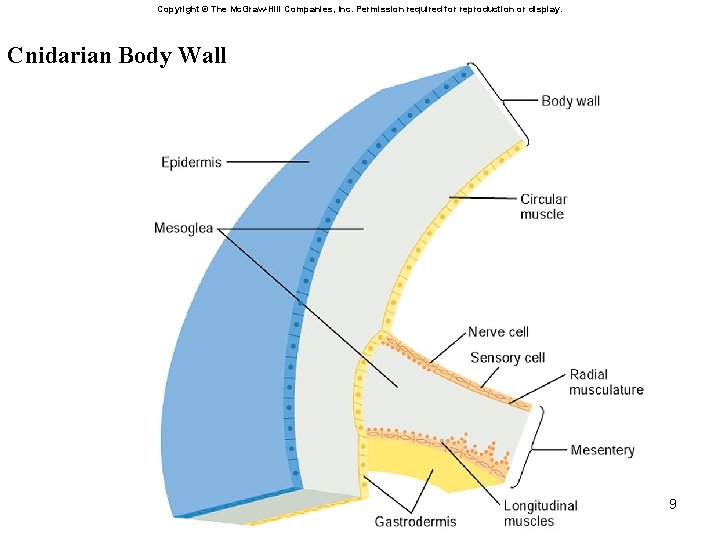
Copyright © The Mc. Graw-Hill Companies, Inc. Permission required for reproduction or display. Cnidarian Body Wall 9
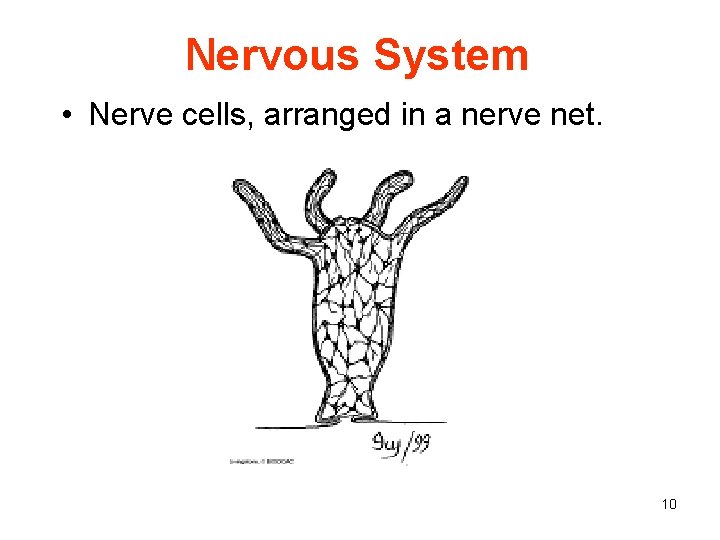
Nervous System • Nerve cells, arranged in a nerve net. 10
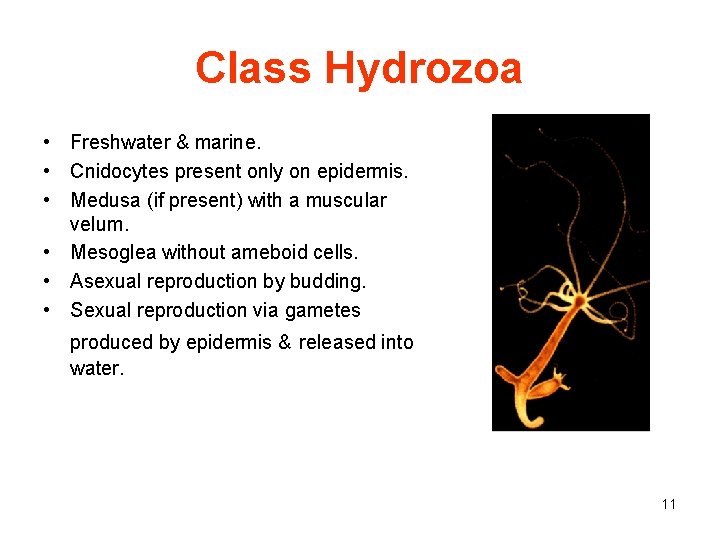
Class Hydrozoa • Freshwater & marine. • Cnidocytes present only on epidermis. • Medusa (if present) with a muscular velum. • Mesoglea without ameboid cells. • Asexual reproduction by budding. • Sexual reproduction via gametes produced by epidermis & released into water. 11
Class Hydrozoa • • Hydra Obelia Gonionemus Physalia 12
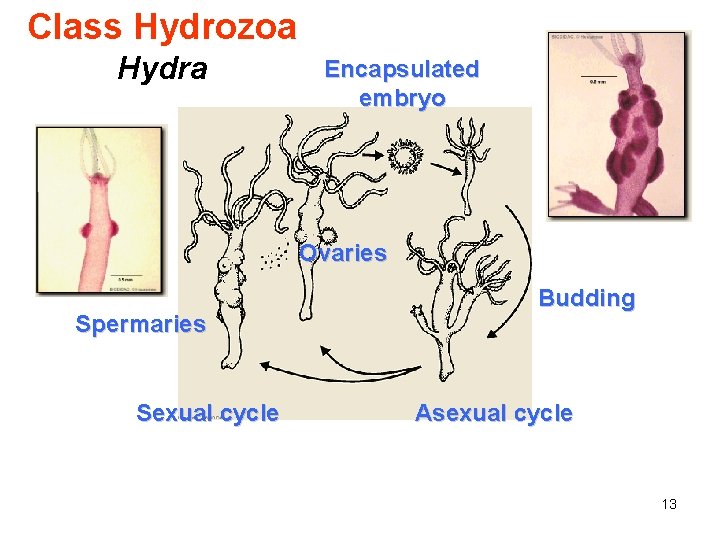
Class Hydrozoa Hydra Encapsulated embryo Ovaries Spermaries Sexual cycle Budding Asexual cycle 13
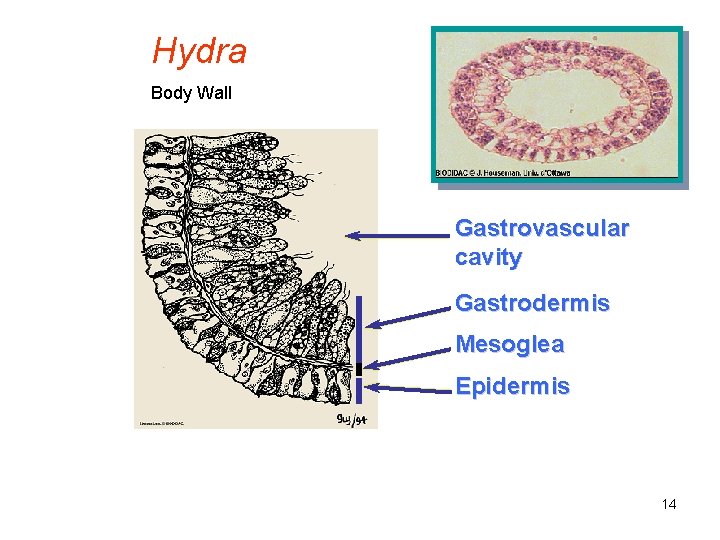
Hydra Body Wall Gastrovascular cavity Gastrodermis Mesoglea Epidermis 14
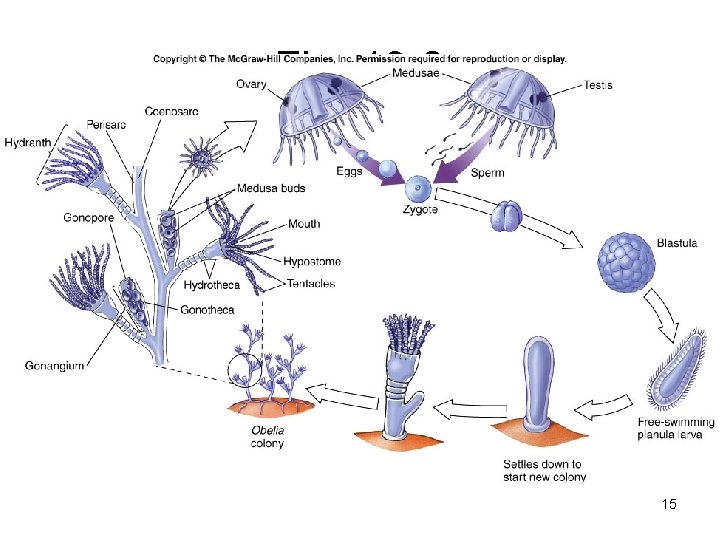
Fig. 13. 9 15
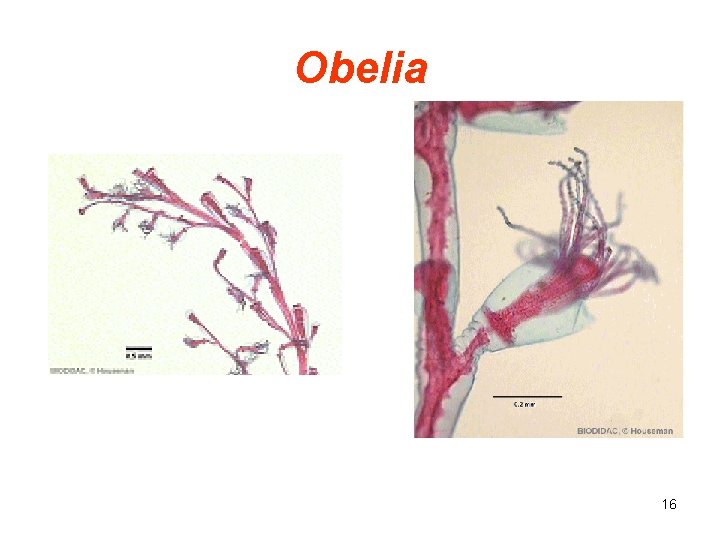
Obelia 16
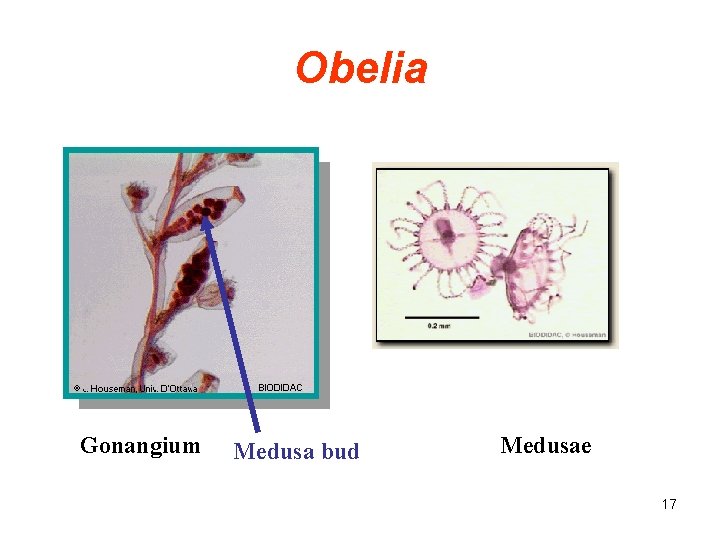
Obelia Gonangium Medusa bud Medusae 17
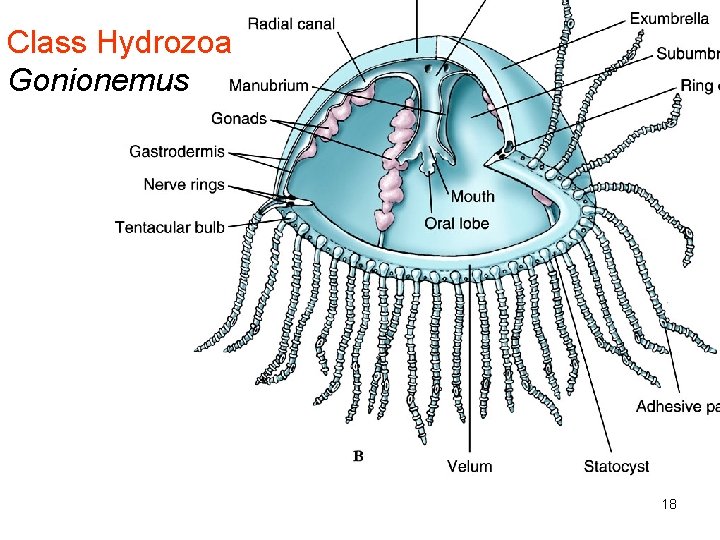
Class Hydrozoa Gonionemus 18

Class Hydrozoa Gonionemus Velum 19
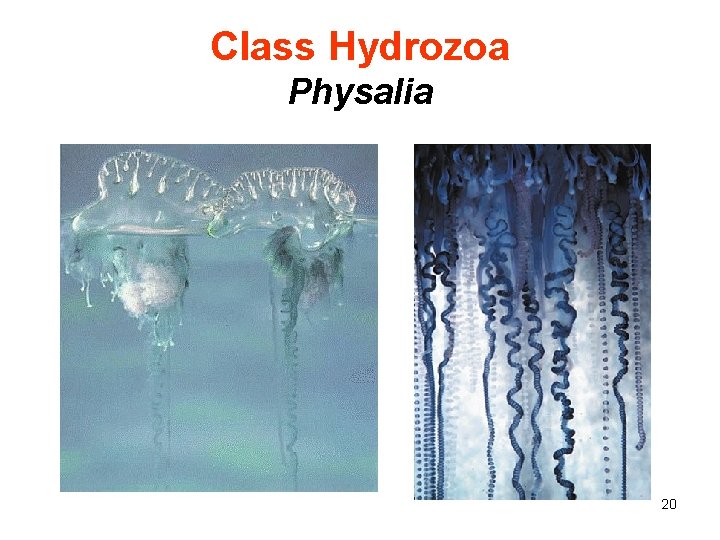
Class Hydrozoa Physalia 20
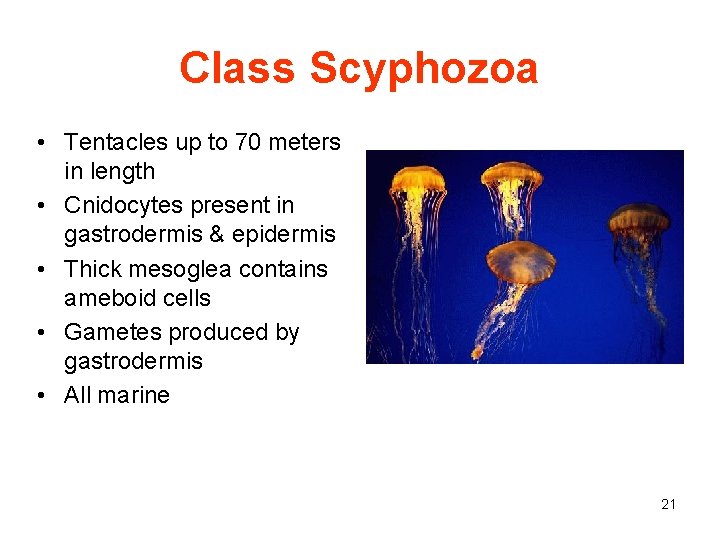
Class Scyphozoa • Tentacles up to 70 meters in length • Cnidocytes present in gastrodermis & epidermis • Thick mesoglea contains ameboid cells • Gametes produced by gastrodermis • All marine 21
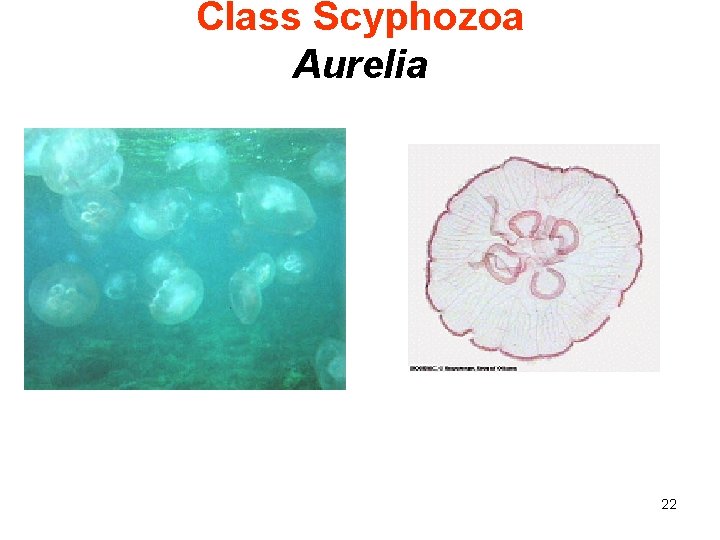
Class Scyphozoa Aurelia 22
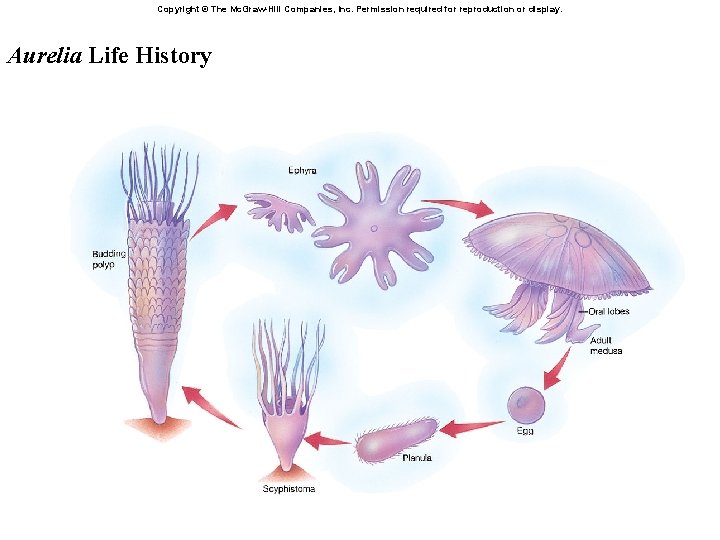
Copyright © The Mc. Graw-Hill Companies, Inc. Permission required for reproduction or display. Aurelia Life History 23
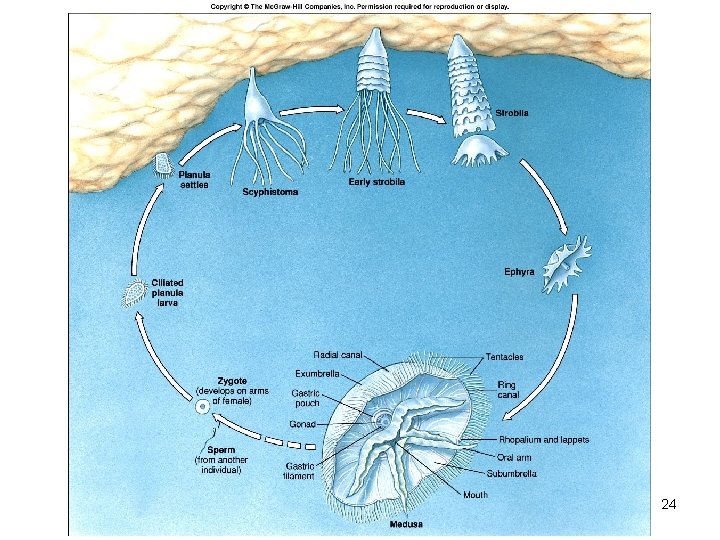
Fig. 13. 18 24
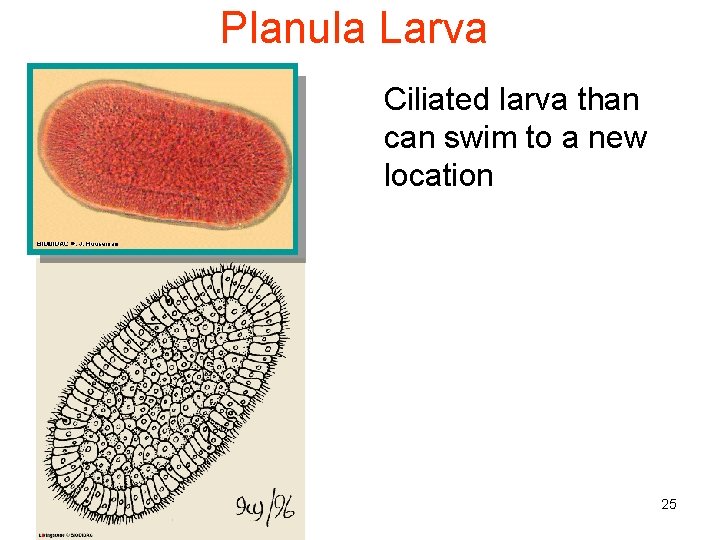
Planula Larva Ciliated larva than can swim to a new location 25
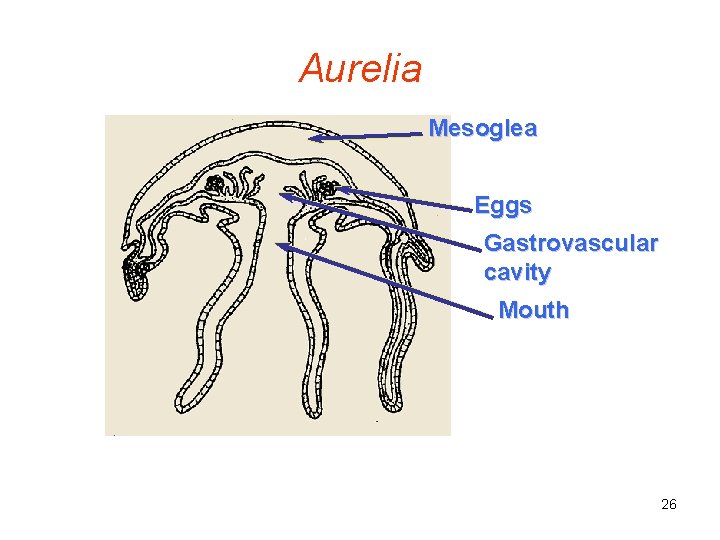
Aurelia Mesoglea Eggs Gastrovascular cavity Mouth 26
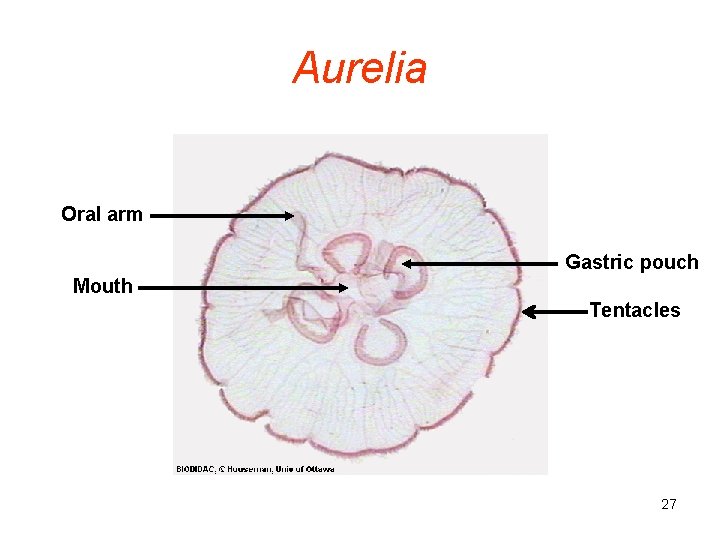
Aurelia Oral arm Gastric pouch Mouth Tentacles 27
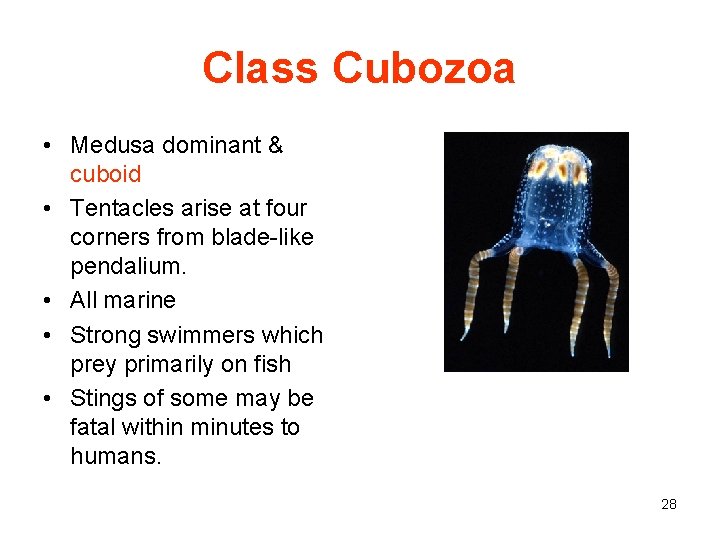
Class Cubozoa • Medusa dominant & cuboid • Tentacles arise at four corners from blade-like pendalium. • All marine • Strong swimmers which prey primarily on fish • Stings of some may be fatal within minutes to humans. 28
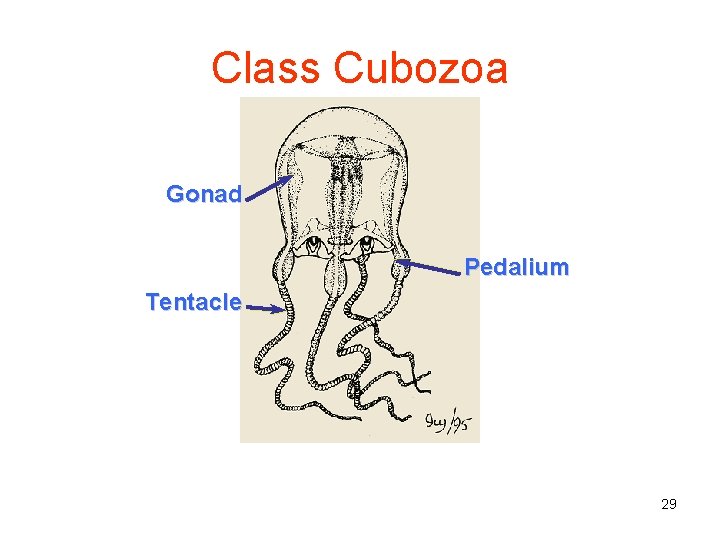
Class Cubozoa Gonad Pedalium Tentacle 29
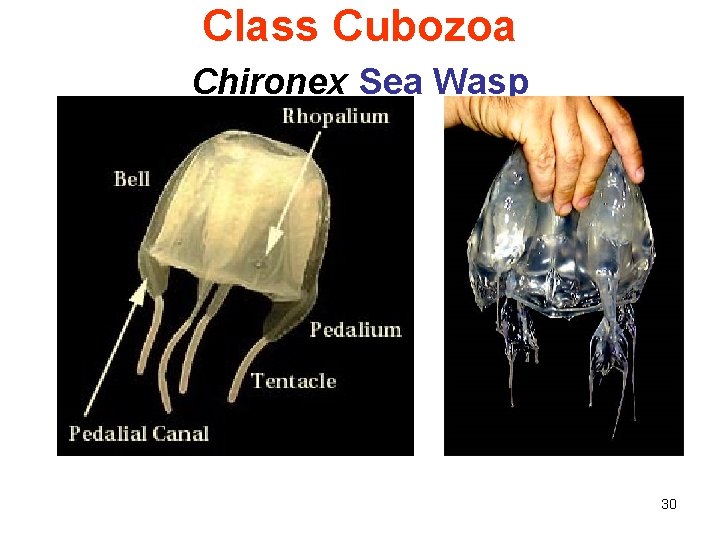
Class Cubozoa Chironex Sea Wasp 30
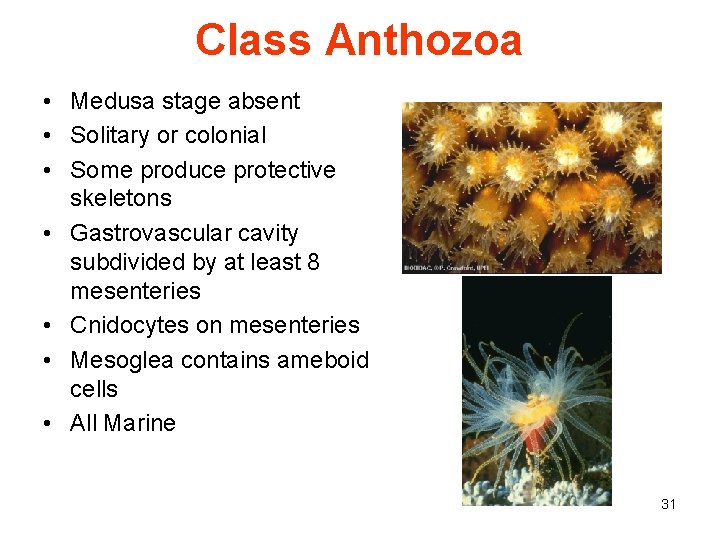
Class Anthozoa • Medusa stage absent • Solitary or colonial • Some produce protective skeletons • Gastrovascular cavity subdivided by at least 8 mesenteries • Cnidocytes on mesenteries • Mesoglea contains ameboid cells • All Marine 31
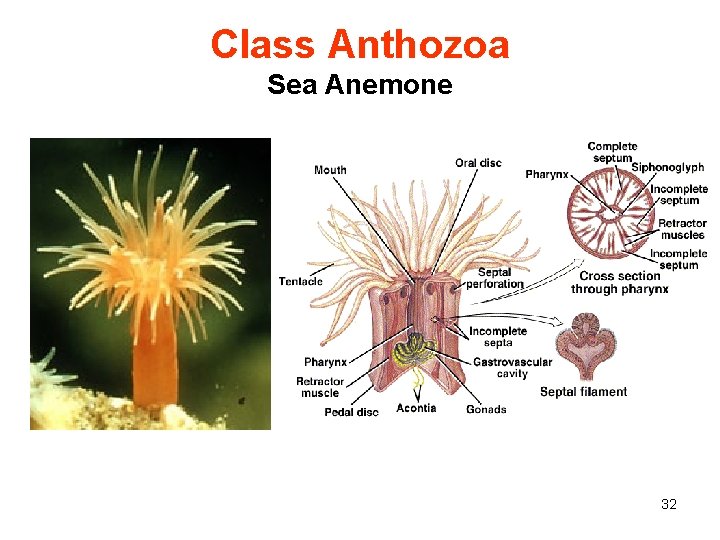
Class Anthozoa Sea Anemone 32
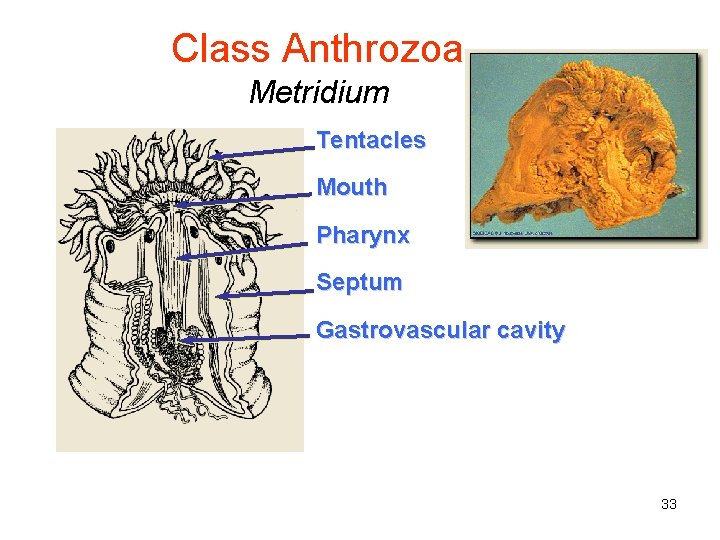
Class Anthrozoa Metridium Tentacles Mouth Pharynx Septum Gastrovascular cavity 33
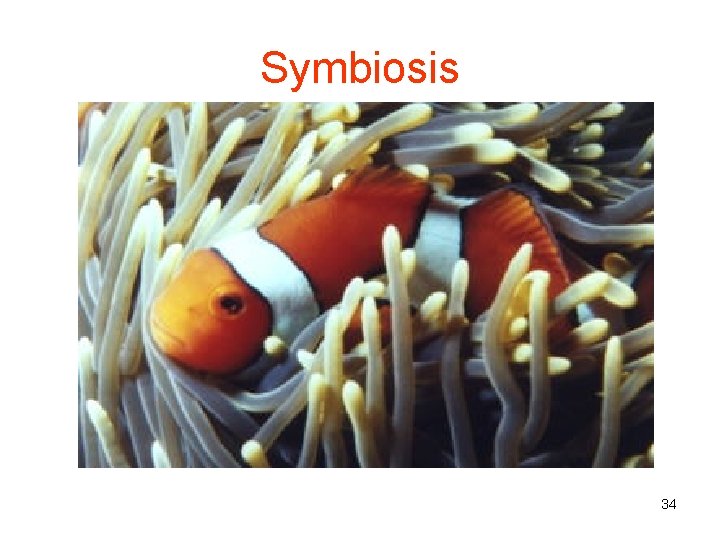
Symbiosis 34
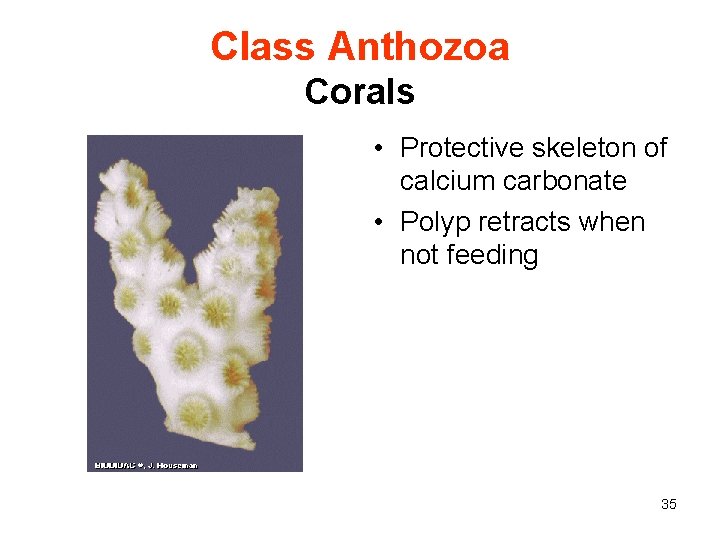
Class Anthozoa Corals • Protective skeleton of calcium carbonate • Polyp retracts when not feeding 35
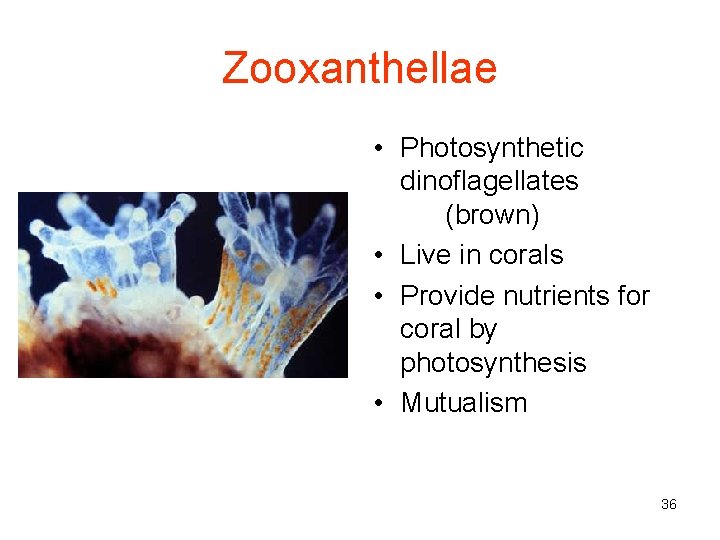
Zooxanthellae • Photosynthetic dinoflagellates (brown) • Live in corals • Provide nutrients for coral by photosynthesis • Mutualism 36
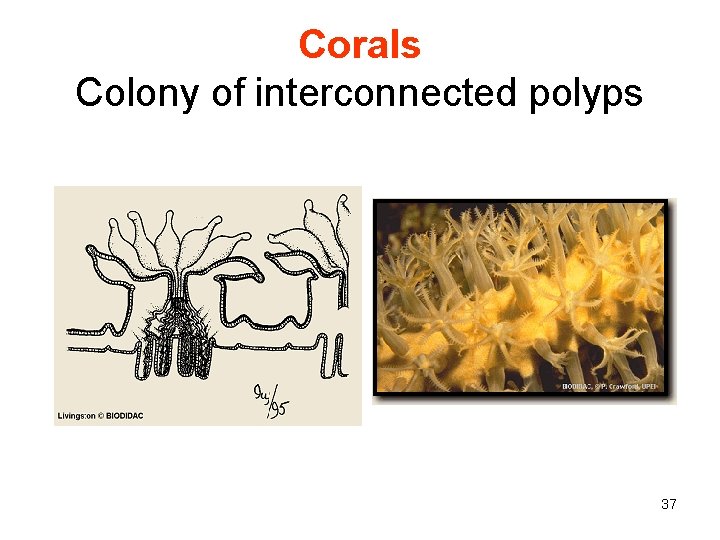
Corals Colony of interconnected polyps 37
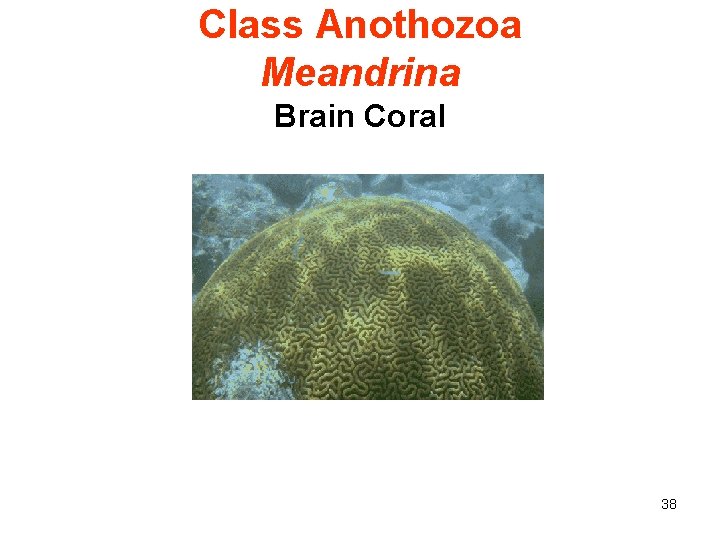
Class Anothozoa Meandrina Brain Coral 38
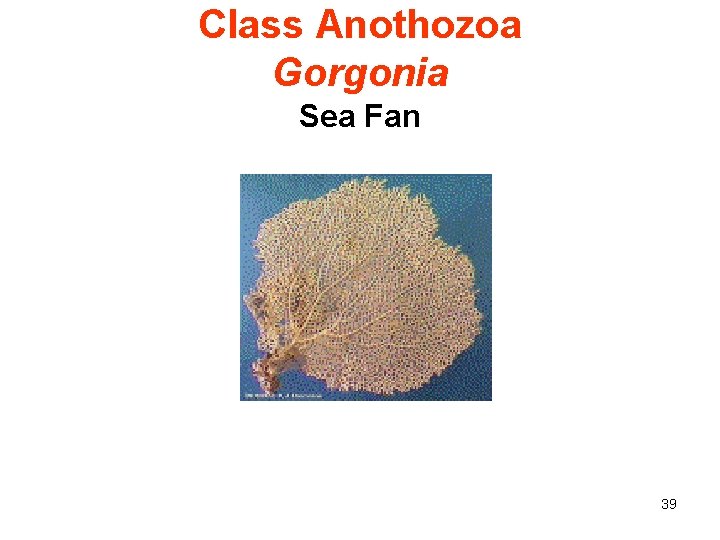
Class Anothozoa Gorgonia Sea Fan 39
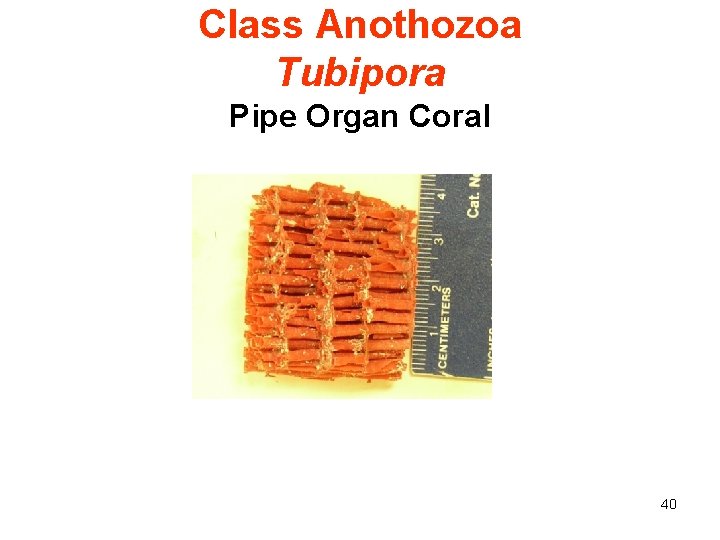
Class Anothozoa Tubipora Pipe Organ Coral 40
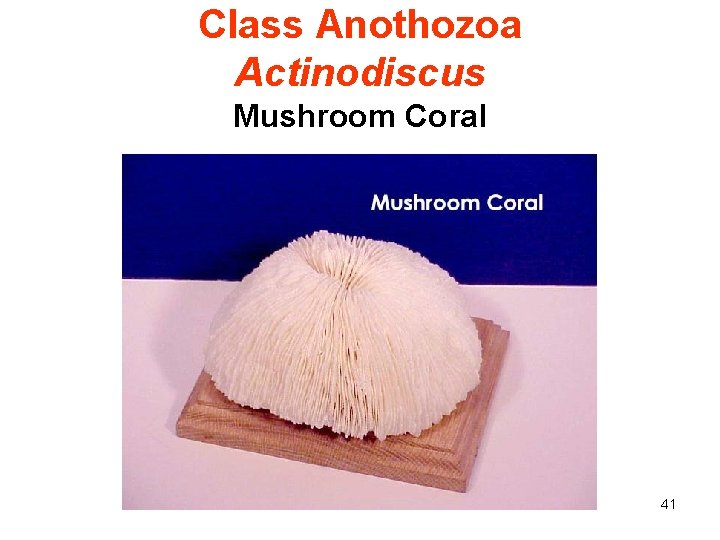
Class Anothozoa Actinodiscus Mushroom Coral 41
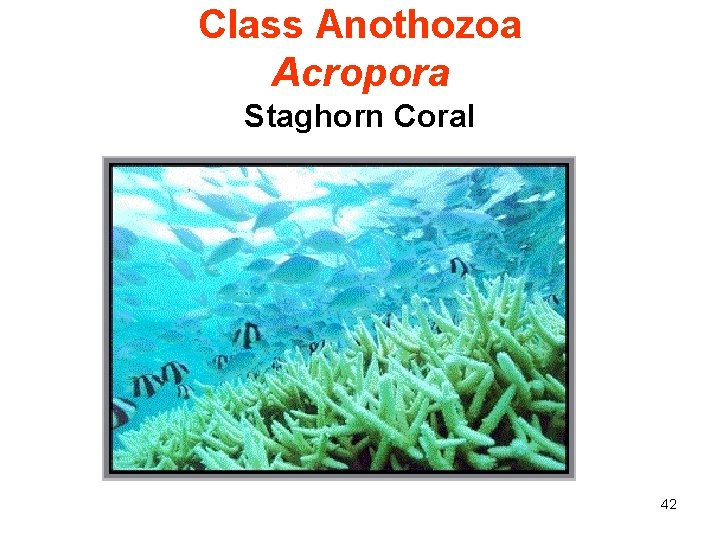
Class Anothozoa Acropora Staghorn Coral 42
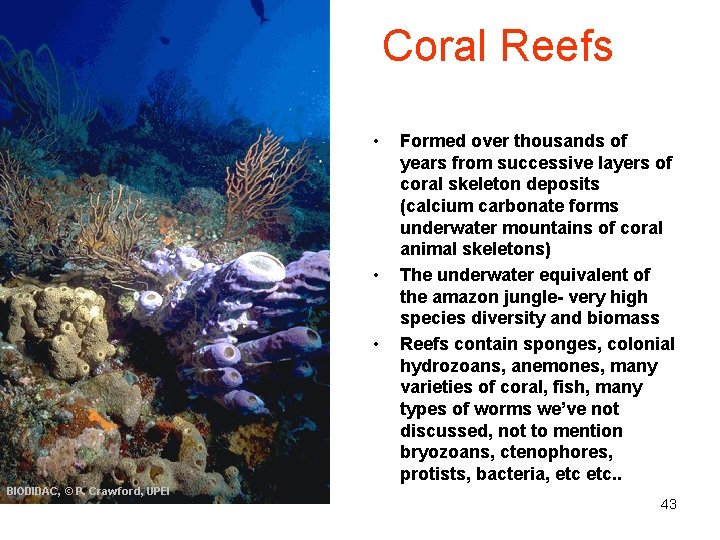
Coral Reefs • • • Formed over thousands of years from successive layers of coral skeleton deposits (calcium carbonate forms underwater mountains of coral animal skeletons) The underwater equivalent of the amazon jungle- very high species diversity and biomass Reefs contain sponges, colonial hydrozoans, anemones, many varieties of coral, fish, many types of worms we’ve not discussed, not to mention bryozoans, ctenophores, protists, bacteria, etc. . 43
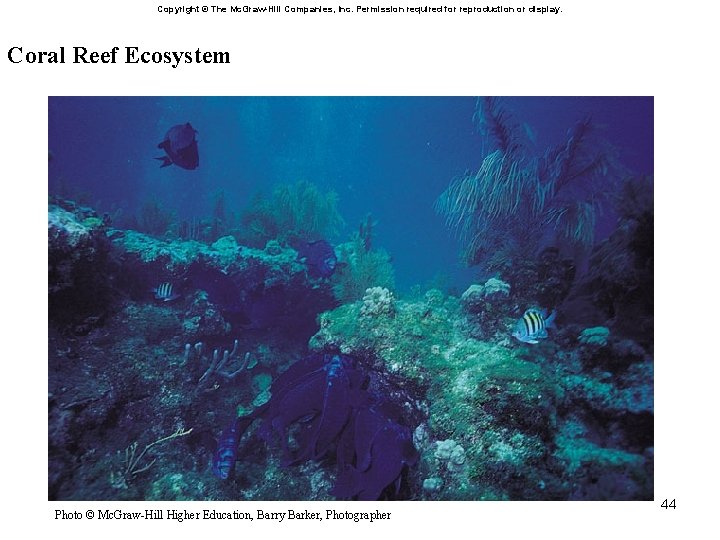
Copyright © The Mc. Graw-Hill Companies, Inc. Permission required for reproduction or display. Coral Reef Ecosystem Photo © Mc. Graw-Hill Higher Education, Barry Barker, Photographer 44
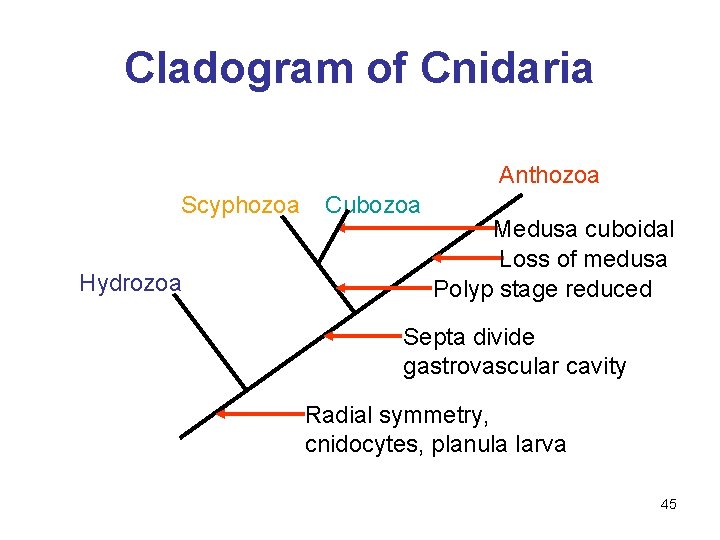
Cladogram of Cnidaria Anthozoa Scyphozoa Hydrozoa Cubozoa Medusa cuboidal Loss of medusa Polyp stage reduced Septa divide gastrovascular cavity Radial symmetry, cnidocytes, planula larva 45
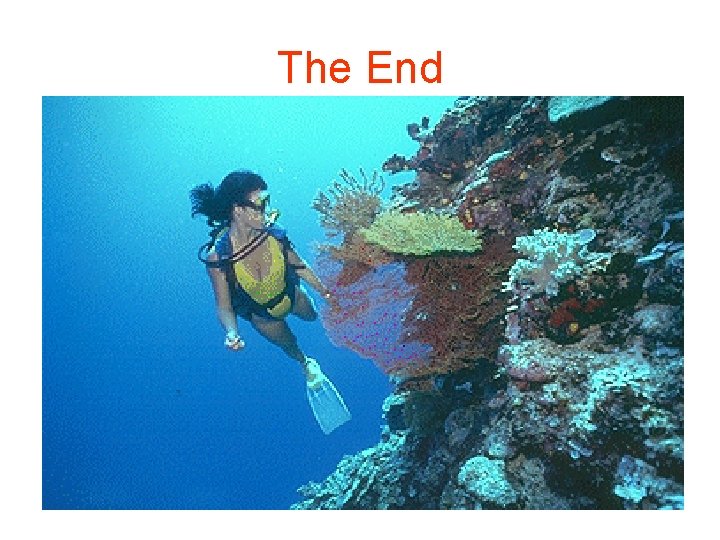
The End 46
- Slides: 46