
Phylum Chordata The Chordates Characteristics Common to all
- Slides: 10
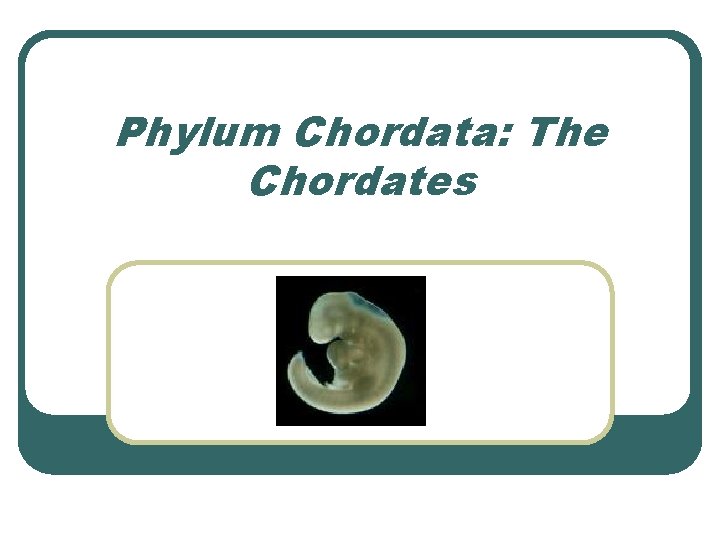
Phylum Chordata: The Chordates
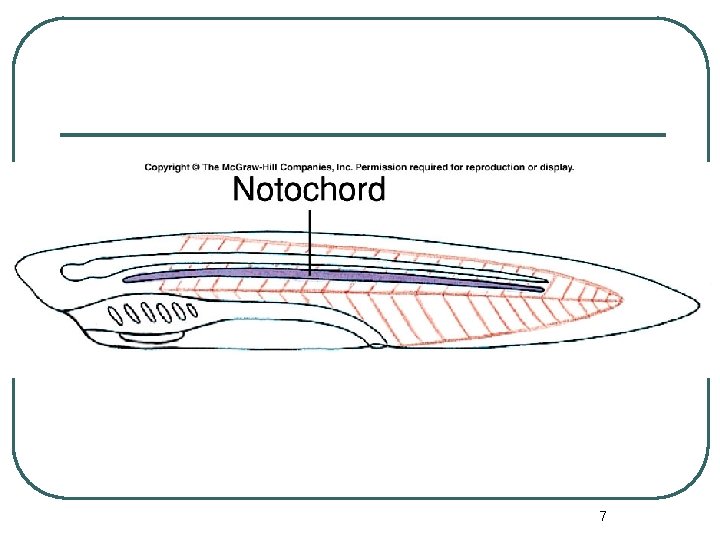
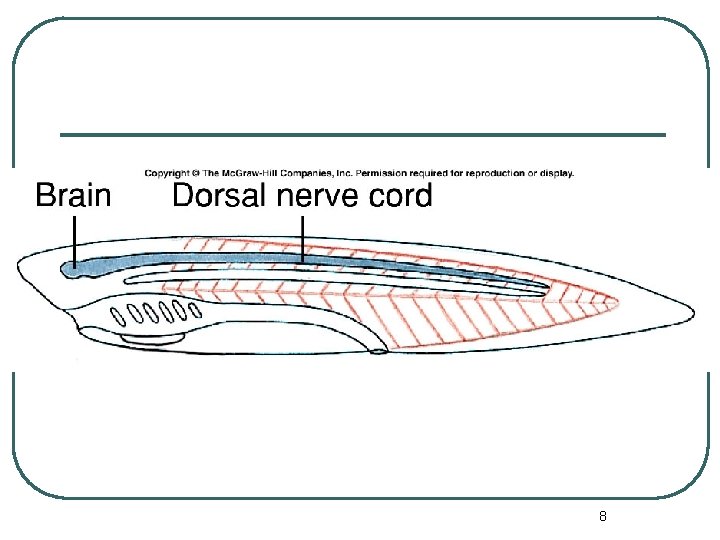
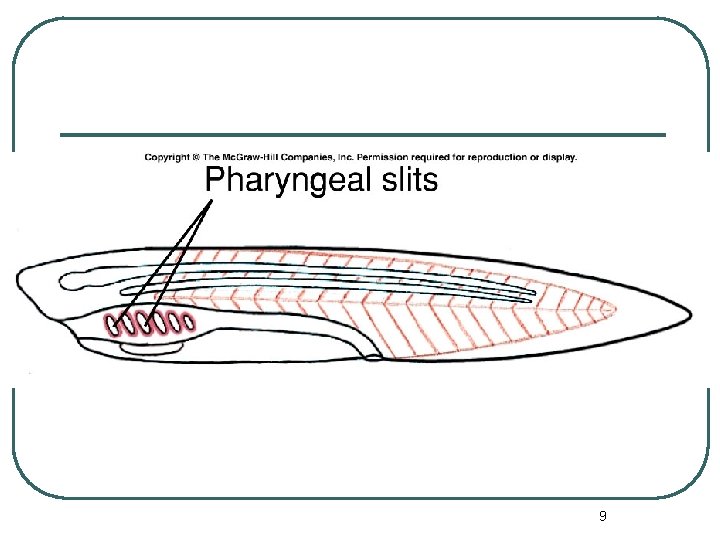
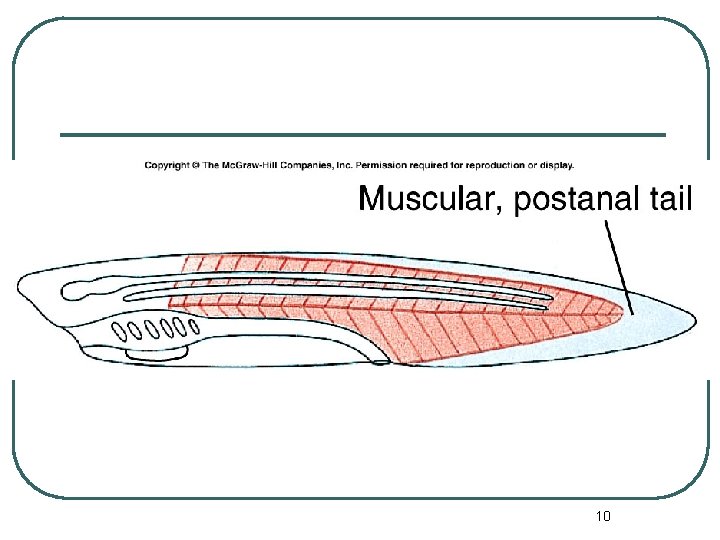
Characteristics Common to all Chordates l l l l Notochord – a supportive rod that extends most of the length of the animal (think vertebrae); allows for muscle attachment Bilaterally symmetrical Pharyngeal Slits or Pouches – think gills Dorsal Hollow Nerve Cord – think spinal cord and nervous system Tail Presence of thyroid gland Complete digestive tract Heart
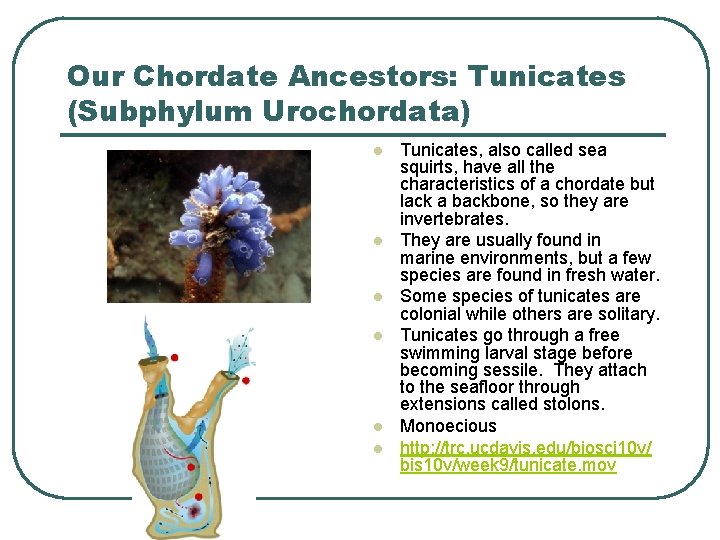
Our Chordate Ancestors: Tunicates (Subphylum Urochordata) l l l Tunicates, also called sea squirts, have all the characteristics of a chordate but lack a backbone, so they are invertebrates. They are usually found in marine environments, but a few species are found in fresh water. Some species of tunicates are colonial while others are solitary. Tunicates go through a free swimming larval stage before becoming sessile. They attach to the seafloor through extensions called stolons. Monoecious http: //trc. ucdavis. edu/biosci 10 v/ bis 10 v/week 9/tunicate. mov
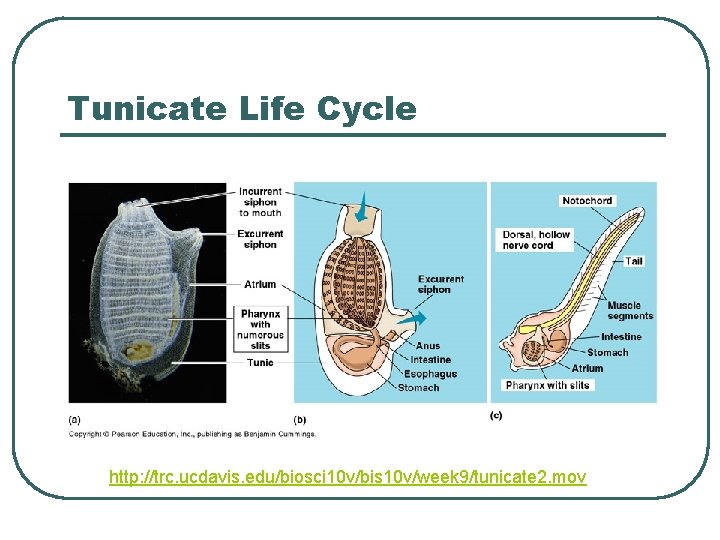
Tunicate Life Cycle http: //trc. ucdavis. edu/biosci 10 v/bis 10 v/week 9/tunicate 2. mov
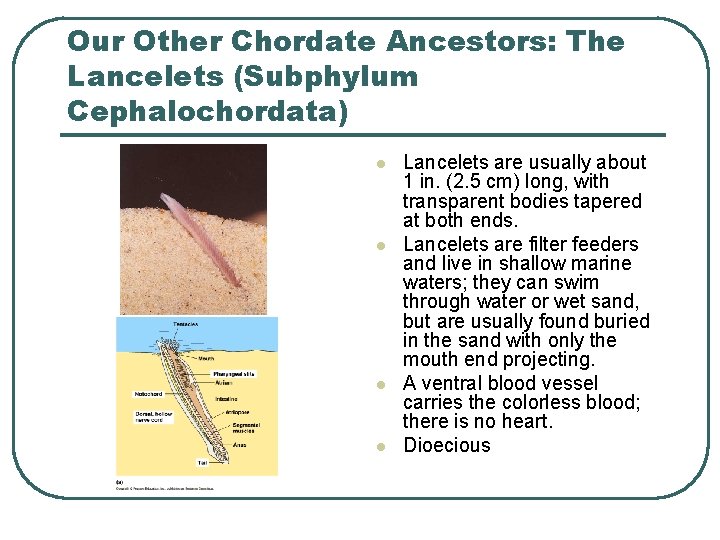
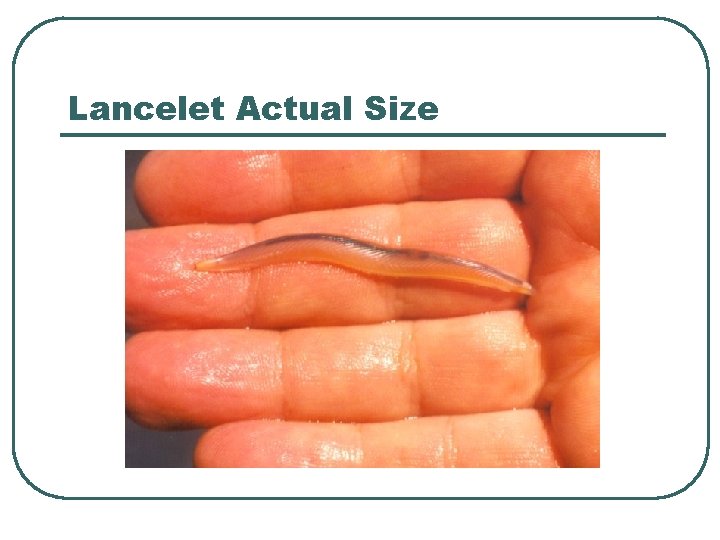
Our Other Chordate Ancestors: The Lancelets (Subphylum Cephalochordata) l l Lancelets are usually about 1 in. (2. 5 cm) long, with transparent bodies tapered at both ends. Lancelets are filter feeders and live in shallow marine waters; they can swim through water or wet sand, but are usually found buried in the sand with only the mouth end projecting. A ventral blood vessel carries the colorless blood; there is no heart. Dioecious
Lancelet Actual Size
7
8
9
10