
Phylum Chordata The Chordates All chordates have these
- Slides: 9
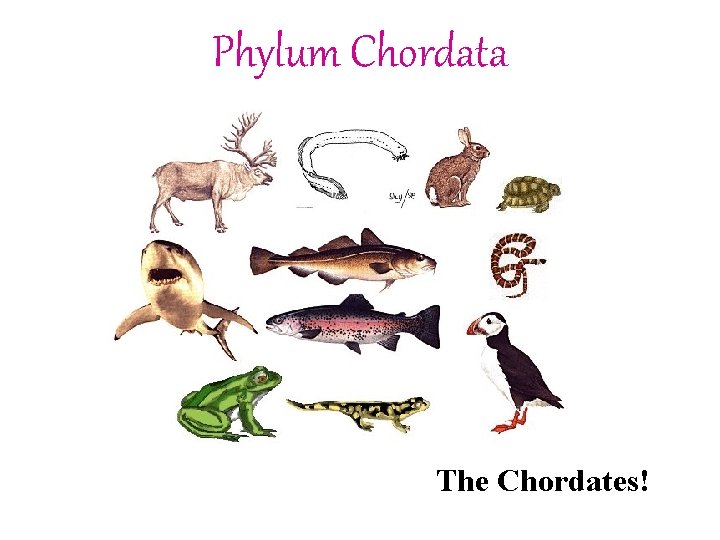
Phylum Chordata The Chordates!
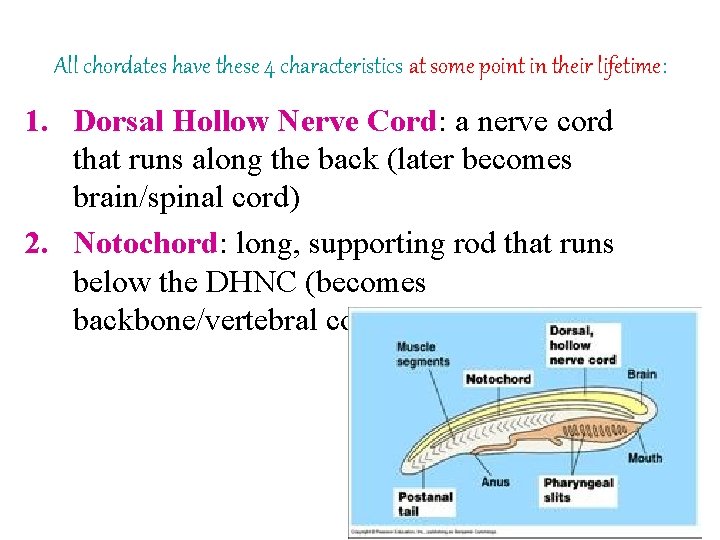
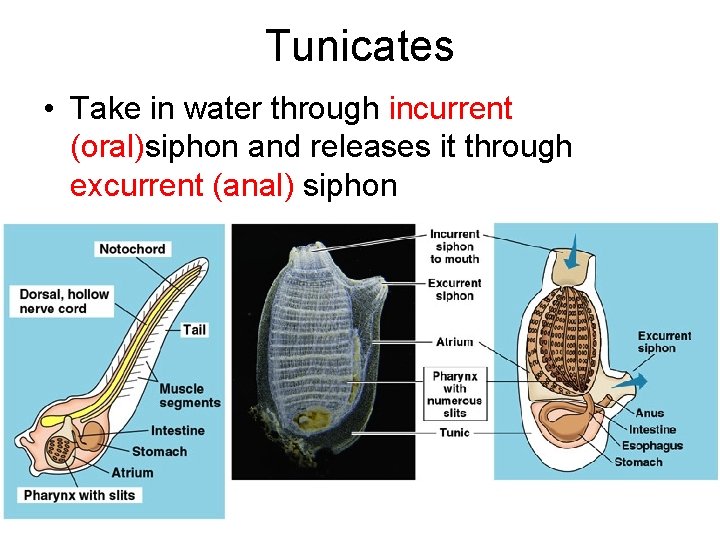
All chordates have these 4 characteristics at some point in their lifetime: 1. Dorsal Hollow Nerve Cord: a nerve cord that runs along the back (later becomes brain/spinal cord) 2. Notochord: long, supporting rod that runs below the DHNC (becomes backbone/vertebral column)
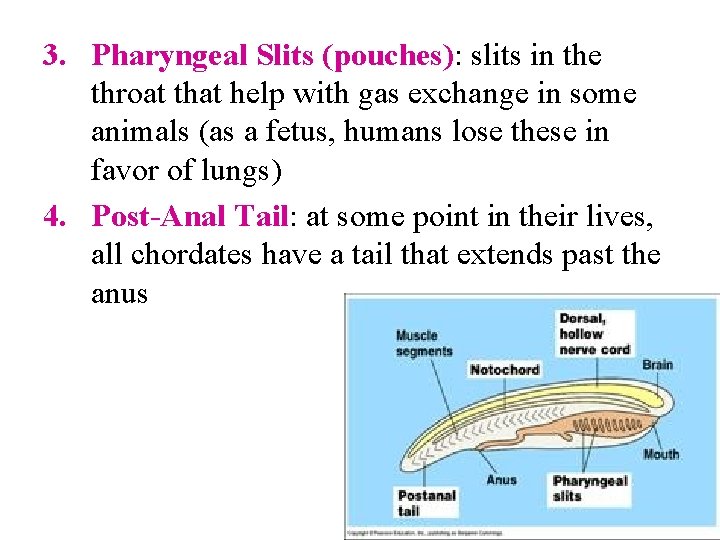
3. Pharyngeal Slits (pouches): slits in the throat that help with gas exchange in some animals (as a fetus, humans lose these in favor of lungs) 4. Post-Anal Tail: at some point in their lives, all chordates have a tail that extends past the anus
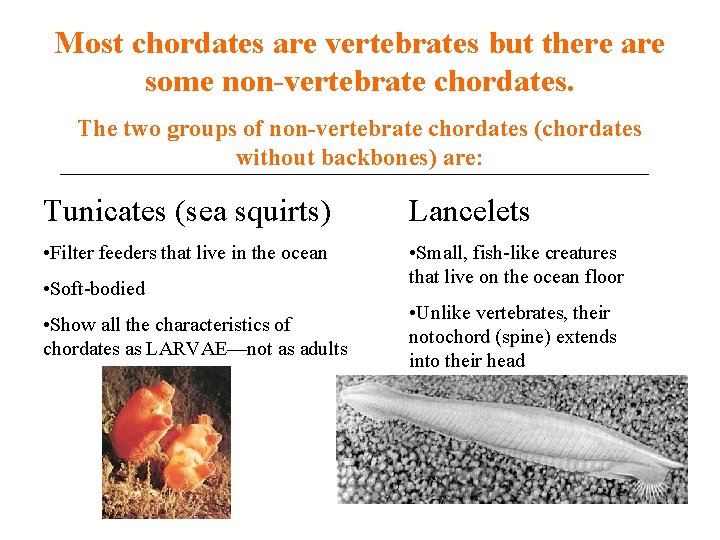
Most chordates are vertebrates but there are some non-vertebrate chordates. The two groups of non-vertebrate chordates (chordates without backbones) are: Tunicates (sea squirts) Lancelets • Filter feeders that live in the ocean • Small, fish-like creatures that live on the ocean floor • Soft-bodied • Show all the characteristics of chordates as LARVAE—not as adults • Unlike vertebrates, their notochord (spine) extends into their head
Tunicates • Take in water through incurrent (oral)siphon and releases it through excurrent (anal) siphon
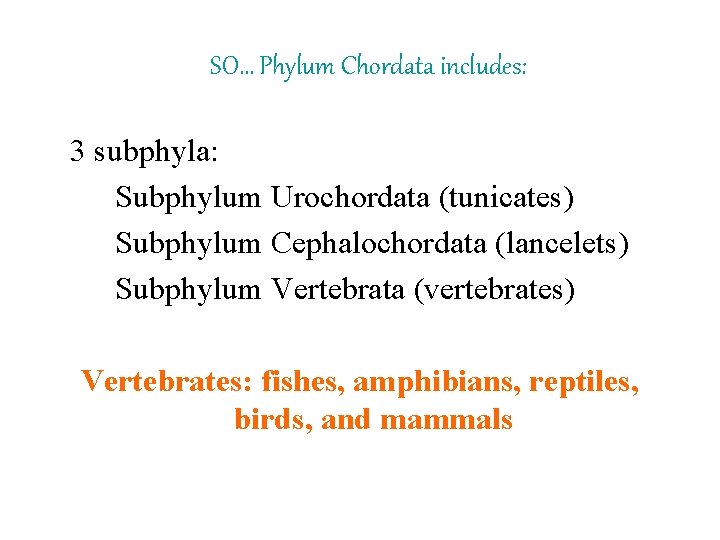
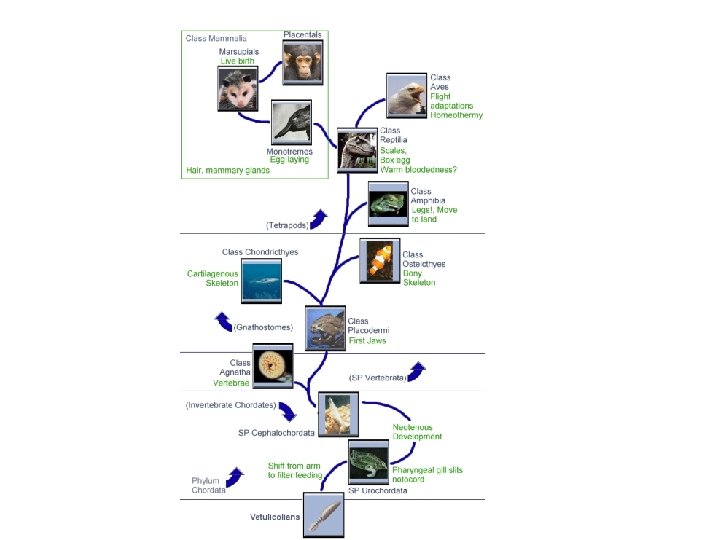
SO… Phylum Chordata includes: 3 subphyla: Subphylum Urochordata (tunicates) Subphylum Cephalochordata (lancelets) Subphylum Vertebrata (vertebrates) Vertebrates: fishes, amphibians, reptiles, birds, and mammals
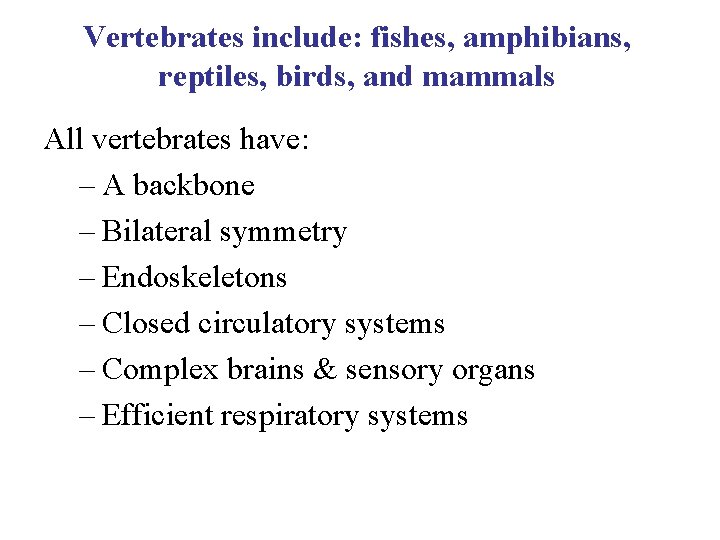
Vertebrates include: fishes, amphibians, reptiles, birds, and mammals All vertebrates have: – A backbone – Bilateral symmetry – Endoskeletons – Closed circulatory systems – Complex brains & sensory organs – Efficient respiratory systems
Introduction to Fish • Jawless Fish – Lamprey, Part 2 – Hagfish