
Phylum Chordata Subphylum Vertebrata Vertebrates These organisms have

Phylum Chordata Subphylum Vertebrata Vertebrates These organisms have a dorsal nerve cord and vertebrae. Bilateral Symmetry
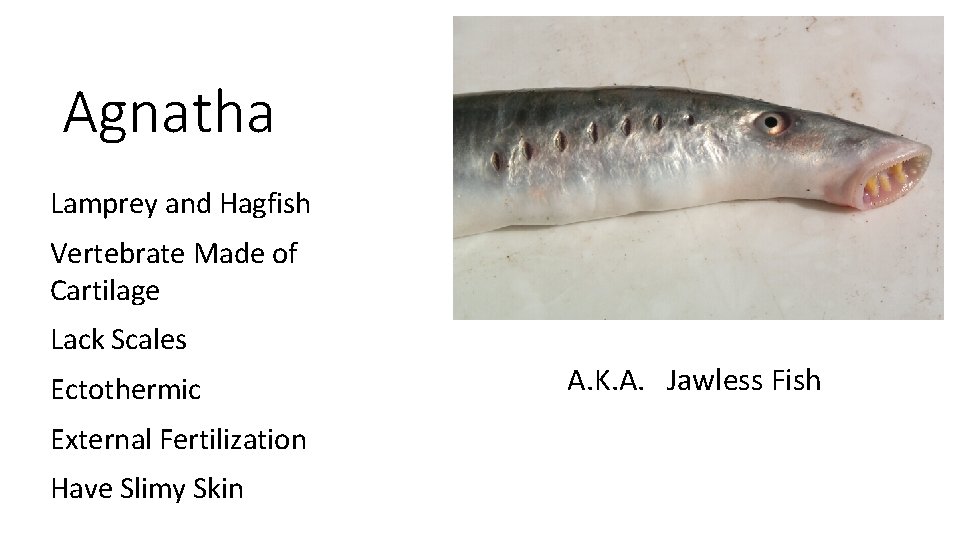
Agnatha Lamprey and Hagfish Vertebrate Made of Cartilage Lack Scales Ectothermic External Fertilization Have Slimy Skin A. K. A. Jawless Fish

Chondrichthyes Cartilagenous Fish (Bone is actually cartilage) Sharks, Skates, and Rays Scales Ectothermic 2 Pairs of Fins Internal Fertilization

Osteichthyes “Bony Fish” True Bone for a skeleton Ectotherm 2 pairs of fins and Gills External fertilization Have a swim bladder to keep them buoyant Trout, Bass, Flounder
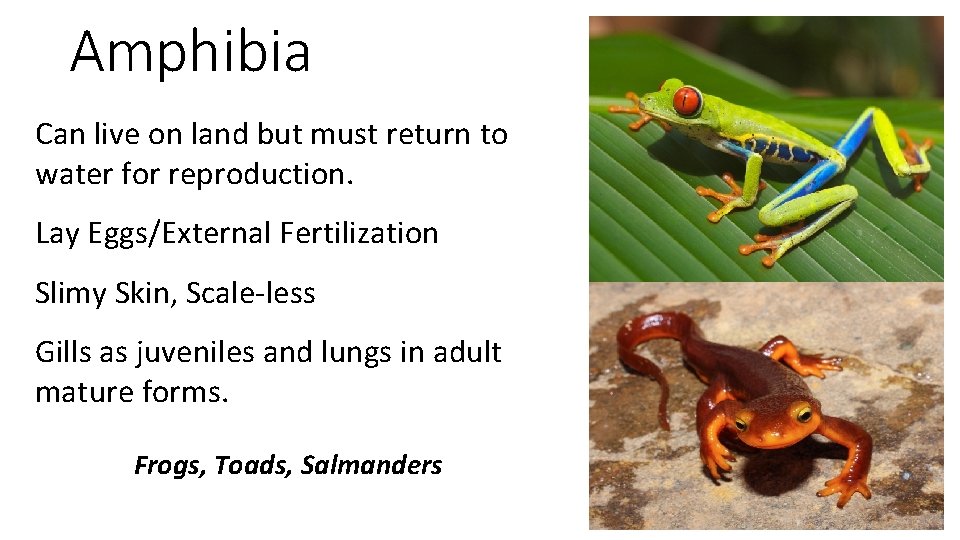
Amphibia Can live on land but must return to water for reproduction. Lay Eggs/External Fertilization Slimy Skin, Scale-less Gills as juveniles and lungs in adult mature forms. Frogs, Toads, Salmanders
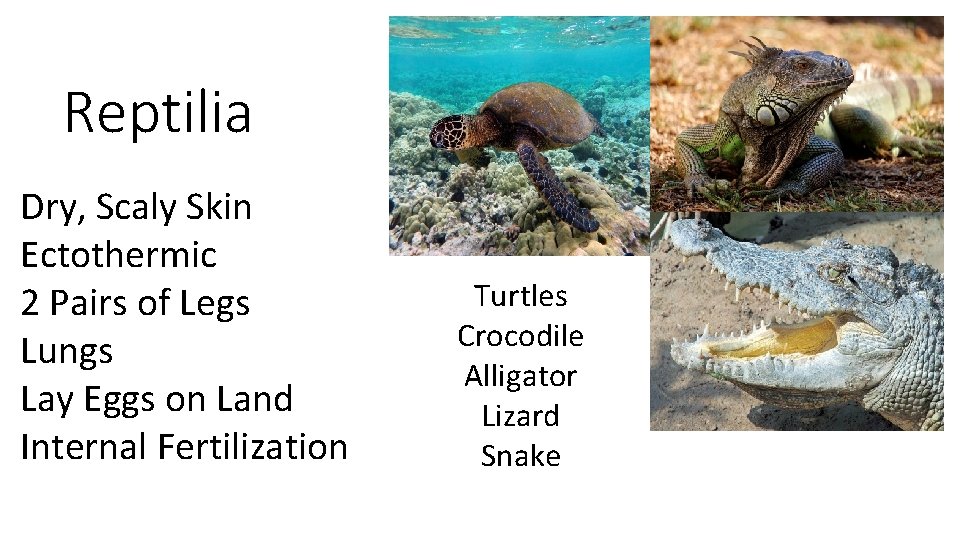
Reptilia Dry, Scaly Skin Ectothermic 2 Pairs of Legs Lungs Lay Eggs on Land Internal Fertilization Turtles Crocodile Alligator Lizard Snake
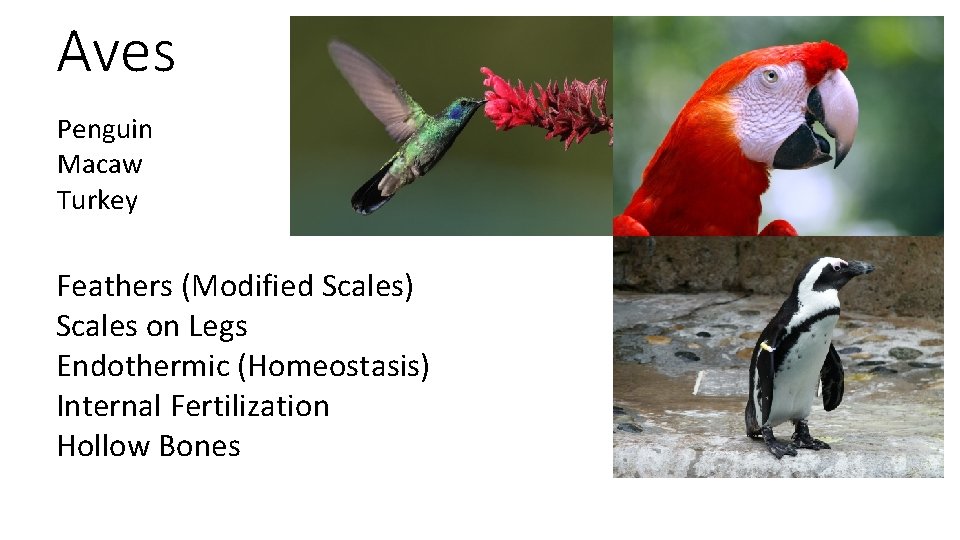
Aves Penguin Macaw Turkey Feathers (Modified Scales) Scales on Legs Endothermic (Homeostasis) Internal Fertilization Hollow Bones
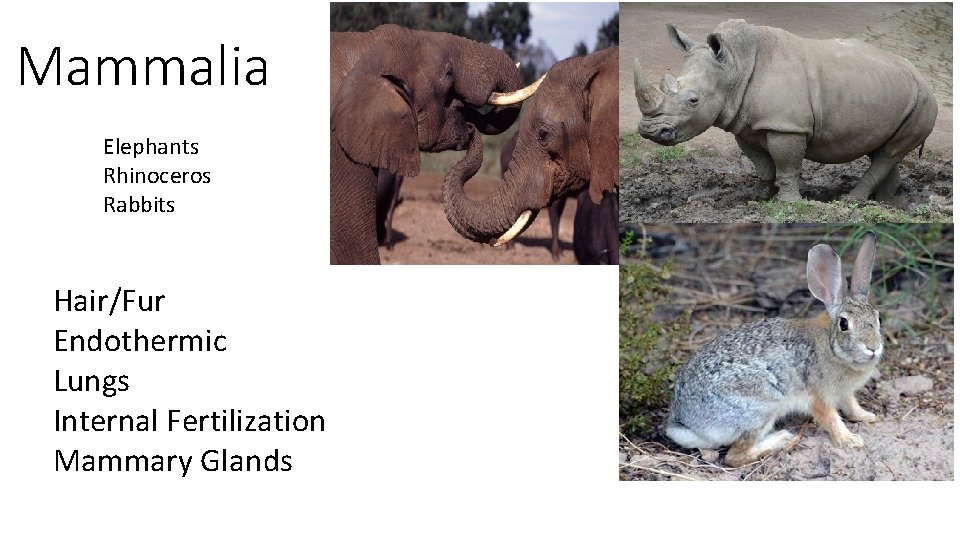
Mammalia Elephants Rhinoceros Rabbits Hair/Fur Endothermic Lungs Internal Fertilization Mammary Glands
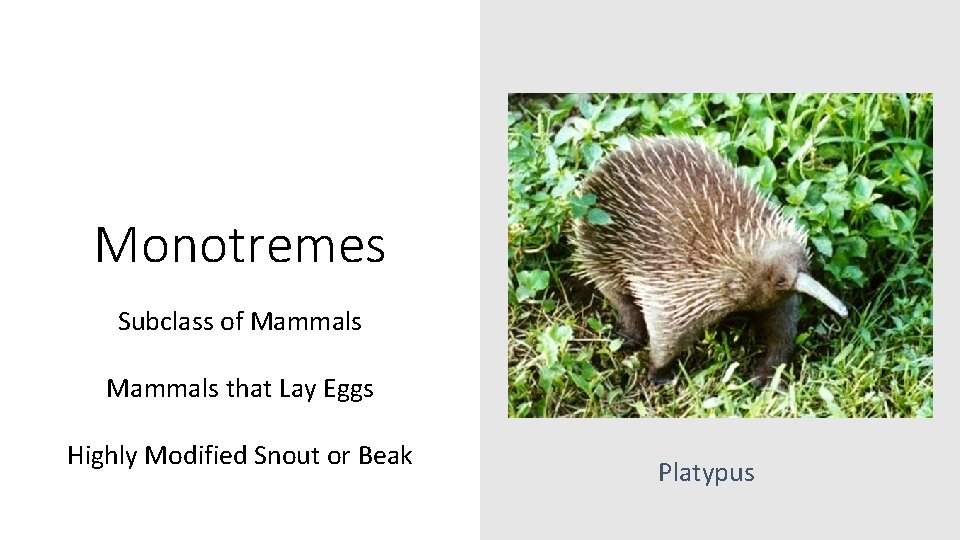
Monotremes Subclass of Mammals that Lay Eggs Highly Modified Snout or Beak Platypus
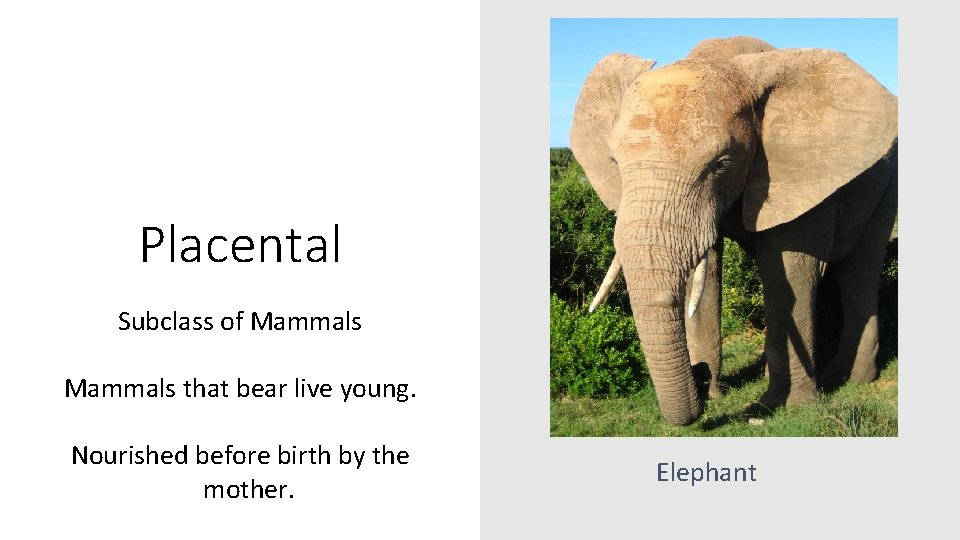
Placental Subclass of Mammals that bear live young. Nourished before birth by the mother. Elephant
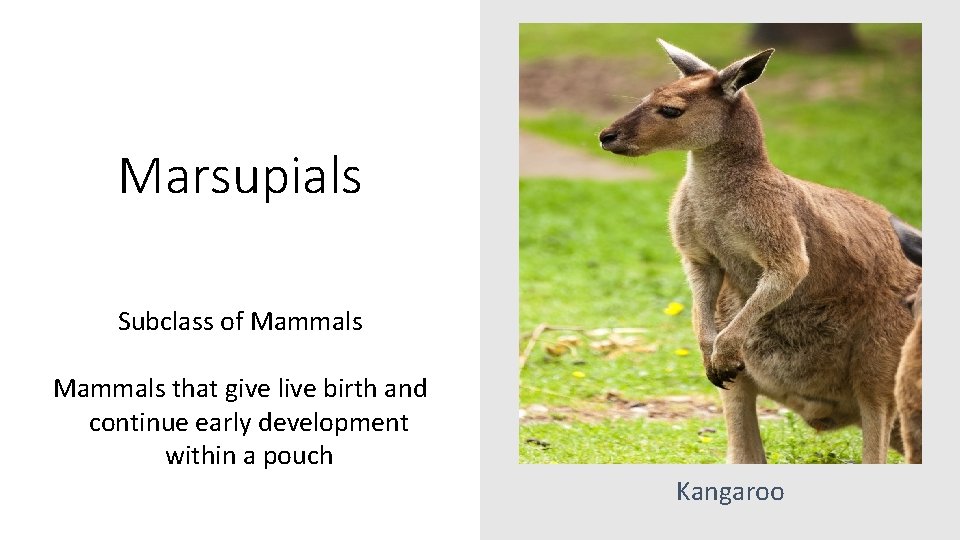
Marsupials Subclass of Mammals that give live birth and continue early development within a pouch Kangaroo
- Slides: 12