
PHYLUM CHORDATA Subphylum Vertebrata Vertebrates are animals that
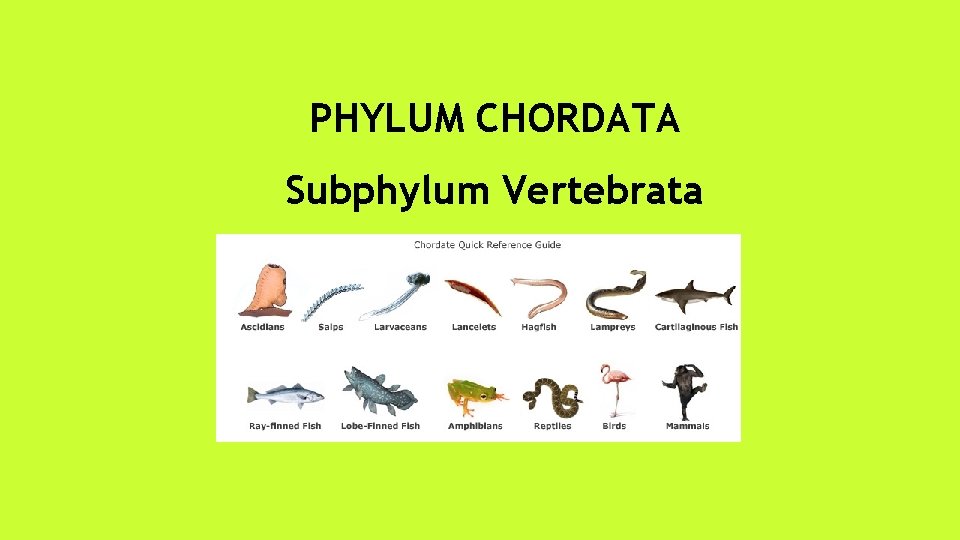
PHYLUM CHORDATA Subphylum Vertebrata
Vertebrates are animals that have a backbone or spinal column, also called vertebrae. These animals include: fish, birds, mammals, amphibians, and reptiles.
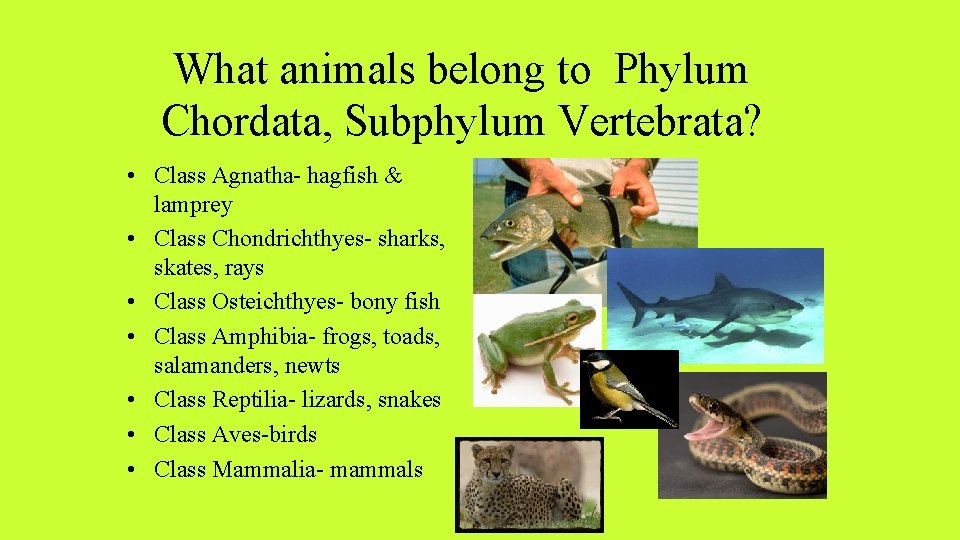
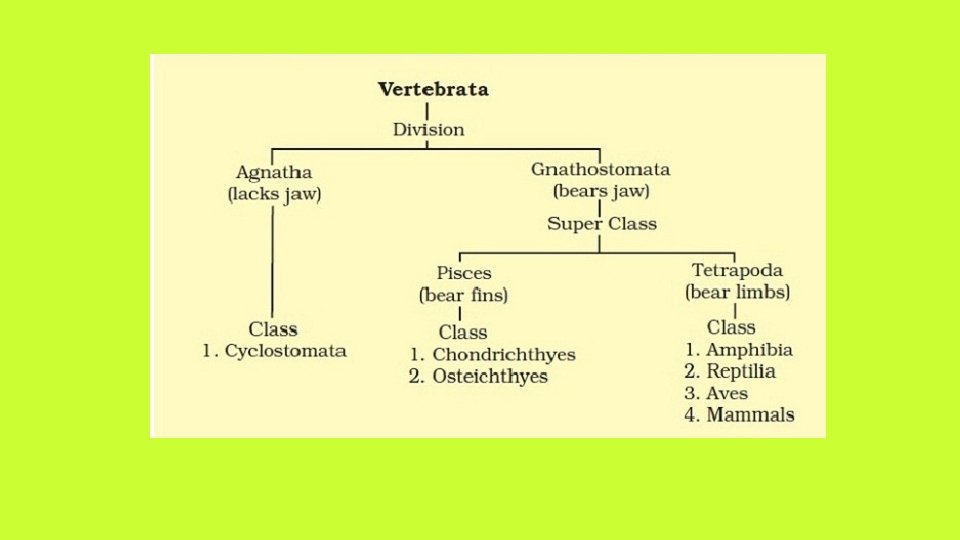
What animals belong to Phylum Chordata, Subphylum Vertebrata? • Class Agnatha- hagfish & lamprey • Class Chondrichthyes- sharks, skates, rays • Class Osteichthyes- bony fish • Class Amphibia- frogs, toads, salamanders, newts • Class Reptilia- lizards, snakes • Class Aves-birds • Class Mammalia- mammals
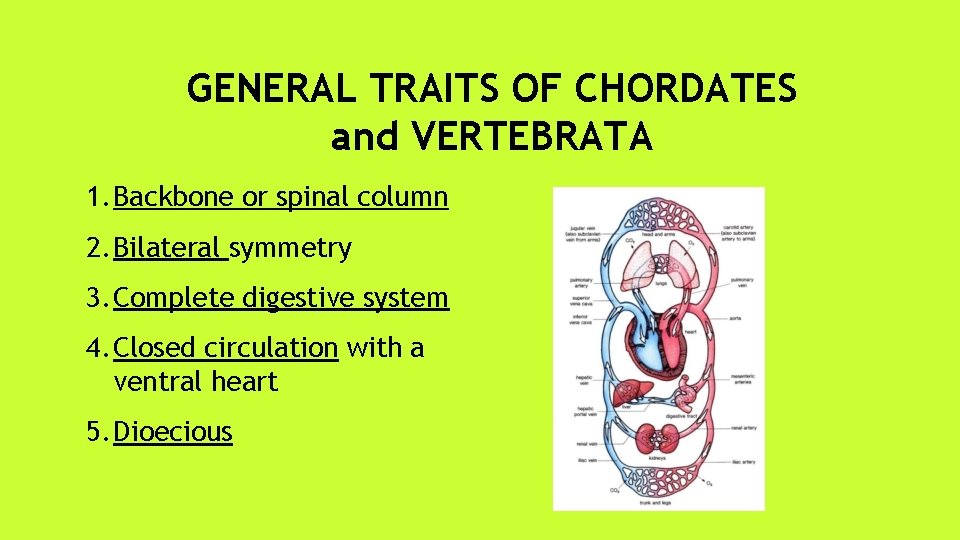
GENERAL TRAITS OF CHORDATES and VERTEBRATA 1. Backbone or spinal column 2. Bilateral symmetry 3. Complete digestive system 4. Closed circulation with a ventral heart 5. Dioecious

GENERAL TRAITS OF FISH 1. Streamlined bodies 2. Mucus covered bodies 3. Paired fins help with steering & balance. 4. Maintain buoyancy 5. tissues & bones not as heavy
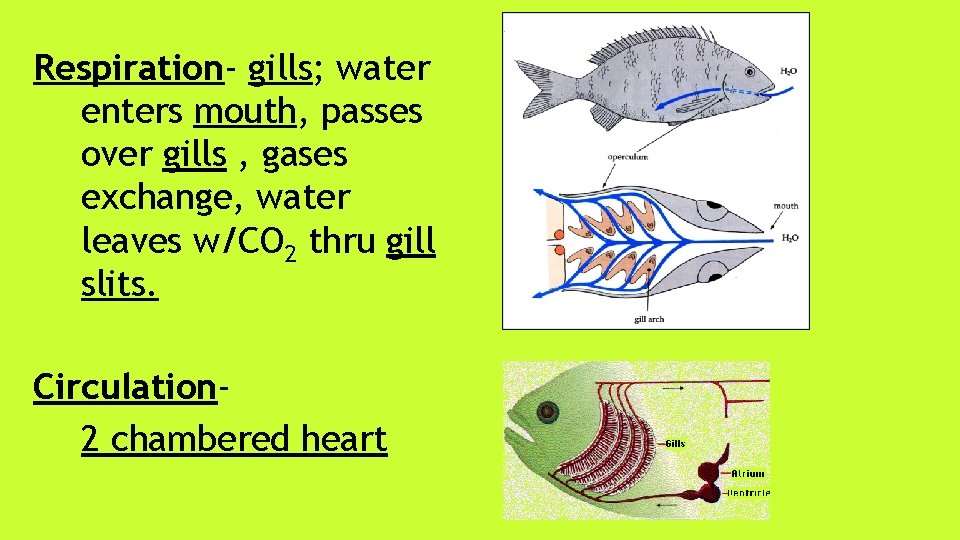
Respiration- gills; water enters mouth, passes over gills , gases exchange, water leaves w/CO 2 thru gill slits. Circulation 2 chambered heart
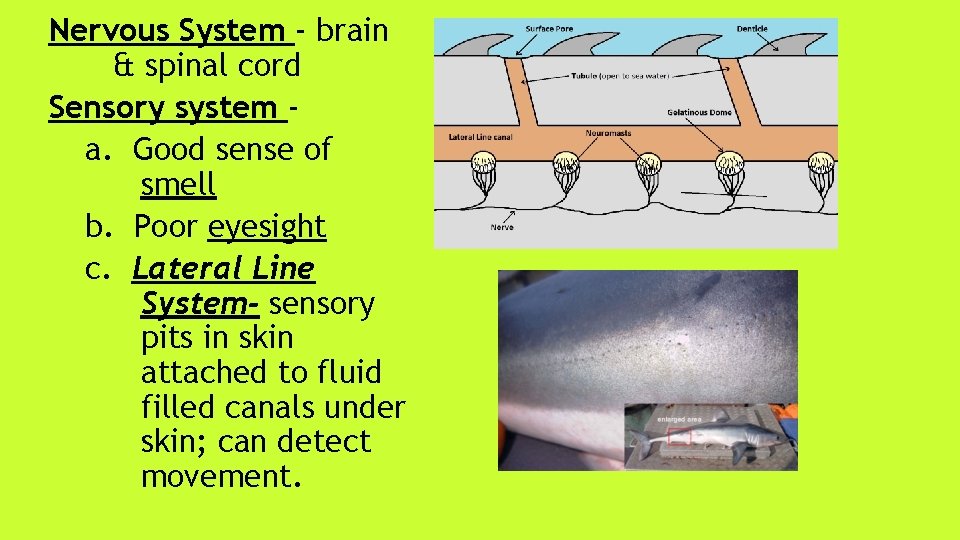
Nervous System - brain & spinal cord Sensory system a. Good sense of smell b. Poor eyesight c. Lateral Line System- sensory pits in skin attached to fluid filled canals under skin; can detect movement.
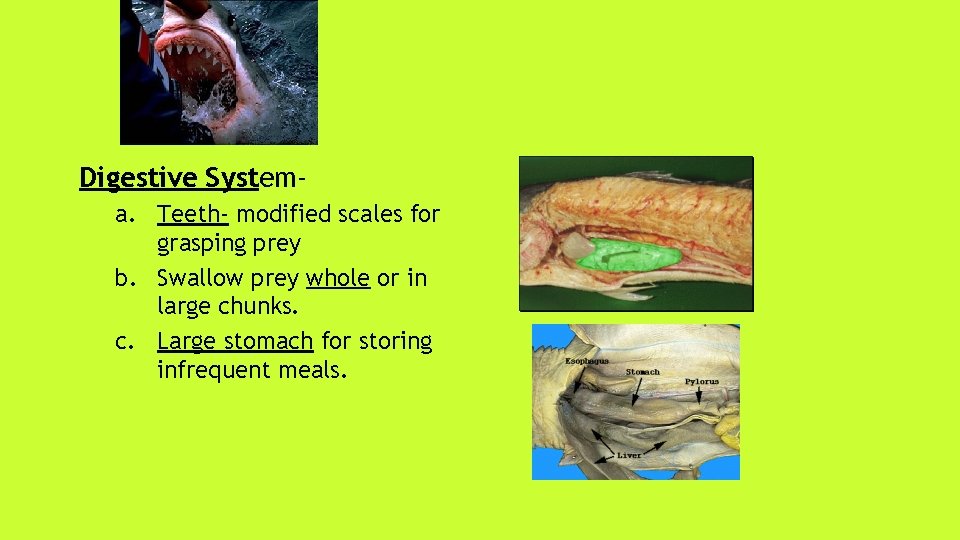
Digestive Systema. Teeth- modified scales for grasping prey b. Swallow prey whole or in large chunks. c. Large stomach for storing infrequent meals.

THREE CLASSES OF FISH
CLASS AGNATHA (Jawless fish) 1. EX: hagfish & lamprey 2. Jawless fish w/smooth skin- no scales 3. Cartilage skeleton 4. No paired fins 5. Gills open to water 6. Fertilization- external 7. Oviparous- lays eggs externally
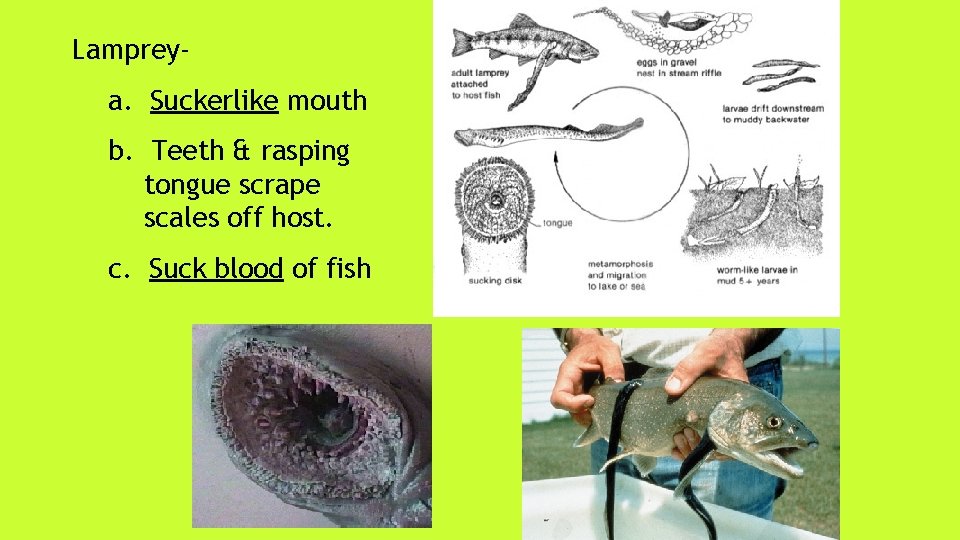
Lampreya. Suckerlike mouth b. Teeth & rasping tongue scrape scales off host. c. Suck blood of fish
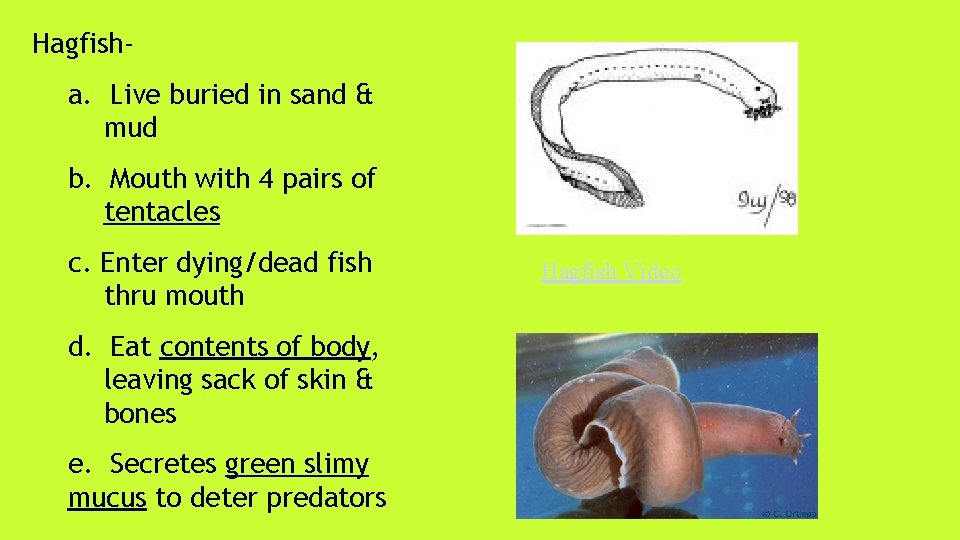
Hagfisha. Live buried in sand & mud b. Mouth with 4 pairs of tentacles c. Enter dying/dead fish thru mouth d. Eat contents of body, leaving sack of skin & bones e. Secretes green slimy mucus to deter predators Hagfish Video
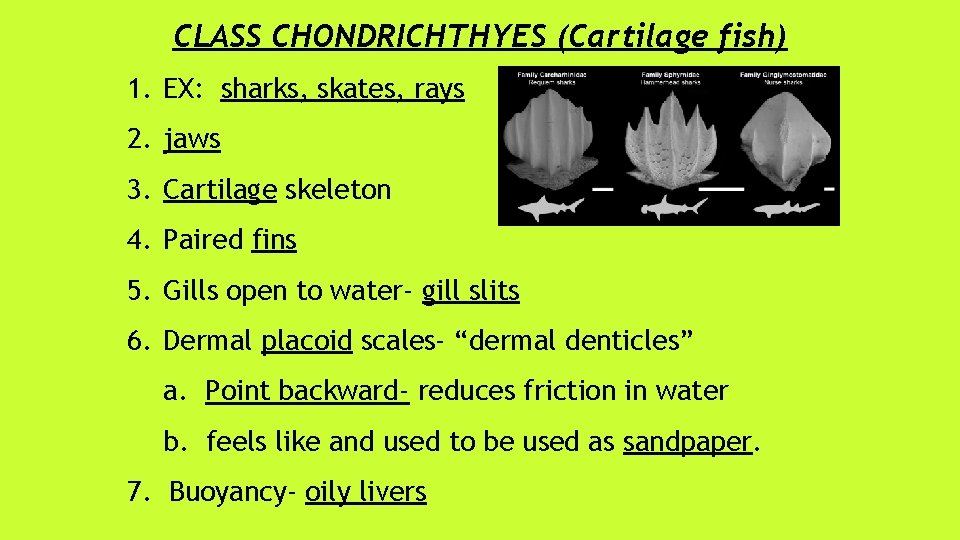
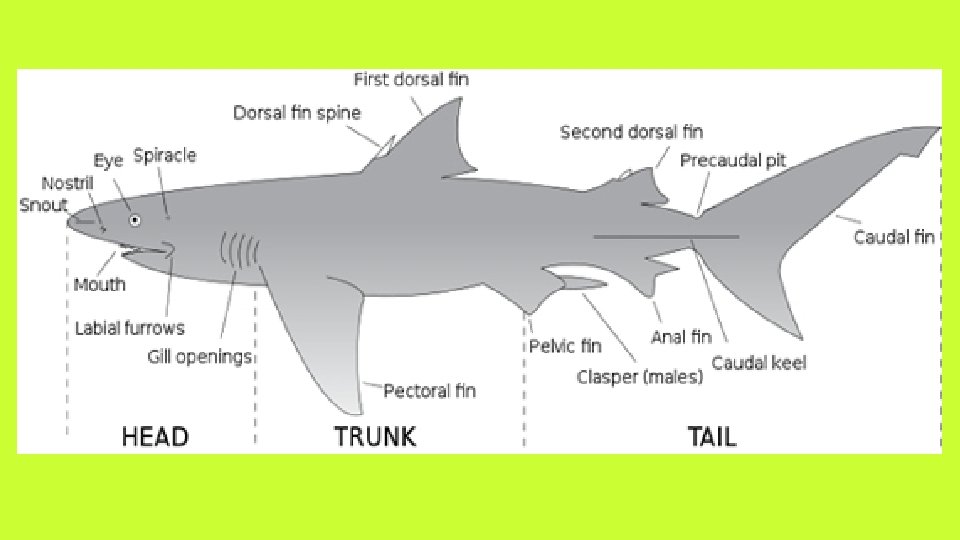
CLASS CHONDRICHTHYES (Cartilage fish) 1. EX: sharks, skates, rays 2. jaws 3. Cartilage skeleton 4. Paired fins 5. Gills open to water- gill slits 6. Dermal placoid scales- “dermal denticles” a. Point backward- reduces friction in water b. feels like and used to be used as sandpaper. 7. Buoyancy- oily livers
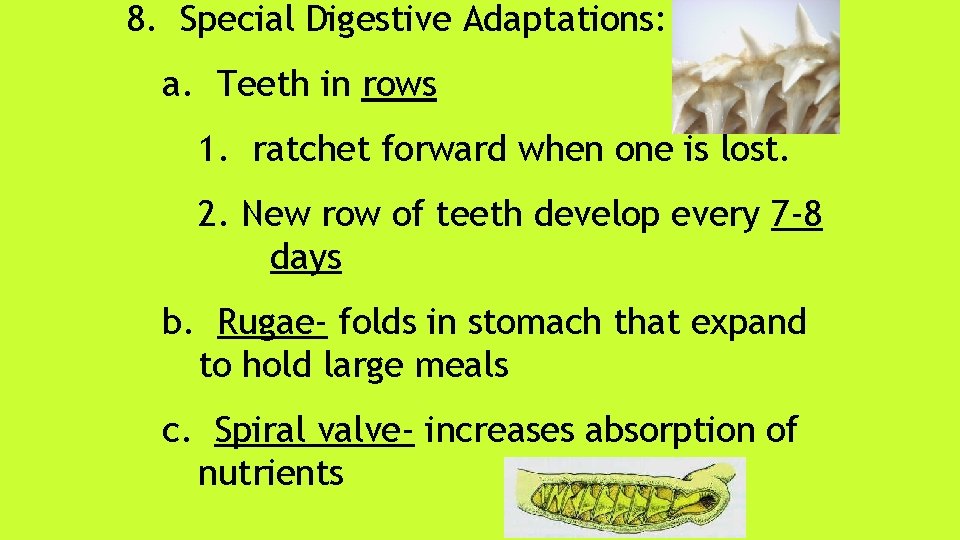
8. Special Digestive Adaptations: a. Teeth in rows 1. ratchet forward when one is lost. 2. New row of teeth develop every 7 -8 days b. Rugae- folds in stomach that expand to hold large meals c. Spiral valve- increases absorption of nutrients
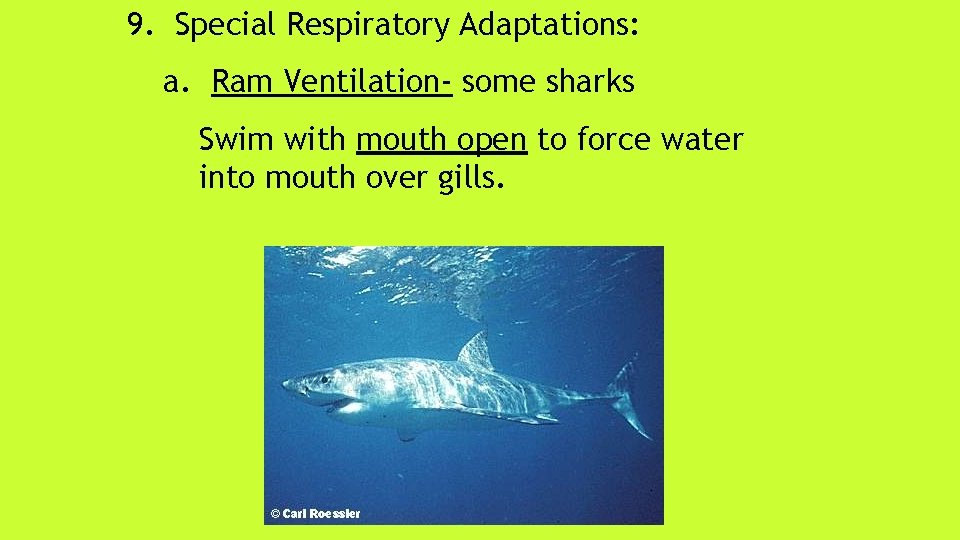
9. Special Respiratory Adaptations: a. Ram Ventilation- some sharks Swim with mouth open to force water into mouth over gills.
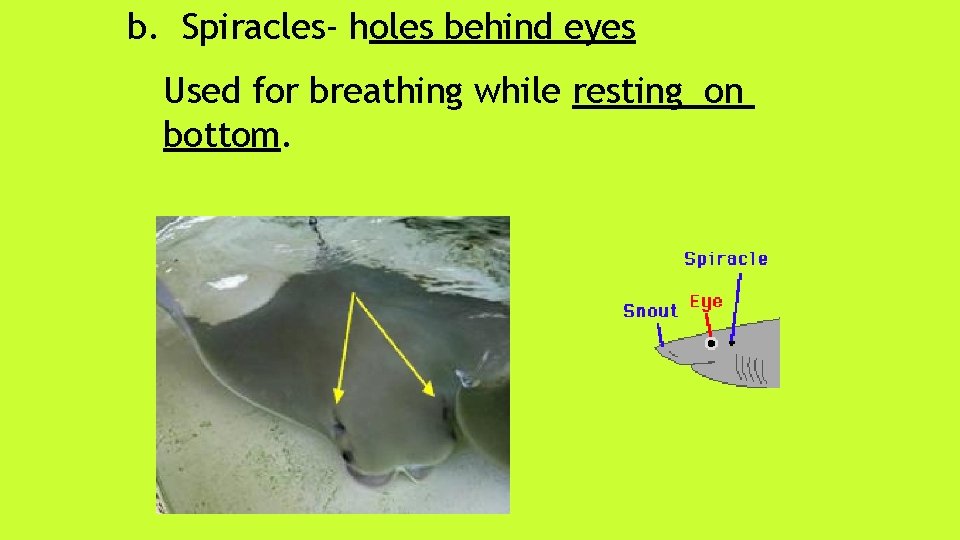
b. Spiracles- holes behind eyes Used for breathing while resting on bottom.
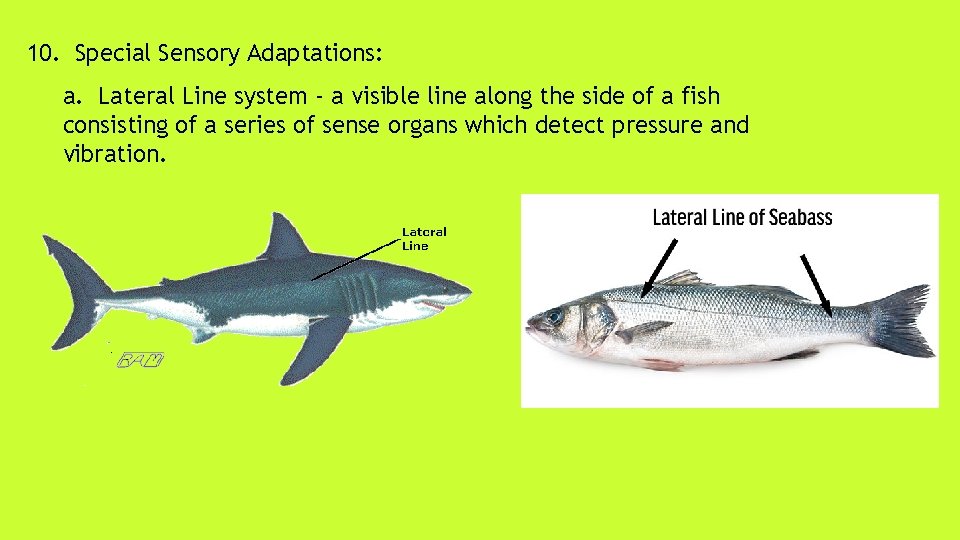
10. Special Sensory Adaptations: a. Lateral Line system - a visible line along the side of a fish consisting of a series of sense organs which detect pressure and vibration.
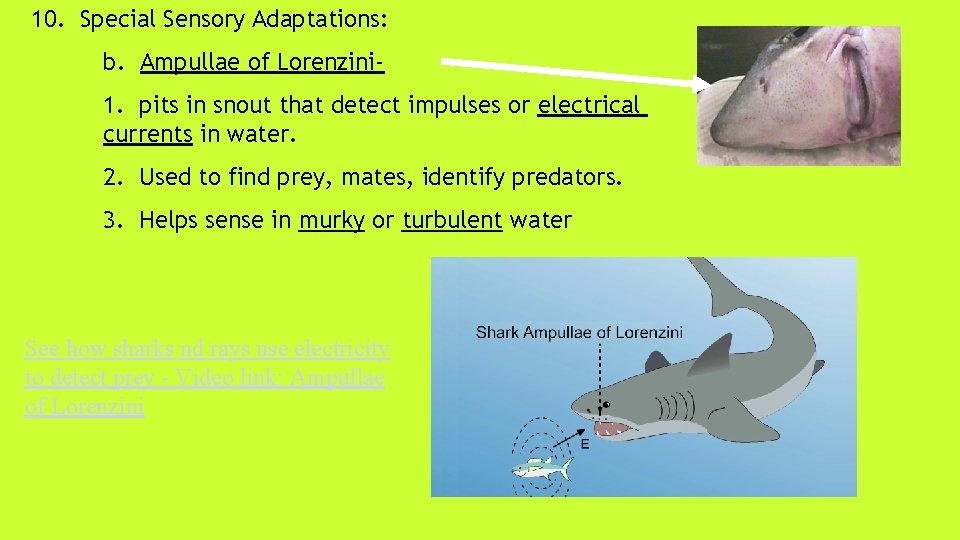
10. Special Sensory Adaptations: b. Ampullae of Lorenzini 1. pits in snout that detect impulses or electrical currents in water. 2. Used to find prey, mates, identify predators. 3. Helps sense in murky or turbulent water See how sharks nd rays use electricity to detect prey - Video link: Ampullae of Lorenzini
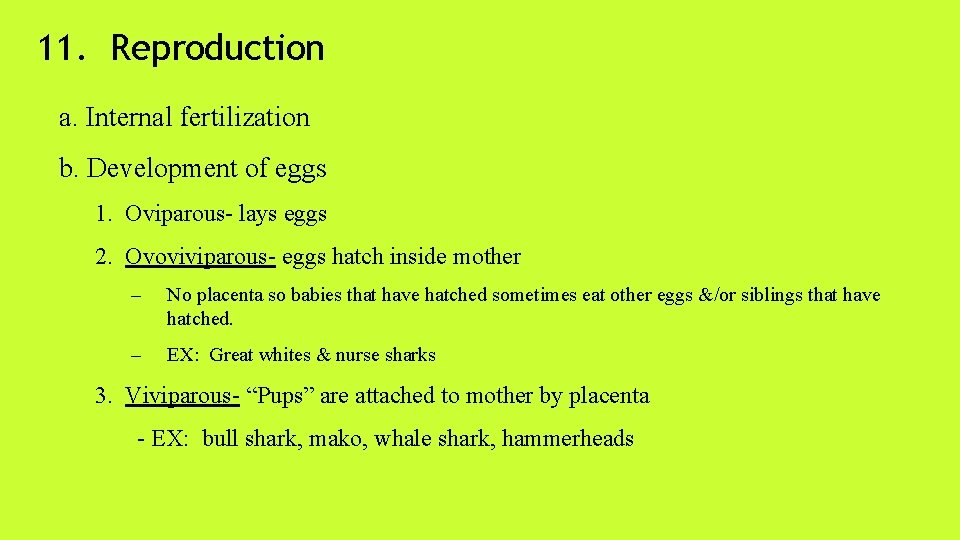
11. Reproduction a. Internal fertilization b. Development of eggs 1. Oviparous- lays eggs 2. Ovoviviparous- eggs hatch inside mother – No placenta so babies that have hatched sometimes eat other eggs &/or siblings that have hatched. – EX: Great whites & nurse sharks 3. Viviparous- “Pups” are attached to mother by placenta - EX: bull shark, mako, whale shark, hammerheads
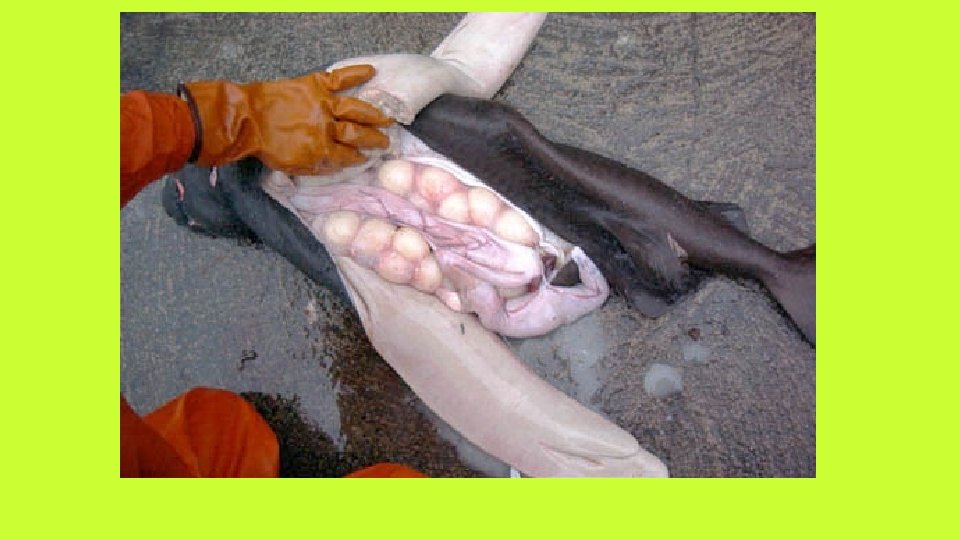
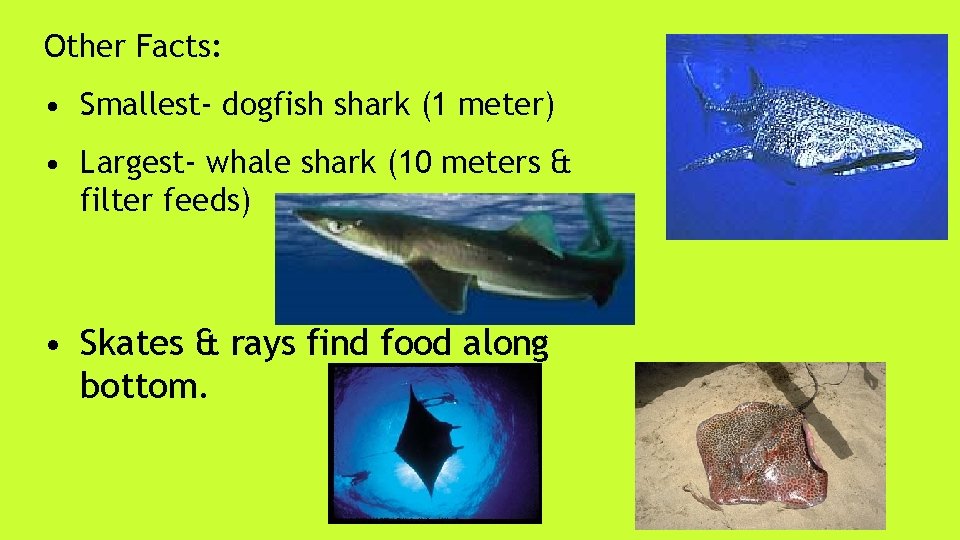
Other Facts: • Smallest- dogfish shark (1 meter) • Largest- whale shark (10 meters & filter feeds) • Skates & rays find food along bottom.
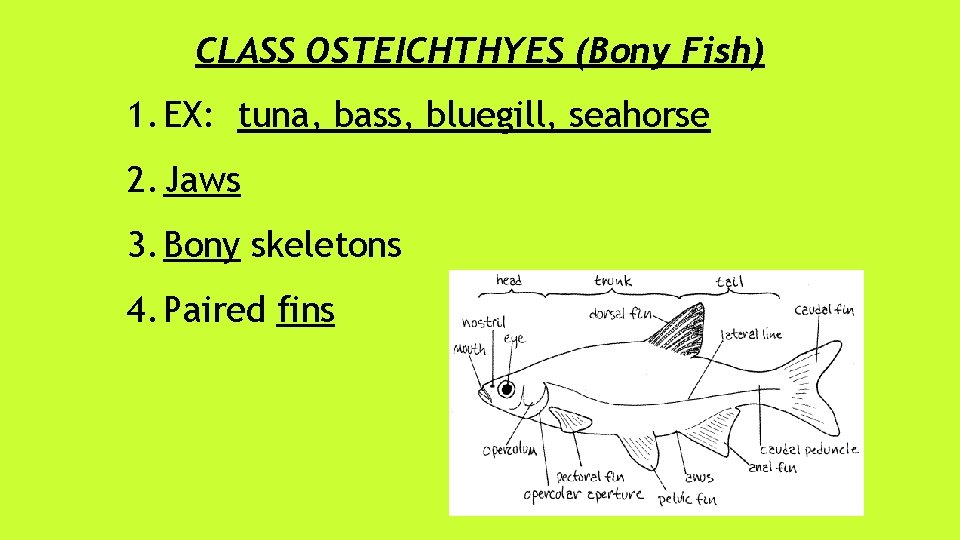
CLASS OSTEICHTHYES (Bony Fish) 1. EX: tuna, bass, bluegill, seahorse 2. Jaws 3. Bony skeletons 4. Paired fins
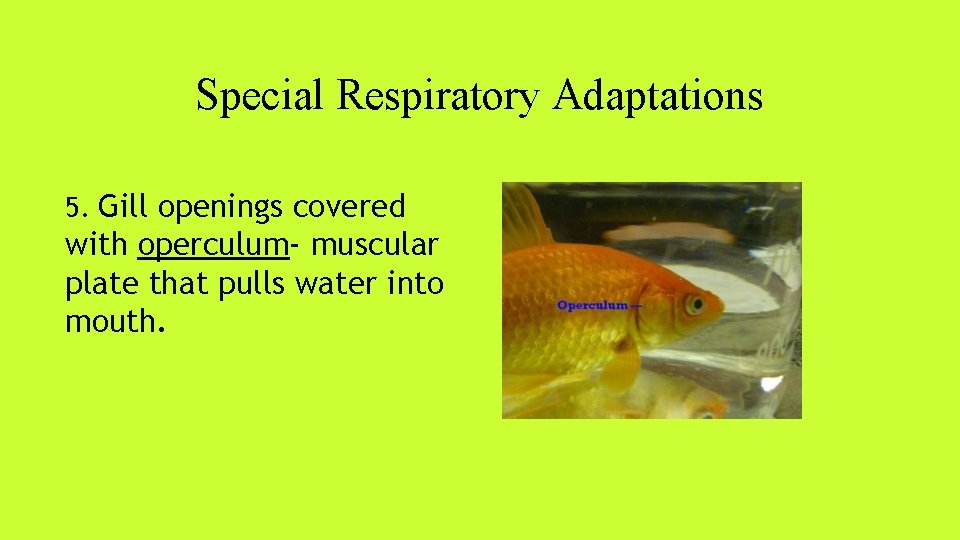
Special Respiratory Adaptations 5. Gill openings covered with operculum- muscular plate that pulls water into mouth.
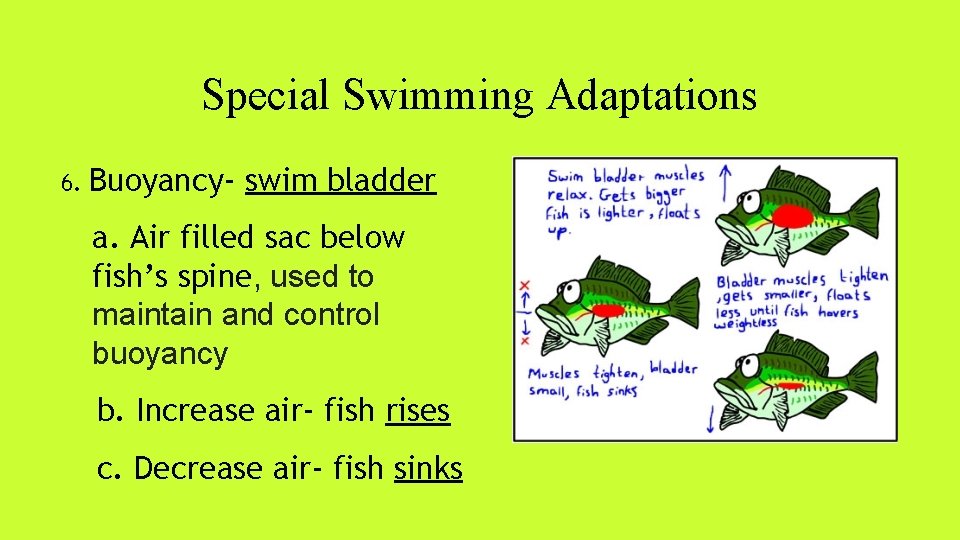
Special Swimming Adaptations 6. Buoyancy- swim bladder a. Air filled sac below fish’s spine, used to maintain and control buoyancy b. Increase air- fish rises c. Decrease air- fish sinks
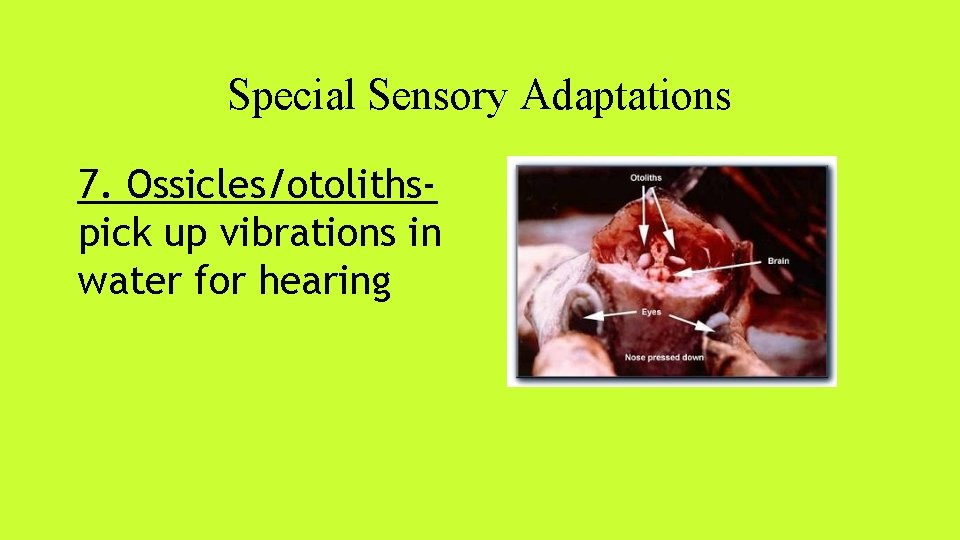
Special Sensory Adaptations 7. Ossicles/otolithspick up vibrations in water for hearing
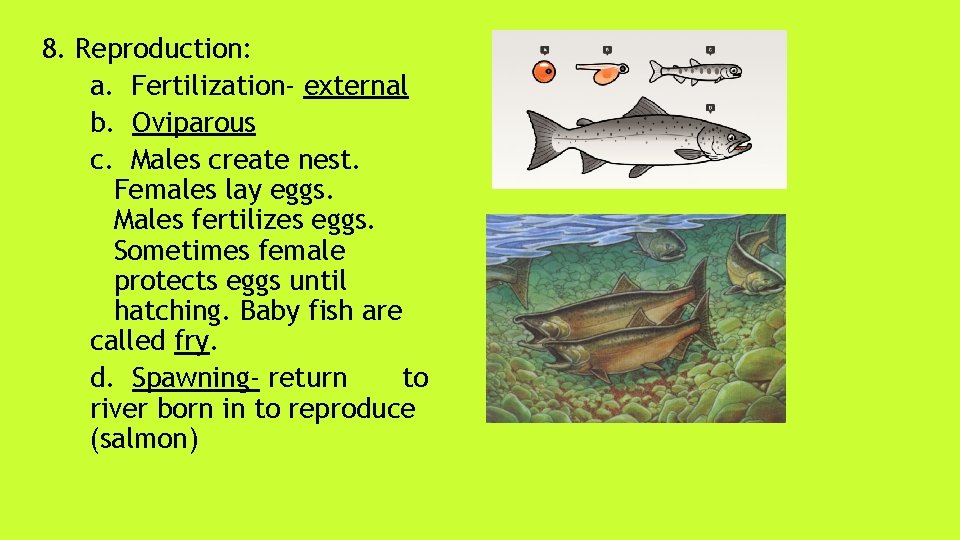
8. Reproduction: a. Fertilization- external b. Oviparous c. Males create nest. Females lay eggs. Males fertilizes eggs. Sometimes female protects eggs until hatching. Baby fish are called fry. d. Spawning- return to river born in to reproduce (salmon)
- Slides: 28