
Phylum Chordata A K A Chordates Four Distinguishing
- Slides: 19
Phylum Chordata A. K. A. Chordates
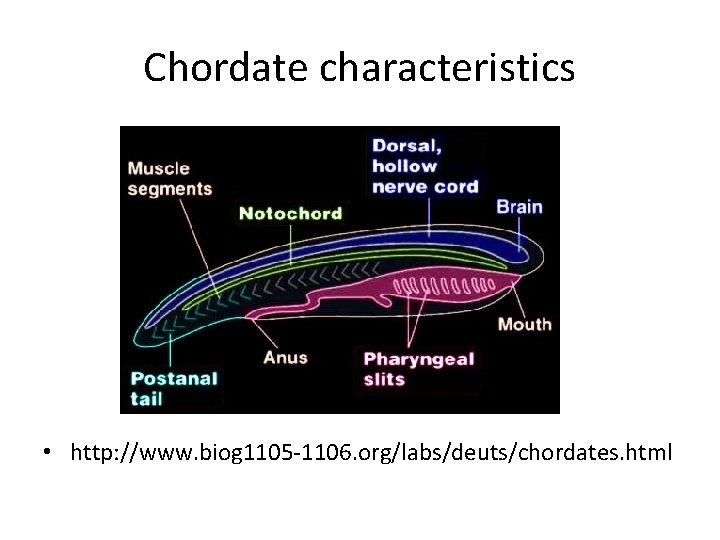
Four Distinguishing Features 1) Single, hollow, dorsal nerve cord 2) Gill or pharyngeal slits (small openings along anterior part of body or pharynx) 3) Notochord: flexible rod for support that lies between the nerve cord and gut 4) Post-anal tail: tail that extends beyond the anus
Chordate characteristics • http: //www. biog 1105 -1106. org/labs/deuts/chordates. html
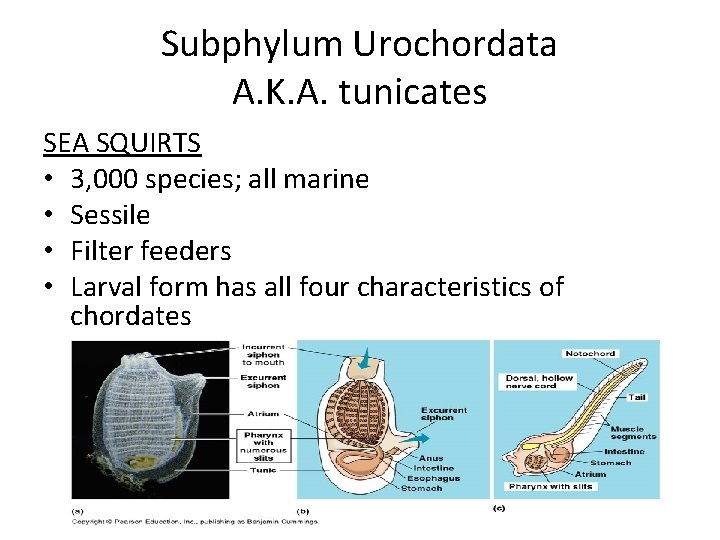
Subphylum Urochordata A. K. A. tunicates SEA SQUIRTS • 3, 000 species; all marine • Sessile • Filter feeders • Larval form has all four characteristics of chordates
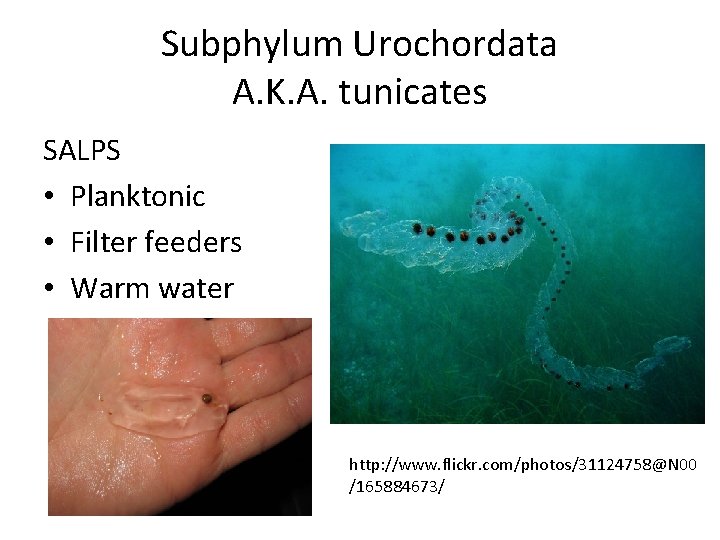
Subphylum Urochordata A. K. A. tunicates SALPS • Planktonic • Filter feeders • Warm water http: //www. flickr. com/photos/31124758@N 00 /165884673/
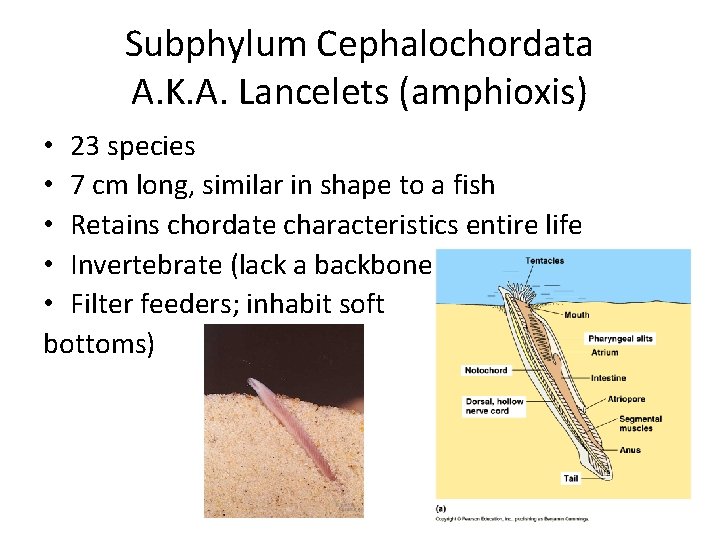
Subphylum Cephalochordata A. K. A. Lancelets (amphioxis) • 23 species • 7 cm long, similar in shape to a fish • Retains chordate characteristics entire life • Invertebrate (lack a backbone) • Filter feeders; inhabit soft bottoms)
Subphylum Vertebrata A. K. A. Vertebrates • Have a backbone; usually made of bone • Bilateral symmetry • Endoskeleton • Complete digestive system • Closed circulatory system Include: fish, reptiles, birds and mammals
Types of Fishes 1) Class Agnatha: Jawless fish 2) Class Chondrichthyes: cartilaginous fish 3) Class Osteichthyes: bony fish
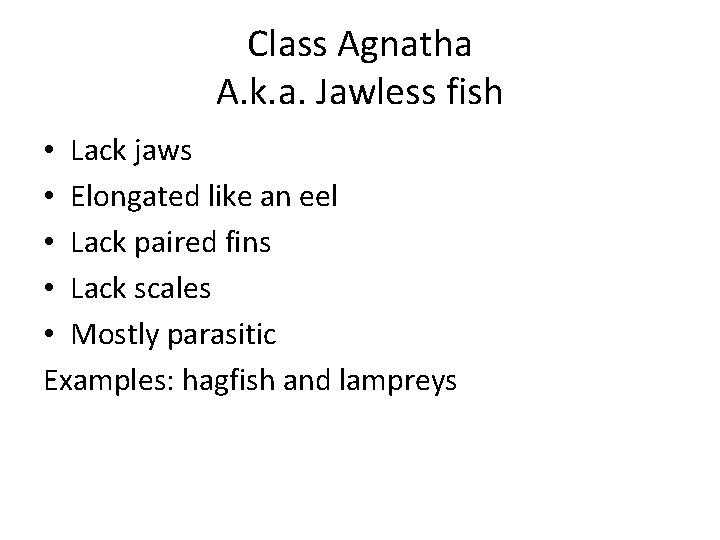
Class Agnatha A. k. a. Jawless fish • Lack jaws • Elongated like an eel • Lack paired fins • Lack scales • Mostly parasitic Examples: hagfish and lampreys
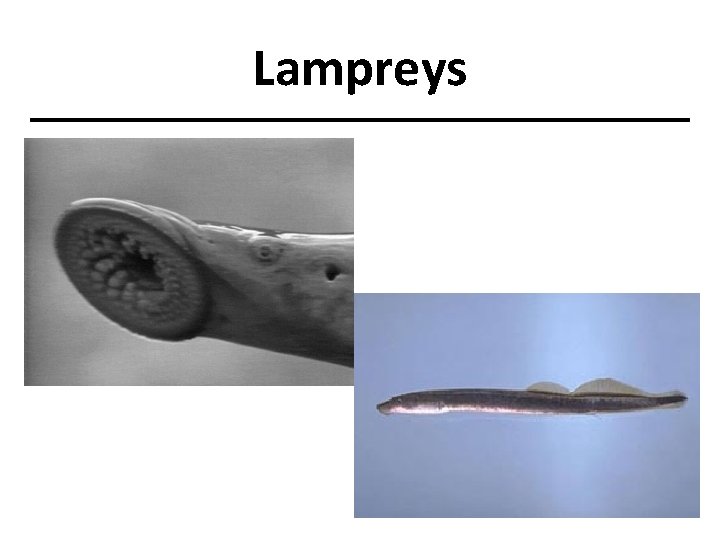
Lampreys
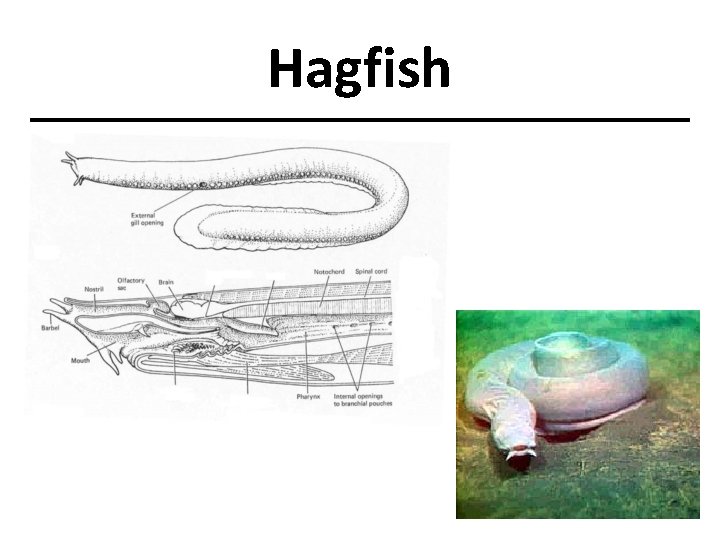
Hagfish
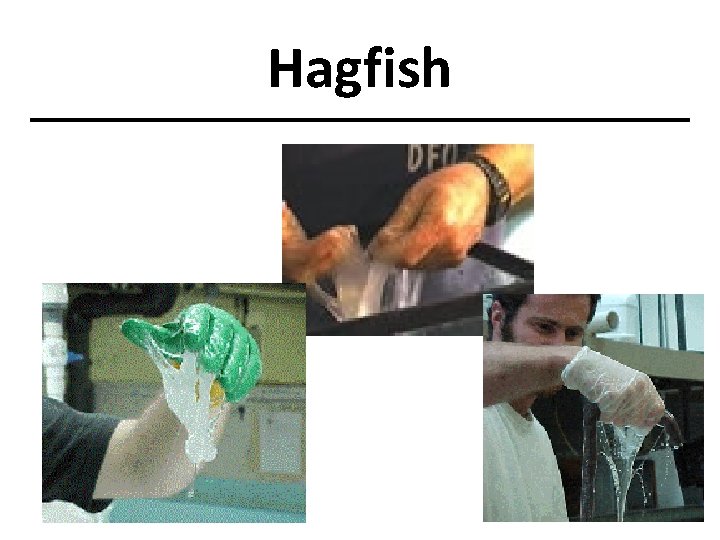
Hagfish
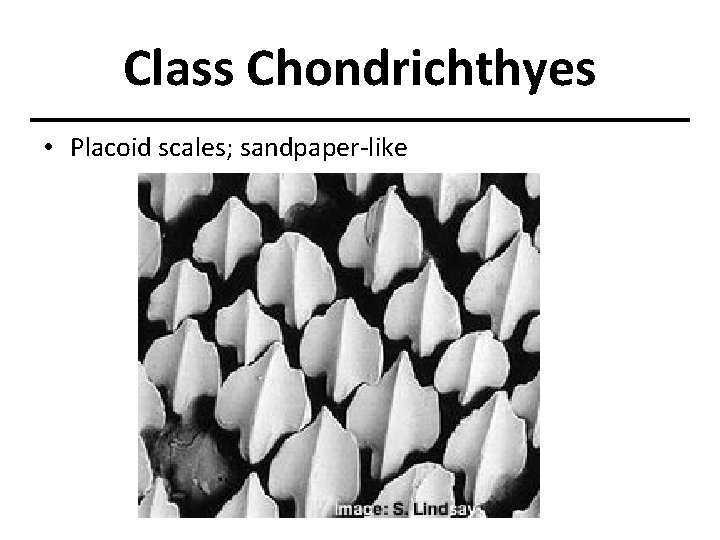
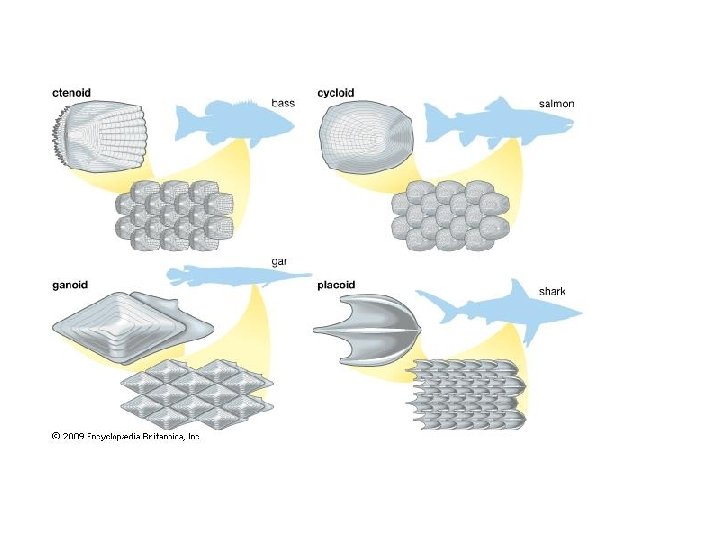
Class Chondrichthyes A. k. a. Cartilaginous Fish Skeleton of cartilage Movable jaws with teeth Paired lateral fins for efficient swimming Placoid scales: similar shape to teeth embedded into the skin • Spiracle and gill slits are not covered Includes: Sharks, Rays, Skates, and Ratfish • •
Class Chondrichthyes • Placoid scales; sandpaper-like
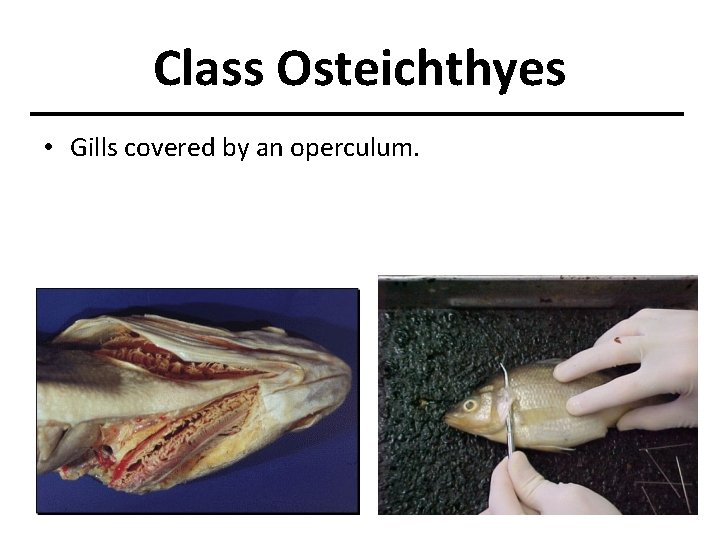
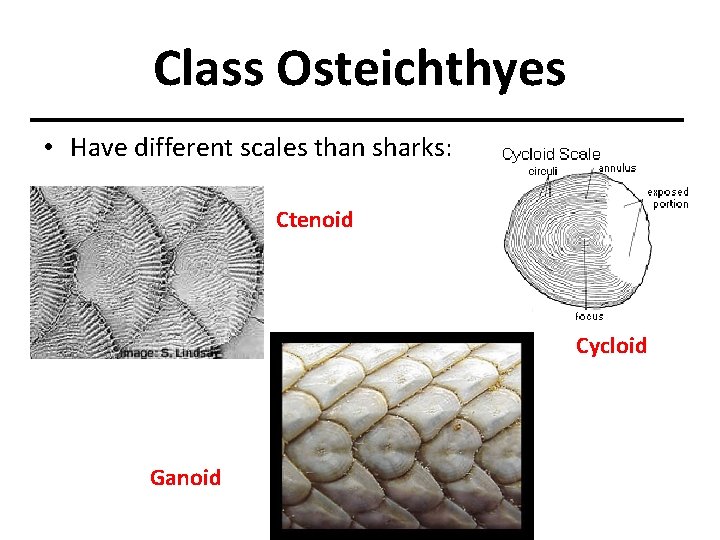
Class Osteichthyes A. k. a. Bony fish • Skeleton made of bone • Cycloid, ganoid or ctenoid scales which are thin flexible and overlapping • Scales are made of bone and covered by a thin layer of tissue and mucus • Operculum that covers and protects the gills • Swim bladder: fills with air to control buoyancy
Class Osteichthyes • Gills covered by an operculum.
Class Osteichthyes • Have different scales than sharks: Ctenoid Cycloid Ganoid
Fish Adaptations • You will work in pairs. • Each pair will have one sheet of paper and each person should have a different color pen. • Each person in the pair will answer every other question in their color pen. • Answer the following questions: • Part I: 1, 2, 3, 4, 5, 7 8, 10, 11, 12(read), 14, 15, 16, 17 (your fish only) • Part. II: 1, 2 a-c, 3, 5, 7 • Part III: 1, 2, 3, 4, 6