
Phylum Basidiomycota General characters 1 The sexual reproduction
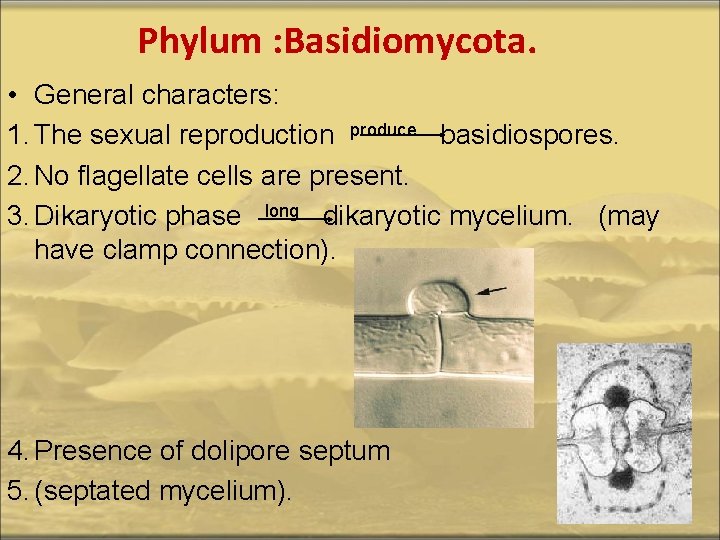
Phylum : Basidiomycota. • General characters: 1. The sexual reproduction produce basidiospores. 2. No flagellate cells are present. 3. Dikaryotic phase long dikaryotic mycelium. (may have clamp connection). 4. Presence of dolipore septum 5. (septated mycelium).
5. Basidiomycota: parasites rust fungi smut fungi Saprophytes. 6. Cell wall contain high amount of chitin. 7. Forming marcroscopic fruiting bodies. 8. Asexual reproduction by conidia, chlamdospores
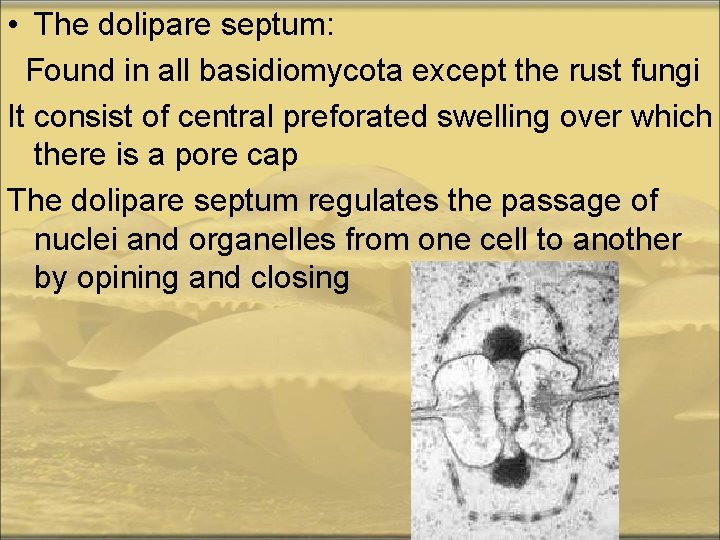
• The dolipare septum: Found in all basidiomycota except the rust fungi It consist of central preforated swelling over which there is a pore cap The dolipare septum regulates the passage of nuclei and organelles from one cell to another by opining and closing
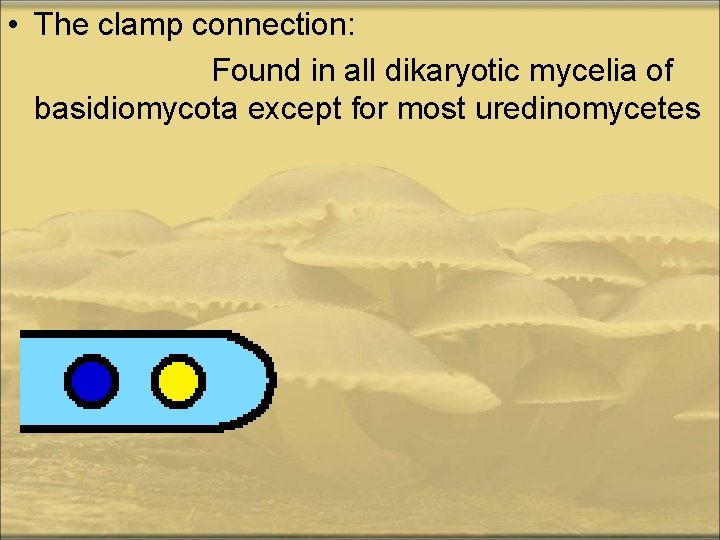
• The clamp connection: Found in all dikaryotic mycelia of basidiomycota except for most uredinomycetes
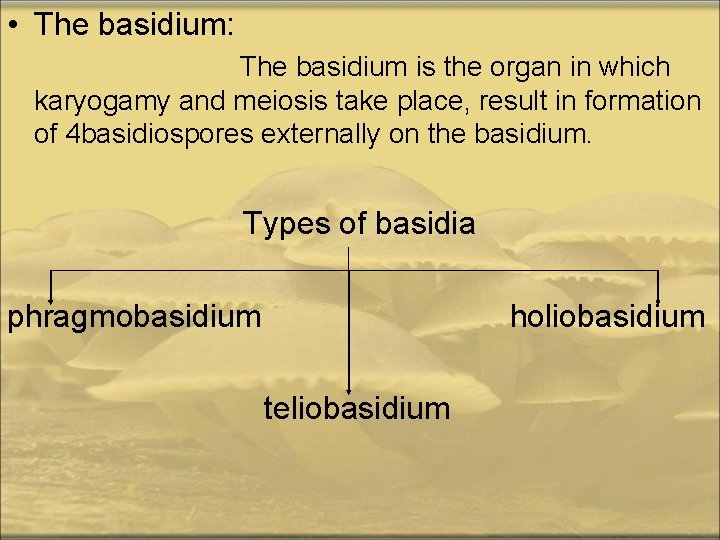
• The basidium: The basidium is the organ in which karyogamy and meiosis take place, result in formation of 4 basidiospores externally on the basidium. Types of basidia phragmobasidium holiobasidium teliobasidium
• Diplodization or dikaryotization: Is the process in which a primary mycelium converted into secondary myclium.
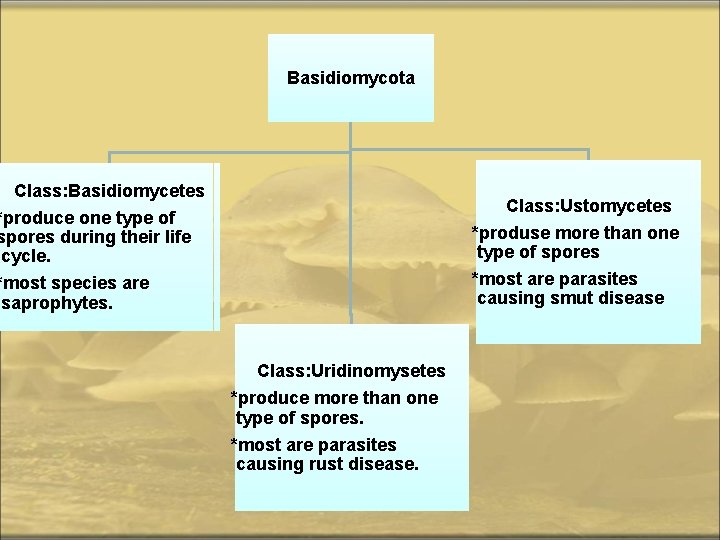
Basidiomycota Class: Basidiomycetes Class: Ustomycetes *produse more than one type of spores *most are parasites causing smut disease *produce one type of spores during their life cycle. *most species are saprophytes. Class: Uridinomysetes *produce more than one type of spores. *most are parasites causing rust disease.
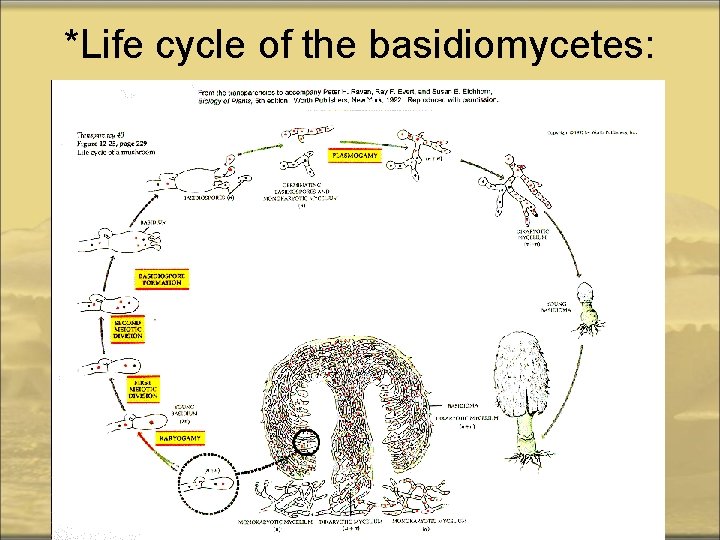
*Life cycle of the basidiomycetes:
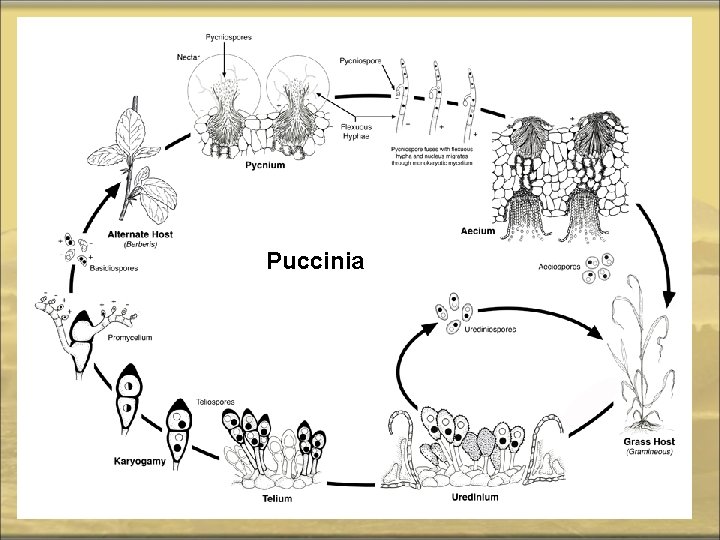
Puccinia
Class: Urediniomycetes General characters: 1. The mycelium has no clamp connection or dolipore septum. 2. Obligate parasites causing rust disease. 3. Heteroeious( require two different species of plant host to complete life cycle). 4. Heterothalic(have two diffrenet mating types -. +). 5. Sexual reproduction takes place by spermatization between spermatia and receptive hypae. 6. Life cycle is very complex.
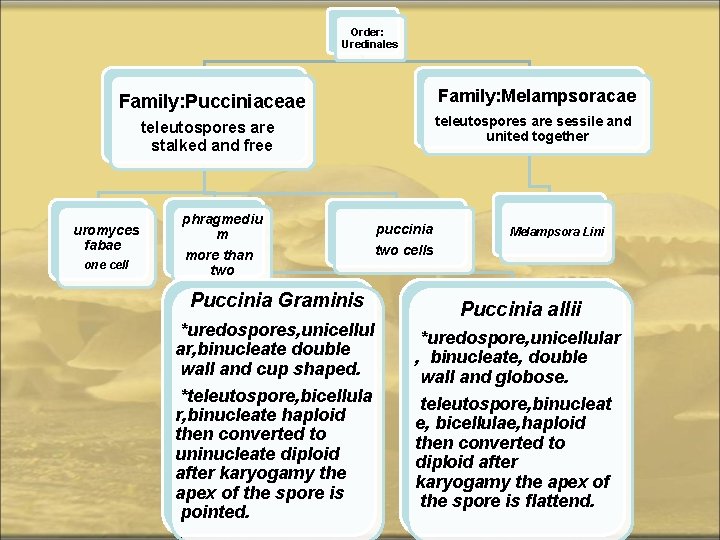
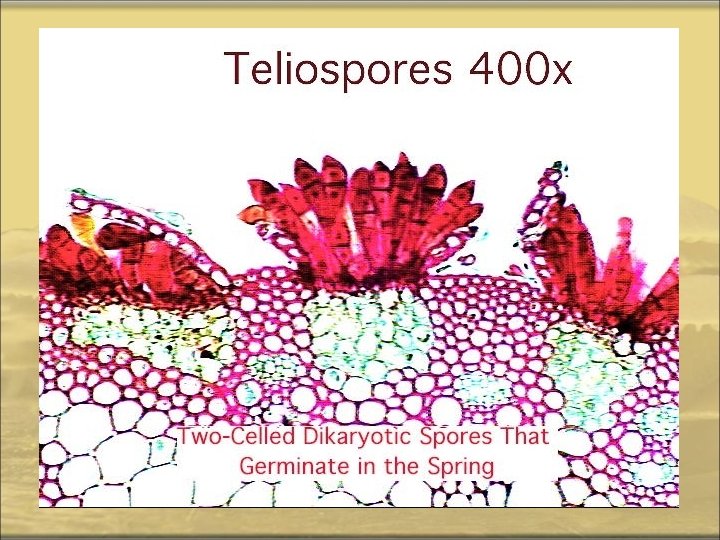
Order: Uredinales Family: Melampsoracae Family: Pucciniaceae teleutospores are sessile and united together teleutospores are stalked and free uromyces fabae one cell phragmediu m more than two Puccinia Graminis *uredospores, unicellul ar, binucleate double wall and cup shaped. *teleutospore, bicellula r, binucleate haploid then converted to uninucleate diploid after karyogamy the apex of the spore is pointed. . puccinia Melampsora Lini two cells Puccinia allii *uredospore, unicellular , binucleate, double wall and globose. teleutospore, binucleat e, bicellulae, haploid then converted to diploid after karyogamy the apex of the spore is flattend.
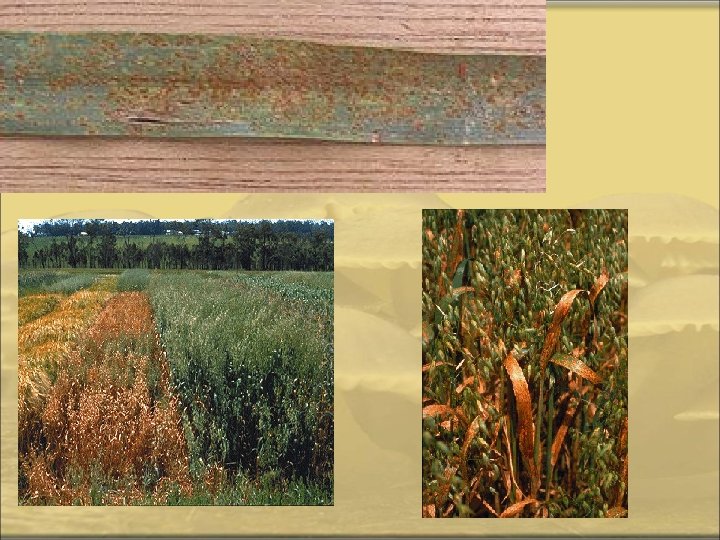
Puccinia : Causing rust disease. • Plant Health Management Fungicide Application: The list of compounds labeled for rust control includes: chlorothalonil, chlorothalonil + fenarimol, chlorothalonil + thiophanate-methyl, cyproconazole, mancozeb, thiophanate-methyl + mancozeb, propiconazole, triadimefon, and thiram + triadimefon.
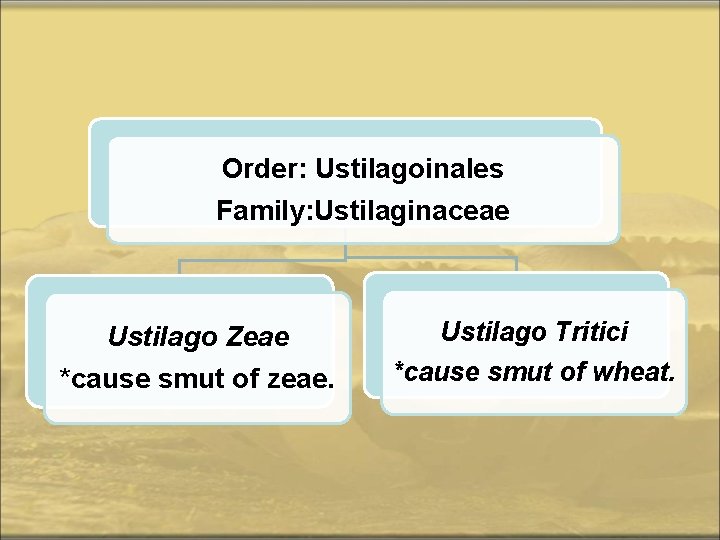
Order: Ustilagoinales Family: Ustilaginaceae Ustilago Zeae *cause smut of zeae. Ustilago Tritici *cause smut of wheat.
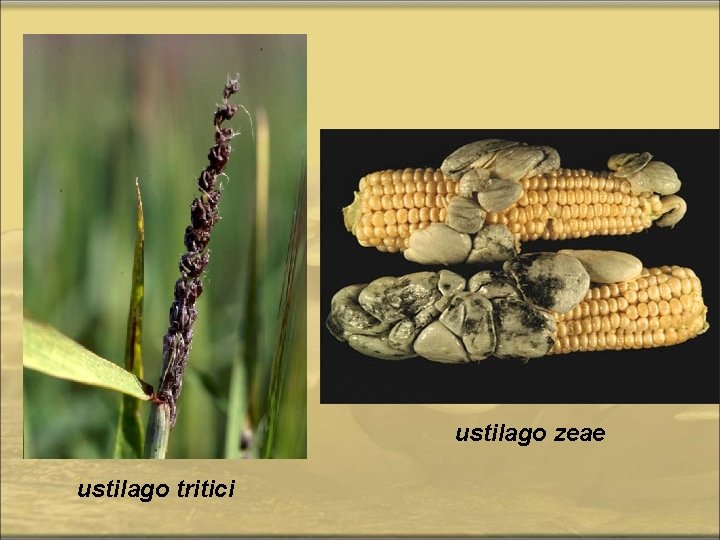
ustilago zeae ustilago tritici
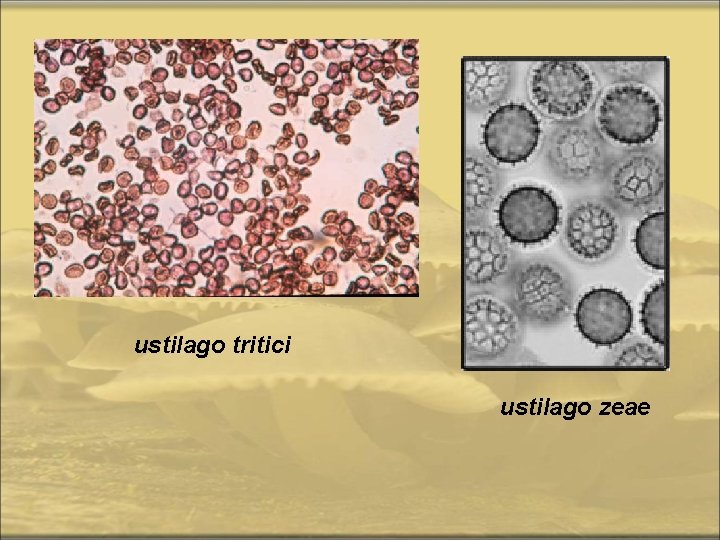
ustilago tritici ustilago zeae
- Slides: 17