
Phylum Arthropoda Phylum Arthropoda Facts n n Arthropods

- Slides: 41
Phylum Arthropoda
Phylum Arthropoda Facts n n Arthropods inhabit virtually every environment on earth Includes: n Crayfish n Lobsters n Spiders n Scorpions n Insects Considered to be the most successful animal group More than 1 million known species (6 -9 million est. )
Phylum Arthropoda Characteristics n n n n Microscopic to 12 ft length (King Crab) Jointed appendages- Structures extending from body wall Bilaterally symmetrical Evolutionary links to annelids Many are toxic Many vector (transmit) pathogens Many beneficial
Phylum Arthropoda n n n n n Rigid exoskeleton for support and protection Molting occurs during growth Paired, jointed appendages Ventral nervous system (ventral nerve cord) Reduced coelom Open circulatory system Complete digestive tract Malpighian tubules Excretory units Respiration through tracheae (network of fine tubes) and spiracles (structures where air enters) Metamorphosis often occurs during development
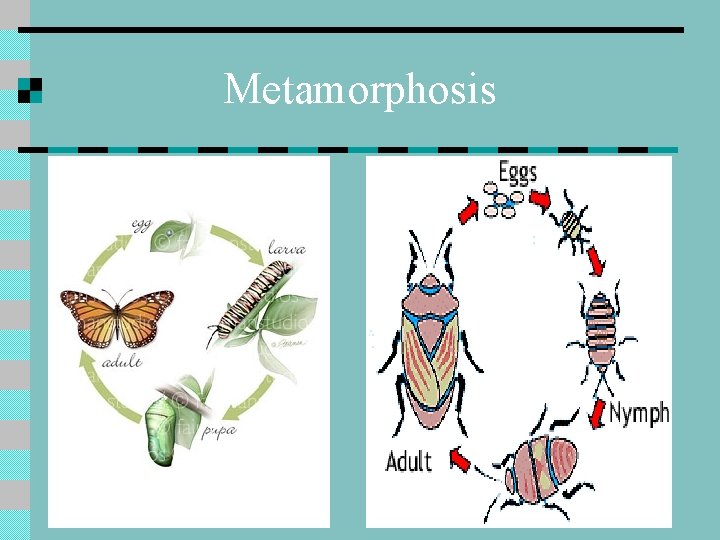
Arthropod Metamorphosis n Metamorphosis = radical change in body form n n n Complete Metamorphosis Includes pupa stage Incomplete metamorphosis No pupa stage Results in reduced competition between immature forms and adults Eat different food Occupy different habitats Example = caterpillar vs. butterfly
Metamorphosis
Arthropod Exoskeleton n n Secreted by the epidermis Functions: n n n http: //www. youtube. com/watch? v=z. Xhdr 0 Tp. Ow. YBack to results Protection Prevent water loss Muscle attachment/movement Two layers n n n Support Epicuticle (outside) = waxy, impermeable to water Procuticle = chitin Must be shed to allow growth (molt) molt
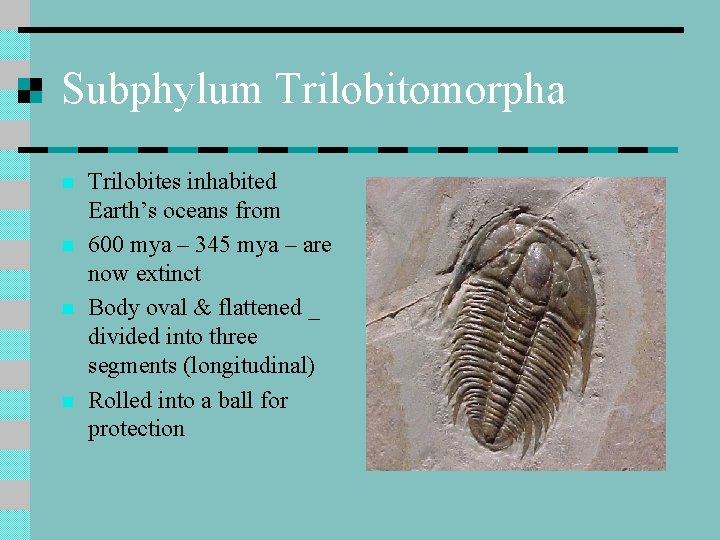
Subphylum Trilobitomorpha n n Trilobites inhabited Earth’s oceans from 600 mya – 345 mya – are now extinct Body oval & flattened _ divided into three segments (longitudinal) Rolled into a ball for protection
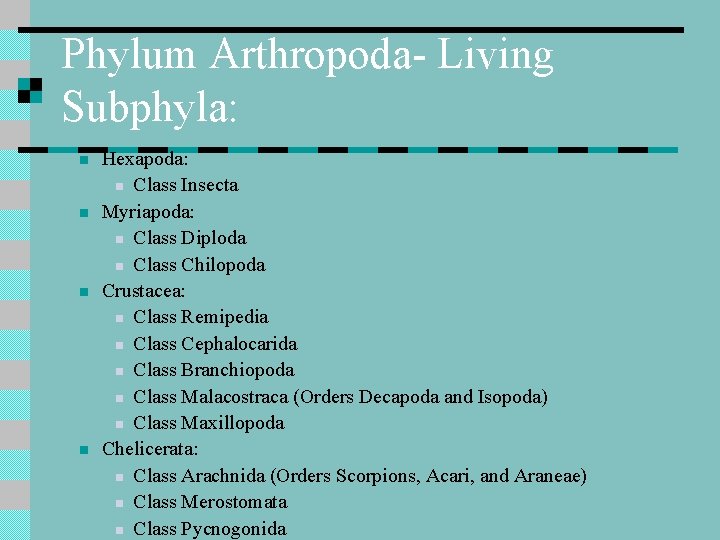
Phylum Arthropoda- Living Subphyla: n n Hexapoda: n Class Insecta Myriapoda: n Class Diploda n Class Chilopoda Crustacea: n Class Remipedia n Class Cephalocarida n Class Branchiopoda n Class Malacostraca (Orders Decapoda and Isopoda) n Class Maxillopoda Chelicerata: n Class Arachnida (Orders Scorpions, Acari, and Araneae) n Class Merostomata n Class Pycnogonida
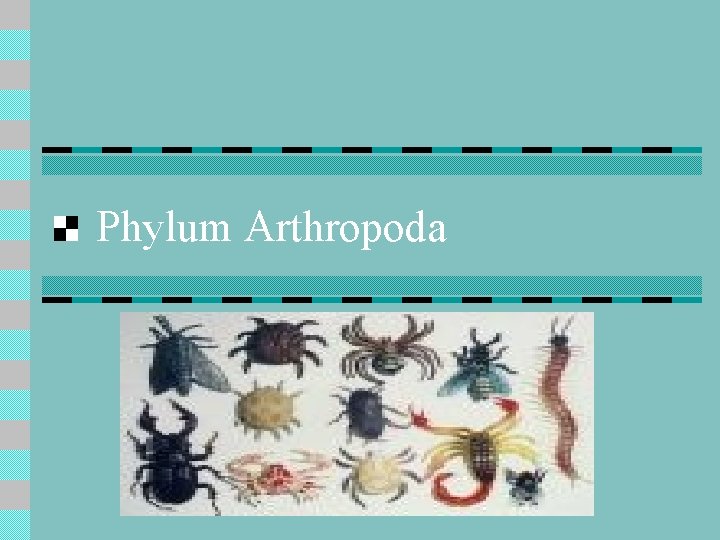
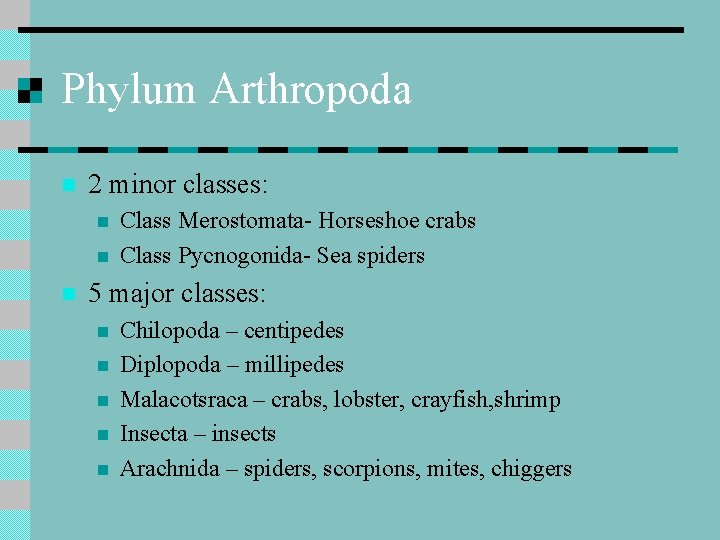
Phylum Arthropoda n 2 minor classes: n n n Class Merostomata- Horseshoe crabs Class Pycnogonida- Sea spiders 5 major classes: n n n Chilopoda – centipedes Diplopoda – millipedes Malacotsraca – crabs, lobster, crayfish, shrimp Insecta – insects Arachnida – spiders, scorpions, mites, chiggers
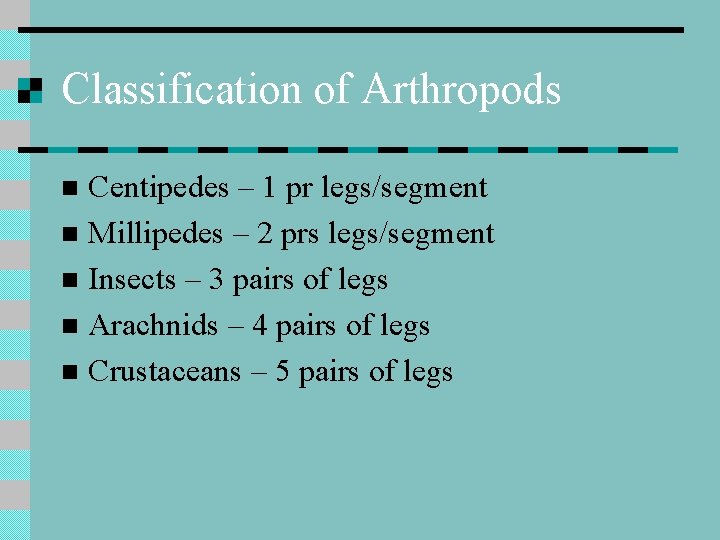
Classification of Arthropods Centipedes – 1 pr legs/segment n Millipedes – 2 prs legs/segment n Insects – 3 pairs of legs n Arachnids – 4 pairs of legs n Crustaceans – 5 pairs of legs n
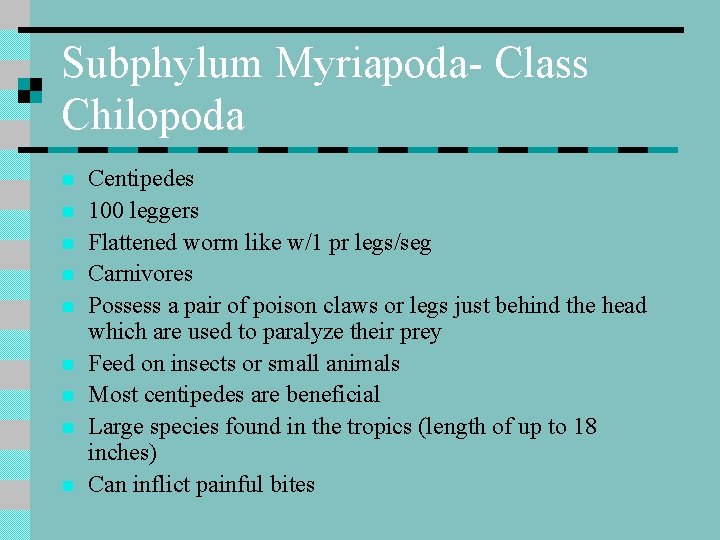
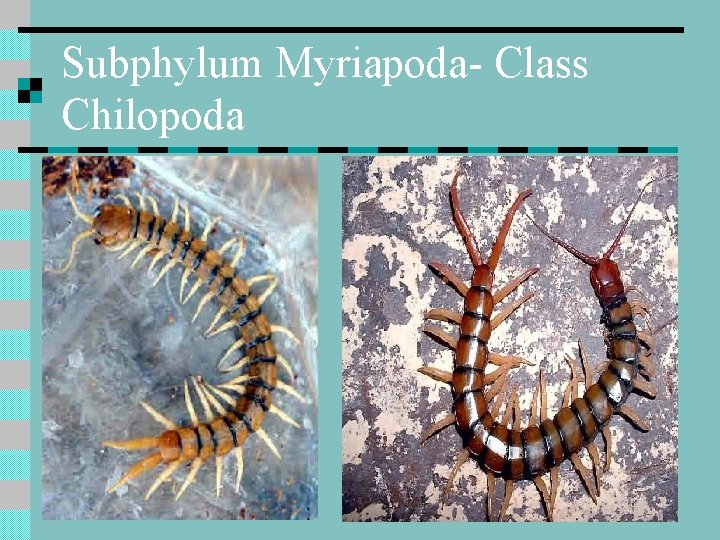
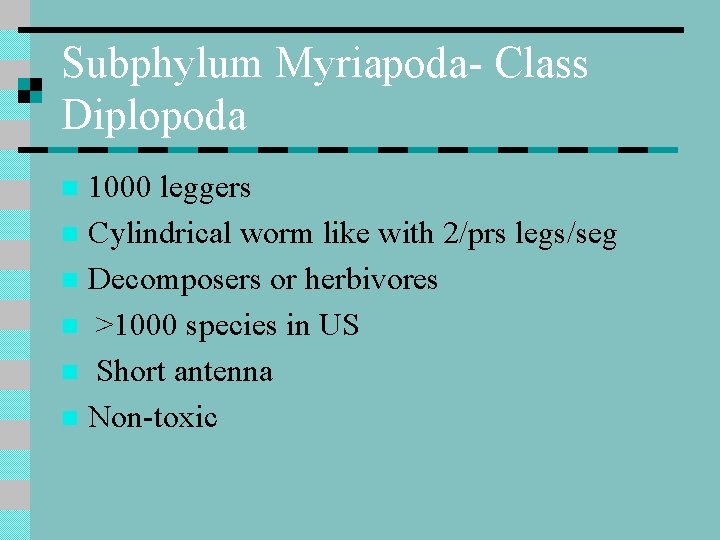
Subphylum Myriapoda- Class Chilopoda n n n n n Centipedes 100 leggers Flattened worm like w/1 pr legs/seg Carnivores Possess a pair of poison claws or legs just behind the head which are used to paralyze their prey Feed on insects or small animals Most centipedes are beneficial Large species found in the tropics (length of up to 18 inches) Can inflict painful bites
Subphylum Myriapoda- Class Chilopoda
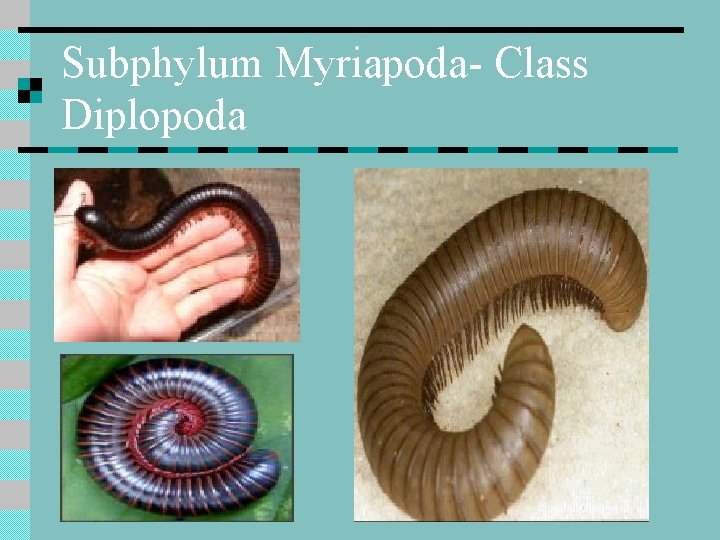
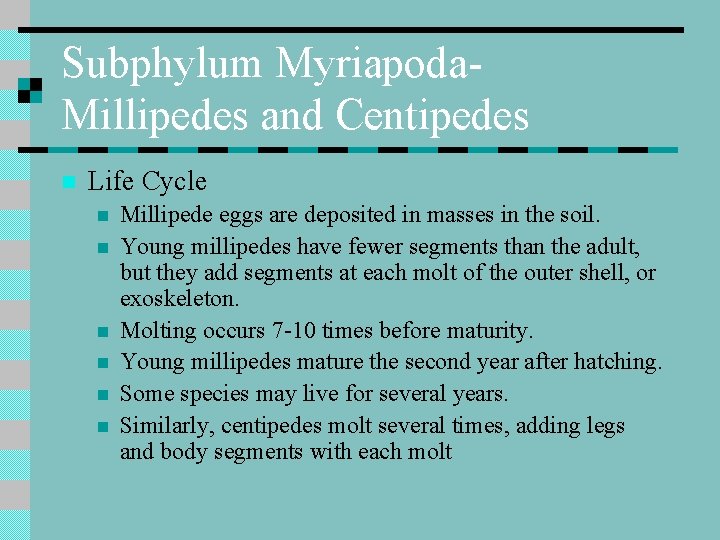
Subphylum Myriapoda- Class Diplopoda 1000 leggers n Cylindrical worm like with 2/prs legs/seg n Decomposers or herbivores n >1000 species in US n Short antenna n Non-toxic n
Subphylum Myriapoda- Class Diplopoda
Subphylum Myriapoda. Millipedes and Centipedes n Life Cycle n n n Millipede eggs are deposited in masses in the soil. Young millipedes have fewer segments than the adult, but they add segments at each molt of the outer shell, or exoskeleton. Molting occurs 7 -10 times before maturity. Young millipedes mature the second year after hatching. Some species may live for several years. Similarly, centipedes molt several times, adding legs and body segments with each molt
Subphylum Crustacea n n n n Body segmented with hardened Limbs generally with two branches Two pairs of antennae Two compound eyes (eyes with many lenses) Body with 7 or more pairs of sometimes very different appendages for feeding, locomotion and sex Respiration by gills Nauplius Distinctive larval stage with three pairs of branched appendages Although originally aquatic, many crustaceans are adapted to life on land
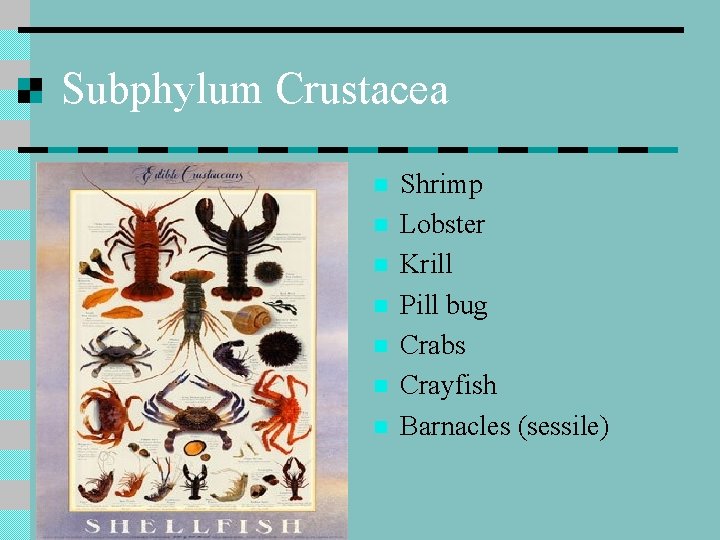
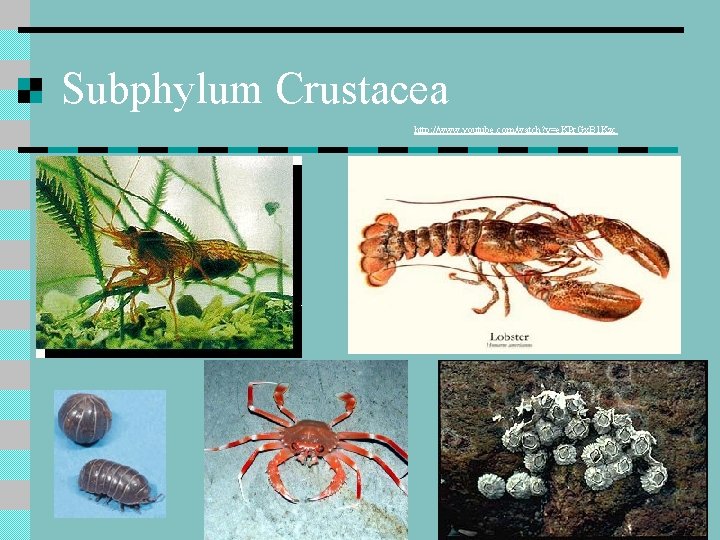
Subphylum Crustacea n n n n Shrimp Lobster Krill Pill bug Crabs Crayfish Barnacles (sessile)
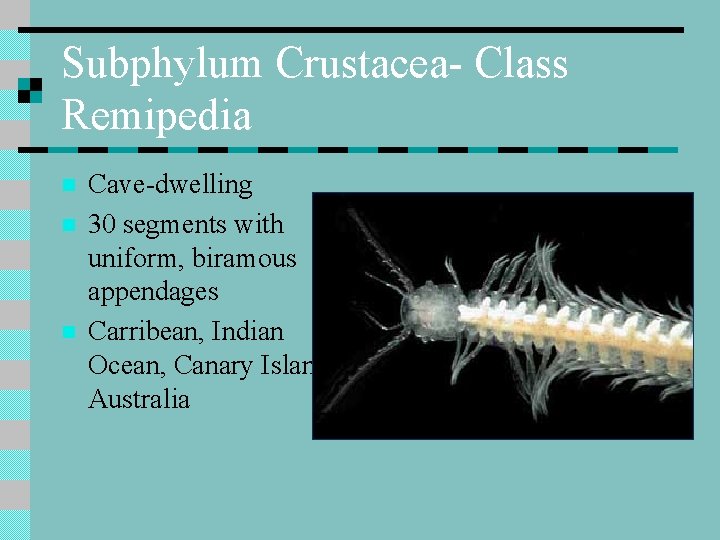
Subphylum Crustacea- Class Remipedia n n n Cave-dwelling 30 segments with uniform, biramous appendages Carribean, Indian Ocean, Canary Islands, Australia
Subphylum Crustacea http: //www. youtube. com/watch? v=e. KPr. Gx. B 1 Kzc
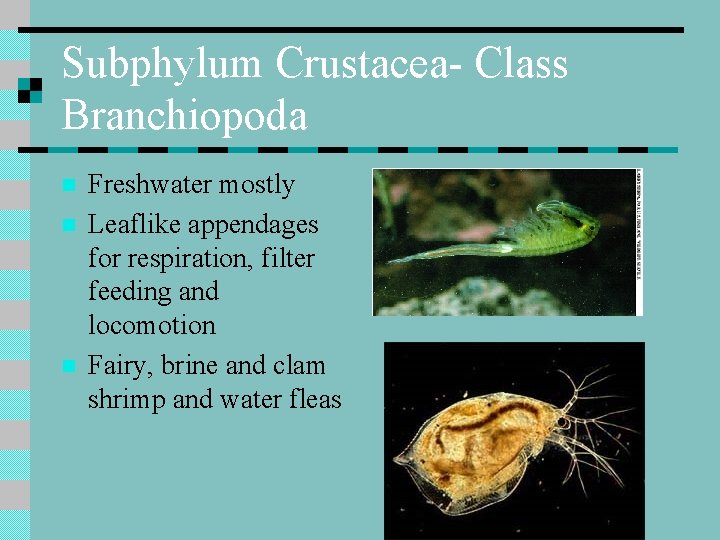
Subphylum Crustacea- Class Branchiopoda n n n Freshwater mostly Leaflike appendages for respiration, filter feeding and locomotion Fairy, brine and clam shrimp and water fleas
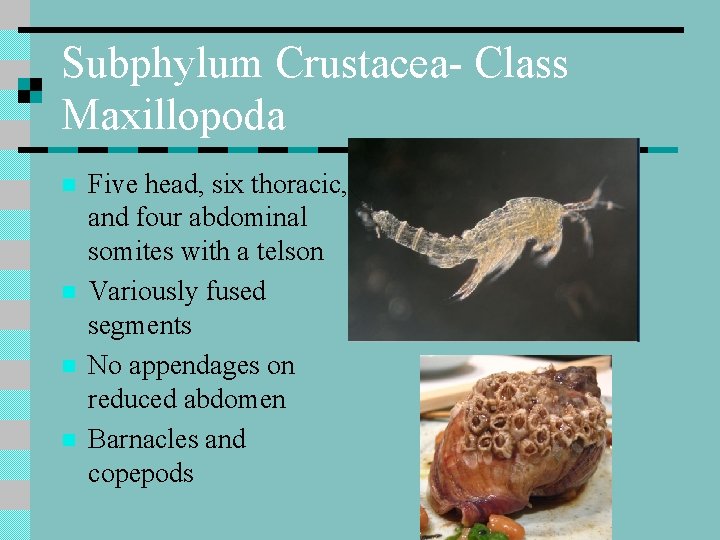
Subphylum Crustacea- Class Maxillopoda n n Five head, six thoracic, and four abdominal somites with a telson Variously fused segments No appendages on reduced abdomen Barnacles and copepods
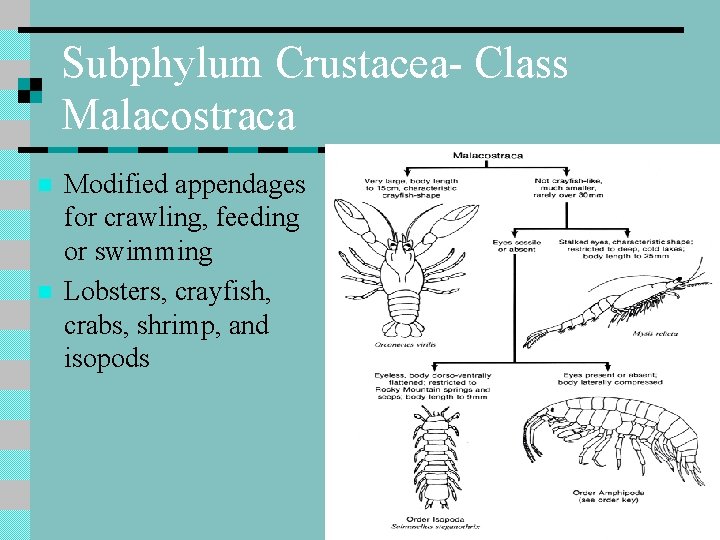
Subphylum Crustacea- Class Malacostraca n n Modified appendages for crawling, feeding or swimming Lobsters, crayfish, crabs, shrimp, and isopods
Subphylum Hexapoda- Class Insecta >750, 000 species n Upwards of 3 million species n Outnumber all other plant and animal groups n Found in all environments n 10, 000 ft. high n Some fly 100 s of KM per week n
Subphylum Hexapoda- Class Insecta n n n n Three body divisions n Head n Thorax n Abdomen Exoskeleton 12 Inches—Largest 1 MM-Smallest Rapid growth rate n Exponential Most mature < 1 year Display almost every color
Subphylum Hexapoda- Class Insecta n n n Open circulatory system Spiracles along abdomen used for breathing Highly modified mouth parts (mandibles) mandibles n n n Some beetles can chew through lead or zinc Well developed tube within a tube digestive system Well developed nervous system Sight- two types of eyes Smell/taste-Use of antennae and feet Hearing- tympanum (eardrum)
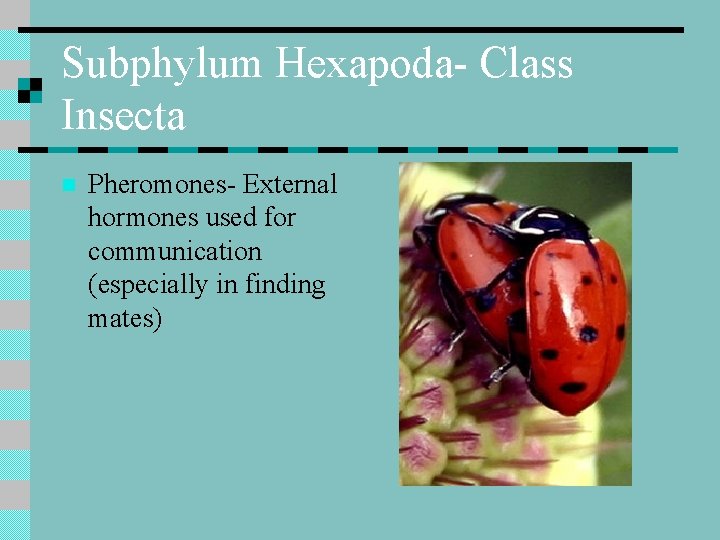
Subphylum Hexapoda- Class Insecta n Pheromones- External hormones used for communication (especially in finding mates)
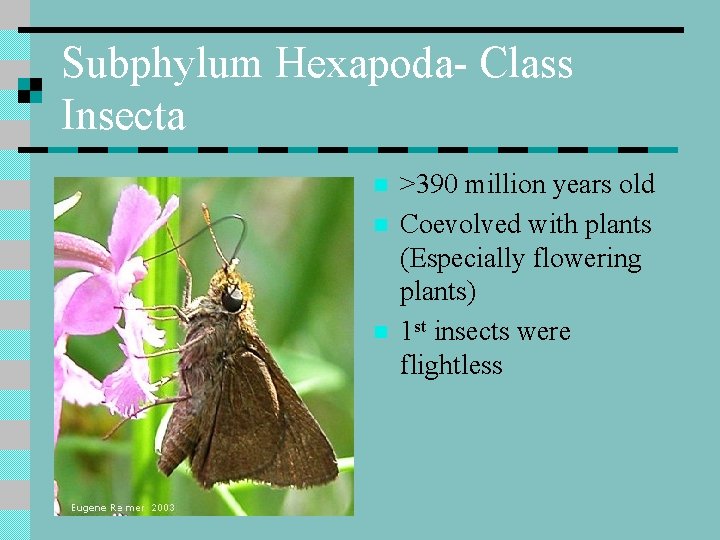
Subphylum Hexapoda- Class Insecta n n n >390 million years old Coevolved with plants (Especially flowering plants) 1 st insects were flightless
Subphylum Hexapoda- Class Insecta n n n Entomology- Study of insects and other arthropods Helpful or harmful Helpful insects: n n n Pollinators Research and discovery- fruit fly for genetic research Food producers- honey Textiles- Silk & beeswax Biological control agents
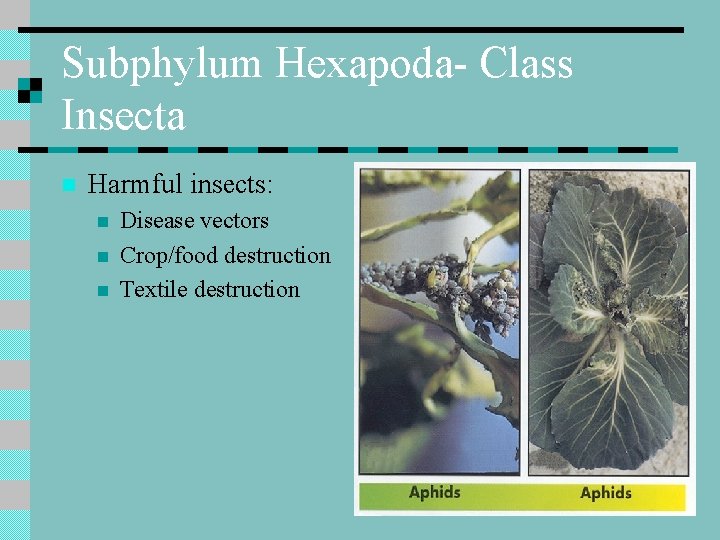
Subphylum Hexapoda- Class Insecta n Harmful insects: n n n Disease vectors Crop/food destruction Textile destruction
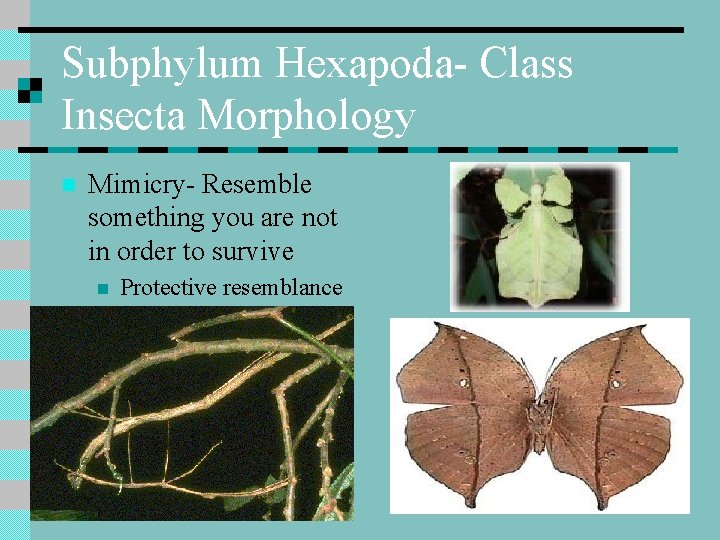
Subphylum Hexapoda- Class Insecta Morphology n Mimicry- Resemble something you are not in order to survive n Protective resemblance
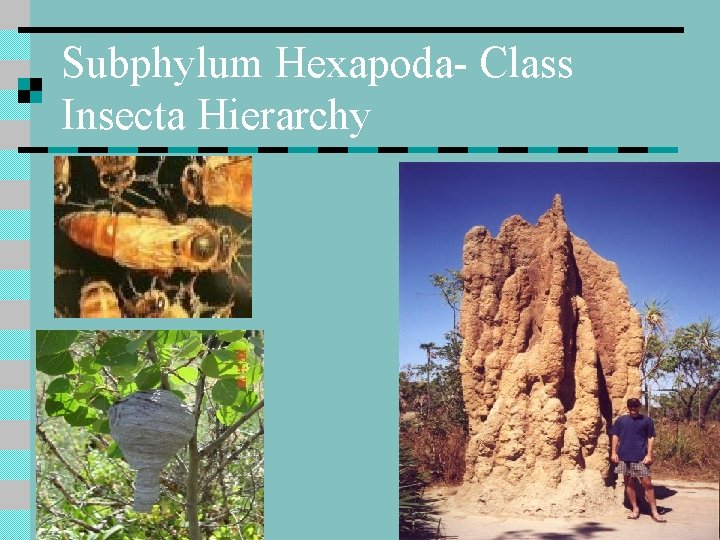
Subphylum Hexapoda- Class Insecta Hierarchy n n Ants, termites, hornets, wasps, and some bees Social hierarchy n n n Caste system King and queen Large number of individuals function as one unit Division of labor Physical appearance of individuals depends on their caste placement
Subphylum Hexapoda- Class Insecta Hierarchy
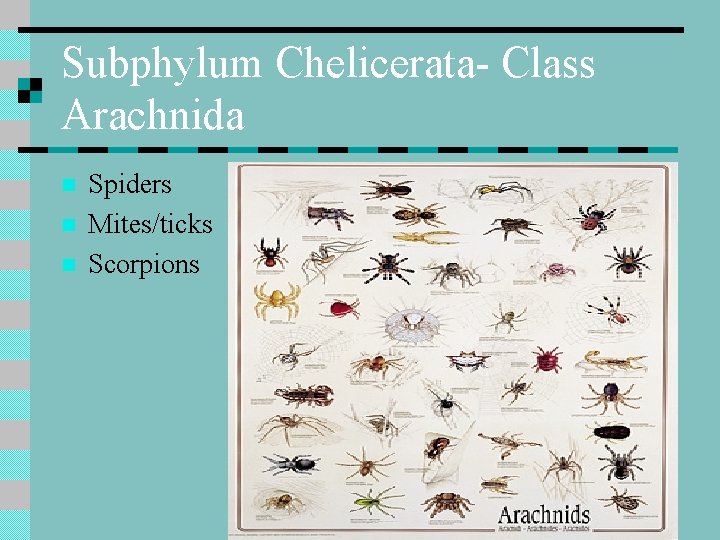
Subphylum Chelicerata- Class Arachnida n n n Spiders Mites/ticks Scorpions
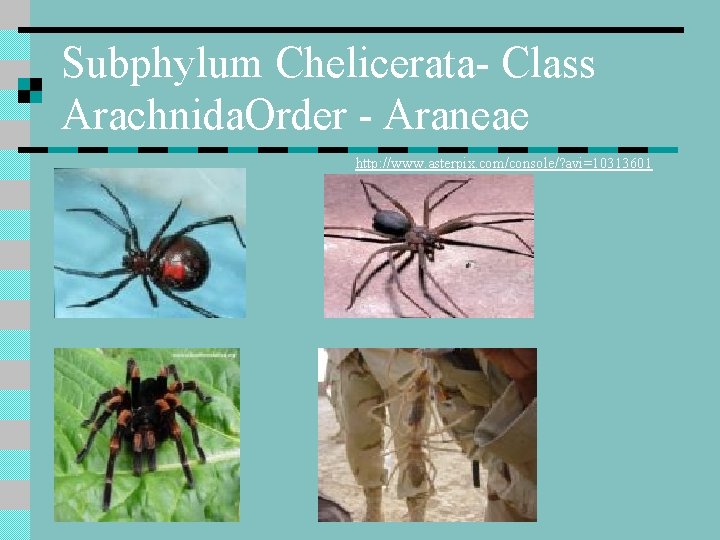
Subphylum Chelicerata- Order Araneae n n n n Most familiar spiders Cephalothorax (head fused to thorax)and abdomen All toxic No antennae Use pedipalps ( 2 nd pair of appendages modified to catch and handle prey) and walking legs as sensory organs >30, 000 Species/3, 000 in U. S. Tarantulas largest n Body 2. 5 in, legs 9 -10 in. n Many, but not all spiders web builders n n Spinneretes- Appendages that secrete silk) Liquid feeders Inject digestive enzymes into prey and drink juices Use powerful jaws to crush exoskeleton- then digest and eat
Subphylum Chelicerata- Class Arachnida. Order - Araneae http: //www. asterpix. com/console/? avi=10313601
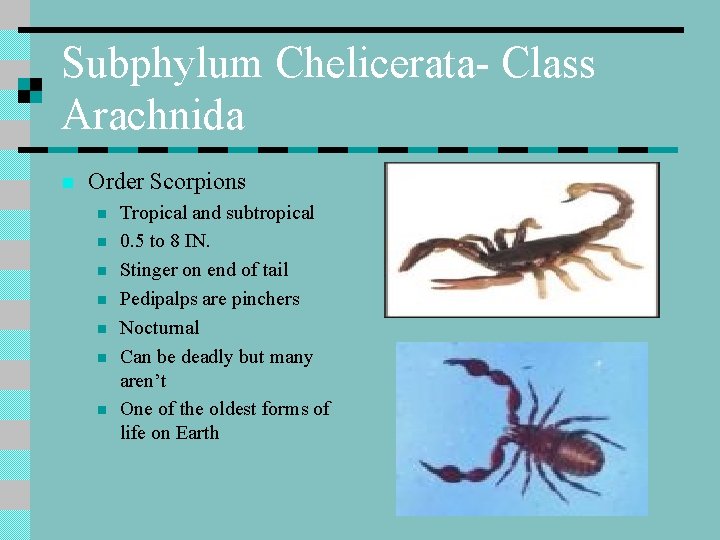
Subphylum Chelicerata- Class Arachnida n Order Scorpions n n n n Tropical and subtropical 0. 5 to 8 IN. Stinger on end of tail Pedipalps are pinchers Nocturnal Can be deadly but many aren’t One of the oldest forms of life on Earth
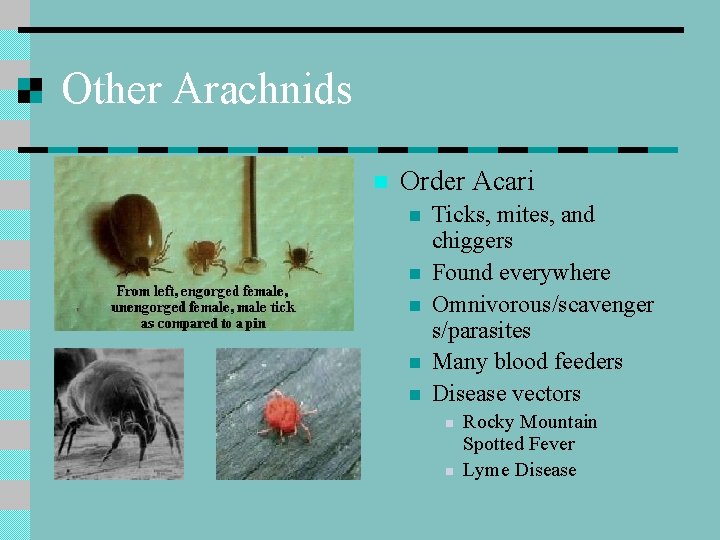
Other Arachnids n Order Acari n n n Ticks, mites, and chiggers Found everywhere Omnivorous/scavenger s/parasites Many blood feeders Disease vectors n n Rocky Mountain Spotted Fever Lyme Disease
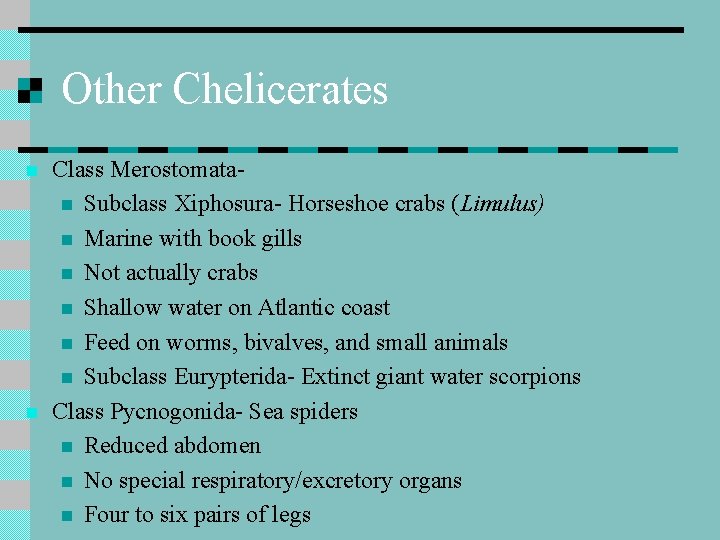
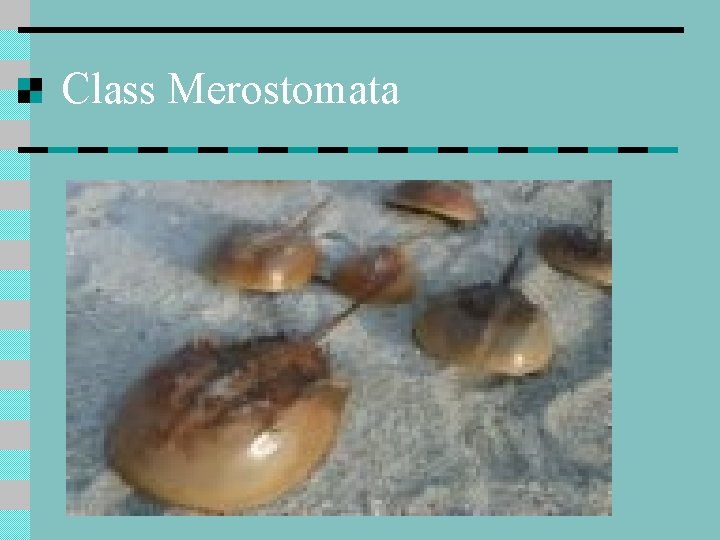
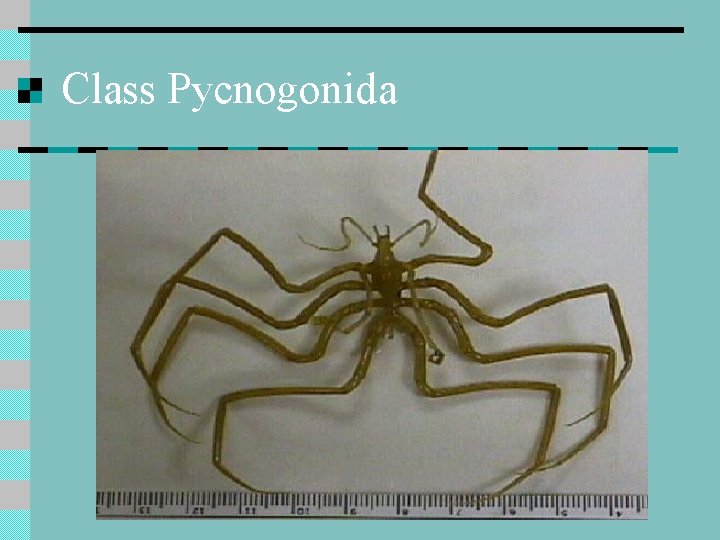
Other Chelicerates n n Class Merostomatan Subclass Xiphosura- Horseshoe crabs (Limulus) n Marine with book gills n Not actually crabs n Shallow water on Atlantic coast n Feed on worms, bivalves, and small animals n Subclass Eurypterida- Extinct giant water scorpions Class Pycnogonida- Sea spiders n Reduced abdomen n No special respiratory/excretory organs n Four to six pairs of legs
Class Merostomata
Class Pycnogonida