
Phylum Arthropoda Mrs Howards Life Science Arthropoda Characteristics

- Slides: 20
Phylum Arthropoda Mrs. Howard’s Life Science
Arthropoda - Characteristics Arthropods are a diverse group characterized by: n An Exoskeleton n Jointed appendages n A segmented body n Includes Insects, Spiders, Crustaceans, Centipedes & Millipedes
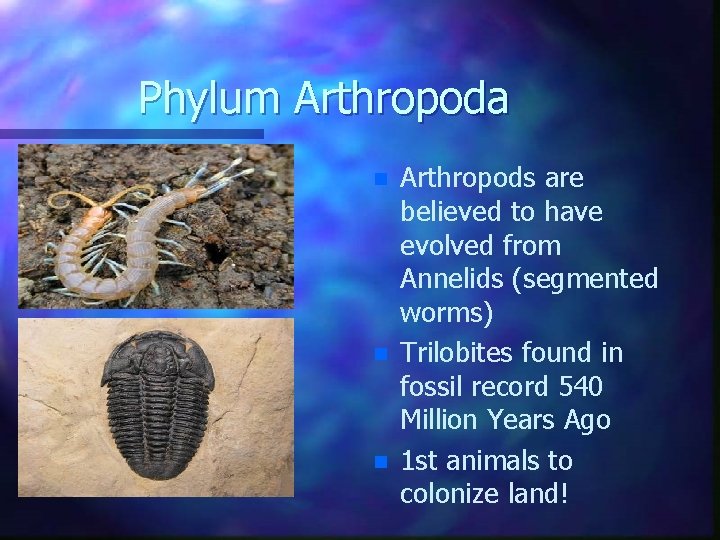
Phylum Arthropoda n n n Arthropods are believed to have evolved from Annelids (segmented worms) Trilobites found in fossil record 540 Million Years Ago 1 st animals to colonize land!
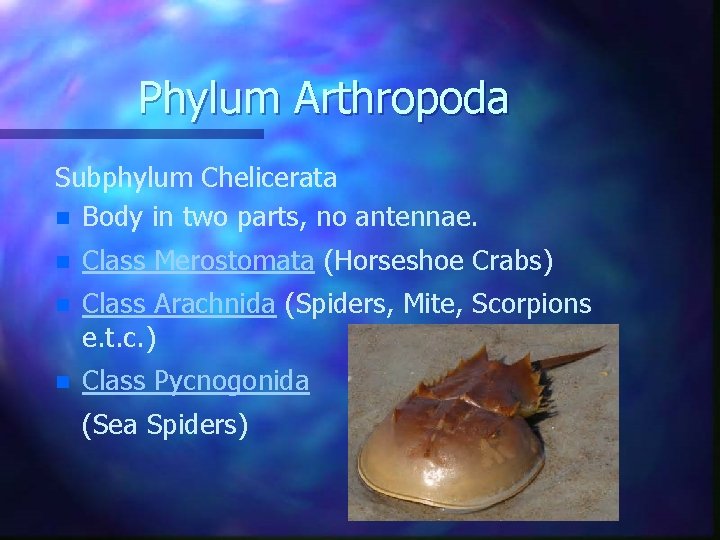
Phylum Arthropoda Subphylum Chelicerata n Body in two parts, no antennae. n Class Merostomata (Horseshoe Crabs) n Class Arachnida (Spiders, Mite, Scorpions e. t. c. ) n Class Pycnogonida (Sea Spiders)
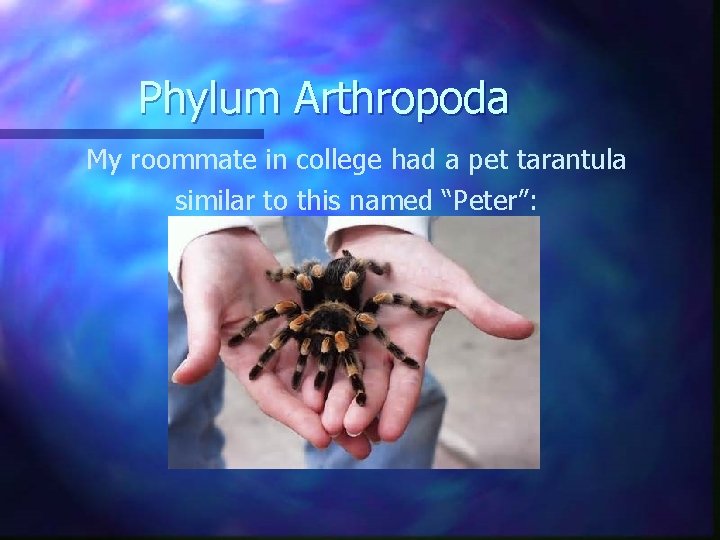
Phylum Arthropoda My roommate in college had a pet tarantula similar to this named “Peter”:
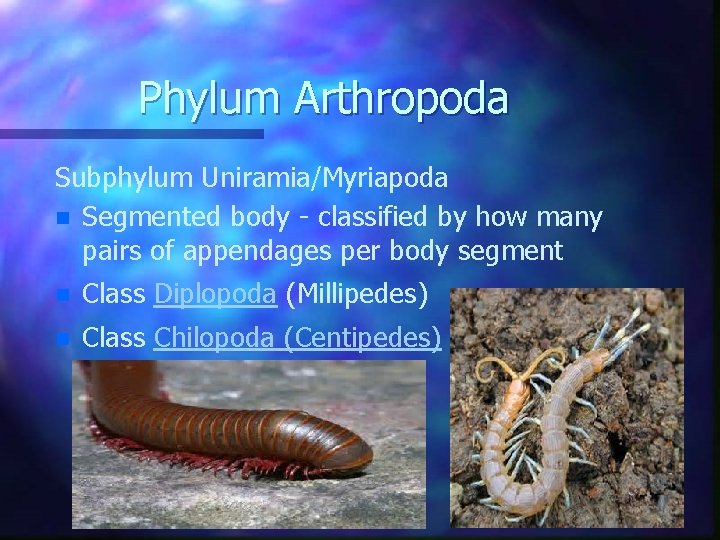
Phylum Arthropoda Subphylum Uniramia/Myriapoda n Segmented body - classified by how many pairs of appendages per body segment n Class Diplopoda (Millipedes) n Class Chilopoda (Centipedes)
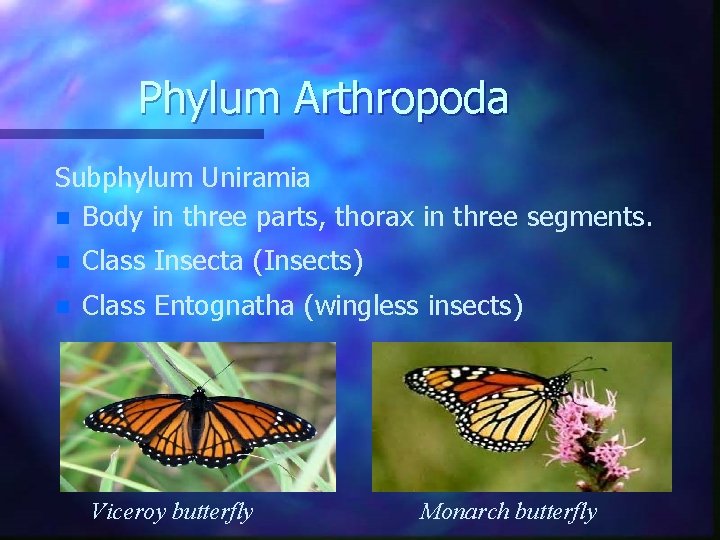
Phylum Arthropoda Subphylum Uniramia n Body in three parts, thorax in three segments. n Class Insecta (Insects) n Class Entognatha (wingless insects) Viceroy butterfly Monarch butterfly
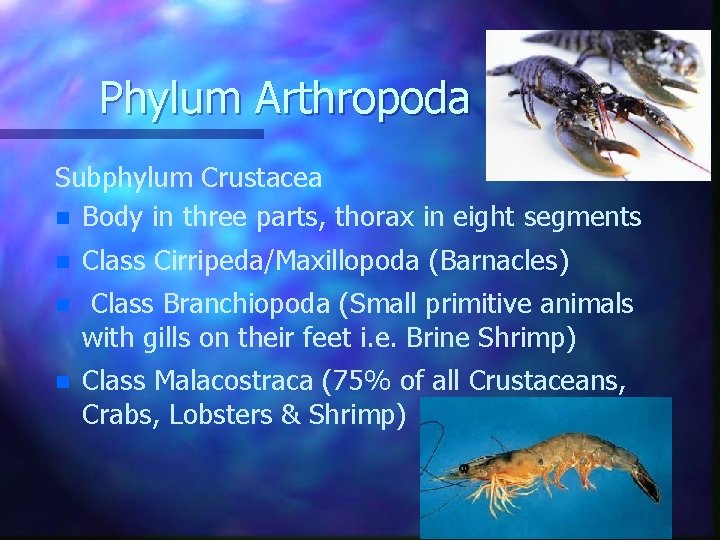
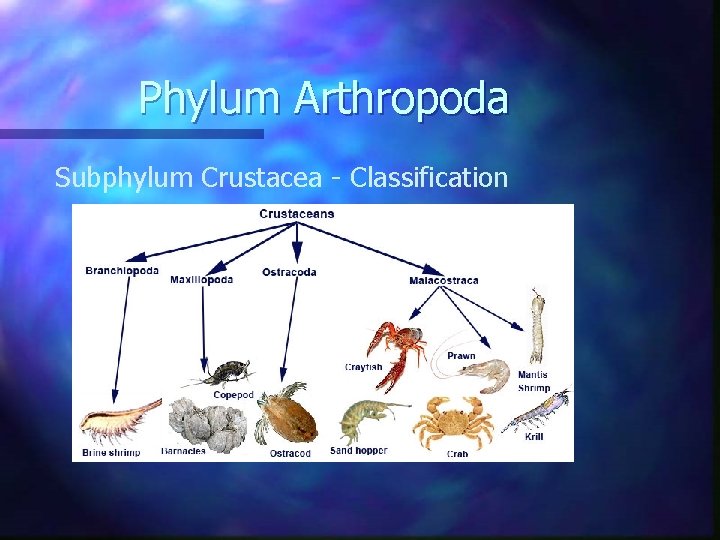
Phylum Arthropoda Subphylum Crustacea n Body in three parts, thorax in eight segments n Class Cirripeda/Maxillopoda (Barnacles) n Class Branchiopoda (Small primitive animals with gills on their feet i. e. Brine Shrimp) n Class Malacostraca (75% of all Crustaceans, Crabs, Lobsters & Shrimp)
Phylum Arthropoda Subphylum Crustacea - Classification
Phylum Arthropoda Brain Pop Video on Insects: https: //www. brainpop. com/science/diversityoflife/insects/ Youtube Video on Madagascar Hissing Cockroach I had to raise one for a couple of weeks in college: https: //www. youtube. com/watch? v=W 7 Efjt 6 UC 1 g
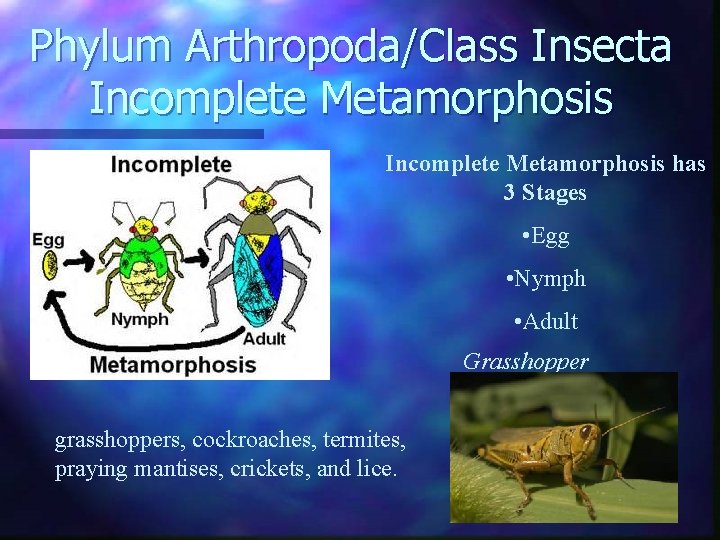
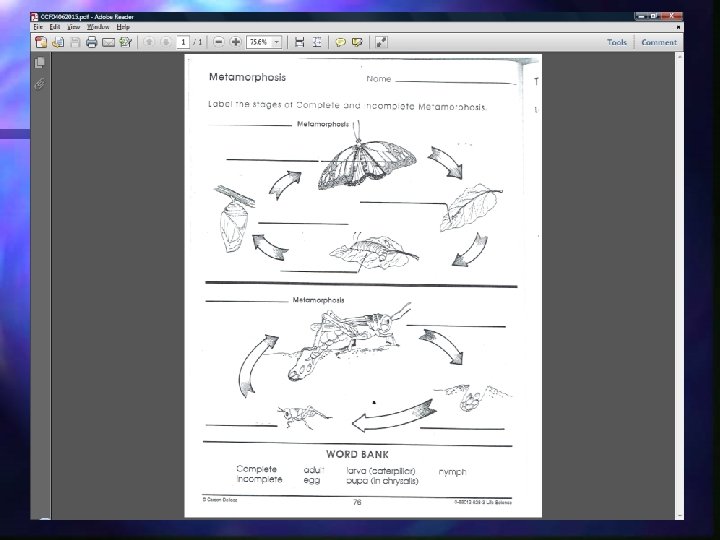
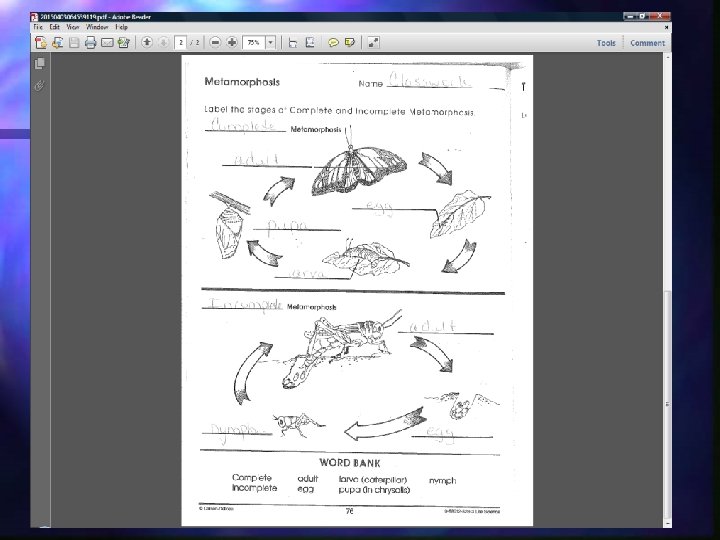
Phylum Arthropoda/Class Insecta Incomplete Metamorphosis has 3 Stages • Egg • Nymph • Adult Grasshopper grasshoppers, cockroaches, termites, praying mantises, crickets, and lice.
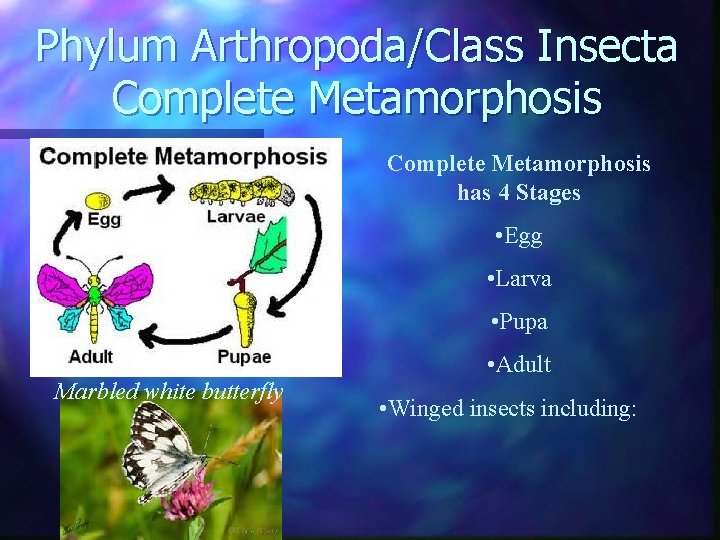
Phylum Arthropoda/Class Insecta Complete Metamorphosis has 4 Stages • Egg • Larva • Pupa Marbled white butterfly • Adult • Winged insects including:
Phylum Arthropoda Metamorphosis in Insects Metamorphosis Worksheet Solutions on following slide
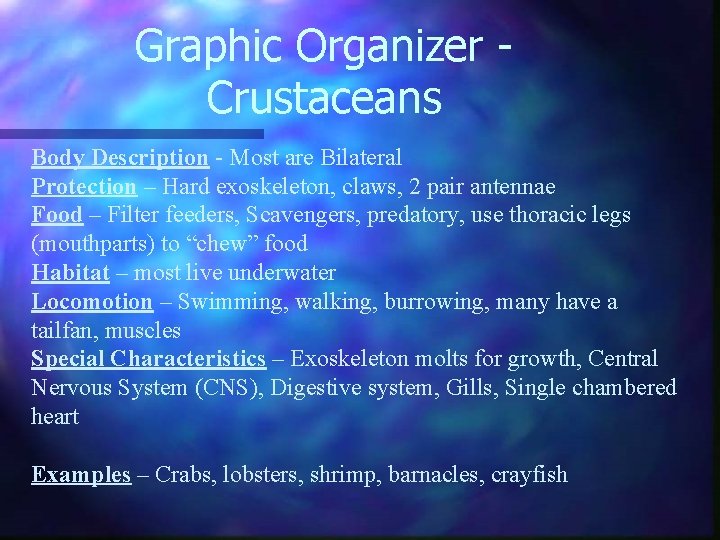
Graphic Organizer Crustaceans Body Description - Most are Bilateral Protection – Hard exoskeleton, claws, 2 pair antennae Food – Filter feeders, Scavengers, predatory, use thoracic legs (mouthparts) to “chew” food Habitat – most live underwater Locomotion – Swimming, walking, burrowing, many have a tailfan, muscles Special Characteristics – Exoskeleton molts for growth, Central Nervous System (CNS), Digestive system, Gills, Single chambered heart Examples – Crabs, lobsters, shrimp, barnacles, crayfish
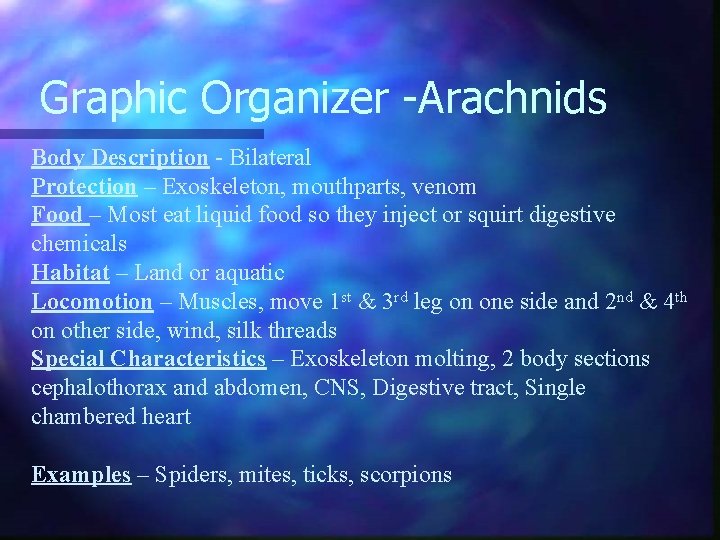
Graphic Organizer -Arachnids Body Description - Bilateral Protection – Exoskeleton, mouthparts, venom Food – Most eat liquid food so they inject or squirt digestive chemicals Habitat – Land or aquatic Locomotion – Muscles, move 1 st & 3 rd leg on one side and 2 nd & 4 th on other side, wind, silk threads Special Characteristics – Exoskeleton molting, 2 body sections cephalothorax and abdomen, CNS, Digestive tract, Single chambered heart Examples – Spiders, mites, ticks, scorpions
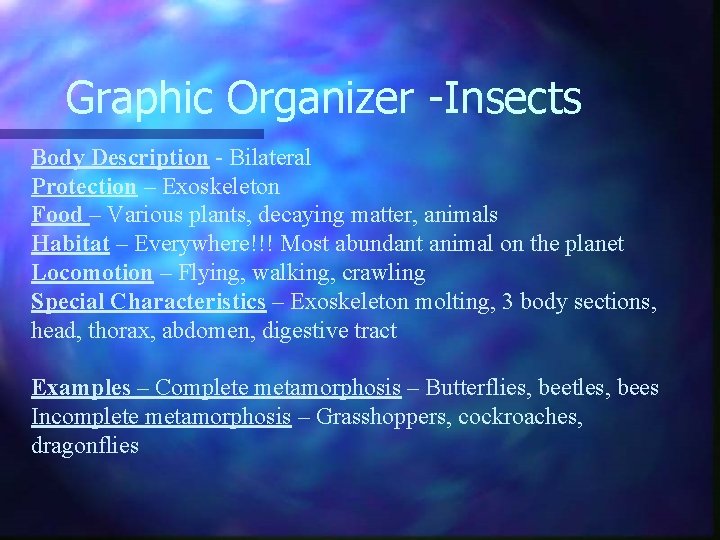
Graphic Organizer -Insects Body Description - Bilateral Protection – Exoskeleton Food – Various plants, decaying matter, animals Habitat – Everywhere!!! Most abundant animal on the planet Locomotion – Flying, walking, crawling Special Characteristics – Exoskeleton molting, 3 body sections, head, thorax, abdomen, digestive tract Examples – Complete metamorphosis – Butterflies, beetles, bees Incomplete metamorphosis – Grasshoppers, cockroaches, dragonflies
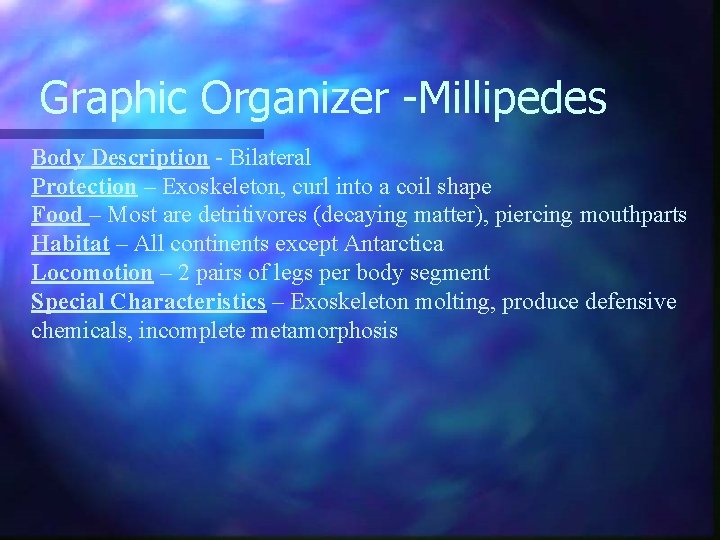
Graphic Organizer -Millipedes Body Description - Bilateral Protection – Exoskeleton, curl into a coil shape Food – Most are detritivores (decaying matter), piercing mouthparts Habitat – All continents except Antarctica Locomotion – 2 pairs of legs per body segment Special Characteristics – Exoskeleton molting, produce defensive chemicals, incomplete metamorphosis
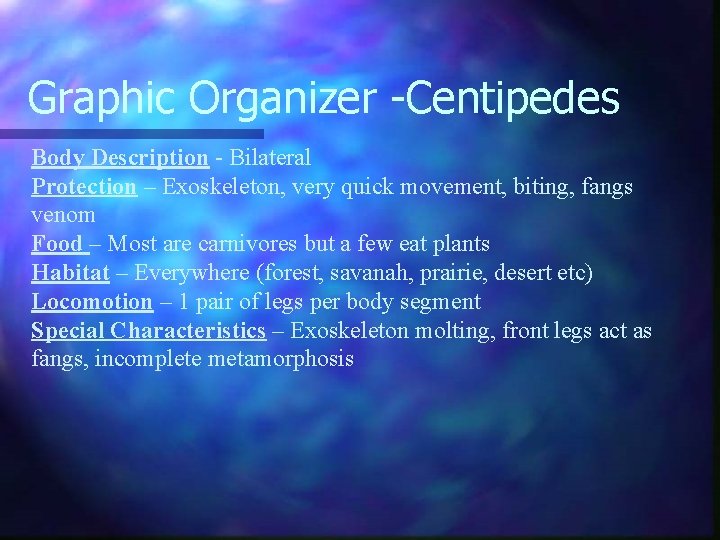
Graphic Organizer -Centipedes Body Description - Bilateral Protection – Exoskeleton, very quick movement, biting, fangs venom Food – Most are carnivores but a few eat plants Habitat – Everywhere (forest, savanah, prairie, desert etc) Locomotion – 1 pair of legs per body segment Special Characteristics – Exoskeleton molting, front legs act as fangs, incomplete metamorphosis