
Phylum Arthropoda General Characteristics Arthropod Largest group of


- Slides: 35
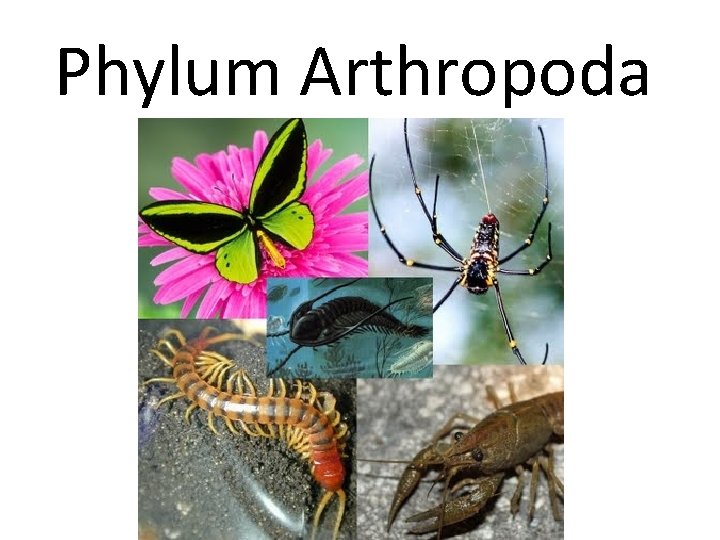
Phylum Arthropoda
General Characteristics • Arthropod = ________ • Largest group of animals – 80% of described species – 30 -50 million species • Most varied
General Characteristics Con’t • Metamerism (body divided into segments) –_______________ • Paired, jointed appendages • Ecdysis-molting (growth) • Open Circulatory System • Complete digestion tract
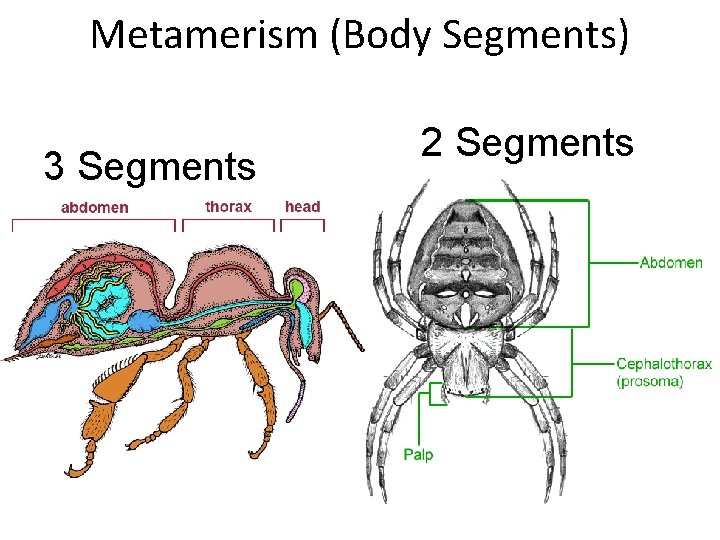
Metamerism (Body Segments) 3 Segments 2 Segments
General Characteristics Con’t • Ventral Nervous System • _________ • Metamorphosis • 5 Subphylum –Trilobitomorpha, Myriapoda, Chelicerata, Crustacea, Hexapoda
Exoskeleton • Functions of exoskeleton –_______________ –Minimize H 2 O loss –Muscle attachment
Exoskeleton Structure • Composed of _________ • Epicuticle: outer layer –Water proof • Procuticle: inner layer –Made of chitin
Ecdysis (molting) • 3 step process – 1. Enzymes digest old exoskeleton – 2. New exoskeleton secreted New exoskeleton is soft – 3. Scleratization (hardening)
Ecdysis (molting) • Molting is important for arthropod growth –Can’t grow in a suit of armor • Is also a dangerous time for arthropods –Typically animals about to molt, will go into hiding just before the process begins
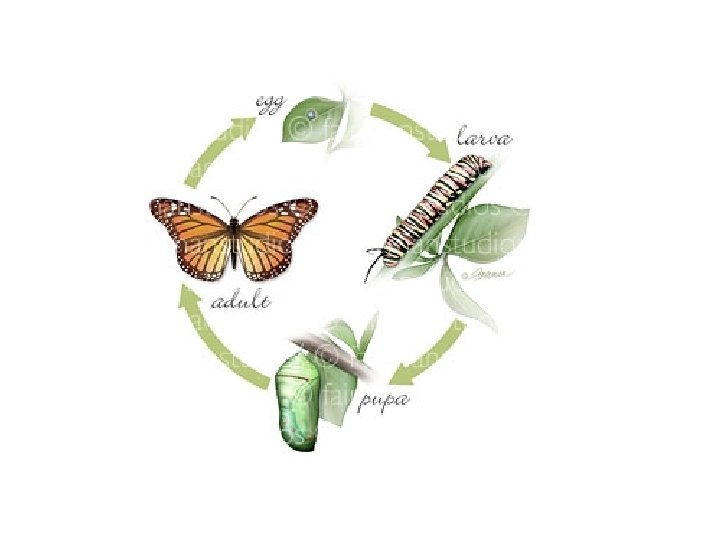
_____________ • Changes in body form from larval to adult –Ex. Butterfly, Dragonfly • Reduces competition for food and living space
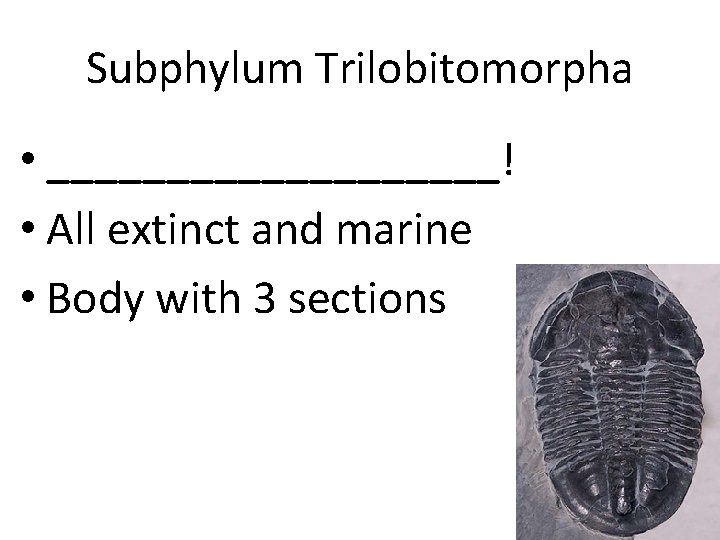
Subphylum Trilobitomorpha • __________! • All extinct and marine • Body with 3 sections
Subphylum Myriapoda • Myriapoda- “many legs” • Millipedes, centipedes • Paired legs • ____________
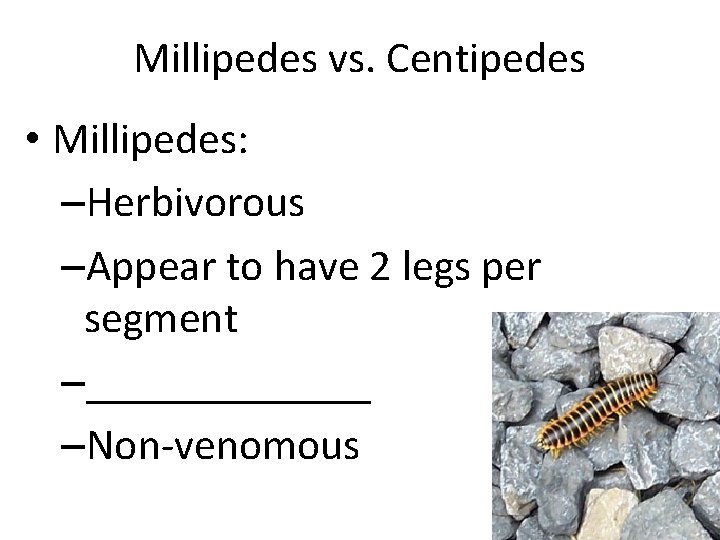
Millipedes vs. Centipedes • Millipedes: –Herbivorous –Appear to have 2 legs per segment –_______ –Non-venomous
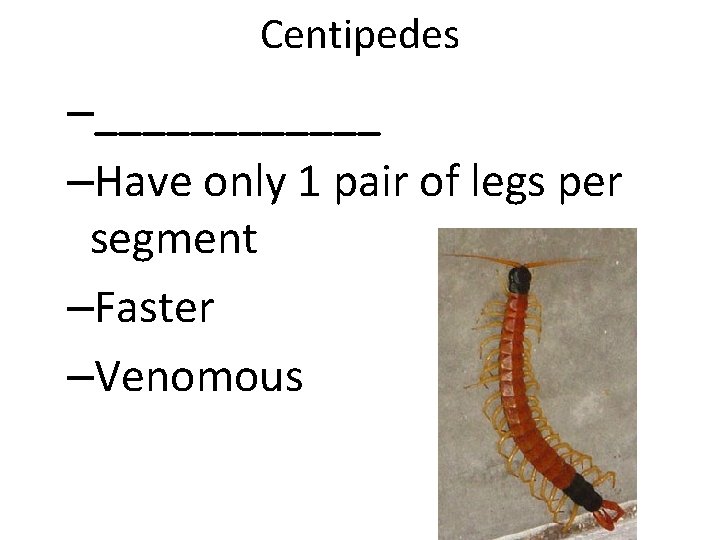
Centipedes –______ –Have only 1 pair of legs per segment –Faster –Venomous
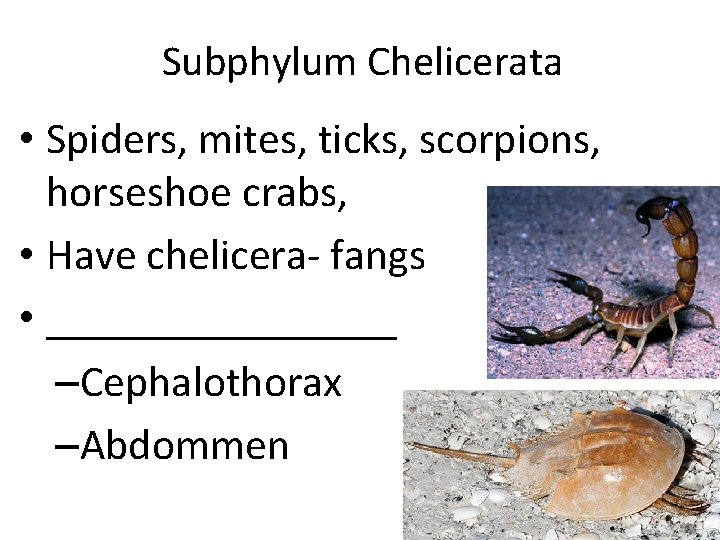
Subphylum Chelicerata • Spiders, mites, ticks, scorpions, horseshoe crabs, • Have chelicera- fangs • ________ –Cephalothorax –Abdommen
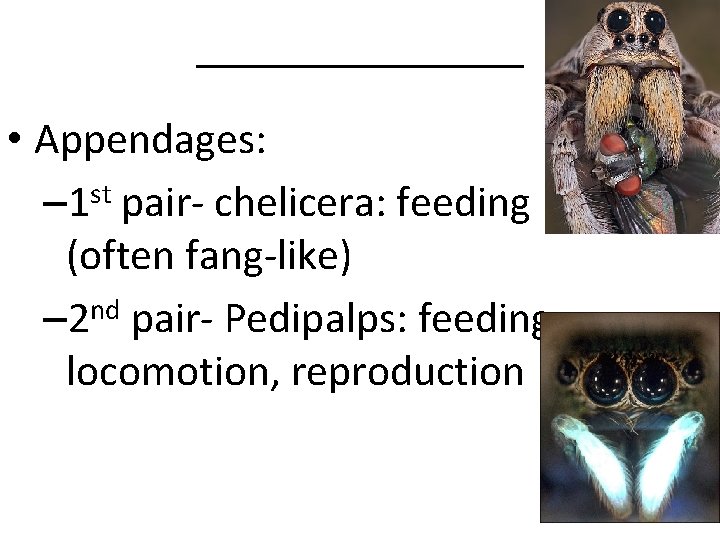
________ • Appendages: st – 1 pair- chelicera: feeding (often fang-like) nd – 2 pair- Pedipalps: feeding, locomotion, reproduction
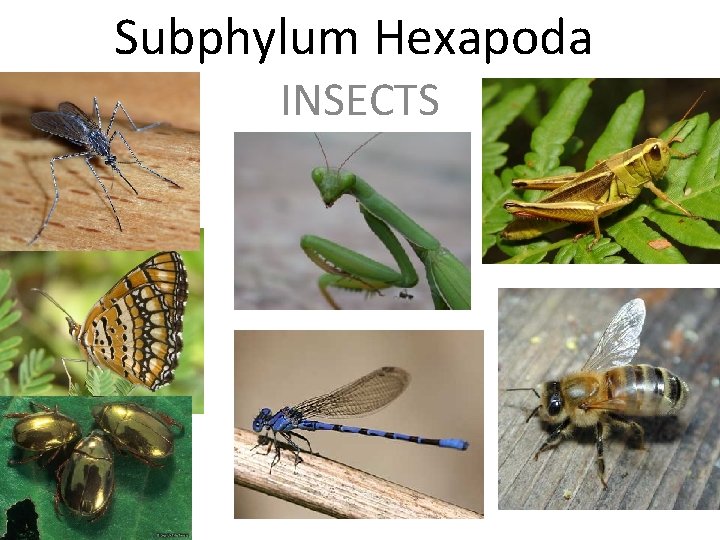
Subphylum Hexapoda INSECTS
General Characteristics • Hexapoda = “______” • Includes the class Insecta – 30 million species – 27 Major orders • We will only learn 8
General Characteristics Con’t • 3 pairs of legs – 6 total • 1 pair of antennae • Most have 2 pairs of wings • ___________ • 3 part body plan –Head, Thorax, Abdomen
Insect Flight • Is a unique trait to the insects • Different insects have wing modifications for specific functions
Economic Importance �Parasites �Ticks, fleas �Are considered agricultural pests. � 1949 -European corn borer caused $349 million in damage to the US corn crop
Economic Importance Con’t • Provide goods –Honey –Beeswax –Yummy (to certain cultures) –Silk –Dyes
Economic Importance Con’t • Also are vectors for many diseases –Bubonic plague (flea) –Malaria (mosquito) –_________(mosquito) –African Sleeping Sickness (Tsetse fly)
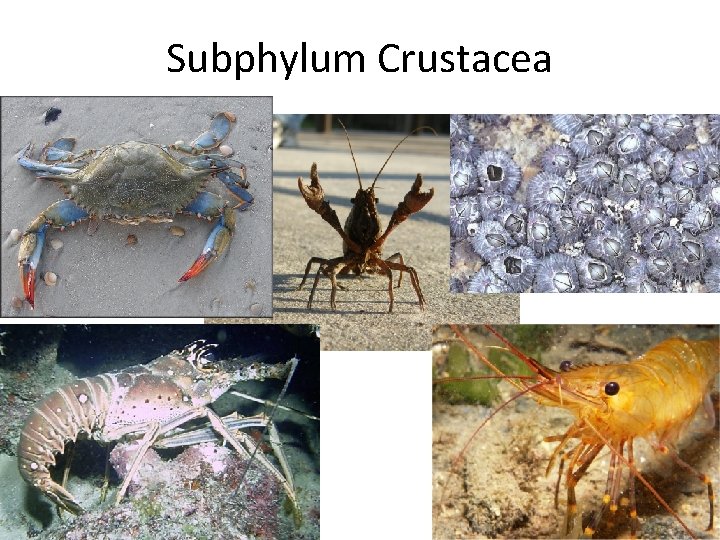
Subphylum Crustacea
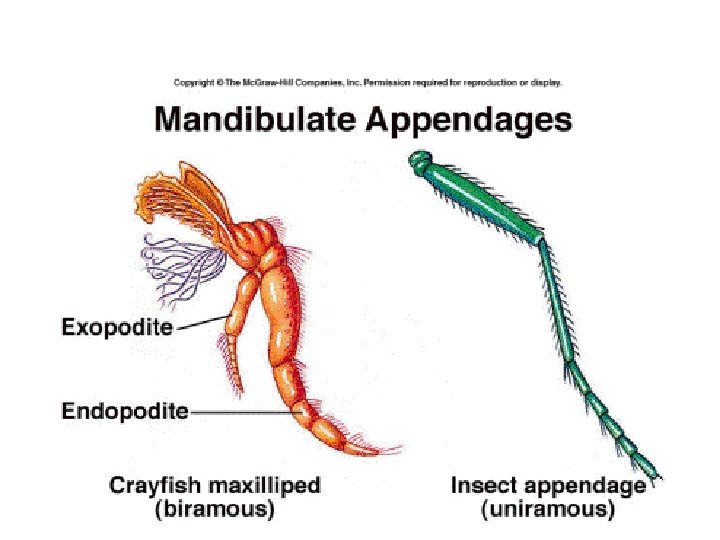
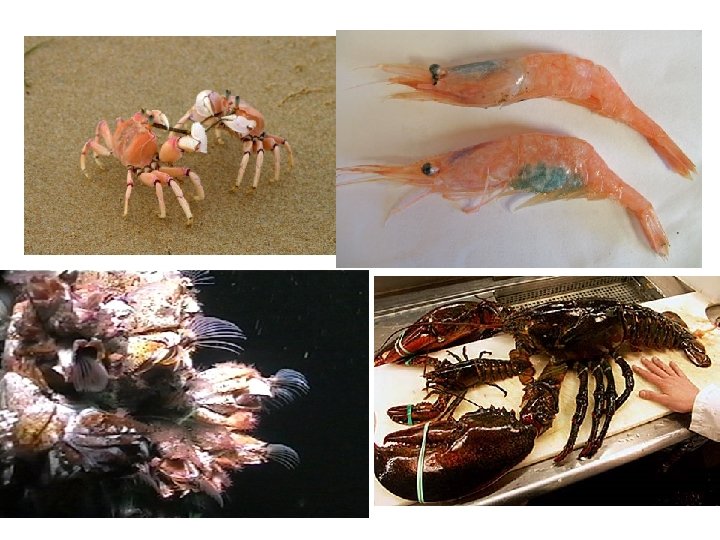
General Characteristics �Includes crabs, lobsters, crayfish, shrimp, and barnacles �_______________ �Biramous Appendage: branched Yshaped appendages
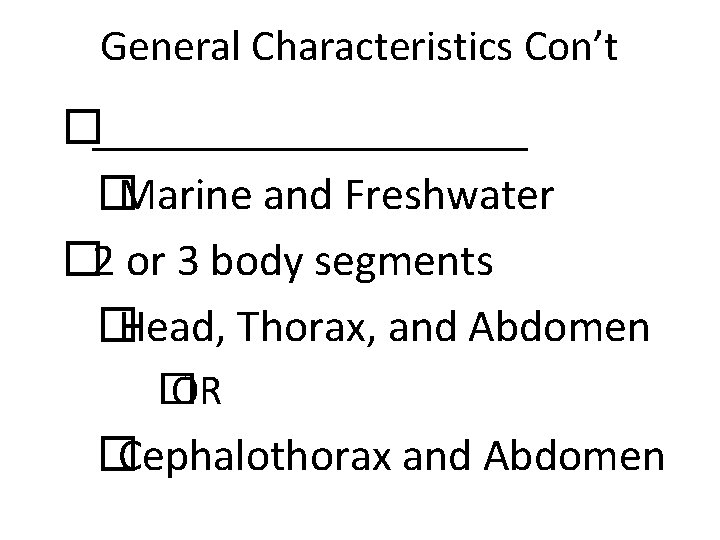
General Characteristics Con’t �__________ � Marine and Freshwater � 2 or 3 body segments � Head, Thorax, and Abdomen � OR � Cephalothorax and Abdomen
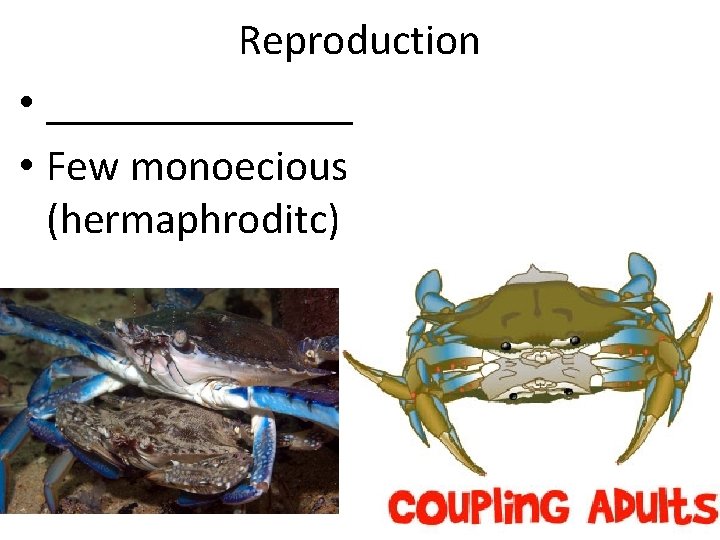
Reproduction • _______ • Few monoecious (hermaphroditc)
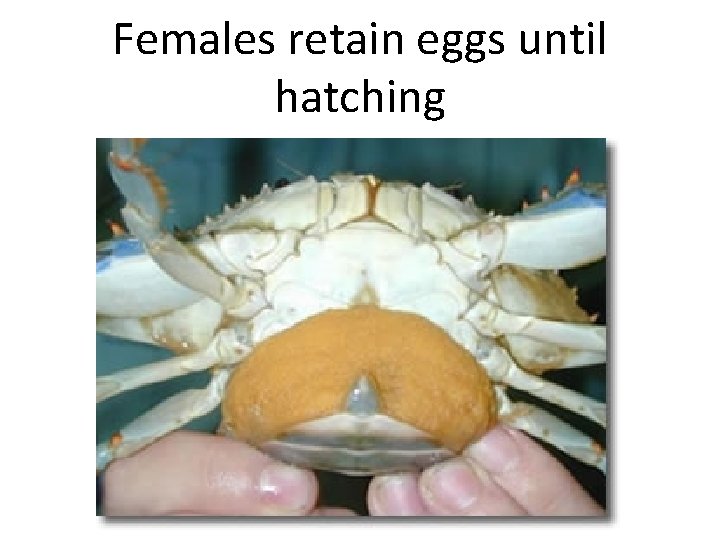
Females retain eggs until hatching
Economic Importance • Tasty—people like to consume them • _______
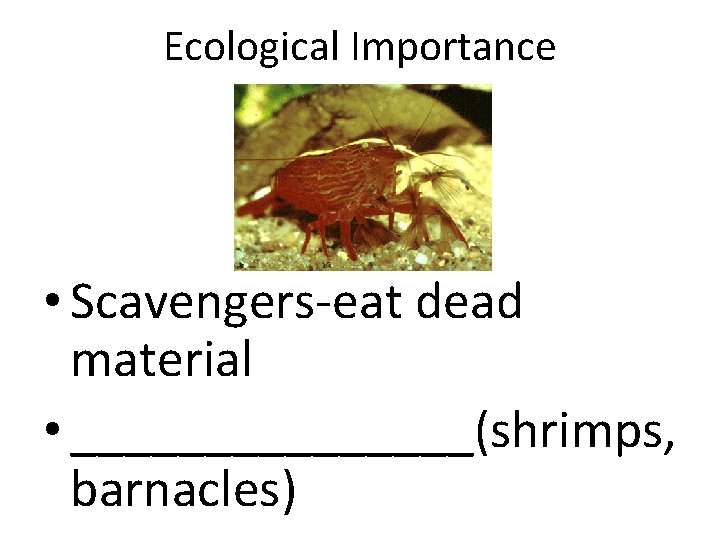
Ecological Importance • Scavengers-eat dead material • ________(shrimps, barnacles)