
Phylum Arthropoda Creatures of the Jointed Legs Phylum

- Slides: 14
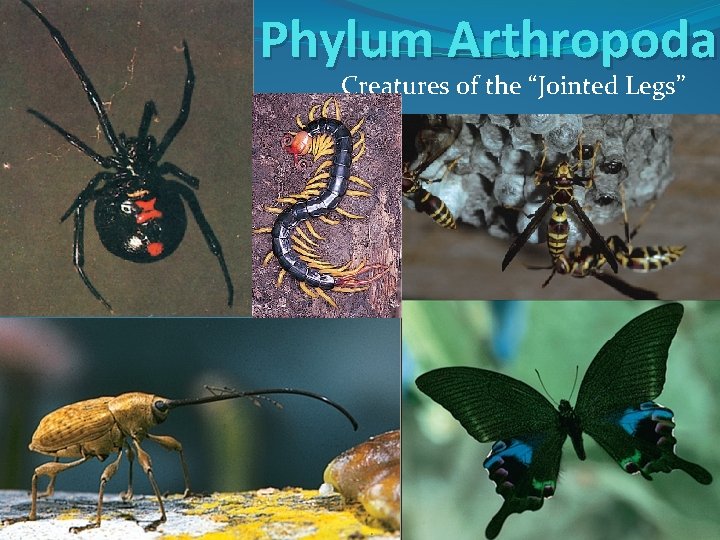
Phylum Arthropoda Creatures of the “Jointed Legs”
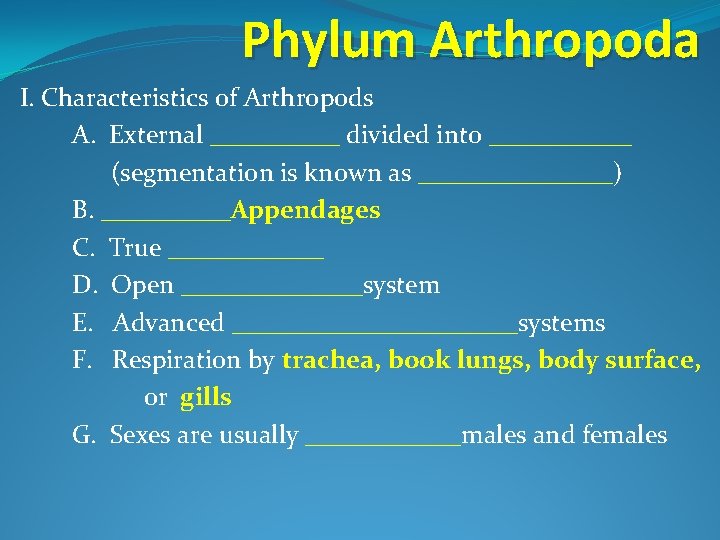
Phylum Arthropoda I. Characteristics of Arthropods A. External _____ divided into ______ (segmentation is known as ________) B. _____Appendages C. True ______ D. Open _______system E. Advanced ___________systems F. Respiration by trachea, book lungs, body surface, or gills G. Sexes are usually ______males and females
II. There are six major classes of Arthropods A. Class ______– The largest and most successful class of organisms in the world. B. Class ______– mostly aquatic; shrimp, crabs, lobsters, crayfish, etc. C. Class _____– spiders, mites and ticks D. Class ______– venomous centipedes E. Class ______- nonvenomous millipedes F. Class ______(Xiphosuridae) – The Horseshoe Crabs
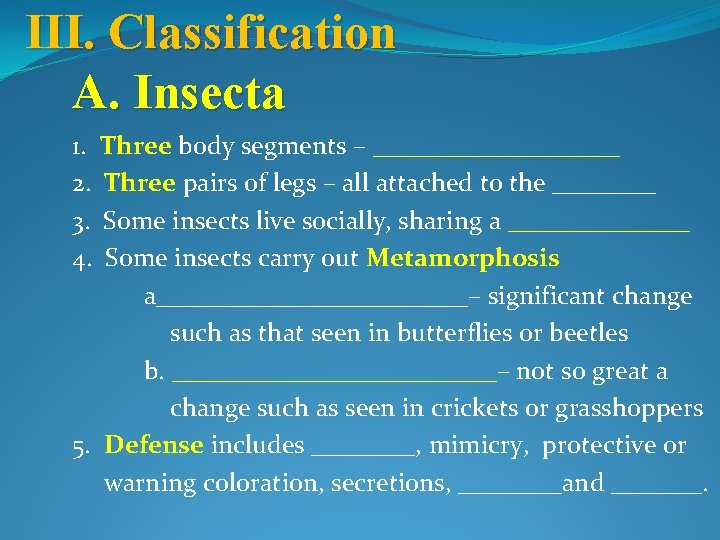
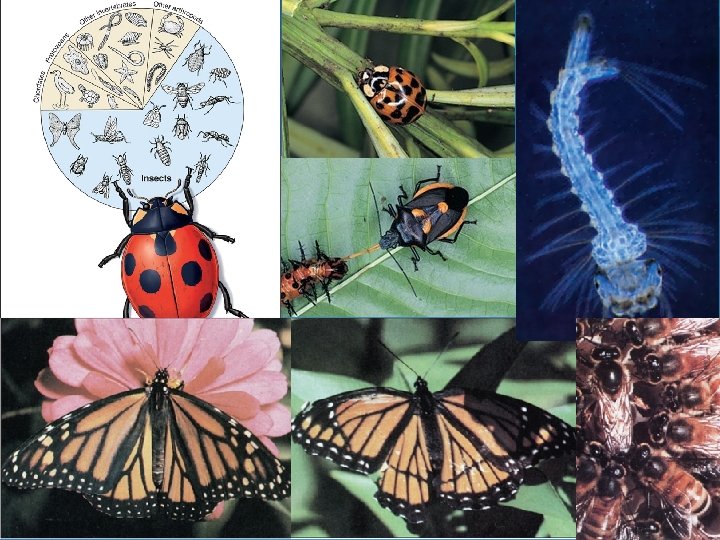
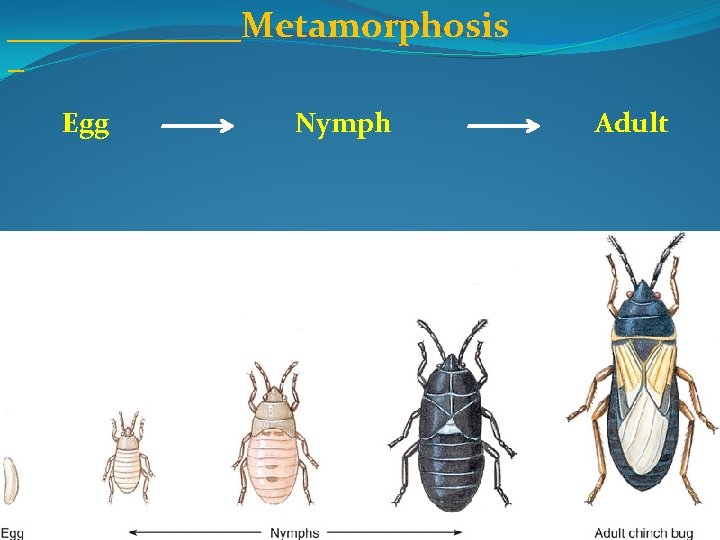
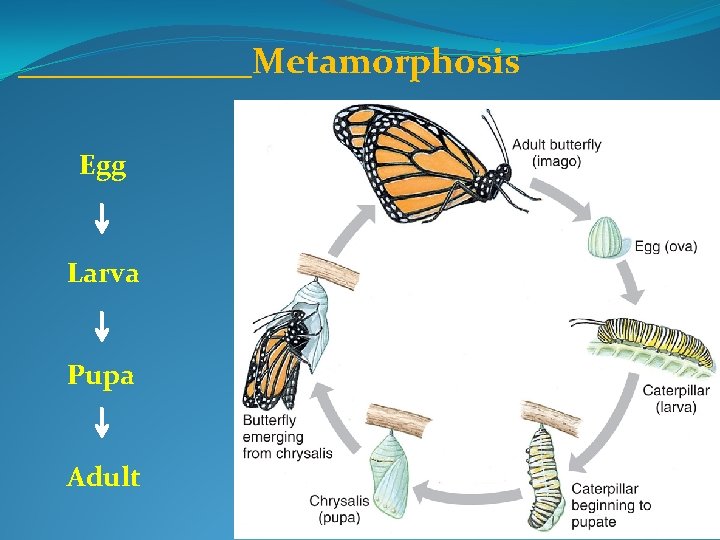
III. Classification A. Insecta 1. Three body segments – __________ 2. Three pairs of legs – all attached to the ____ 3. Some insects live socially, sharing a _______ 4. Some insects carry out Metamorphosis a____________– significant change such as that seen in butterflies or beetles b. _____________– not so great a change such as seen in crickets or grasshoppers 5. Defense includes ____, mimicry, protective or warning coloration, secretions, ____and _______.
_______Metamorphosis – Egg Nymph Adult
_______Metamorphosis Egg Larva Pupa Adult
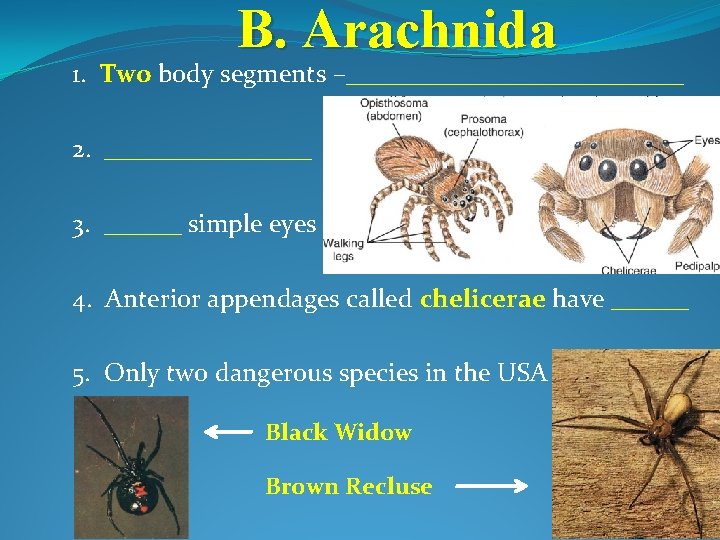
B. Arachnida 1. Two body segments –_____________ 2. ________ 3. ______ simple eyes 4. Anterior appendages called chelicerae have ______ 5. Only two dangerous species in the USA Black Widow Brown Recluse
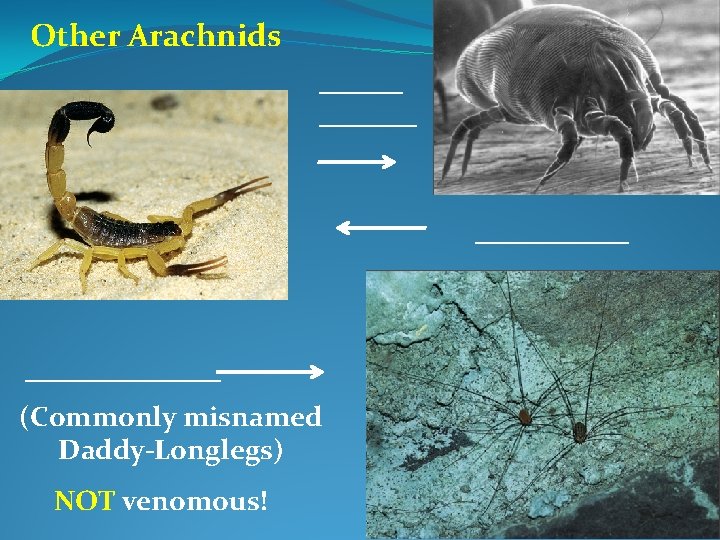
Other Arachnids ______________ (Commonly misnamed Daddy-Longlegs) NOT venomous!
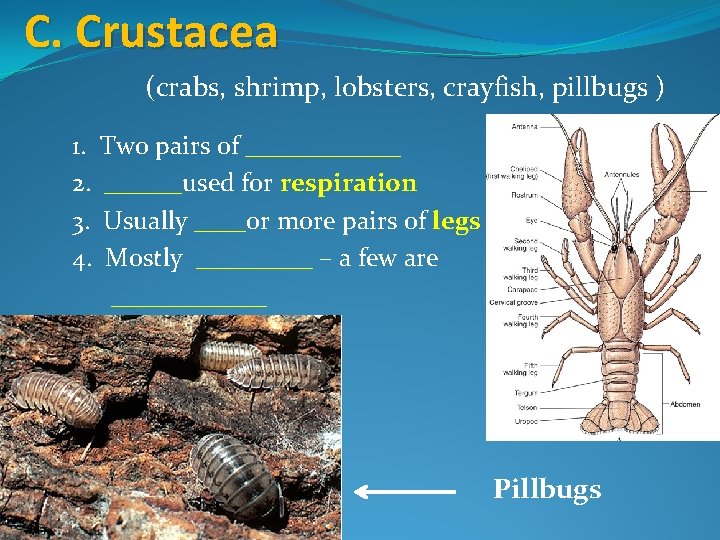
C. Crustacea (crabs, shrimp, lobsters, crayfish, pillbugs ) 1. Two pairs of ______ 2. ______used for respiration 3. Usually ____or more pairs of legs 4. Mostly _____ – a few are ______ Pillbugs
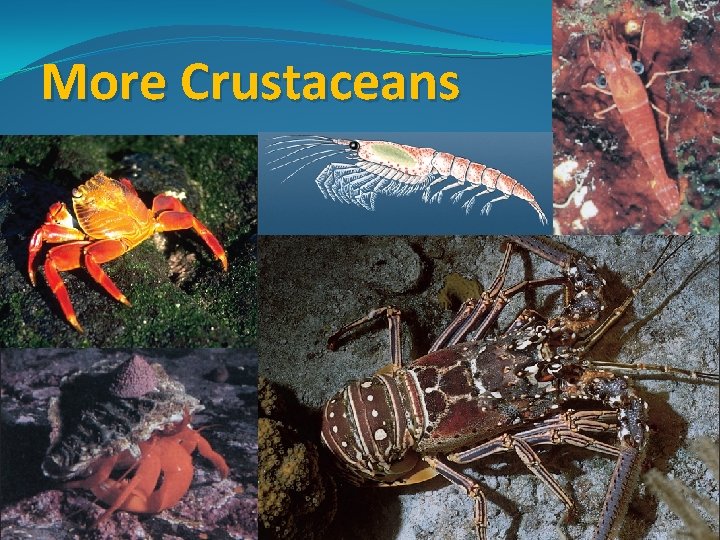
More Crustaceans
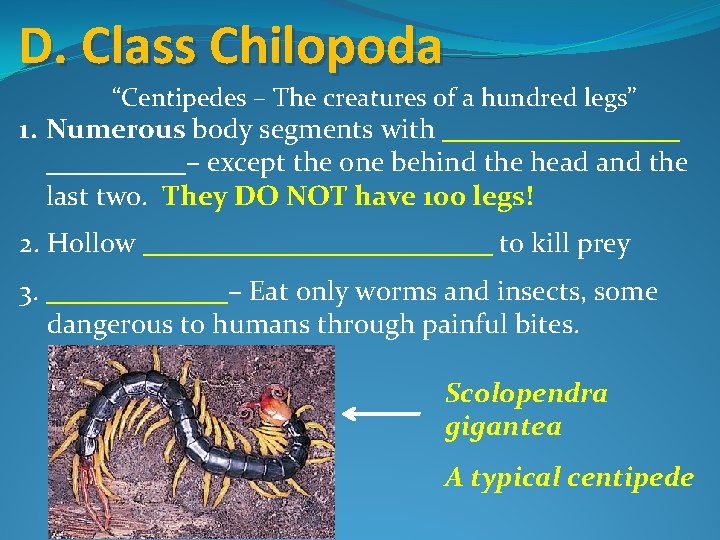
D. Class Chilopoda “Centipedes – The creatures of a hundred legs” 1. Numerous body segments with _________– except the one behind the head and the last two. They DO NOT have 100 legs! 2. Hollow _____________ to kill prey 3. _______– Eat only worms and insects, some dangerous to humans through painful bites. Scolopendra gigantea A typical centipede
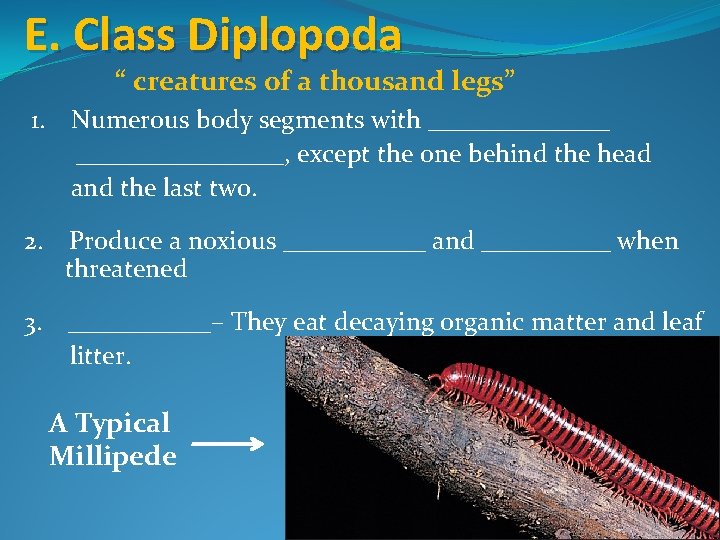
E. Class Diplopoda “ creatures of a thousand legs” 1. Numerous body segments with ________________, except the one behind the head and the last two. 2. Produce a noxious ______ and _____ when threatened 3. ______– They eat decaying organic matter and leaf litter. A Typical Millipede
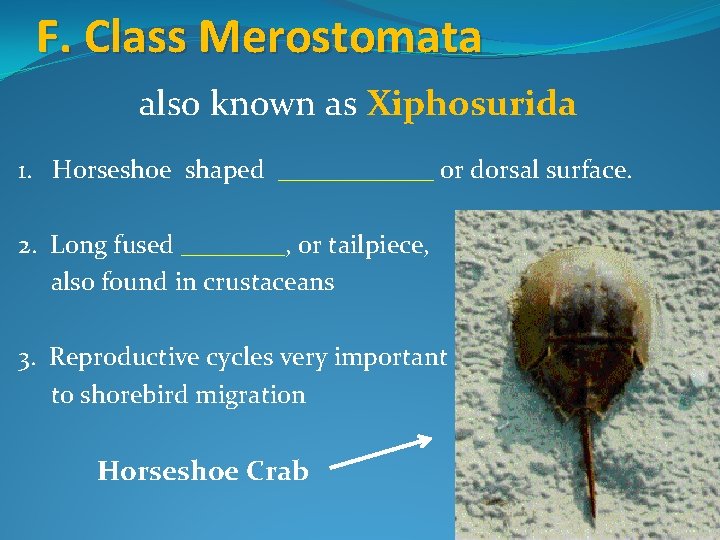
F. Class Merostomata also known as Xiphosurida 1. Horseshoe shaped ______ or dorsal surface. 2. Long fused ____, or tailpiece, also found in crustaceans 3. Reproductive cycles very important to shorebird migration Horseshoe Crab