
Phylum Arthropoda Arthropods jointed foot Arthro joint pod




- Slides: 58
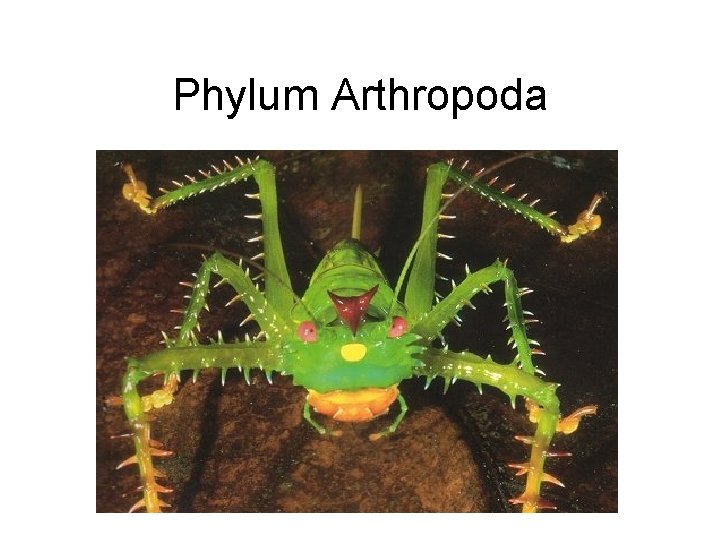
Phylum Arthropoda
Arthropods “jointed foot” “Arthro” = joint “pod” = foot
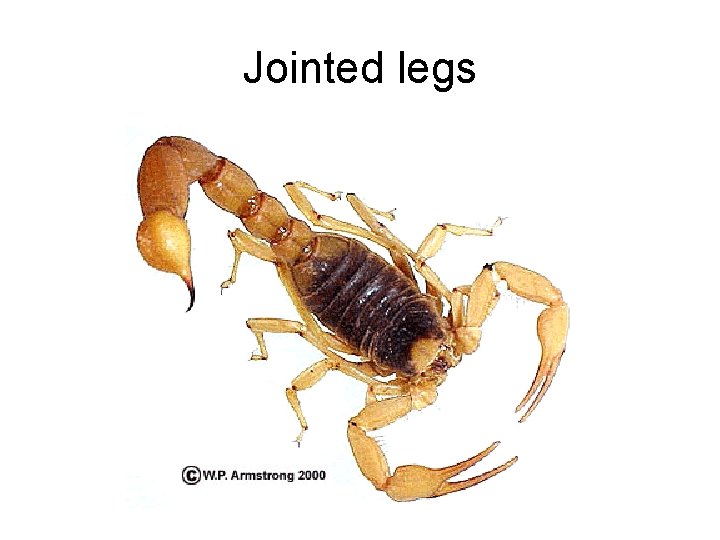
Jointed legs
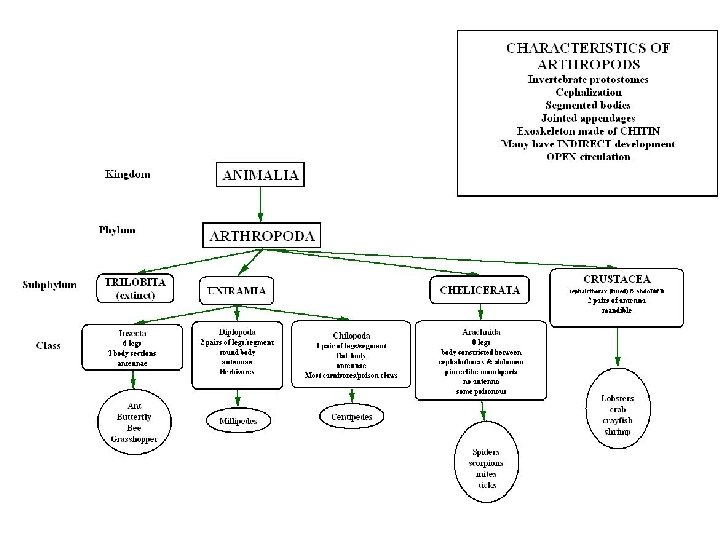
Arthropoda facts • 750, 000 species identified so far. More than 3 times the number of all other species. • Include insects, crabs, centipedes and spiders. • They have a segmented body, a tough exoskeleton and jointed appendages.
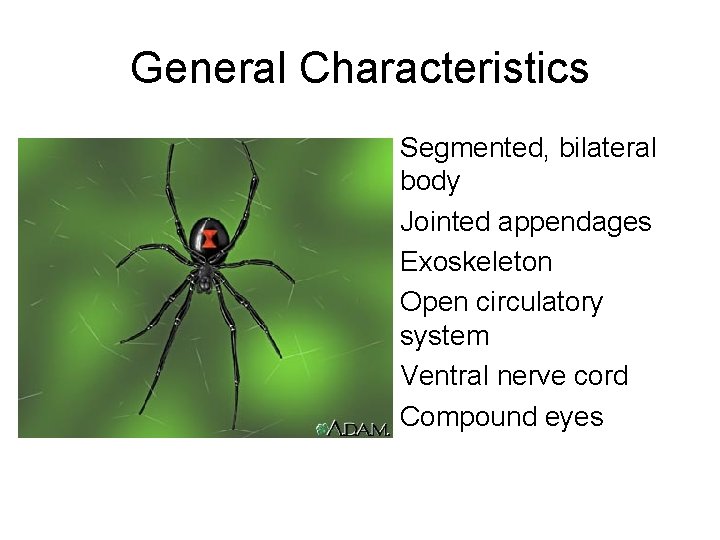
General Characteristics • Segmented, bilateral body • Jointed appendages • Exoskeleton • Open circulatory system • Ventral nerve cord • Compound eyes
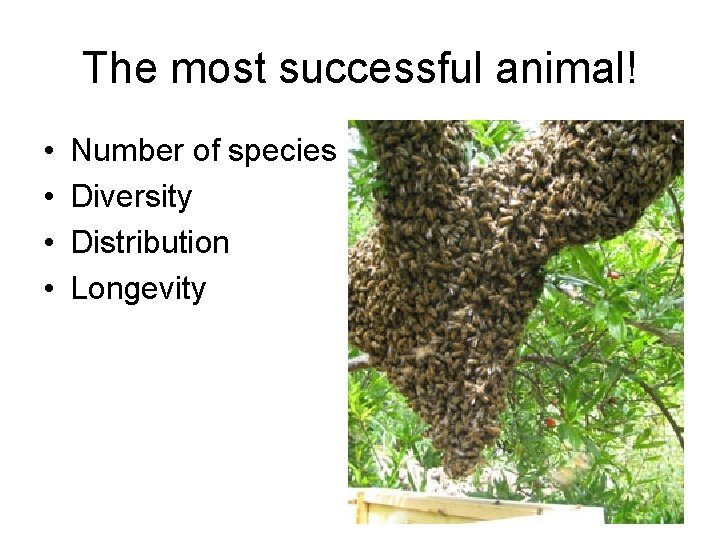
The most successful animal! • • Number of species Diversity Distribution Longevity
Reason for Success • • • Versatile exoskeleton Segmentation Oxygen piped directly to cells (terrestrial) Highly developed sensory organs Complex behavior Metamorphosis
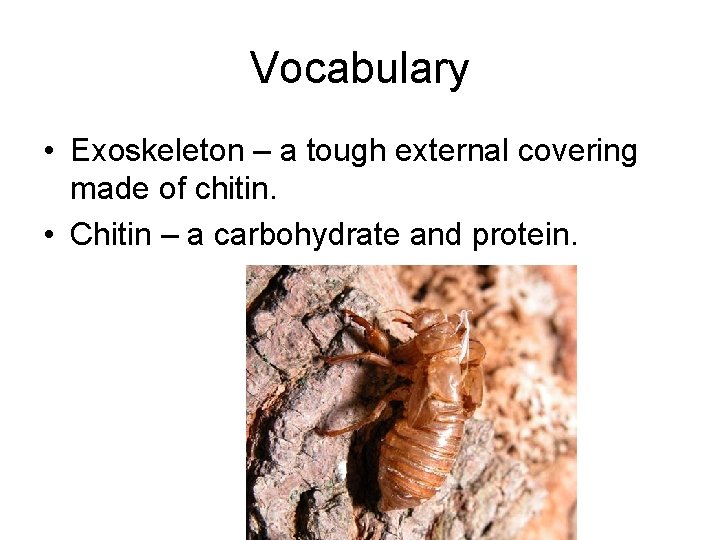
Vocabulary • Exoskeleton – a tough external covering made of chitin. • Chitin – a carbohydrate and protein.
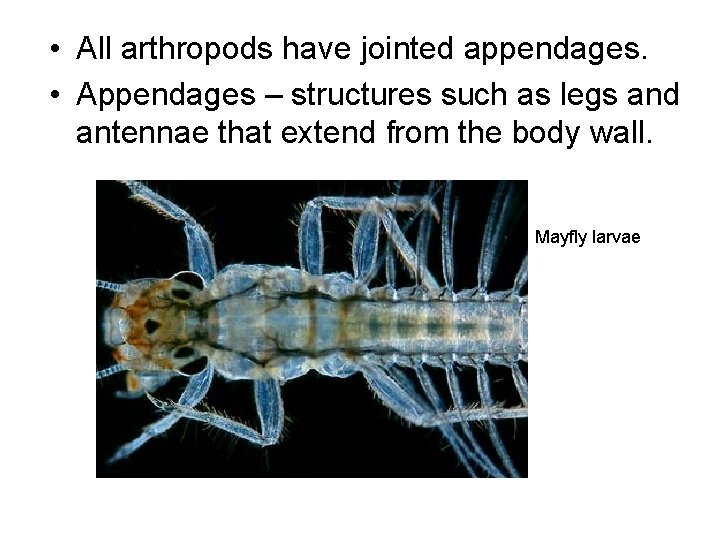
• All arthropods have jointed appendages. • Appendages – structures such as legs and antennae that extend from the body wall. Mayfly larvae
Form and Function in Arthropods • They have specialized organs found only in this phylum. • They use tracheal tubes or other specialized organs for respiration, have an open circulatory system and excrete wastes through saclike tubes.
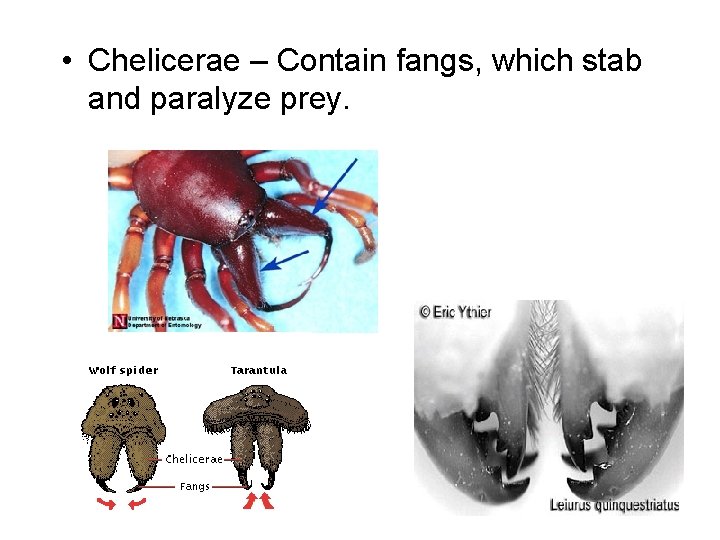
Feeding • Include herbivores, carnivores and omnivores. • They are bloodsuckers, filter feeders, detritivores, and parasites. • Many types of mouthparts: pincers, fangs, and sickle-shaped jaws. • Complete digestive system with two openings • Various mouthparts and structures that aid in eating include chelicerae, fangs, jaws, pedipalps, teeth, mandibles, etc.
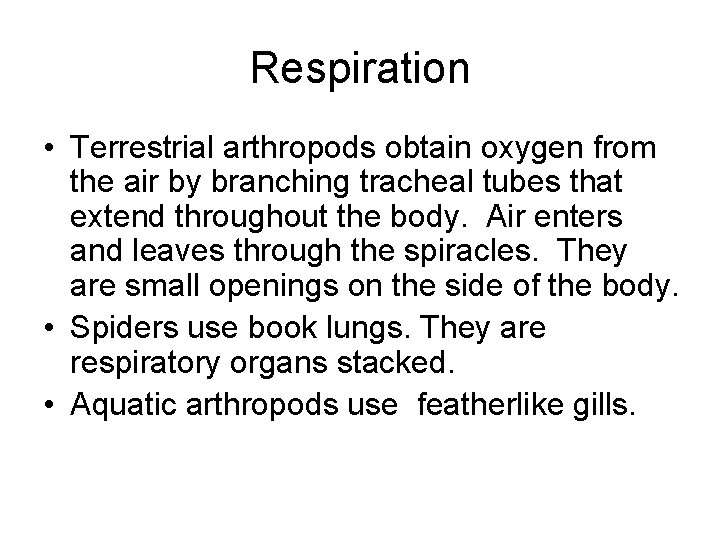
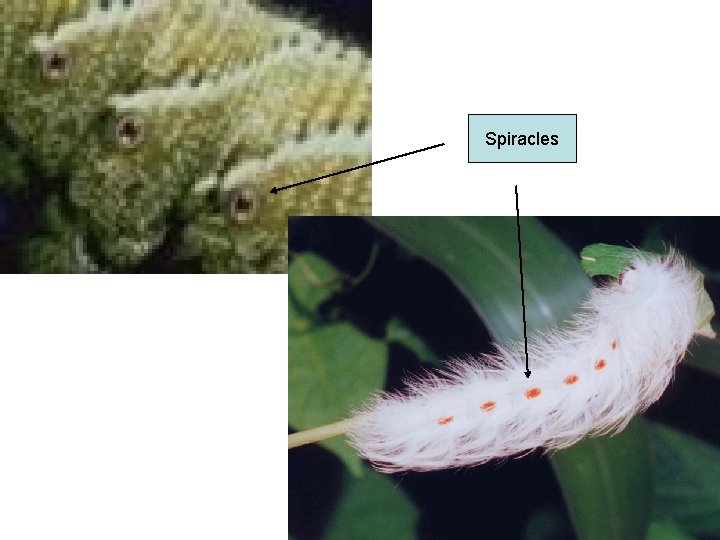
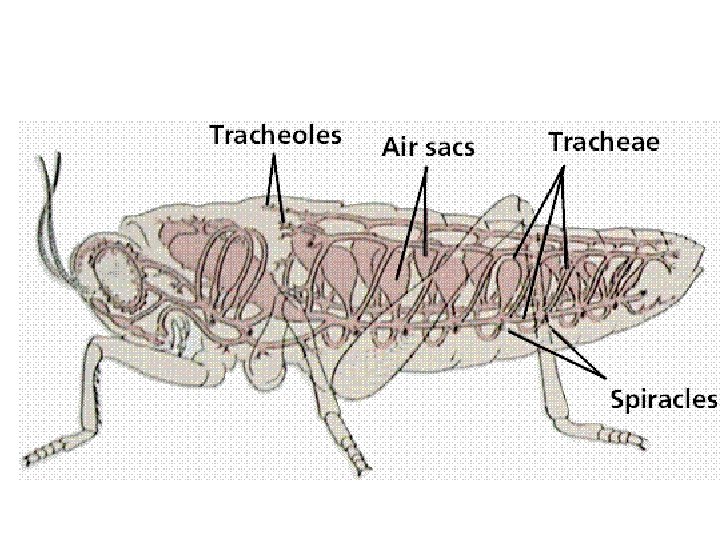
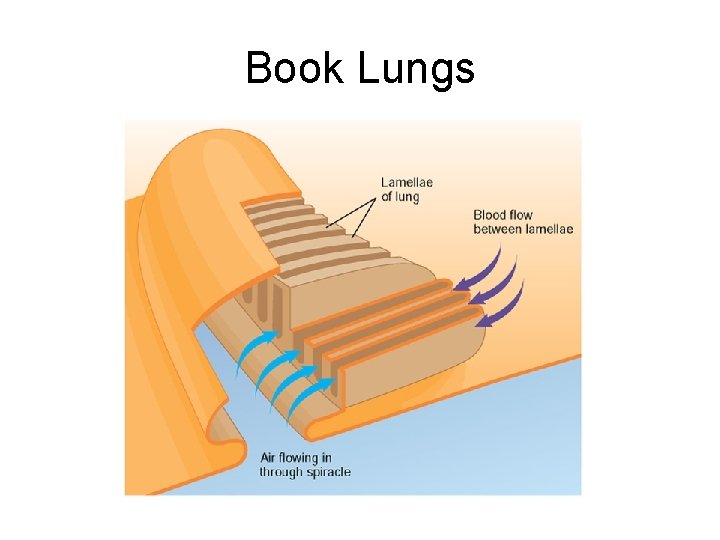
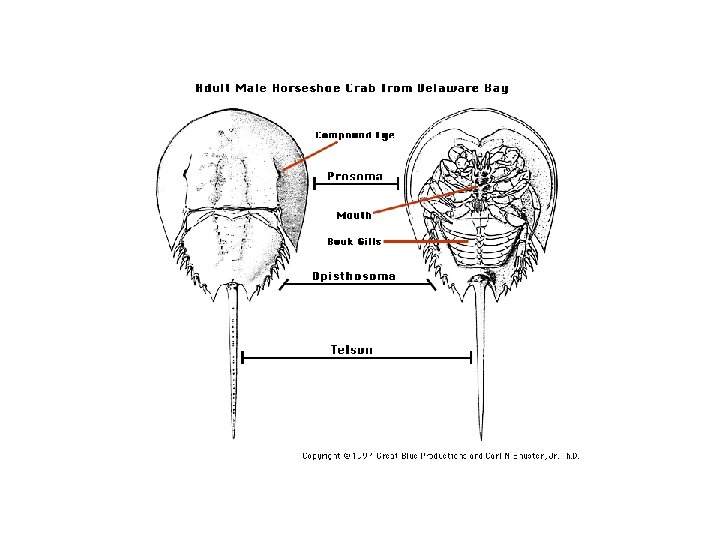
Respiration • Terrestrial arthropods obtain oxygen from the air by branching tracheal tubes that extend throughout the body. Air enters and leaves through the spiracles. They are small openings on the side of the body. • Spiders use book lungs. They are respiratory organs stacked. • Aquatic arthropods use featherlike gills.
Spiracles
Book Lungs
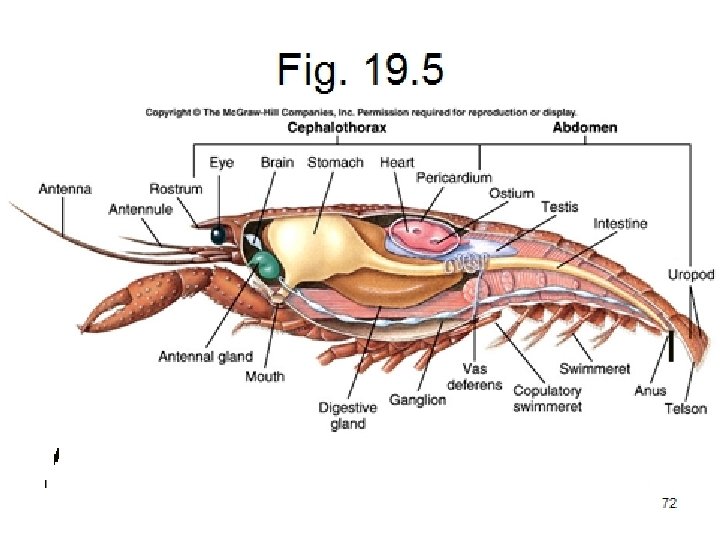
Circulation • Arthropods have an open circulatory system. • They have a well developed heart which pumps blood through arteries that go to tissues. Blood leaves the tissues and moves through the cavities. It collects in the cavity around the heart where it is pumped out again.
OPEN CIRCULATORY SYSTEM HEART with openings (OSTIA) ARTERIES leaving heart but NO VEINS to return hemolymph (blood)
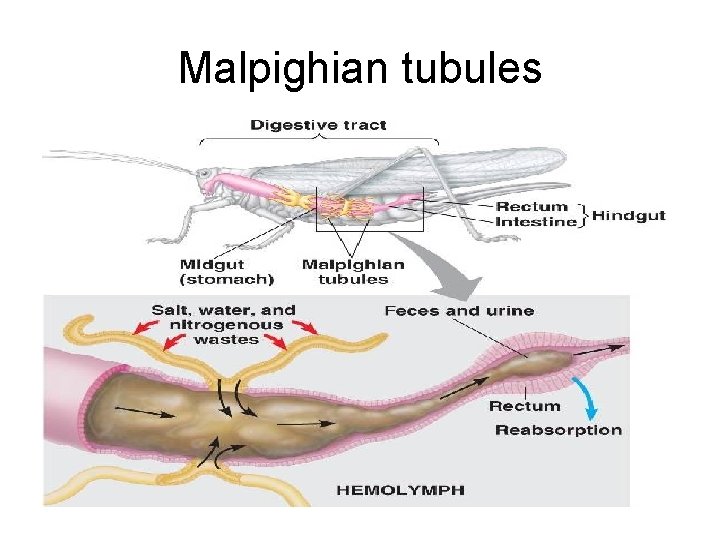
Excretion • Dispose of the nitrogen waste using Malpighian tubes. They are saclike organs that extract the waste from the blood and add it to the feces. • In aquatic arthropods, nitrogenous wastes are removed by simple diffusion from the body
Malpighian tubules
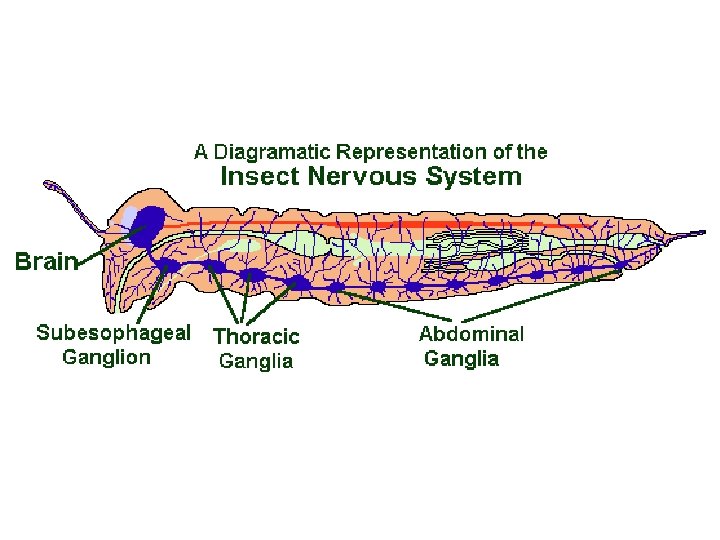
Response • They have a well developed nervous system. They have a brain and two nerves that send incoming and outgoing messages. They have sophisticated sense organs and can see and taste things very well.
Reproduction • Terrestrial arthropods have internal fertilization. Some species do have external fertilization.
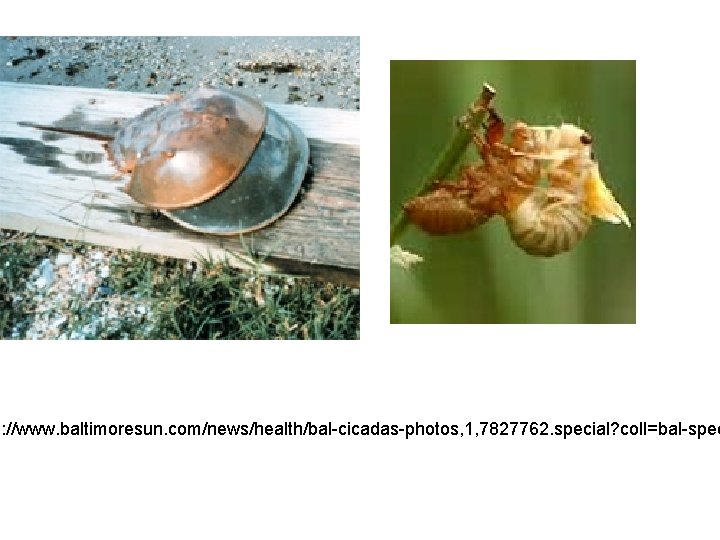
Movement, support, and body plan • Arthropods have an exoskeleton made of protein, lipid, chitin, and calcium carbonate. Chitin, a polysaccharide, is the major component of the exoskeleton. • Well-developed groups of muscles that flex and extend to move appendages • Arthropods will molt or shed their exoskeleton to grow and develop. • Coelomate • Bilateral symmetry • Segmented body (number of segments varies) • Jointed appendages
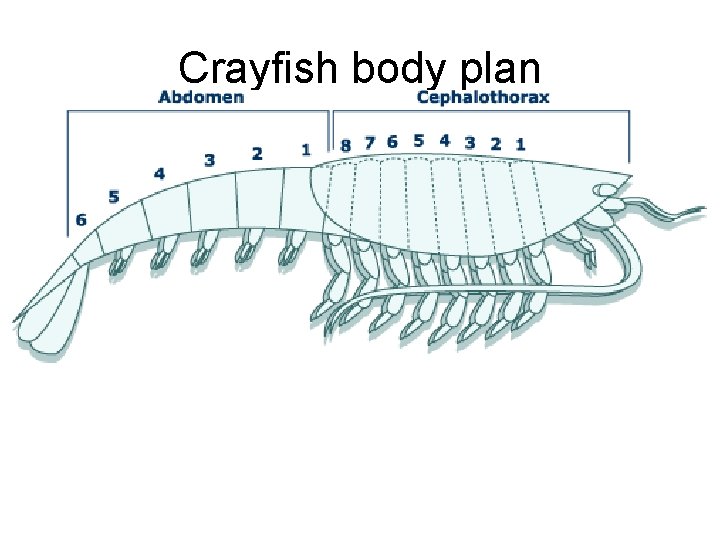
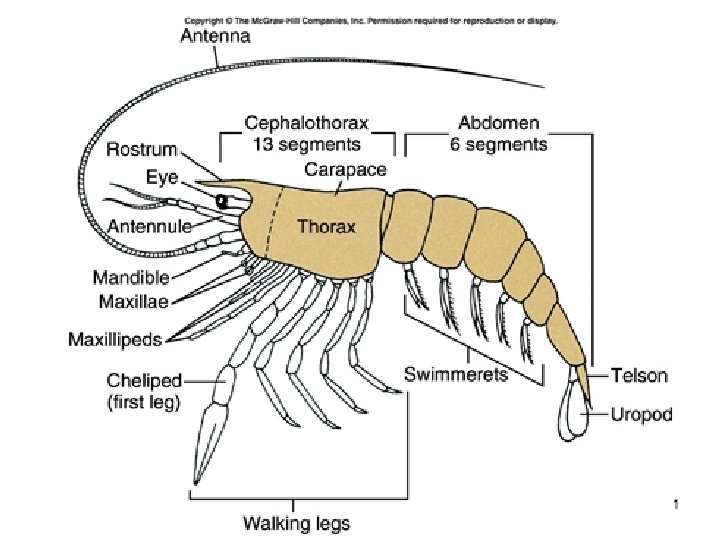
Crayfish body plan
Growth and development • When arthropods outgrow their exoskeleton they must molt. • The whole exoskeleton is molted. • Skin glands digest the inner part of the old exoskeleton and then it pulls it off.
p: //www. baltimoresun. com/news/health/bal-cicadas-photos, 1, 7827762. special? coll=bal-spec
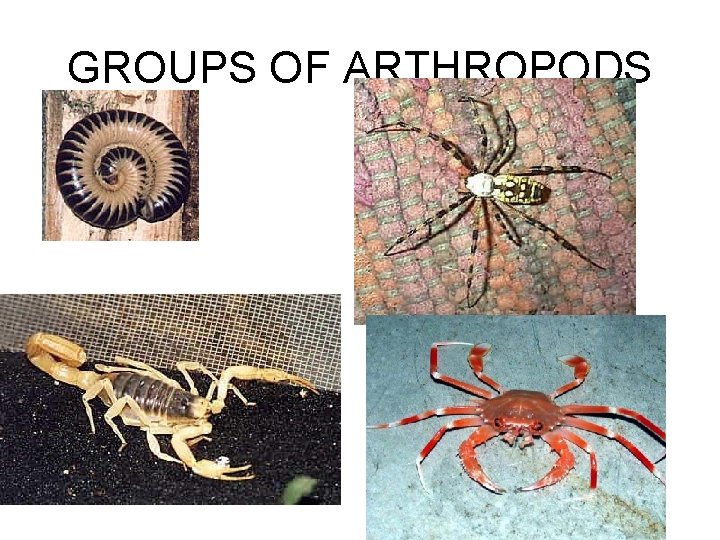
GROUPS OF ARTHROPODS
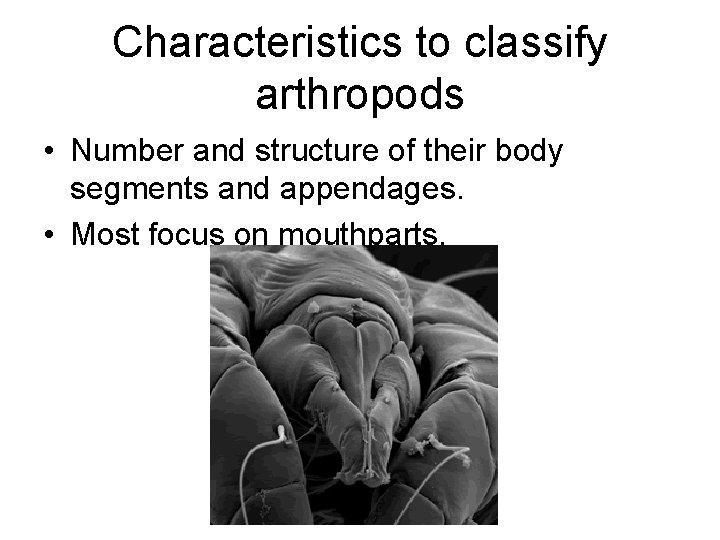
Characteristics to classify arthropods • Number and structure of their body segments and appendages. • Most focus on mouthparts.
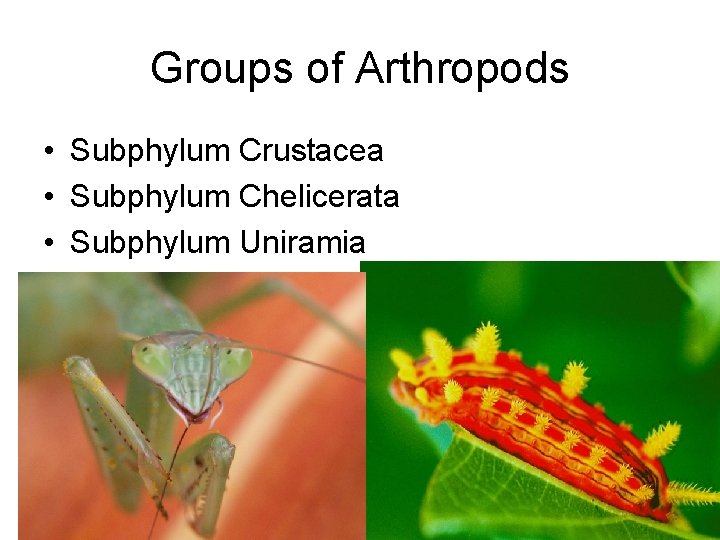
Groups of Arthropods • Subphylum Crustacea • Subphylum Chelicerata • Subphylum Uniramia
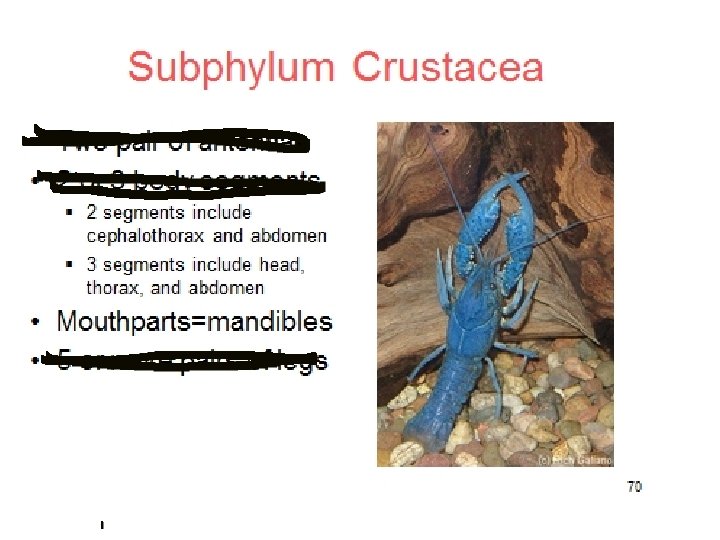
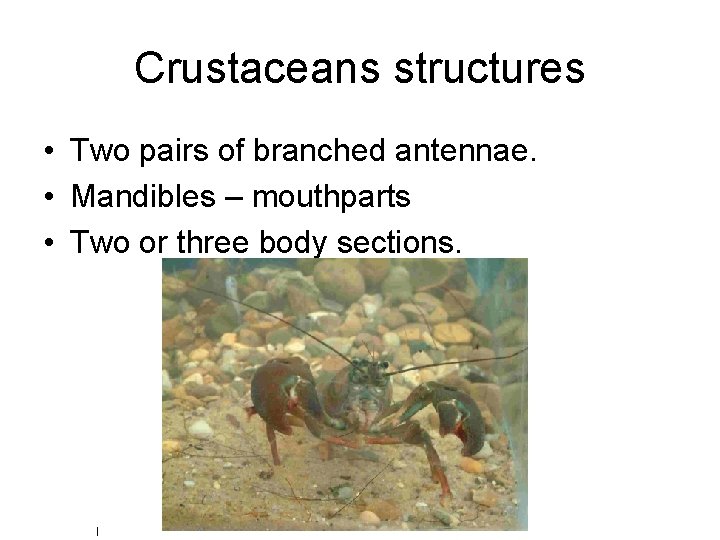
Crustaceans structures • Two pairs of branched antennae. • Mandibles – mouthparts • Two or three body sections.
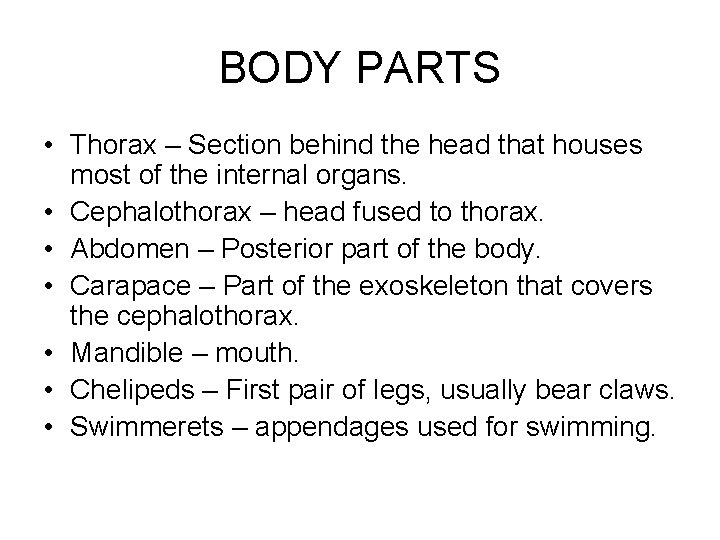
BODY PARTS • Thorax – Section behind the head that houses most of the internal organs. • Cephalothorax – head fused to thorax. • Abdomen – Posterior part of the body. • Carapace – Part of the exoskeleton that covers the cephalothorax. • Mandible – mouth. • Chelipeds – First pair of legs, usually bear claws. • Swimmerets – appendages used for swimming.
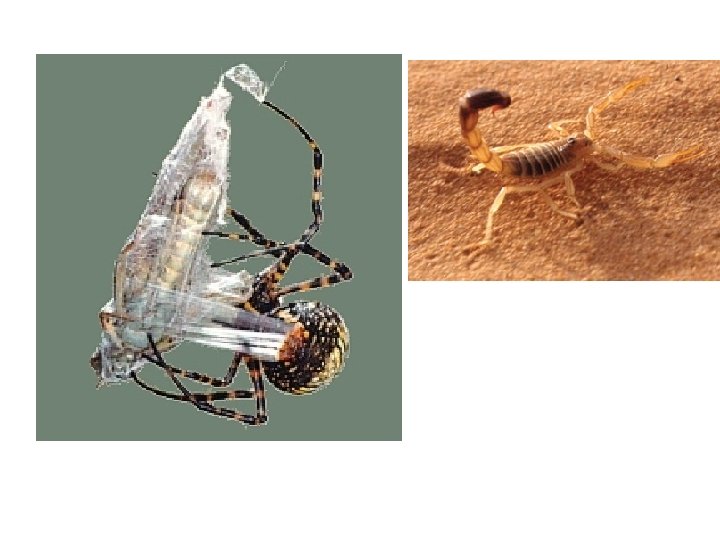
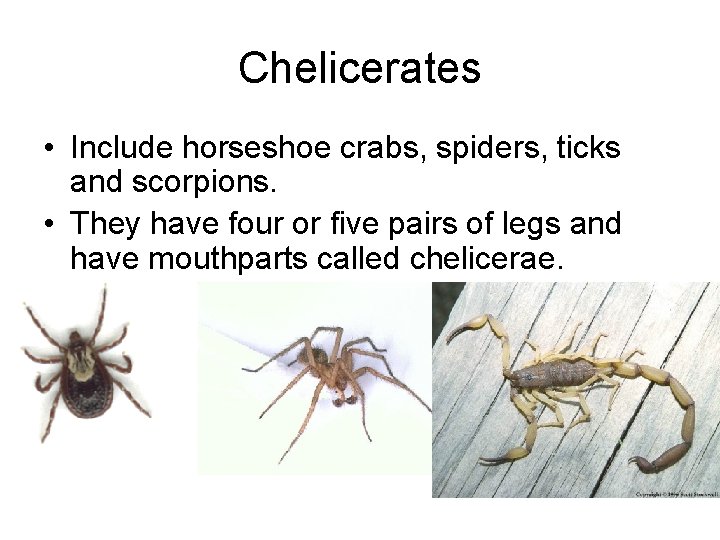
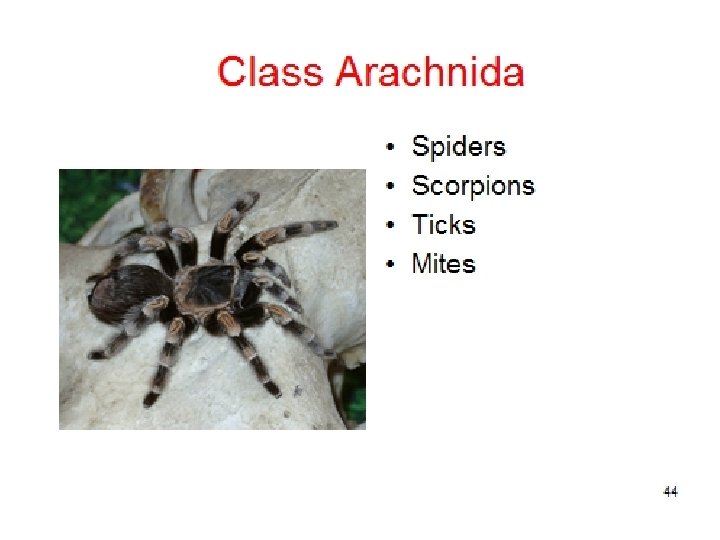
Chelicerates • Include horseshoe crabs, spiders, ticks and scorpions. • They have four or five pairs of legs and have mouthparts called chelicerae.
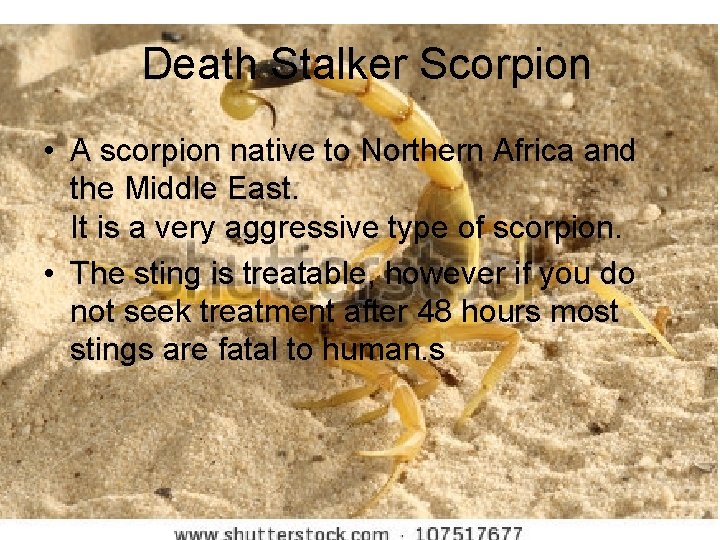
Death Stalker Scorpion • A scorpion native to Northern Africa and the Middle East. It is a very aggressive type of scorpion. • The sting is treatable, however if you do not seek treatment after 48 hours most stings are fatal to human. s
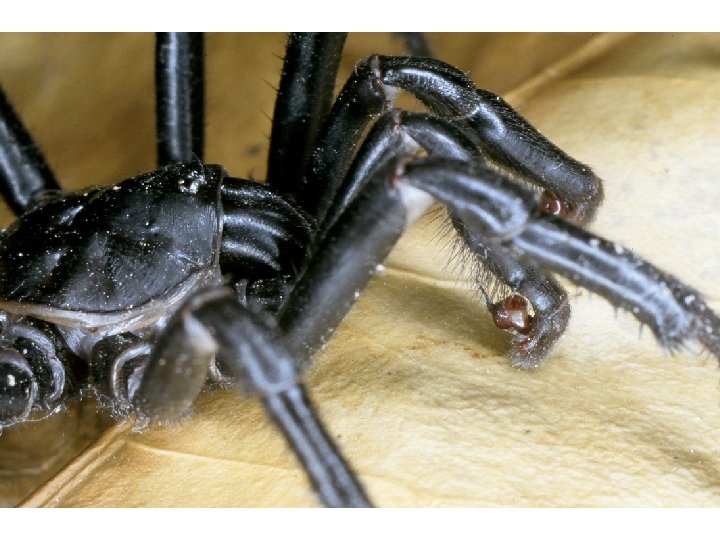
• Chelicerae – Contain fangs, which stab and paralyze prey.
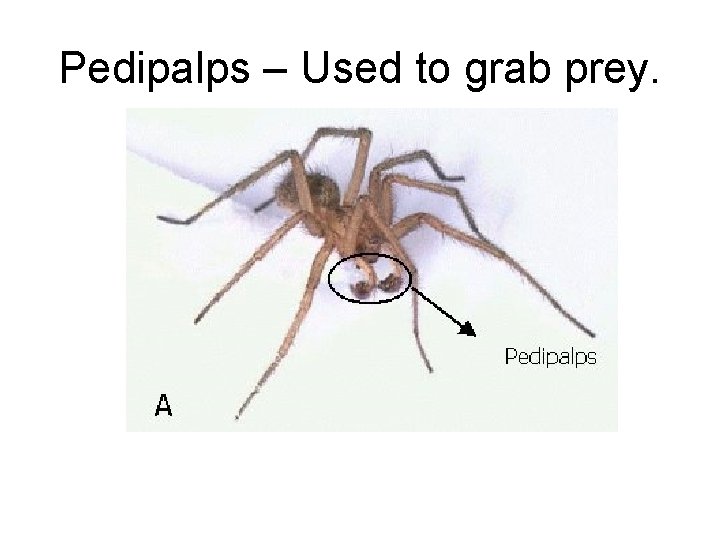
Pedipalps – Used to grab prey.
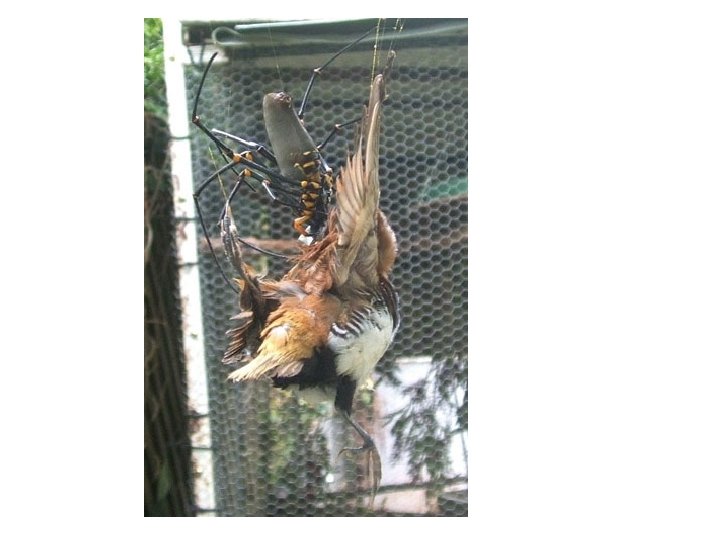
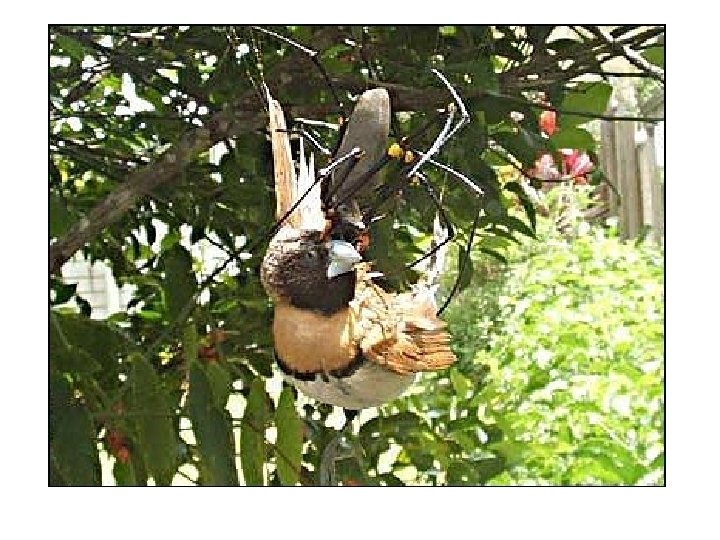
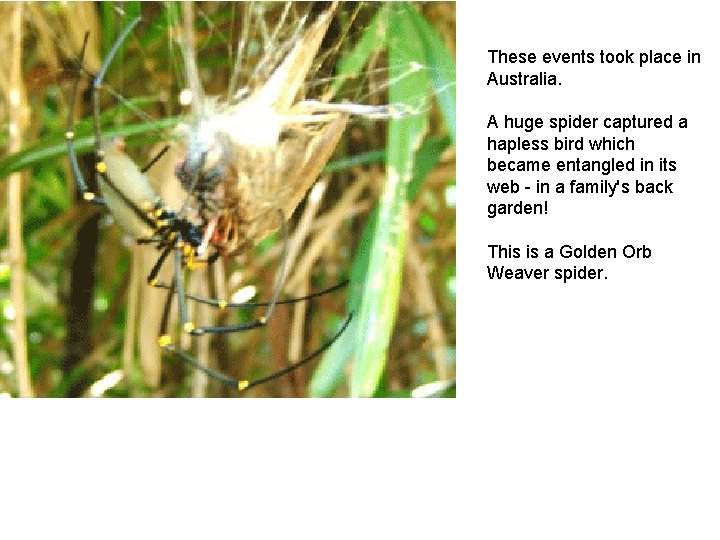
These events took place in Australia. A huge spider captured a hapless bird which became entangled in its web - in a family's back garden! This is a Golden Orb Weaver spider.
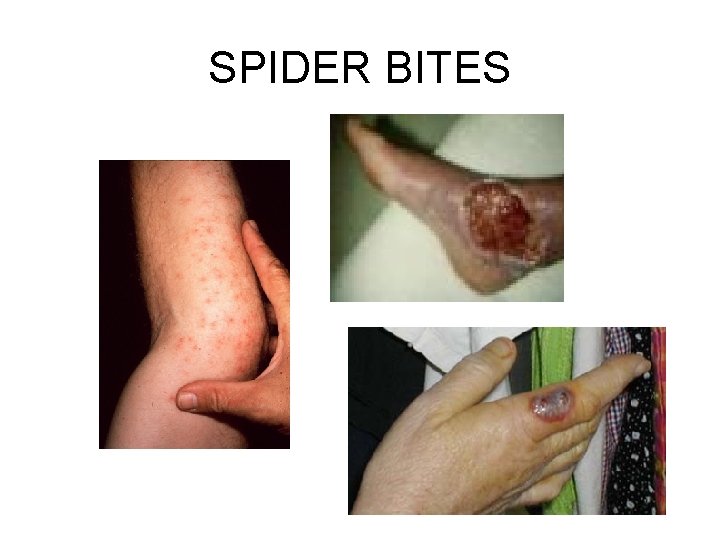
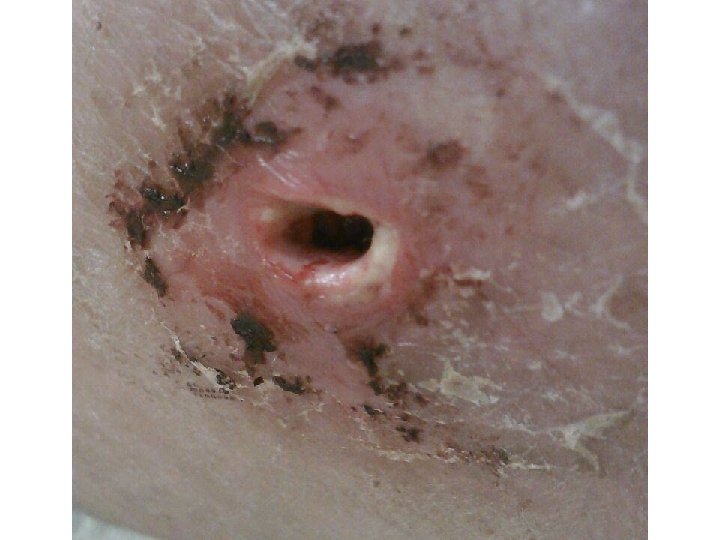
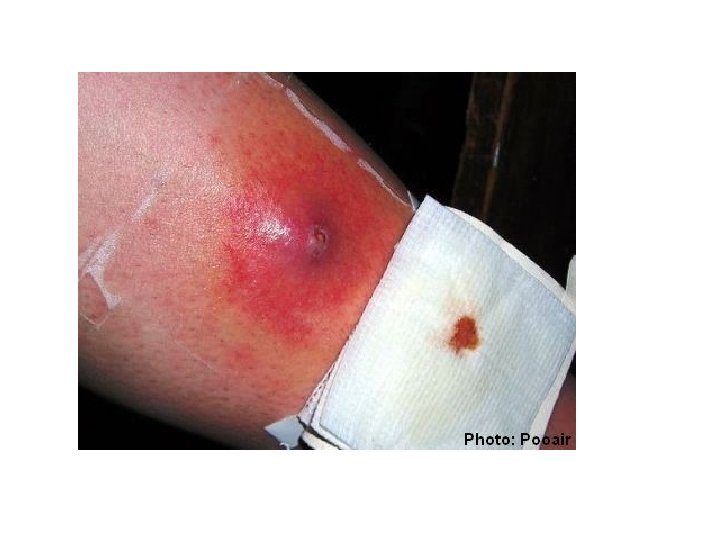
SPIDER BITES
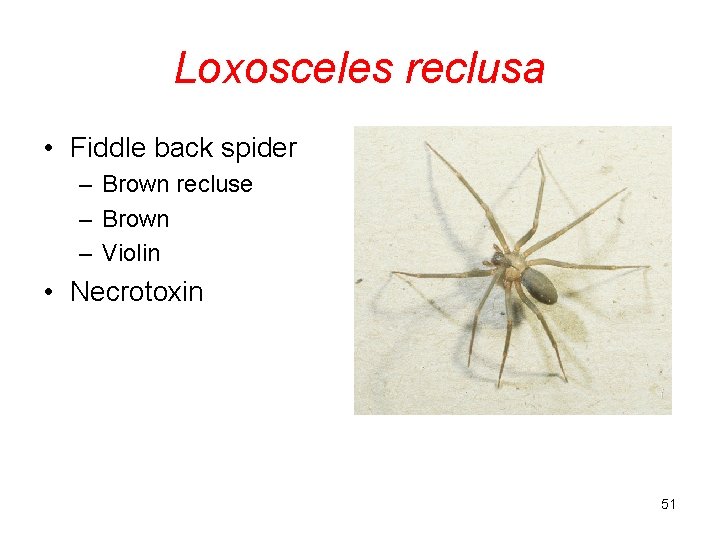
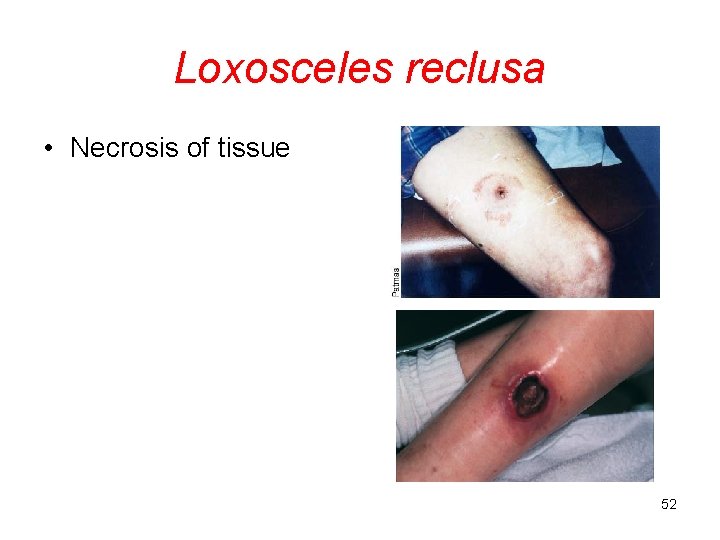
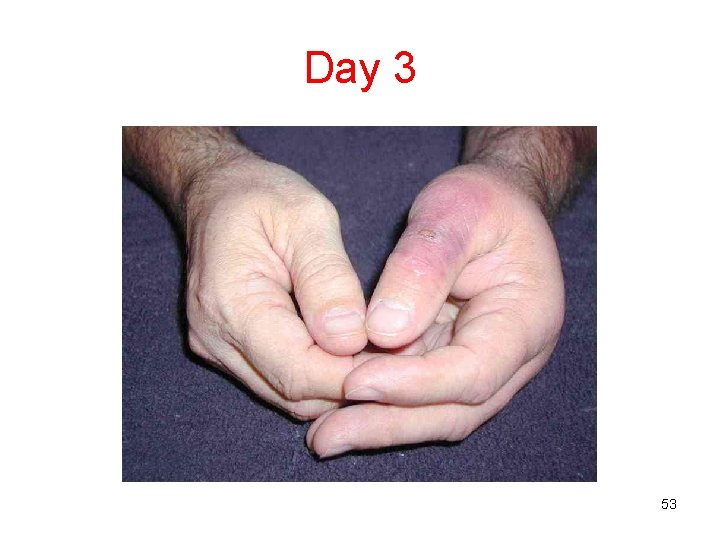
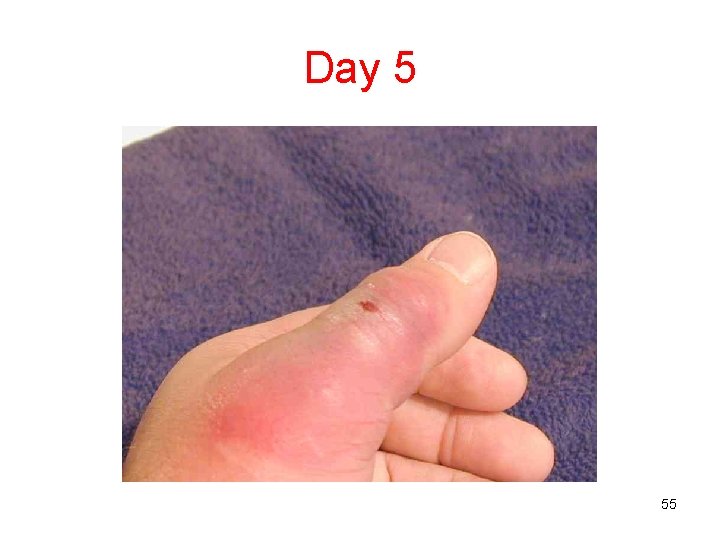
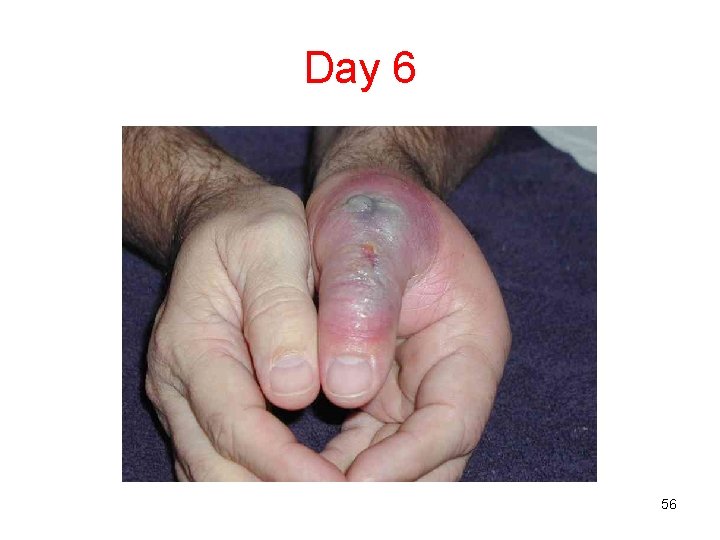
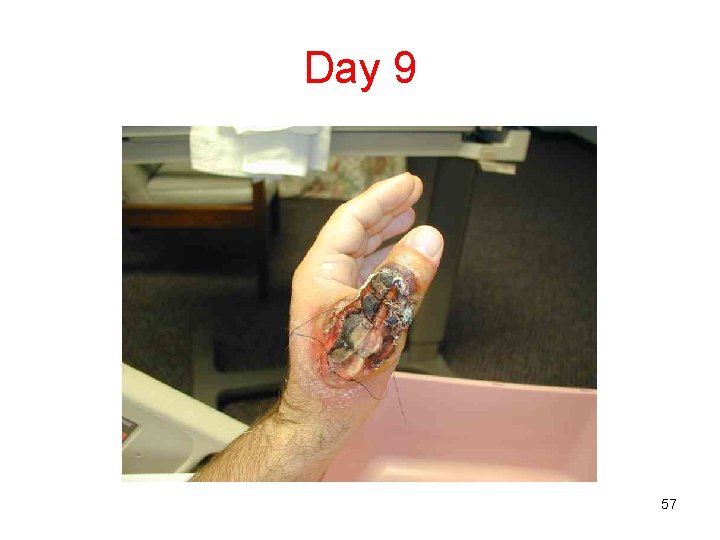
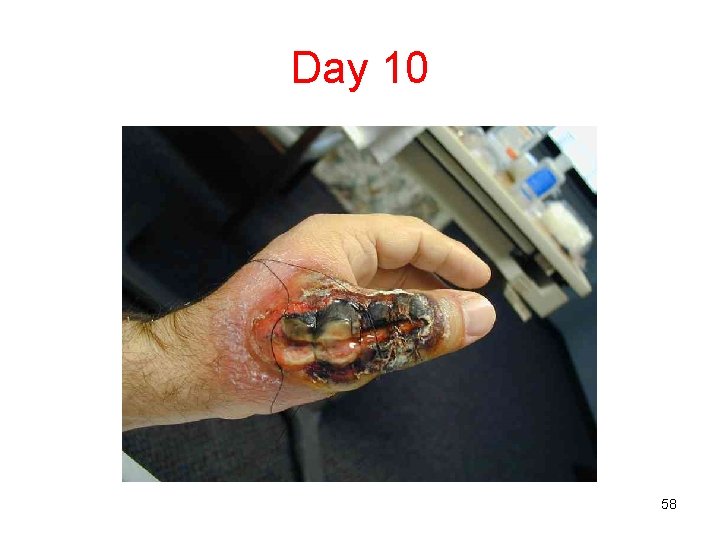
Loxosceles reclusa • Fiddle back spider – Brown recluse – Brown – Violin • Necrotoxin 51
Loxosceles reclusa • Necrosis of tissue 52
Day 3 53
Day 4 54
Day 5 55
Day 6 56
Day 9 57
Day 10 58