
Phylum Annelida What were the benefits of segmentation
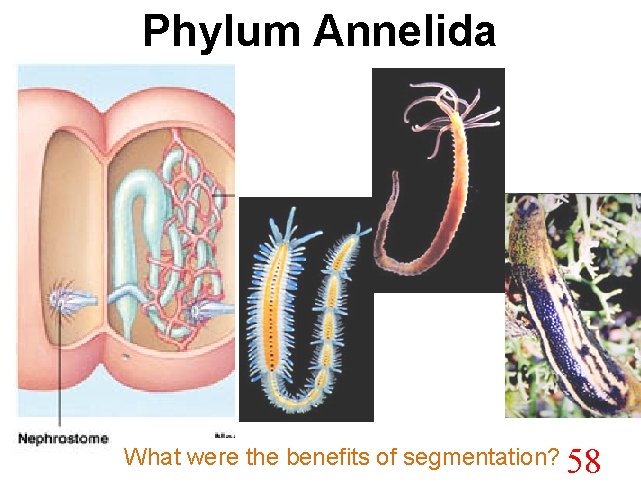
Phylum Annelida What were the benefits of segmentation? 58
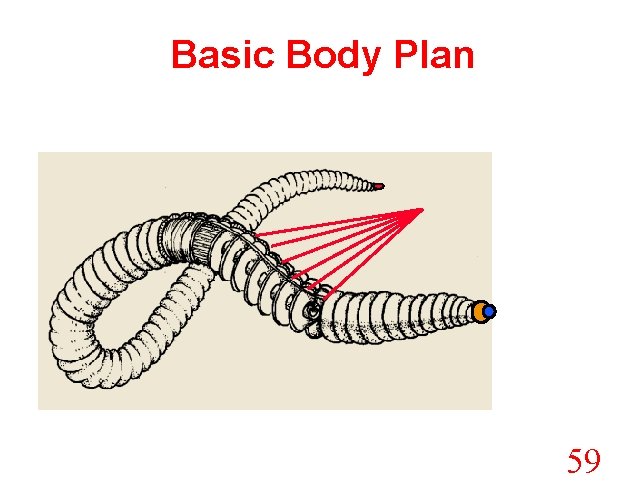
Basic Body Plan 59
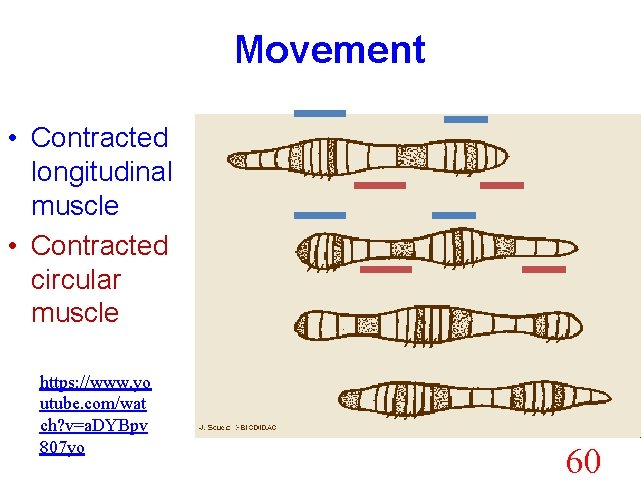
Movement • Contracted longitudinal muscle • Contracted circular muscle https: //www. yo utube. com/wat ch? v=a. DYBpv 807 yo 60
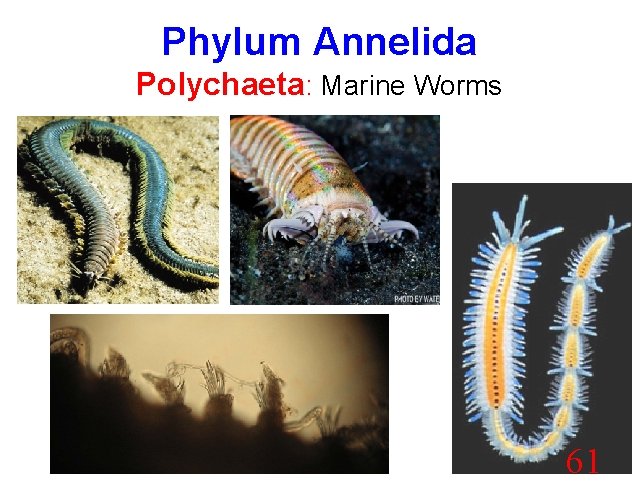
Phylum Annelida Polychaeta: Marine Worms 61
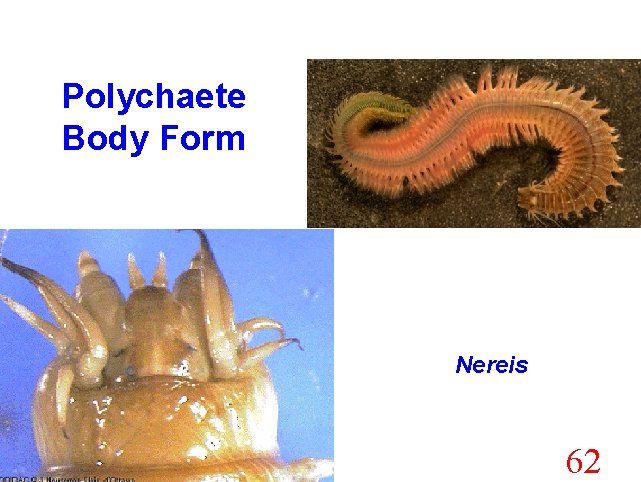
Polychaete Body Form Nereis 62
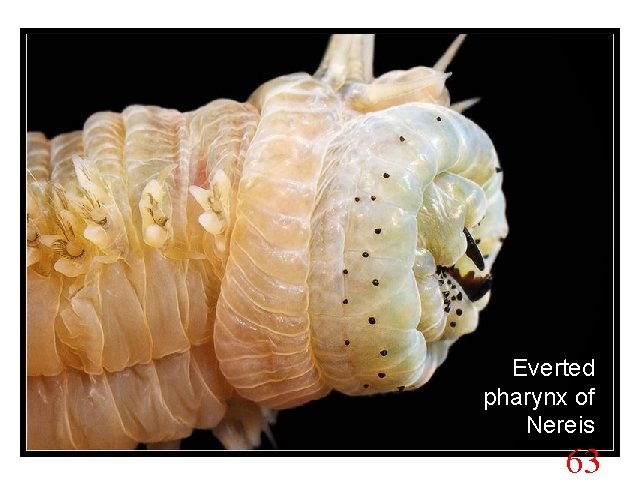
Everted pharynx of Nereis 63
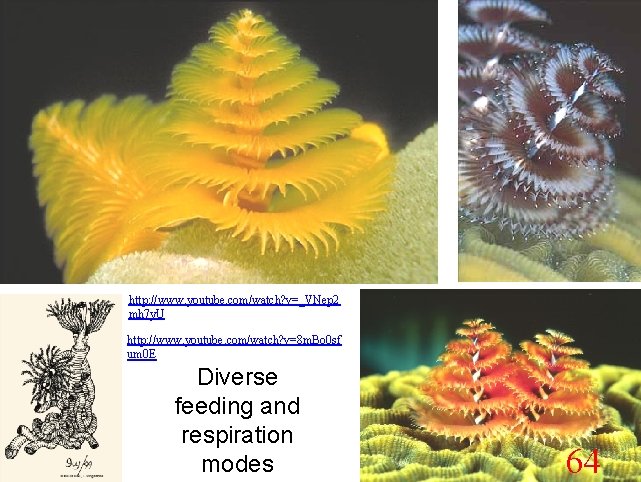
http: //www. youtube. com/watch? v=_VNep 2 mh 7 y. U http: //www. youtube. com/watch? v=8 m. Bo 0 sf um 0 E Diverse feeding and respiration modes 64
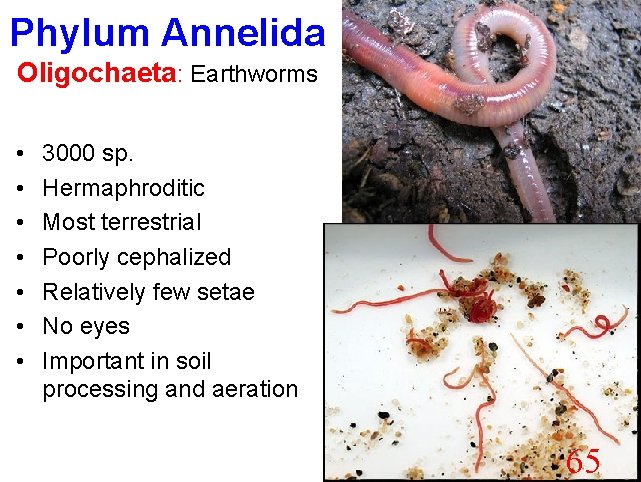
Phylum Annelida Oligochaeta: Earthworms • • 3000 sp. Hermaphroditic Most terrestrial Poorly cephalized Relatively few setae No eyes Important in soil processing and aeration 65
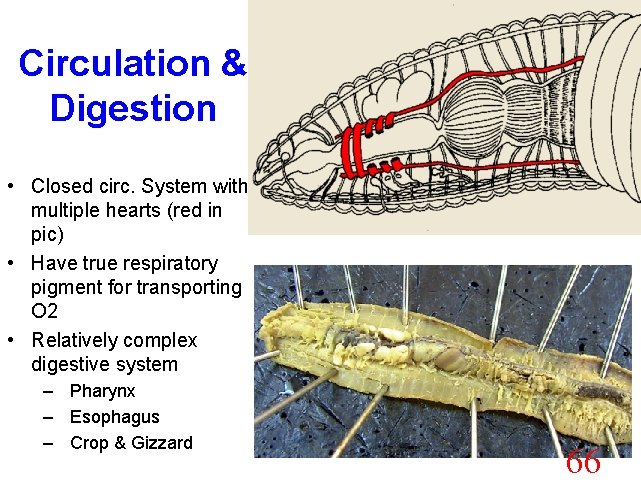
Circulation & Digestion • Closed circ. System with multiple hearts (red in pic) • Have true respiratory pigment for transporting O 2 • Relatively complex digestive system – Pharynx – Esophagus – Crop & Gizzard 66
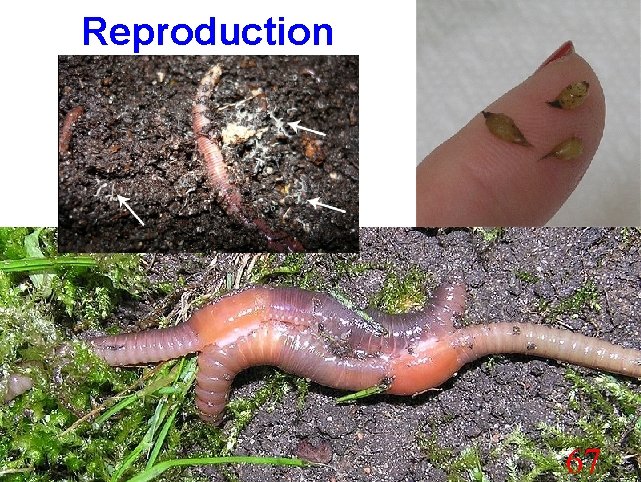
Reproduction 67
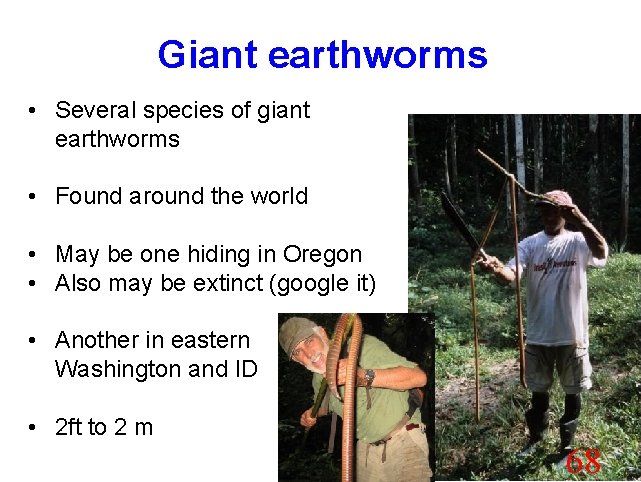
Giant earthworms • Several species of giant earthworms • Found around the world • May be one hiding in Oregon • Also may be extinct (google it) • Another in eastern Washington and ID • 2 ft to 2 m 68
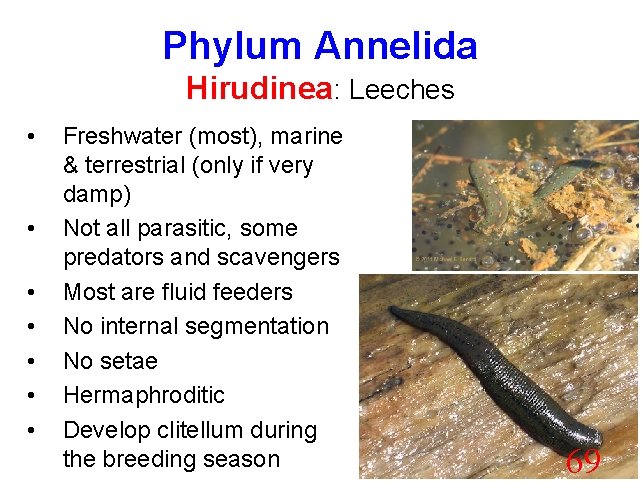
Phylum Annelida Hirudinea: Leeches • • Freshwater (most), marine & terrestrial (only if very damp) Not all parasitic, some predators and scavengers Most are fluid feeders No internal segmentation No setae Hermaphroditic Develop clitellum during the breeding season 69
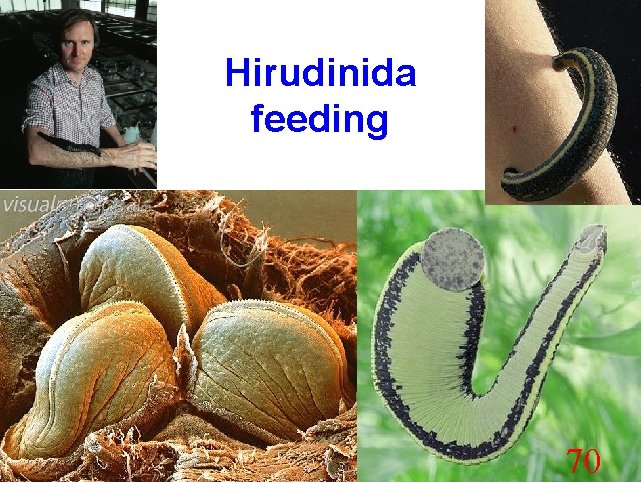
Hirudinida feeding 70
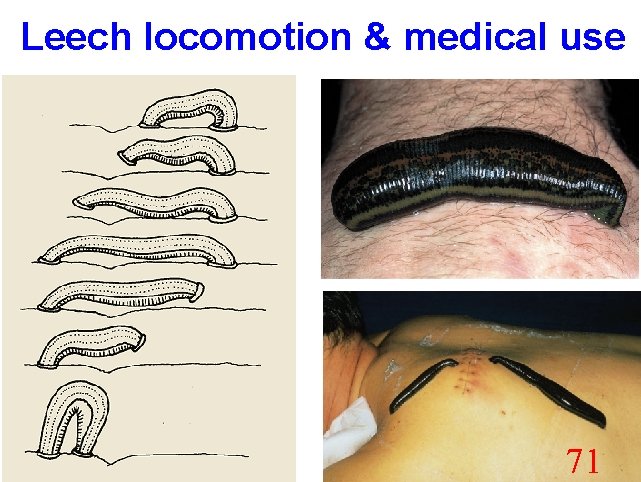
Leech locomotion & medical use 71
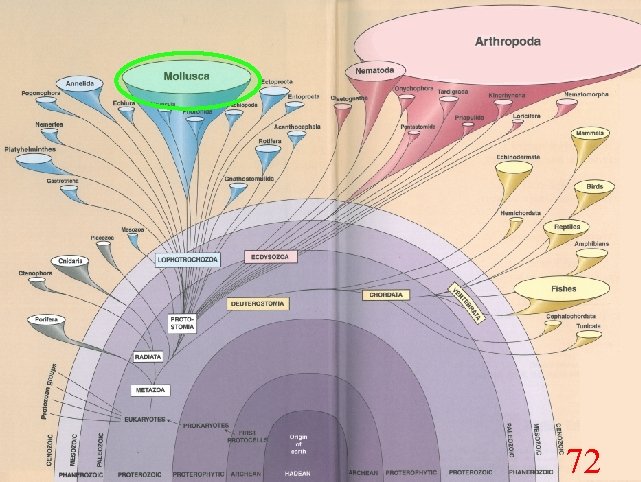
72
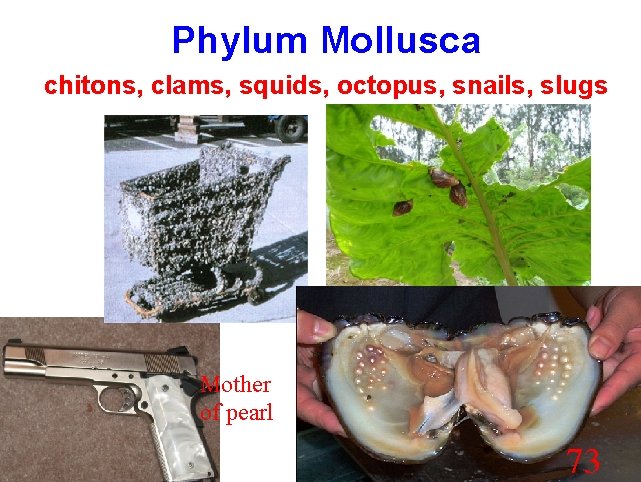
Phylum Mollusca chitons, clams, squids, octopus, snails, slugs Mother of pearl 73
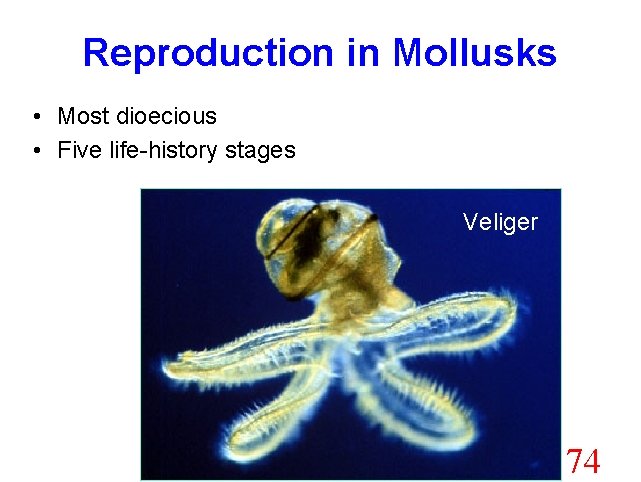
Reproduction in Mollusks • Most dioecious • Five life-history stages Veliger 74
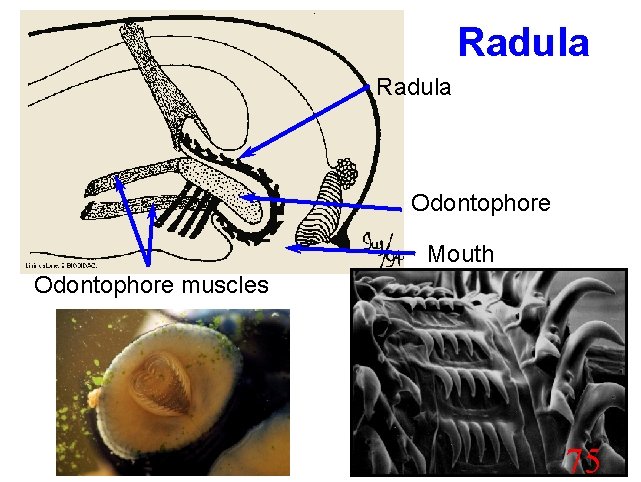
Radula Odontophore Mouth Odontophore muscles 75
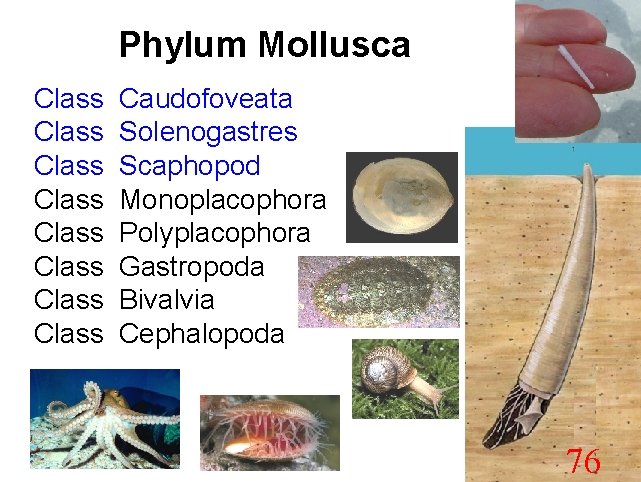
Phylum Mollusca Class Class Caudofoveata Solenogastres Scaphopod Monoplacophora Polyplacophora Gastropoda Bivalvia Cephalopoda 76
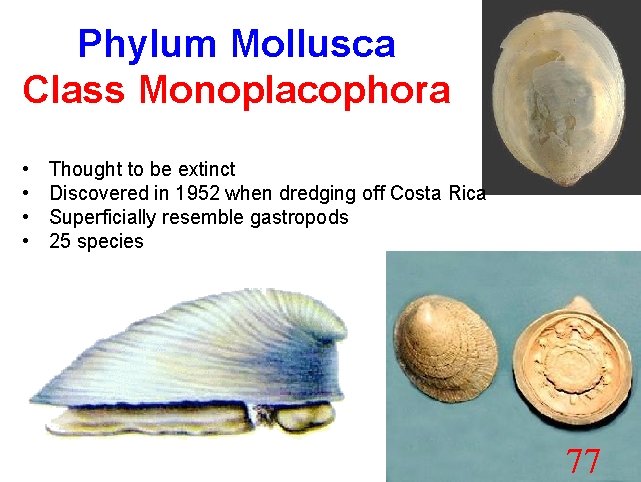
Phylum Mollusca Class Monoplacophora • • Thought to be extinct Discovered in 1952 when dredging off Costa Rica Superficially resemble gastropods 25 species 77
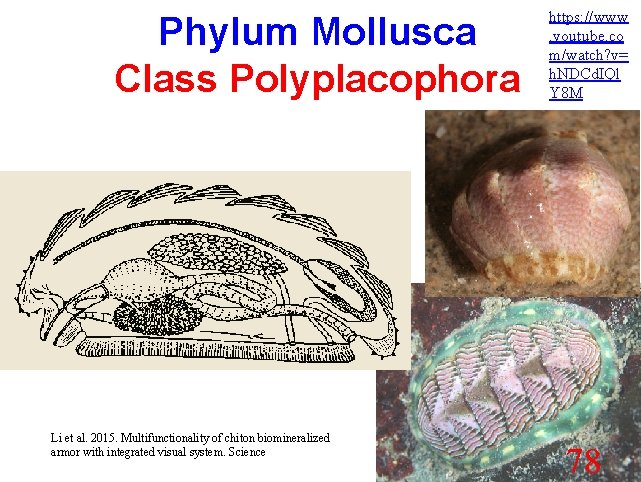
Phylum Mollusca Class Polyplacophora Li et al. 2015. Multifunctionality of chiton biomineralized armor with integrated visual system. Science https: //www. youtube. co m/watch? v= h. NDCd. IQl Y 8 M 78
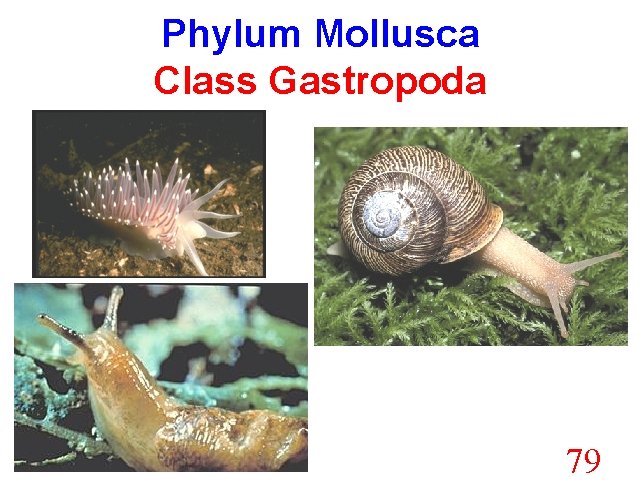
Phylum Mollusca Class Gastropoda 79
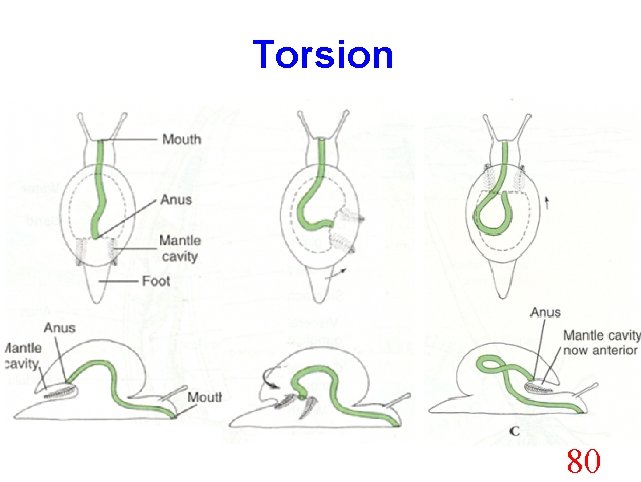
Torsion 80
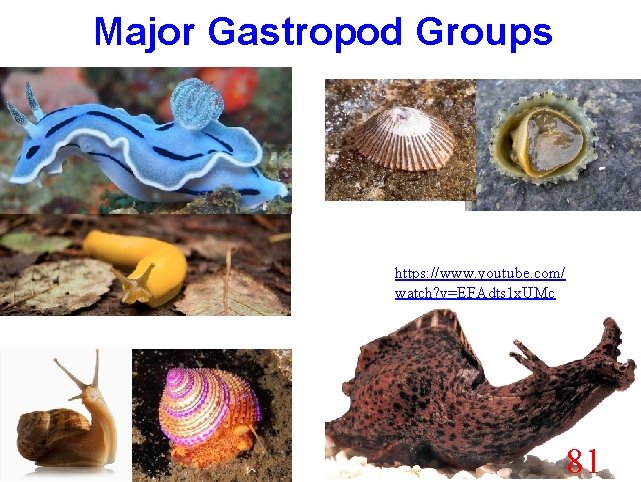
Major Gastropod Groups https: //www. youtube. com/ watch? v=EFAdts 1 x. UMc 81
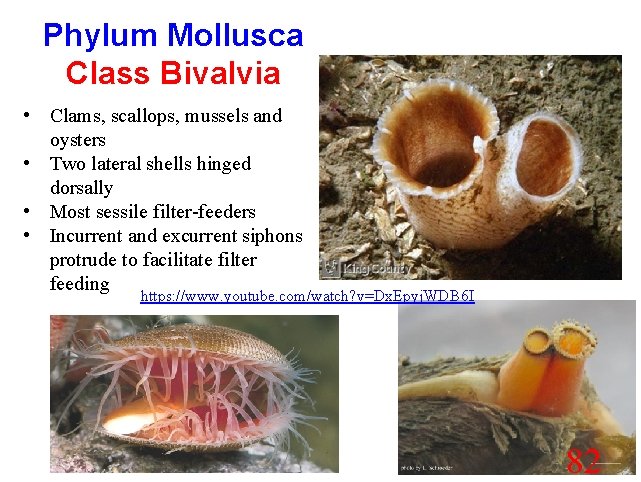
Phylum Mollusca Class Bivalvia • Clams, scallops, mussels and oysters • Two lateral shells hinged dorsally • Most sessile filter-feeders • Incurrent and excurrent siphons protrude to facilitate filter feeding https: //www. youtube. com/watch? v=Dx. Epyj. WDB 6 I 82
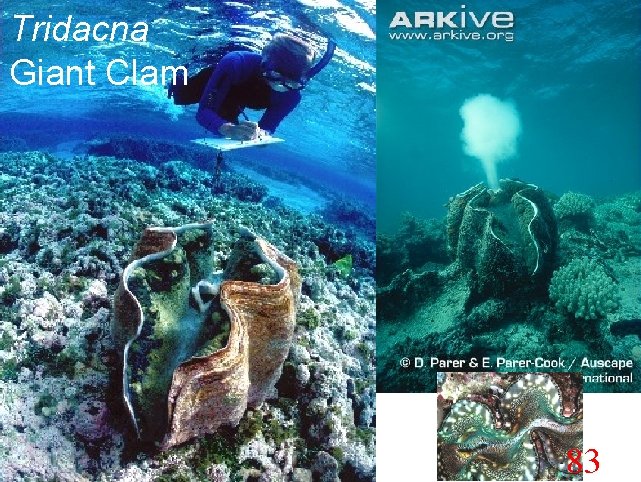
Tridacna Giant Clam 83
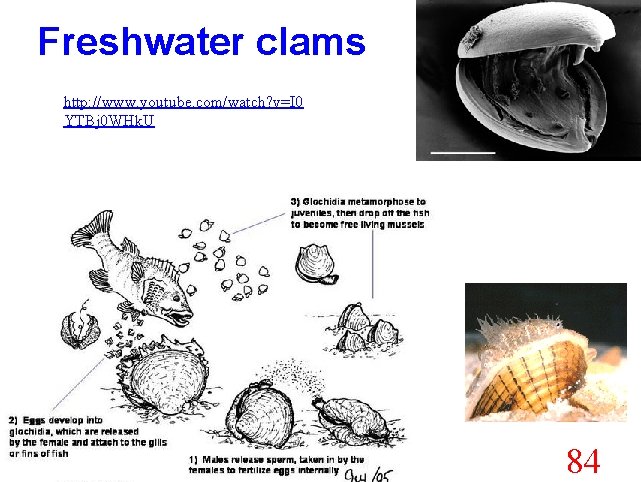
Freshwater clams http: //www. youtube. com/watch? v=I 0 YTBj 0 WHk. U 84
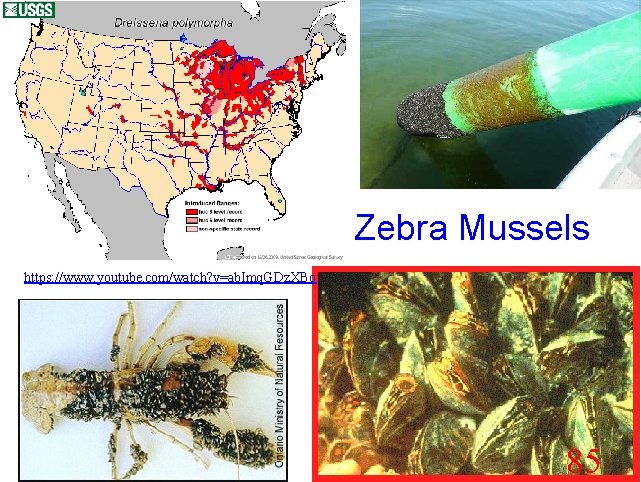
Zebra Mussels https: //www. youtube. com/watch? v=ab. Imq. GDz. XBo 85
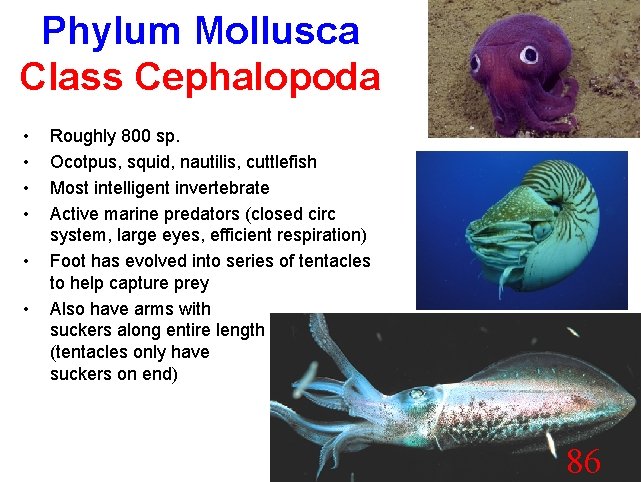
Phylum Mollusca Class Cephalopoda • • • Roughly 800 sp. Ocotpus, squid, nautilis, cuttlefish Most intelligent invertebrate Active marine predators (closed circ system, large eyes, efficient respiration) Foot has evolved into series of tentacles to help capture prey Also have arms with suckers along entire length (tentacles only have suckers on end) 86
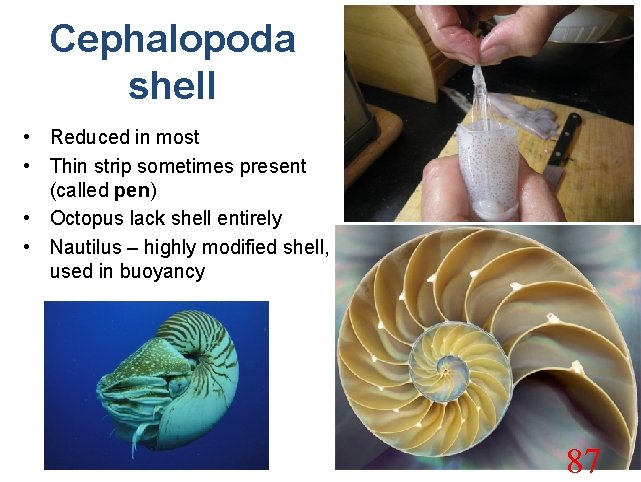
Cephalopoda shell • Reduced in most • Thin strip sometimes present (called pen) • Octopus lack shell entirely • Nautilus – highly modified shell, used in buoyancy 87
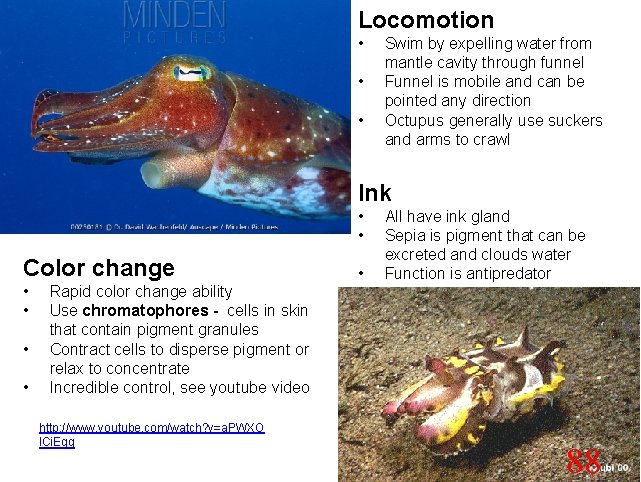
Locomotion • • • Swim by expelling water from mantle cavity through funnel Funnel is mobile and can be pointed any direction Octupus generally use suckers and arms to crawl Ink • • Color change • • Rapid color change ability Use chromatophores - cells in skin that contain pigment granules Contract cells to disperse pigment or relax to concentrate Incredible control, see youtube video http: //www. youtube. com/watch? v=a. PWXO l. Ci. Egg • All have ink gland Sepia is pigment that can be excreted and clouds water Function is antipredator 88
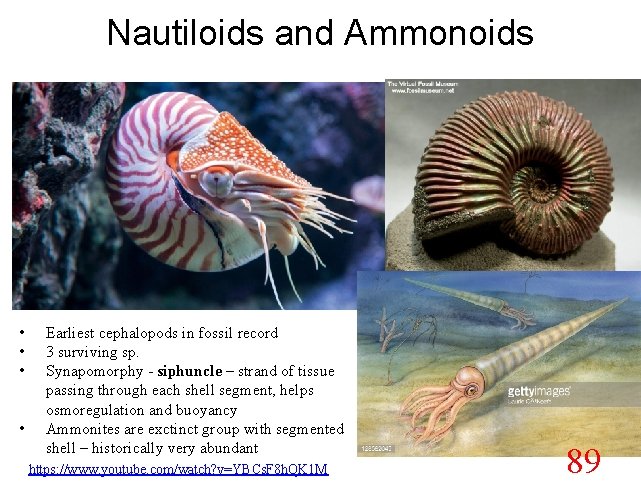
Nautiloids and Ammonoids • • Earliest cephalopods in fossil record 3 surviving sp. Synapomorphy - siphuncle – strand of tissue passing through each shell segment, helps osmoregulation and buoyancy Ammonites are exctinct group with segmented shell – historically very abundant https: //www. youtube. com/watch? v=YBCs. F 8 h. QK 1 M 89
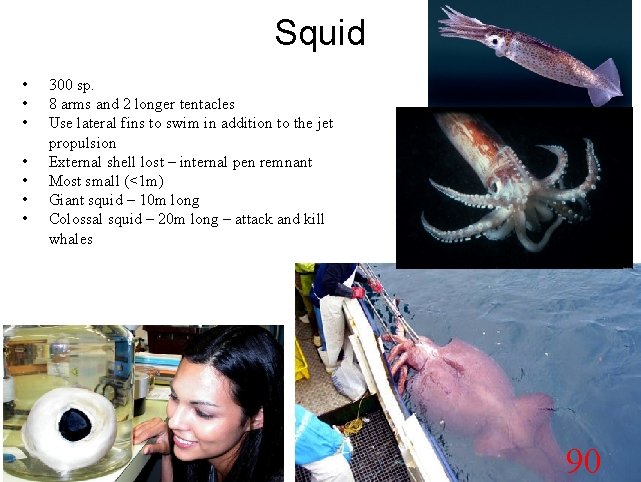
Squid • • 300 sp. 8 arms and 2 longer tentacles Use lateral fins to swim in addition to the jet propulsion External shell lost – internal pen remnant Most small (<1 m) Giant squid – 10 m long Colossal squid – 20 m long – attack and kill whales 90
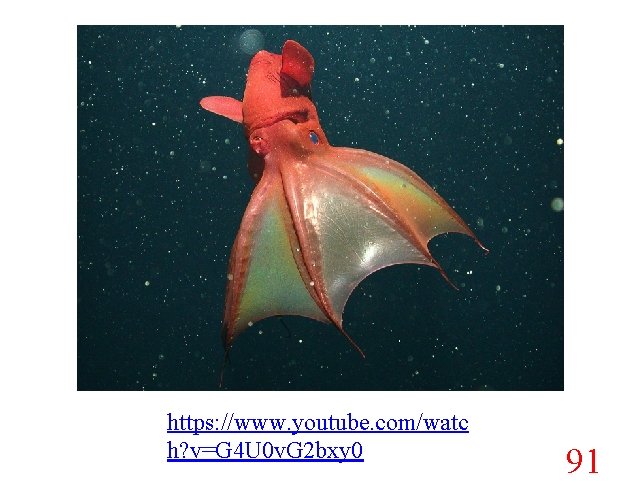
https: //www. youtube. com/watc h? v=G 4 U 0 v. G 2 bxy 0 91
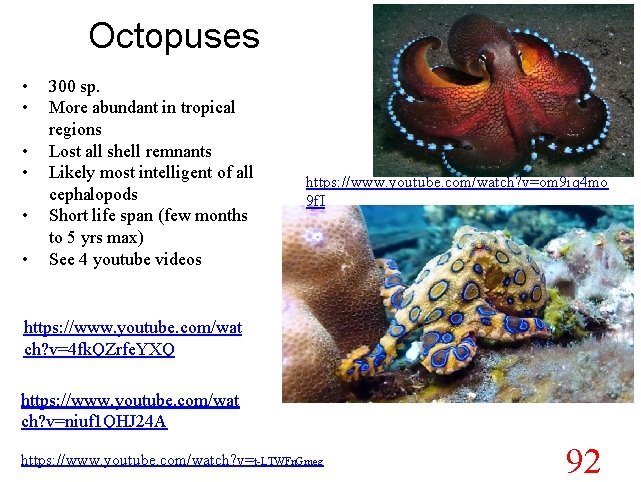
Octopuses • • • 300 sp. More abundant in tropical regions Lost all shell remnants Likely most intelligent of all cephalopods Short life span (few months to 5 yrs max) See 4 youtube videos https: //www. youtube. com/watch? v=om 9 iq 4 mo 9 f. I https: //www. youtube. com/wat ch? v=4 fk. QZrfe. YXQ https: //www. youtube. com/wat ch? v=niuf 1 QHJ 24 A https: //www. youtube. com/watch? v=t-LTWFn. Gmeg 92
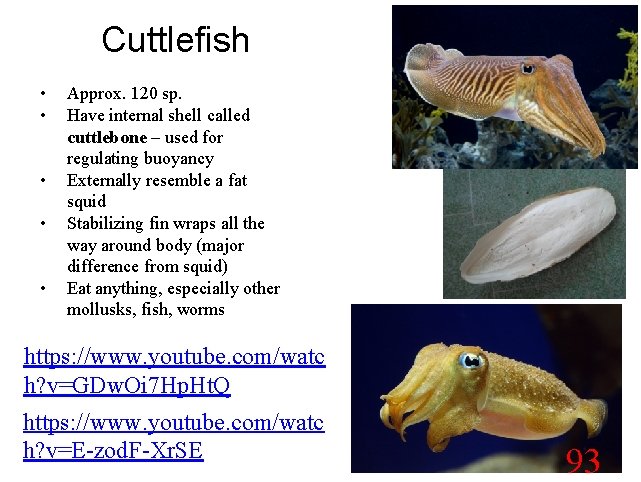
Cuttlefish • • • Approx. 120 sp. Have internal shell called cuttlebone – used for regulating buoyancy Externally resemble a fat squid Stabilizing fin wraps all the way around body (major difference from squid) Eat anything, especially other mollusks, fish, worms https: //www. youtube. com/watc h? v=GDw. Oi 7 Hp. Ht. Q https: //www. youtube. com/watc h? v=E-zod. F-Xr. SE 93
- Slides: 36