
Phylum Annelida The Segmented Worms Phylum Level Characteristics






- Slides: 12
Phylum Annelida The Segmented Worms
Phylum Level Characteristics • round • segmented (repeated body units containing similar structures) • bilateral symmetry, hydrostatic skeleton • complete digestive system • Eg. earthworms, leeches
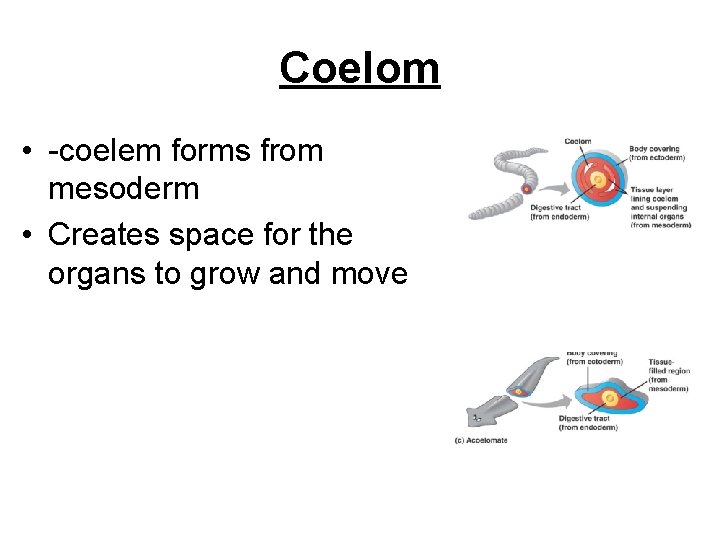
Coelom • -coelem forms from mesoderm • Creates space for the organs to grow and move Sdsddddddddddddddddddddddd dssssssssssssssssssssssssssss s
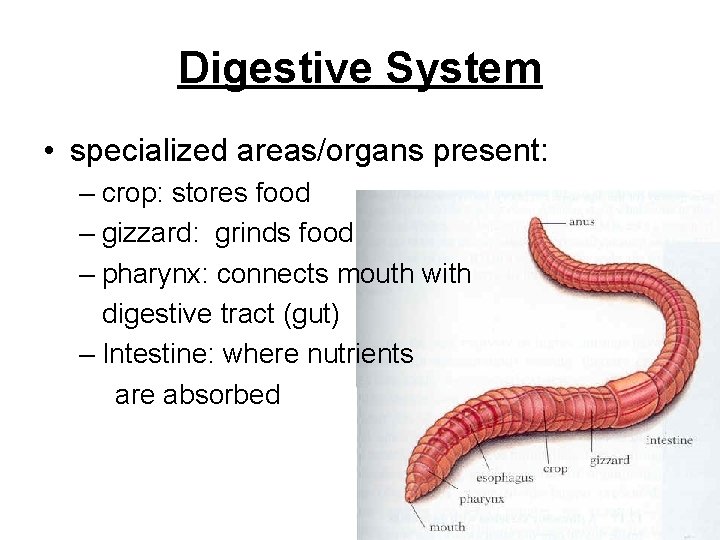
Digestive System • specialized areas/organs present: – crop: stores food – gizzard: grinds food – pharynx: connects mouth with digestive tract (gut) – Intestine: where nutrients are absorbed
Respiratory System • Aquatic annelids often breathe through gills • Other annelids take in oxygen and expel carbon dioxide through their skin • Skin must be moist for gas exchange to be possible – If worms dry out they suffocate and DIE!!
Circulatory System • closed system – Typically, 2 blood vessels run length of body • Dorsal: blood moves towards head • Ventral: blood moves towards tail – necessary to provide glucose and oxygen to all cells of a fairly active animal
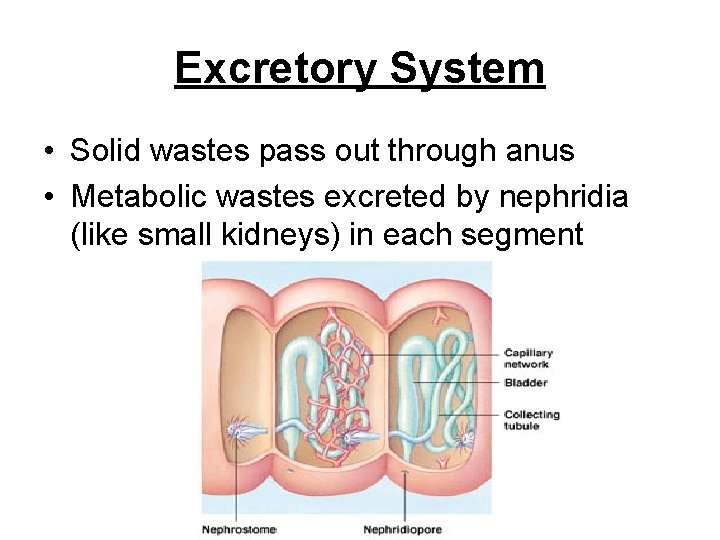
Excretory System • Solid wastes pass out through anus • Metabolic wastes excreted by nephridia (like small kidneys) in each segment
Nervous System • Brain sits at front of body • Ventral nerve cord runs entire length of worm • Many different types of sense organs depending on species
Movement 2 groups of muscles: 1. longitudinal-makes worm short and then long 2. lateral, circular-makes worm fat then thin Setae- Hairlike anchors
Movement http: //www. biology. ualberta. ca/courses. hp/z ool 250/animations/Earthworm. swf
Reproduction • A few reproduce asexually by budding • Most reproduce sexually • Some species have separate sexes and external fertilization – Coordinate the release of eggs and sperm to increase the chances of successful fertilization – Done by aquatic annelids
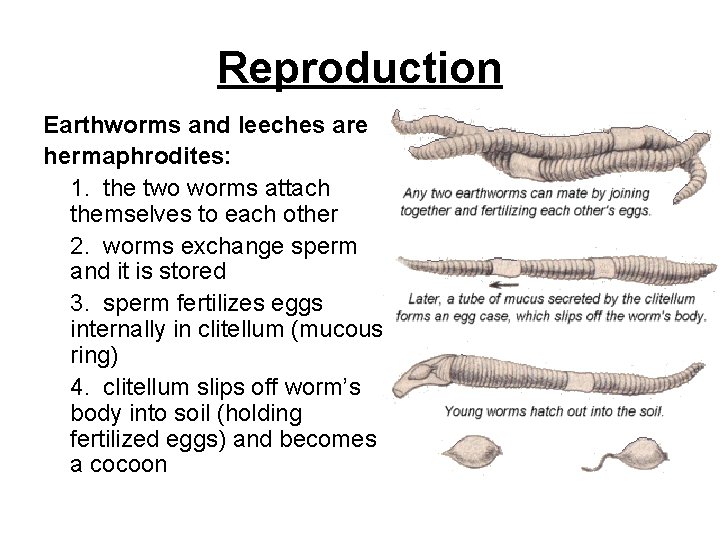
Reproduction Earthworms and leeches are hermaphrodites: 1. the two worms attach themselves to each other 2. worms exchange sperm and it is stored 3. sperm fertilizes eggs internally in clitellum (mucous ring) 4. clitellum slips off worm’s body into soil (holding fertilized eggs) and becomes a cocoon