
Phylum Annelida Segmented Worms Body divided into repeating
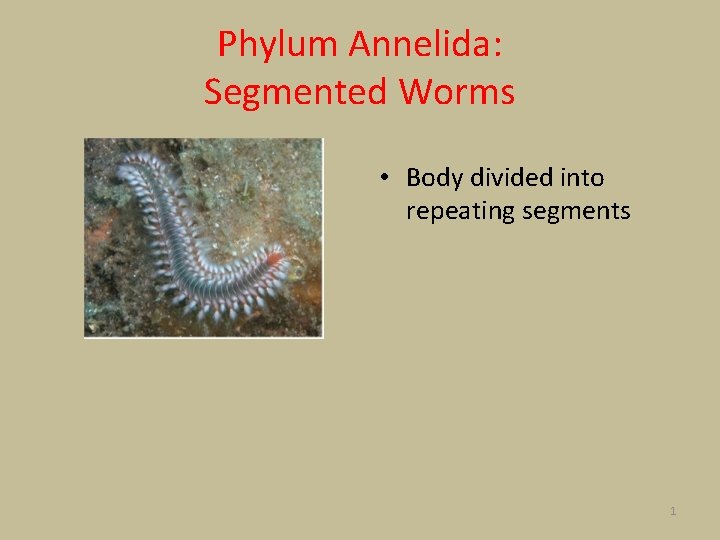
Phylum Annelida: Segmented Worms • Body divided into repeating segments 1
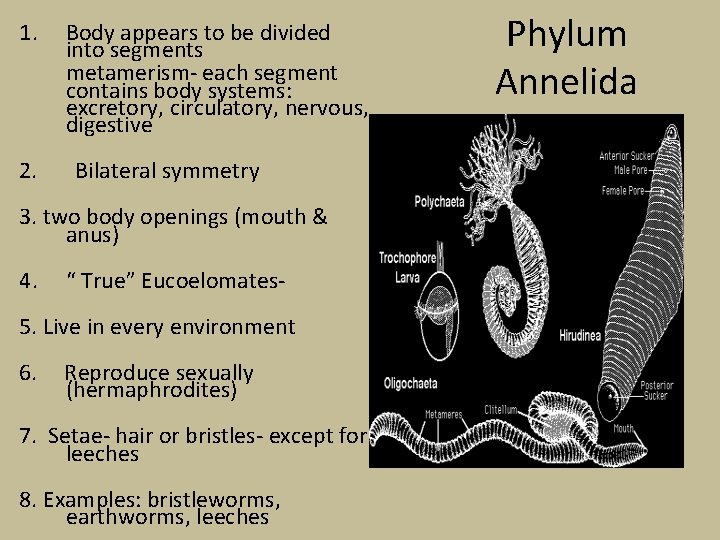
1. 2. Body appears to be divided into segments metamerism- each segment contains body systems: excretory, circulatory, nervous, digestive Bilateral symmetry 3. two body openings (mouth & anus) 4. “ True” Eucoelomates- 5. Live in every environment 6. Reproduce sexually (hermaphrodites) 7. Setae- hair or bristles- except for leeches 8. Examples: bristleworms, earthworms, leeches Phylum Annelida
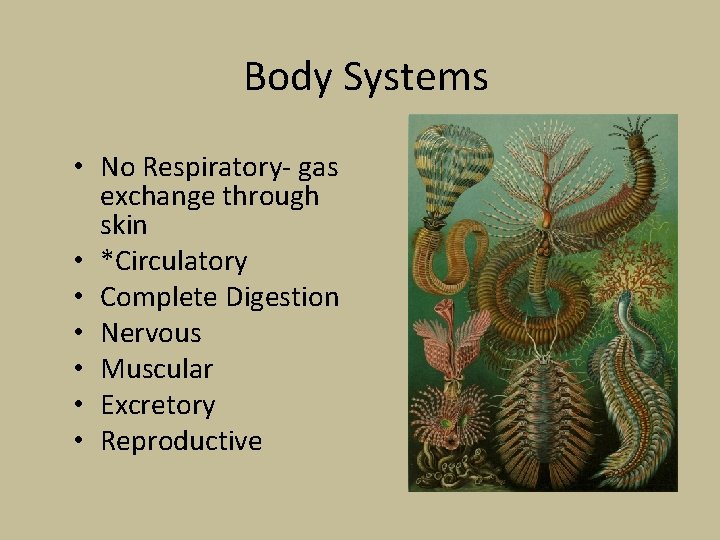
Body Systems • No Respiratory- gas exchange through skin • *Circulatory • Complete Digestion • Nervous • Muscular • Excretory • Reproductive
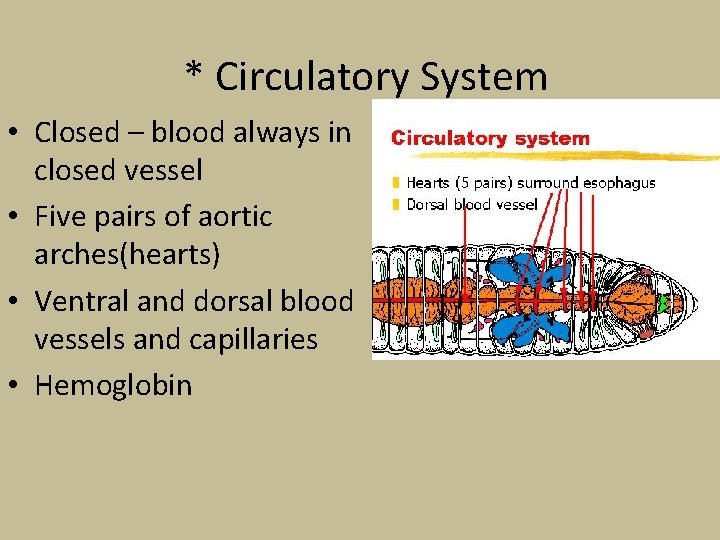
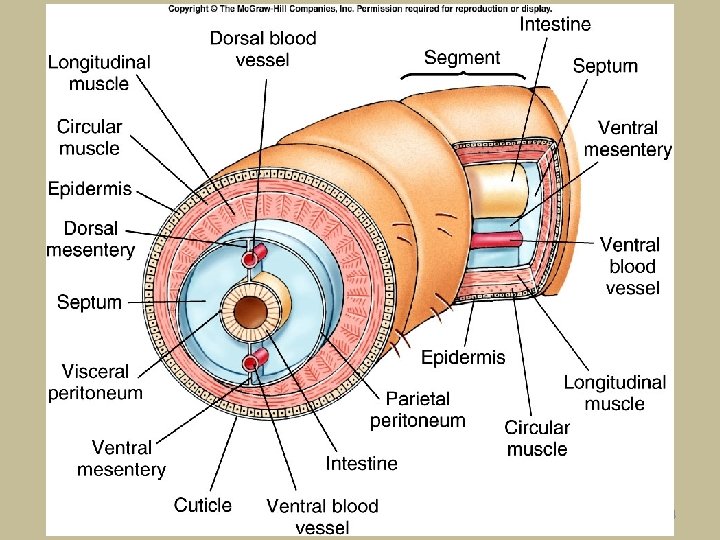
* Circulatory System • Closed – blood always in closed vessel • Five pairs of aortic arches(hearts) • Ventral and dorsal blood vessels and capillaries • Hemoglobin
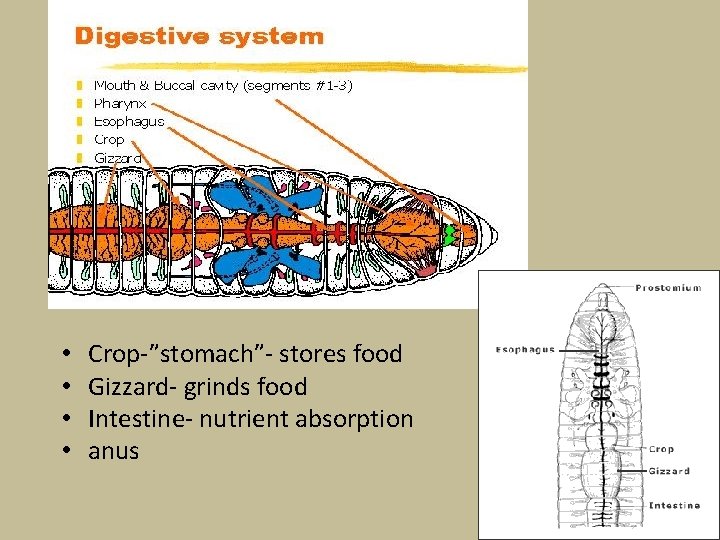
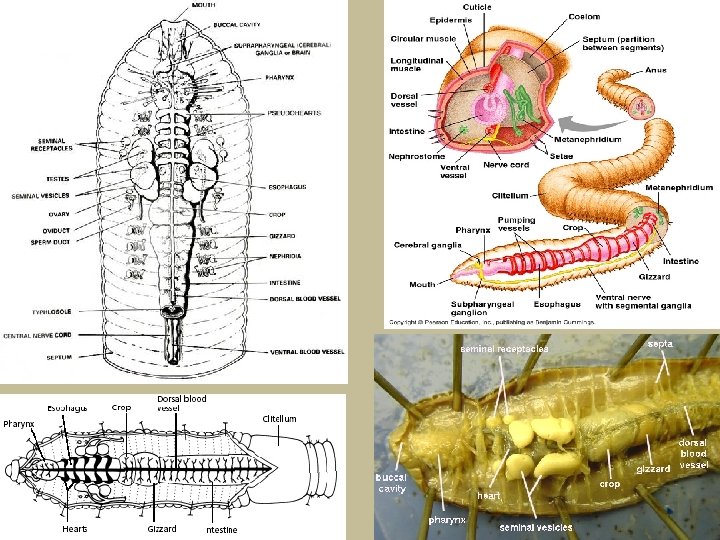
Digestive system • • Crop-”stomach”- stores food Gizzard- grinds food Intestine- nutrient absorption anus
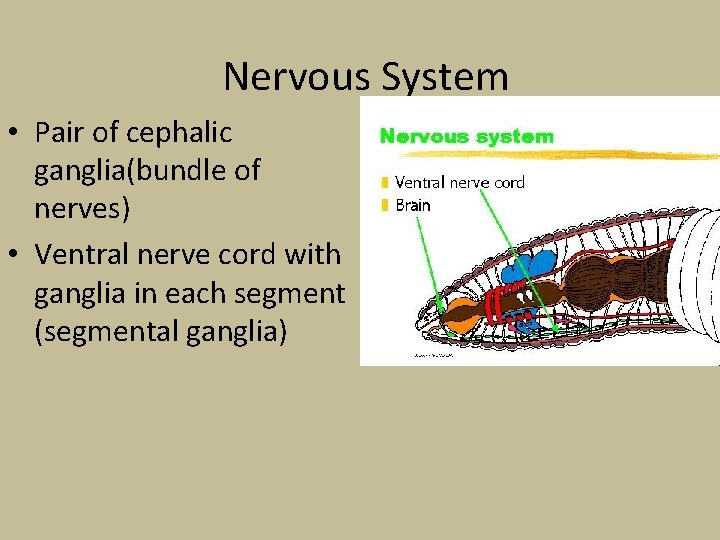
Nervous System • Pair of cephalic ganglia(bundle of nerves) • Ventral nerve cord with ganglia in each segment (segmental ganglia)
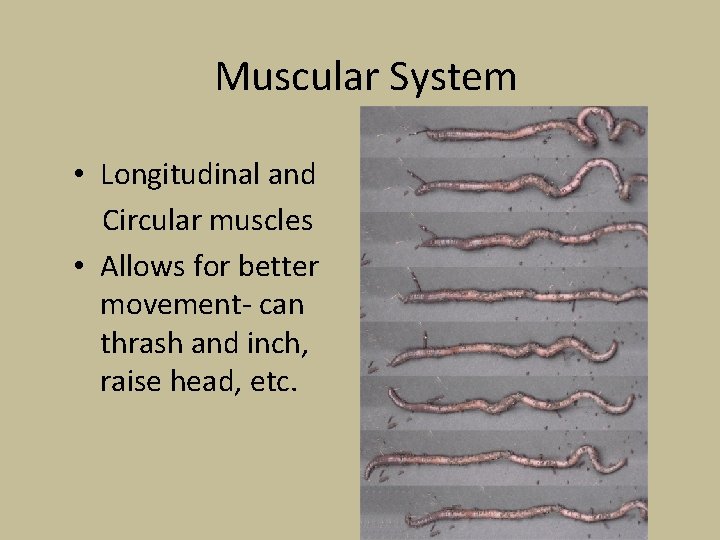
Muscular System • Longitudinal and Circular muscles • Allows for better movement- can thrash and inch, raise head, etc.
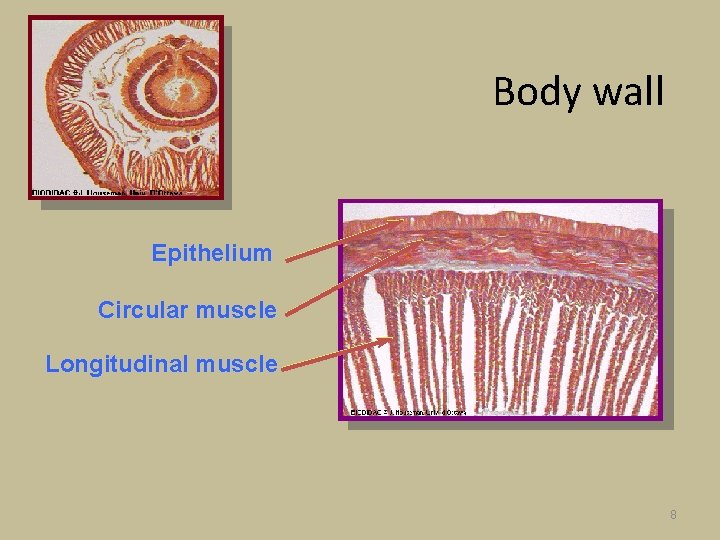
Body wall Epithelium Circular muscle Longitudinal muscle 8
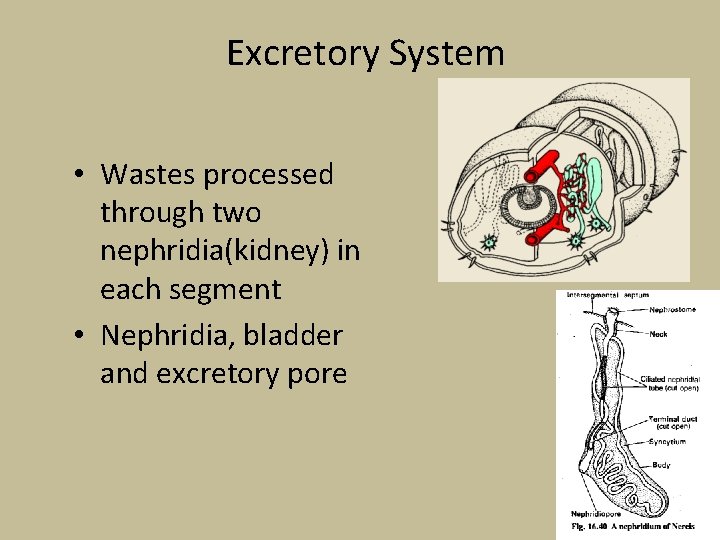
Excretory System • Wastes processed through two nephridia(kidney) in each segment • Nephridia, bladder and excretory pore
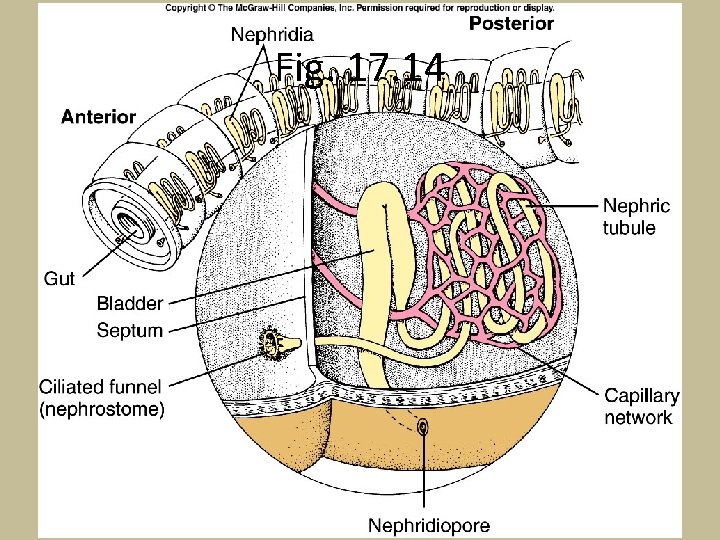
Fig. 17. 14 10
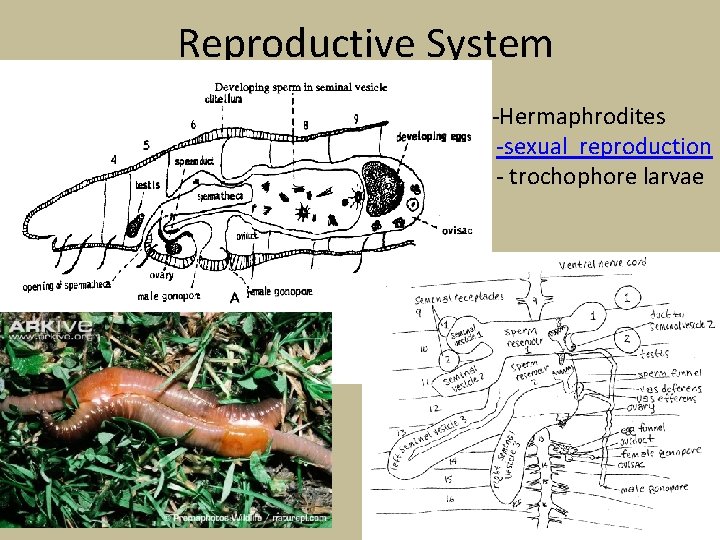
Reproductive System -Hermaphrodites • -sexual reproduction • - trochophore larvae
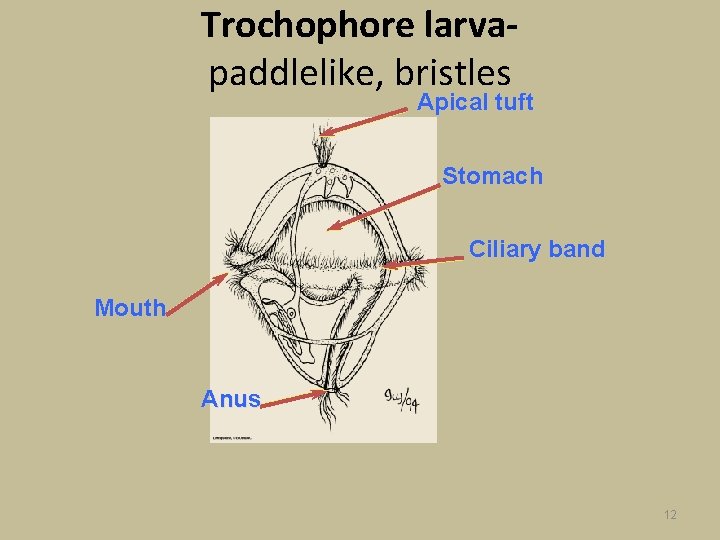
Trochophore larvapaddlelike, bristles Apical tuft Stomach Ciliary band Mouth Anus 12
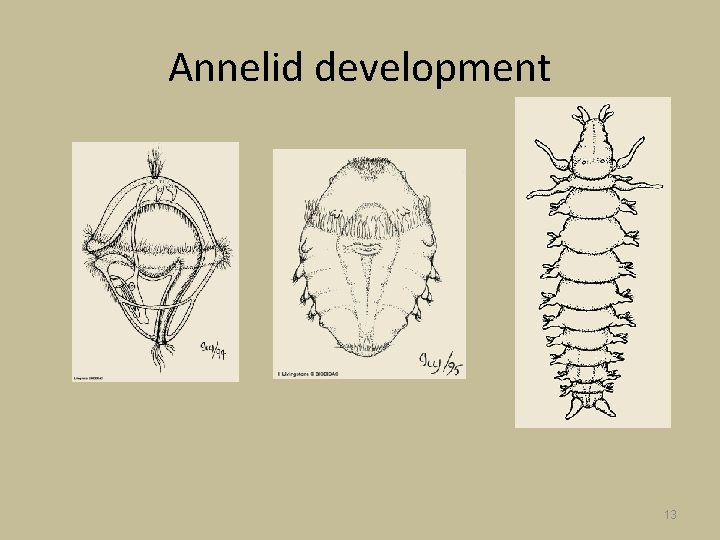
Annelid development 13
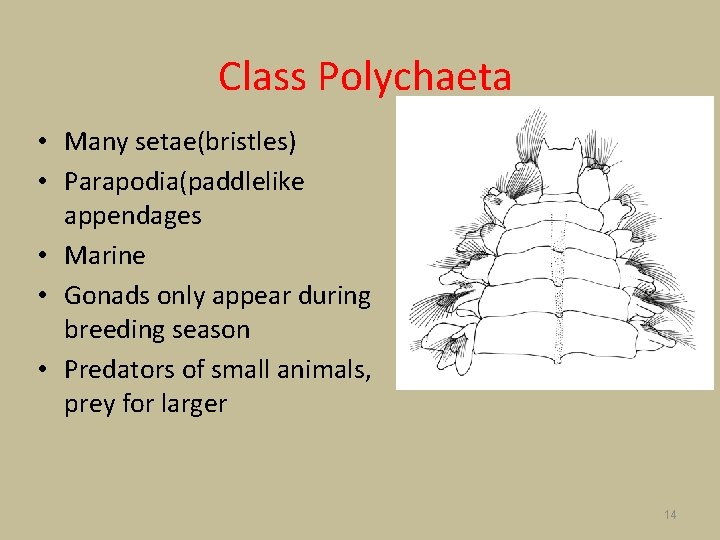
Class Polychaeta • Many setae(bristles) • Parapodia(paddlelike appendages • Marine • Gonads only appear during breeding season • Predators of small animals, prey for larger 14
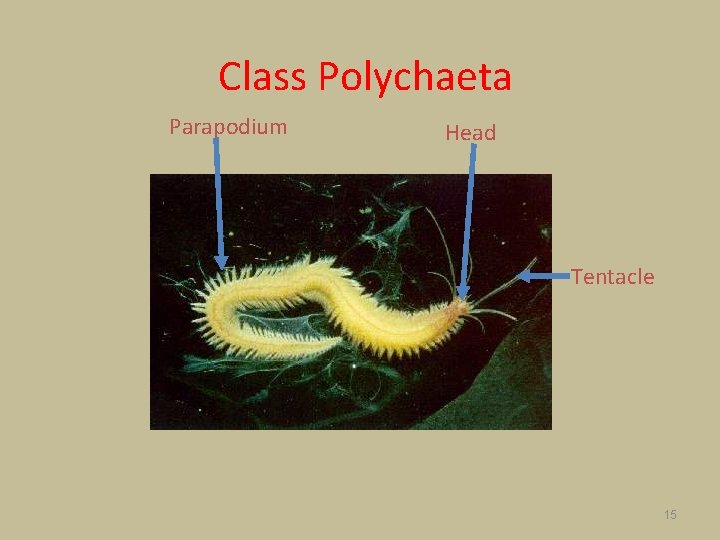
Class Polychaeta Parapodium Head Tentacle 15
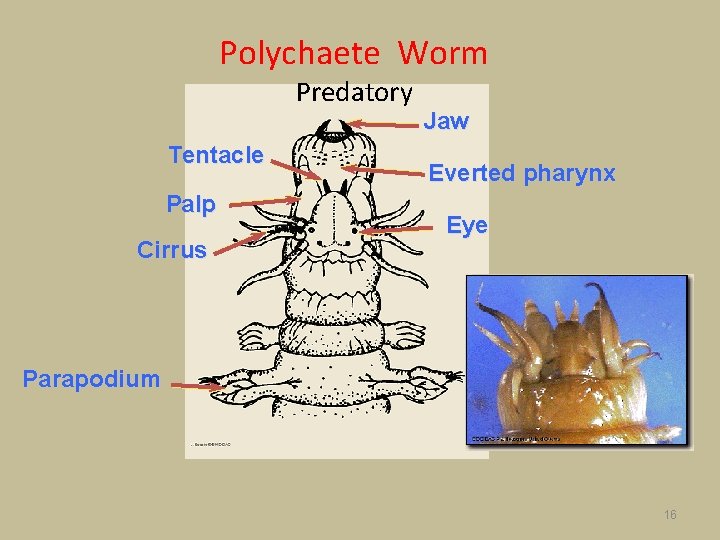
Polychaete Worm Predatory Tentacle Palp Cirrus Jaw Everted pharynx Eye Parapodium 16
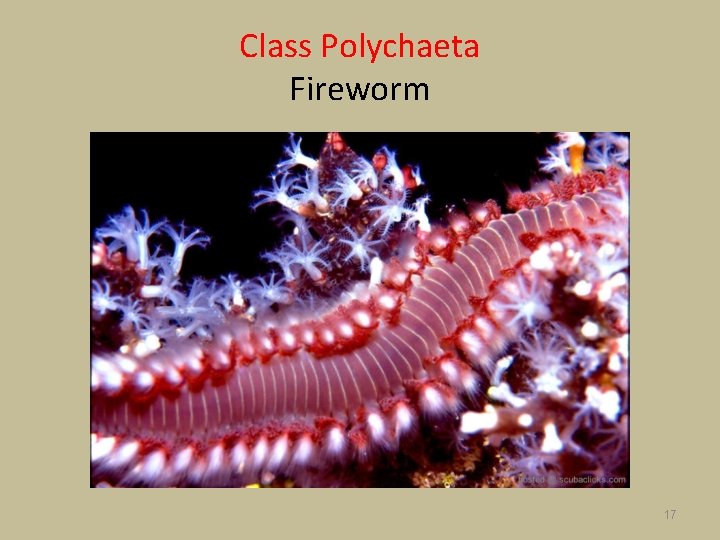
Class Polychaeta Fireworm 17
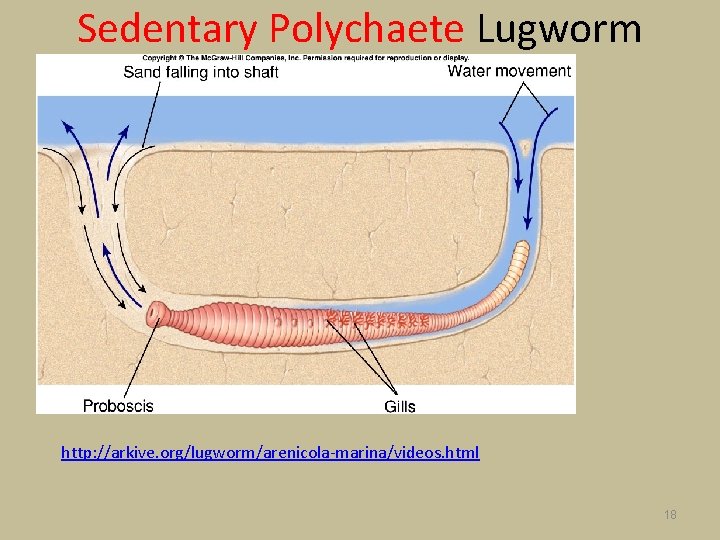
Sedentary Polychaete Lugworm http: //arkive. org/lugworm/arenicola-marina/videos. html 18
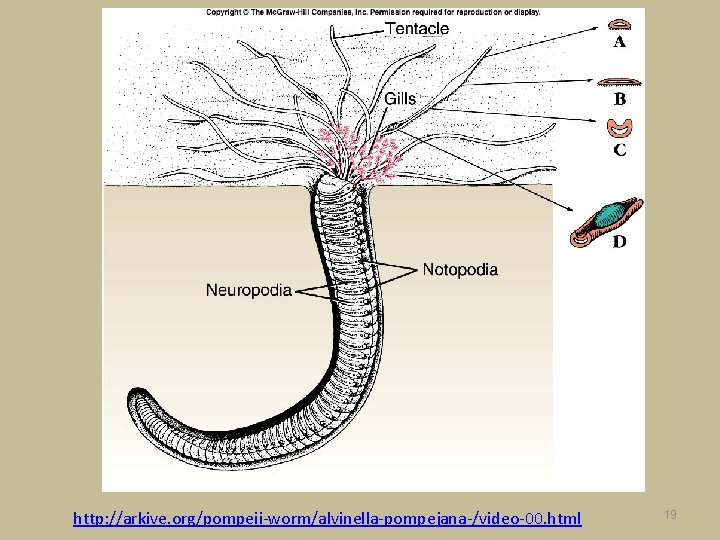
http: //arkive. org/pompeii-worm/alvinella-pompejana-/video-00. html 19
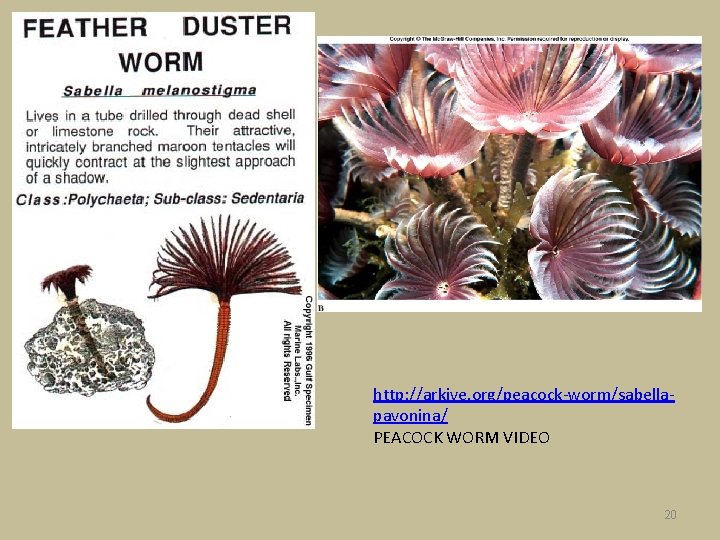
http: //arkive. org/peacock-worm/sabellapavonina/ PEACOCK WORM VIDEO 20
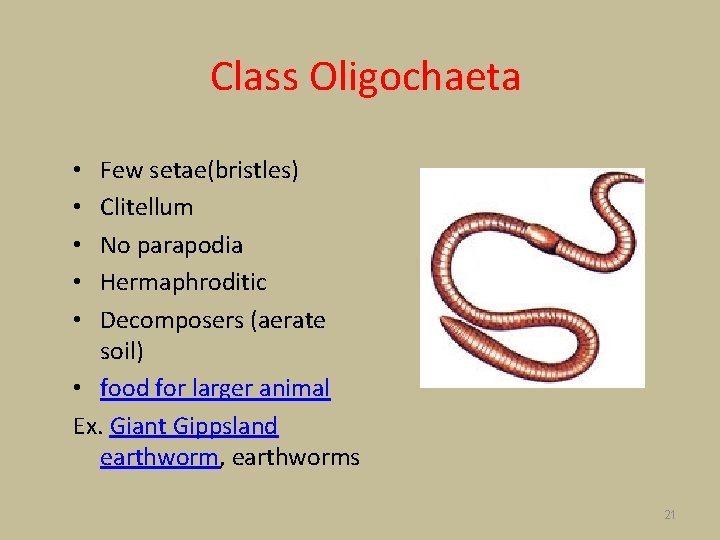
Class Oligochaeta Few setae(bristles) Clitellum No parapodia Hermaphroditic Decomposers (aerate soil) • food for larger animal Ex. Giant Gippsland earthworm, earthworms • • • 21
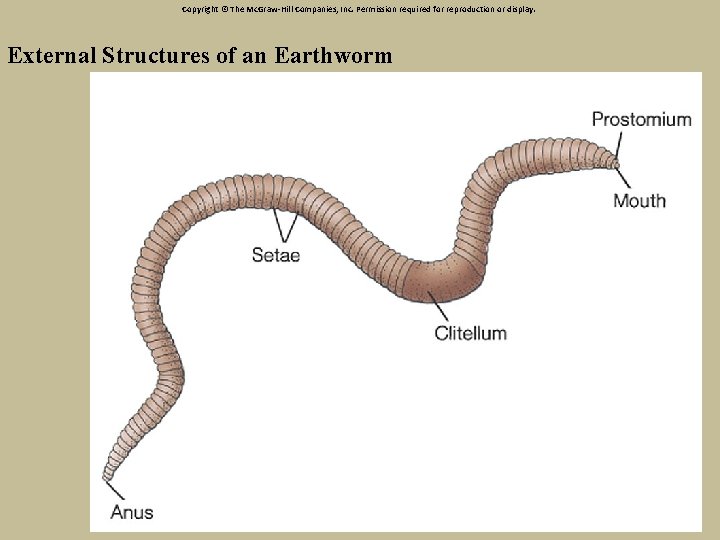
Copyright © The Mc. Graw-Hill Companies, Inc. Permission required for reproduction or display. External Structures of an Earthworm 22
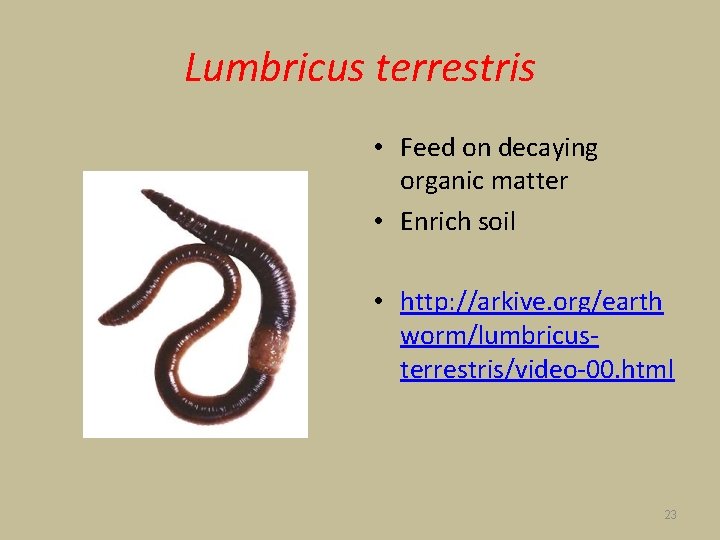
Lumbricus terrestris • Feed on decaying organic matter • Enrich soil • http: //arkive. org/earth worm/lumbricusterrestris/video-00. html 23
24
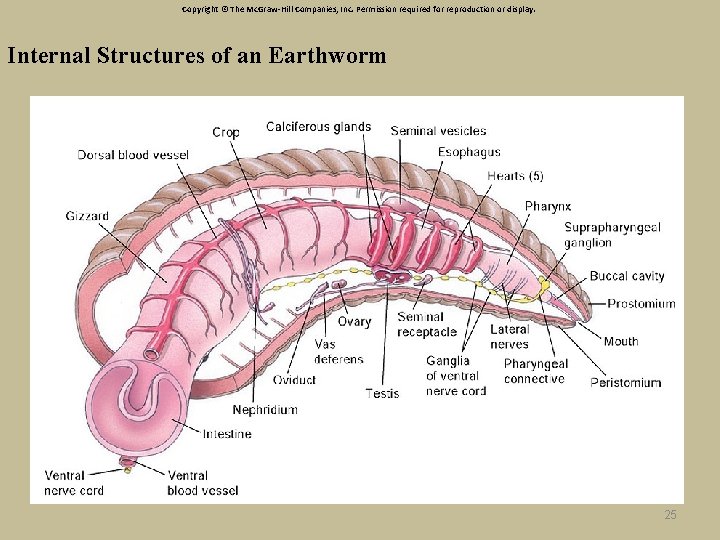
Copyright © The Mc. Graw-Hill Companies, Inc. Permission required for reproduction or display. Internal Structures of an Earthworm 25
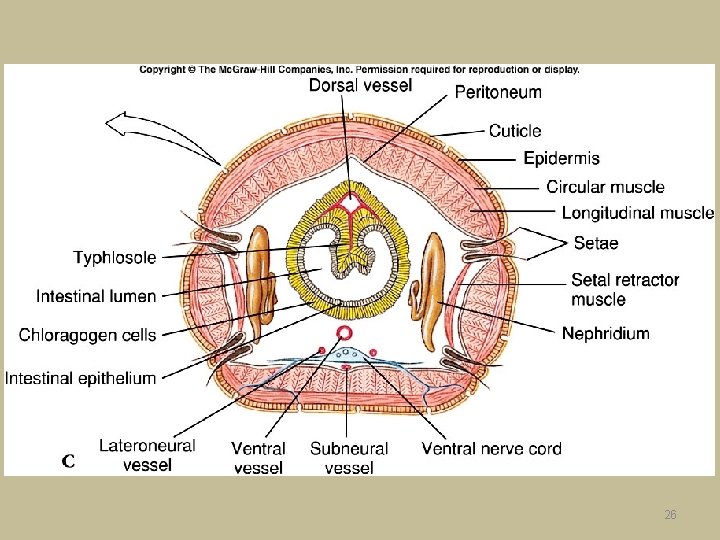
26
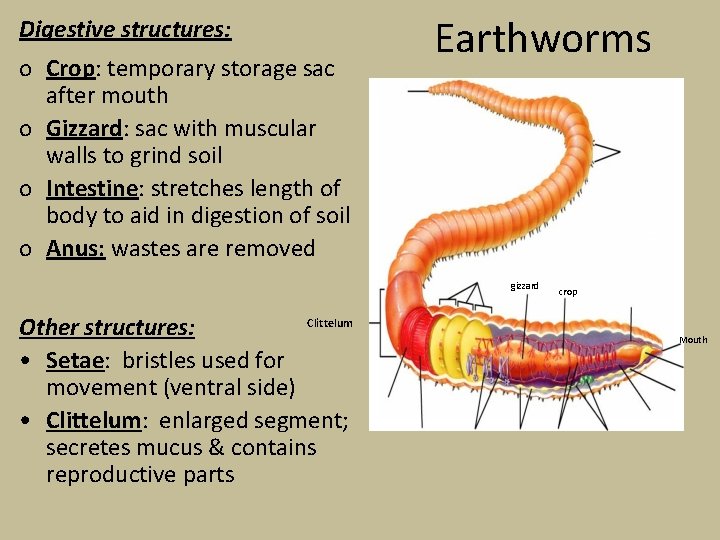
Earthworms Digestive structures: o Crop: temporary storage sac after mouth o Gizzard: sac with muscular walls to grind soil o Intestine: stretches length of body to aid in digestion of soil o Anus: wastes are removed Anus Setae gizzard Clittelum Other structures: • Setae: bristles used for movement (ventral side) • Clittelum: enlarged segment; secretes mucus & contains reproductive parts crop Mouth



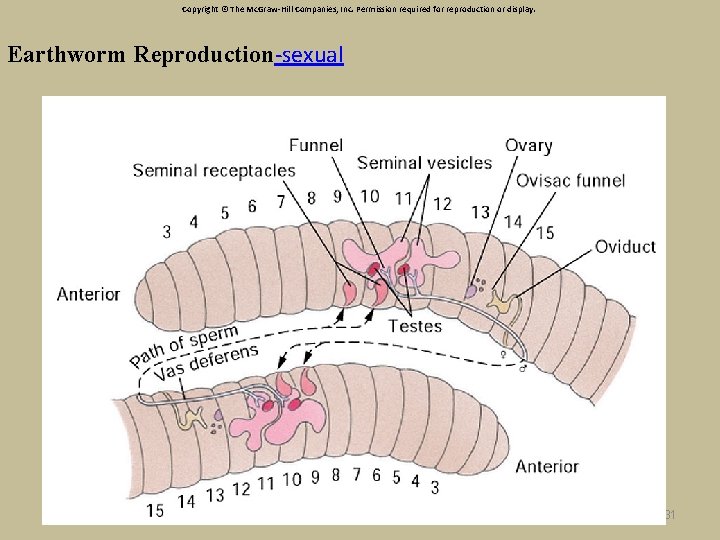
Copyright © The Mc. Graw-Hill Companies, Inc. Permission required for reproduction or display. Earthworm Reproduction-sexual 31
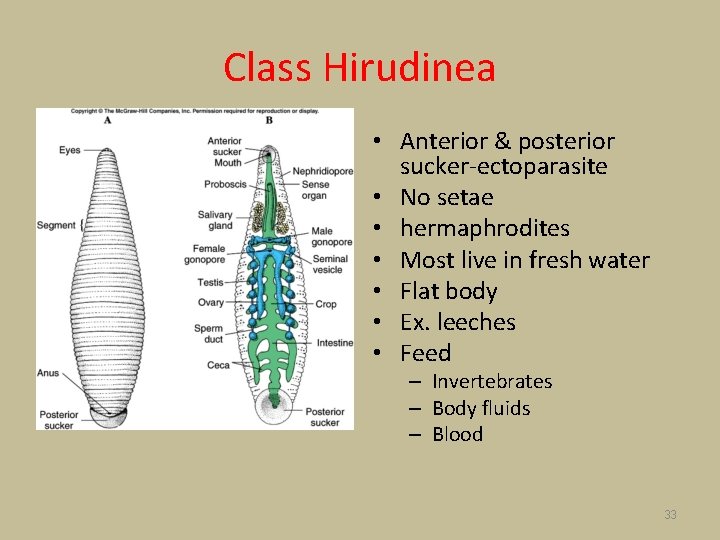
Class Hirudinea • Anterior & posterior sucker-ectoparasite • No setae • hermaphrodites • Most live in fresh water • Flat body • Ex. leeches • Feed – Invertebrates – Body fluids – Blood 33
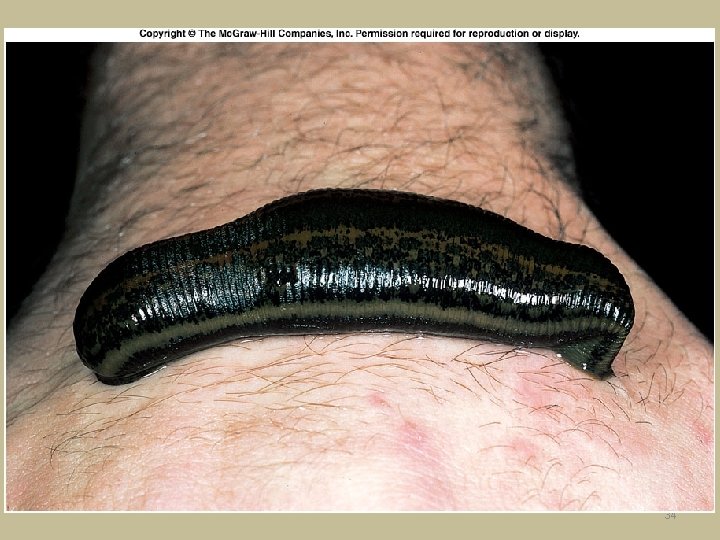
34
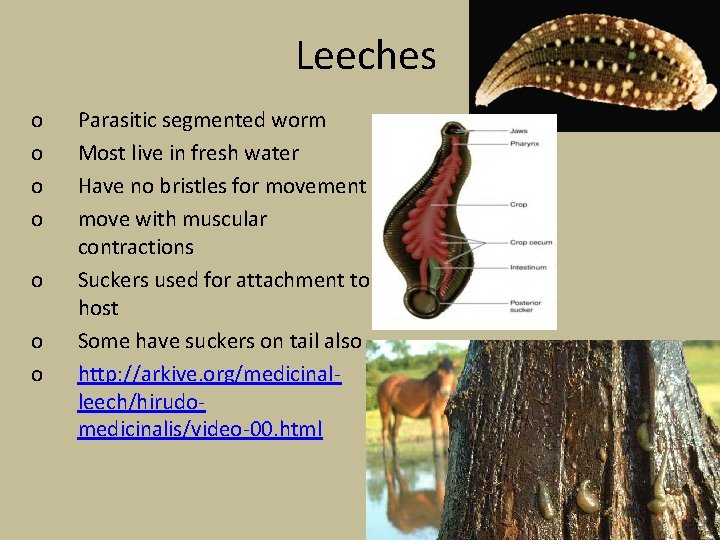
Leeches o o o o Parasitic segmented worm Most live in fresh water Have no bristles for movement move with muscular contractions Suckers used for attachment to host Some have suckers on tail also http: //arkive. org/medicinalleech/hirudomedicinalis/video-00. html
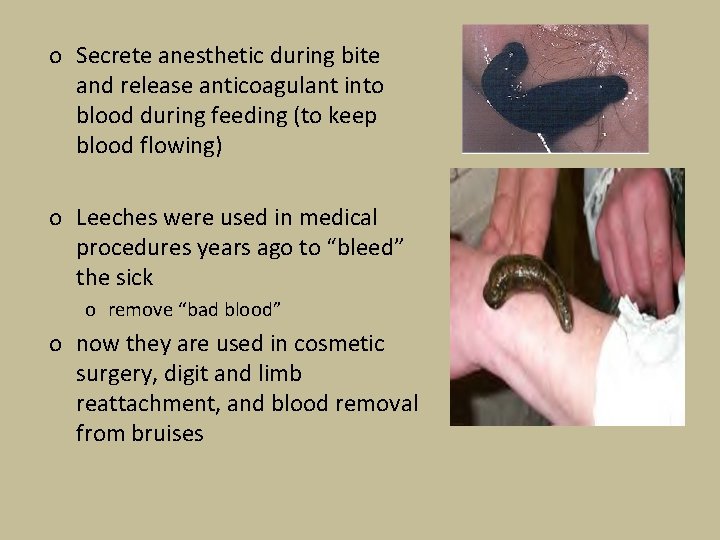
o Secrete anesthetic during bite and release anticoagulant into blood during feeding (to keep blood flowing) o Leeches were used in medical procedures years ago to “bleed” the sick o remove “bad blood” o now they are used in cosmetic surgery, digit and limb reattachment, and blood removal from bruises
- Slides: 36