
Phylum Annelida Segmented Worms Annelida means little rings
- Slides: 18
Phylum Annelida (Segmented Worms) • Annelida means “little rings” or “segments” • Bilaterally symmetrical coelomates –Coelomes divided into partitions by septa • Inhabit marine, fresh water, & moist environments • Has complex digestive system • Has closed circulatory system • Epidermis is primary gas exchange organ • Are hermaphroditic • Reproduce sexually by cross fertilization • Reproduce asexually through regeneration
Phylum Annelida Body of annelids have segmentation. Segmentation is a characteristic that features regularly repeating body segments. Annelids are sometimes called “Bristle worms”, because of the tiny bristles that they bear (except leeches) called setae. 3 Classes
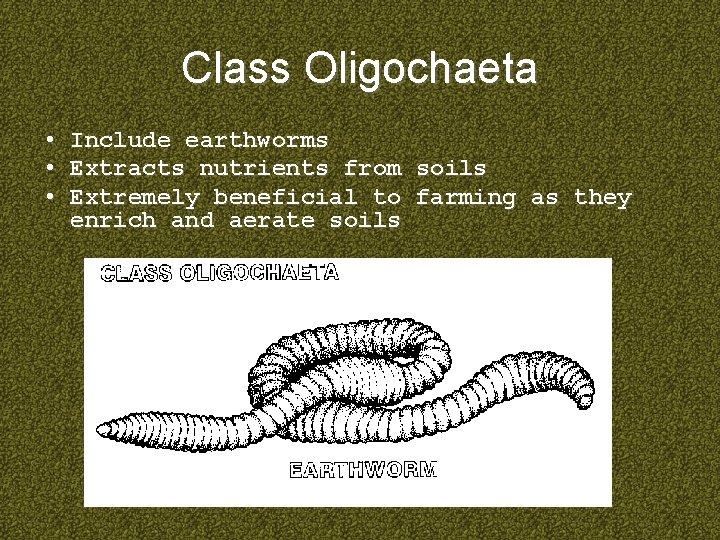
Class Oligochaeta • • • Include earthworms Extracts nutrients from soils Extremely beneficial to farming as they enrich and aerate soils
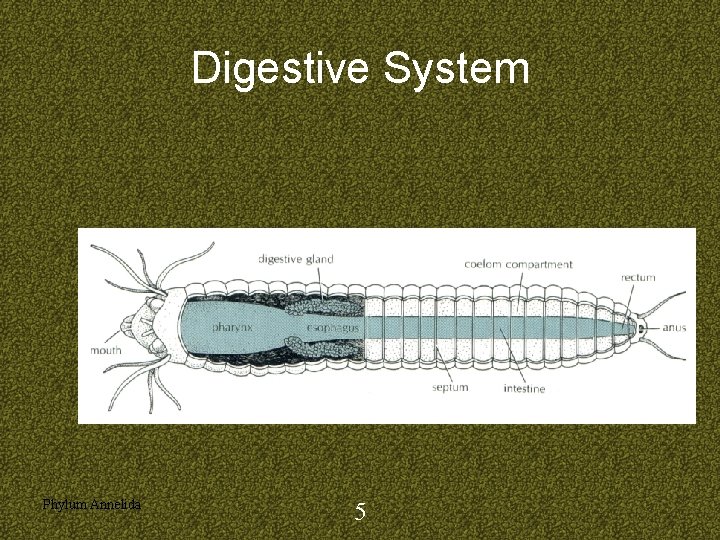
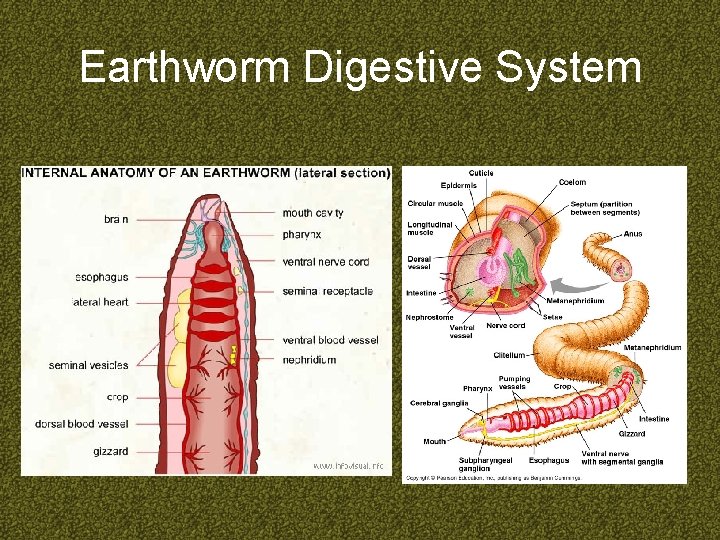
Earthworm Anatomy Setae project through small pores in the cuticle to provide anchoring points to allow the earthworm to move. Food is brought in by a muscular pharynx. The digestive tract is unsegmented and runs continuously the length of the body. The intestine has a u-shaped fold.
Digestive System Phylum Annelida 5
Earthworm Digestive System
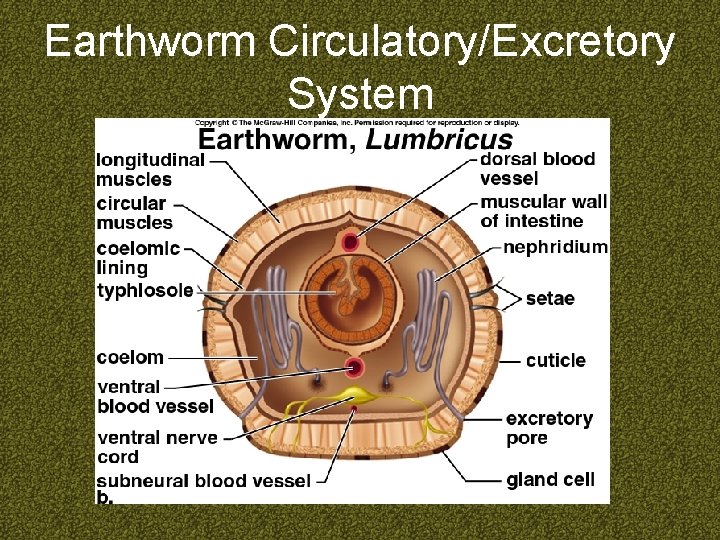
Earthworm Anatomy Earthworms also have a crop and a gizzard, which stores and mechanically digests food. Annelids have closed circulatory systems. Earthworms have five (aortic arches) hearts. The excretory system consists of a pair of nephridia (similar to our kidneys) in each body segment (except the first three and last one).
Earthworm Circulatory/Excretory System
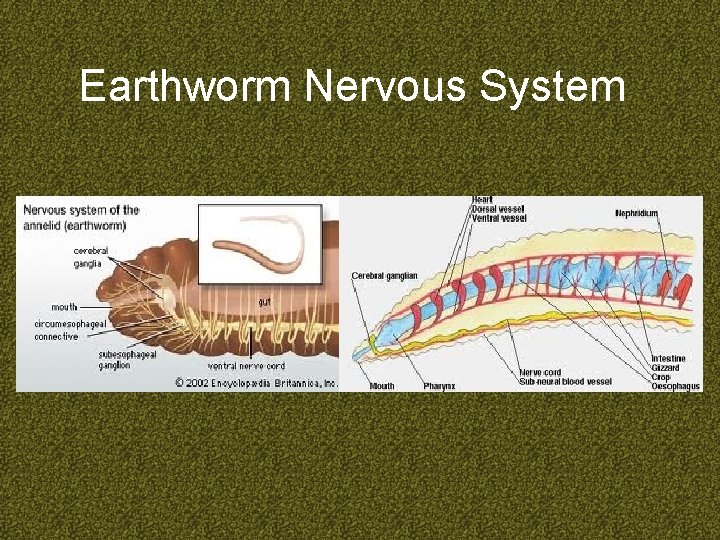
Earthworm Anatomy The nervous system in earthworms and all annelids have a pair of cerebral ganglia, which acts as the brain. Earthworms are hermaphrodites and exchange sperm with each other during copulation. When earthworms mate, they come out of their burrows at night and touch surfaces.
Earthworm Nervous System
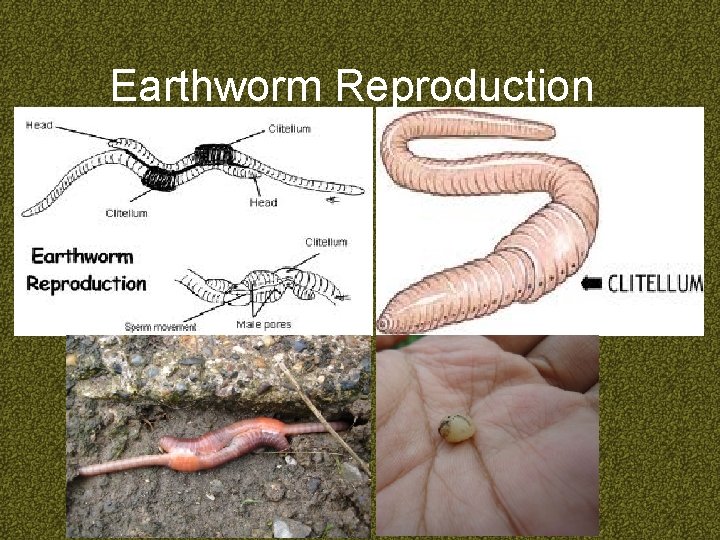
Earthworm Reproduction Mating earthworms are held together by mucus secreted by a reproductive organ called a clitellum and they are also held together by setae. Sperm are discharged and travel to an opening called the seminal receptacle. After sperm exchange, the worms separate. Each worm then secretes a protective covering over the clitellum that forms a cocoon.
Earthworm Reproduction The cocoon slides forward along the body As it slides forward, it passes over the oviducts. Eggs from the oviduct and sperm from the seminal receptacles transfer into the cocoon. After fertilization the cocoon slides off the worm. The embryos develop in the cocoon and eventually emerge as juvenile worms.
Earthworm Reproduction
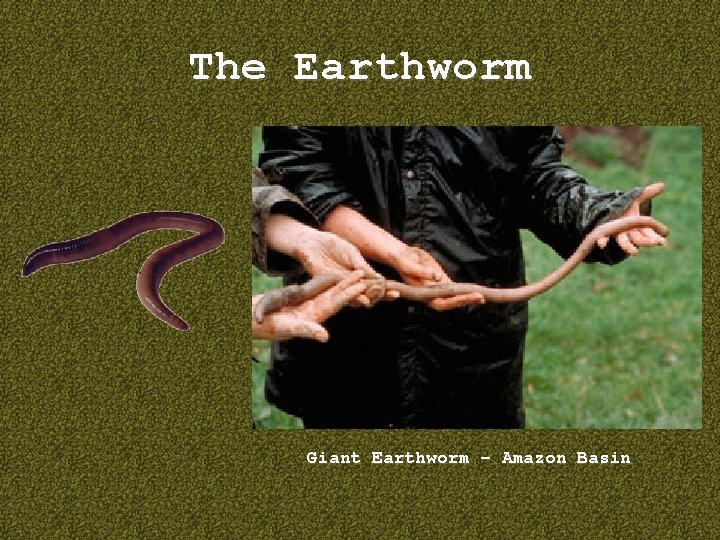
The Earthworm Giant Earthworm – Amazon Basin
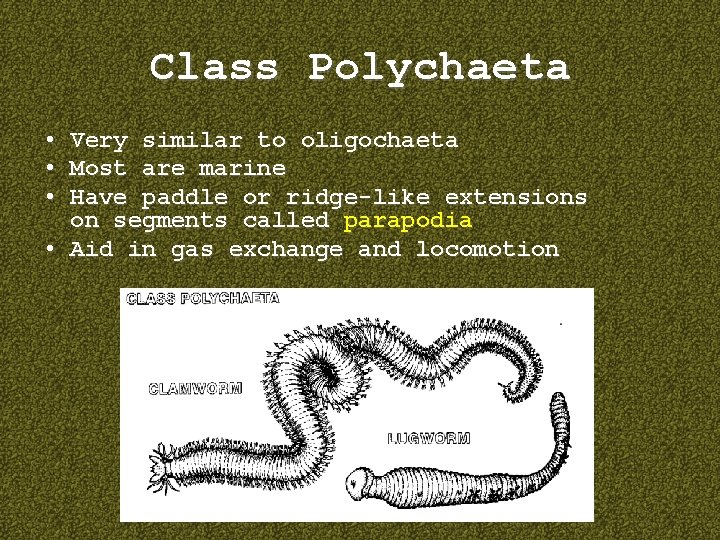
Class Polychaeta • • • Very similar to oligochaeta Most are marine Have paddle or ridge-like extensions on segments called parapodia • Aid in gas exchange and locomotion
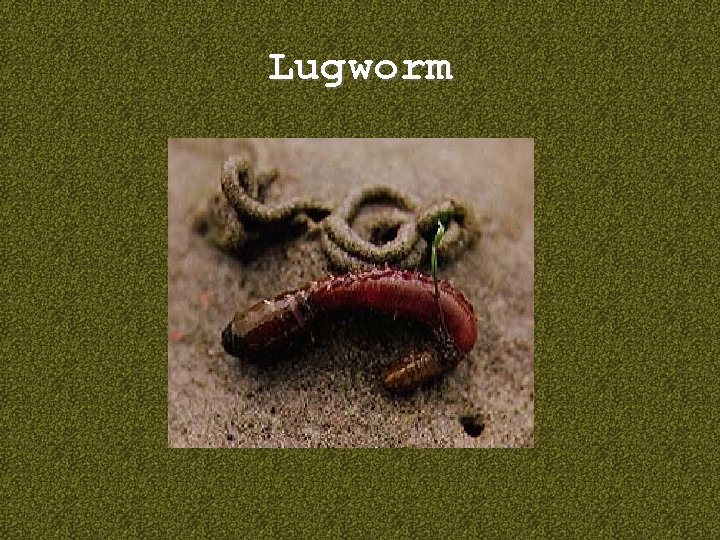
Lugworm
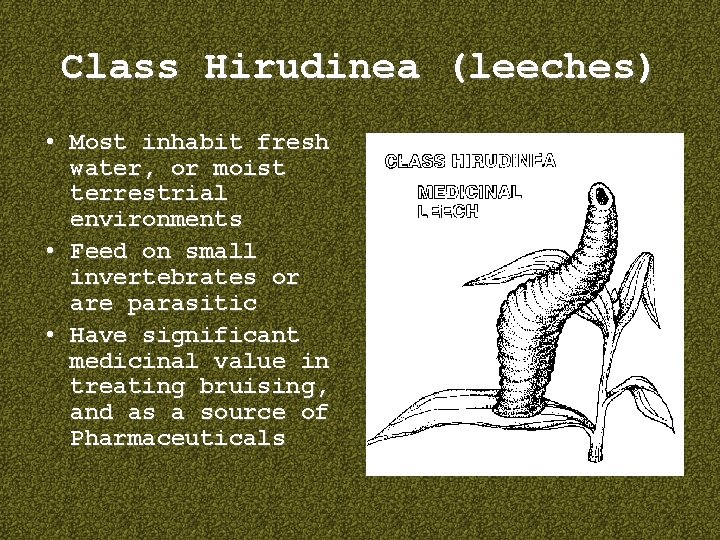
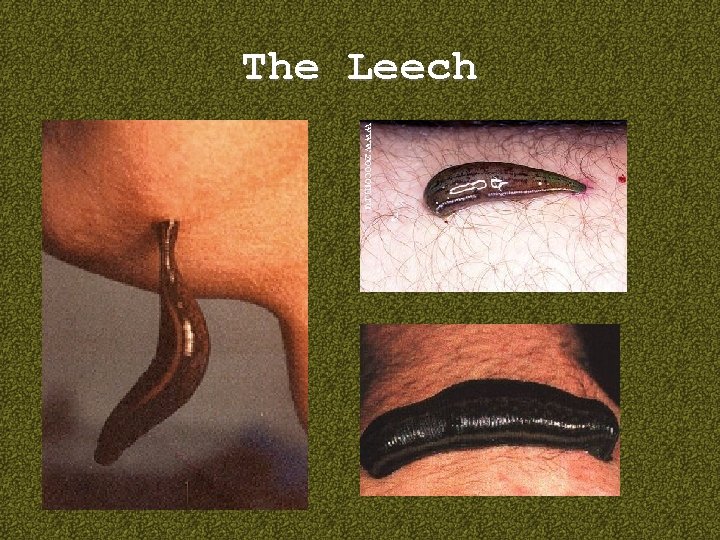
Class Hirudinea (leeches) • Most inhabit fresh water, or moist terrestrial environments • Feed on small invertebrates or are parasitic • Have significant medicinal value in treating bruising, and as a source of Pharmaceuticals
The Leech