
Phylum Annelida Leeches General Information Annelids are ringed
- Slides: 32
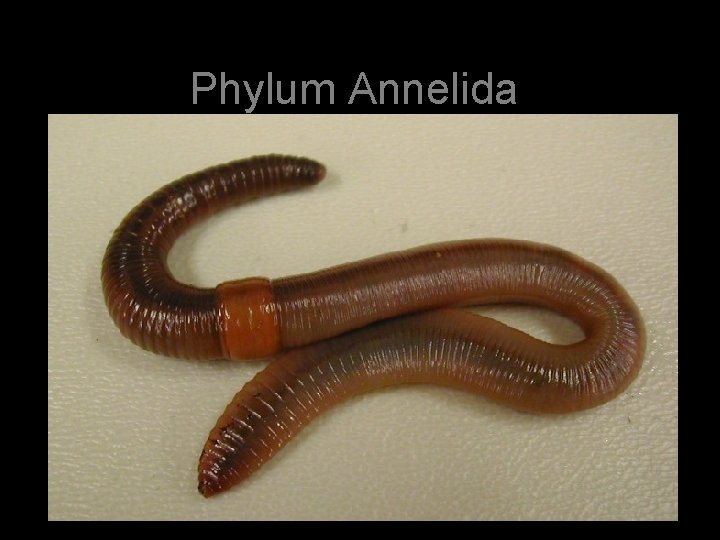
Phylum Annelida
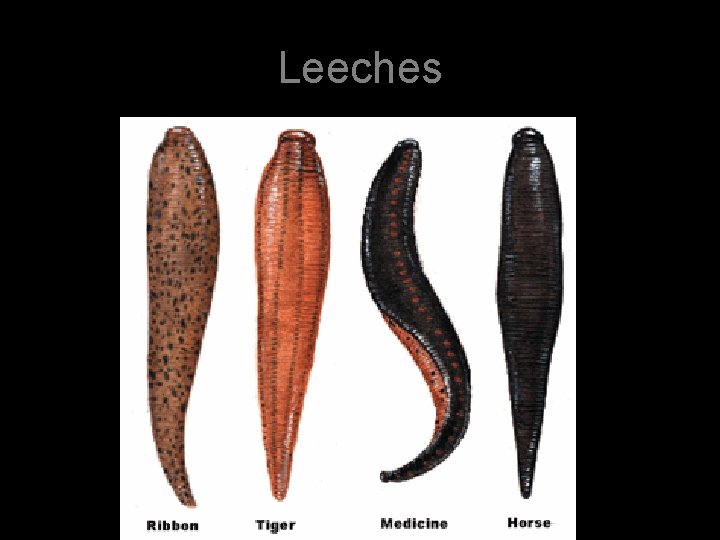
Leeches
General Information • • Annelids are ringed, segmented worms Examples include earthworms and leeches Habitat: terrestrial, fresh water, marine Have bilateral symmetry with 3 body layers (ectoderm, mesoderm, & endoderm)
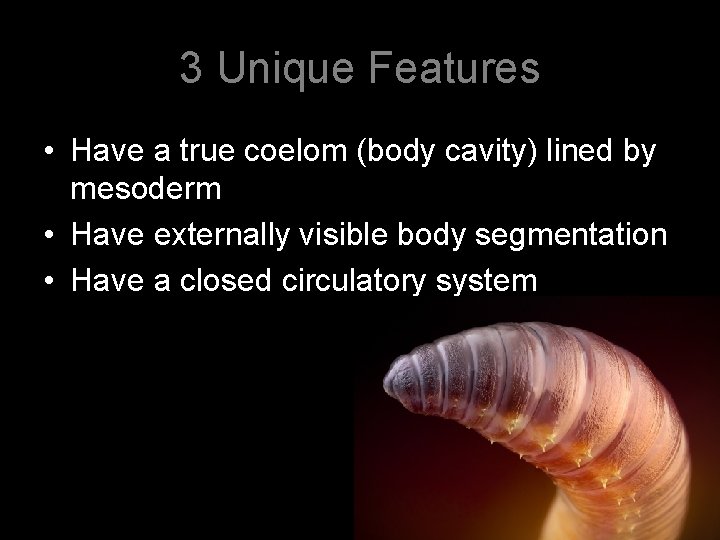
3 Unique Features • Have a true coelom (body cavity) lined by mesoderm • Have externally visible body segmentation • Have a closed circulatory system
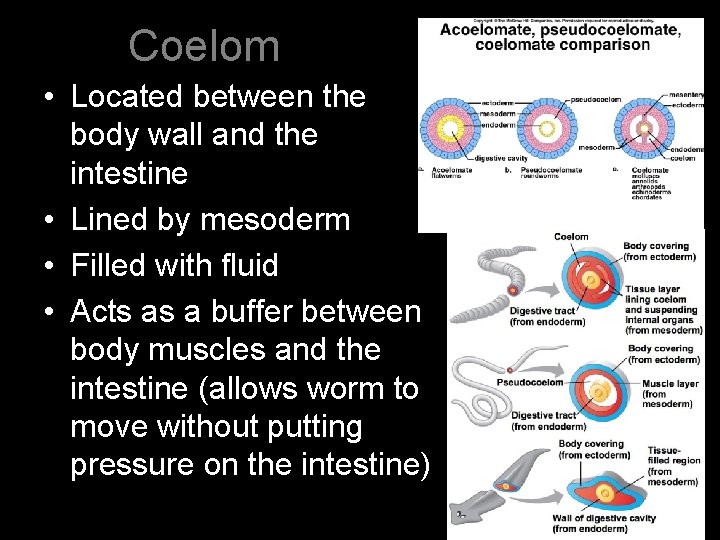
Coelom • Located between the body wall and the intestine • Lined by mesoderm • Filled with fluid • Acts as a buffer between body muscles and the intestine (allows worm to move without putting pressure on the intestine)
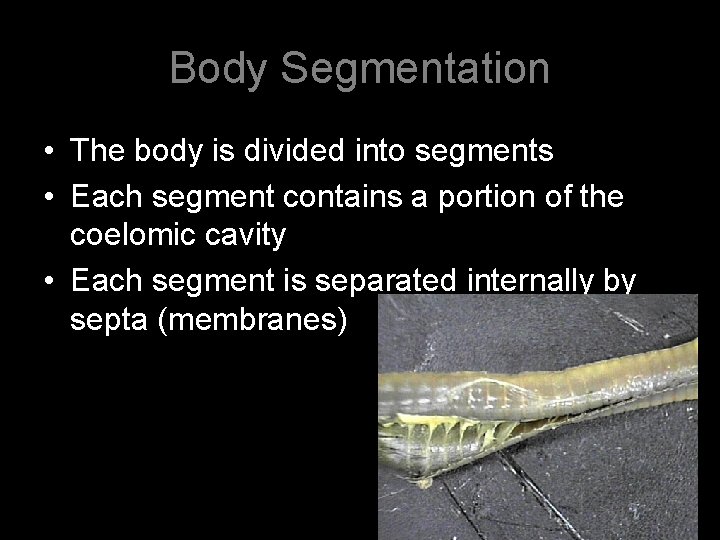
Body Segmentation • The body is divided into segments • Each segment contains a portion of the coelomic cavity • Each segment is separated internally by septa (membranes)
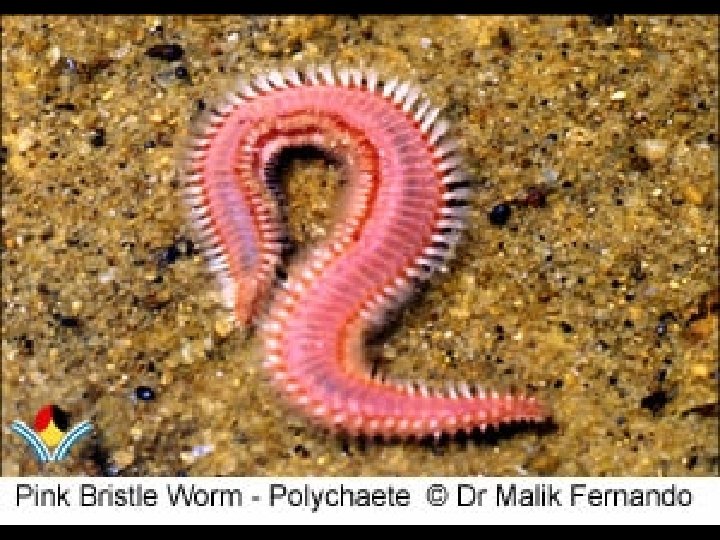
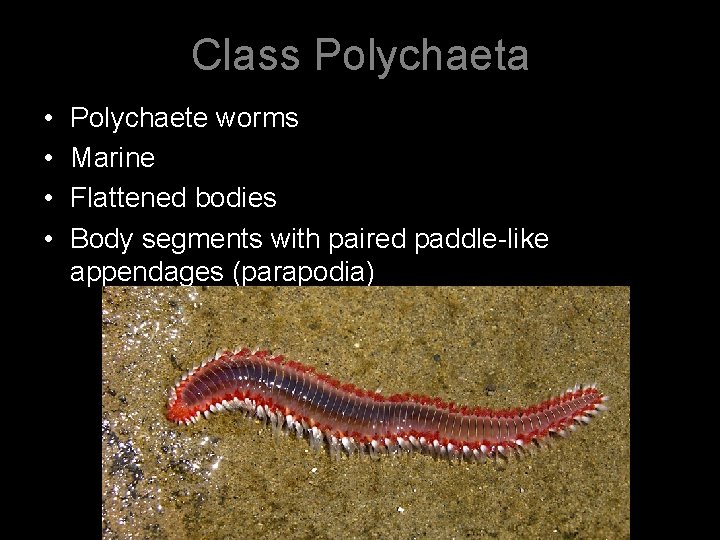
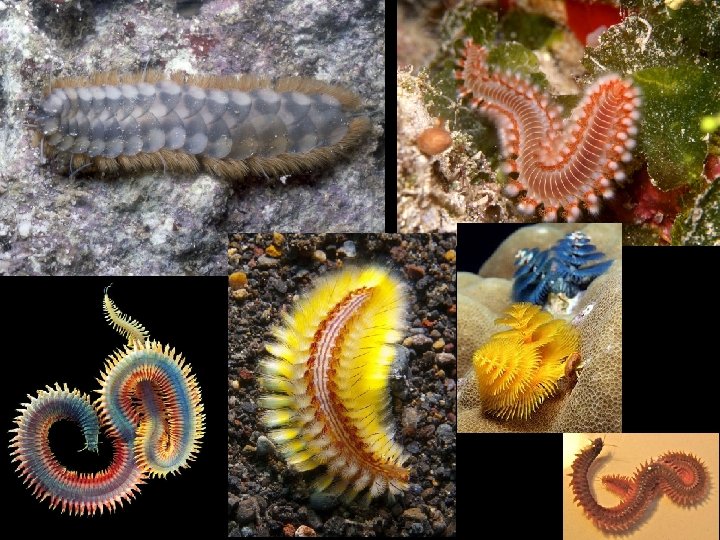
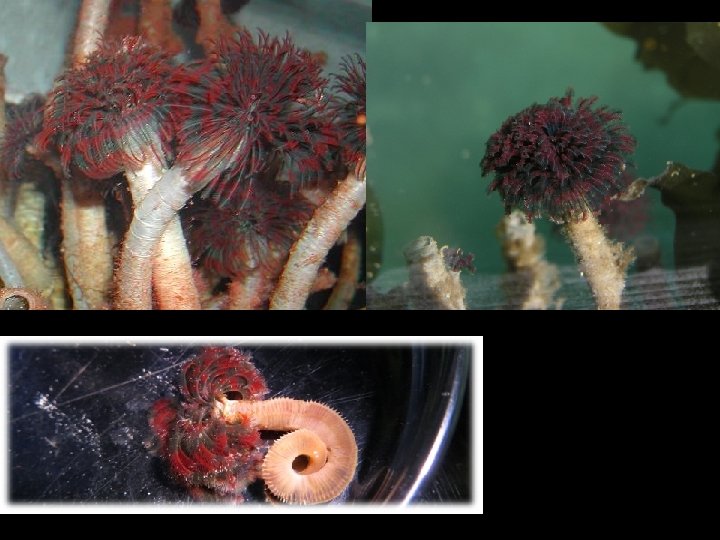
Class Polychaeta • • Polychaete worms Marine Flattened bodies Body segments with paired paddle-like appendages (parapodia)
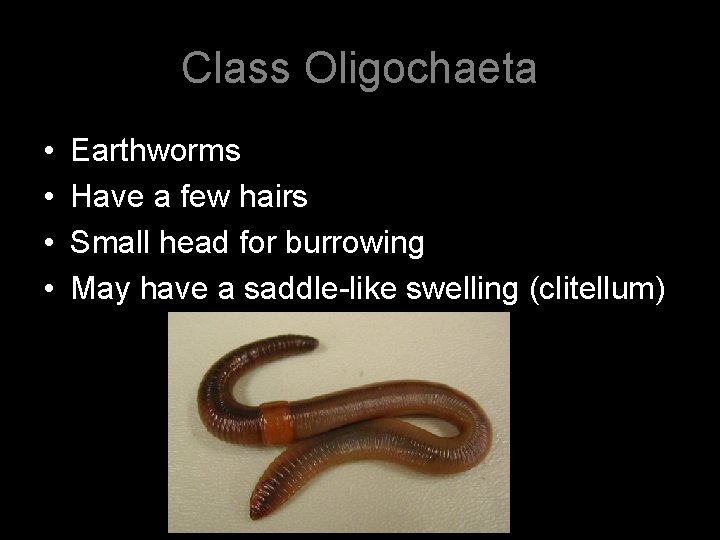
Class Oligochaeta • • Earthworms Have a few hairs Small head for burrowing May have a saddle-like swelling (clitellum)
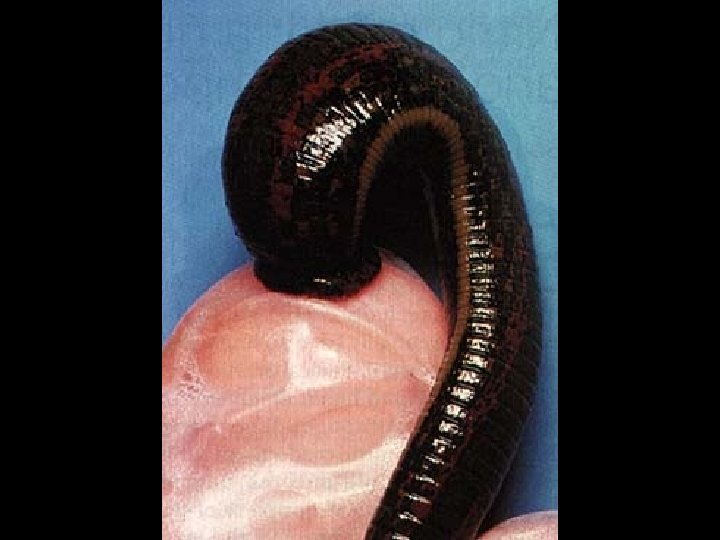
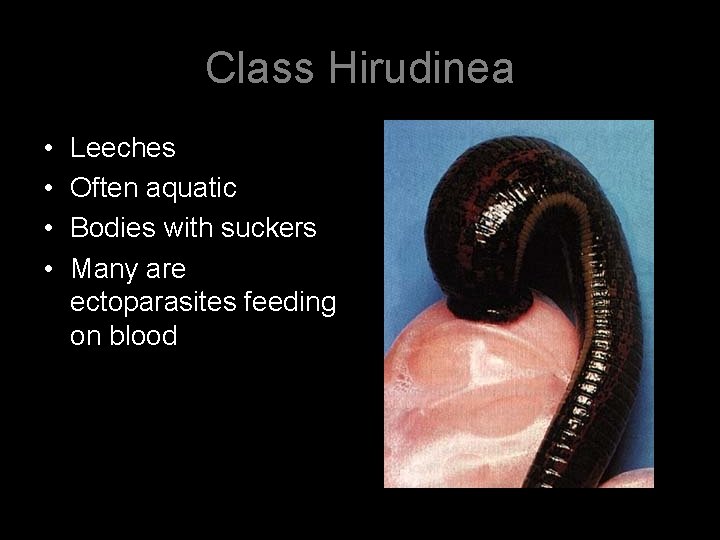
Class Hirudinea • • Leeches Often aquatic Bodies with suckers Many are ectoparasites feeding on blood
Class Oligocheatea • Earthworms will be our representative organism for this Phylum
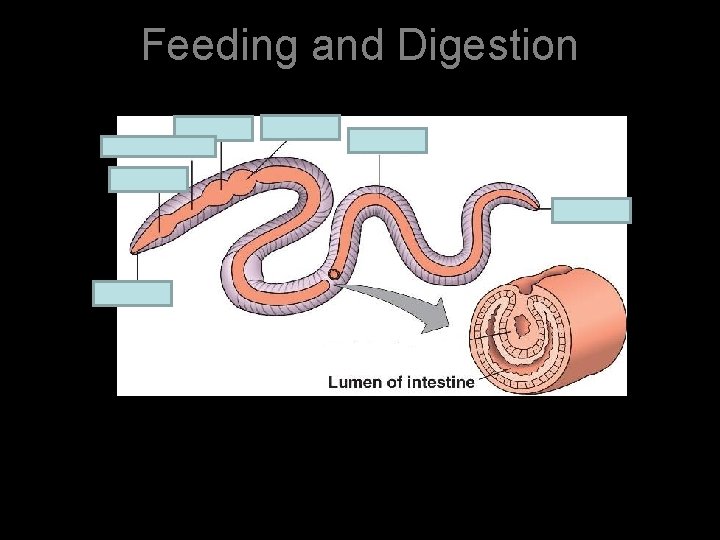
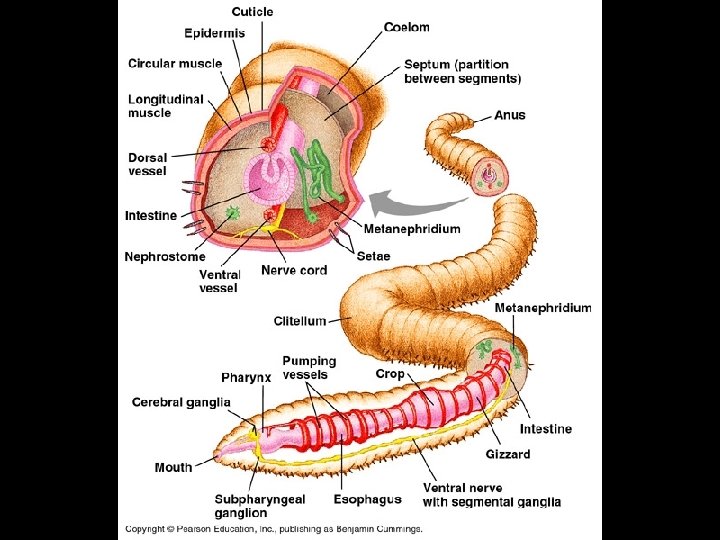
Earthworm Ingestion • Earthworms have a complete digestive system (one way digestive tract) • Food (organic material in the soil) enters through the mouth • The pharynx draws food into the mouth (suck in and swallows food) • Food moves through the esophagus to the crop where it is stored temporarily
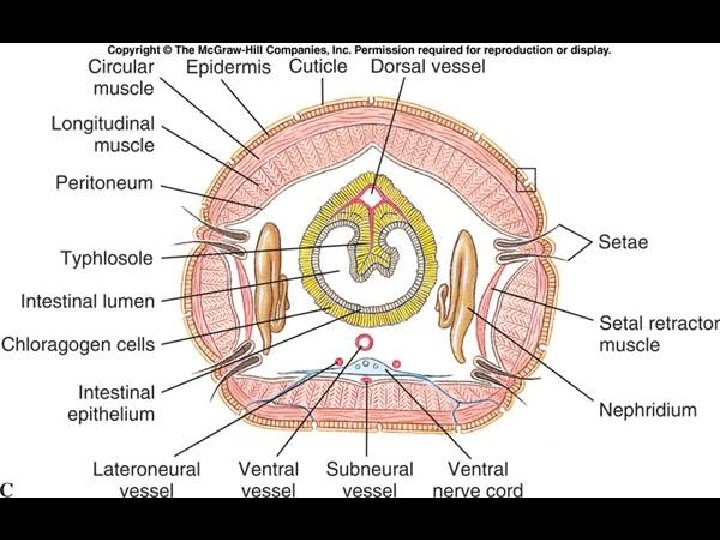
Earthworm Digestion • Food moves from the crop to the gizzard • Gizzard contains sand grains which help grind up food by muscular contractions • Food moves into the intestine where enzymes chemically digest (break down) food into particles small enough to be absorbed into blood • Intestine has a typhlosole which increases the surface area for nutrient absorption
Feeding and Digestion
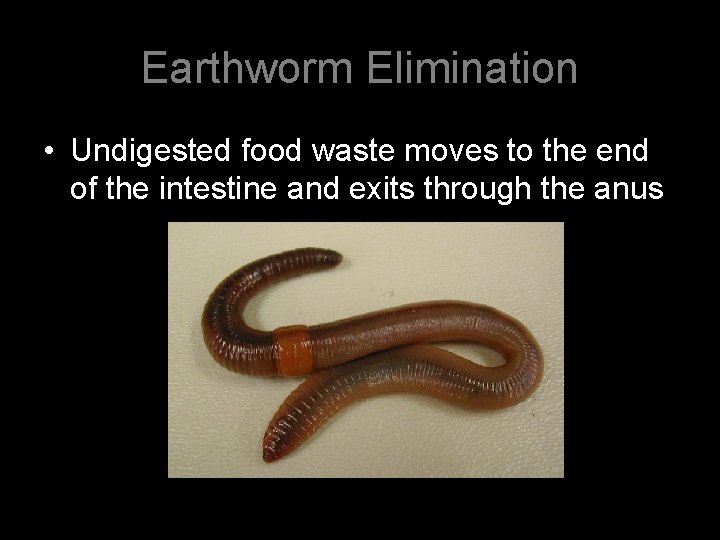
Earthworm Elimination • Undigested food waste moves to the end of the intestine and exits through the anus
Earthworm Respiration • Gas exchange (O 2 & CO 2) happens via diffusion through the moist skin • Mucus glands secrete mucus to keep skin moist • O 2 diffuses across the moist skin and into the capillaries and blood • O 2 is carried by hemoglobin (Hb) in the blood
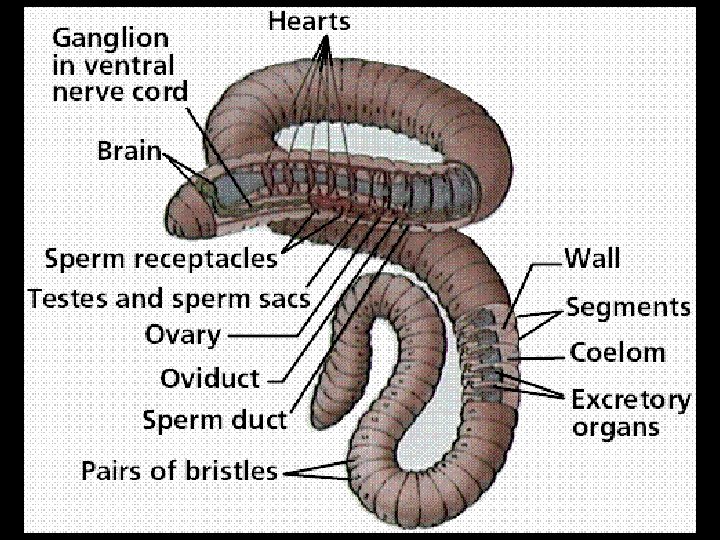
Earthworm Circulation • Earthworms have a closed circulatory system (blood is always contained in vessels) • Closed circulatory systems allow for more effective delivery of nutrients which allows for increased activity and size • Earthworms have 5 pairs of hearts which pump blood through the vessels
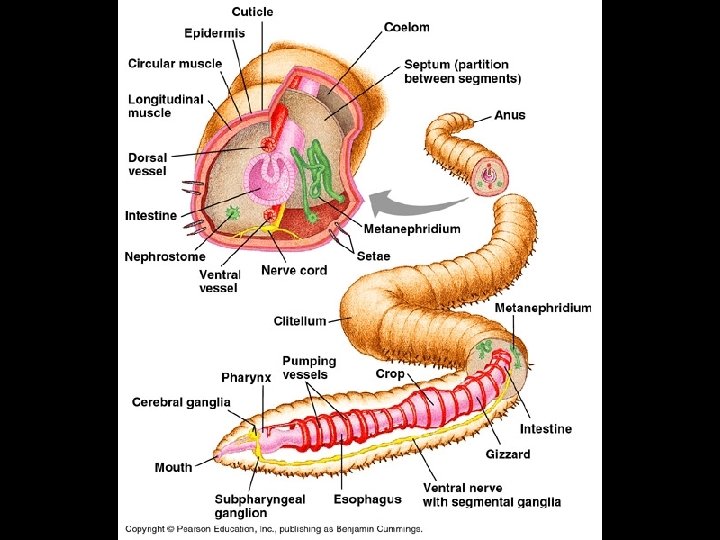
Earthworm Excretion • Excretory organs called nephridia filter excess H 2 O and nitrogenous wastes from the coelomic cavity of one segment • This waste passes through a long tube surrounded by blood vessels (much like our kidneys) and eventually exits through an excretory pore in the next segment • Excess water is reabsorbed into the blood vessels
Earthworm Sexual Reproduction • Earthworms are hermaphrodites (male & female on same individual) • 2 earthworms cross-fertilize (exchange sperm) • Earthworms have a swelling called a clitellum which secretes a mucus cocoon into which fertilized eggs are deposited
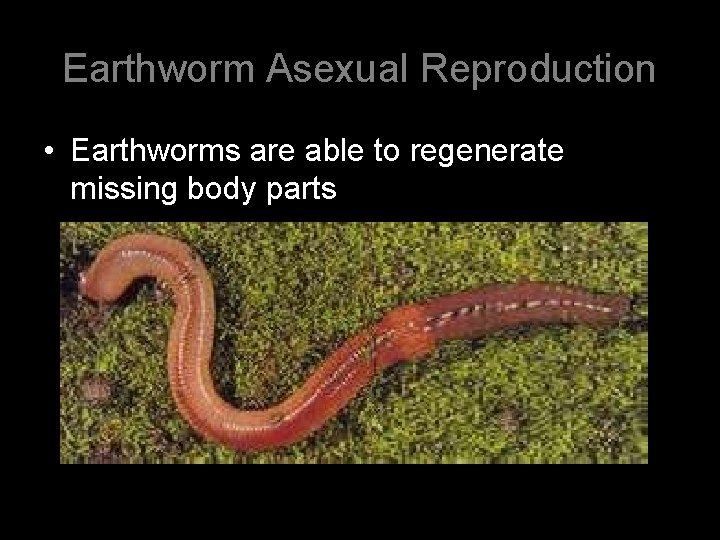
Earthworm Asexual Reproduction • Earthworms are able to regenerate missing body parts
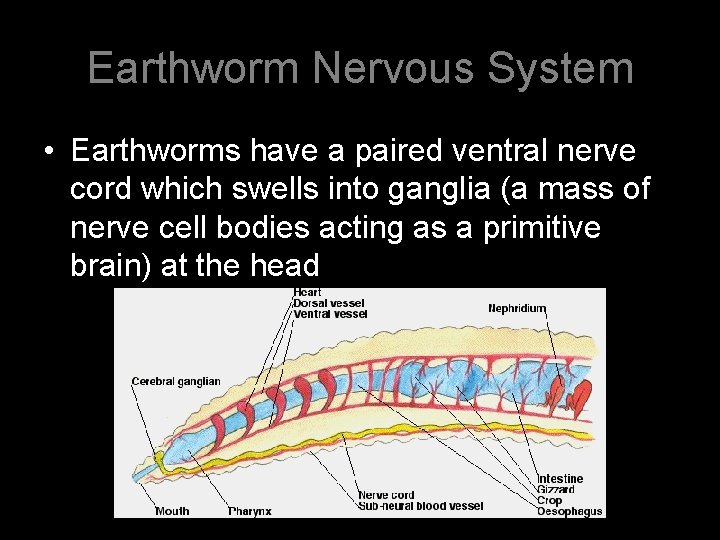
Earthworm Nervous System • Earthworms have a paired ventral nerve cord which swells into ganglia (a mass of nerve cell bodies acting as a primitive brain) at the head
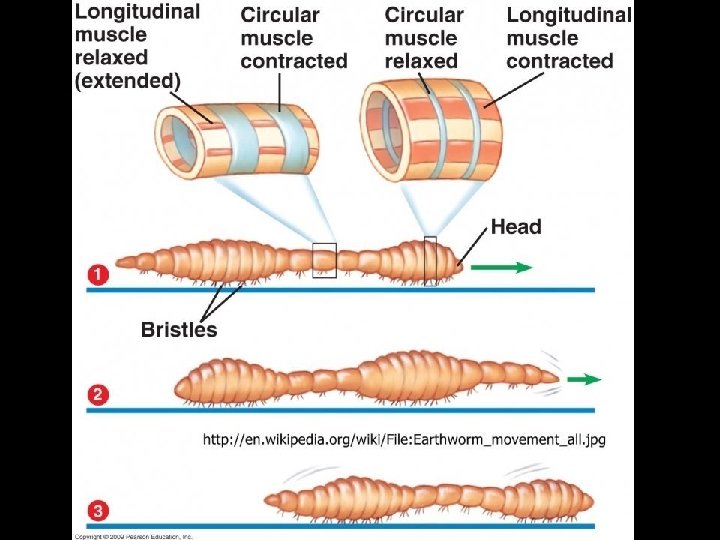
Earthworm Locomotion • Uses longitudinal and circular muscles combined with the fluid pressure in the coelom and the setae (bristles) to help burrow and move • Contraction of the circular muscles of anterior (front) cause worm to lengthen • Paired setae (bristles) anchor worm to soil • Longitudinal muscles contract causing worm to shorten pulling it’s posterior (tail end forward)
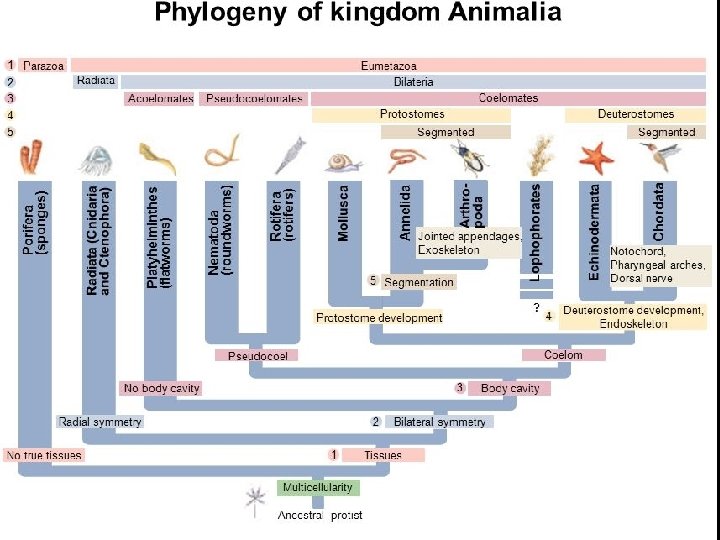
Evolutionary Significance • Segmentation! Body segmentation lead to the ability to have specialized structures in the body plan of organisms. • Share common ancestor with the Arthropods • Closed Circulatory System – heart(s) and blood vessels • True Coelom – mesoderm lines the digestive tract