
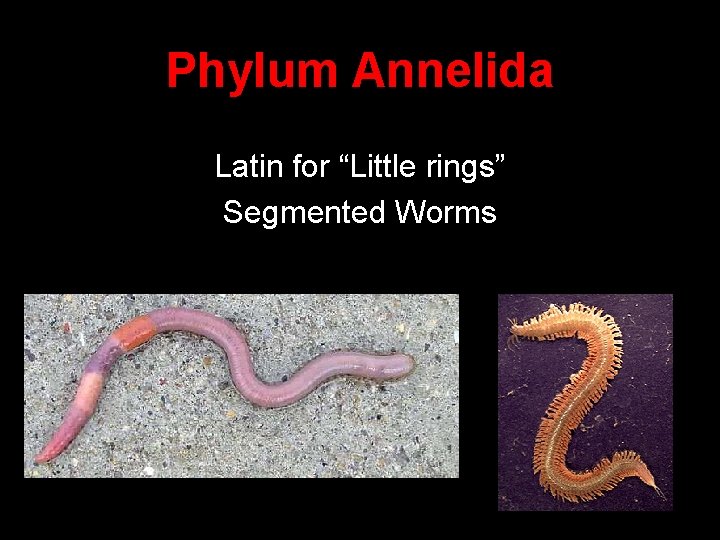
Phylum Annelida Latin for Little rings Segmented Worms

- Slides: 29
Phylum Annelida Latin for “Little rings” Segmented Worms
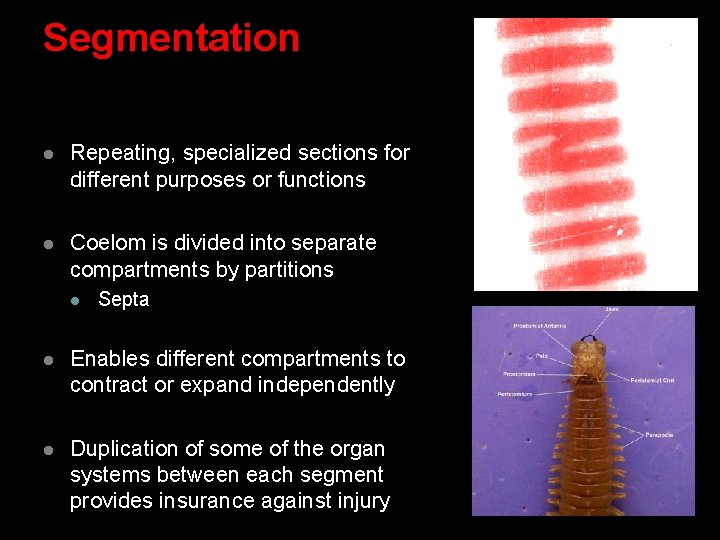
Segmentation l Repeating, specialized sections for different purposes or functions l Coelom is divided into separate compartments by partitions l Septa l Enables different compartments to contract or expand independently l Duplication of some of the organ systems between each segment provides insurance against injury
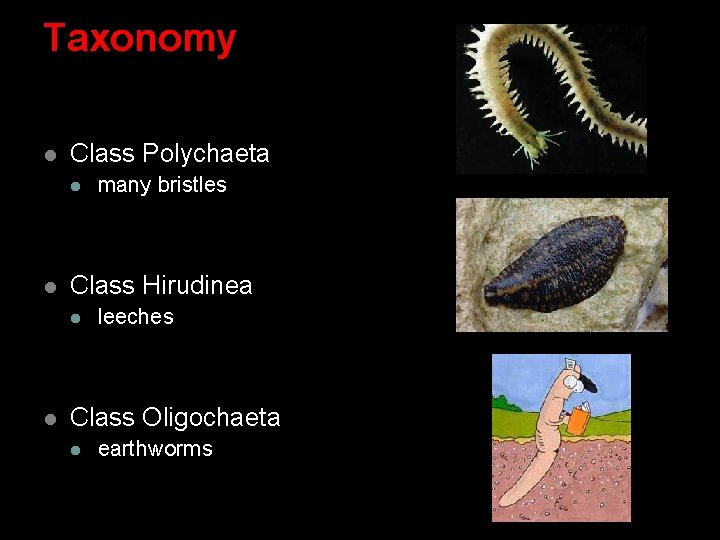
Taxonomy l Class Polychaeta l l Class Hirudinea l l many bristles leeches Class Oligochaeta l earthworms
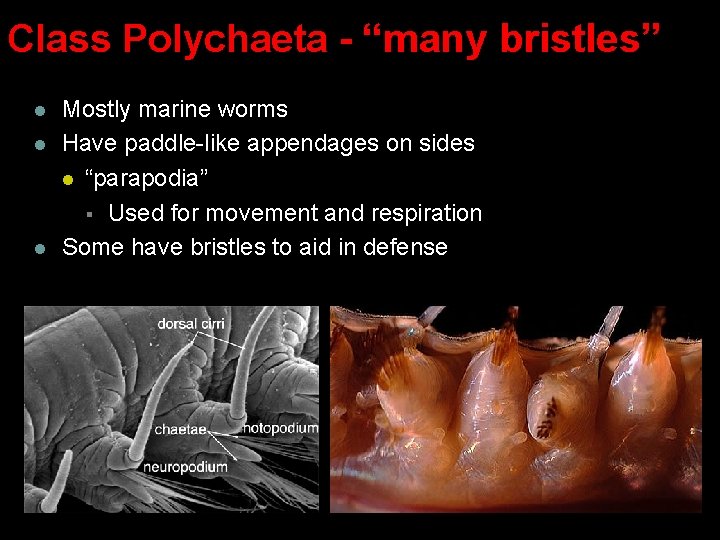
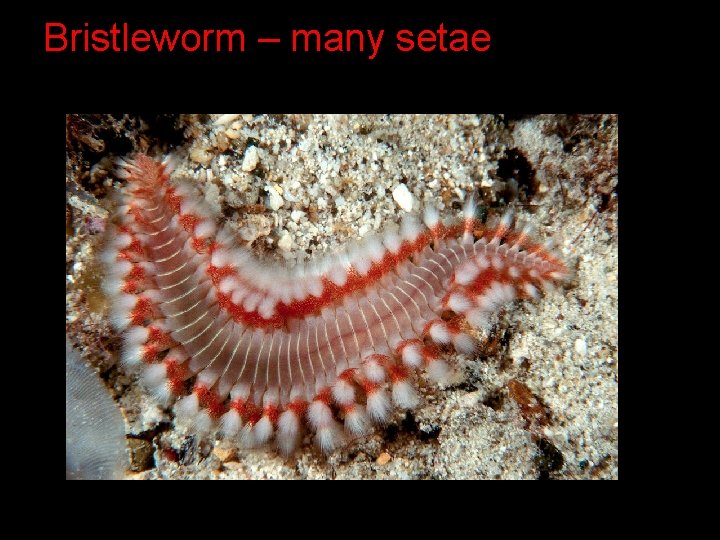
Class Polychaeta - “many bristles” l l l Mostly marine worms Have paddle-like appendages on sides l “parapodia” § Used for movement and respiration Some have bristles to aid in defense
Bristleworm – many setae
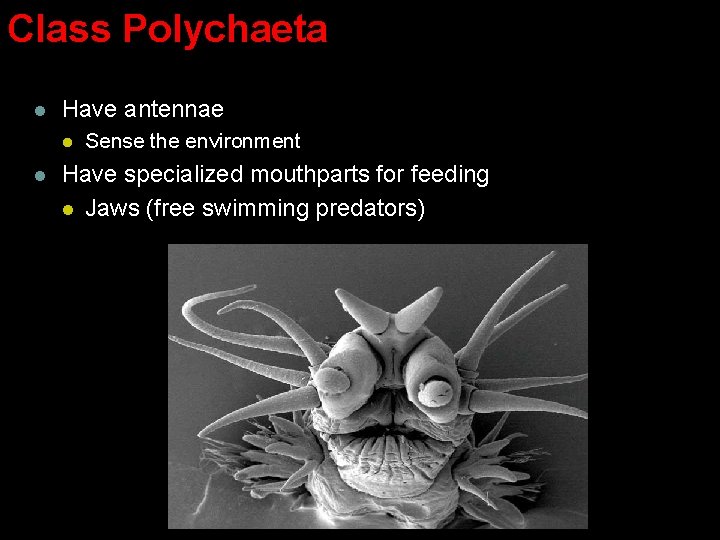
Class Polychaeta l Have antennae l l Sense the environment Have specialized mouthparts for feeding l Jaws (free swimming predators)
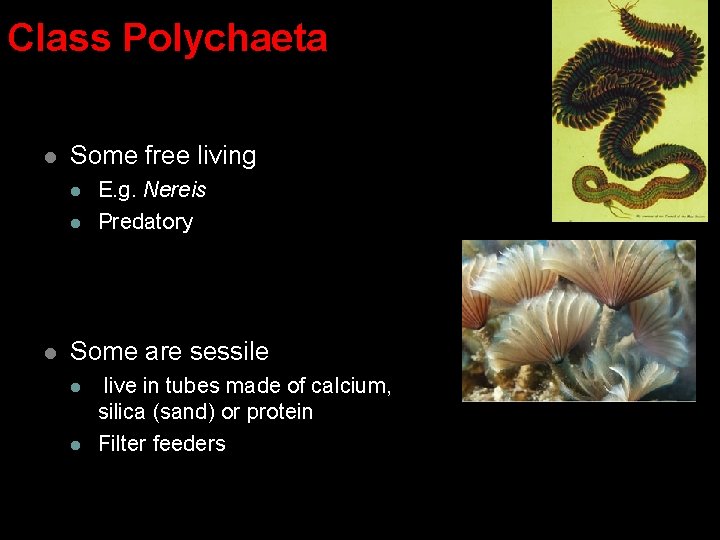
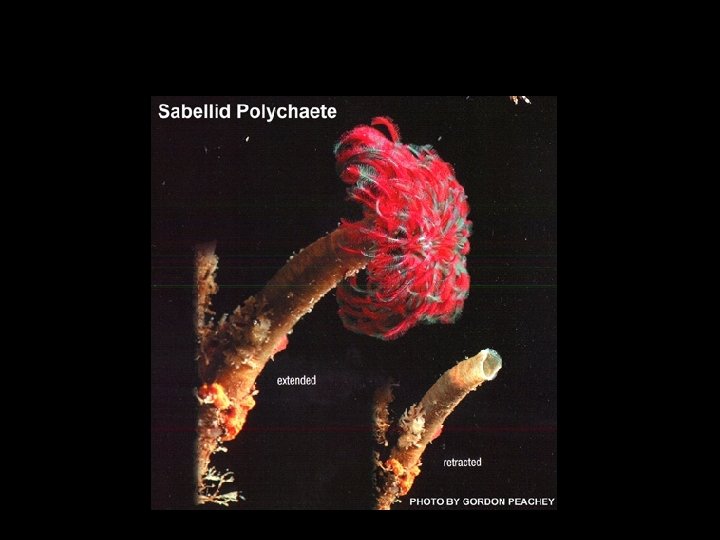
Class Polychaeta l Some free living l l l E. g. Nereis Predatory Some are sessile l l live in tubes made of calcium, silica (sand) or protein Filter feeders
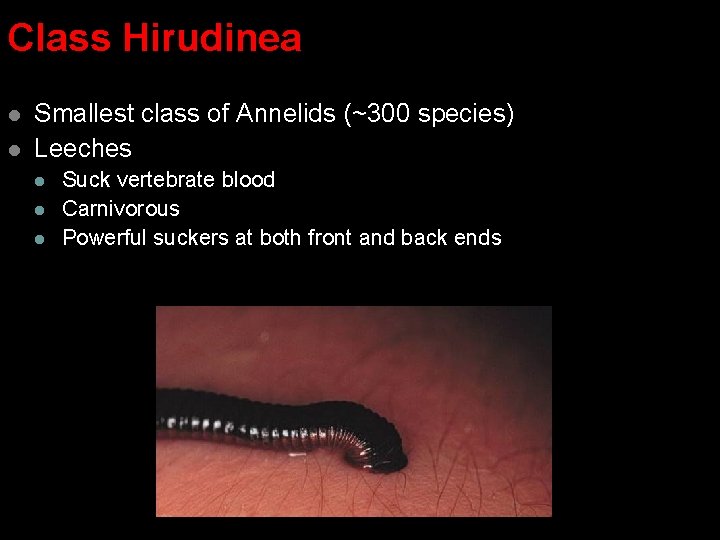
Class Hirudinea l l Smallest class of Annelids (~300 species) Leeches l l l Suck vertebrate blood Carnivorous Powerful suckers at both front and back ends
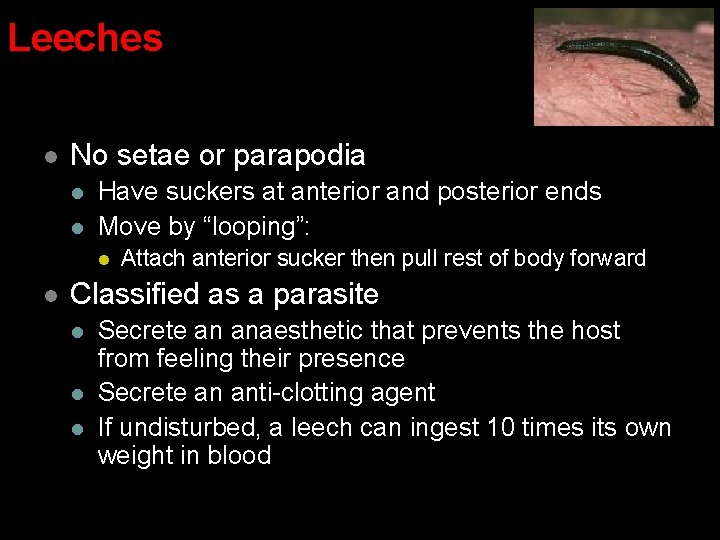
Leeches l No setae or parapodia l l Have suckers at anterior and posterior ends Move by “looping”: l l Attach anterior sucker then pull rest of body forward Classified as a parasite l l l Secrete an anaesthetic that prevents the host from feeling their presence Secrete an anti-clotting agent If undisturbed, a leech can ingest 10 times its own weight in blood
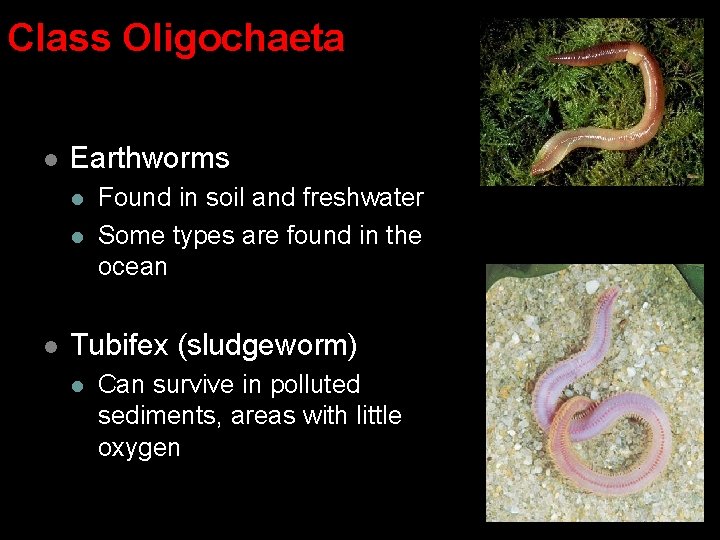
Class Oligochaeta l Earthworms l l l Found in soil and freshwater Some types are found in the ocean Tubifex (sludgeworm) l Can survive in polluted sediments, areas with little oxygen
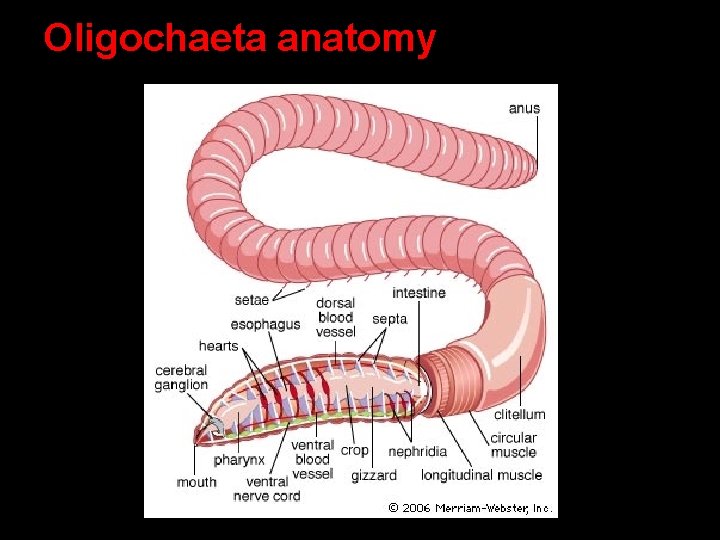
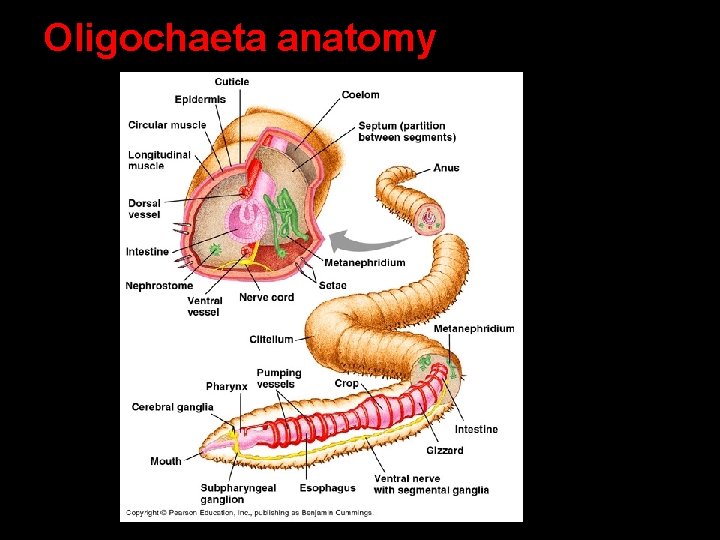
Oligochaeta anatomy
Oligochaeta anatomy
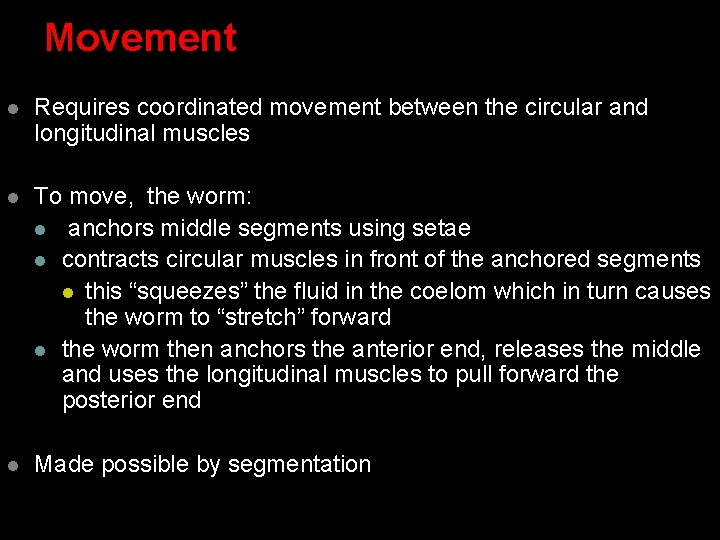
Movement l Requires coordinated movement between the circular and longitudinal muscles l To move, the worm: l anchors middle segments using setae l contracts circular muscles in front of the anchored segments l this “squeezes” the fluid in the coelom which in turn causes the worm to “stretch” forward l the worm then anchors the anterior end, releases the middle and uses the longitudinal muscles to pull forward the posterior end l Made possible by segmentation
Movement
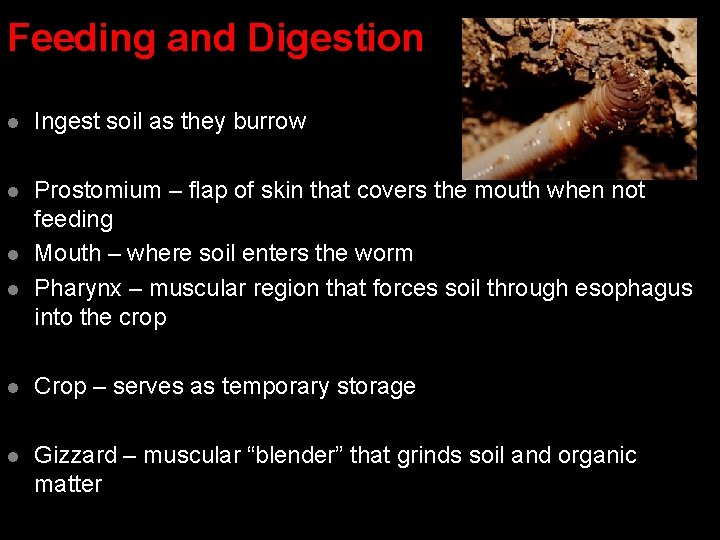
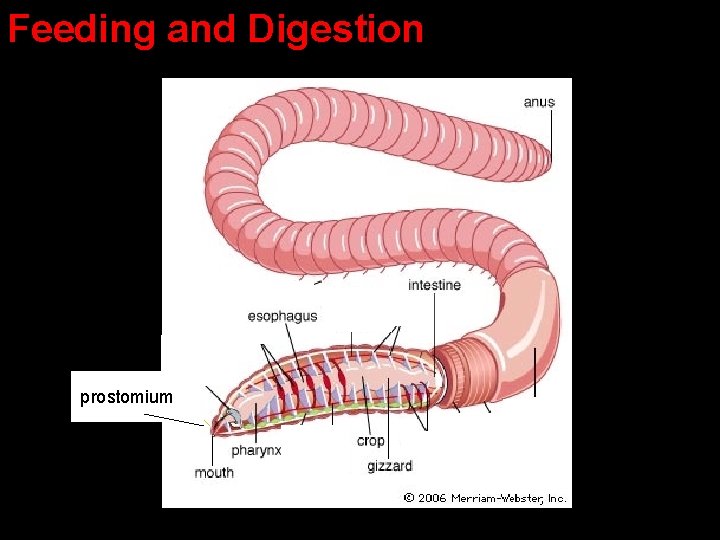
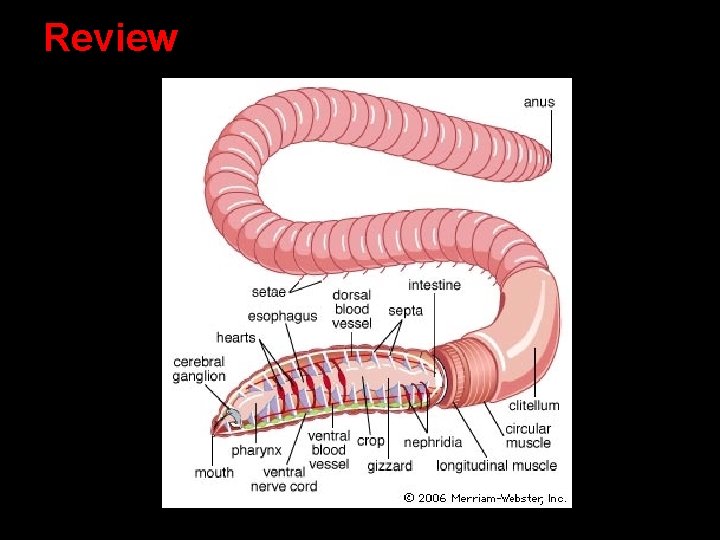
Feeding and Digestion l Ingest soil as they burrow l Prostomium – flap of skin that covers the mouth when not feeding Mouth – where soil enters the worm Pharynx – muscular region that forces soil through esophagus into the crop l l l Crop – serves as temporary storage l Gizzard – muscular “blender” that grinds soil and organic matter
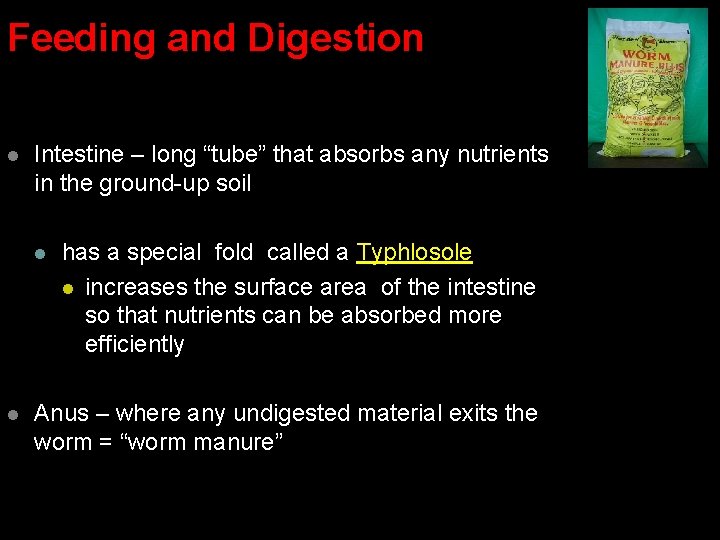
Feeding and Digestion l Intestine – long “tube” that absorbs any nutrients in the ground-up soil l l has a special fold called a Typhlosole l increases the surface area of the intestine so that nutrients can be absorbed more efficiently Anus – where any undigested material exits the worm = “worm manure”
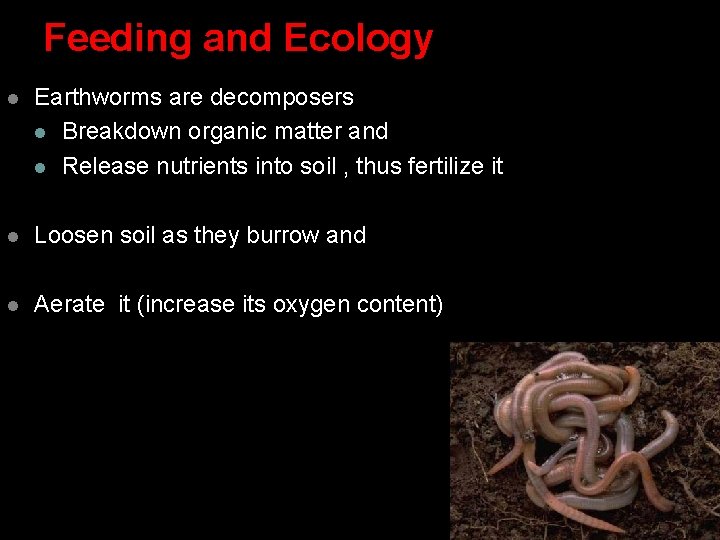
Feeding and Ecology l Earthworms are decomposers l Breakdown organic matter and l Release nutrients into soil , thus fertilize it l Loosen soil as they burrow and l Aerate it (increase its oxygen content)
Feeding and Digestion prostomiumm
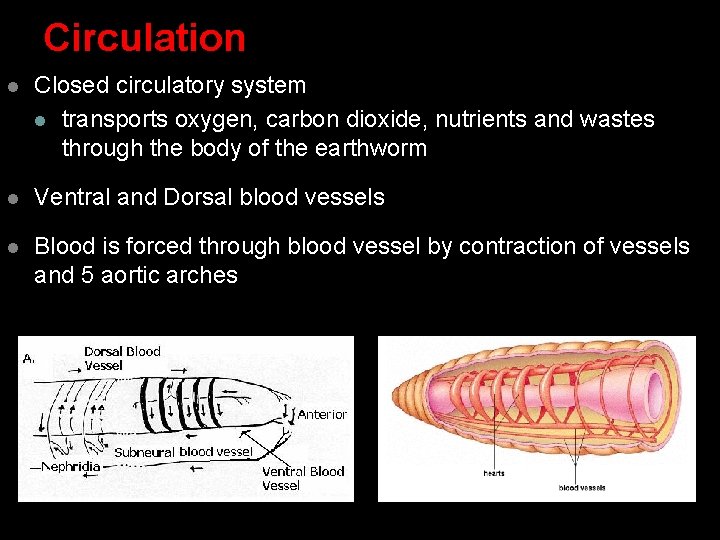
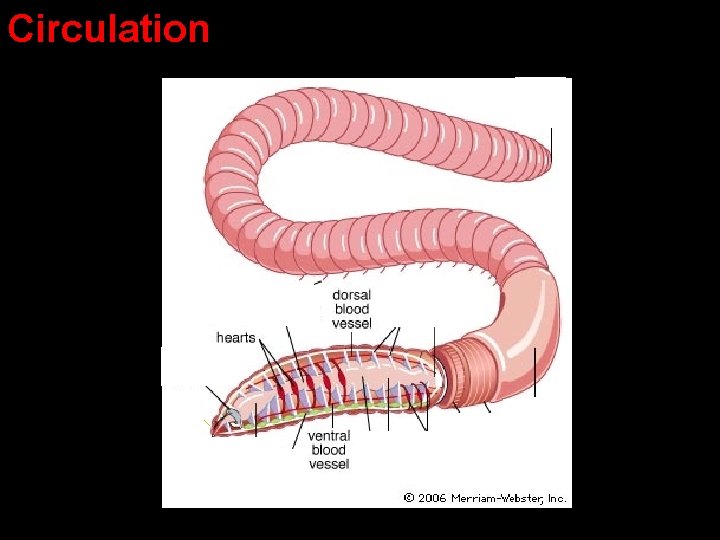
Circulation l Closed circulatory system l transports oxygen, carbon dioxide, nutrients and wastes through the body of the earthworm l Ventral and Dorsal blood vessels l Blood is forced through blood vessel by contraction of vessels and 5 aortic arches
Circulation
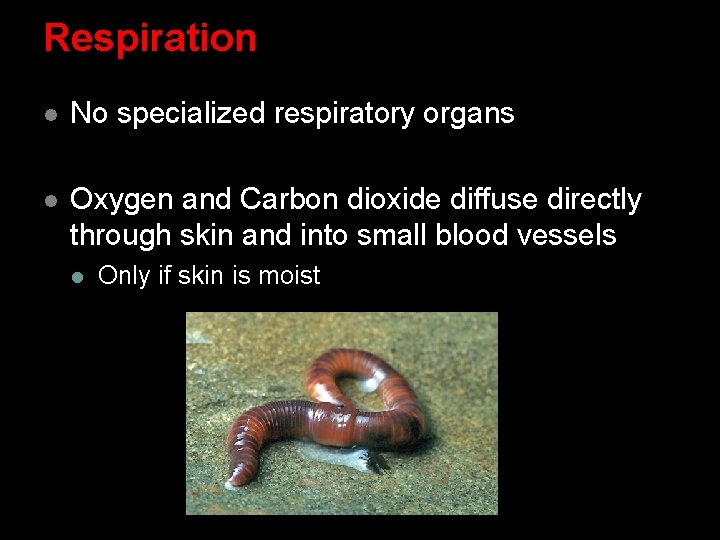
Respiration l No specialized respiratory organs l Oxygen and Carbon dioxide diffuse directly through skin and into small blood vessels l Only if skin is moist
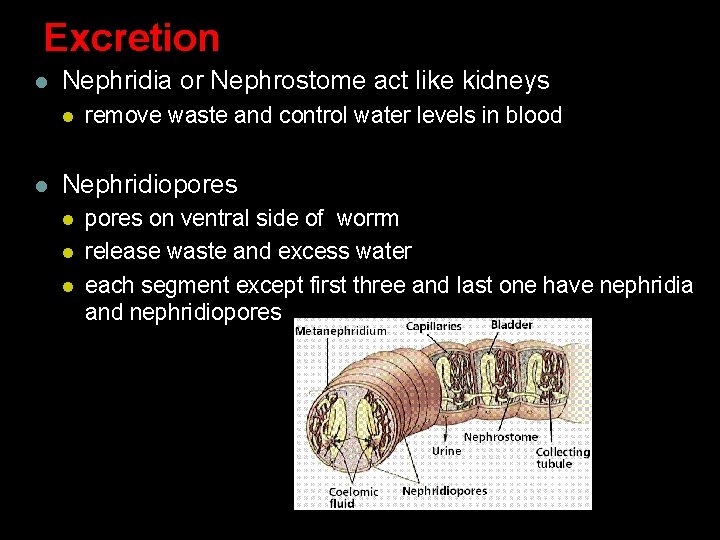
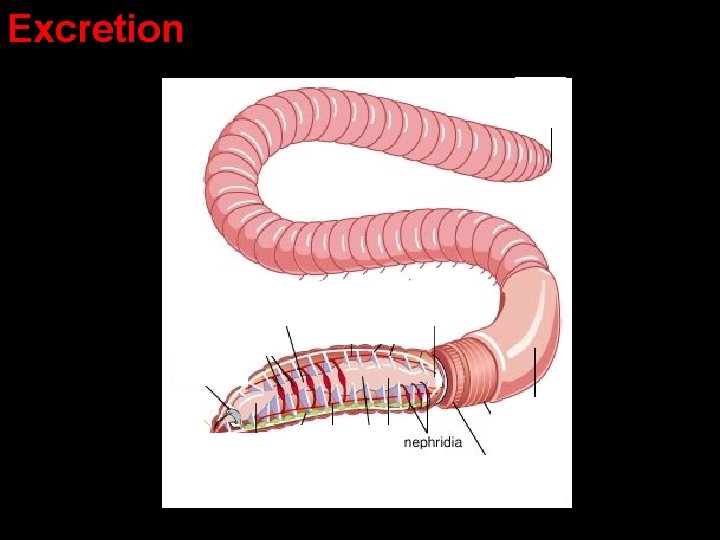
Excretion l Nephridia or Nephrostome act like kidneys l l remove waste and control water levels in blood Nephridiopores l l l pores on ventral side of worrm release waste and excess water each segment except first three and last one have nephridia and nephridiopores
Excretion
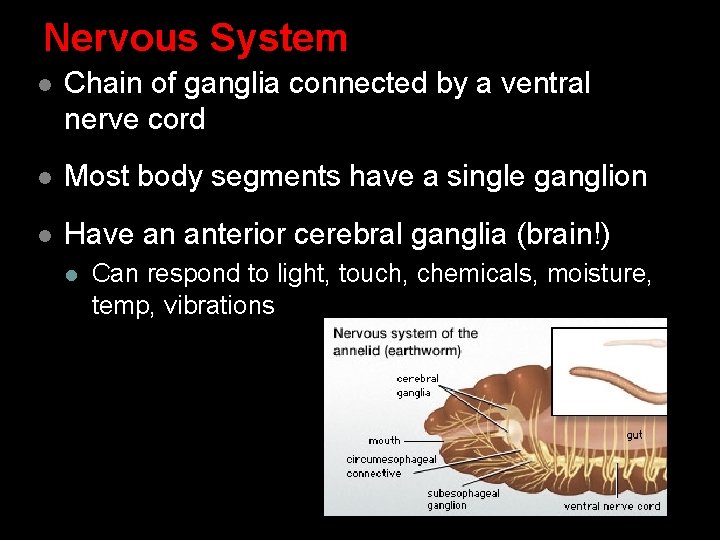
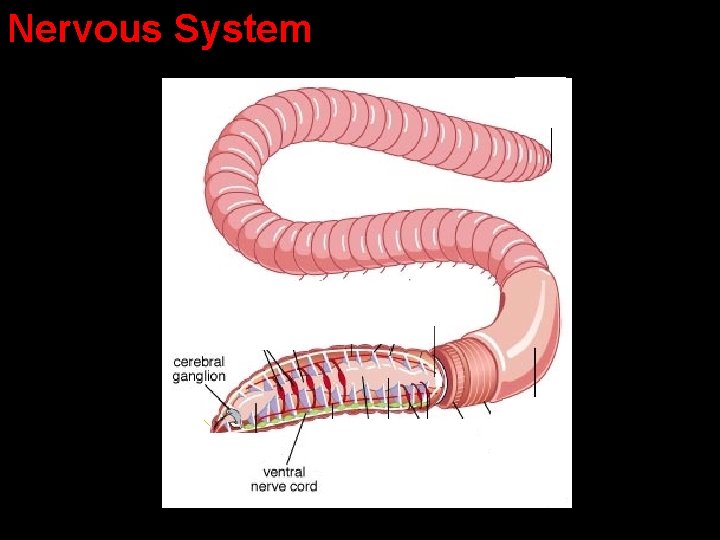
Nervous System l Chain of ganglia connected by a ventral nerve cord l Most body segments have a single ganglion l Have an anterior cerebral ganglia (brain!) l Can respond to light, touch, chemicals, moisture, temp, vibrations
Nervous System
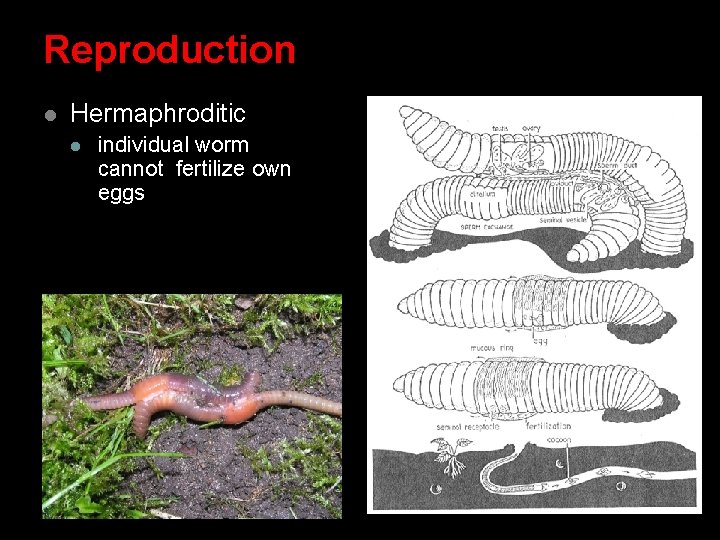
Reproduction l Hermaphroditic l individual worm cannot fertilize own eggs
Reproduction l l The “Position” l head to tail, ventral surface to ventral surface The “Transfer” l clitellum secretes mucus l each earthworm injects sperm into the mucus l mucus moves into pouch-like seminal receptacle of each worm The “Delivery” l several days later the worm secretes a tube of mucus and chitin (thick carbohydrate) from clitellum l as the worm moves the tube “picks” up eggs and carries it to sperm to be fertilized The “Result” l tube closes up to form protective case and 2 -3 weeks “baby” worms hatch
Review