
PHYLOGENY AND THE TREE OF LIFE PHYLOGENY Phylogeny
- Slides: 7
PHYLOGENY AND THE TREE OF LIFE
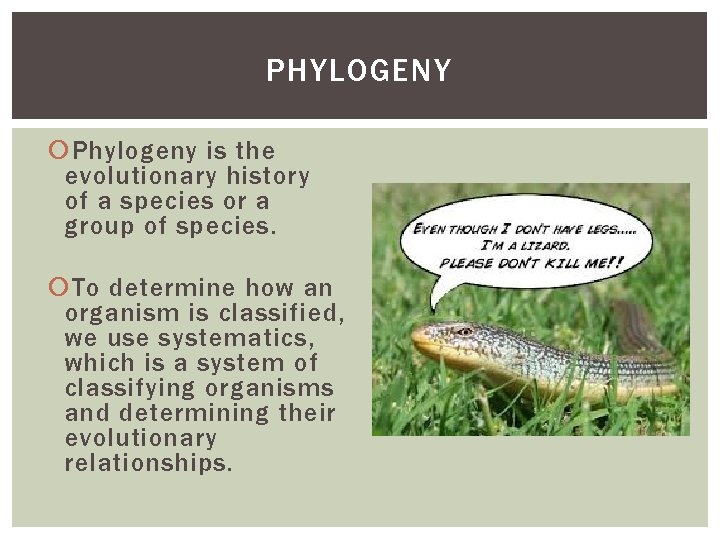
PHYLOGENY Phylogeny is the evolutionary history of a species or a group of species. To determine how an organism is classified, we use systematics, which is a system of classifying organisms and determining their evolutionary relationships.
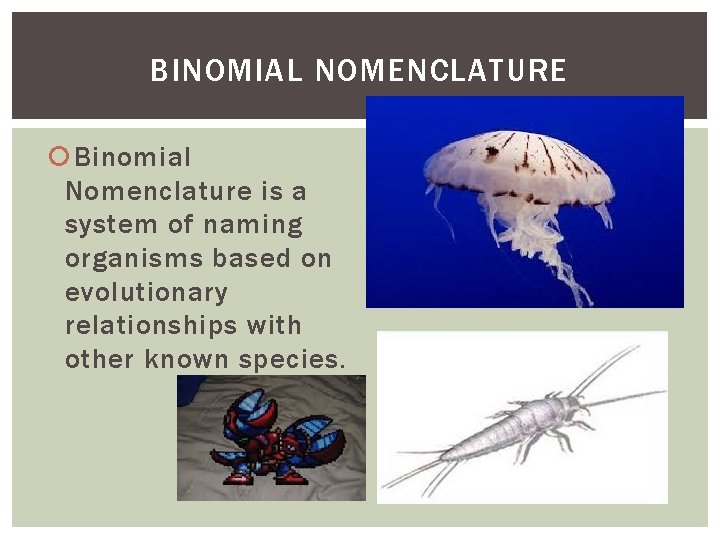
BINOMIAL NOMENCLATURE Binomial Nomenclature is a system of naming organisms based on evolutionary relationships with other known species.
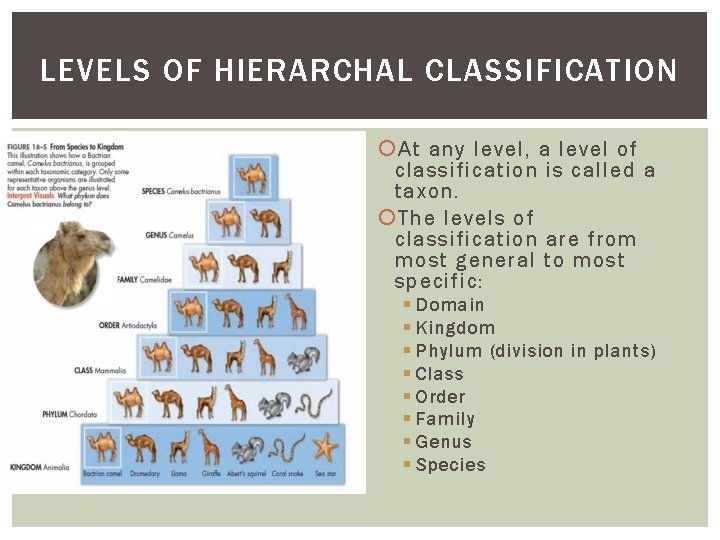
LEVELS OF HIERARCHAL CLASSIFICATION At any level, a level of classification is called a taxon. The levels of classification are from most general to most specific: § Domain § Kingdom § Phylum (division in plants) § Class § Order § Family § Genus § Species
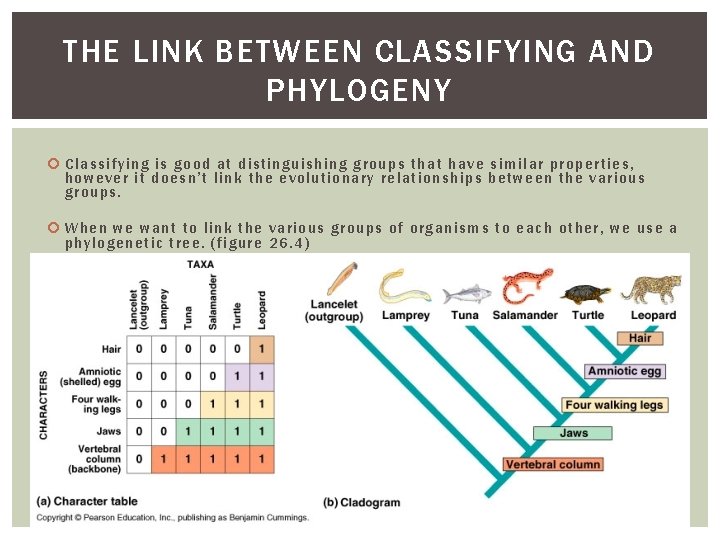
THE LINK BETWEEN CLASSIFYING AND PHYLOGENY Classify ing is good at dis tingu ishing groups that have simil ar properties, howe ver it do esn’t link th e evolutionary relationships between the various gro ups. When we want to link the various groups of organisms to each other, we use a ph yl og enetic tree. (figure 26. 4)
COMMON TERMS Sister taxa: groups that share an immediate common ancestor. Rooted tree: tree shows the latest common ancestor that all organisms in the tree share. Basal taxon: group that diverges early in the tree. Polytomy: more an two groups emerge from a single divergence. (>2)
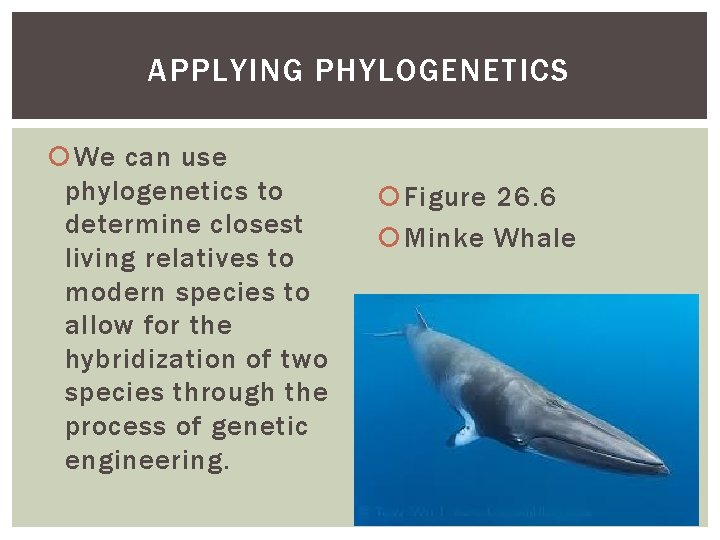
APPLYING PHYLOGENETICS We can use phylogenetics to determine closest living relatives to modern species to allow for the hybridization of two species through the process of genetic engineering. Figure 26. 6 Minke Whale