
Phylogeny and the Tree of Life Overview Investigating
- Slides: 10
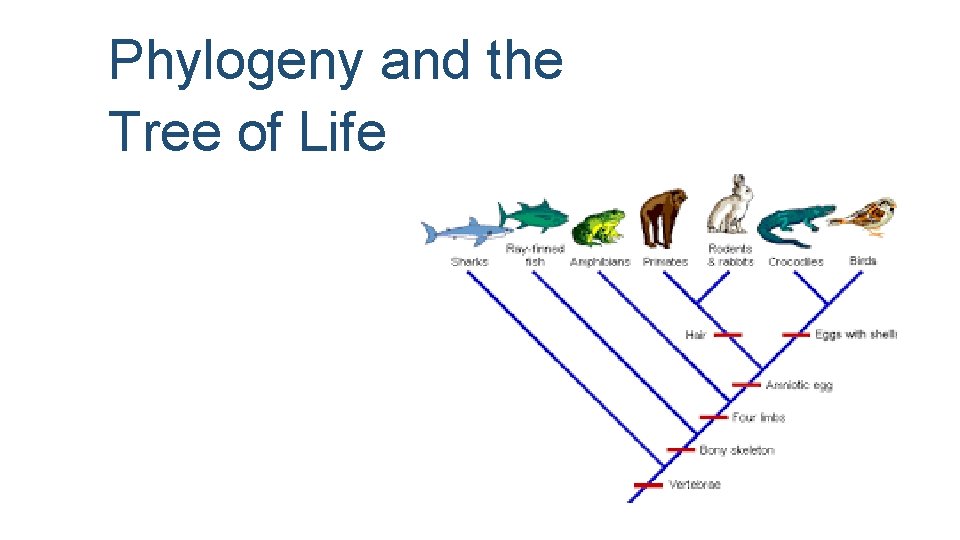
Phylogeny and the Tree of Life
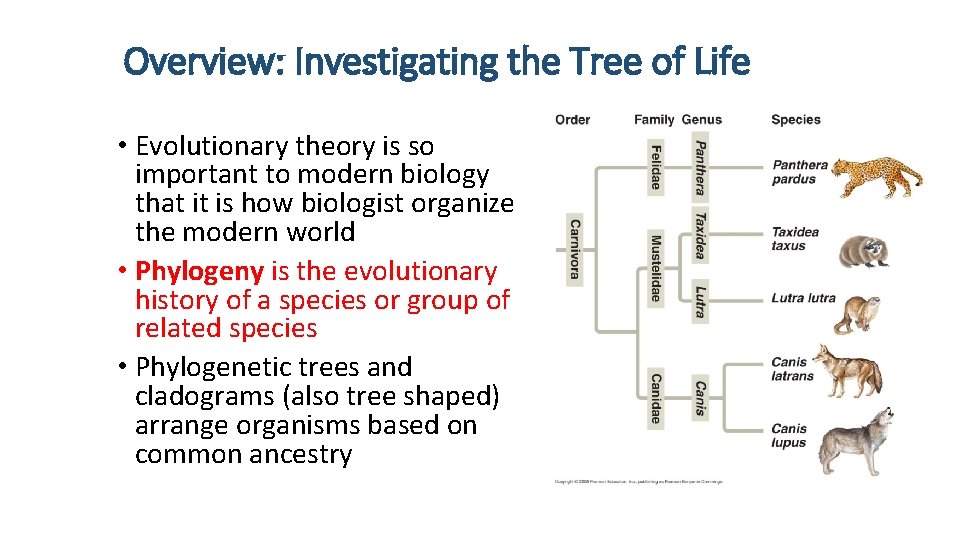
Overview: Investigating the Tree of Life • Evolutionary theory is so important to modern biology that it is how biologist organize the modern world • Phylogeny is the evolutionary history of a species or group of related species • Phylogenetic trees and cladograms (also tree shaped) arrange organisms based on common ancestry
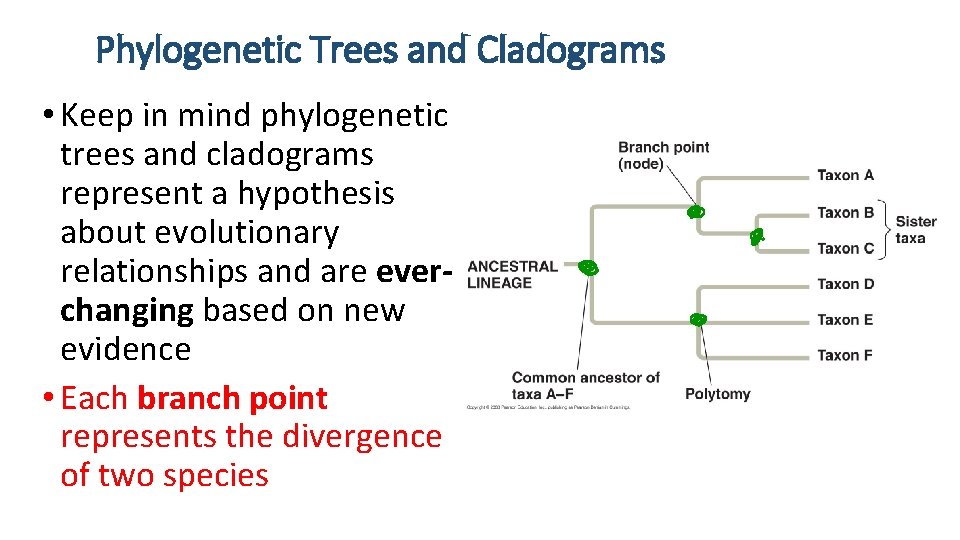
Phylogenetic Trees and Cladograms • Keep in mind phylogenetic trees and cladograms represent a hypothesis about evolutionary relationships and are everchanging based on new evidence • Each branch point represents the divergence of two species
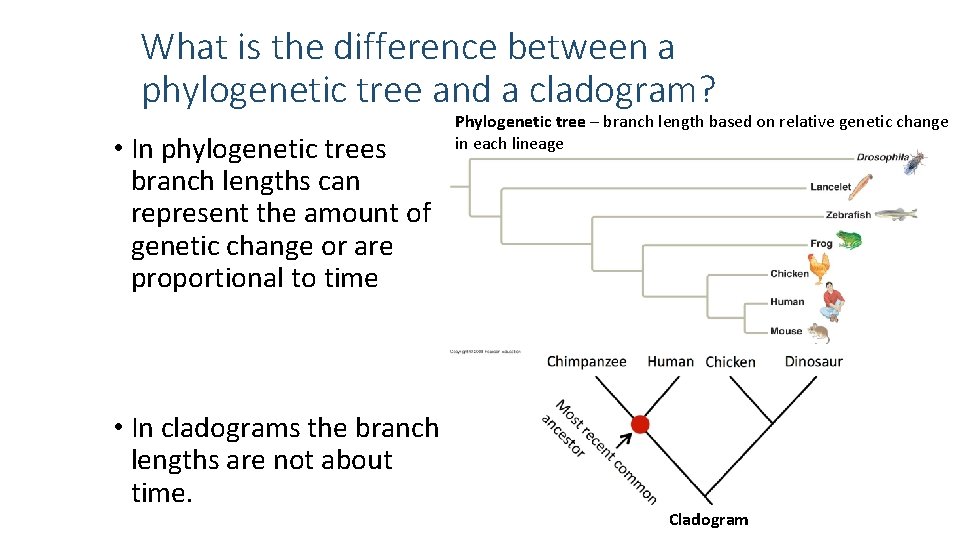
What is the difference between a phylogenetic tree and a cladogram? • In phylogenetic trees branch lengths can represent the amount of genetic change or are proportional to time • In cladograms the branch lengths are not about time. Phylogenetic tree – branch length based on relative genetic change in each lineage Cladogram
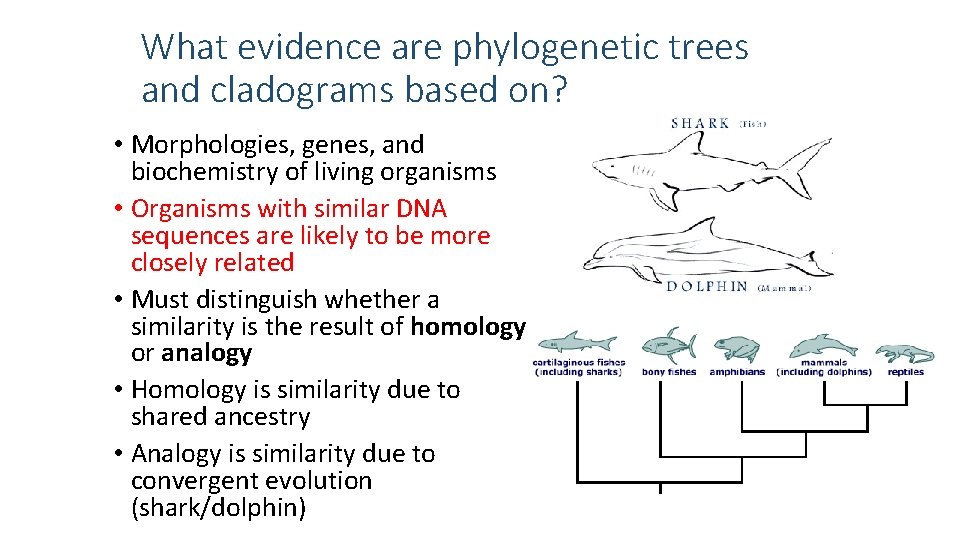
What evidence are phylogenetic trees and cladograms based on? • Morphologies, genes, and biochemistry of living organisms • Organisms with similar DNA sequences are likely to be more closely related • Must distinguish whether a similarity is the result of homology or analogy • Homology is similarity due to shared ancestry • Analogy is similarity due to convergent evolution (shark/dolphin)
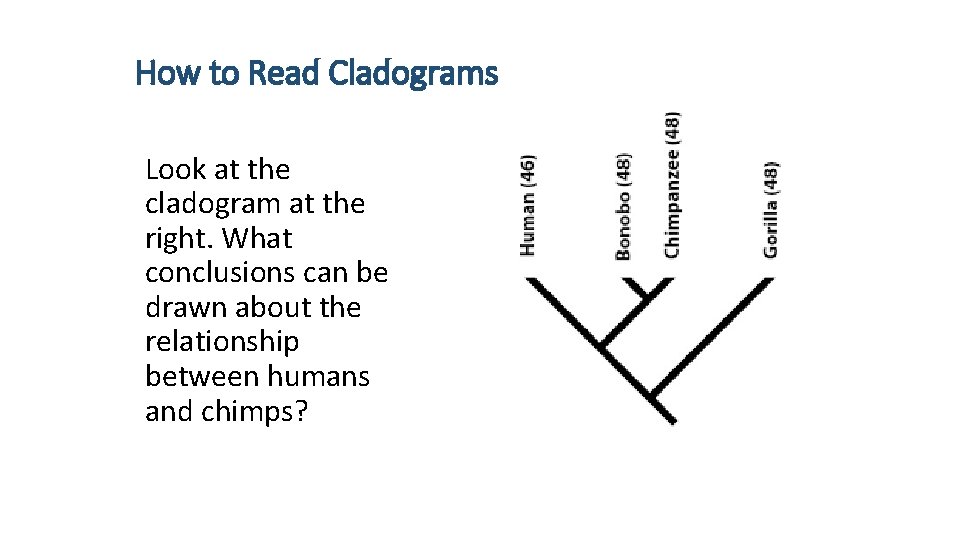
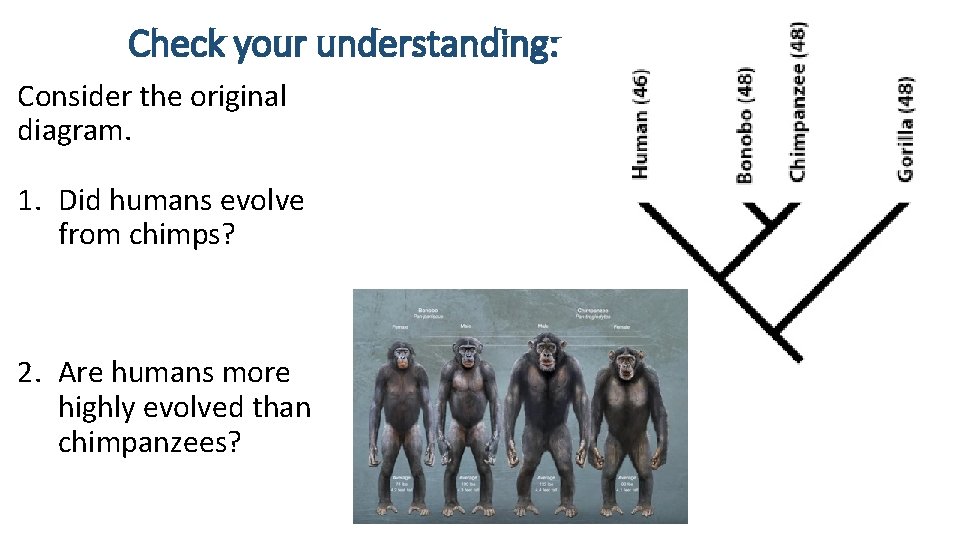
How to Read Cladograms Look at the cladogram at the right. What conclusions can be drawn about the relationship between humans and chimps?
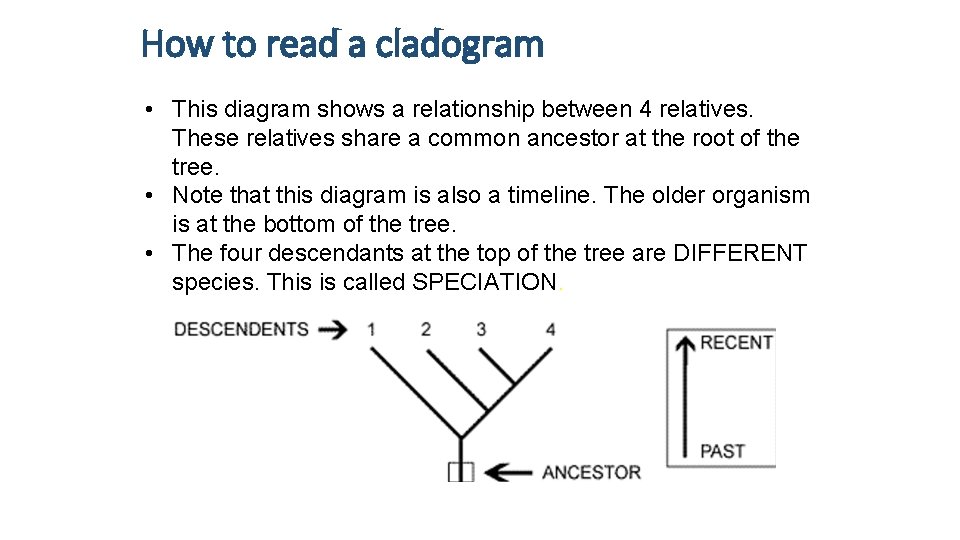
How to read a cladogram • This diagram shows a relationship between 4 relatives. These relatives share a common ancestor at the root of the tree. • Note that this diagram is also a timeline. The older organism is at the bottom of the tree. • The four descendants at the top of the tree are DIFFERENT species. This is called SPECIATION.
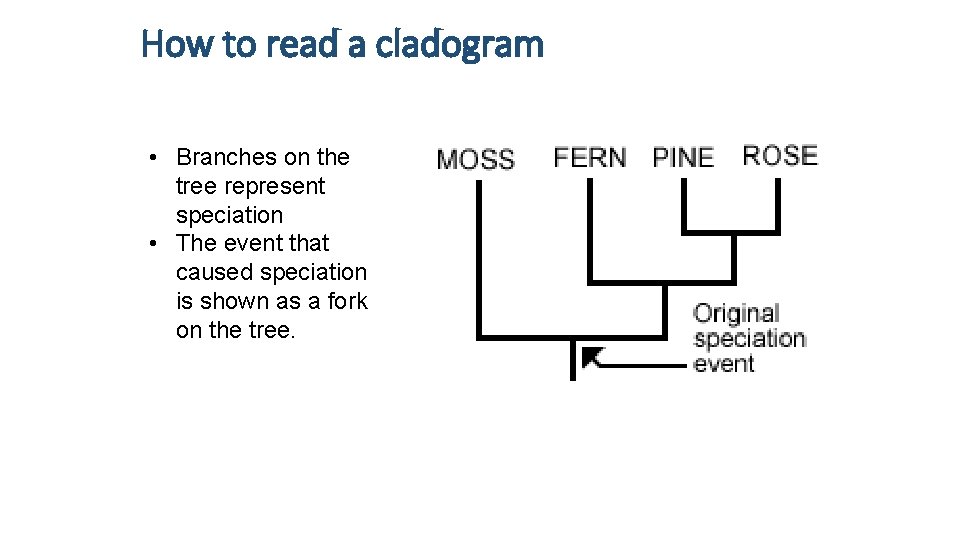
How to read a cladogram • Branches on the tree represent speciation • The event that caused speciation is shown as a fork on the tree.
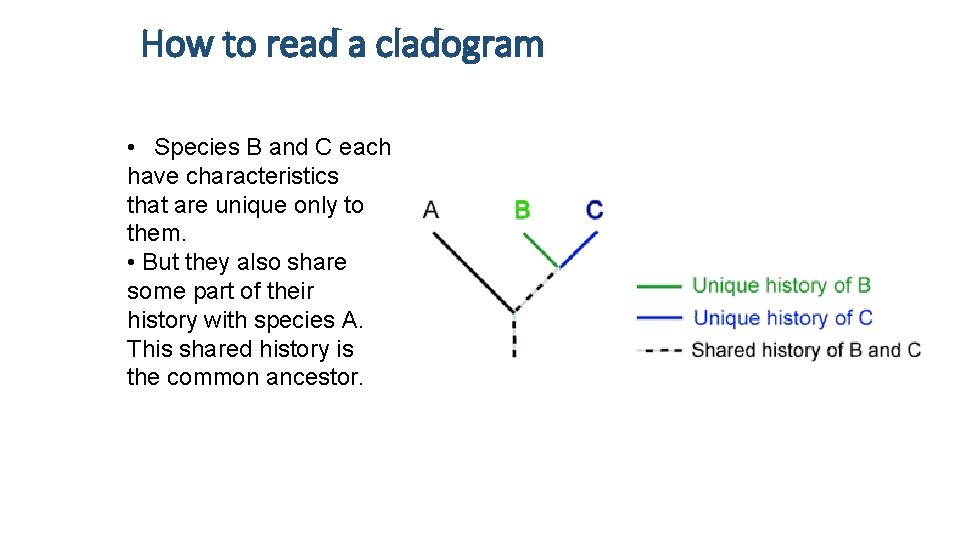
How to read a cladogram • Species B and C each have characteristics that are unique only to them. • But they also share some part of their history with species A. This shared history is the common ancestor.
Check your understanding: Consider the original diagram. 1. Did humans evolve from chimps? 2. Are humans more highly evolved than chimpanzees?