
Phylogeny and Embryonic development Biology What are other
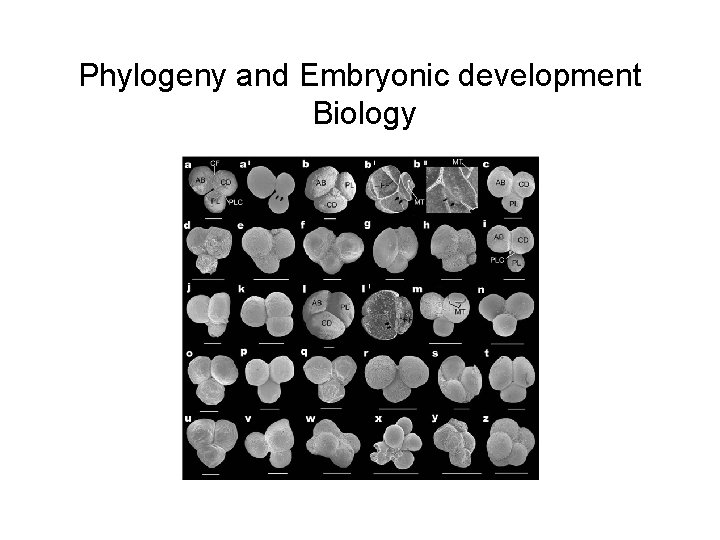
Phylogeny and Embryonic development Biology

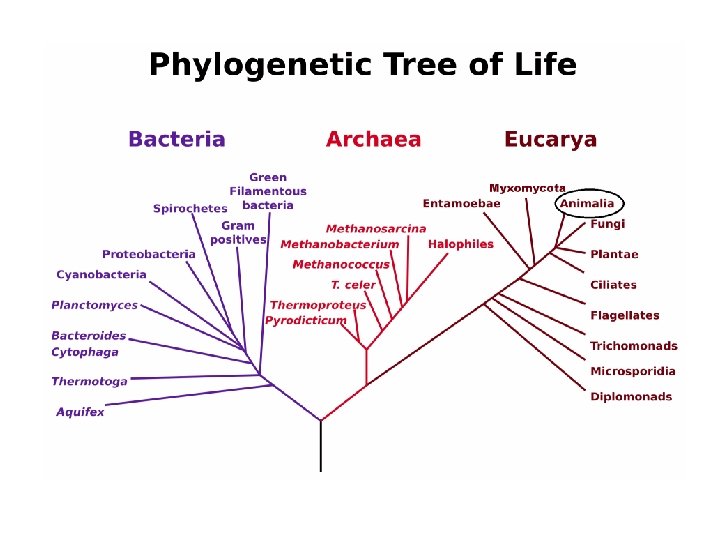
What are other ways organisms can be compared to determine their relatedness to one another? Morphology; homologous structures Mitochondrial DNA Shared derived characters
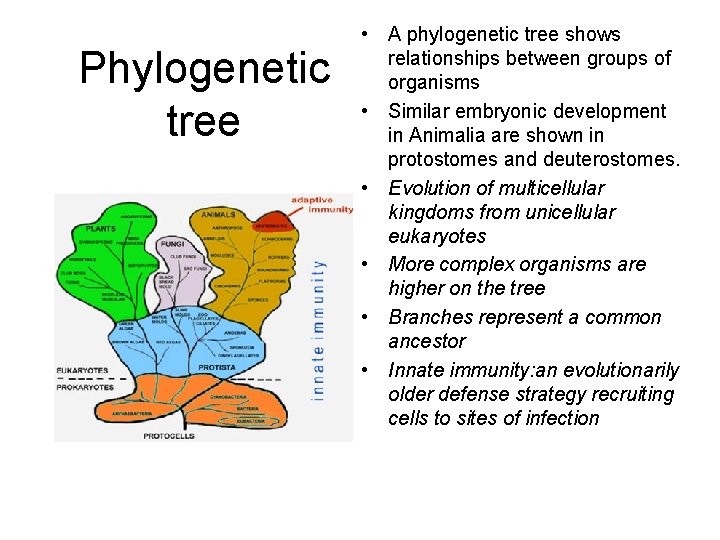
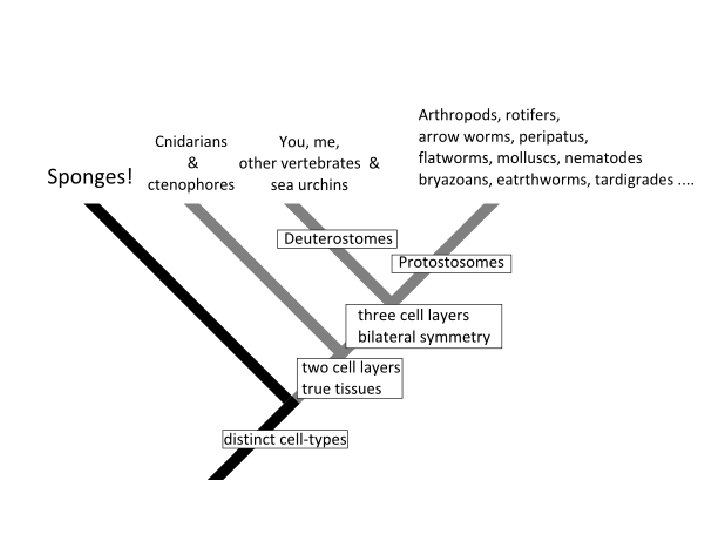
Phylogenetic tree • A phylogenetic tree shows relationships between groups of organisms • Similar embryonic development in Animalia are shown in protostomes and deuterostomes. • Evolution of multicellular kingdoms from unicellular eukaryotes • More complex organisms are higher on the tree • Branches represent a common ancestor • Innate immunity: an evolutionarily older defense strategy recruiting cells to sites of infection
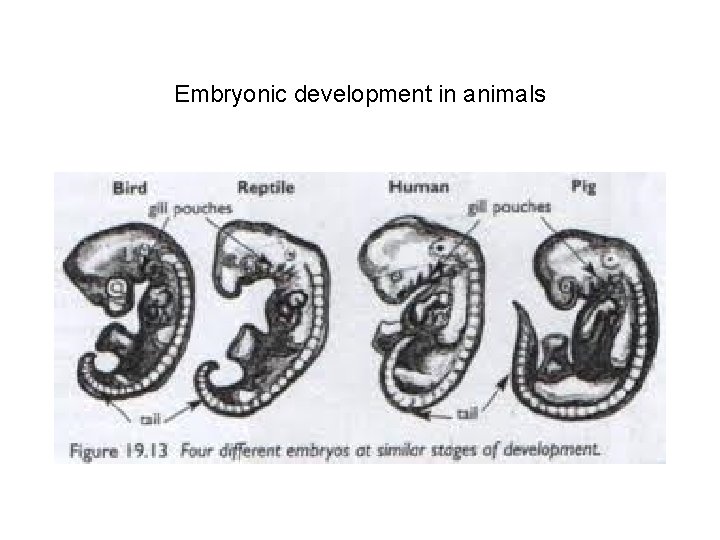
Embryonic development in animals
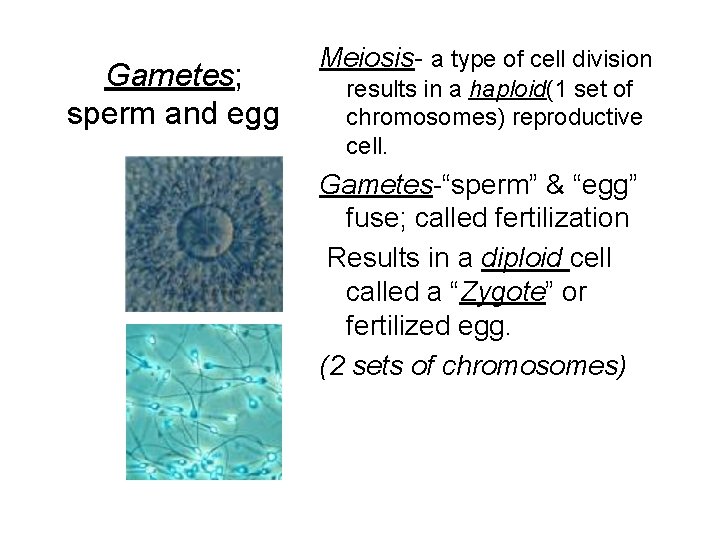
Gametes; sperm and egg Meiosis- a type of cell division results in a haploid(1 set of chromosomes) reproductive cell. Gametes-“sperm” & “egg” fuse; called fertilization Results in a diploid cell called a “Zygote” or fertilized egg. (2 sets of chromosomes)

Blastulation • Repeated cell divisions forms a blastula (undifferentiated ball of cells) • These are stem cells that will ultimately give rise to systems of cells ie nervous or musculoskeletal • Ends at 7 cell divisions (128 cells)
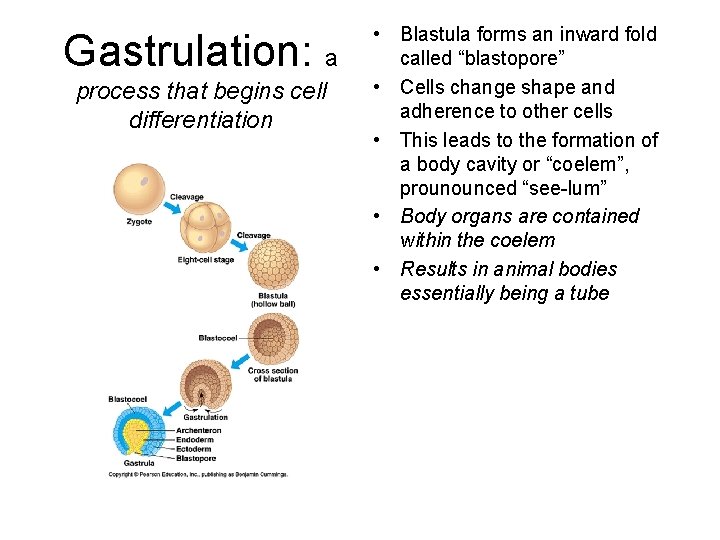
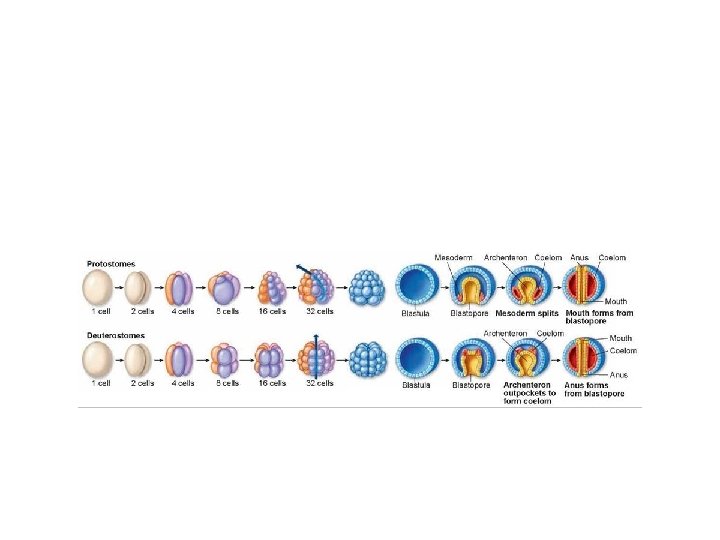
Gastrulation: a process that begins cell differentiation • Blastula forms an inward fold called “blastopore” • Cells change shape and adherence to other cells • This leads to the formation of a body cavity or “coelem”, prounounced “see-lum” • Body organs are contained within the coelem • Results in animal bodies essentially being a tube
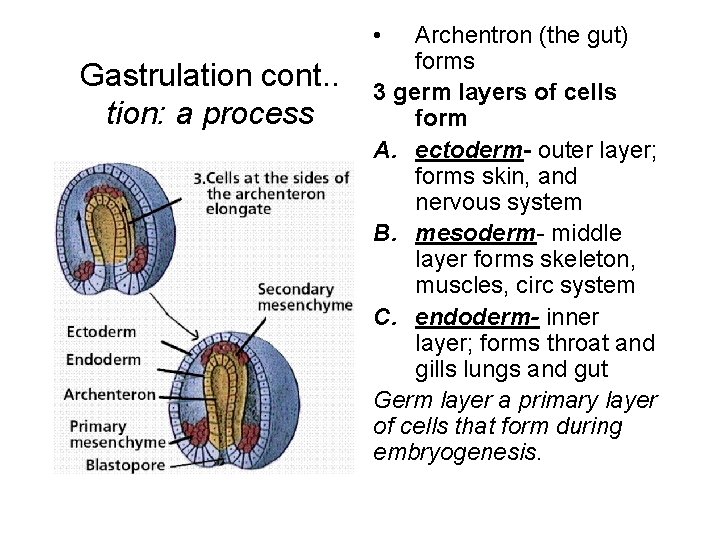
• Gastrulation cont. . tion: a process Archentron (the gut) forms 3 germ layers of cells form A. ectoderm- outer layer; forms skin, and nervous system B. mesoderm- middle layer forms skeleton, muscles, circ system C. endoderm- inner layer; forms throat and gills lungs and gut Germ layer a primary layer of cells that form during embryogenesis.
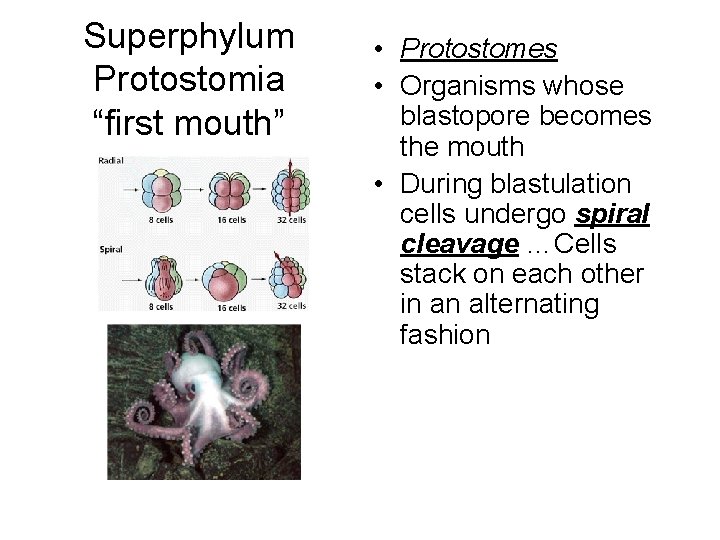
Superphylum Protostomia “first mouth” • Protostomes • Organisms whose blastopore becomes the mouth • During blastulation cells undergo spiral cleavage …Cells stack on each other in an alternating fashion
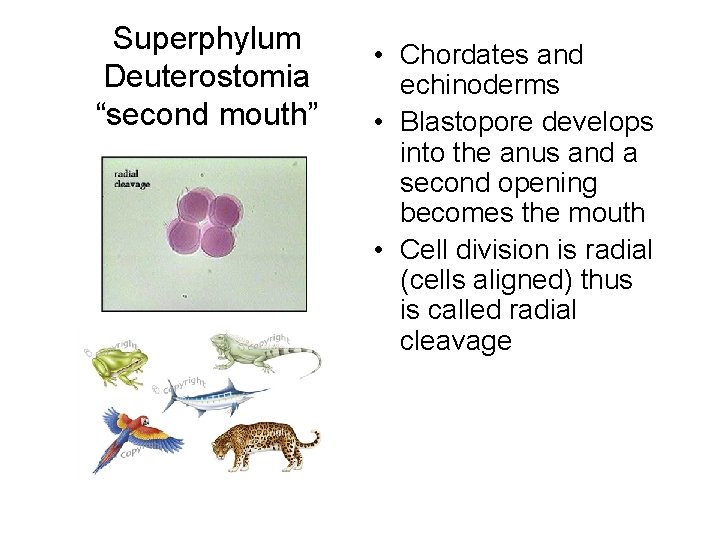
Superphylum Deuterostomia “second mouth” • Chordates and echinoderms • Blastopore develops into the anus and a second opening becomes the mouth • Cell division is radial (cells aligned) thus is called radial cleavage
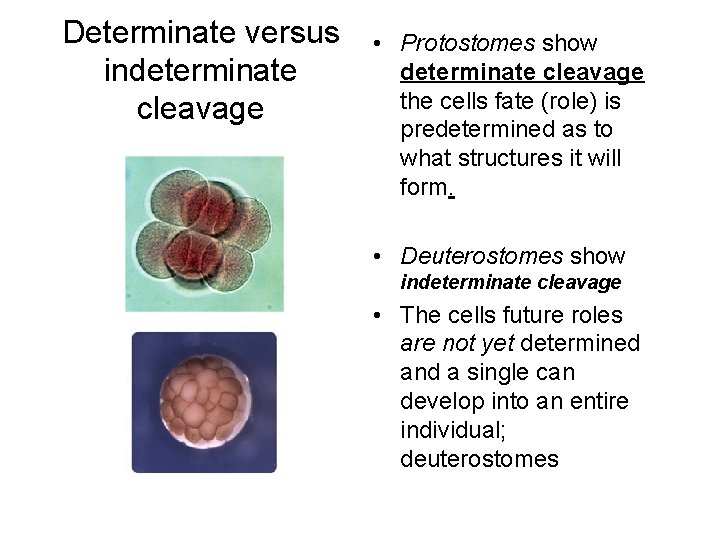
Determinate versus indeterminate cleavage • Protostomes show determinate cleavage the cells fate (role) is predetermined as to what structures it will form. • Deuterostomes show indeterminate cleavage • The cells future roles are not yet determined and a single can develop into an entire individual; deuterostomes
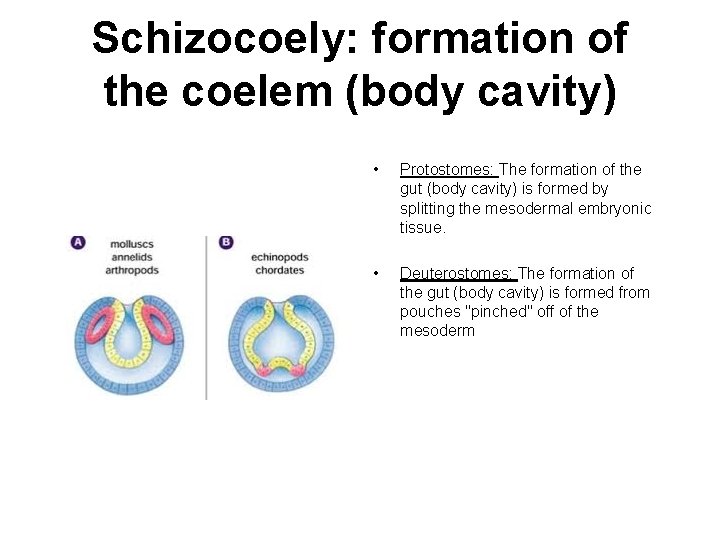
Schizocoely: formation of the coelem (body cavity) • Protostomes: The formation of the gut (body cavity) is formed by splitting the mesodermal embryonic tissue. • Deuterostomes: The formation of the gut (body cavity) is formed from pouches "pinched" off of the mesoderm
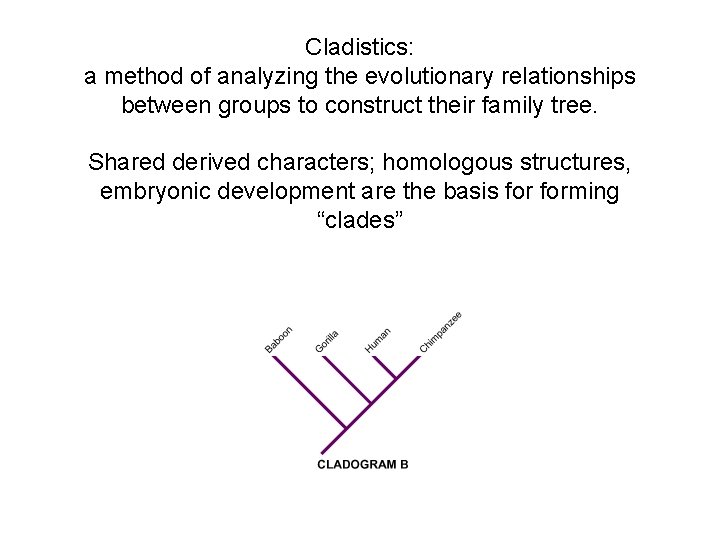
Cladistics: a method of analyzing the evolutionary relationships between groups to construct their family tree. Shared derived characters; homologous structures, embryonic development are the basis forming “clades”
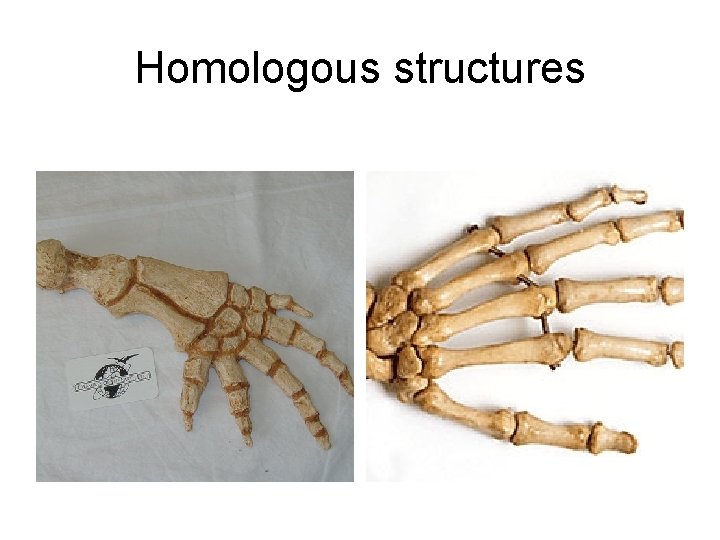
Homologous structures
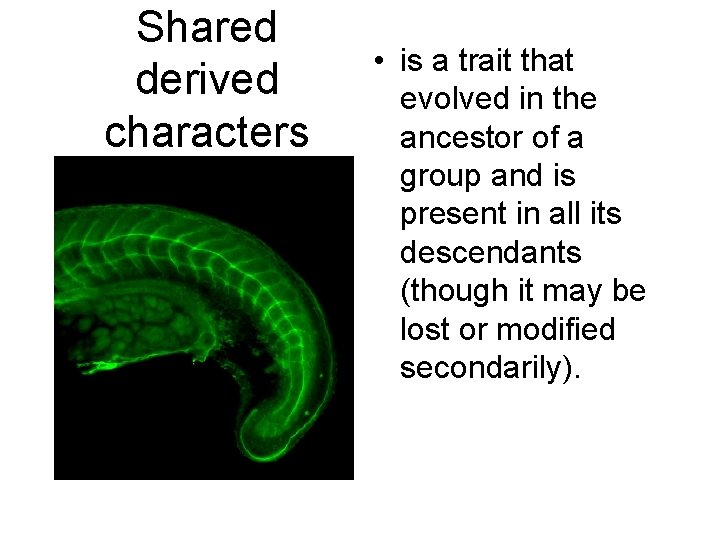
Shared derived characters • is a trait that evolved in the ancestor of a group and is present in all its descendants (though it may be lost or modified secondarily).
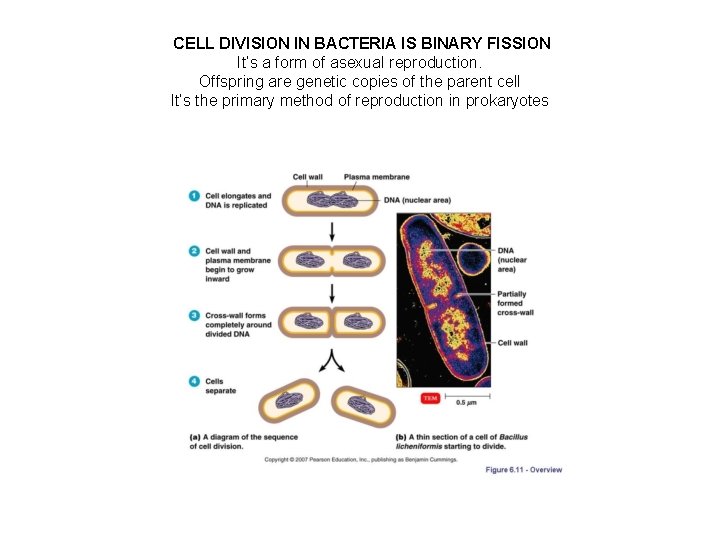
CELL DIVISION IN BACTERIA IS BINARY FISSION It’s a form of asexual reproduction. Offspring are genetic copies of the parent cell It’s the primary method of reproduction in prokaryotes
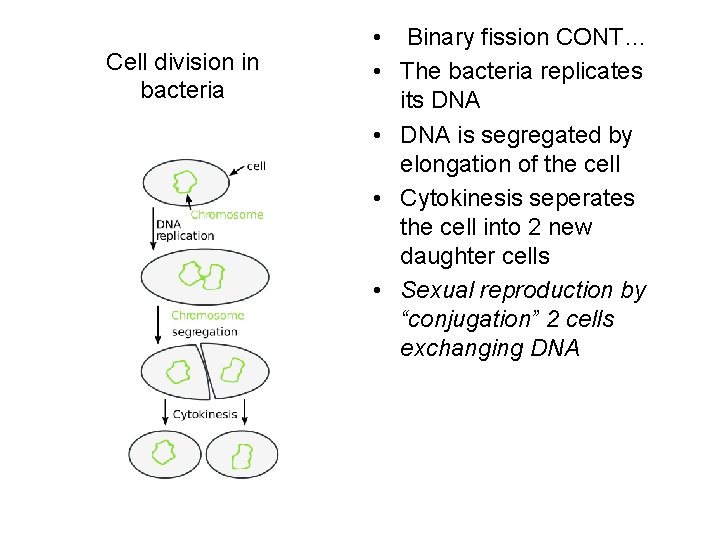
Cell division in bacteria • Binary fission CONT… • The bacteria replicates its DNA • DNA is segregated by elongation of the cell • Cytokinesis seperates the cell into 2 new daughter cells • Sexual reproduction by “conjugation” 2 cells exchanging DNA
- Slides: 20