
Phylogenies and the Tree of Life Basic Principles
Phylogenies and the Tree of Life Basic Principles of Phylogenetics Parsimony - Distance - Likelihood Topologies - Super Trees - Testing Networks Challenges Empirical Investigations: Molecular Clock Biochemical rates Selection Strength Tree shapes Branching Patterns Rootings Open Questions
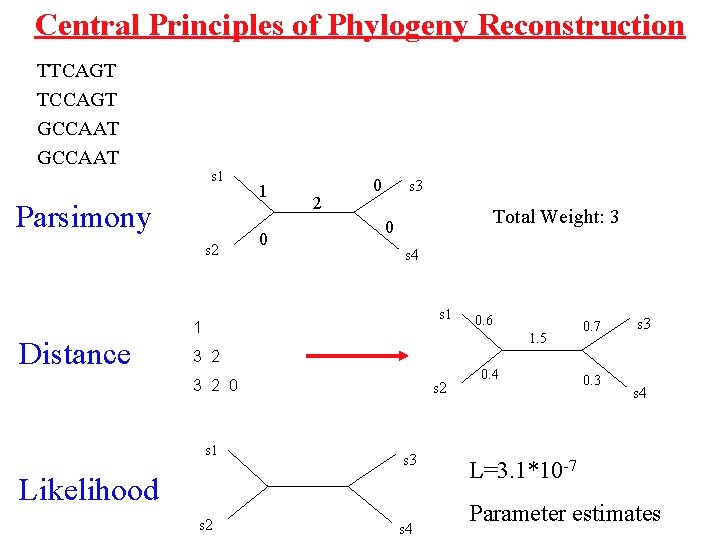
Central Principles of Phylogeny Reconstruction TTCAGT TCCAGT GCCAAT s 1 Parsimony s 2 Distance 1 0 2 0 s 3 Total Weight: 3 0 s 4 s 1 1 0. 6 1. 5 0. 7 s 3 3 2 0 s 1 s 2 s 3 Likelihood s 2 s 4 0. 3 s 4 L=3. 1*10 -7 Parameter estimates
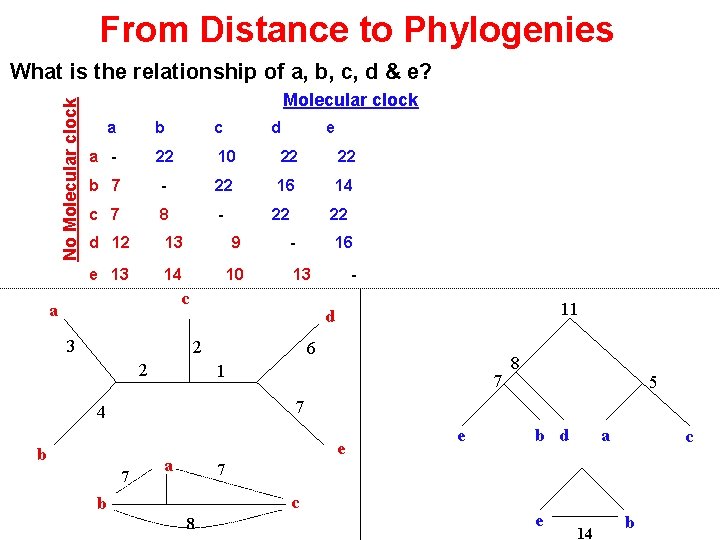
From Distance to Phylogenies No Molecular clock What is the relationship of a, b, c, d & e? Molecular clock a b c d e a - 22 10 22 22 b 7 - 22 16 14 c 7 8 - 22 d 12 13 9 e 13 14 10 22 - 16 13 c a 3 - 11 d 2 2 6 1 7 8 5 7 4 b 7 e a e b d a c 7 c b 8 e 14 b
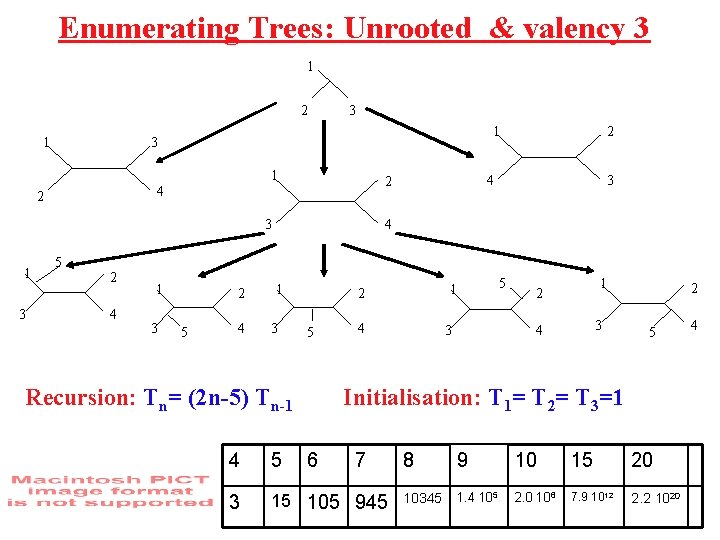
Enumerating Trees: Unrooted & valency 3 1 2 1 3 1 2 3 3 4 3 1 4 2 5 2 4 1 3 2 5 4 1 3 5 Recursion: Tn= (2 n-5) Tn-1 5 1 2 4 3 1 2 3 4 2 5 Initialisation: T 1= T 2= T 3=1 4 5 6 7 3 15 105 945 8 9 10 15 20 10345 1. 4 105 2. 0 106 7. 9 1012 2. 2 1020 4
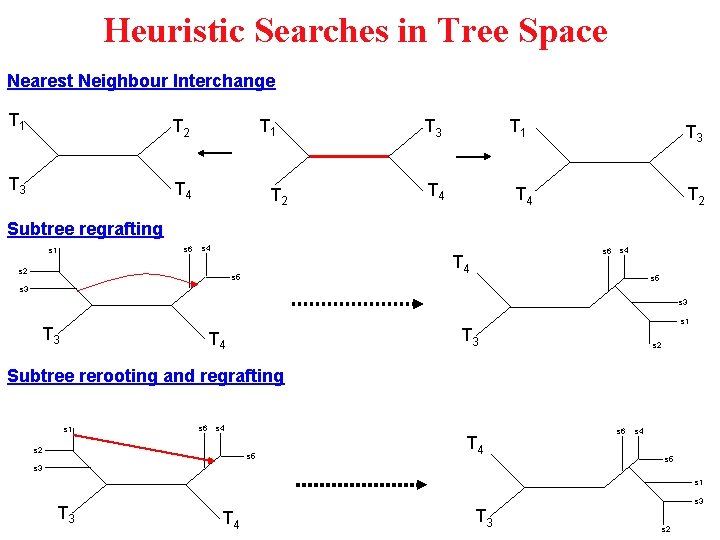
Heuristic Searches in Tree Space Nearest Neighbour Interchange T 1 T 2 T 3 T 4 T 1 T 2 T 3 T 1 T 4 T 3 T 4 T 2 Subtree regrafting s 6 s 1 s 4 s 2 s 6 T 4 s 5 s 3 s 3 T 3 s 1 T 3 T 4 s 2 Subtree rerooting and regrafting s 1 s 6 s 4 s 2 s 5 T 4 s 3 s 6 s 4 s 5 s 1 T 3 T 4 T 3 s 2
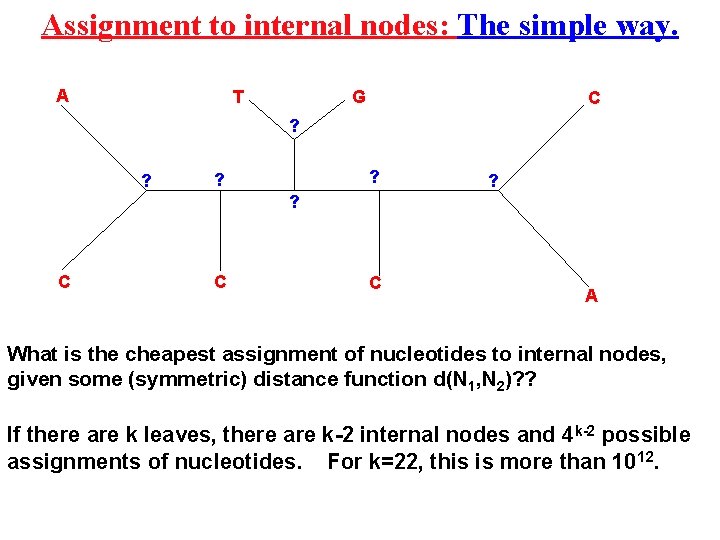
Assignment to internal nodes: The simple way. A G T C ? ? ? ? C C C A What is the cheapest assignment of nucleotides to internal nodes, given some (symmetric) distance function d(N 1, N 2)? ? If there are k leaves, there are k-2 internal nodes and 4 k-2 possible assignments of nucleotides. For k=22, this is more than 10 12.
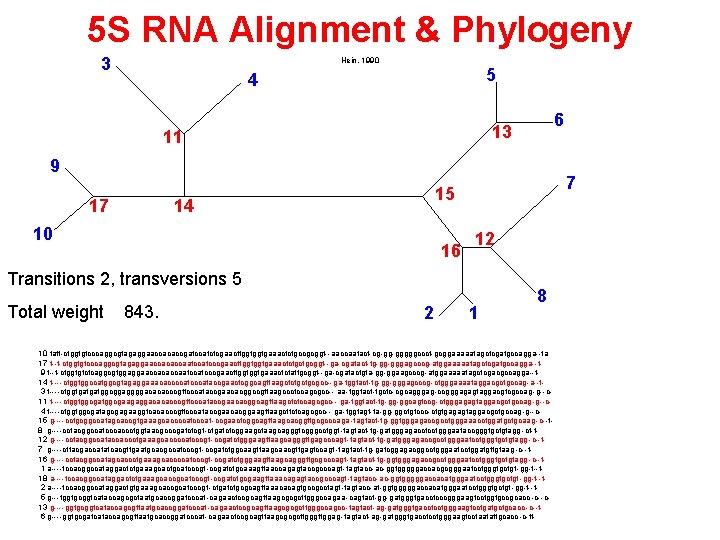
5 S RNA Alignment & Phylogeny 3 Hein, 1990 5 4 6 13 11 9 17 7 15 14 10 16 12 Transitions 2, transversions 5 Total weight 843. 2 1 8 10 tatt-ctggtgtcccaggcgtagaggaaccacaccgatccatctcgaacttggtggtgaaactctgccgcggt--aaccaatact-cg-gg-gggggccct-gcggaaaaatagctcgatgccagga--ta 17 t--t-ctggtgtcccaggcgtagaggaaccacaccaatcccgaacttggtggtgaaactctgctgcggt--ga-cgatact-tg-gg-gggagcccg-atggaaaaatagctcgatgccagga--t 9 t--t-ctggtgtctcaggcgtggaggaaccacaccaatcccgaacttggtggtgaaactctattgcggt--ga-cgatactgta-gg-ggaagcccg-atggaaaaatagctcgacgccagga--t 14 t----ctggtggccatggcgtagaggaaacaccccataccgaactcggcagttaagctctgctgcgcc--ga-tggtact-tg-gg-gggagcccg-ctgggaaaataggacgctgccag-a--t 3 t----ctggtgatgatggcggaggggacacacccgttcccataccgaacacggccgttaagccctccagcgcc-- aa-tggtact-tgctc-cgcagggag-ccgggagagtaggacgtcgccag -g--c 11 t----ctggtggcgaagaggacacacccgttcccataccgaacacggcagttaagctctccagcgcc-- ga-tggtact-tg-gg-ggcagtccg-ctgggagagtaggacgctgccag -g--c 4 t----ctggtggcgatagcgagaaggtcacacccgttcccataccgaacacggaagttaagcttctcagcgcc-- ga-tggtagt-ta-gg-ggctgtccc-ctgtgagagtaggacgctgccag -g--c 15 g----cctgcggccatagcaccgtgaaagcaccccat -ccgaactcggcagttaagcacggttgcgcccaga -tagtact-tg-ggtgggagaccgcctgggaaacctggatgctgcaag -c--t 8 g----cctacggccatcccaccctggtaacgcccgatctcgt -ctgatctcggaagctaagcagggtcgggcctggt -tagtact-tg-gatgggagacctcctgggaataccgggtgctgtagg -ct-t 12 g----cctacggccataccaccctgaaagcaccccatcccgt -ccgatctgggaagttaagcagggttgagcccagt -tagtact-tg-gatgggagaccgcctgggaatcctgggtgctgtagg -c--t 7 g----cttacgaccatatcacgttgaatgcacgccatcccgt -ccgatctggcaagttaagcaacgttgagtccagt -tagtact-tg-gatcggagacggcctgggaatcctggatgttgtaag -c--t 16 g----cctacggccatagcaccctgaaagcaccccatcccgt -ccgatctgggaagttaagcagggttgcgcccagt -tagtact-tg-ggtgggagaccgcctgggaatcctgggtgctgtagg -c--t 1 a----tccacggccataggactctgaaagcactgcatcccgt -ccgatctgcaaagttaaccagagtaccgcccagt -tagtacc-ac-ggtgggggaccacgcgggaatcctgggtgctgt -gg-t--t 18 a----tccacggccataggactctgaaagcaccgcatcccgt -ccgatctgcgaagttaaacagagtaccgcccagt -tagtacc-ac-ggtgggggaccacatgggaatcctgggtgctgt -gg-t--t 2 a----tccacggccataggactgtgaaagcaccgcatcccgt -ctgatctgcgcagttaaacacagtgccgcctagt -tagtacc-at-ggtgggggaccacatgggaatcctgggtgctgt -gg-t--t 5 g---tggtgcggtcataccagcgctaatgcaccggatcccat -cagaactccgcagttaagcgcgcttgggccagaa -cagtact-gg-gatgggtgacctcccgggaagtcctggtgccgcacc -c--c 13 g----ggtgcggtcataccagcgttaatgcaccggatcccat -cagaactccgcagttaagcgcgcttgggccagcc -tagtact-ag-gatgggtgacctcctgggaagtcctgatgctgcacc -c--t 6 g----ggtgcgatcataccagcgttaatgcaccggatcccat -cagaactccgcagttaagcgcgcttgggttggag -tagtact-ag-gatgggtgacctcctgggaagtcctaatattgcacc -c-tt-
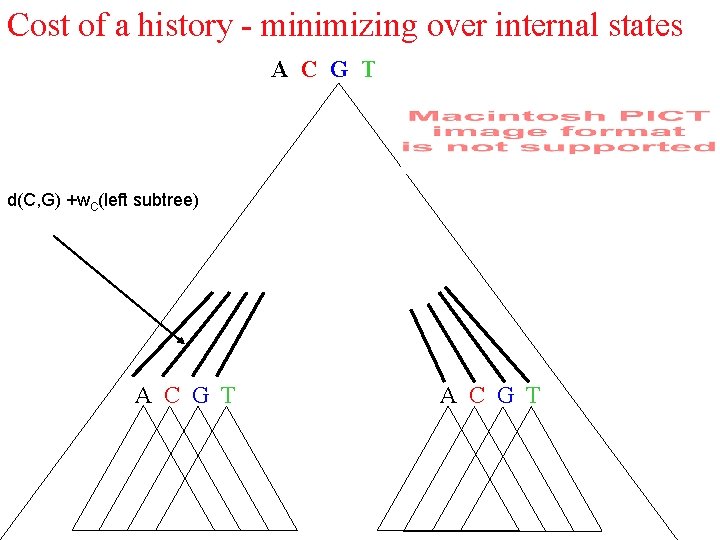
Cost of a history - minimizing over internal states A C G T d(C, G) +w. C(left subtree) A C G T
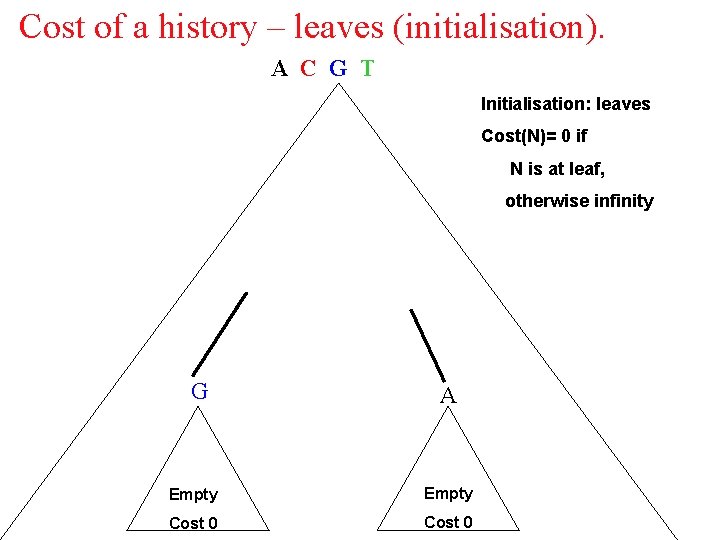
Cost of a history – leaves (initialisation). A C G T Initialisation: leaves Cost(N)= 0 if N is at leaf, otherwise infinity G A Empty Cost 0
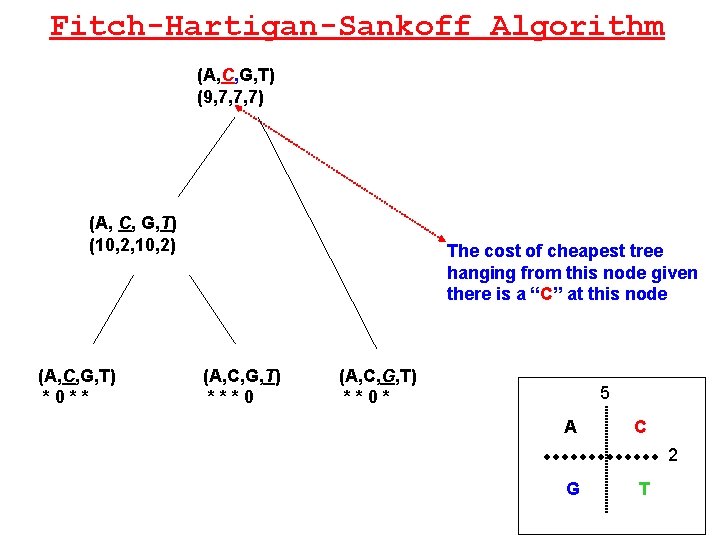
Fitch-Hartigan-Sankoff Algorithm (A, C, G, T) (9, 7, 7, 7) (A, C, G, T) (10, 2, 10, 2) (A, C, G, T) *0** The cost of cheapest tree hanging from this node given there is a “C” at this node (A, C, G, T) ***0 (A, C, G, T) **0* 5 A C 2 G T
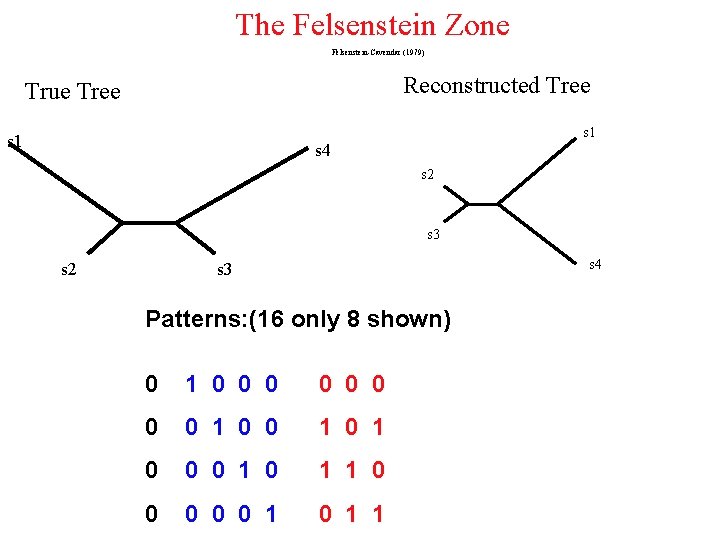
The Felsenstein Zone Felsenstein-Cavendar (1979) Reconstructed Tree True Tree s 1 s 4 s 2 s 3 s 2 s 4 s 3 Patterns: (16 only 8 shown) 0 1 0 0 0 0 1 0 0 0 1 1
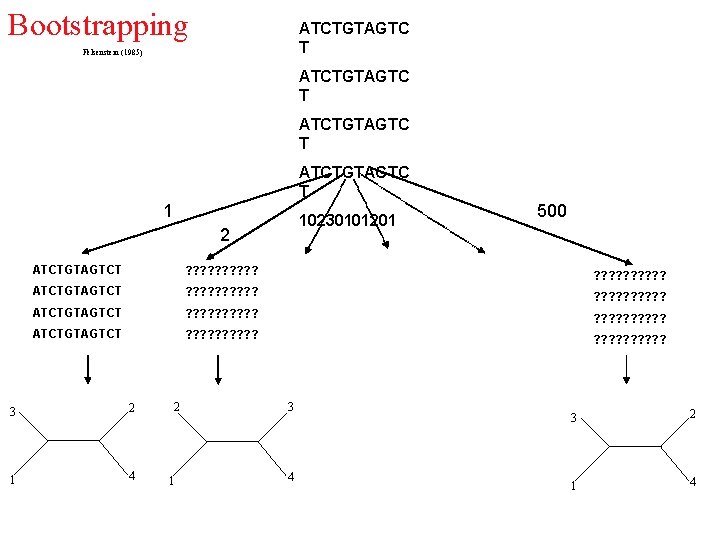
Bootstrapping ATCTGTAGTC T Felsenstein (1985) ATCTGTAGTC T 1 10230101201 2 500 ATCTGTAGTCT ? ? ? ? ? ? ? ? ? ? ? ? ? ? ? ? ? ? ? ? 3 2 1 4 2 1 3 4 3 2 1 4
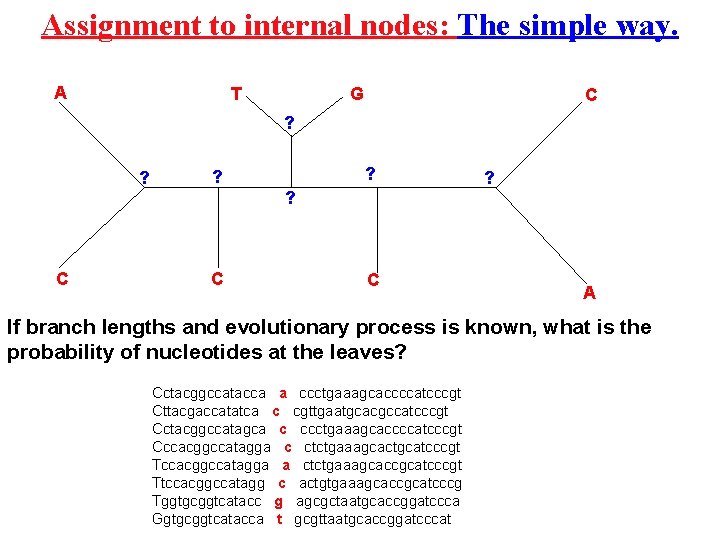
Assignment to internal nodes: The simple way. A G T C ? ? ? ? C C C A If branch lengths and evolutionary process is known, what is the probability of nucleotides at the leaves? Cctacggccatacca a ccctgaaagcaccccatcccgt Cttacgaccatatca c cgttgaatgcacgccatcccgt Cctacggccatagca c ccctgaaagcaccccatcccgt Cccacggccatagga c ctctgaaagcactgcatcccgt Tccacggccatagga a ctctgaaagcaccgcatcccgt Ttccacggccatagg c actgtgaaagcaccgcatcccg Tggtgcggtcatacc g agcgctaatgcaccggatccca Ggtgcggtcatacca t gcgttaatgcaccggatcccat
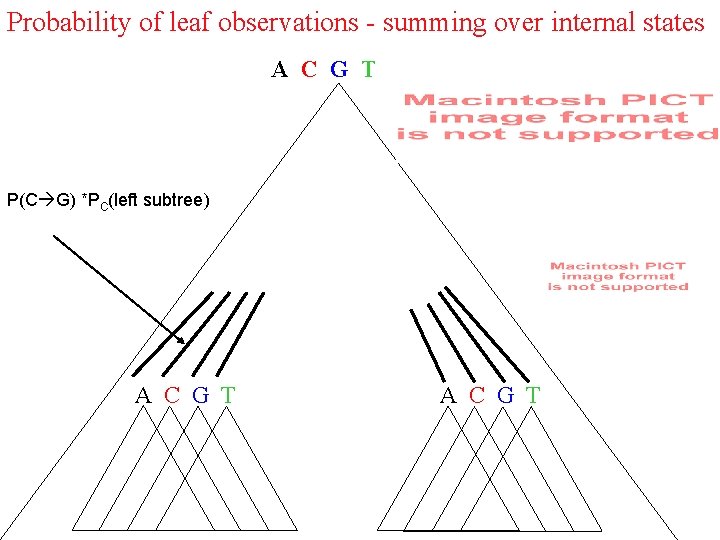
Probability of leaf observations - summing over internal states A C G T P(C G) *PC(left subtree) A C G T
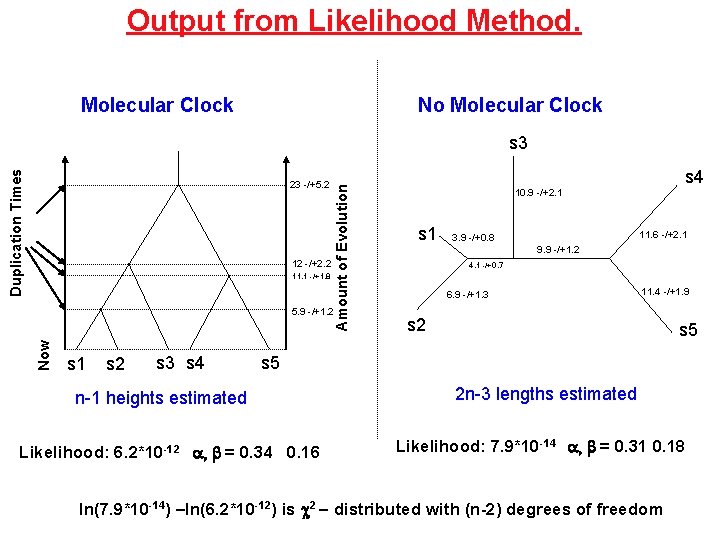
Output from Likelihood Method. Molecular Clock No Molecular Clock 23 -/+5. 2 12 -/+2. 2 11. 1 -/+1. 8 Amount of Evolution Duplication Times s 3 Now 5. 9 -/+1. 2 s 1 s 2 s 3 s 4 10. 9 -/+2. 1 s 1 11. 6 -/+2. 1 3. 9 -/+0. 8 9. 9 -/+1. 2 4. 1 -/+0. 7 6. 9 -/+1. 3 11. 4 -/+1. 9 s 2 s 5 n-1 heights estimated Likelihood: 6. 2*10 -12 = 0. 34 0. 16 2 n-3 lengths estimated Likelihood: 7. 9*10 -14 = 0. 31 0. 18 ln(7. 9*10 -14) –ln(6. 2*10 -12) is 2 – distributed with (n-2) degrees of freedom
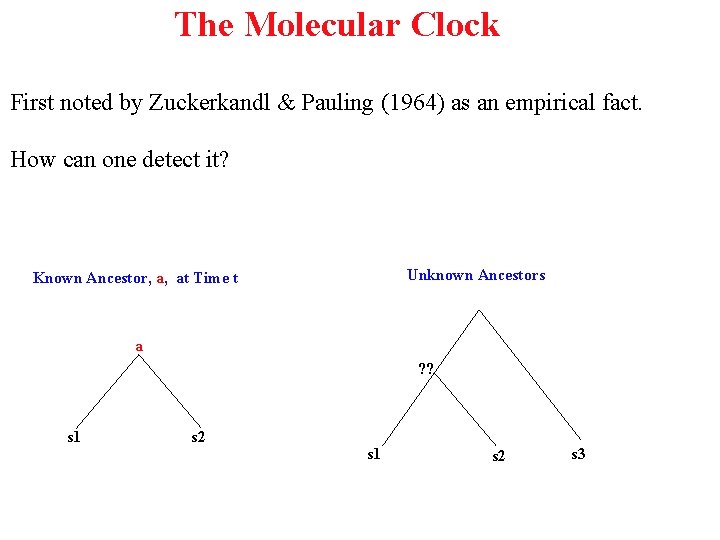
The Molecular Clock First noted by Zuckerkandl & Pauling (1964) as an empirical fact. How can one detect it? Unknown Ancestors Known Ancestor, a, at Time t a ? ? s 1 s 2 s 3
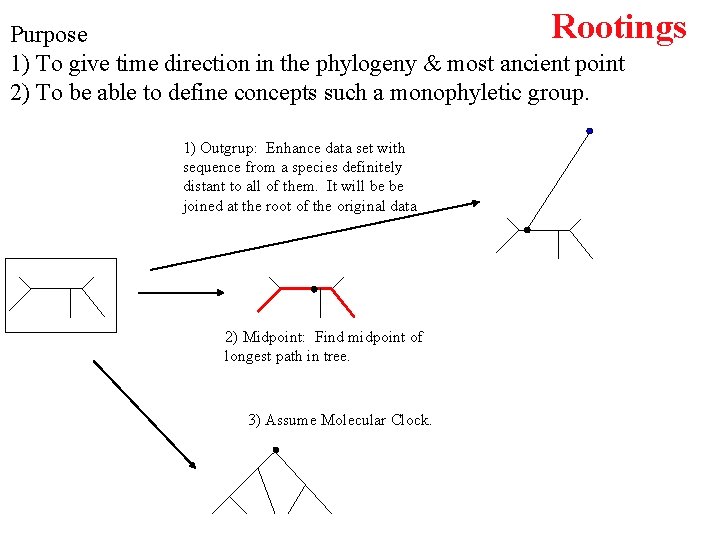
Rootings Purpose 1) To give time direction in the phylogeny & most ancient point 2) To be able to define concepts such a monophyletic group. 1) Outgrup: Enhance data set with sequence from a species definitely distant to all of them. It will be be joined at the root of the original data 2) Midpoint: Find midpoint of longest path in tree. 3) Assume Molecular Clock.
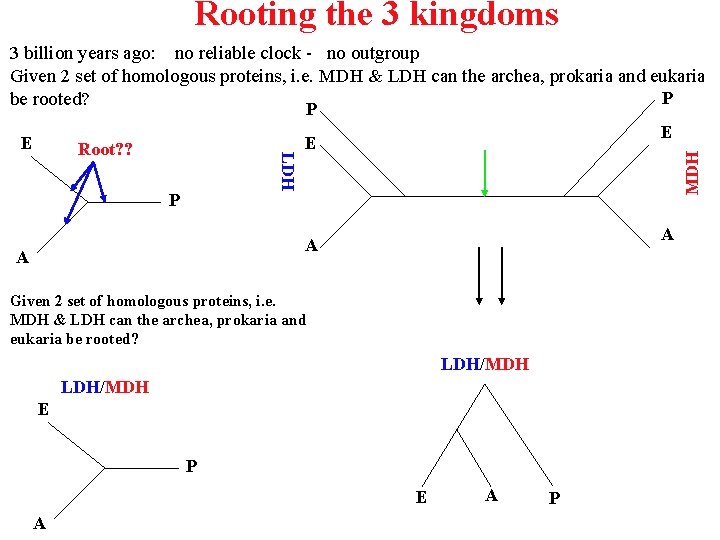
Rooting the 3 kingdoms 3 billion years ago: no reliable clock - no outgroup Given 2 set of homologous proteins, i. e. MDH & LDH can the archea, prokaria and eukaria P be rooted? P LDH Root? ? P E E MDH E A A A Given 2 set of homologous proteins, i. e. MDH & LDH can the archea, prokaria and eukaria be rooted? LDH/MDH E P E A A P
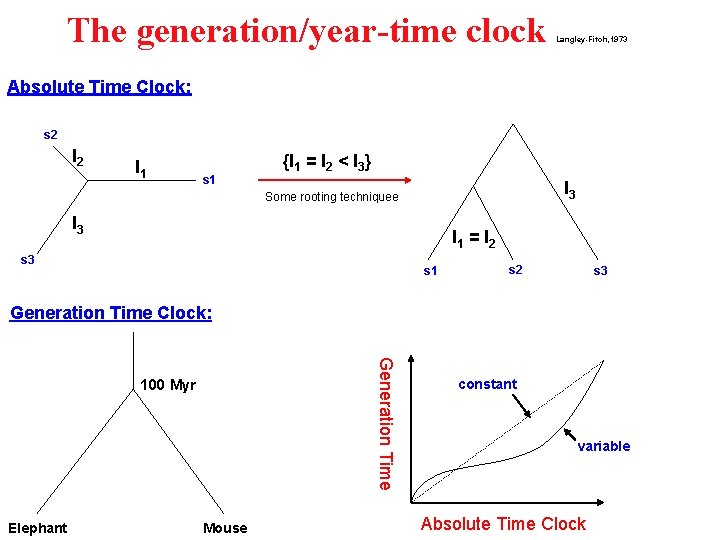
The generation/year-time clock Langley-Fitch, 1973 Absolute Time Clock: s 2 l 1 s 1 {l 1 = l 2 < l 3} l 3 Some rooting techniquee l 3 l 1 = l 2 s 3 s 1 s 2 s 3 Generation Time Clock: Generation Time 100 Myr Elephant Mouse constant variable Absolute Time Clock
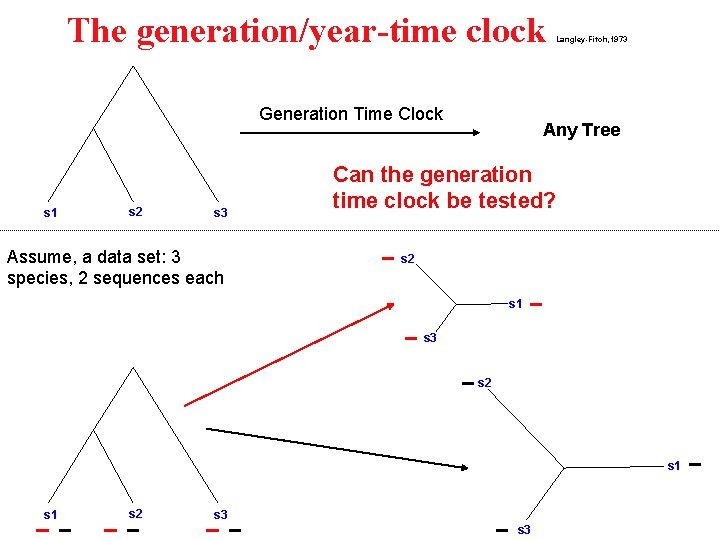
The generation/year-time clock Generation Time Clock s 1 s 2 s 3 Assume, a data set: 3 species, 2 sequences each Langley-Fitch, 1973 Any Tree Can the generation time clock be tested? s 2 s 1 s 3 s 2 s 1 s 2 s 3
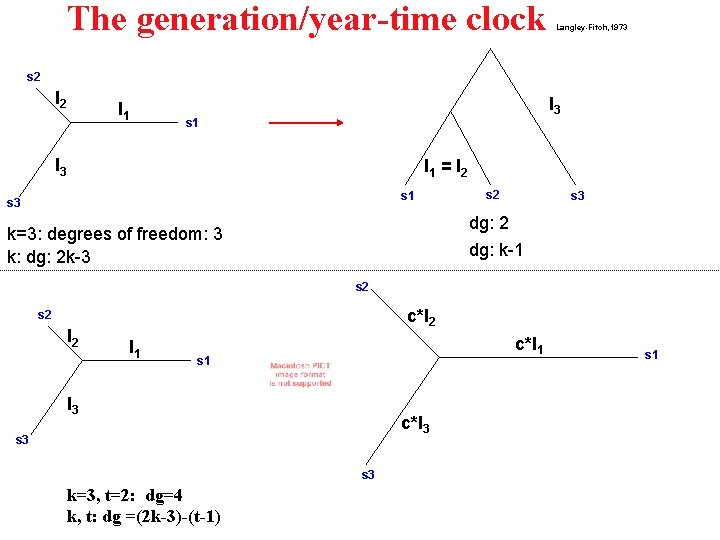
The generation/year-time clock Langley-Fitch, 1973 s 2 l 1 l 3 s 1 l 3 l 1 = l 2 s 1 s 3 s 2 s 3 dg: 2 k=3: degrees of freedom: 3 k: dg: 2 k-3 dg: k-1 s 2 c*l 2 s 2 l 1 c*l 1 s 1 l 3 c*l 3 s 3 k=3, t=2: dg=4 k, t: dg =(2 k-3)-(t-1) s 1
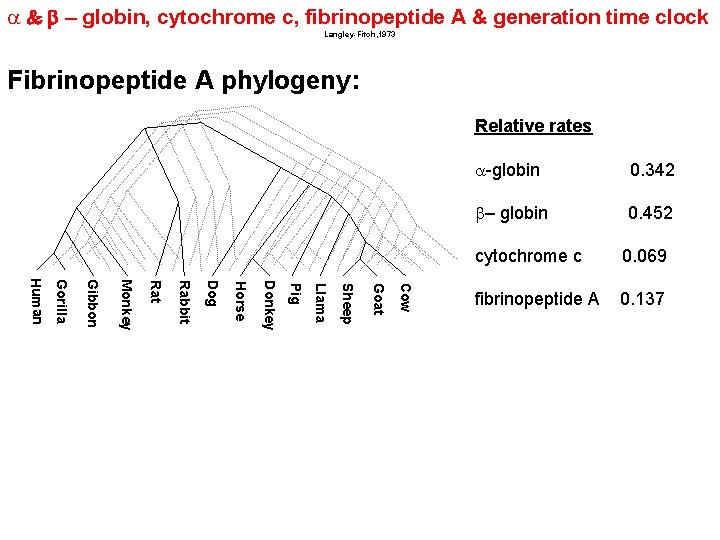
a & – globin, cytochrome c, fibrinopeptide A & generation time clock Langley-Fitch, 1973 Fibrinopeptide A phylogeny: Relative rates a-globin 0. 342 b– globin 0. 452 Cow Goat Sheep Llama Pig Donkey Horse Dog Rabbit Rat Monkey Gibbon Gorilla Human cytochrome c 0. 069 fibrinopeptide A 0. 137
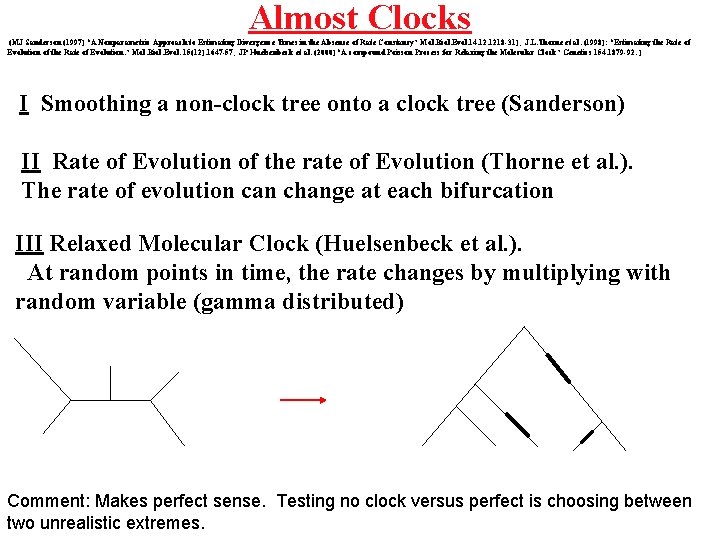
Almost Clocks (MJ Sanderson (1997) “A Nonparametric Approach to Estimating Divergence Times in the Absence of Rate Constancy” Mol. Biol. Evol. 14. 1218 -31), J. L. Thorne et al. (1998): “Estimating the Rate of Evolution of the Rate of Evolution. ” Mol. Biol. Evol. 15(12). 1647 -57, JP Huelsenbeck et al. (2000) “A compound Poisson Process for Relaxing the Molecular Clock” Genetics 154. 1879 -92. ) I Smoothing a non-clock tree onto a clock tree (Sanderson) II Rate of Evolution of the rate of Evolution (Thorne et al. ). The rate of evolution can change at each bifurcation III Relaxed Molecular Clock (Huelsenbeck et al. ). At random points in time, the rate changes by multiplying with random variable (gamma distributed) Comment: Makes perfect sense. Testing no clock versus perfect is choosing between two unrealistic extremes.
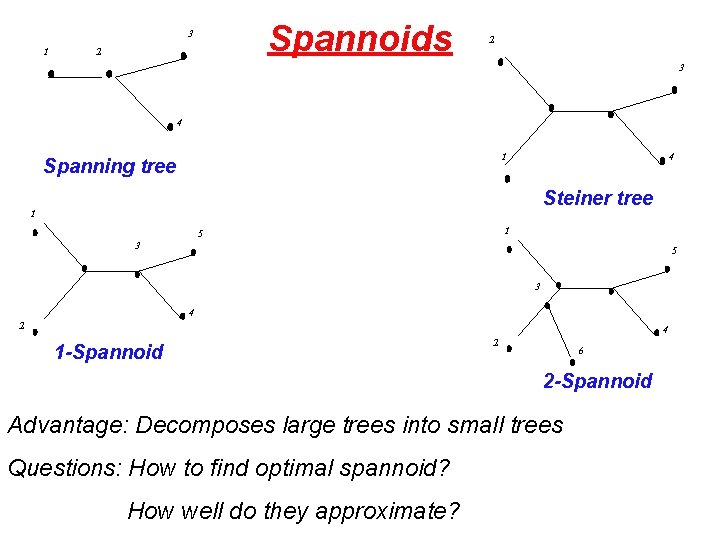
Spannoids 3 1 2 2 3 4 1 Spanning tree 4 Steiner tree 1 1 5 3 4 2 4 1 -Spannoid 2 6 2 -Spannoid Advantage: Decomposes large trees into small trees Questions: How to find optimal spannoid? How well do they approximate?
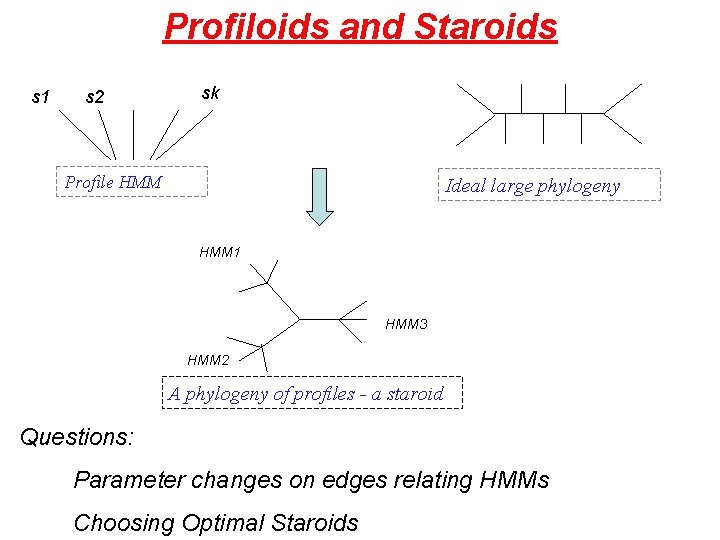
Profiloids and Staroids s 1 s 2 sk Profile HMM Ideal large phylogeny HMM 1 HMM 3 HMM 2 A phylogeny of profiles - a staroid Questions: Parameter changes on edges relating HMMs Choosing Optimal Staroids
- Slides: 25