
Phylogenetics without multiple sequence alignment Mark Ragan Institute
- Slides: 36
Phylogenetics without multiple sequence alignment Mark Ragan Institute for Molecular Bioscience and School of Information Technology & Electrical Engineering The University of Queensland, Brisbane, Australia IPAM Workshop on Multiple Sequence Alignment UCLA, 13 January 2015
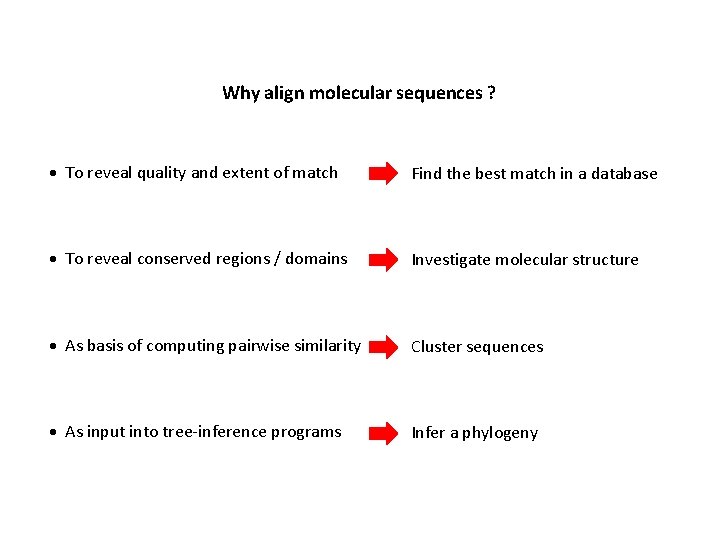
Why align molecular sequences ? To reveal quality and extent of match Find the best match in a database To reveal conserved regions / domains Investigate molecular structure As basis of computing pairwise similarity Cluster sequences As input into tree-inference programs Infer a phylogeny
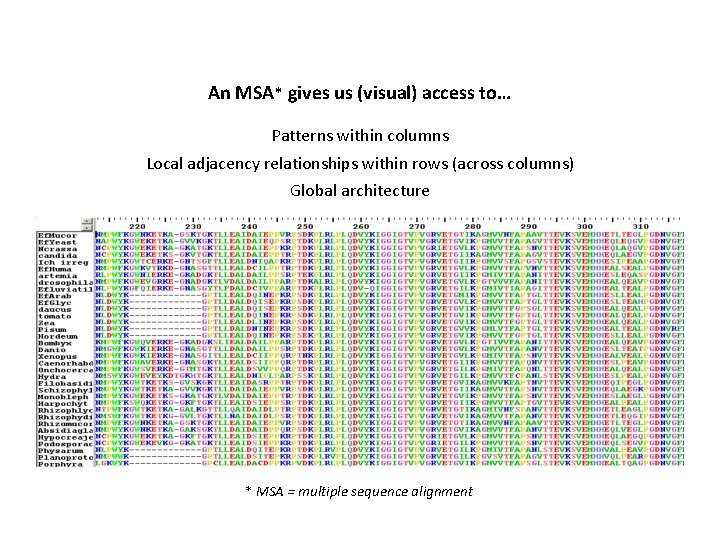
An MSA* gives us (visual) access to… Patterns within columns Local adjacency relationships within rows (across columns) Global architecture * MSA = multiple sequence alignment
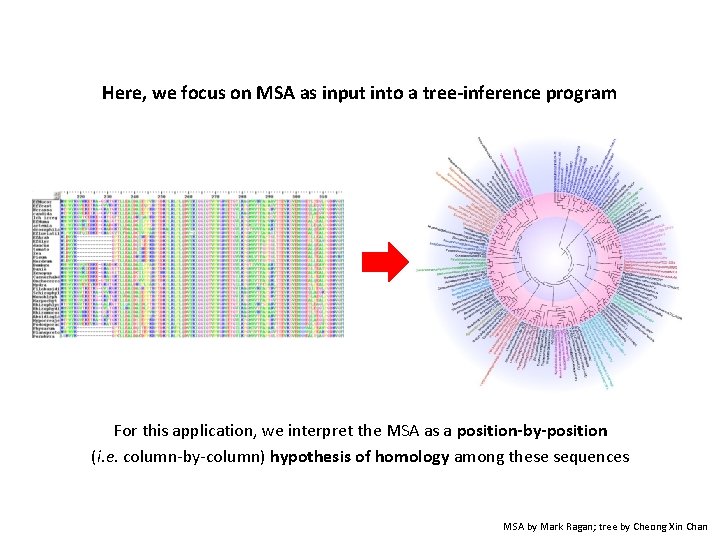
Here, we focus on MSA as input into a tree-inference program For this application, we interpret the MSA as a position-by-position (i. e. column-by-column) hypothesis of homology among these sequences MSA by Mark Ragan; tree by Cheong Xin Chan
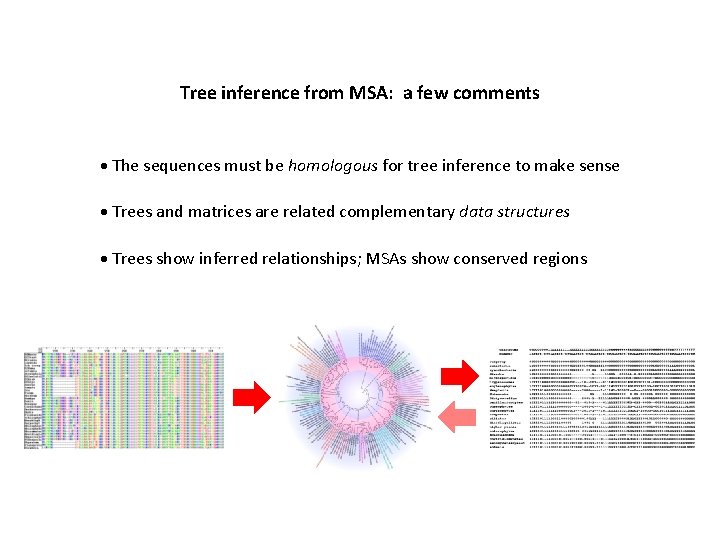
Tree inference from MSA: a few comments The sequences must be homologous for tree inference to make sense Trees and matrices are related complementary data structures Trees show inferred relationships; MSAs show conserved regions
Algorithmic approaches to MSA Lots of them (local/global, HMM-based, structural. . . ) Computationally difficult (NP-hard) This means that we can’t be sure of getting the “best” MSA Best evolutionary history, best structure or best statistical support ? Iterative paradigm (MSA tree … ) Slightly sub-optimal MSA usually contains valuable information Algorithmic approaches to tree inference Parsimony = OK if sequences are very similar ML and Bayesian = statistically principled, model-dependent, slow Distance = unprincipled, but often surprisingly good in practice But I come to bury Caesar, not to praise him
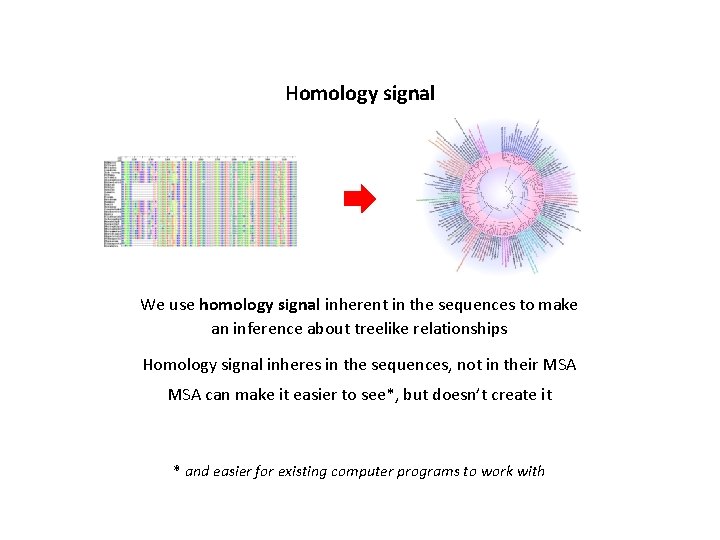
Homology signal We use homology signal inherent in the sequences to make an inference about treelike relationships Homology signal inheres in the sequences, not in their MSA can make it easier to see*, but doesn’t create it * and easier for existing computer programs to work with
Homology signal (continued) We shouldn’t assume that MSA captures it all, or uses it optimally MSA gives us access to Patterns within columns Local adjacency relationships Global architecture Let’s consider these to be components of the homology signal Here we’ll focus on the first two of these components
Pattern and adjacency The column component needs to capture “sameness” of a character across sequences For application in phylogenetics, “sameness” has to mean homology (or orthology). It’s difficult to build a statistical case that a particular single character in one sequence is homologous with a particular one in a second sequence. MSA uses adjacency (and sometimes global) information to build this support. Alternatively we might compare sets of adjacent characters (strings), which are less likely to occur by chance. The adjacency component doesn’t just provide statistical support for the column component Because conserved function arises in part from chemical properties of adjacent residues (e. g. in making that part of the molecule an active site or -helix), we expect homology signal to have an adjacency component in its own right.
MSA: potential (and real) problems Genomes are dynamic, data can be dirty, and MSA is hard Within some but not all members of a gene set… Homologous regions may be inserted / deleted Homologous regions may be rearranged / duplicated Regions may have different evolutionary histories (LGT) Transcriptional variation similar issues for protein sets Sequences may be mis-assembled (or not assembled in the first place) and/or truncated MSA is computationally difficult and/or heuristic Can we extract enough/most/all of the homology signal without MSA ?
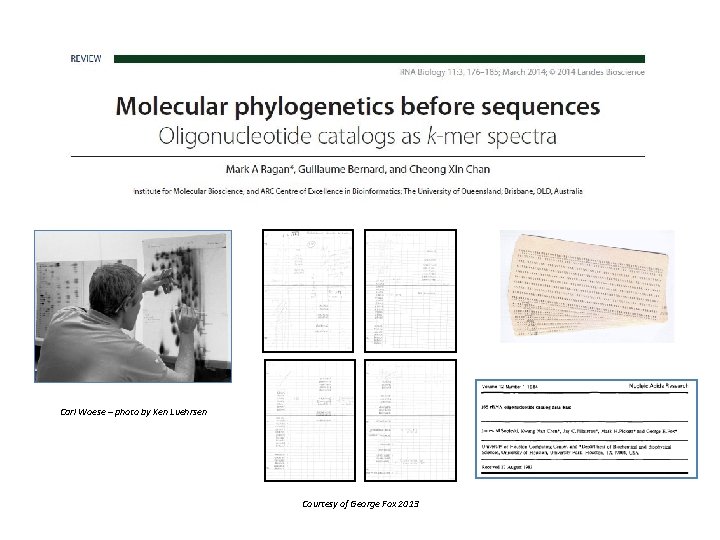
Carl Woese – photo by Ken Luehrsen Courtesy of George Fox 2013
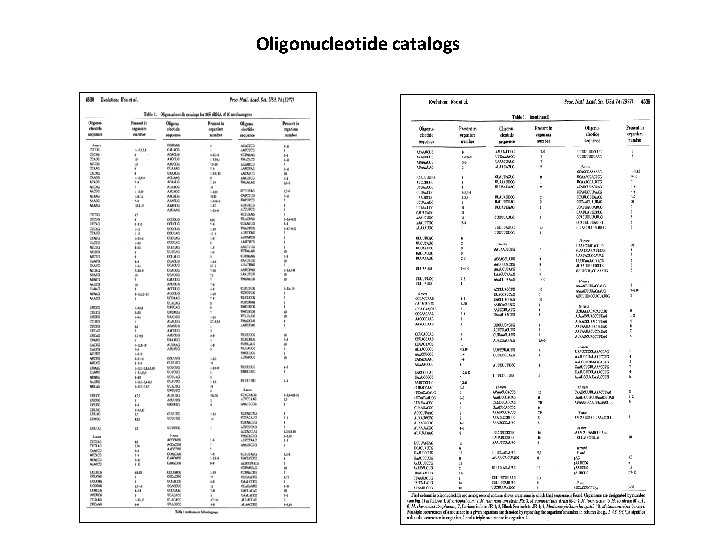
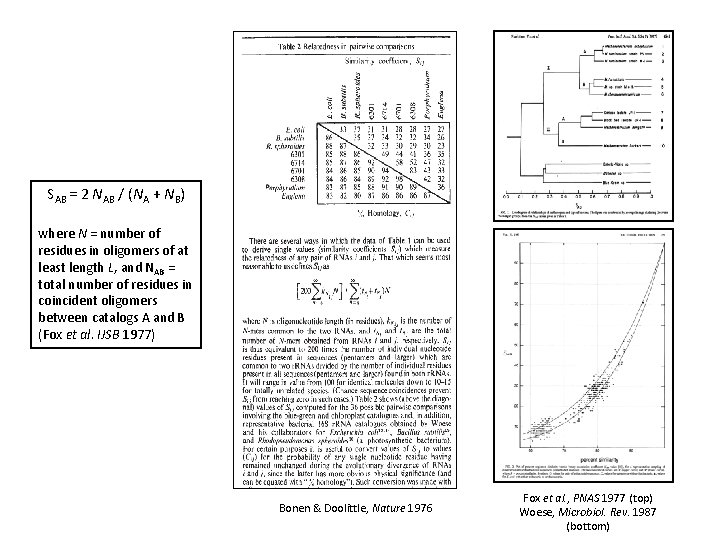
Oligonucleotide catalogs
SAB = 2 NAB / (NA + NB) where N = number of residues in oligomers of at least length L, and NAB = total number of residues in coincident oligomers between catalogs A and B (Fox et al. IJSB 1977) Bonen & Doolittle, Nature 1976 Fox et al. , PNAS 1977 (top) Woese, Microbiol. Rev. 1987 (bottom)
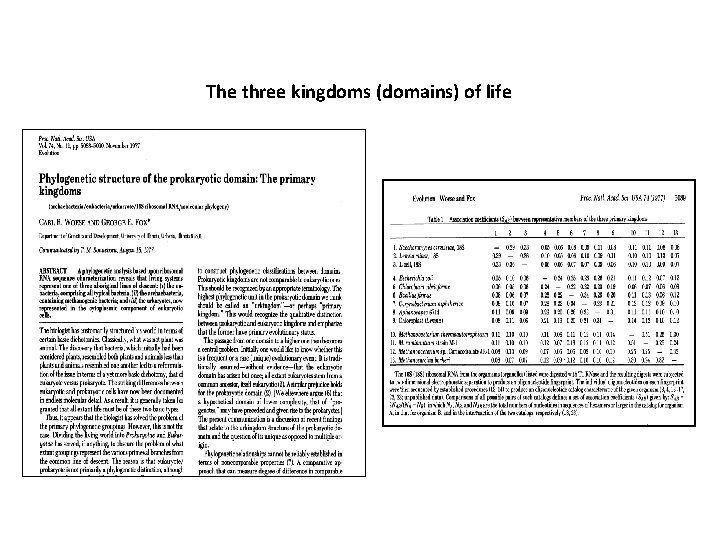
The three kingdoms (domains) of life
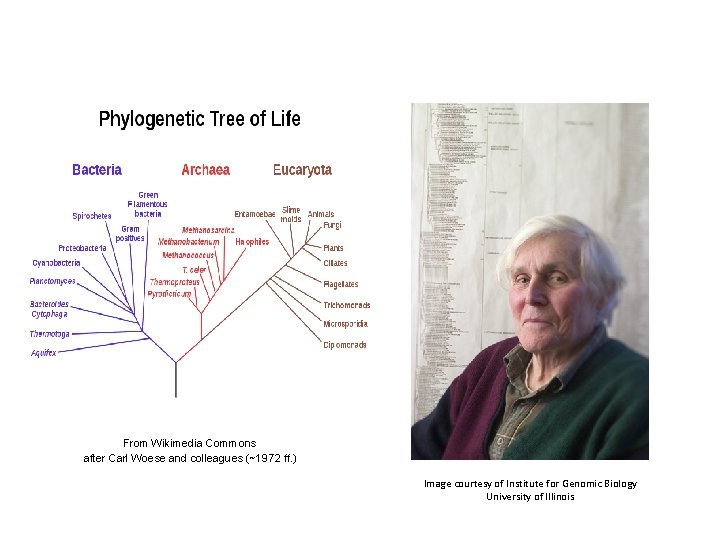
From Wikimedia Commons after Carl Woese and colleagues (~1972 ff. ) Image courtesy of Institute for Genomic Biology University of Illinois
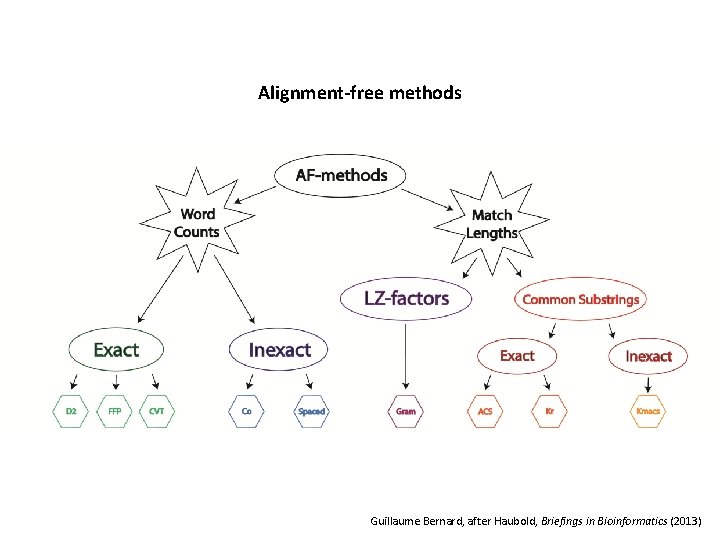
Alignment-free methods Guillaume Bernard, after Haubold, Briefings in Bioinformatics (2013)
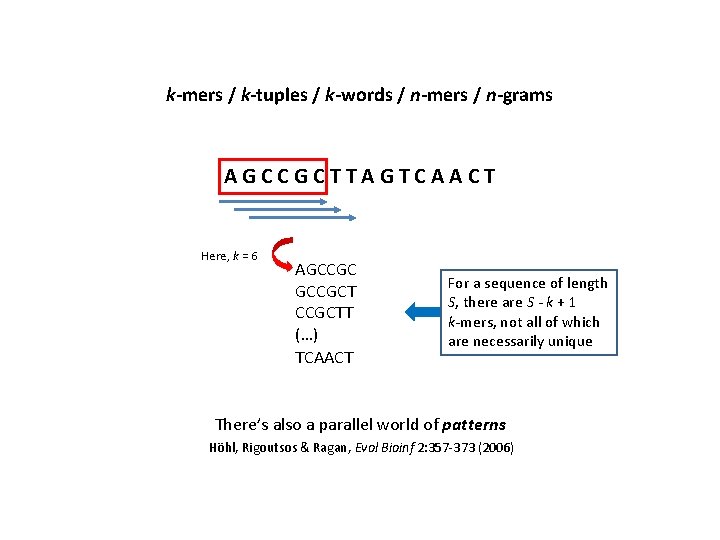
k-mers / k-tuples / k-words / n-mers / n-grams AGCCGCTTAGTCAACT Here, k = 6 AGCCGCT CCGCTT (…) TCAACT For a sequence of length S, there are S - k + 1 k-mers, not all of which are necessarily unique There’s also a parallel world of patterns Höhl, Rigoutsos & Ragan, Evol Bioinf 2: 357 -373 (2006)
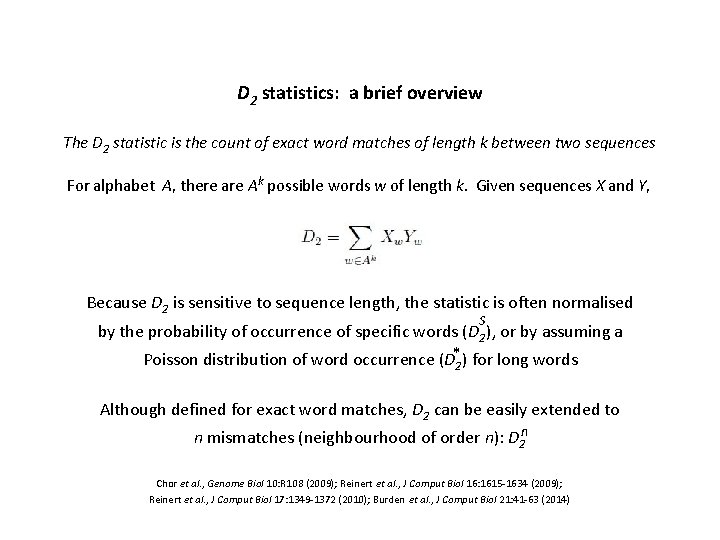
D 2 statistics: a brief overview The D 2 statistic is the count of exact word matches of length k between two sequences For alphabet A, there are Ak possible words w of length k. Given sequences X and Y, Because D 2 is sensitive to sequence length, the statistic is often normalised S by the probability of occurrence of specific words (D 2), or by assuming a Poisson distribution of word occurrence (D* ) for long words 2 Although defined for exact word matches, D 2 can be easily extended to n mismatches (neighbourhood of order n): D 2 n Chor et al. , Genome Biol 10: R 108 (2009); Reinert et al. , J Comput Biol 16: 1615 -1634 (2009); Reinert et al. , J Comput Biol 17: 1349 -1372 (2010); Burden et al. , J Comput Biol 21: 41 -63 (2014)
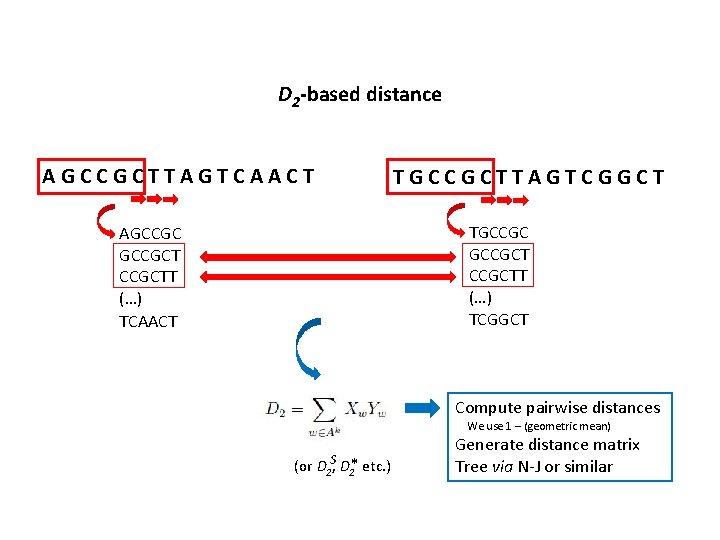
D 2 -based distance AGCCGCTTAGTCAACT TGCCGCTTAGTCGGCT TGCCGCT CCGCTT (…) TCGGCT AGCCGCT CCGCTT (…) TCAACT Compute pairwise distances We use 1 – (geometric mean) (or D 2 S, D 2* etc. ) Generate distance matrix Tree via N-J or similar
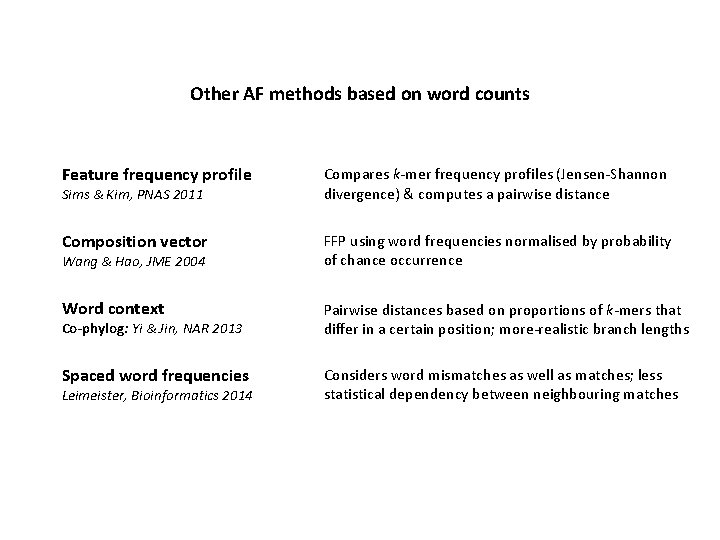
Other AF methods based on word counts Feature frequency profile Compares k-mer frequency profiles (Jensen-Shannon divergence) & computes a pairwise distance Composition vector FFP using word frequencies normalised by probability of chance occurrence Word context Pairwise distances based on proportions of k-mers that differ in a certain position; more-realistic branch lengths Spaced word frequencies Considers word mismatches as well as matches; less statistical dependency between neighbouring matches Sims & Kim, PNAS 2011 Wang & Hao, JME 2004 Co-phylog: Yi & Jin, NAR 2013 Leimeister, Bioinformatics 2014
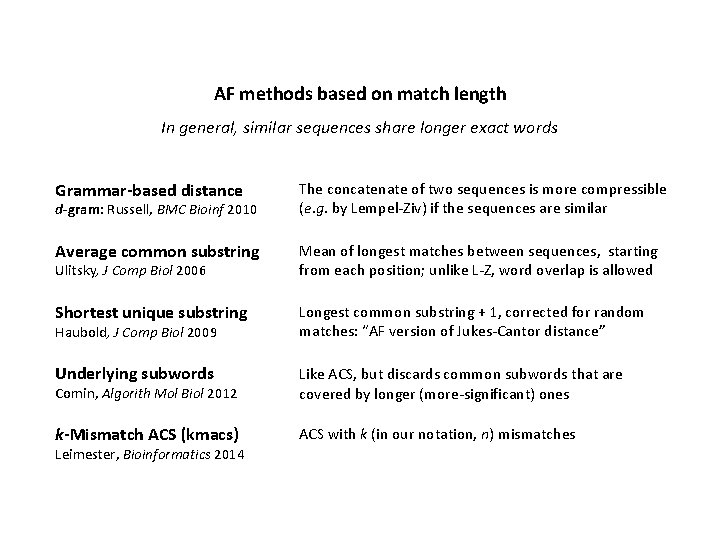
AF methods based on match length In general, similar sequences share longer exact words Grammar-based distance The concatenate of two sequences is more compressible (e. g. by Lempel-Ziv) if the sequences are similar Average common substring Mean of longest matches between sequences, starting from each position; unlike L-Z, word overlap is allowed Shortest unique substring Longest common substring + 1, corrected for random matches: “AF version of Jukes-Cantor distance” Underlying subwords Comin, Algorith Mol Biol 2012 Like ACS, but discards common subwords that are covered by longer (more-significant) ones k-Mismatch ACS (kmacs) ACS with k (in our notation, n) mismatches d-gram: Russell, BMC Bioinf 2010 Ulitsky, J Comp Biol 2006 Haubold, J Comp Biol 2009 Leimester, Bioinformatics 2014
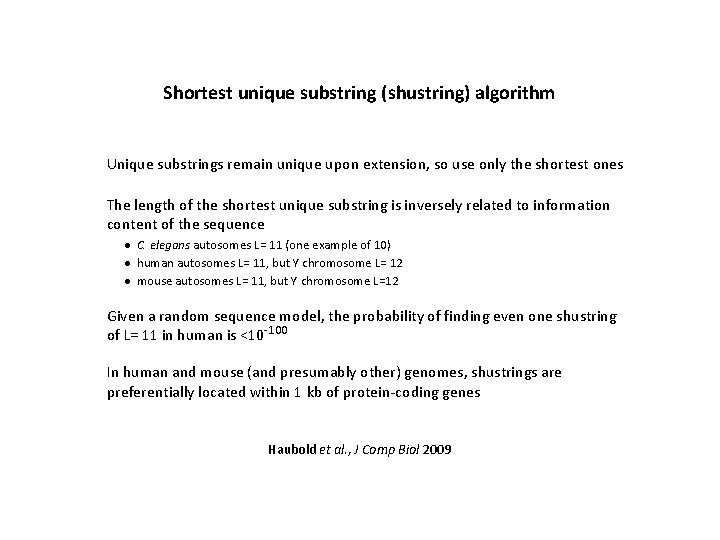
Shortest unique substring (shustring) algorithm Unique substrings remain unique upon extension, so use only the shortest ones The length of the shortest unique substring is inversely related to information content of the sequence C. elegans autosomes L= 11 (one example of 10) human autosomes L= 11, but Y chromosome L= 12 mouse autosomes L= 11, but Y chromosome L=12 Given a random sequence model, the probability of finding even one shustring of L= 11 in human is <10 -100 In human and mouse (and presumably other) genomes, shustrings are preferentially located within 1 kb of protein-coding genes Haubold et al. , J Comp Biol 2009
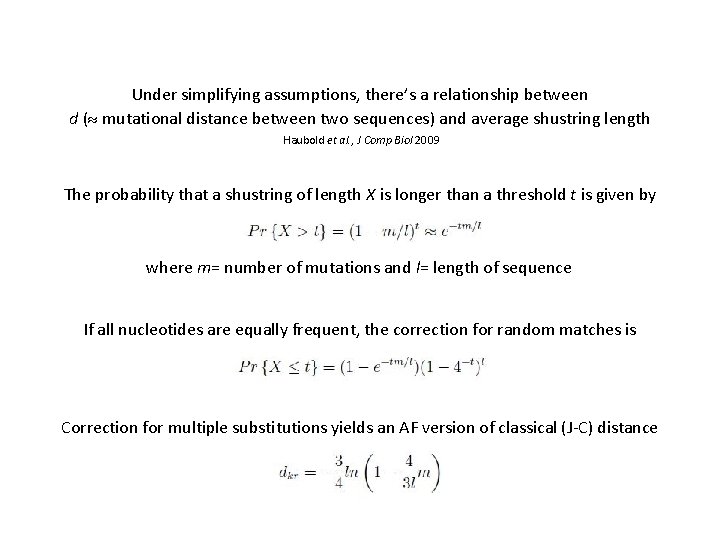
Under simplifying assumptions, there’s a relationship between d ( mutational distance between two sequences) and average shustring length Haubold et al. , J Comp Biol 2009 The probability that a shustring of length X is longer than a threshold t is given by where m= number of mutations and l= length of sequence If all nucleotides are equally frequent, the correction for random matches is Correction for multiple substitutions yields an AF version of classical (J-C) distance
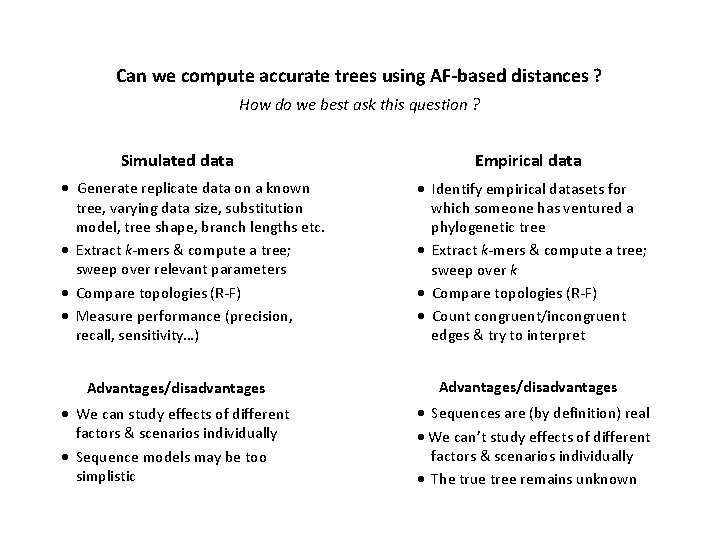
Can we compute accurate trees using AF-based distances ? How do we best ask this question ? Simulated data Generate replicate data on a known tree, varying data size, substitution model, tree shape, branch lengths etc. Extract k-mers & compute a tree; sweep over relevant parameters Compare topologies (R-F) Measure performance (precision, recall, sensitivity…) Advantages/disadvantages We can study effects of different factors & scenarios individually Sequence models may be too simplistic Empirical data Identify empirical datasets for which someone has ventured a phylogenetic tree Extract k-mers & compute a tree; sweep over k Compare topologies (R-F) Count congruent/incongruent edges & try to interpret Advantages/disadvantages Sequences are (by definition) real We can’t study effects of different factors & scenarios individually The true tree remains unknown
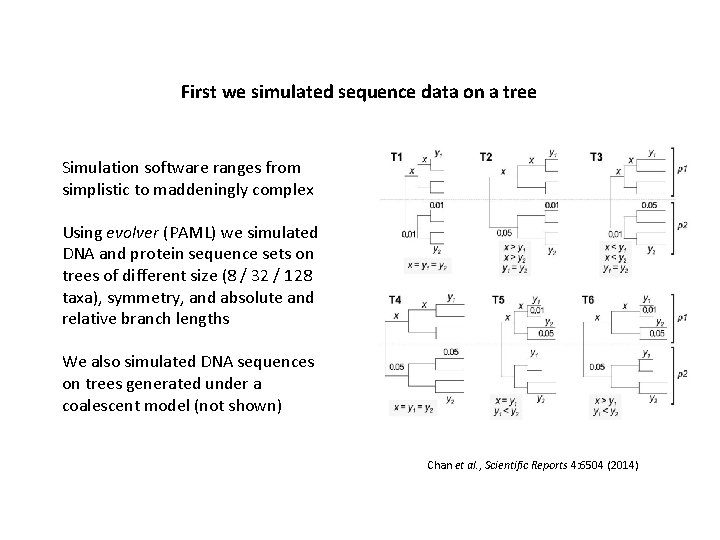
First we simulated sequence data on a tree Simulation software ranges from simplistic to maddeningly complex Using evolver (PAML) we simulated DNA and protein sequence sets on trees of different size (8 / 32 / 128 taxa), symmetry, and absolute and relative branch lengths We also simulated DNA sequences on trees generated under a coalescent model (not shown) Chan et al. , Scientific Reports 4: 6504 (2014)
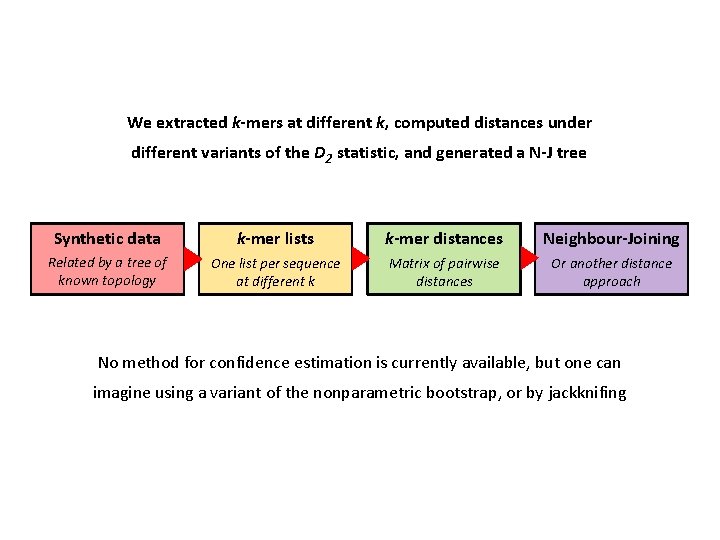
We extracted k-mers at different k, computed distances under different variants of the D 2 statistic, and generated a N-J tree Synthetic data k-mer lists k-mer distances Neighbour-Joining Related by a tree of known topology One list per sequence at different k Matrix of pairwise distances Or another distance approach No method for confidence estimation is currently available, but one can imagine using a variant of the nonparametric bootstrap, or by jackknifing
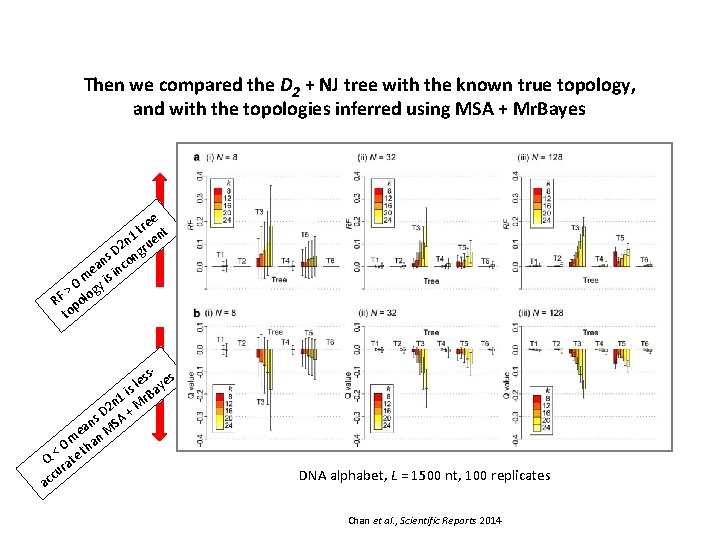
Then we compared the D 2 + NJ tree with the known true topology, and with the topologies inferred using MSA + Mr. Bayes e re t t n 1 2 n grue D ns on ea inc 0 m gy is > RF polo to s- s s e e s l Bay i n 1 Mr 2 D + ns SA a e n. M m a < 0 e th Q rat cu ac DNA alphabet, L = 1500 nt, 100 replicates Chan et al. , Scientific Reports 2014
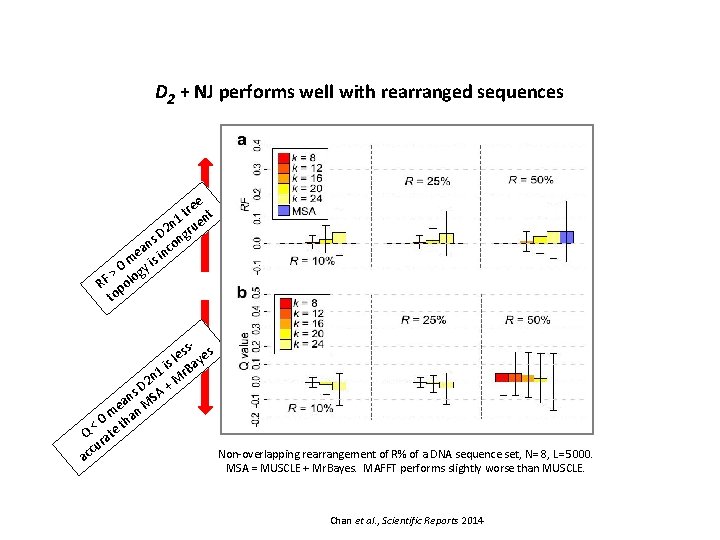
D 2 + NJ performs well with rearranged sequences e re t t n 1 ruen 2 s D ong n ea inc m 0 gy is > RF polo to ses yes l s a 1 i r. B n D 2 A + M s n S ea n M m a < 0 e th Q rat cu Non-overlapping rearrangement of R% of a DNA sequence set, N= 8, L= 5000. ac MSA = MUSCLE + Mr. Bayes. MAFFT performs slightly worse than MUSCLE. Chan et al. , Scientific Reports 2014
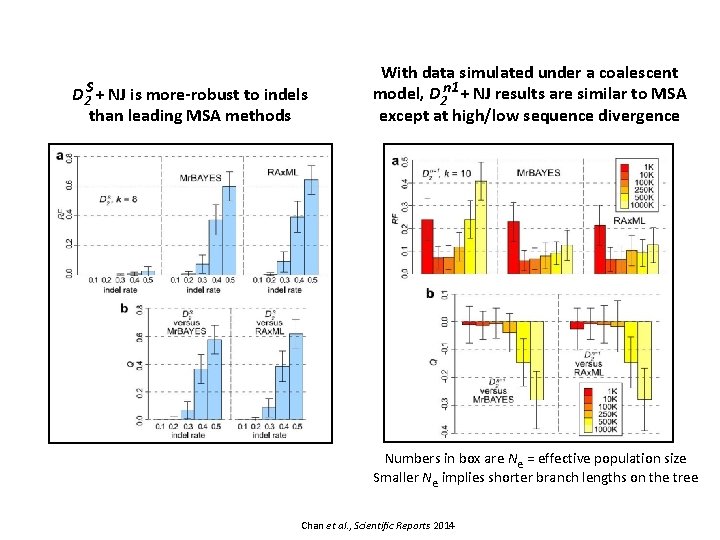
D 2 S + NJ is more-robust to indels than leading MSA methods With data simulated under a coalescent model, D 2 n 1+ NJ results are similar to MSA except at high/low sequence divergence Numbers in box are Ne = effective population size Smaller Ne implies shorter branch lengths on the tree Chan et al. , Scientific Reports 2014
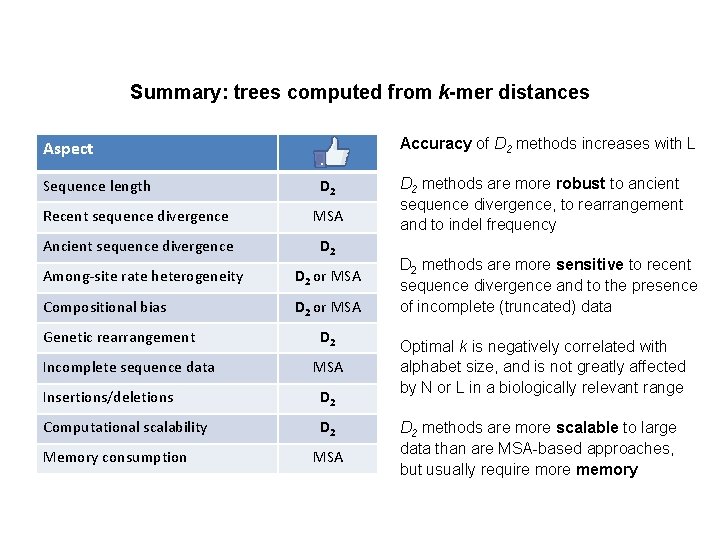
Summary: trees computed from k-mer distances Accuracy of D 2 methods increases with L Aspect Sequence length D 2 Recent sequence divergence MSA Ancient sequence divergence D 2 Among-site rate heterogeneity D 2 or MSA Compositional bias D 2 or MSA Genetic rearrangement Incomplete sequence data D 2 MSA Insertions/deletions D 2 Computational scalability D 2 Memory consumption MSA D 2 methods are more robust to ancient sequence divergence, to rearrangement and to indel frequency D 2 methods are more sensitive to recent sequence divergence and to the presence of incomplete (truncated) data Optimal k is negatively correlated with alphabet size, and is not greatly affected by N or L in a biologically relevant range D 2 methods are more scalable to large data than are MSA-based approaches, but usually require more memory
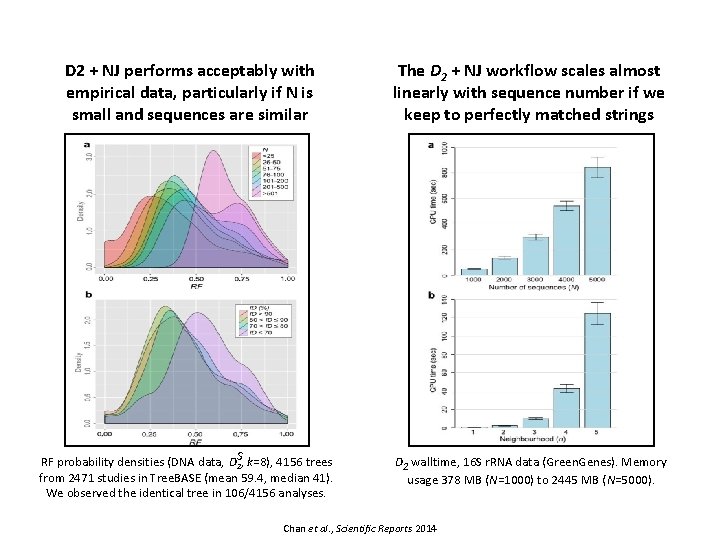
D 2 + NJ performs acceptably with empirical data, particularly if N is small and sequences are similar The D 2 + NJ workflow scales almost linearly with sequence number if we keep to perfectly matched strings RF probability densities (DNA data, D 2 S, k=8), 4156 trees from 2471 studies in Tree. BASE (mean 59. 4, median 41). We observed the identical tree in 106/4156 analyses. D 2 walltime, 16 S r. RNA data (Green. Genes). Memory usage 378 MB (N=1000) to 2445 MB (N=5000). Chan et al. , Scientific Reports 2014
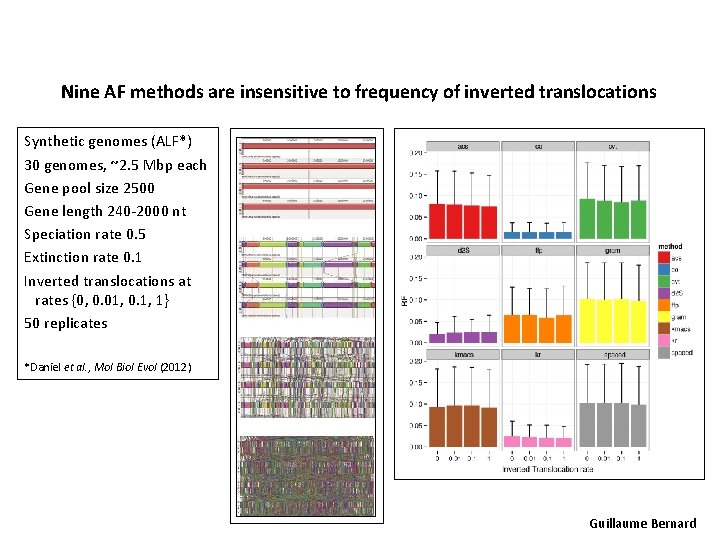
Nine AF methods are insensitive to frequency of inverted translocations Synthetic genomes (ALF*) 30 genomes, ~2. 5 Mbp each Gene pool size 2500 Gene length 240 -2000 nt Speciation rate 0. 5 Extinction rate 0. 1 Inverted translocations at rates {0, 0. 01, 0. 1, 1} 50 replicates *Daniel et al. , Mol Biol Evol (2012) Guillaume Bernard
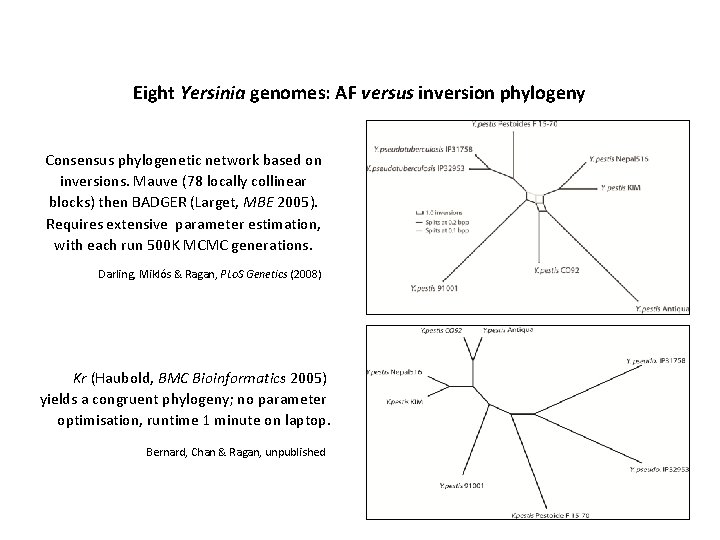
Eight Yersinia genomes: AF versus inversion phylogeny Consensus phylogenetic network based on inversions. Mauve (78 locally collinear blocks) then BADGER (Larget, MBE 2005). Requires extensive parameter estimation, with each run 500 K MCMC generations. Darling, Miklós & Ragan, PLo. S Genetics (2008) Kr (Haubold, BMC Bioinformatics 2005) yields a congruent phylogeny; no parameter optimisation, runtime 1 minute on laptop. Bernard, Chan & Ragan, unpublished
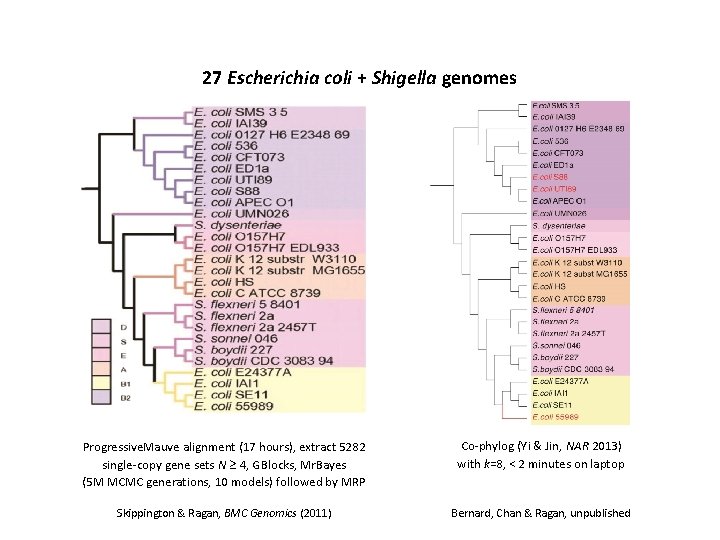
27 Escherichia coli + Shigella genomes Progressive. Mauve alignment (17 hours), extract 5282 single-copy gene sets N 4, GBlocks, Mr. Bayes (5 M MCMC generations, 10 models) followed by MRP Co-phylog (Yi & Jin, NAR 2013) with k=8, < 2 minutes on laptop Skippington & Ragan, BMC Genomics (2011) Bernard, Chan & Ragan, unpublished
Conclusions & outlook AF methods hold considerable potential in phylogenetics & phylogenomics But MSA-based approaches have a six-decade head start With synthetic data, AF methods perform better than MSA-based approaches under some evolutionarily relevant scenarios, but worse under others With empirical data, the jury is still out (Some) AF methods could likely be subsumed under a rigorous model, although probably at the cost of speed & scalability i. e. what makes them attractive in the first place Efficient data structures & precomputation have much to offer Other application areas include LGT analysis, and trees directly from NGS data Song et al. , J Comp Biol 2013; Yi & Jin, NAR 2013
Rob Beiko, Guillaume Bernard, Cheong Xin Chan, Xin-Yi Chua, Yingnan Cong, Aaron Darling, Leanne Haggerty, Michael Höhl & Elizabeth Skippington Australian Research Council James S. Mc. Donnell Foundation National Computational Infrastructure National Supercomputing Facility Specialised Facility in Bioinformatics QFAB Bioinformatics