
Phylogenetic Tree Lecture 11 Department of CSE DIU



- Slides: 24
Phylogenetic Tree Lecture – 11 Department of CSE, DIU
CONTENTS 1. Phylogenetic Analysis and MSA - Evolution - Phylogenetic Tree Basics 2. Phylogenetic Tree Types - Rooted and Unrooted Tree 3. Phylogenetic Tree Approaches - Parsimony - Distance -Maximum Likelihood
1. Phylogenetic Analysis and MSA How are these sequences related?
Phylogenetic Analysis and MSA Similarity searches and multiple alignments of sequences naturally lead to the question: “How are these sequences related? ” and more generally: “How are the organisms (from which these sequences come) related? ” Phylogenetic systematics is a method of taxonomic classification based on their evolutionary history
Evolution • Recall that DNA encodes blue print of life • Living things pass DNA info to their children • Due to mutations, DNA is changed a little bit • After a long time, different species would evolve • Phylogenetics studies genetic relationship between different species
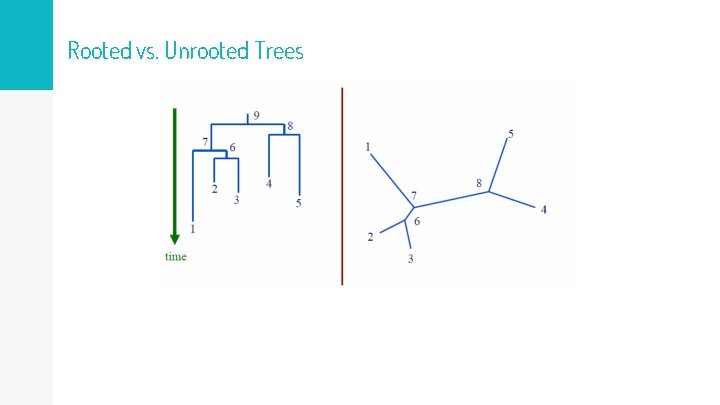
Phylogenetic Tree Basics • leaves represent things (genes, species, individuals/strains) being compared – the term taxon (taxa plural) is used to refer to these when they represent species and broader classifications of organisms • internal nodes are hypothetical ancestral units • in a rooted tree, path from root to a node represents an evolutionary path – the root represents the common ancestor • an unrooted tree specifies relationships among things, but not evolutionary paths
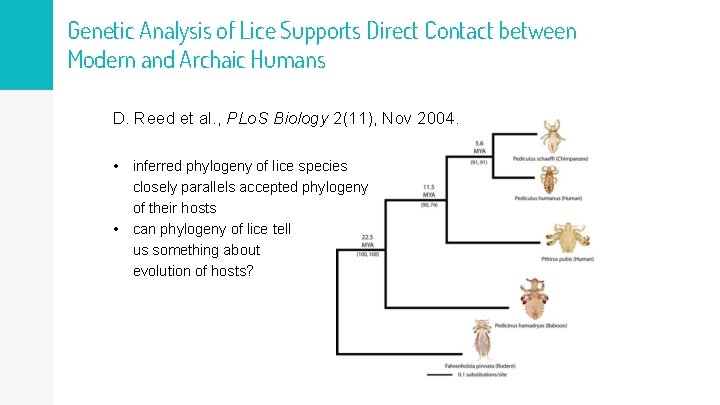
Genetic Analysis of Lice Supports Direct Contact between Modern and Archaic Humans D. Reed et al. , PLo. S Biology 2(11), Nov 2004. • inferred phylogeny of lice species closely parallels accepted phylogeny of their hosts • can phylogeny of lice tell us something about evolution of hosts?
Data for Building Trees • Trees can be constructed from various types of data – distance-based: measures of distance between species/genes – character-based: morphological features (e. g. # legs), DNA/protein sequences – gene-order: linear order of orthologous genes in given genomes
2. Phylogenetic Tree Types Rooted and Unrooted
Rooted vs. Unrooted Trees
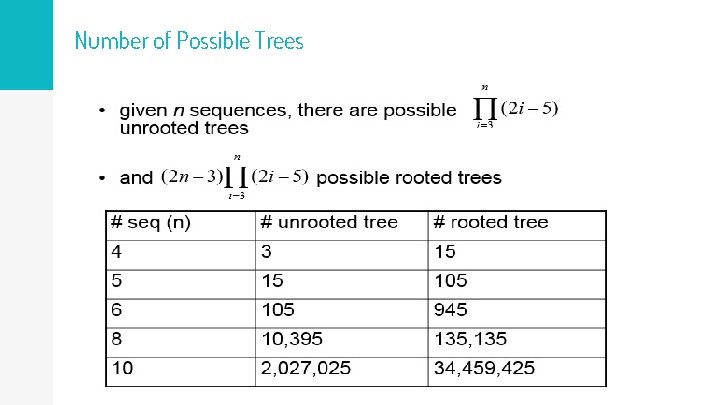
Number of Possible Trees
3. Phylogenetic Tree Approaches Parsimony, Distance, Maximum Likelihood
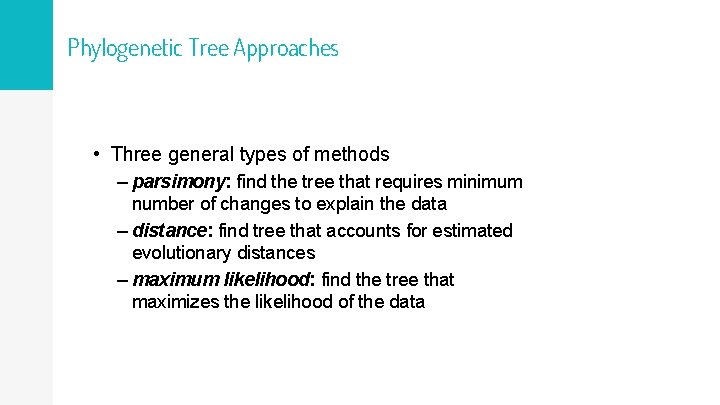
Phylogenetic Tree Approaches • Three general types of methods – parsimony: find the tree that requires minimum number of changes to explain the data – distance: find tree that accounts for estimated evolutionary distances – maximum likelihood: find the tree that maximizes the likelihood of the data
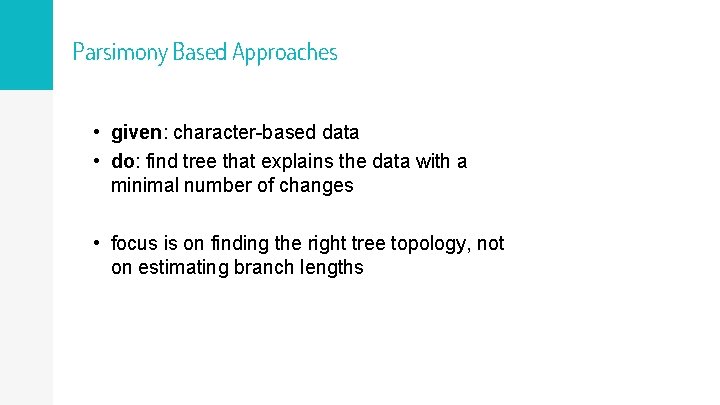
Parsimony Based Approaches • given: character-based data • do: find tree that explains the data with a minimal number of changes • focus is on finding the right tree topology, not on estimating branch lengths
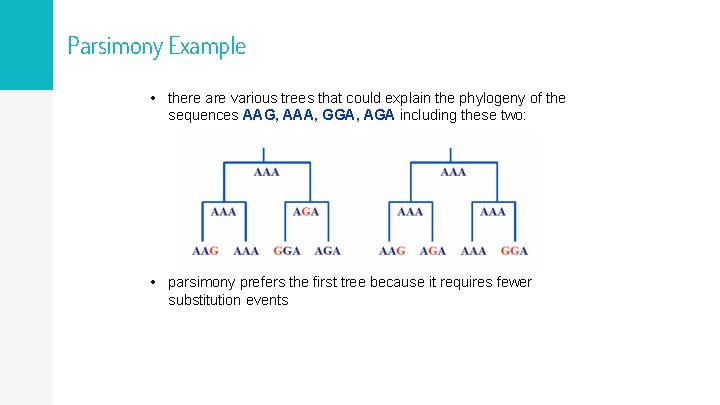
Parsimony Example • there are various trees that could explain the phylogeny of the sequences AAG, AAA, GGA, AGA including these two: • parsimony prefers the first tree because it requires fewer substitution events
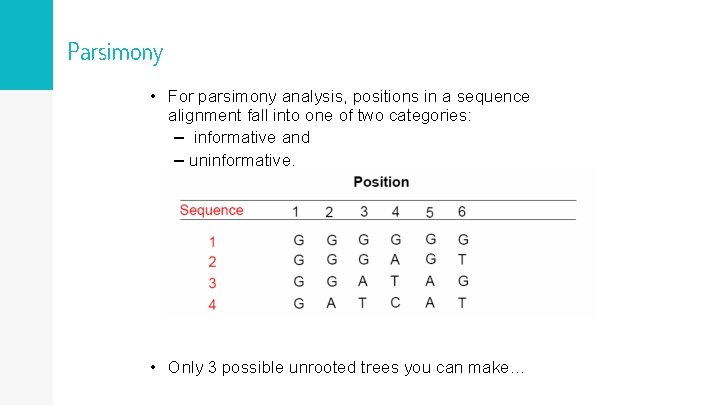
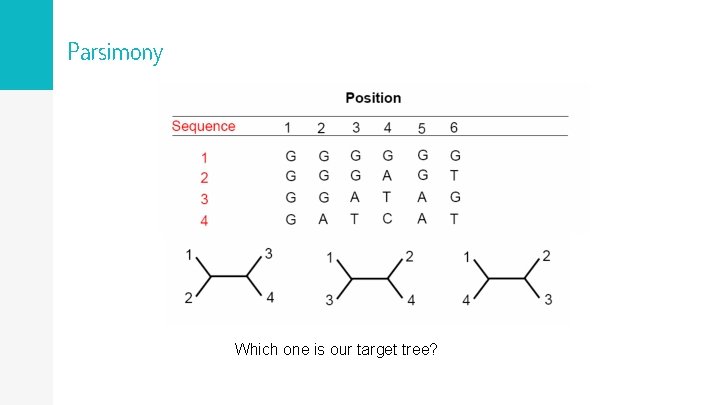
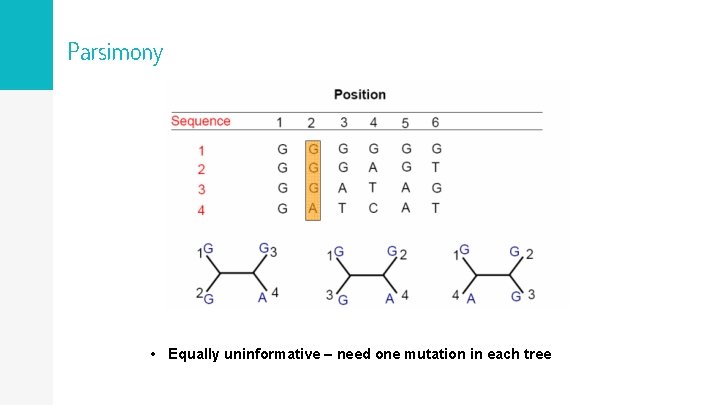
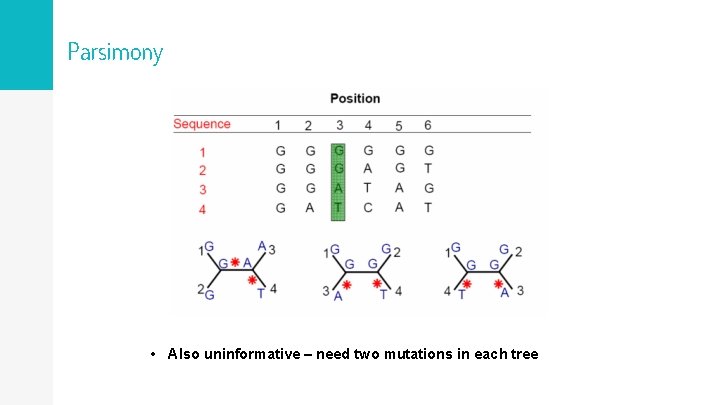
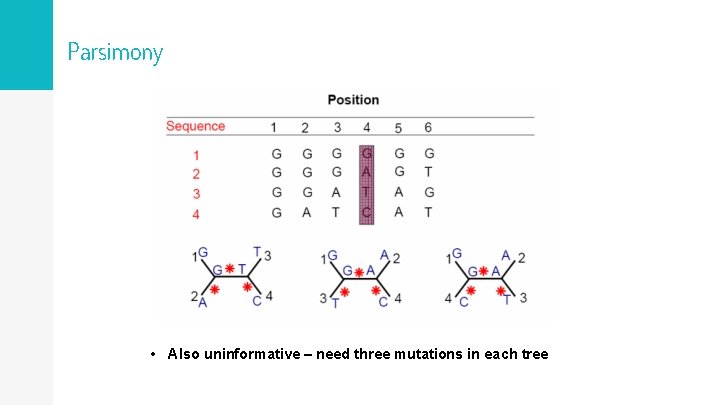
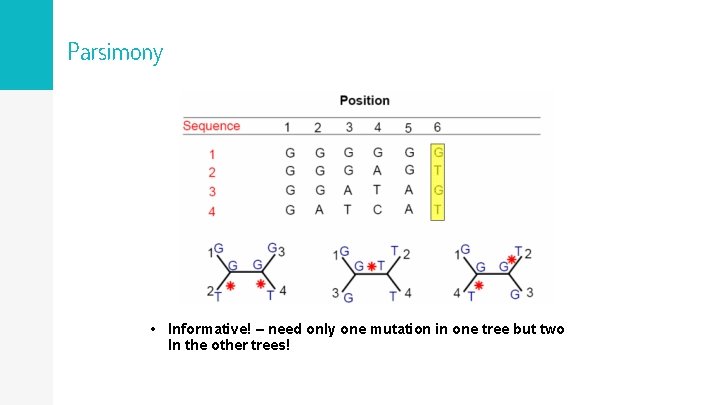
Parsimony • For parsimony analysis, positions in a sequence alignment fall into one of two categories: – informative and – uninformative. • Only 3 possible unrooted trees you can make…
Parsimony Which one is our target tree?
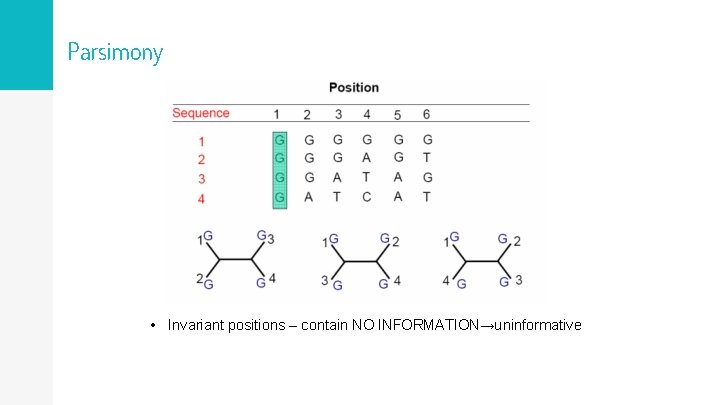
Parsimony • Invariant positions – contain NO INFORMATION→uninformative
Parsimony • Equally uninformative – need one mutation in each tree
Parsimony • Also uninformative – need two mutations in each tree
Parsimony • Also uninformative – need three mutations in each tree
Parsimony • Informative! – need only one mutation in one tree but two In the other trees!
Parsimony • So to be Informative, need at least 2 different nucleotides And each has to be present at least twice. • Every tree is considered for every site, maintaining a running score of the number of mutations required. The tree with the smallest number of invoked mutations is the most parsimonious