
Photovoltaic Part 2 pn Junction Photovoltaic IV Characteristics



- Slides: 20
Photovoltaic- Part 2 pn Junction Photovoltaic I-V Characteristics
Photovoltaic I-V Characteristics
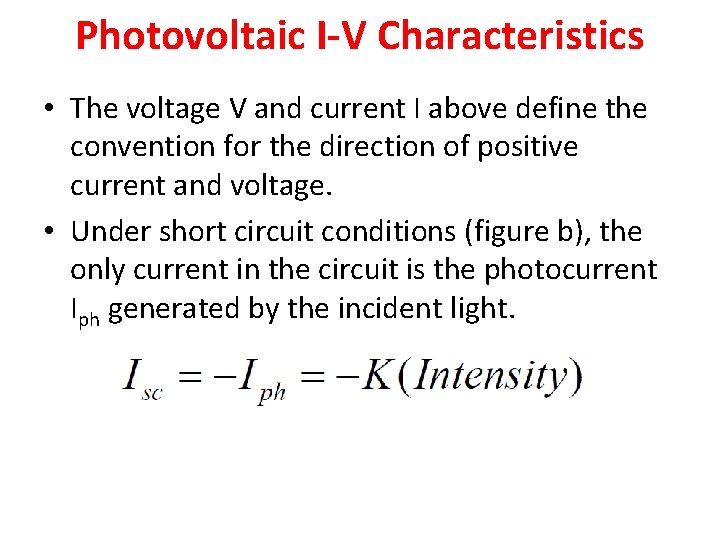
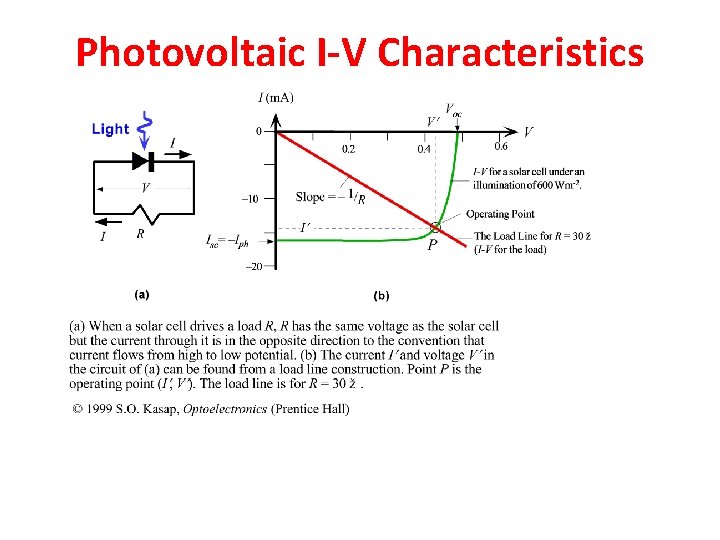
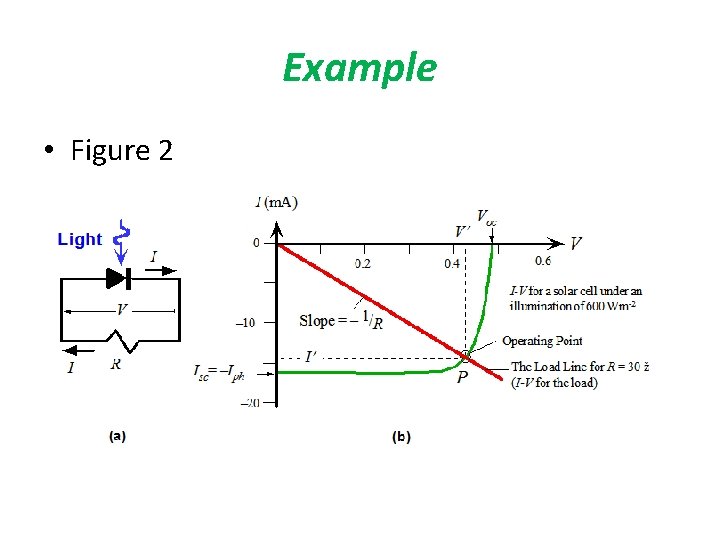
Photovoltaic I-V Characteristics • The voltage V and current I above define the convention for the direction of positive current and voltage. • Under short circuit conditions (figure b), the only current in the circuit is the photocurrent Iph generated by the incident light.
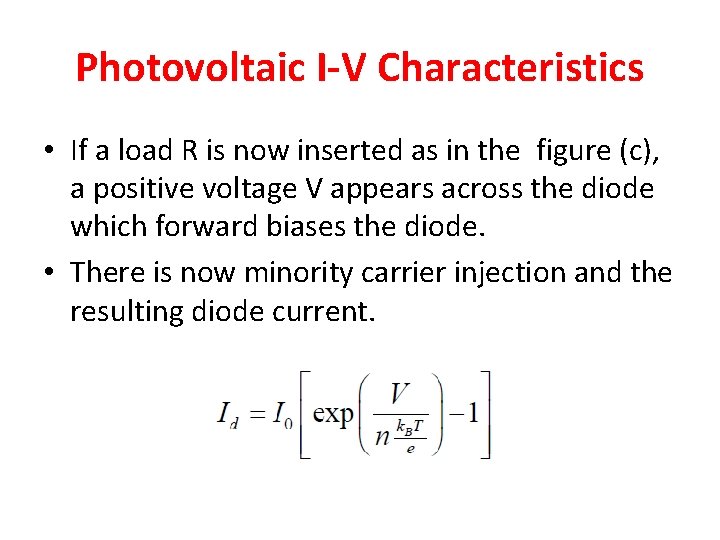
Photovoltaic I-V Characteristics • If a load R is now inserted as in the figure (c), a positive voltage V appears across the diode which forward biases the diode. • There is now minority carrier injection and the resulting diode current.
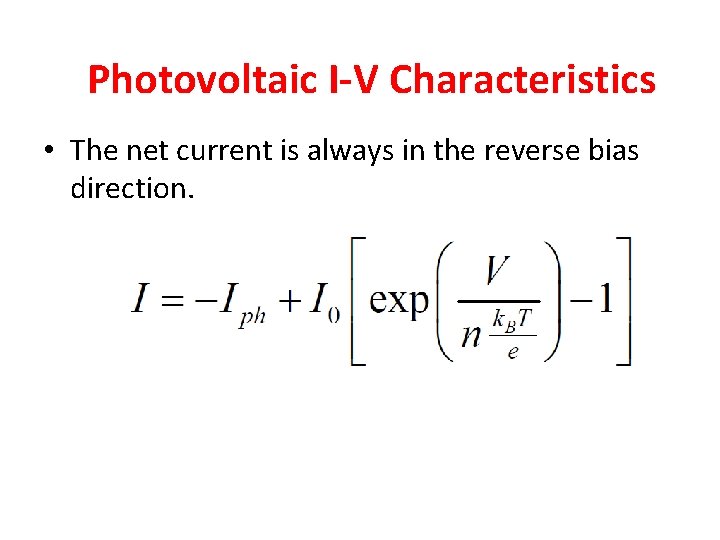
Photovoltaic I-V Characteristics • The net current is always in the reverse bias direction.
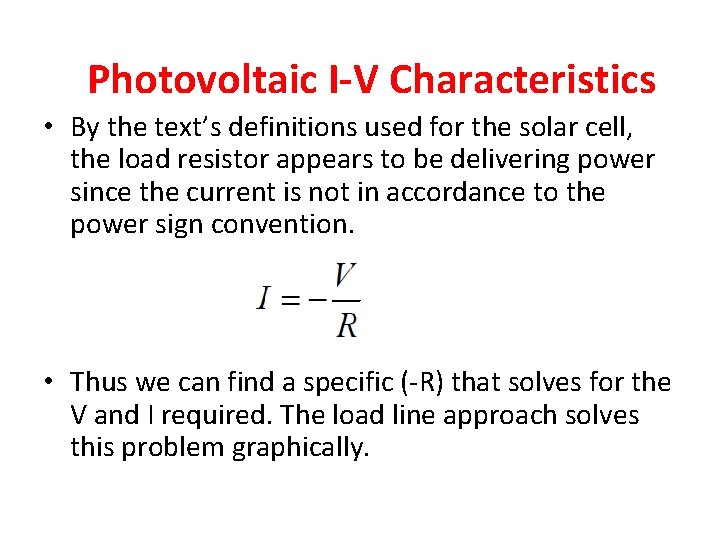
Photovoltaic I-V Characteristics • By the text’s definitions used for the solar cell, the load resistor appears to be delivering power since the current is not in accordance to the power sign convention. • Thus we can find a specific (-R) that solves for the V and I required. The load line approach solves this problem graphically.
Photovoltaic I-V Characteristics
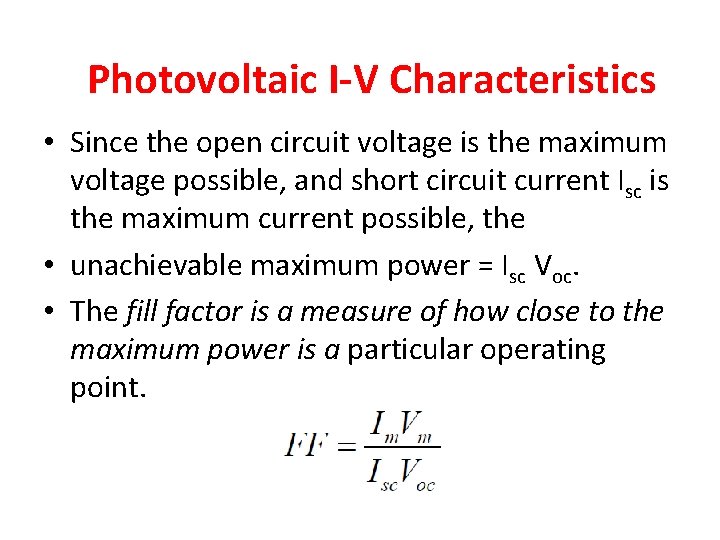
Photovoltaic I-V Characteristics • Since the open circuit voltage is the maximum voltage possible, and short circuit current Isc is the maximum current possible, the • unachievable maximum power = Isc Voc. • The fill factor is a measure of how close to the maximum power is a particular operating point.
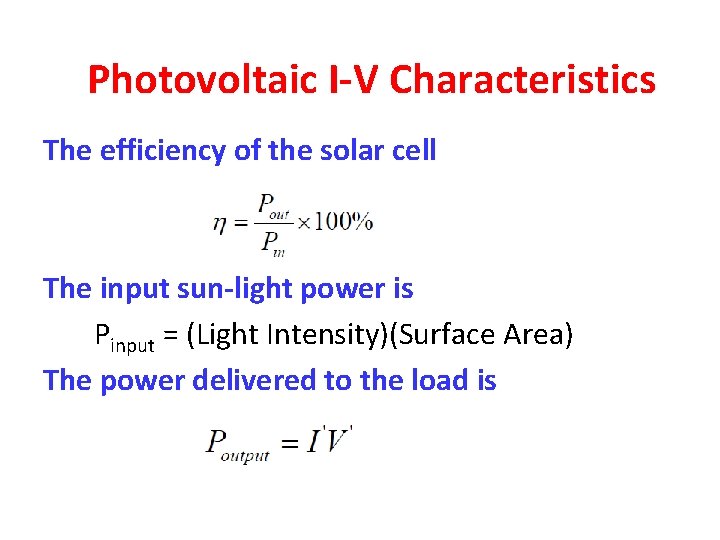
Photovoltaic I-V Characteristics The efficiency of the solar cell The input sun-light power is Pinput = (Light Intensity)(Surface Area) The power delivered to the load is
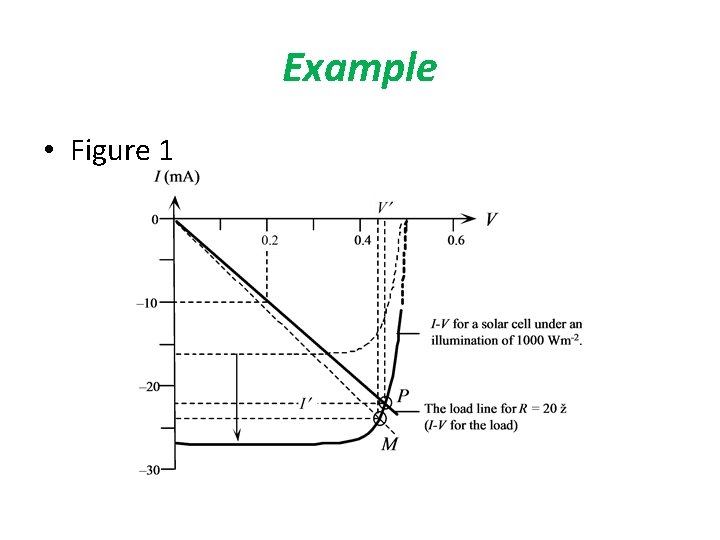
Example What should the load be to obtain maximum power transfer from the solar cell to the load at 1 k. W m-2 illumination. What is this load at 600 W m-2. Given Figure 1 and Figure 2.
Example • Figure 1
Example • Figure 2
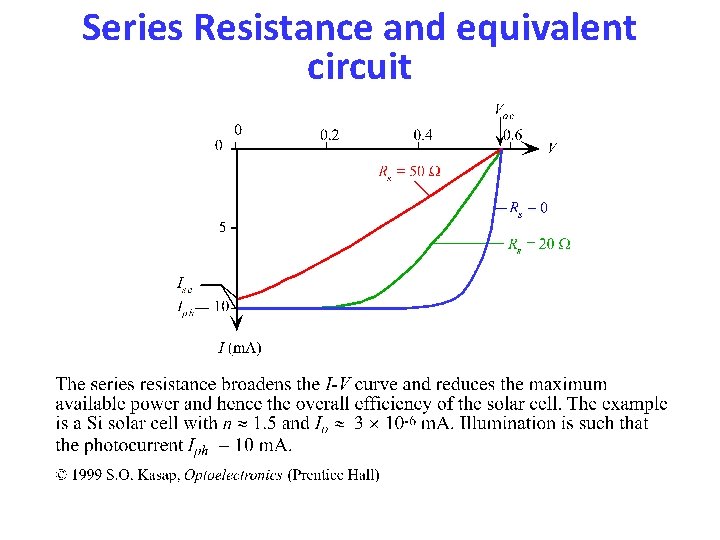
Series Resistance and equivalent circuit
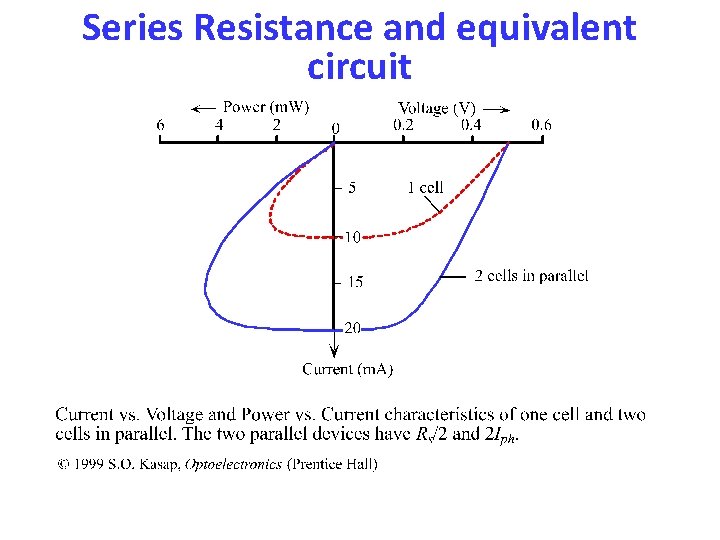
Series Resistance and equivalent circuit
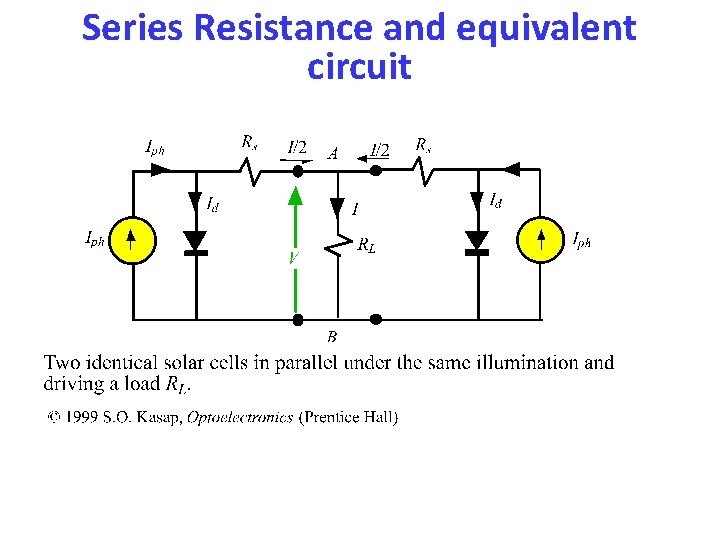
Series Resistance and equivalent circuit
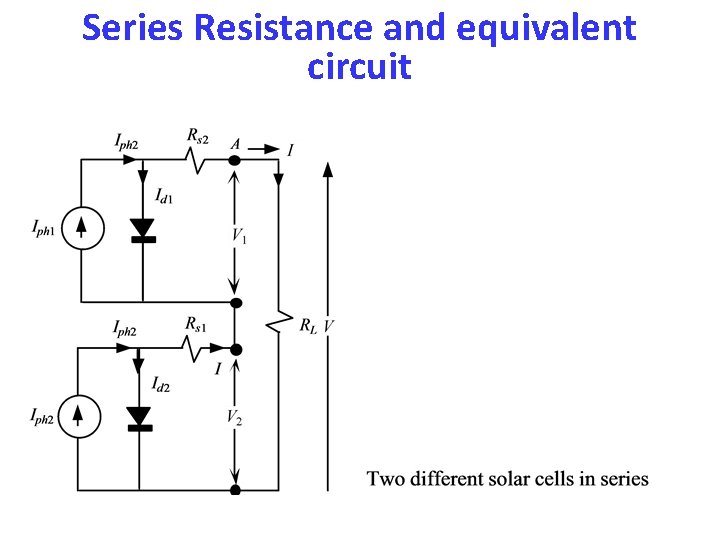
Series Resistance and equivalent circuit
Series Resistance and equivalent circuit
Series Resistance and equivalent circuit
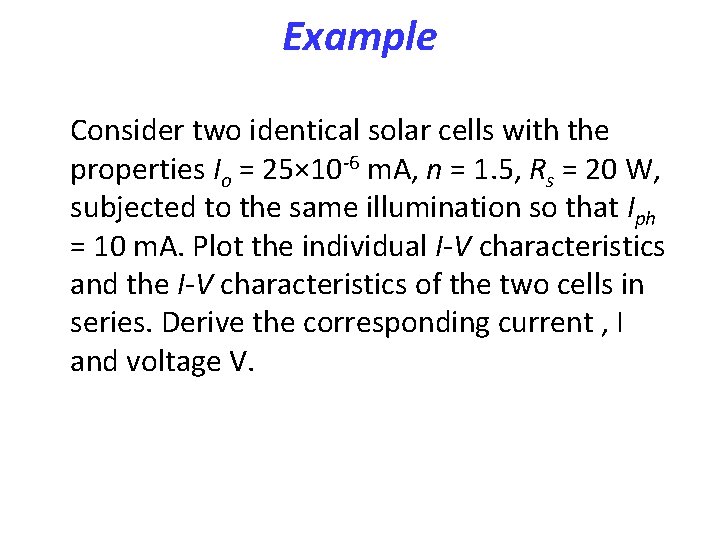
Example Consider two identical solar cells with the properties Io = 25× 10 -6 m. A, n = 1. 5, Rs = 20 W, subjected to the same illumination so that Iph = 10 m. A. Plot the individual I-V characteristics and the I-V characteristics of the two cells in series. Derive the corresponding current , I and voltage V.