
phototransduction photopigments principle of univariance photoreceptors are hyperpolirised
- Slides: 10
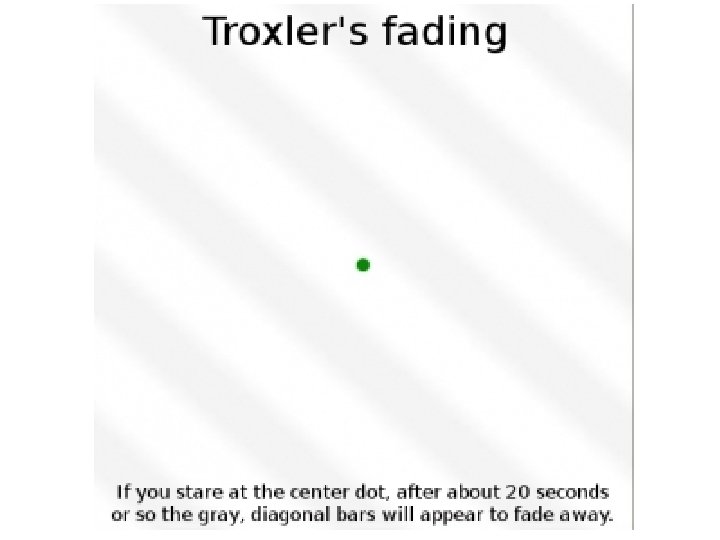
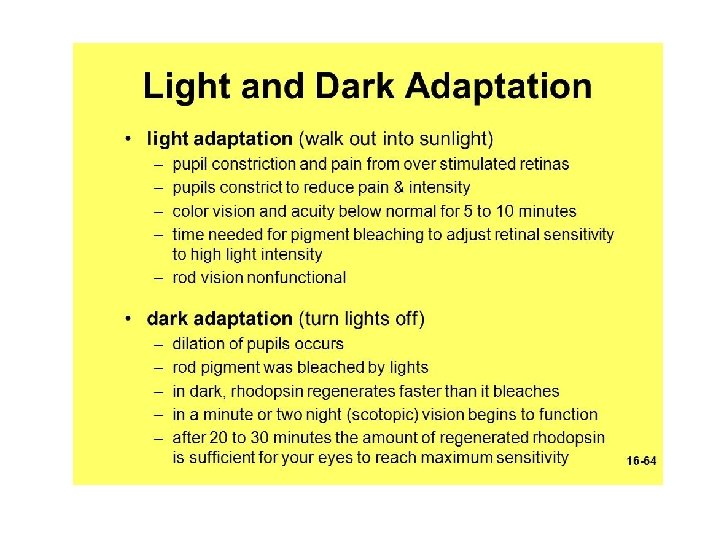
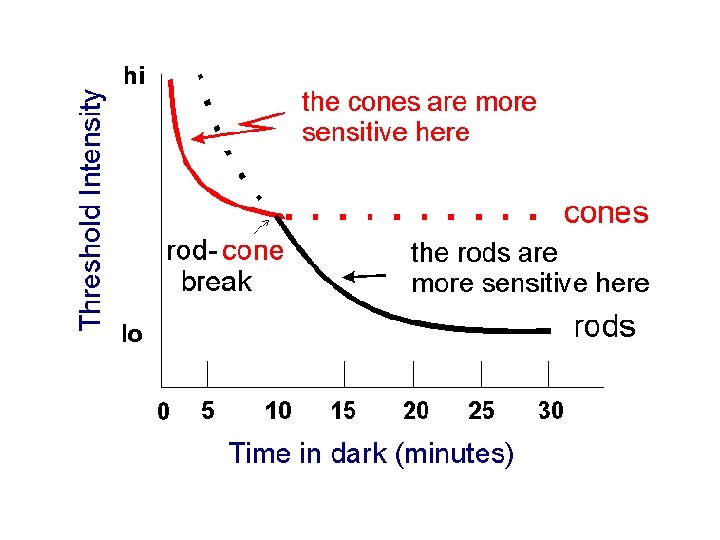
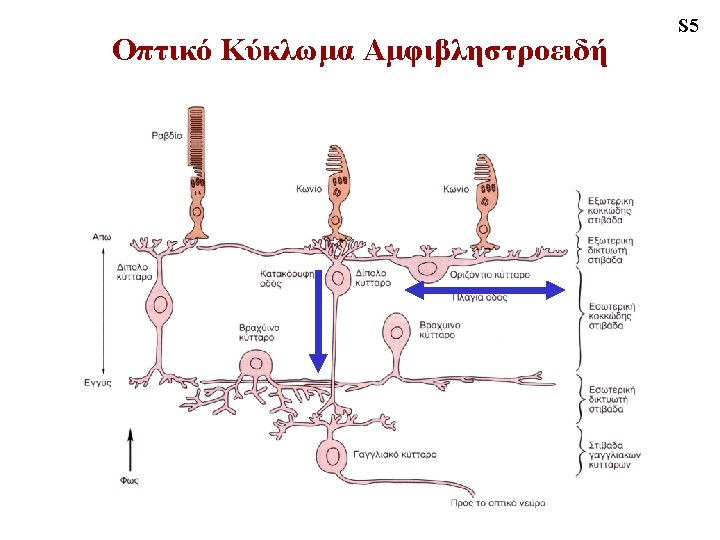
• • • υποδοχή – μετασχηματισμός – κωδικοποίηση (αναπαράσταση) phototransduction: μετατροπή του φωτός σε ηλεκτρικό σήμα από τα photopigments στους φωτουποδοχείς (+ principle of univariance) photoreceptors are hyperpolirised and thus light decreases inhibitory neurotransmitter release to the bipolar cells and thus depolarises them • • • κεντρικό βοθρίο (fovea): μέγιστη οπτική ανάλυση/οξύτητα Γιατί βλέπουμε καλύτερα στο κέντρο από ότι στην περιφέρεια (π. χ. διάβασμα); Γιατί αυτό αντιστρέφεται τη νύχτα; κωνία (cones): λεπτομέρειες, χρώμα, κίνηση, θέλουν πολύ φως, fast temporal dynamics ραβδία (rods): όραση με περιορισμένο φως, slow temporal dynamics ανάλυση (resolution)=κωνία, ευαισθησία (sensitivity)=ραβδία • • convergence: 260 m. photoreceptors – 2 m. ganglion cells (αλλάζει με το eccentricity) in central vision, cones-to-ganglion cells convergence is 1 -1 (high spatial resolution i. e. acuity) • • • pigment epithelium to prevent scatter of light inside the eye cats have tapetum instead, which gives photons a second chance (μάτια γυαλίζουν στο σκοτάδι) red-eye photography (pigment epithelium absorbs long wavelengths less + blood vessels) • • γιατί δεν βλέπουμε τα αγγεία του ματιού μας; Πως μπορούμε να τα “δούμε”; Troxler fading: unchanging stimuli fade from view, the visual system responds only to change (retinal stabilisation makes things disappear from perception ) • • προσαρμογή (adaptation) φωτουποδοχέων στο φως που υπάρχει - ευαισθητοποίηση/απευαισθητοποίηση light adaptation – dark adaptation (economy & change functioning range by changing sensitivity)
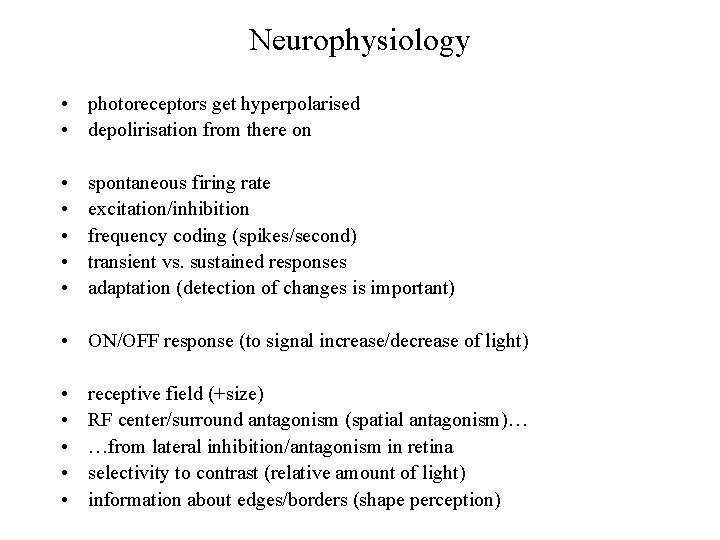
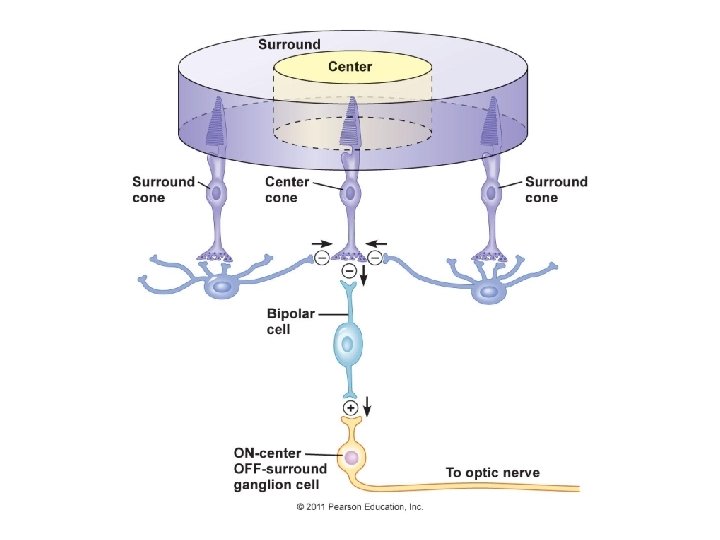
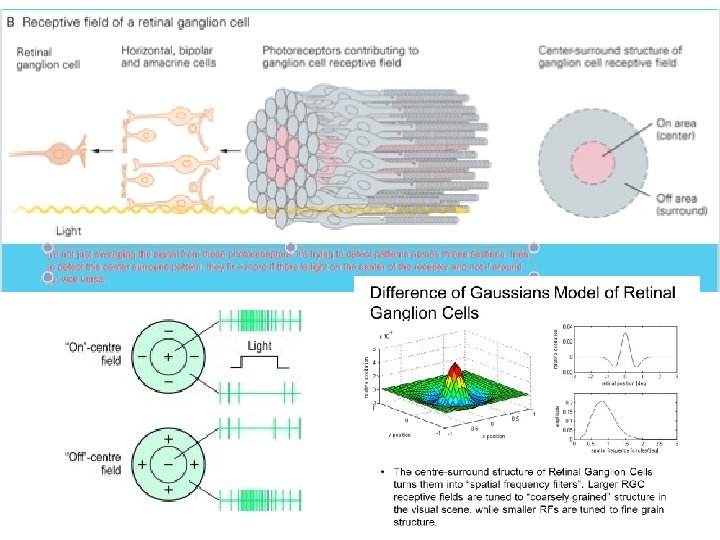
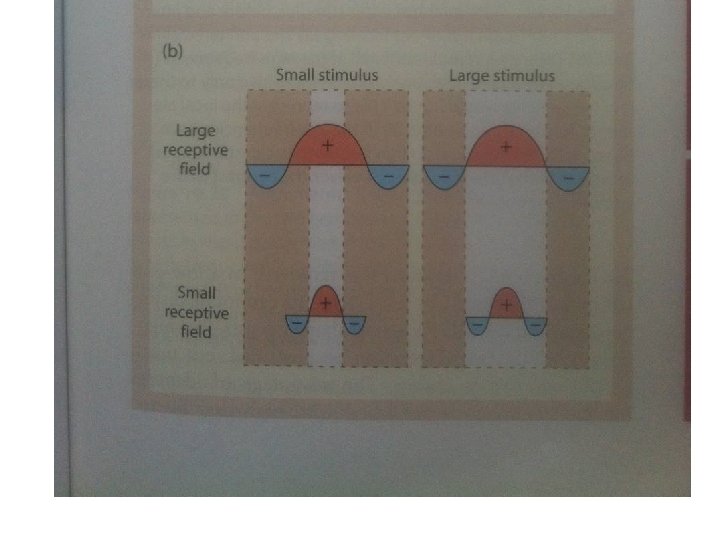
Neurophysiology • photoreceptors get hyperpolarised • depolirisation from there on • • • spontaneous firing rate excitation/inhibition frequency coding (spikes/second) transient vs. sustained responses adaptation (detection of changes is important) • ON/OFF response (to signal increase/decrease of light) • • • receptive field (+size) RF center/surround antagonism (spatial antagonism)… …from lateral inhibition/antagonism in retina selectivity to contrast (relative amount of light) information about edges/borders (shape perception)
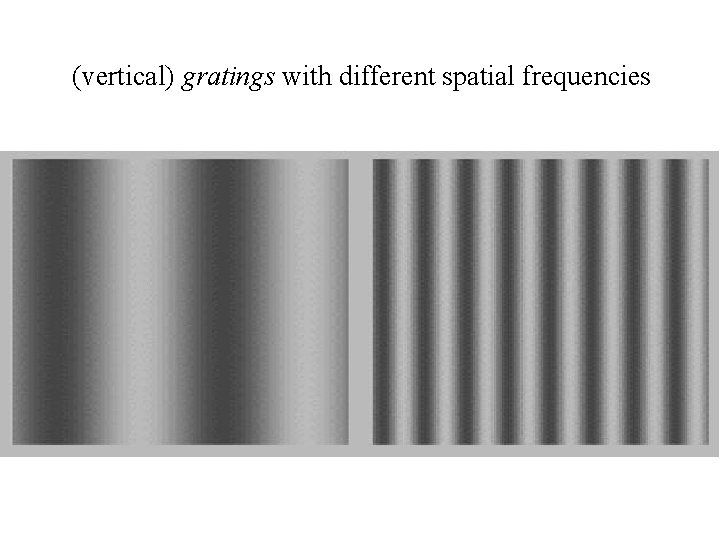
(vertical) gratings with different spatial frequencies