
Photosynthetic Adaptations Life on land Problems associated with
Photosynthetic Adaptations
Life on land • Problems associated with life on land – Water – Structural Support • Solutions – Cuticle – Stomata – Vascular system
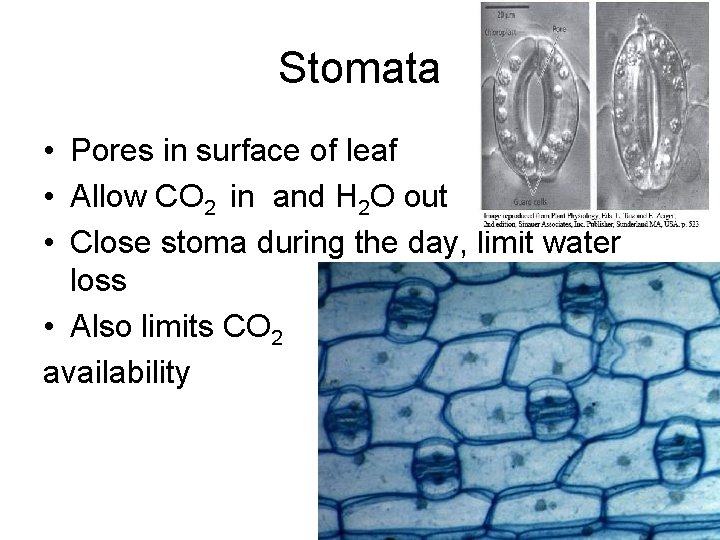
Stomata • Pores in surface of leaf • Allow CO 2 in and H 2 O out • Close stoma during the day, limit water loss • Also limits CO 2 availability
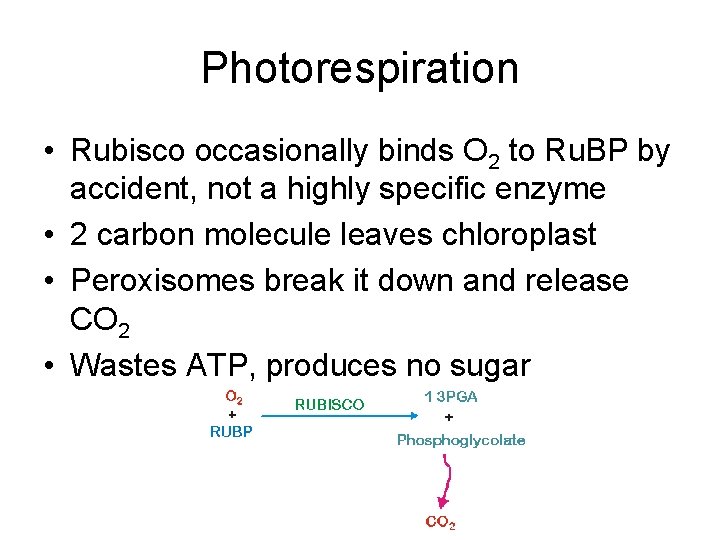
Photorespiration • Rubisco occasionally binds O 2 to Ru. BP by accident, not a highly specific enzyme • 2 carbon molecule leaves chloroplast • Peroxisomes break it down and release CO 2 • Wastes ATP, produces no sugar
Why does photorespiration exist? • Photorespiration drains up to 50% of crops fixed carbon • Early atmosphere had no O 2 – Rubisco didn’t need to be specific • Plants have evolved alternate pathways to avoid photorespiration losses
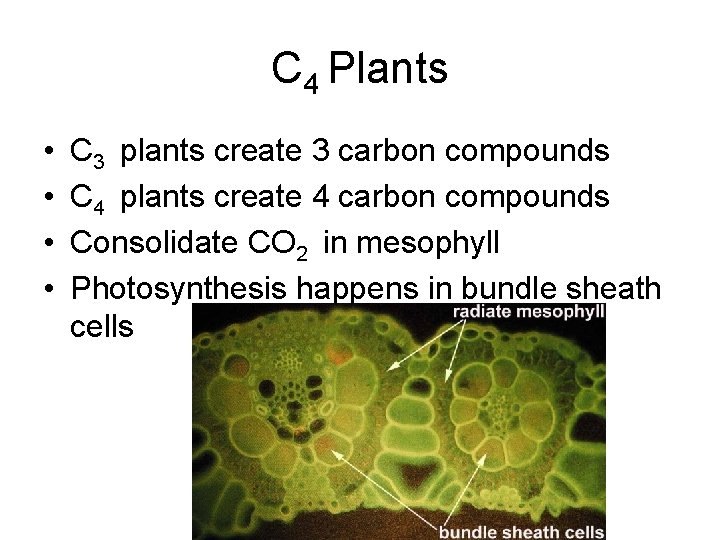
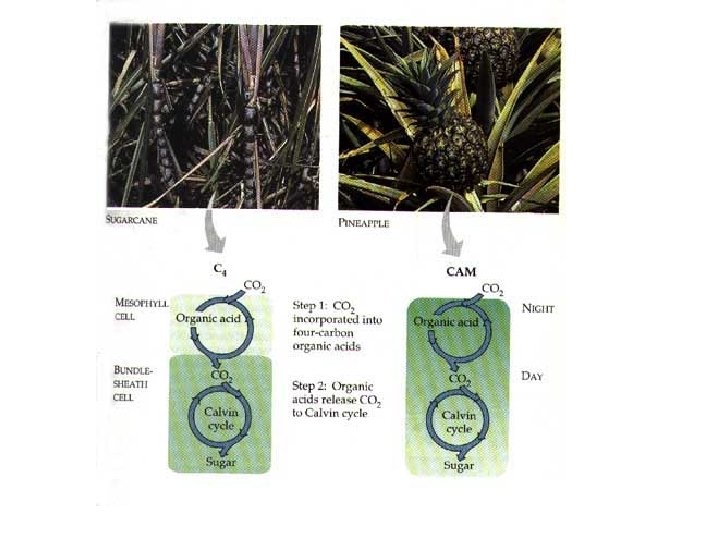
C 4 Plants • • C 3 plants create 3 carbon compounds C 4 plants create 4 carbon compounds Consolidate CO 2 in mesophyll Photosynthesis happens in bundle sheath cells
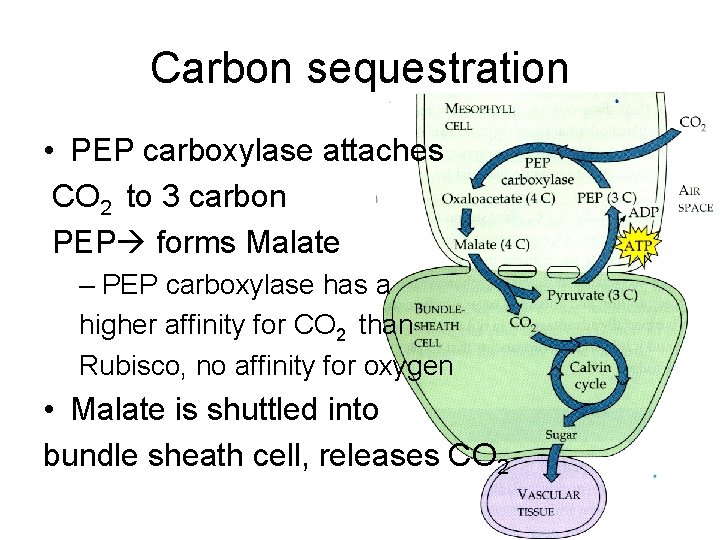
Carbon sequestration • PEP carboxylase attaches CO 2 to 3 carbon PEP forms Malate – PEP carboxylase has a higher affinity for CO 2 than Rubisco, no affinity for oxygen • Malate is shuttled into bundle sheath cell, releases CO 2
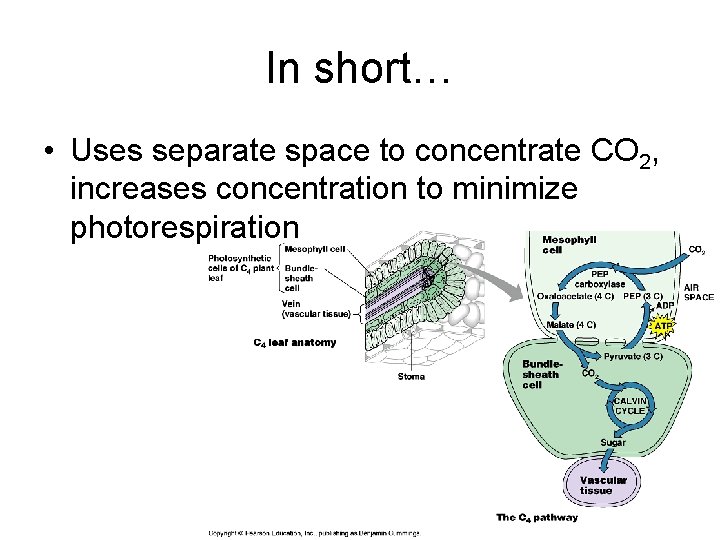
In short… • Uses separate space to concentrate CO 2, increases concentration to minimize photorespiration
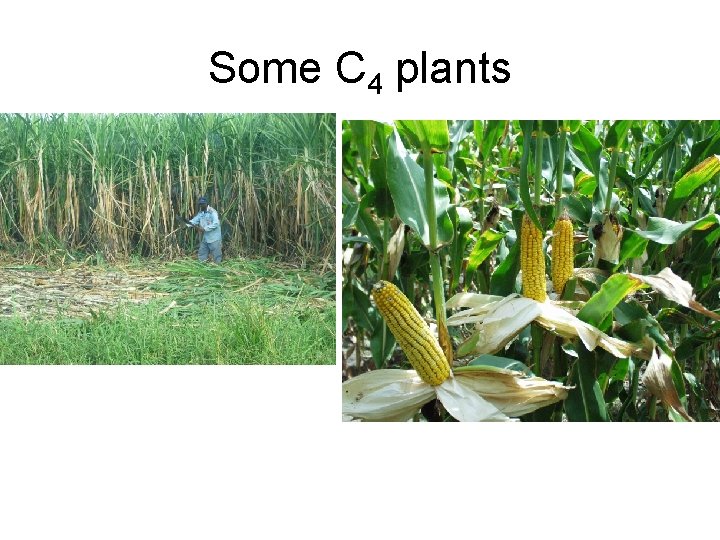
Some C 4 plants
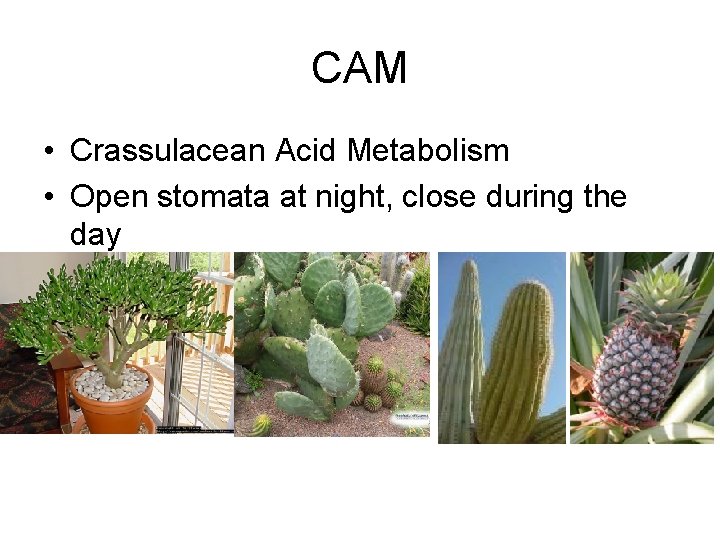
CAM • Crassulacean Acid Metabolism • Open stomata at night, close during the day
How it works… • Take in CO 2 during the night, store it as organic acids in vacuoles – p. H gets more acidic through night • Release CO 2 during the day when ATP, NADPH are supplied by Light Reactions
- Slides: 12