
Photosynthesis Why Study Plants The basic food for
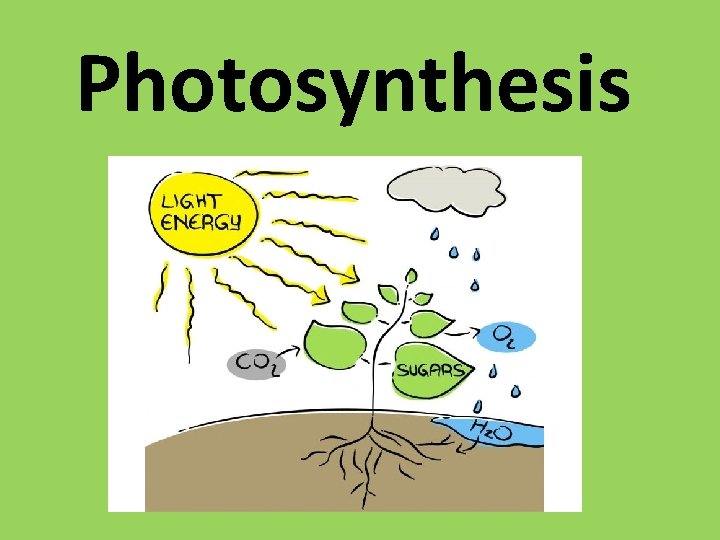
Photosynthesis
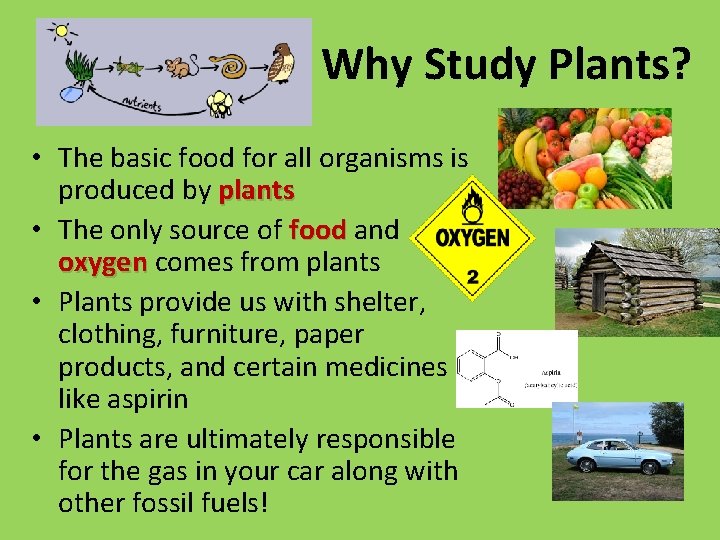
Why Study Plants? • The basic food for all organisms is produced by plants • The only source of food and oxygen comes from plants • Plants provide us with shelter, clothing, furniture, paper products, and certain medicines like aspirin • Plants are ultimately responsible for the gas in your car along with other fossil fuels!
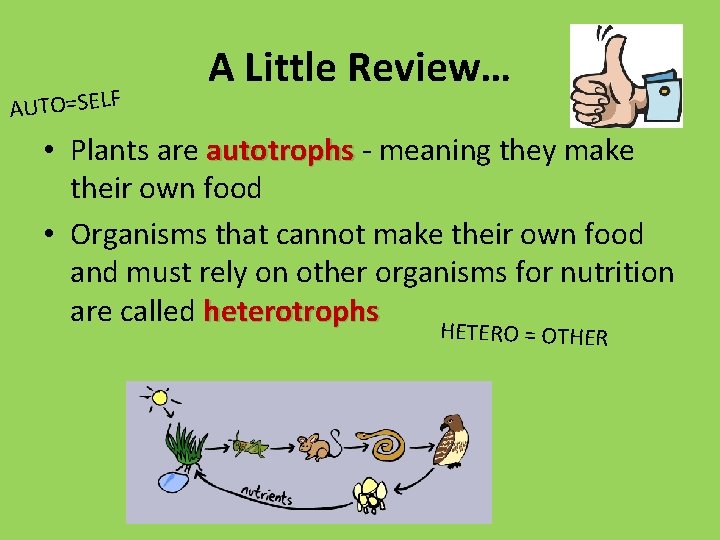
AUTO=SELF A Little Review… • Plants are autotrophs - meaning they make their own food • Organisms that cannot make their own food and must rely on other organisms for nutrition are called heterotrophs H ETERO = OTHER
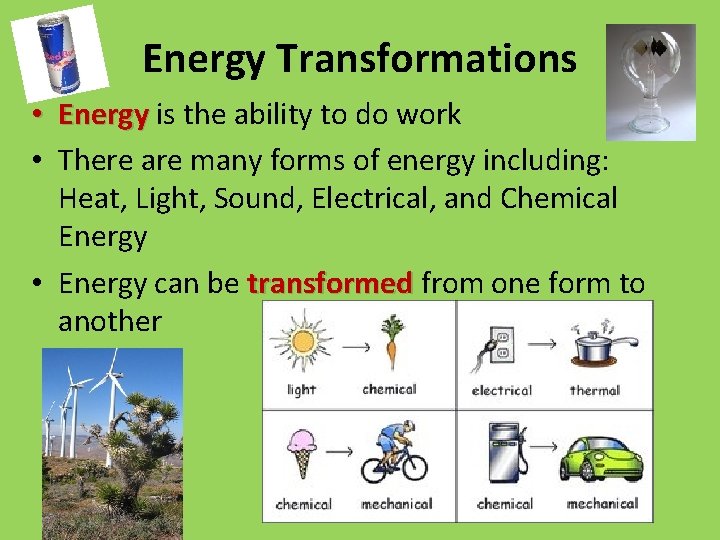
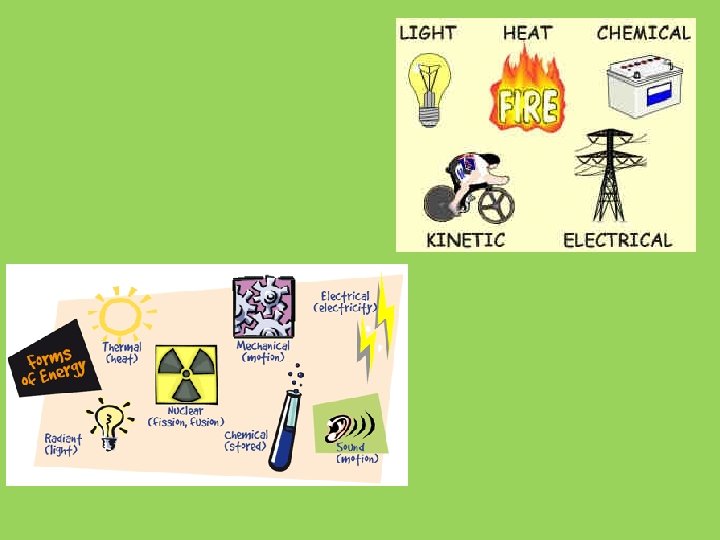
Energy Transformations • Energy is the ability to do work • There are many forms of energy including: Heat, Light, Sound, Electrical, and Chemical Energy • Energy can be transformed from one form to another
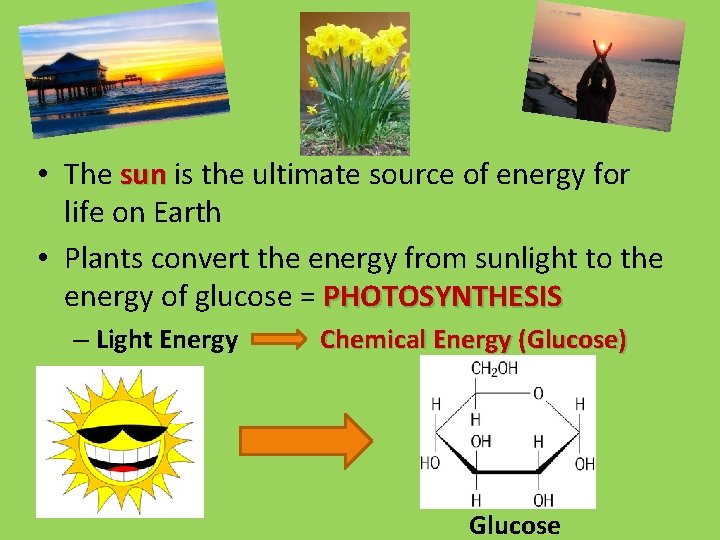
• The sun is the ultimate source of energy for life on Earth • Plants convert the energy from sunlight to the energy of glucose = PHOTOSYNTHESIS – Light Energy Chemical Energy (Glucose) Glucose
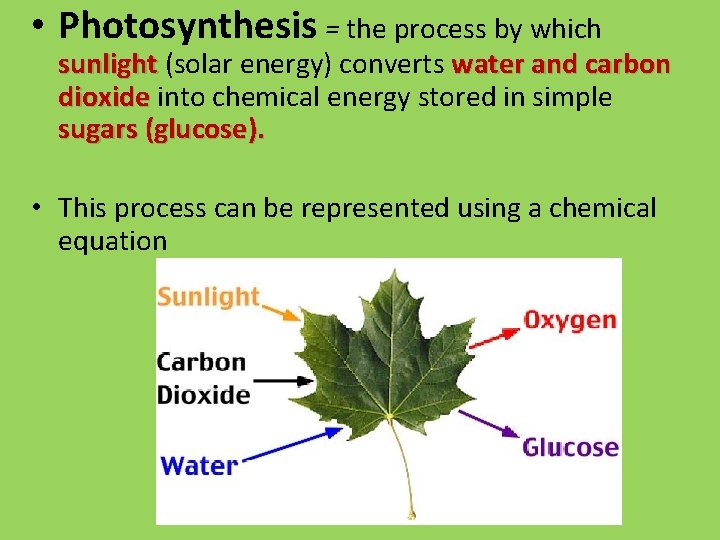
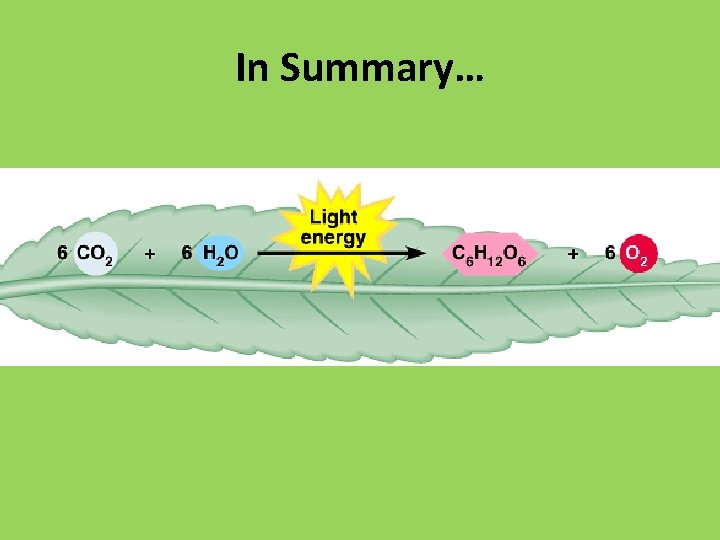
• Photosynthesis = the process by which sunlight (solar energy) converts water and carbon dioxide into chemical energy stored in simple sugars (glucose). • This process can be represented using a chemical equation
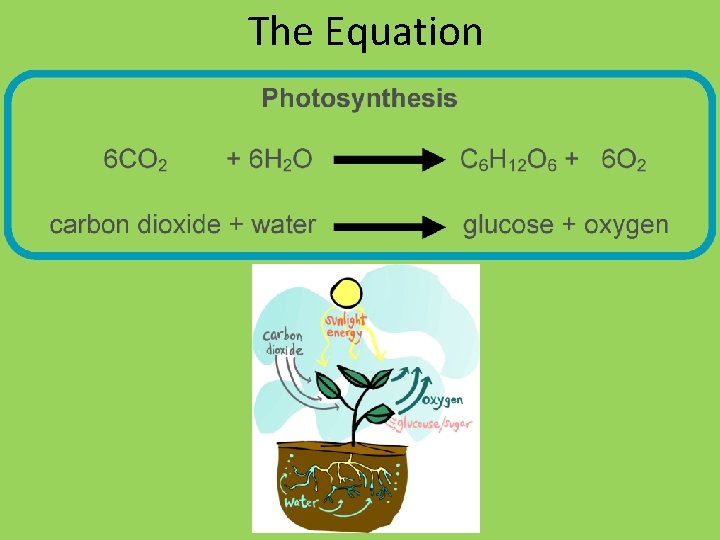
The Equation
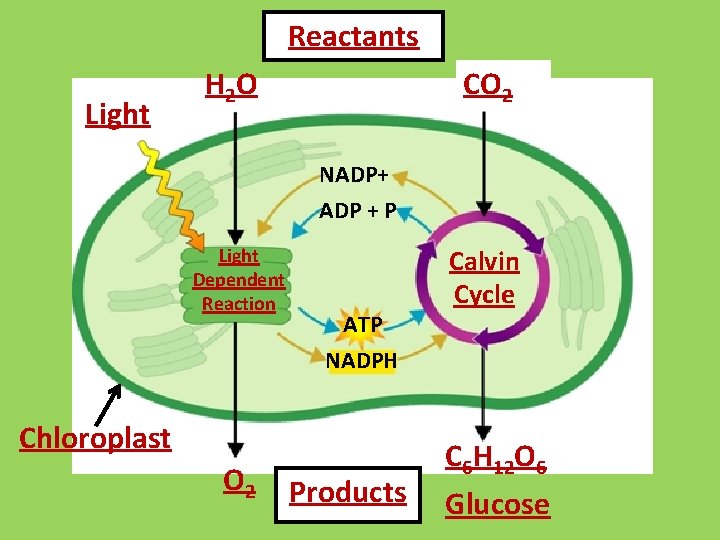
Reactants Light H 2 O CO 2 NADP+ ADP + P Light Dependent Reaction ATP NADPH Chloroplast O 2 Products Calvin Cycle C 6 H 12 O 6 Glucose
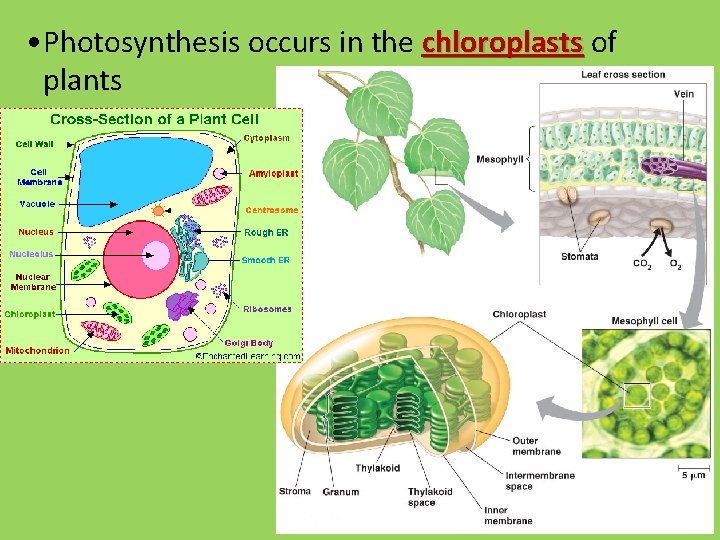
• Photosynthesis occurs in the chloroplasts of plants
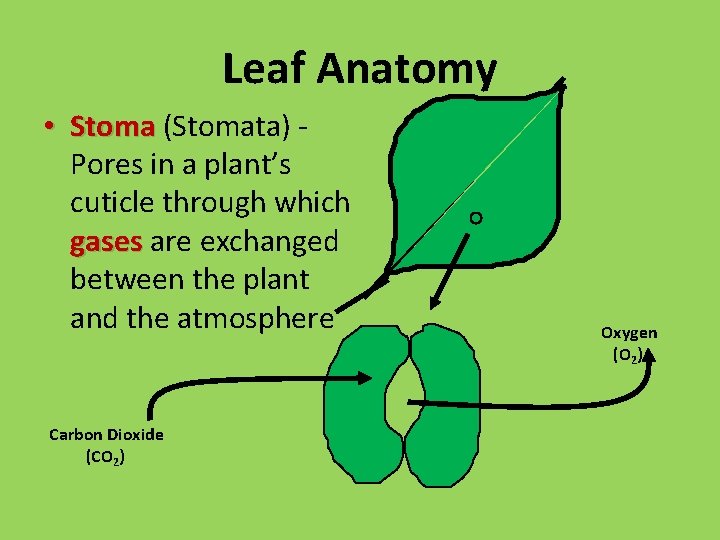
Leaf Anatomy • Stoma (Stomata) Pores in a plant’s cuticle through which gases are exchanged between the plant and the atmosphere Carbon Dioxide (CO 2) Oxygen (O 2)
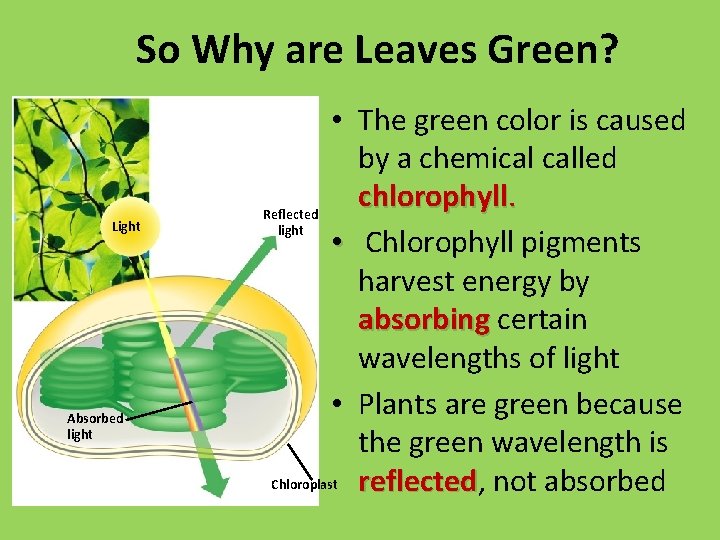
So Why are Leaves Green? Light Absorbed light • The green color is caused by a chemical called chlorophyll. Reflected light • Chlorophyll pigments harvest energy by absorbing certain wavelengths of light • Plants are green because the green wavelength is Chloroplast reflected, reflected not absorbed
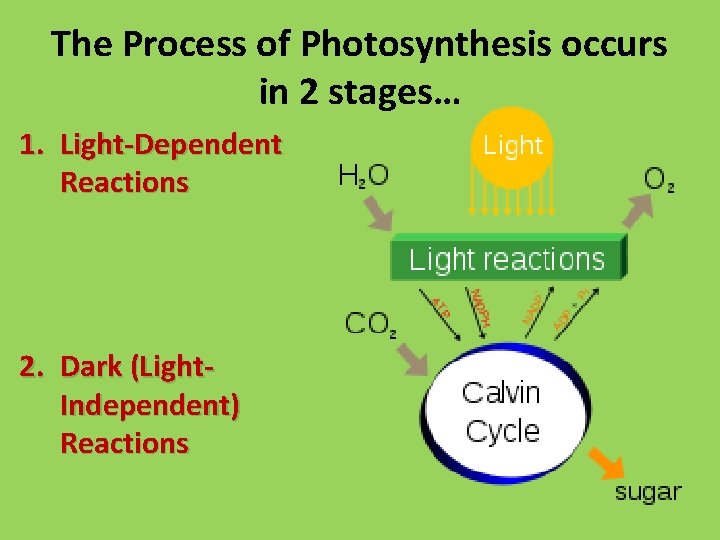
The Process of Photosynthesis occurs in 2 stages… 1. Light-Dependent Reactions 2. Dark (Light. Independent) Reactions
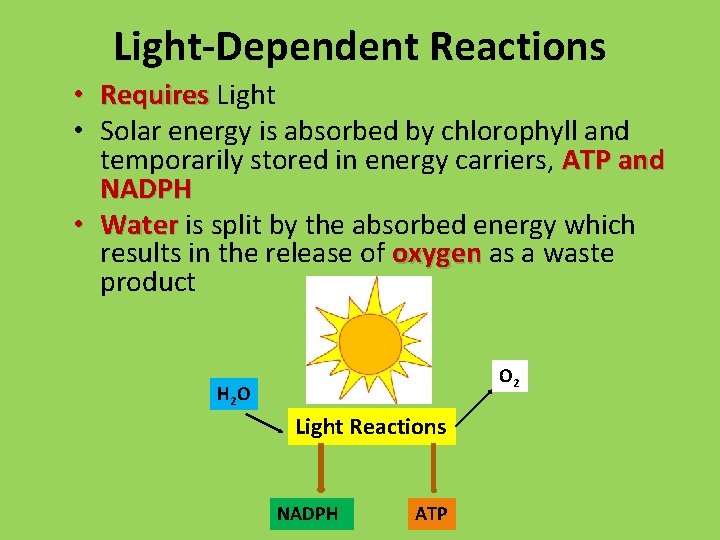
Light-Dependent Reactions • Requires Light • Solar energy is absorbed by chlorophyll and temporarily stored in energy carriers, ATP and NADPH • Water is split by the absorbed energy which results in the release of oxygen as a waste product O 2 H 2 O Light Reactions NADPH ATP
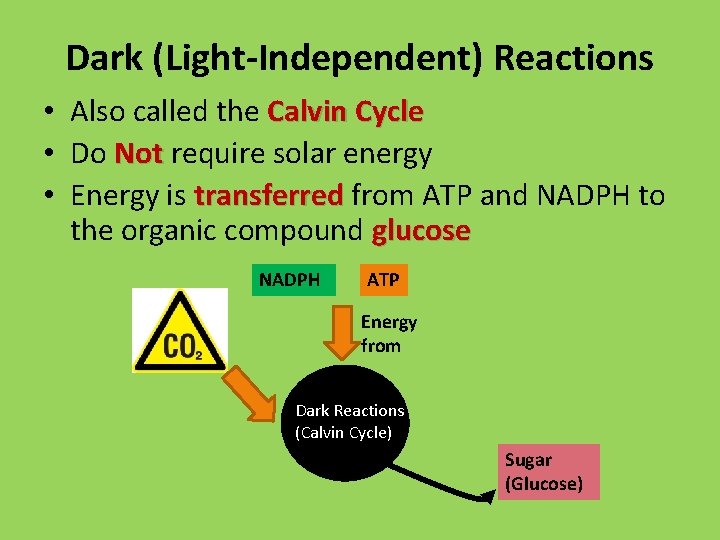
Dark (Light-Independent) Reactions • Also called the Calvin Cycle • Do Not require solar energy • Energy is transferred from ATP and NADPH to the organic compound glucose NADPH ATP Energy from Dark Reactions (Calvin Cycle) Sugar (Glucose)
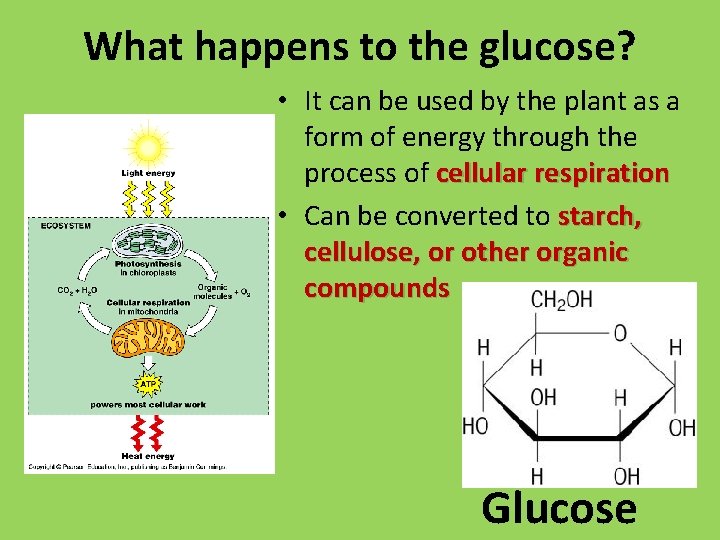
What happens to the glucose? • It can be used by the plant as a form of energy through the process of cellular respiration • Can be converted to starch, cellulose, or other organic compounds Glucose
In Summary…
- Slides: 17