
Photosynthesis What is the ultimate source of all
- Slides: 30
Photosynthesis
What is the ultimate source of all energy
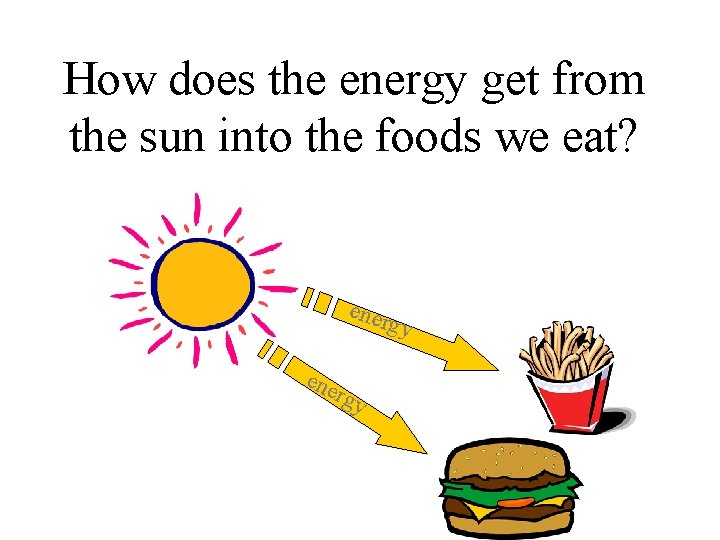
How does the energy get from the sun into the foods we eat? ener gy ene r gy
Plants must break down food just like humans. However, they don’t ingest their food, they make it using photosynthesis.
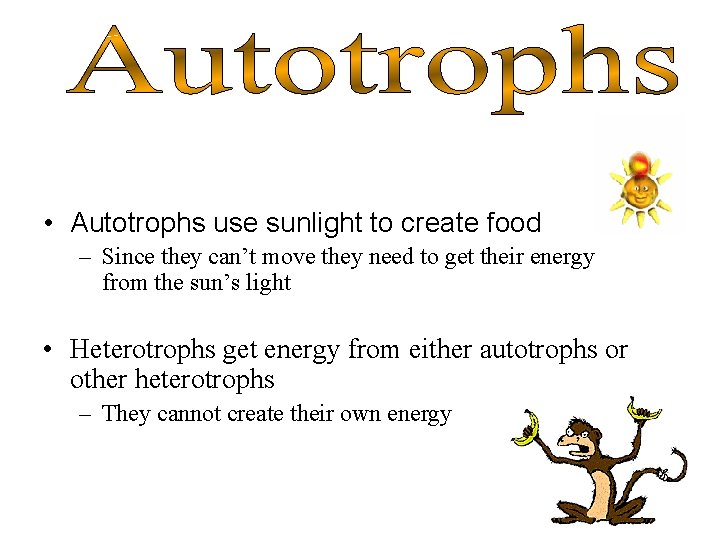
• Autotrophs use sunlight to create food – Since they can’t move they need to get their energy from the sun’s light • Heterotrophs get energy from either autotrophs or other heterotrophs – They cannot create their own energy
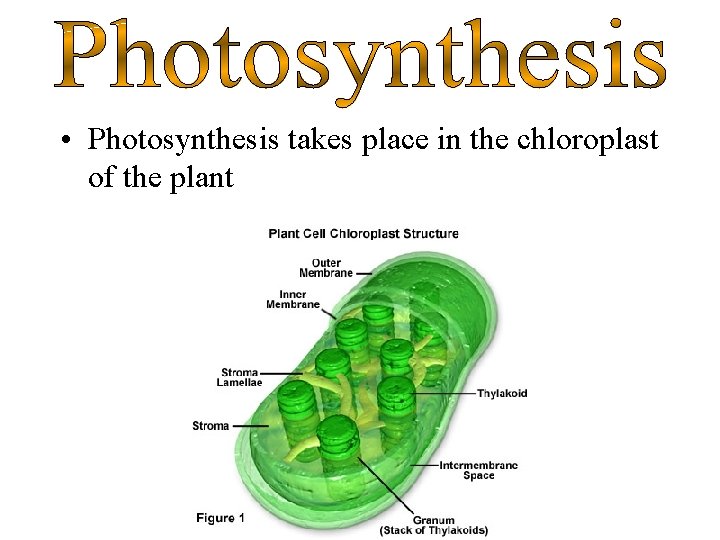
• Photosynthesis takes place in the chloroplast of the plant
Where do we find chloroplasts?
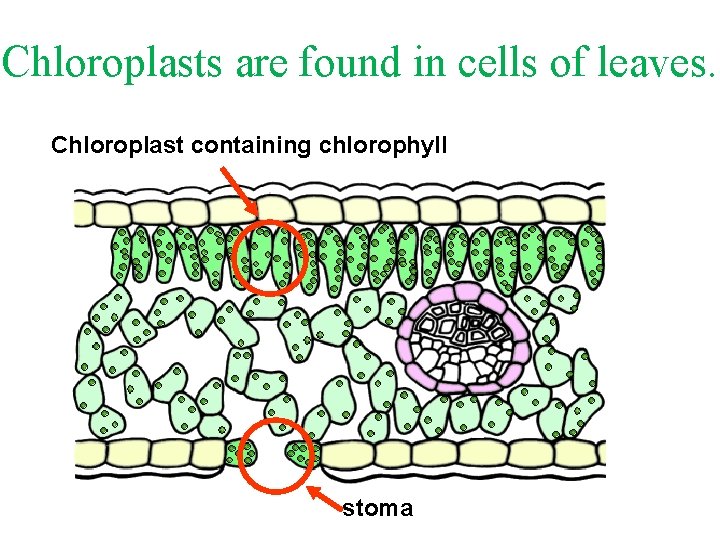
Chloroplasts are found in cells of leaves. Chloroplast containing chlorophyll stoma
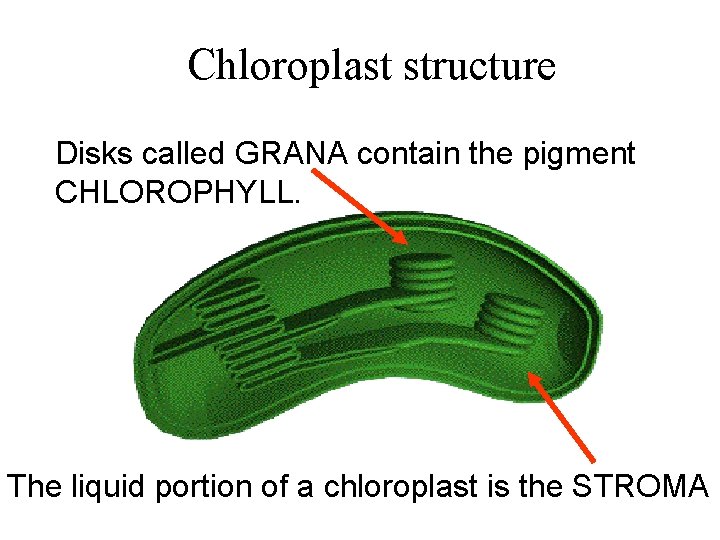
Chloroplast structure Disks called GRANA contain the pigment CHLOROPHYLL. The liquid portion of a chloroplast is the STROMA
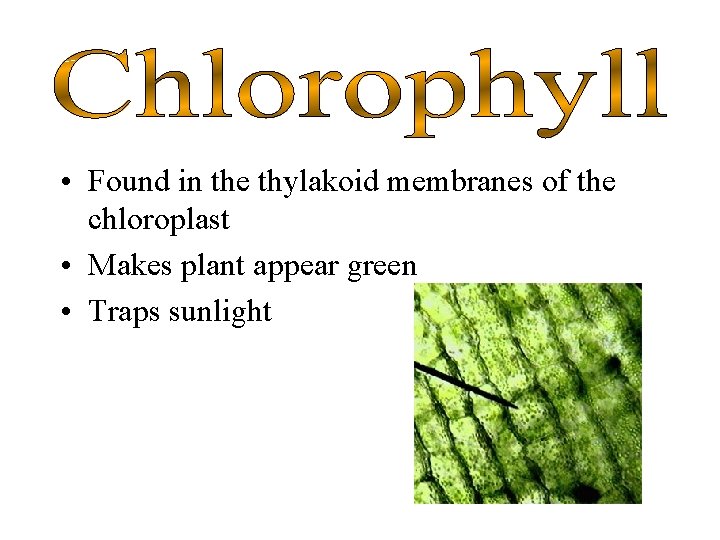
• Found in the thylakoid membranes of the chloroplast • Makes plant appear green • Traps sunlight
What process captures the light energy and uses it to make food?
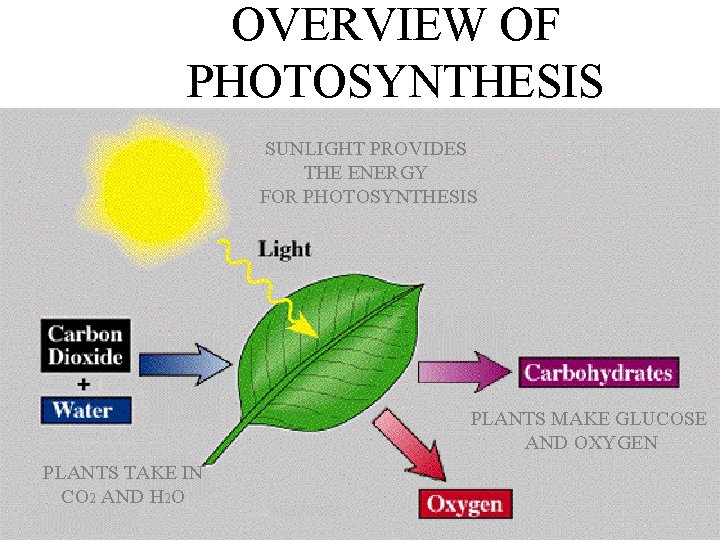
OVERVIEW OF PHOTOSYNTHESIS SUNLIGHT PROVIDES THE ENERGY FOR PHOTOSYNTHESIS PLANTS MAKE GLUCOSE AND OXYGEN PLANTS TAKE IN CO 2 AND H 2 O
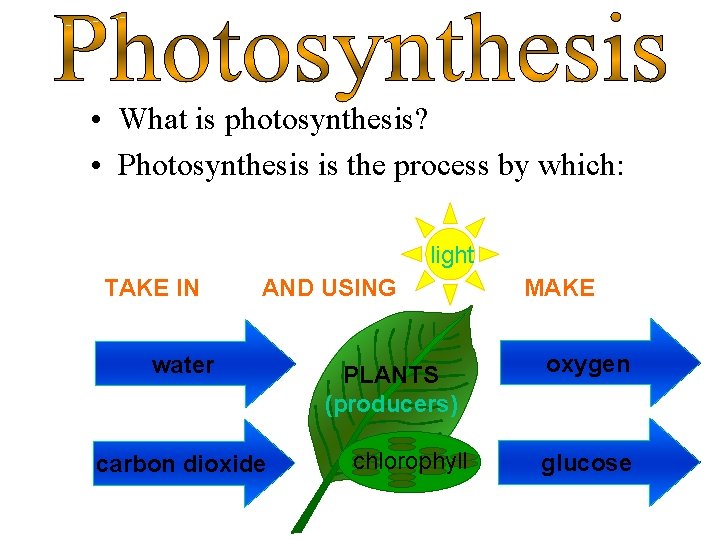
• What is photosynthesis? • Photosynthesis is the process by which: light TAKE IN AND USING water carbon dioxide PLANTS (producers) chlorophyll MAKE oxygen glucose
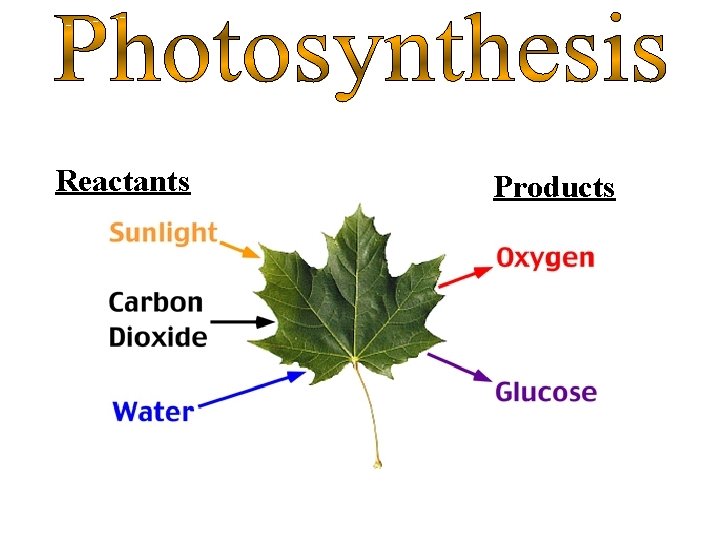
Reactants Products
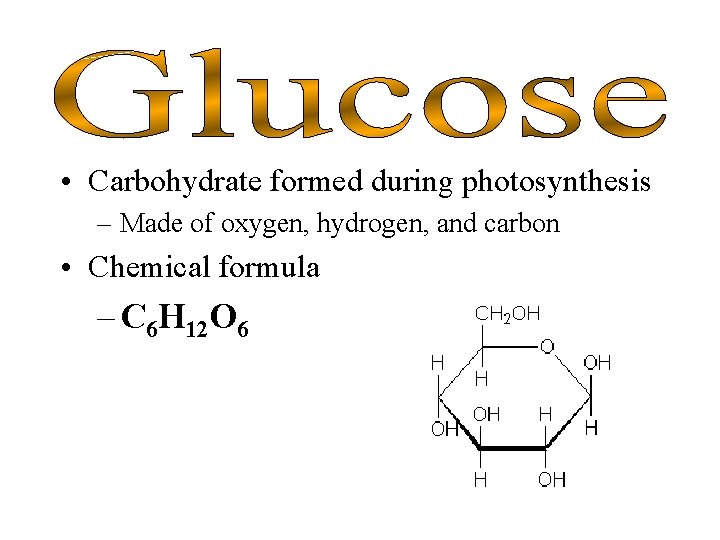
• Carbohydrate formed during photosynthesis – Made of oxygen, hydrogen, and carbon • Chemical formula – C 6 H 12 O 6
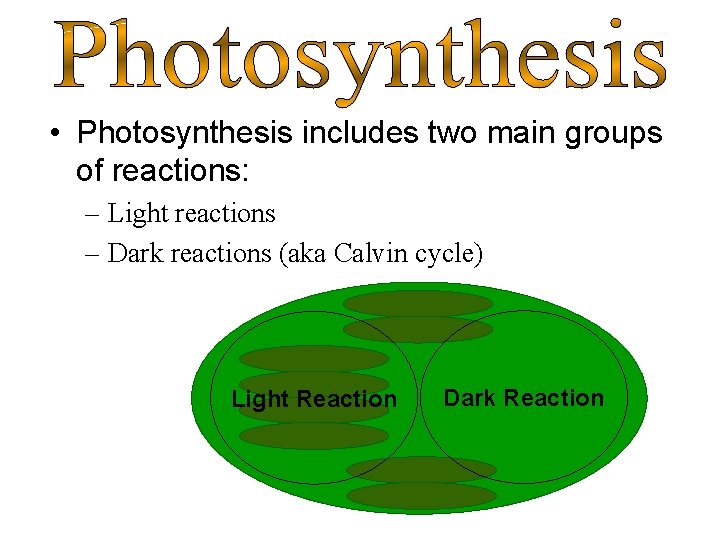
• Photosynthesis includes two main groups of reactions: – Light reactions – Dark reactions (aka Calvin cycle) Light Reaction Dark Reaction
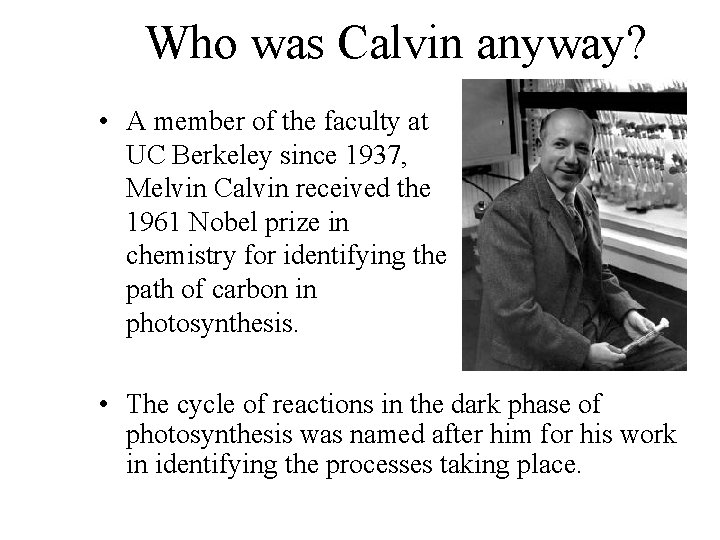
Who was Calvin anyway? • A member of the faculty at UC Berkeley since 1937, Melvin Calvin received the 1961 Nobel prize in chemistry for identifying the path of carbon in photosynthesis. • The cycle of reactions in the dark phase of photosynthesis was named after him for his work in identifying the processes taking place.
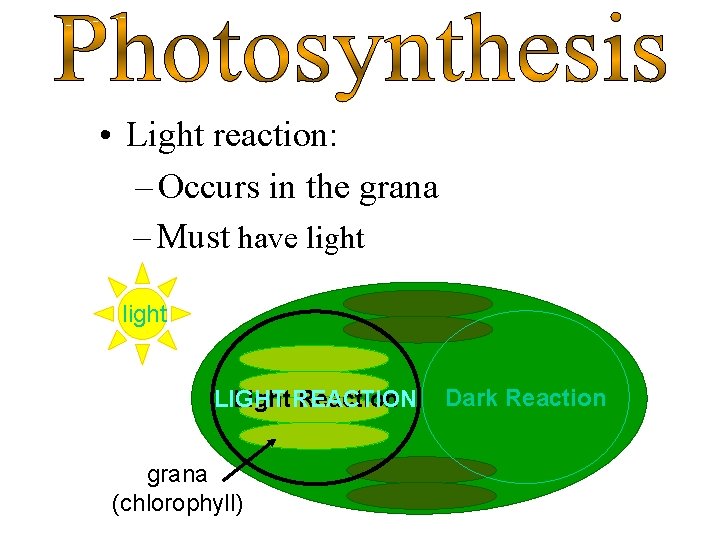
• Light reaction: – Occurs in the grana – Must have light LIGHT Light REACTION Reaction grana (chlorophyll) Dark Reaction
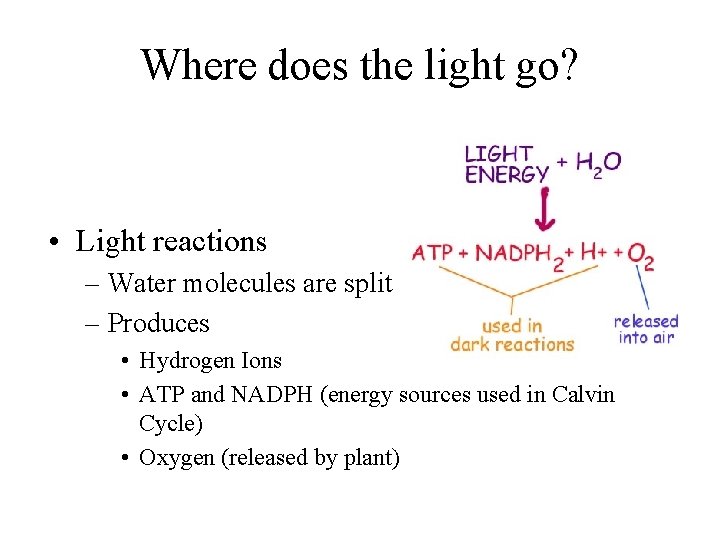
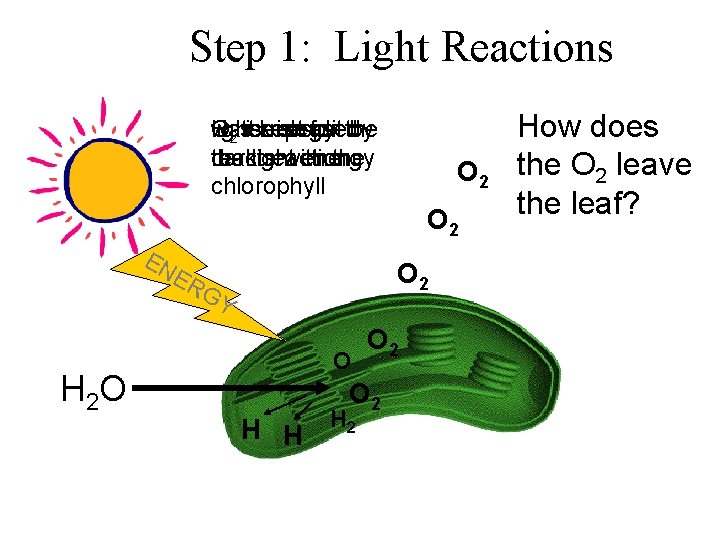
Where does the light go? • Light reactions – Water molecules are split – Produces • Hydrogen Ions • ATP and NADPH (energy sources used in Calvin Cycle) • Oxygen (released by plant)
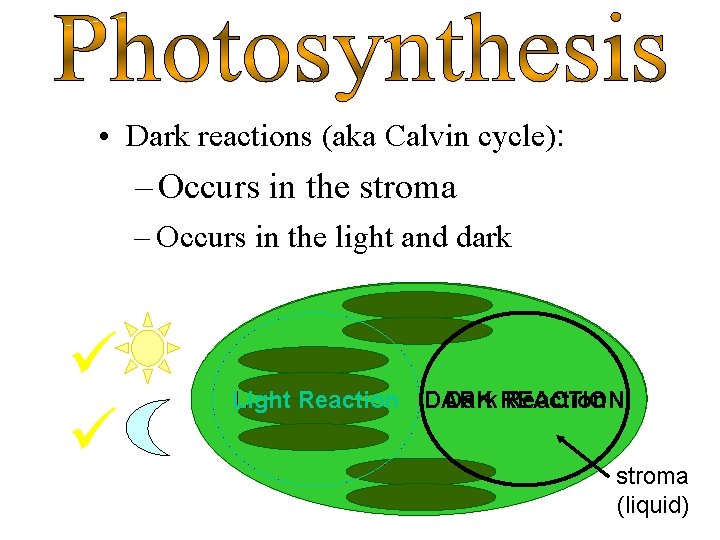
• Dark reactions (aka Calvin cycle): – Occurs in the stroma – Occurs in the light and dark Light Reaction DARK Dark REACTION Reaction stroma (liquid)
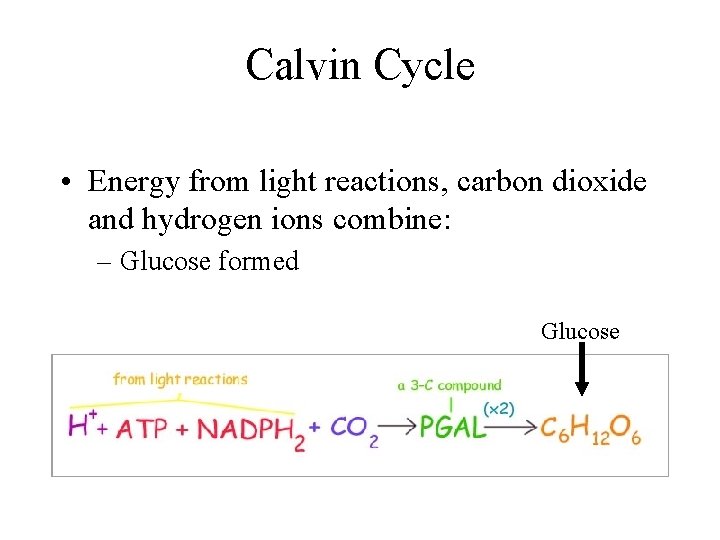
Calvin Cycle • Energy from light reactions, carbon dioxide and hydrogen ions combine: – Glucose formed Glucose
Step 1: Light Reactions O 2 isiskept light water H energy released is split for the by reacts the dark light reaction with energy the chlorophyll O 2 EN O 2 ER H 2 O GY O O 2 H H H 2 How does the O 2 leave the leaf?
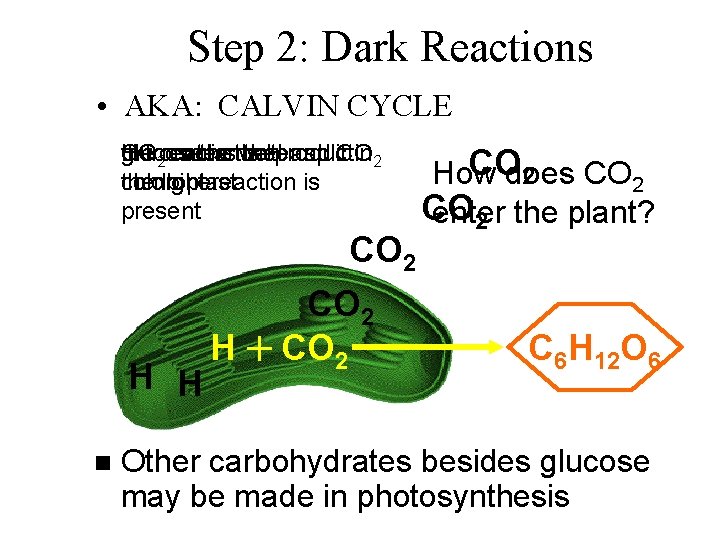
Step 2: Dark Reactions • AKA: CALVIN CYCLE glucose H CO the from enters the is the water the. Hproduct and split. CO in 2 2 reactants the light reaction is chloroplast combine present CO 2 H H n CO 2 H + CO 2 COdoes How CO 2 2 CO enter 2 the plant? C 6 H 12 O 6 Other carbohydrates besides glucose may be made in photosynthesis
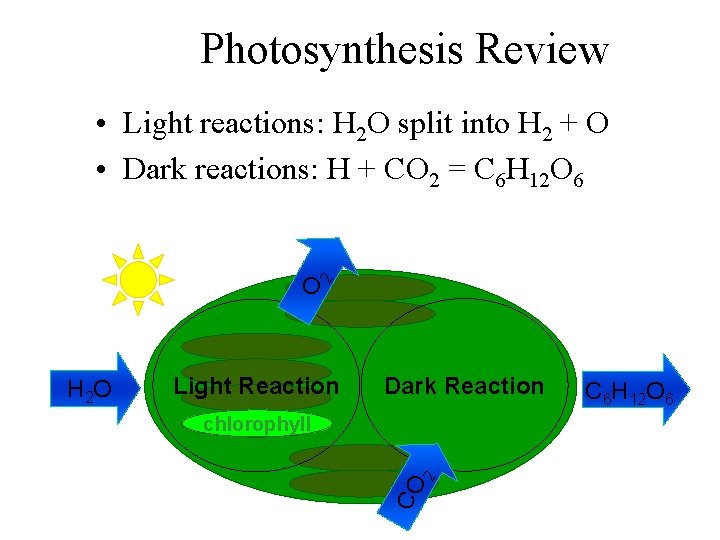
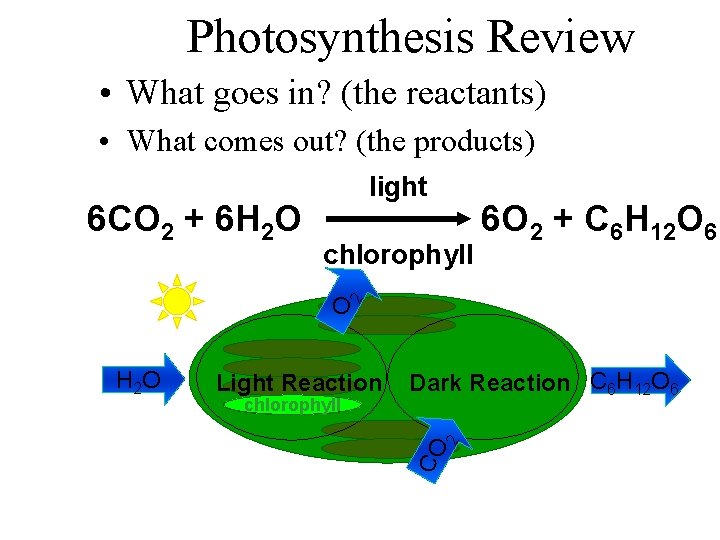
Photosynthesis Review O 2 • Light reactions: H 2 O split into H 2 + O • Dark reactions: H + CO 2 = C 6 H 12 O 6 Light Reaction Dark Reaction 2 chlorophyll CO H 2 O C 6 H 12 O 6
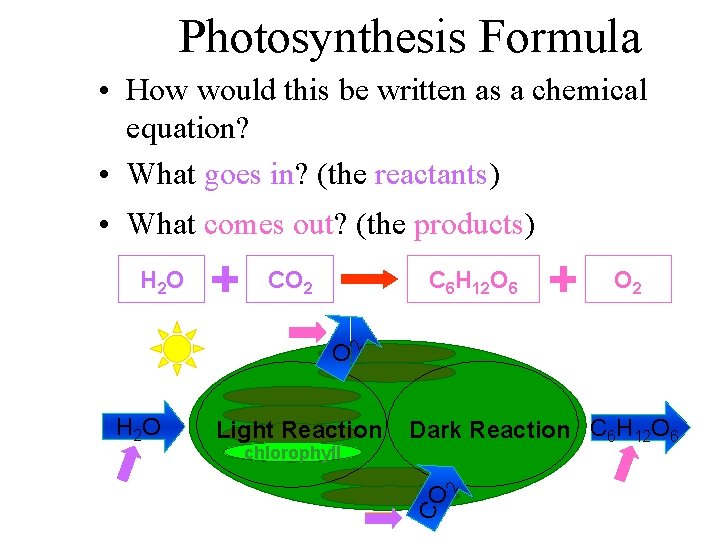
Photosynthesis Formula • How would this be written as a chemical equation? • What goes in? (the reactants) • What comes out? (the products) CO 2 C 6 H 12 O 6 O 2 H 2 O chlorophyll Dark Reaction C 6 H 12 O 6 2 Light Reaction CO H 2 O
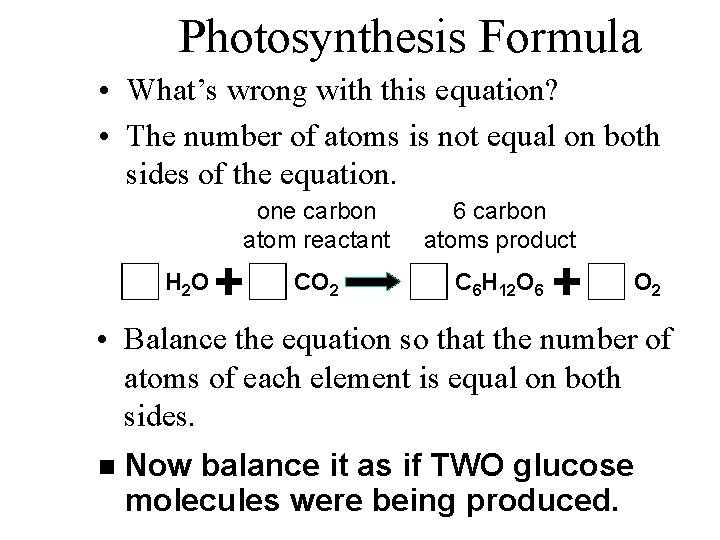
Photosynthesis Formula • What’s wrong with this equation? • The number of atoms is not equal on both sides of the equation. one carbon atom reactant 6 H 2 O 6 CO 2 6 carbon atoms product (1) C 6 H 12 O 6 6 O 2 • Balance the equation so that the number of atoms of each element is equal on both sides. n Now balance it as if TWO glucose molecules were being produced.
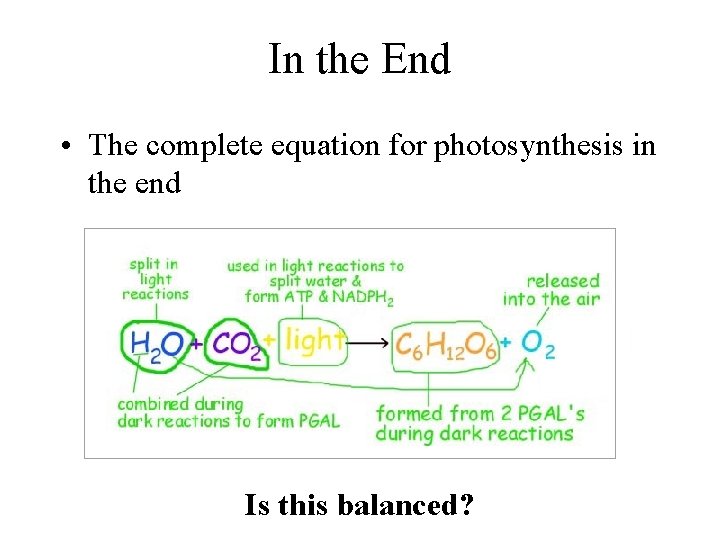
In the End • The complete equation for photosynthesis in the end Is this balanced?
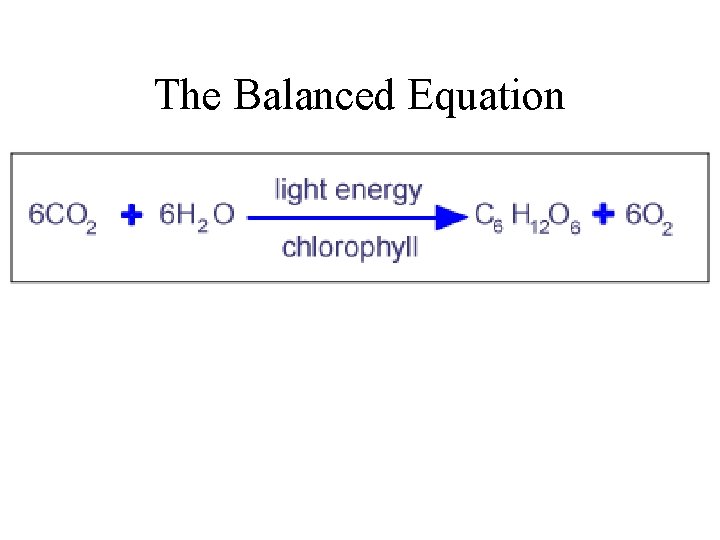
The Balanced Equation
Photosynthesis Review • What goes in? (the reactants) • What comes out? (the products) chlorophyll 6 O 2 + C 6 H 12 O 6 O 2 6 CO 2 + 6 H 2 O light chlorophyll Dark Reaction C 6 H 12 O 6 2 Light Reaction CO H 2 O
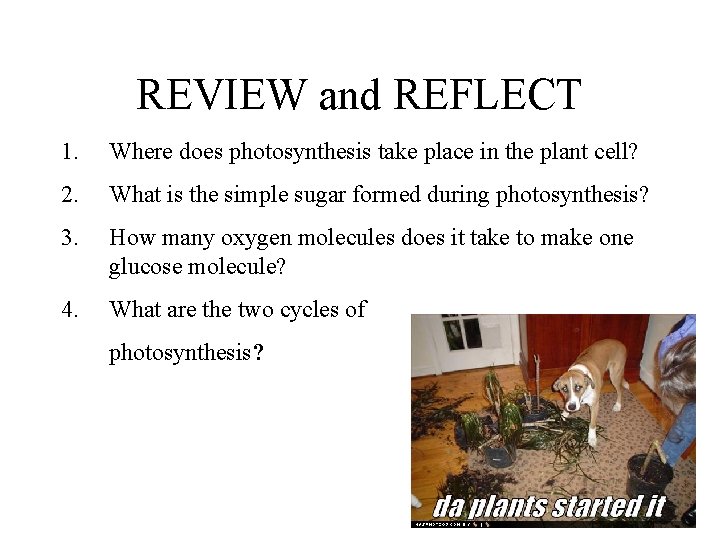
REVIEW and REFLECT 1. Where does photosynthesis take place in the plant cell? 2. What is the simple sugar formed during photosynthesis? 3. How many oxygen molecules does it take to make one glucose molecule? 4. What are the two cycles of photosynthesis?