
Photosynthesis vs Cell Respiration Complementary Processes These two
- Slides: 5
Photosynthesis vs. Cell Respiration
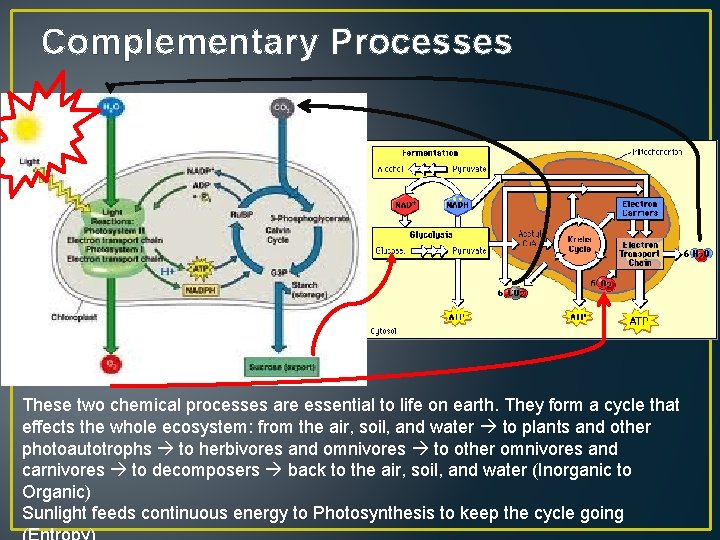
Complementary Processes These two chemical processes are essential to life on earth. They form a cycle that effects the whole ecosystem: from the air, soil, and water to plants and other photoautotrophs to herbivores and omnivores to other omnivores and carnivores to decomposers back to the air, soil, and water (Inorganic to Organic) Sunlight feeds continuous energy to Photosynthesis to keep the cycle going
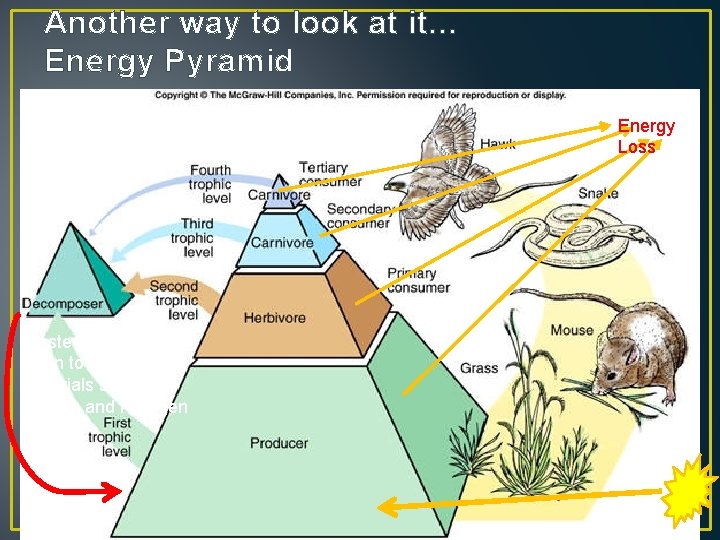
Another way to look at it… Energy Pyramid Energy Loss Waste is broken down to reusable materials such as Carbon and Nitrogen
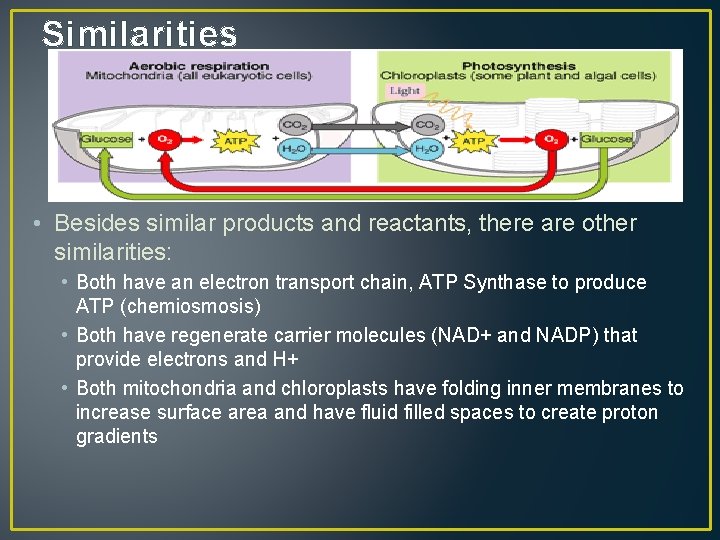
Similarities • Besides similar products and reactants, there are other similarities: • Both have an electron transport chain, ATP Synthase to produce ATP (chemiosmosis) • Both have regenerate carrier molecules (NAD+ and NADP) that provide electrons and H+ • Both mitochondria and chloroplasts have folding inner membranes to increase surface area and have fluid filled spaces to create proton gradients
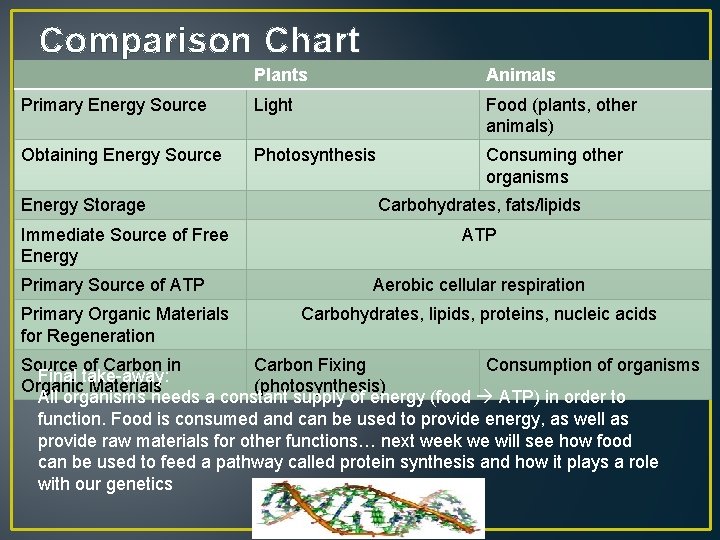
Comparison Chart Plants Animals Primary Energy Source Light Food (plants, other animals) Obtaining Energy Source Photosynthesis Consuming other organisms Energy Storage Immediate Source of Free Energy Primary Source of ATP Primary Organic Materials for Regeneration Carbohydrates, fats/lipids ATP Aerobic cellular respiration Carbohydrates, lipids, proteins, nucleic acids Source of Carbon in Carbon Fixing Consumption of organisms Final take-away: Organic Materials (photosynthesis) All organisms needs a constant supply of energy (food ATP) in order to function. Food is consumed and can be used to provide energy, as well as provide raw materials for other functions… next week we will see how food can be used to feed a pathway called protein synthesis and how it plays a role with our genetics