
Photosynthesis Twostage process Lightdependent reaction Occurs only during

- Slides: 25
Photosynthesis • Two-stage process • Light-dependent reaction – Occurs only during daylight • Light-independent reaction – May continue in the dark
• Photosynth • https: //www. youtube. com/watch? v=g 78 utc LQr. J 4 • Respiration • https: //www. youtube. com/watch? v=0 IJMR s. Tcwcg
Evidence for two stages • Temperature has a clear effect on the rate of photosynthesis – This suggests that although light levels initially limit the rate, there is a second stage controlled by temperature-sensitive enzymes • A plant given alternating periods of dark and light forms more carbohydrate than one in continuous light – Period of darkness ensures that all the product from first stage is converted into carbohydrate before it builds up
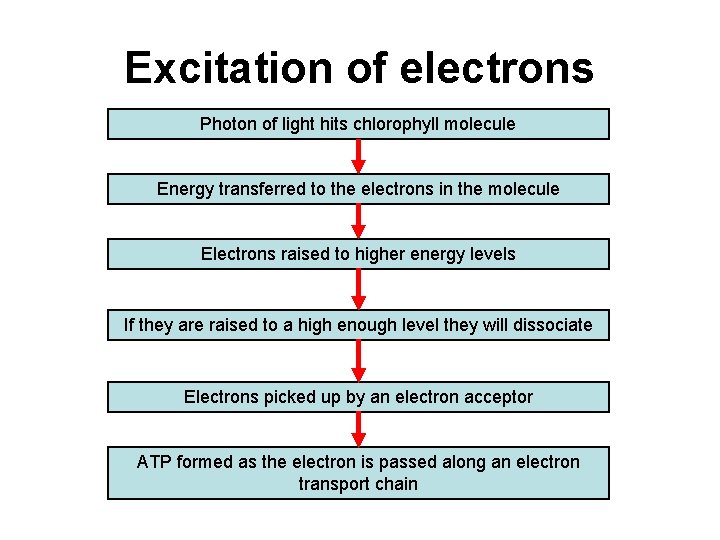
Excitation of electrons Photon of light hits chlorophyll molecule Energy transferred to the electrons in the molecule Electrons raised to higher energy levels If they are raised to a high enough level they will dissociate Electrons picked up by an electron acceptor ATP formed as the electron is passed along an electron transport chain
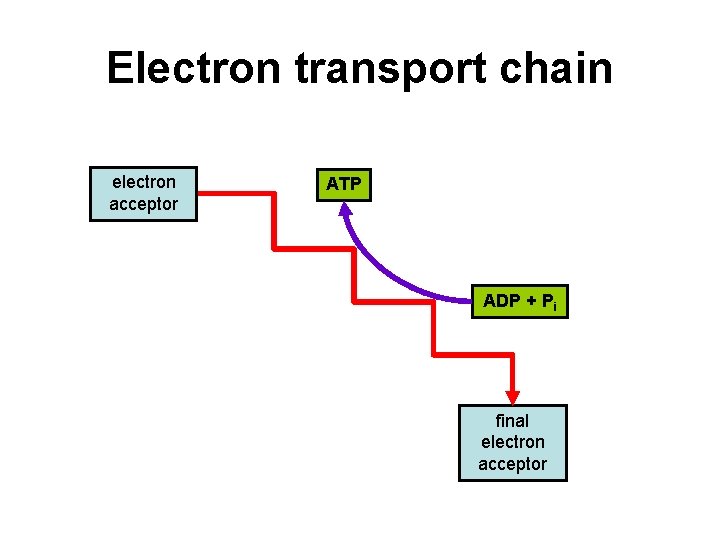
Electron transport chain electron acceptor ATP ADP + Pi final electron acceptor
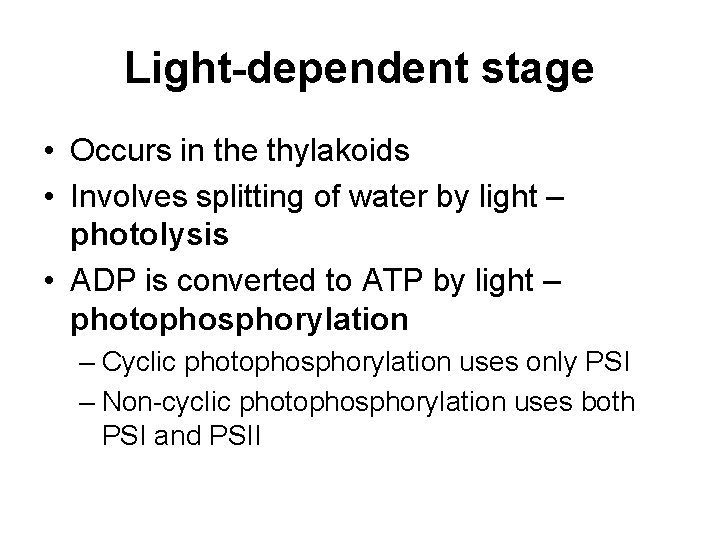
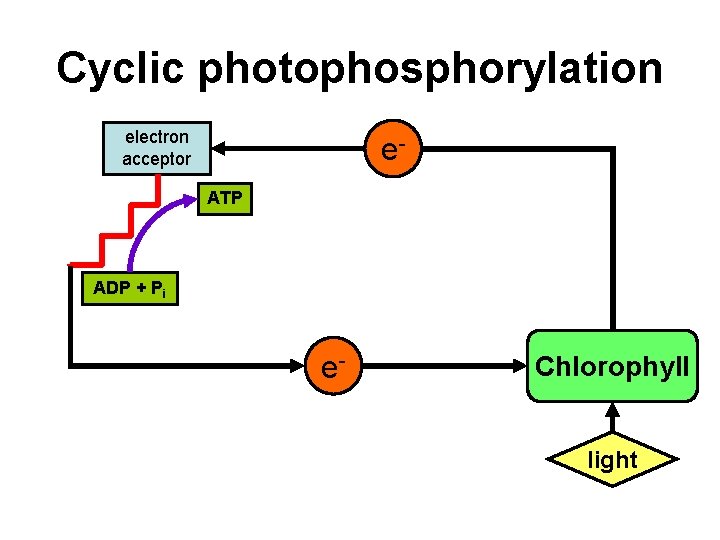
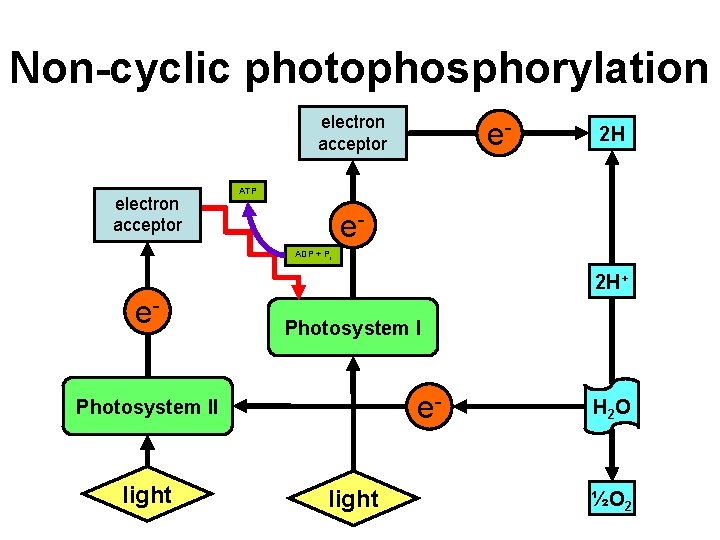
Light-dependent stage • Occurs in the thylakoids • Involves splitting of water by light – photolysis • ADP is converted to ATP by light – photophosphorylation – Cyclic photophosphorylation uses only PSI – Non-cyclic photophosphorylation uses both PSI and PSII
Cyclic photophosphorylation electron acceptor e. ATP ADP + Pi e- Chlorophyll light
Non-cyclic photophosphorylation electron acceptor e- 2 H ATP e. ADP + Pi 2 H+ e- Photosystem II light H 2 O ½O 2
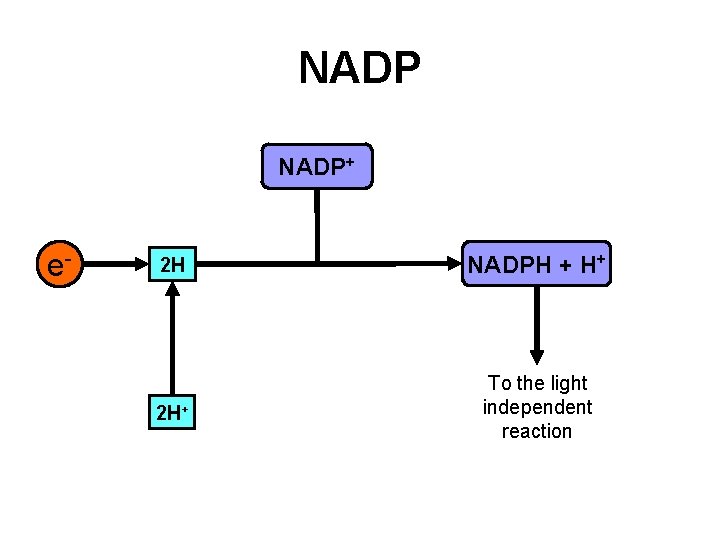
NADP+ e- 2 H NADPH + H+ 2 H+ To the light independent reaction
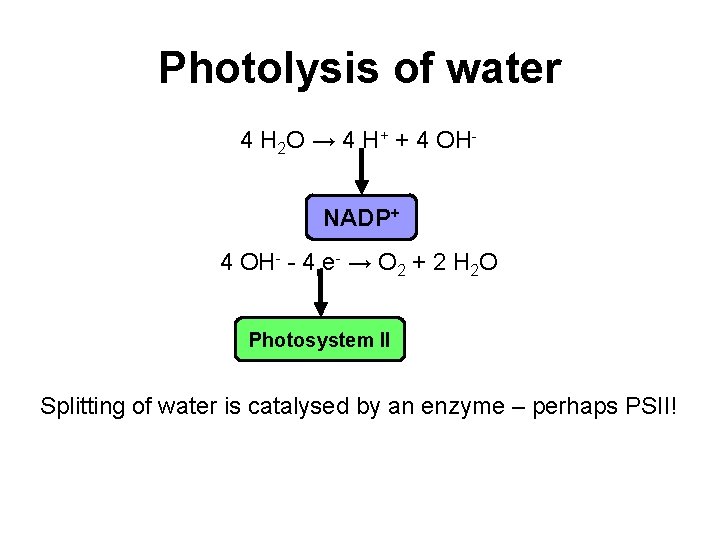
Photolysis of water 4 H 2 O → 4 H+ + 4 OHNADP+ 4 OH- - 4 e- → O 2 + 2 H 2 O Photosystem II Splitting of water is catalysed by an enzyme – perhaps PSII!
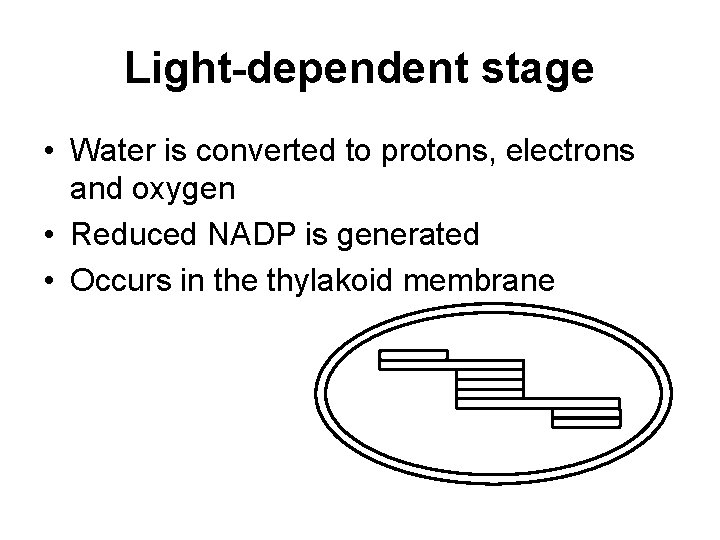
Light-dependent stage • Water is converted to protons, electrons and oxygen • Reduced NADP is generated • Occurs in the thylakoid membrane
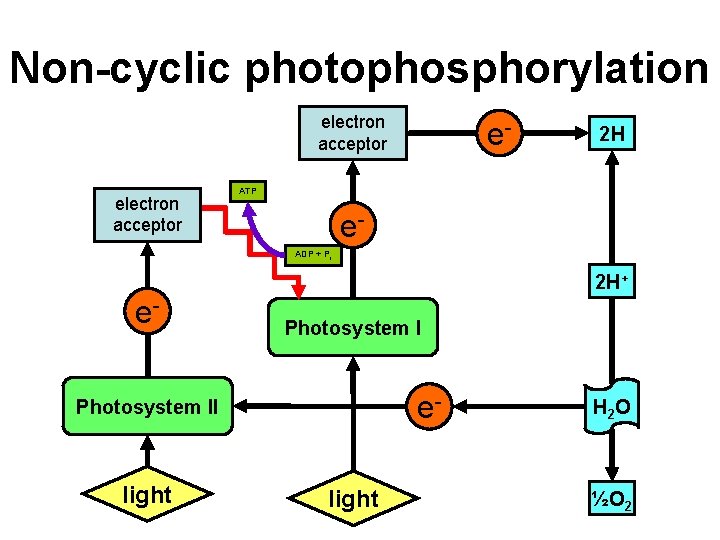
Non-cyclic photophosphorylation electron acceptor e- 2 H ATP e. ADP + Pi 2 H+ e- Photosystem II light H 2 O ½O 2
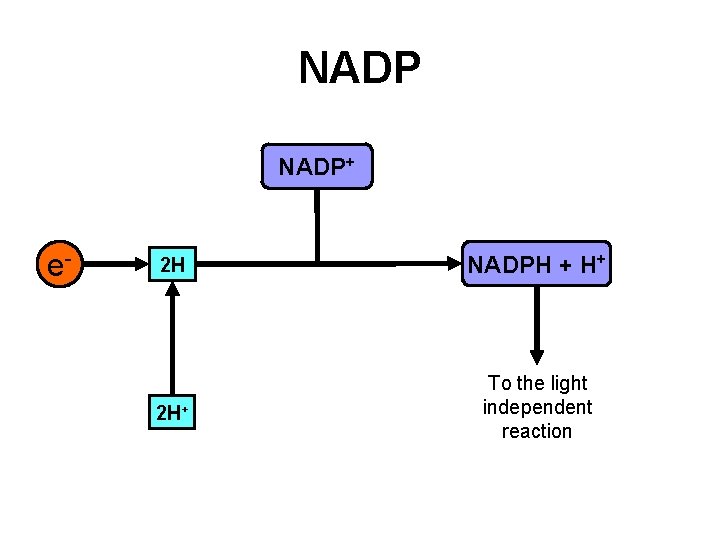
NADP+ e- 2 H NADPH + H+ 2 H+ To the light independent reaction
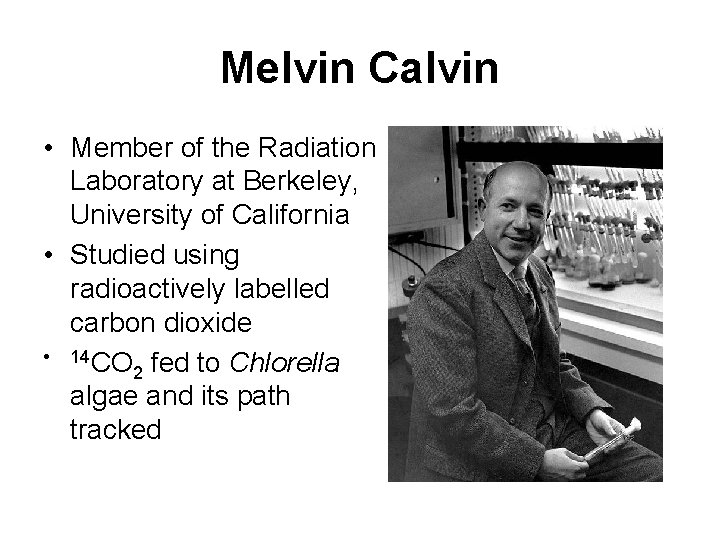
Melvin Calvin • Member of the Radiation Laboratory at Berkeley, University of California • Studied using radioactively labelled carbon dioxide • 14 CO fed to Chlorella 2 algae and its path tracked
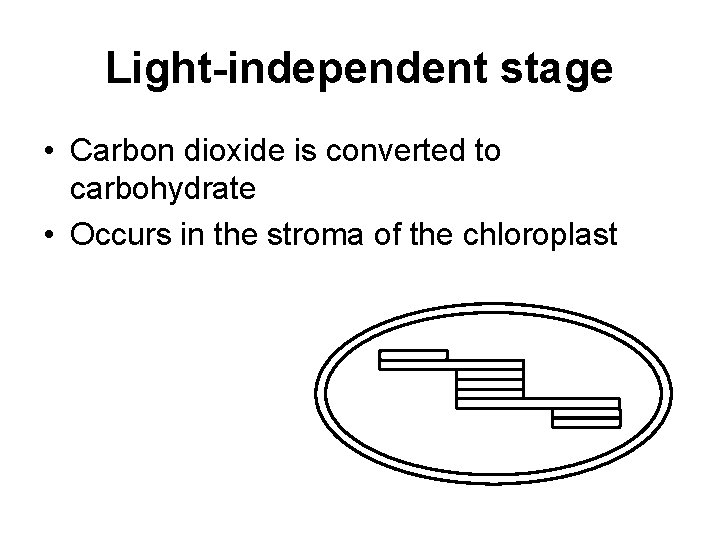
Light-independent stage • Carbon dioxide is converted to carbohydrate • Occurs in the stroma of the chloroplast
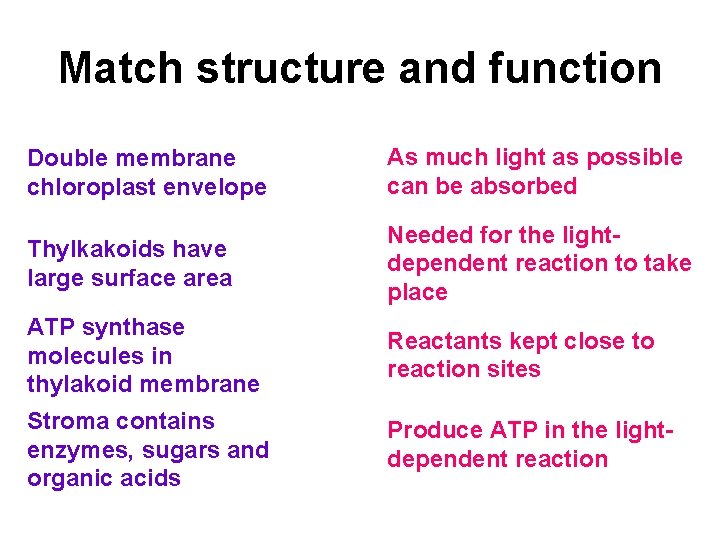
Match structure and function Double membrane chloroplast envelope As much light as possible can be absorbed Thylkakoids have large surface area Needed for the lightdependent reaction to take place ATP synthase molecules in thylakoid membrane Reactants kept close to reaction sites Stroma contains enzymes, sugars and organic acids Produce ATP in the lightdependent reaction
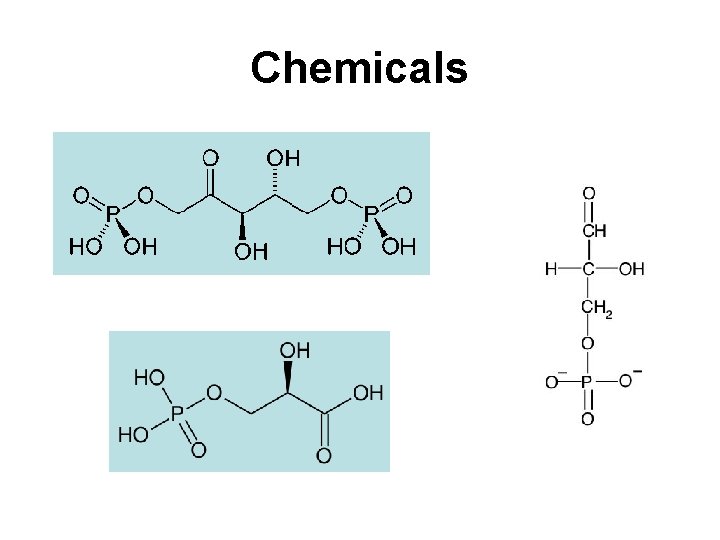
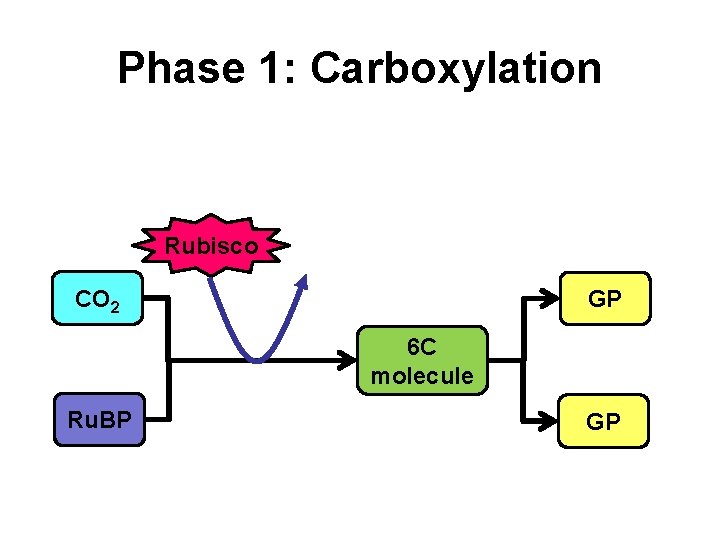
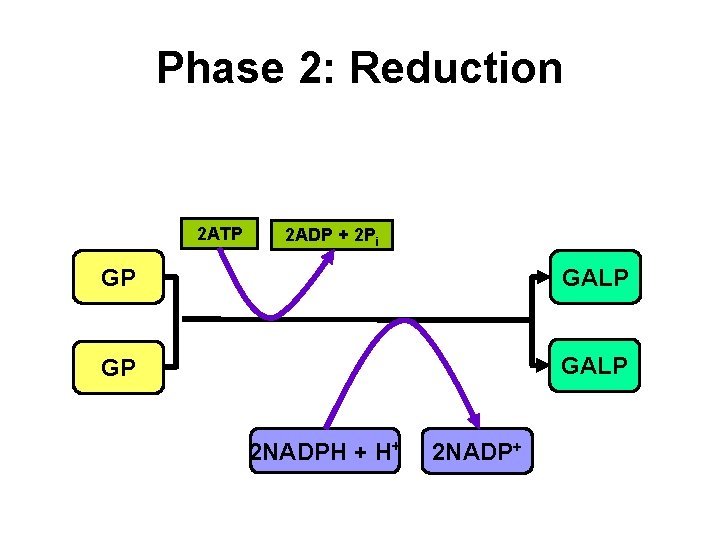
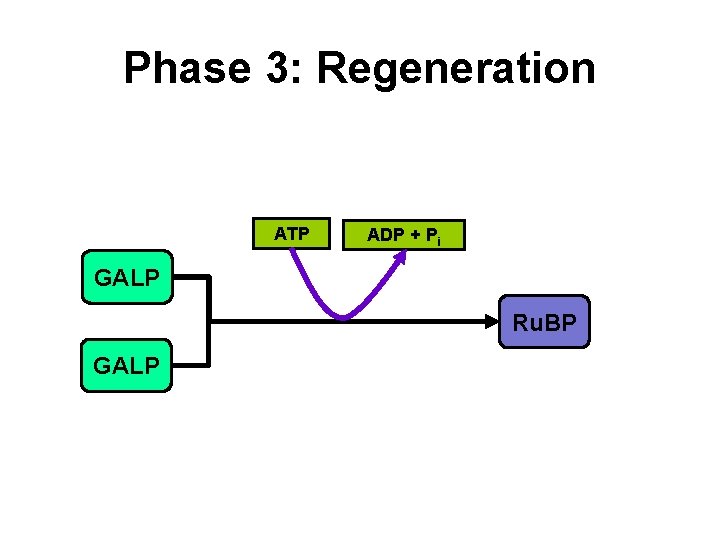
Three phases 1. Carboxylation Carbon dioxide fixation with ribulose bisphosphate (Ru. BP) 2. Reduction of glycerate 3 -phosphate (GP) to glyceraldehyde 3 -phosphate (GALP) 3. Regeneration Re-formation of the CO 2 acceptor molecules
Chemicals
Phase 1: Carboxylation Rubisco CO 2 GP 6 C molecule Ru. BP GP
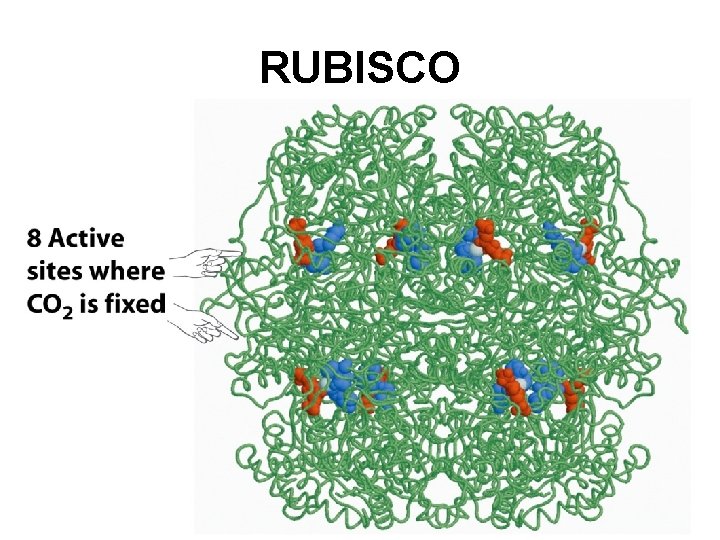
RUBISCO
Phase 2: Reduction 2 ATP 2 ADP + 2 Pi GP GALP 2 NADPH + H+ 2 NADP+
Phase 3: Regeneration ATP ADP + Pi GALP Ru. BP GALP
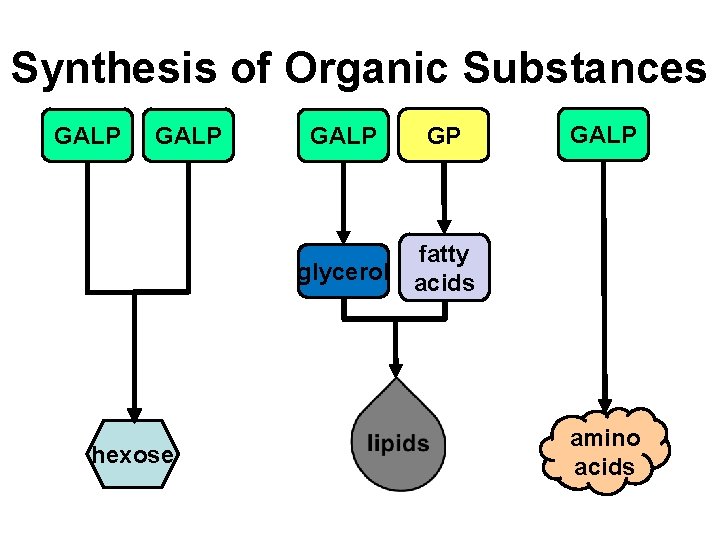
Synthesis of Organic Substances GALP hexose GALP GP glycerol fatty acids GALP amino acids
The Maths • 2 molecules of GALP are made each turn • 5 out of 6 molecules of GALP are used to regenerate Ru. BP • 2 molecules of GALP are needed to make a hexose sugar • How many turns are needed to make 1 molecule of hexose sugar? • How many molecules of ATP and reduced NADP are needed?