
Photosynthesis The general equation for photosynthesis is written


- Slides: 29
Photosynthesis
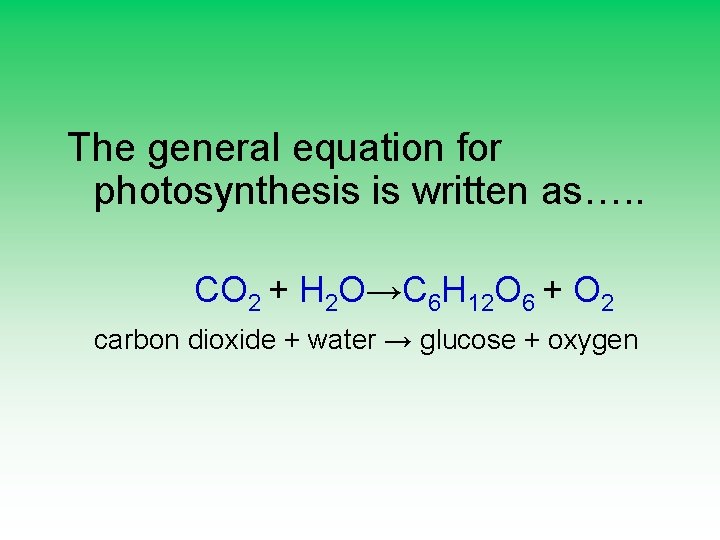
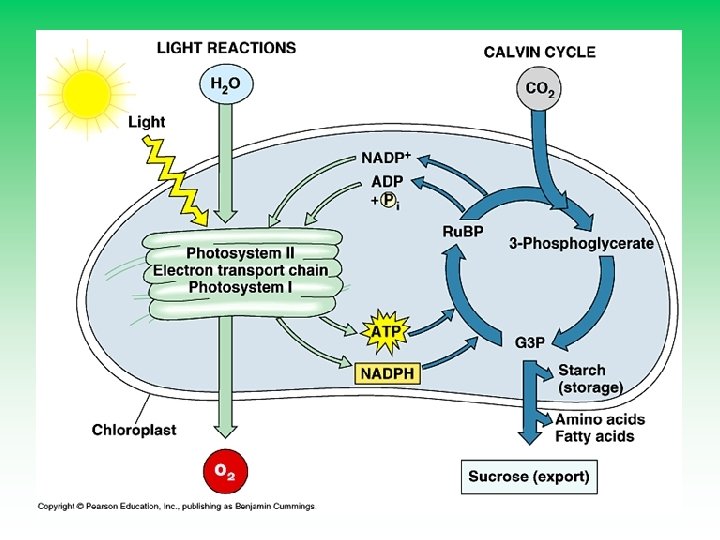
The general equation for photosynthesis is written as…. . CO 2 + H 2 O→C 6 H 12 O 6 + O 2 carbon dioxide + water → glucose + oxygen
Producing Sugars • Organisms that have the ability to produce their own food are called autotrophs. • Making sugars by converting the energy from sunlight into chemical energy in the bonds of glucose is called photosynthesis. • Making sugars from inorganic compounds (NOT sunlight) is called chemosynthesis. This is done by some bacteria.
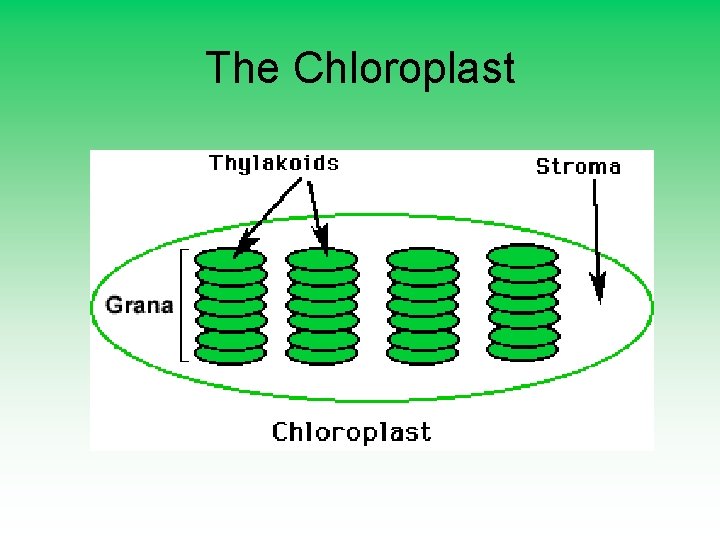
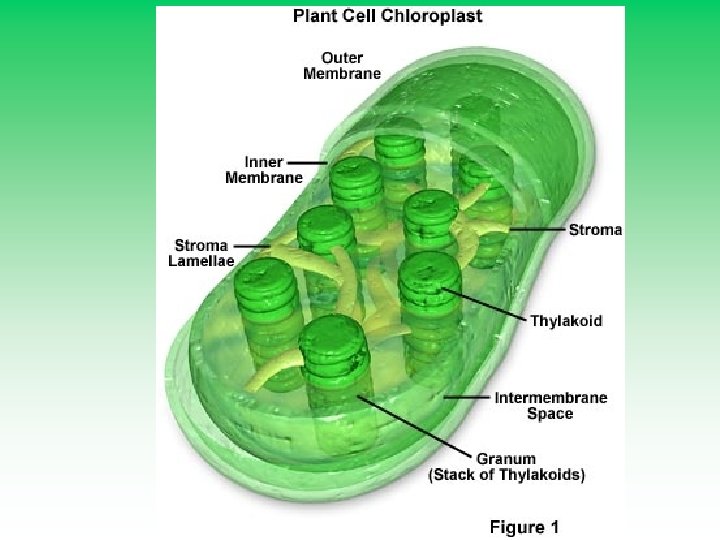
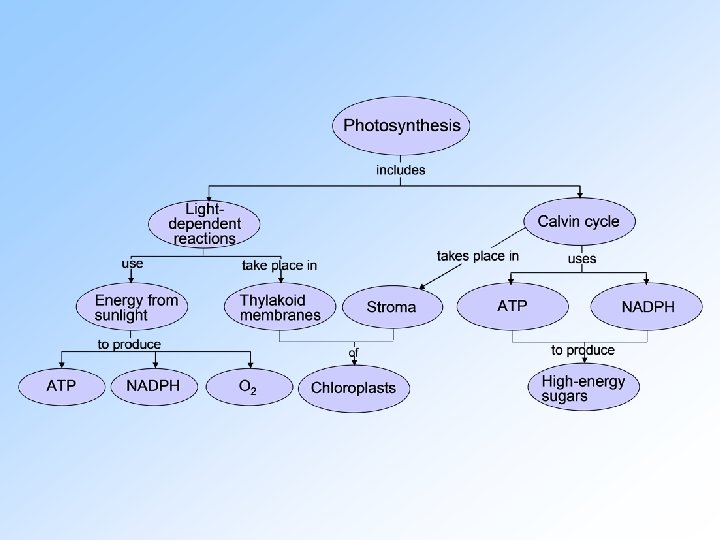
The chloroplast and the pigments • Remember the chloroplast is the cell organelle where photosynthesis occurs. • The chloroplasts contain thylakoid membranes (and stroma). • These membranes trap energy from the sun through their pigments (mainly chlorophyll), which are molecules that absorb specific wavelengths of sunlight.
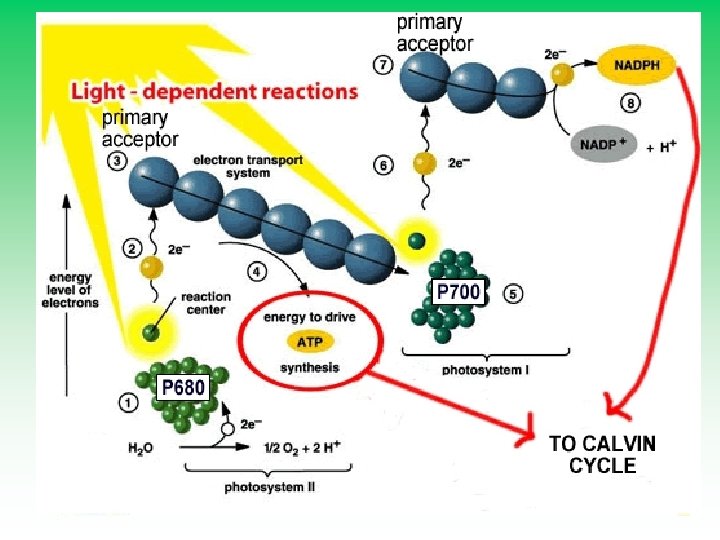
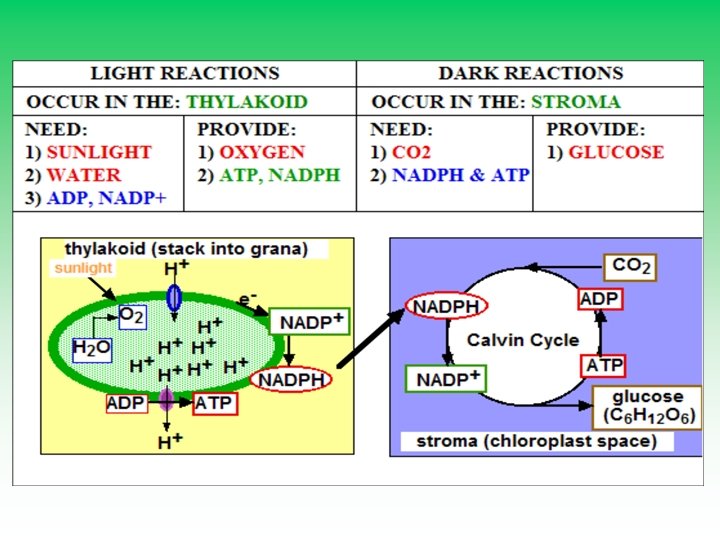
Photosynthesis happens in two phases 1. The light-dependent reactions convert light energy into chemical energy. 2. Molecules of ATP produced in the lightdependent reactions are then used to fuel the light-independent reactions that produce simple sugars. light independent reaction = Calvin Cycle or Dark Cycle
The Chloroplast
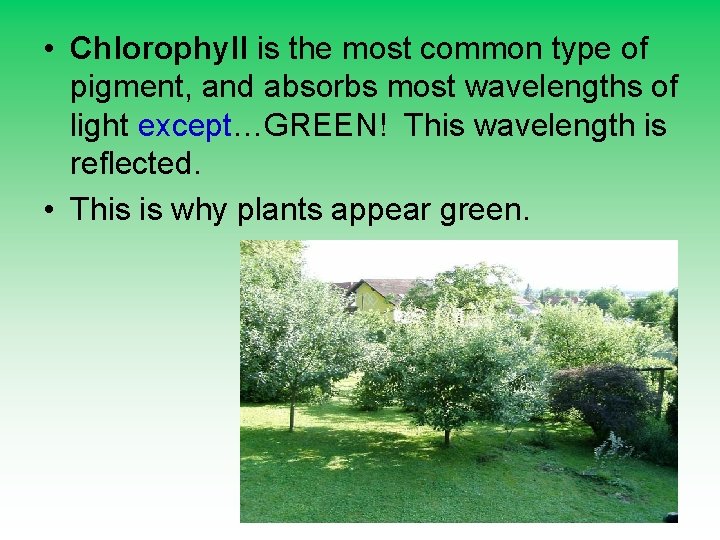
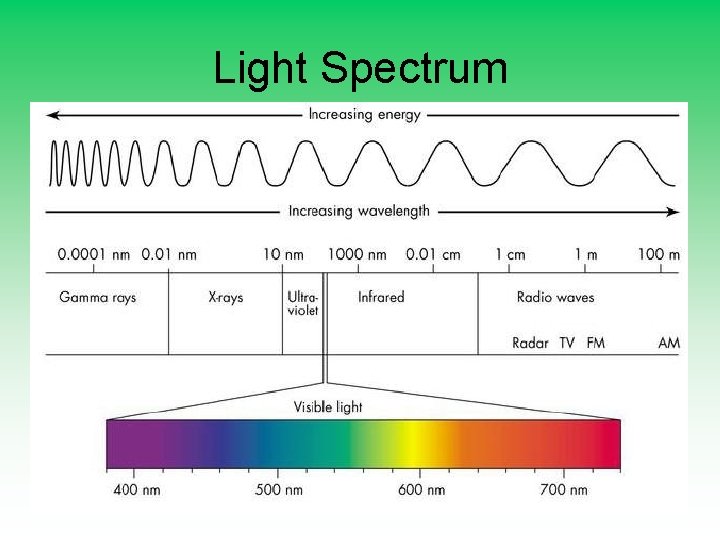
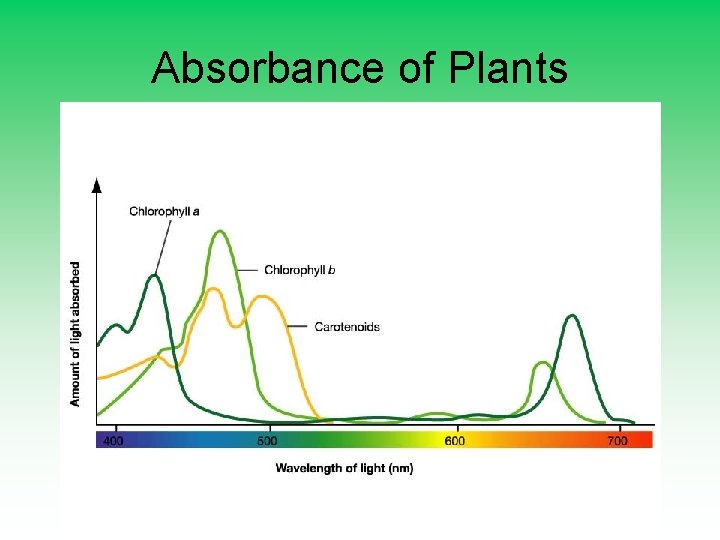
• Chlorophyll is the most common type of pigment, and absorbs most wavelengths of light except…GREEN! This wavelength is reflected. • This is why plants appear green.
Light Spectrum
Absorbance of Plants
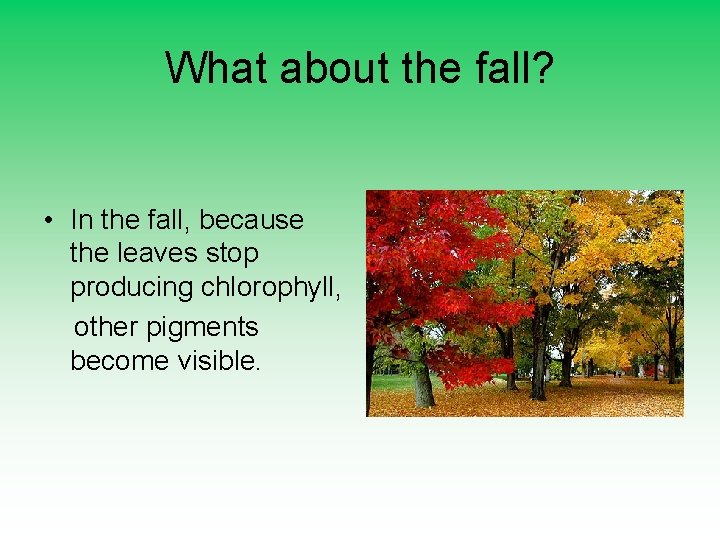
What about the fall? • In the fall, because the leaves stop producing chlorophyll, other pigments become visible.
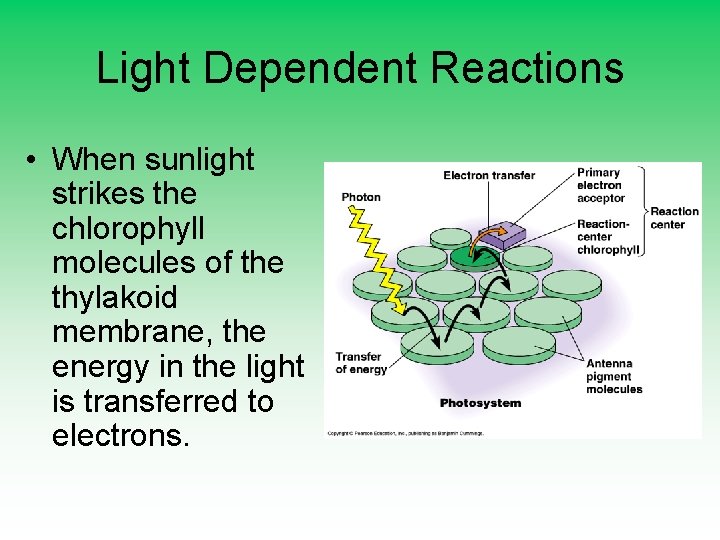
Light Dependent Reactions • When sunlight strikes the chlorophyll molecules of the thylakoid membrane, the energy in the light is transferred to electrons.
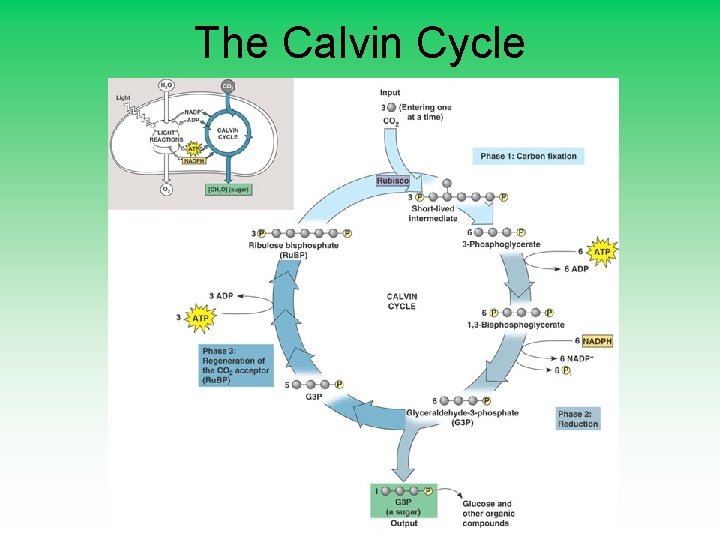
The Calvin Cycle
The Calvin Cycle • Other names for the Calvin Cycle include: The Dark Cycle Light Independent Reaction
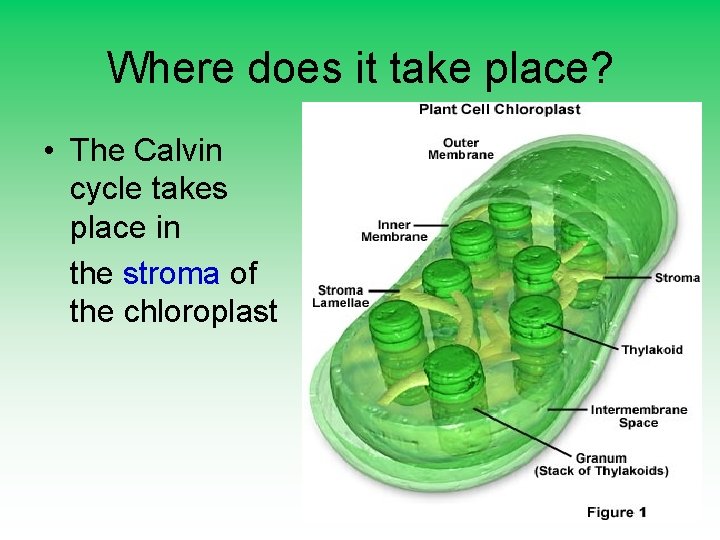
Where does it take place? • The Calvin cycle takes place in the stroma of the chloroplast
Cellular Respiration
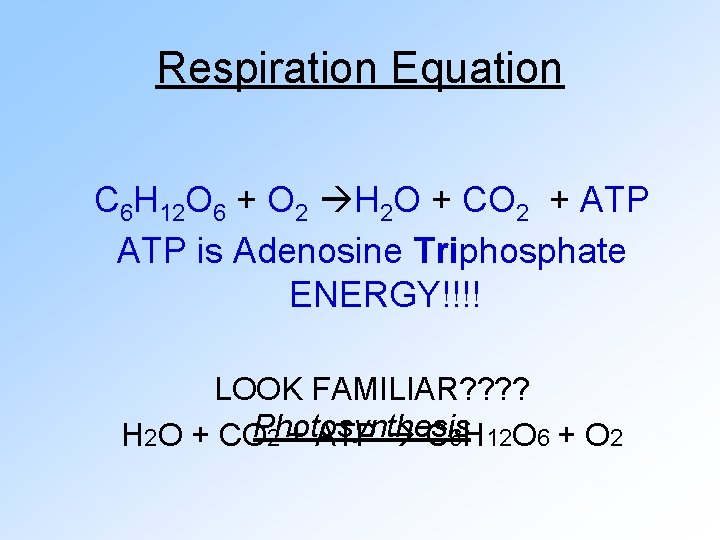
Respiration Equation C 6 H 12 O 6 + O 2 H 2 O + CO 2 + ATP is Adenosine Triphosphate ENERGY!!!! LOOK FAMILIAR? ? H 2 O + COPhotosynthesis 2 + ATP C 6 H 12 O 6 + O 2
Cellular Respiration • The process by which mitochondria break down food molecules (glucose) to produce ATP (ENERGY) • We breathe so that our cells can get oxygen for the mitochondria to make ATP
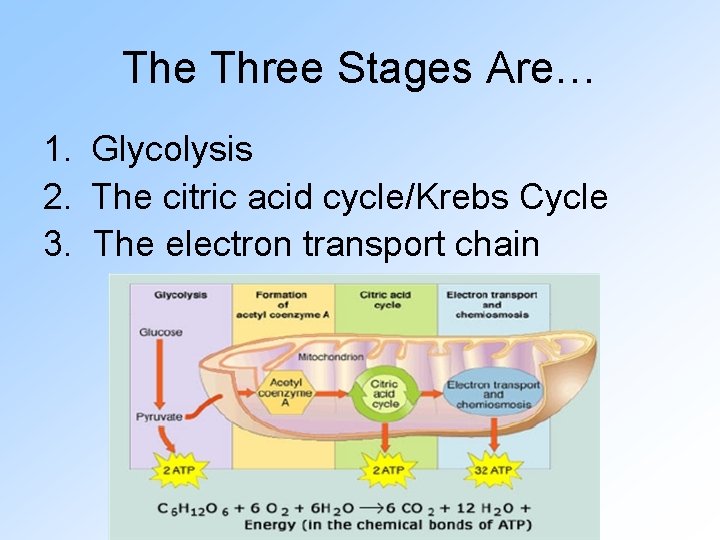
The Three Stages Are… 1. Glycolysis 2. The citric acid cycle/Krebs Cycle 3. The electron transport chain
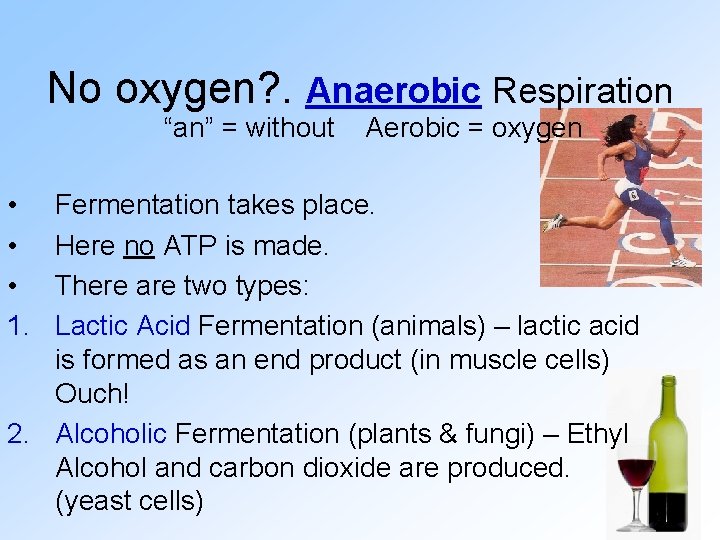
No oxygen? . Anaerobic Respiration “an” = without • • • 1. Aerobic = oxygen Fermentation takes place. Here no ATP is made. There are two types: Lactic Acid Fermentation (animals) – lactic acid is formed as an end product (in muscle cells) Ouch! 2. Alcoholic Fermentation (plants & fungi) – Ethyl Alcohol and carbon dioxide are produced. (yeast cells)
Glycolysis (Anaerobic) • “Glyco” = glucose and “lysis” = to break down… • “Glycolysis”= breakdown of sugar! • Glucose is broken down into 2 molecules of pyruvate. • This happens in the cytoplasm of the cell. • 2 ATPs are made
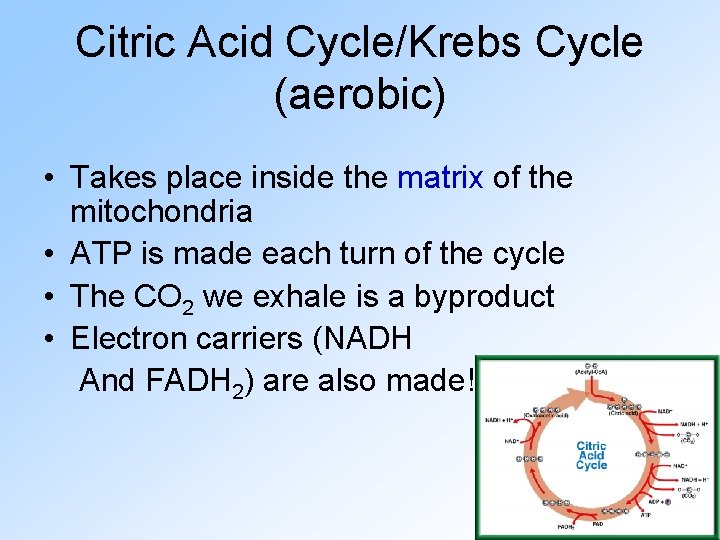
Citric Acid Cycle/Krebs Cycle (aerobic) • Takes place inside the matrix of the mitochondria • ATP is made each turn of the cycle • The CO 2 we exhale is a byproduct • Electron carriers (NADH And FADH 2) are also made!
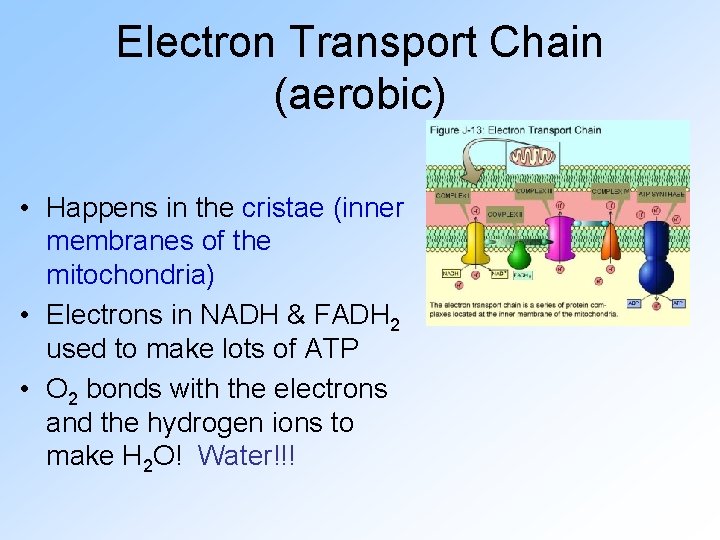
Electron Transport Chain (aerobic) • Happens in the cristae (inner membranes of the mitochondria) • Electrons in NADH & FADH 2 used to make lots of ATP • O 2 bonds with the electrons and the hydrogen ions to make H 2 O! Water!!!
SUMMARY • Glycolysis: anaerobic, in cytoplasm, glucose is broken down, 2 ATPs are made • Krebs/Citric Acid Cycle: aerobic, in matrix, makes ATP and CO 2 • Electron Transport Chain: aerobic, in cristae, makes ATP and H 2 O C 6 H 12 O 6 + O 2 H 2 O + CO 2 + 36 ATPs