
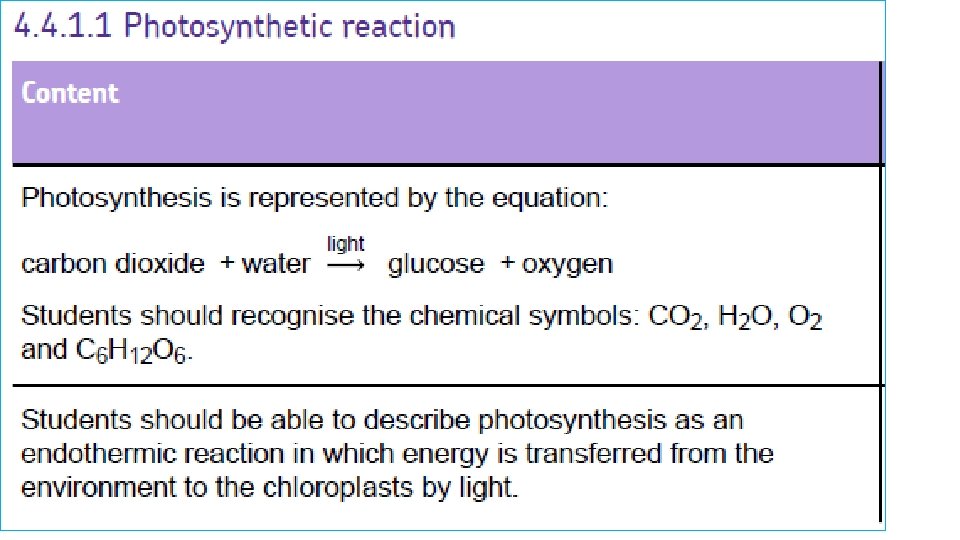
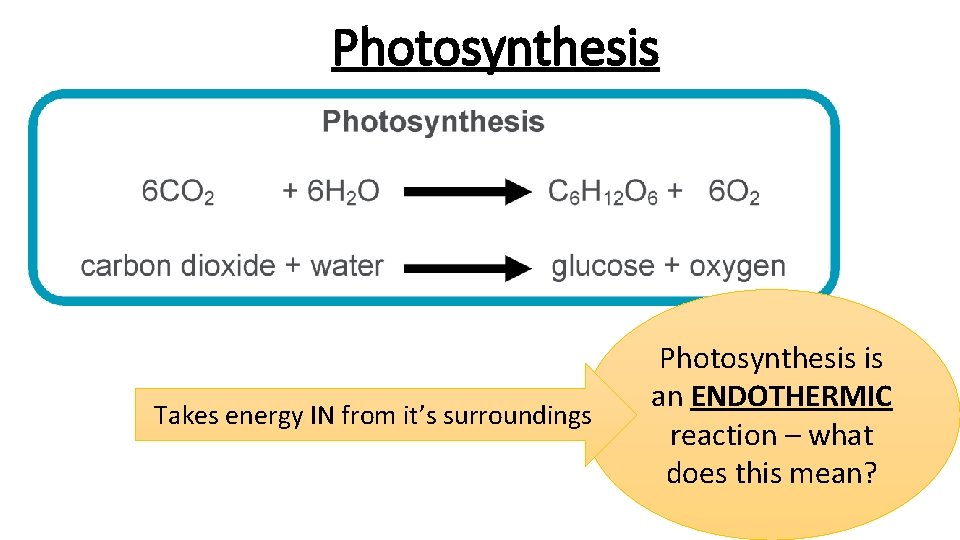
Photosynthesis Takes energy IN from its surroundings Photosynthesis
- Slides: 45
Photosynthesis Takes energy IN from it’s surroundings Photosynthesis is an ENDOTHERMIC reaction – what does this mean?
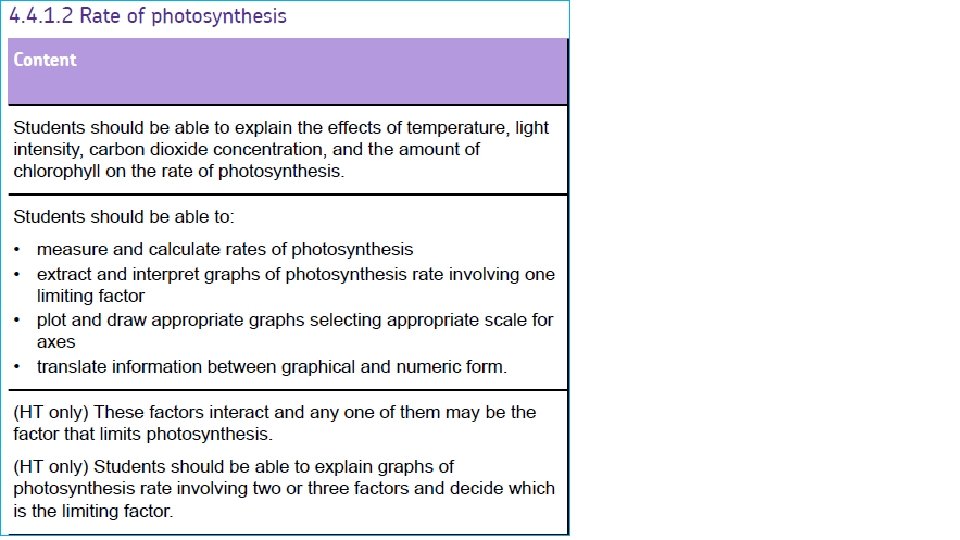
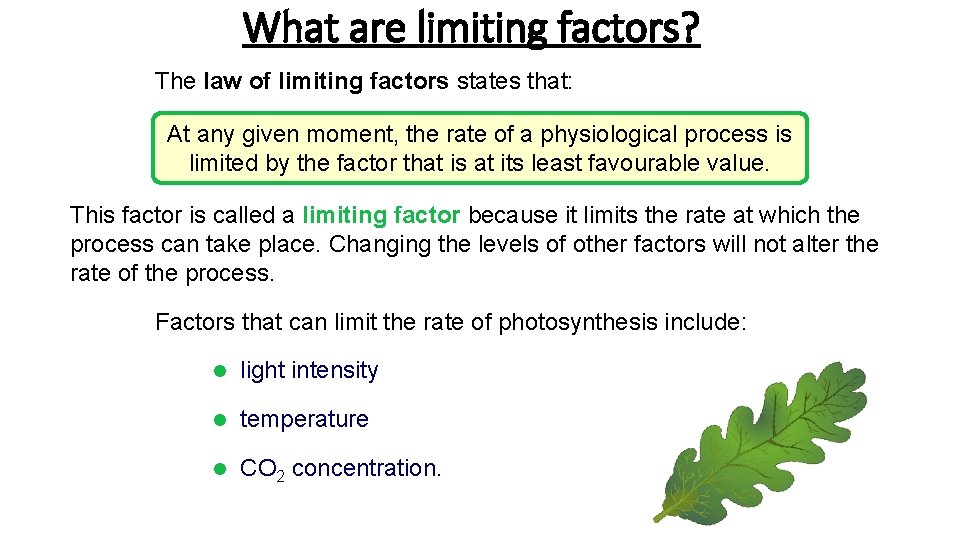
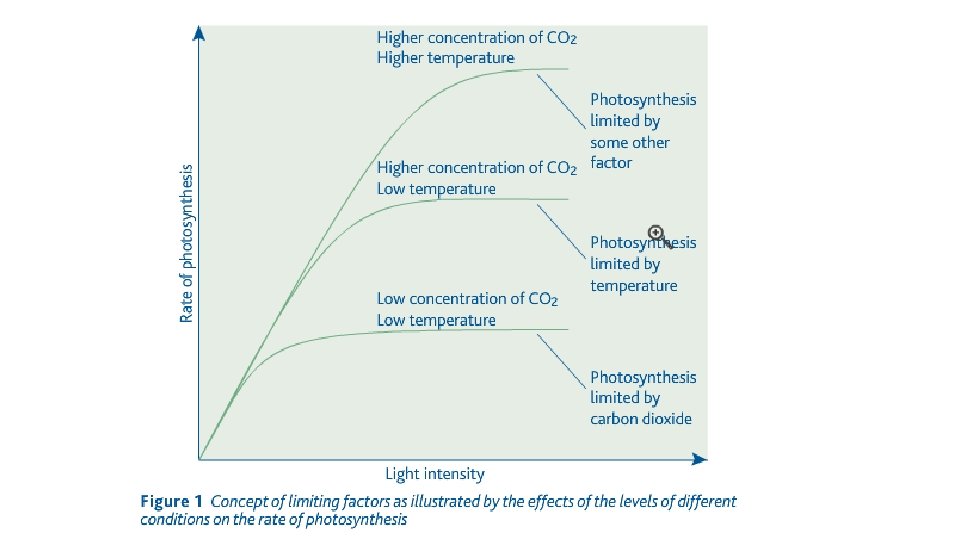
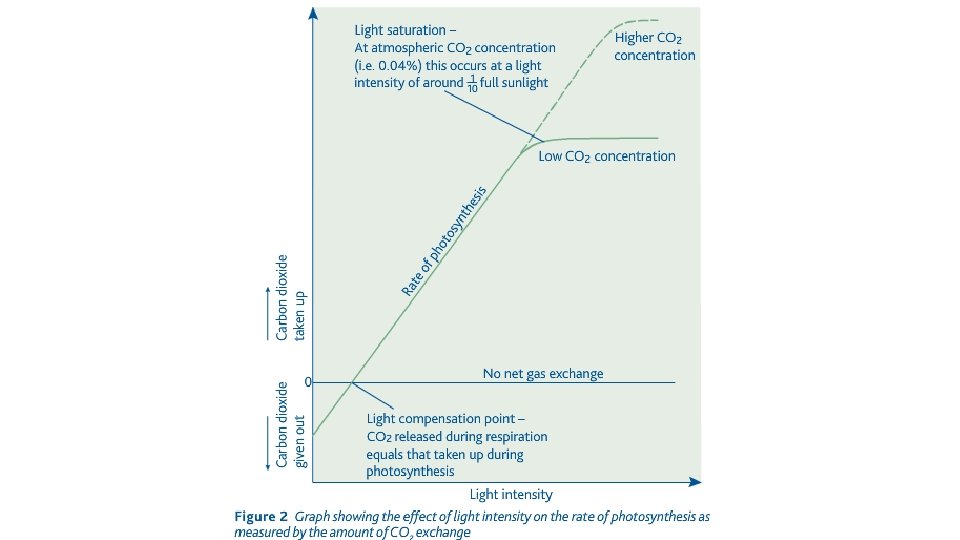
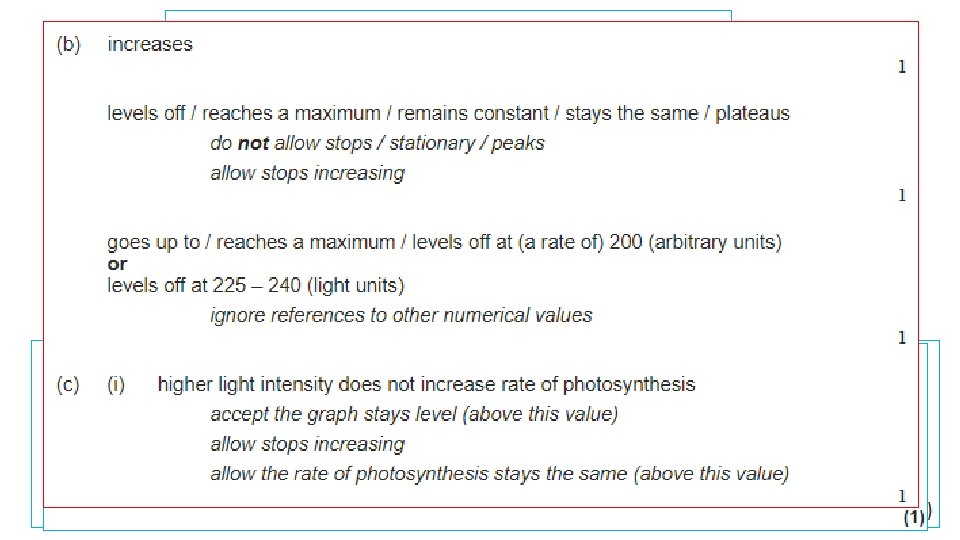
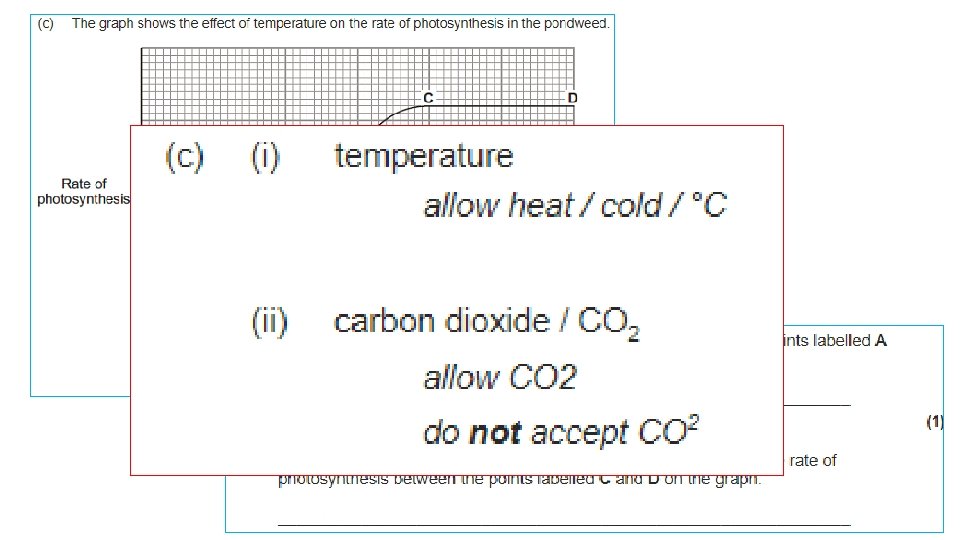
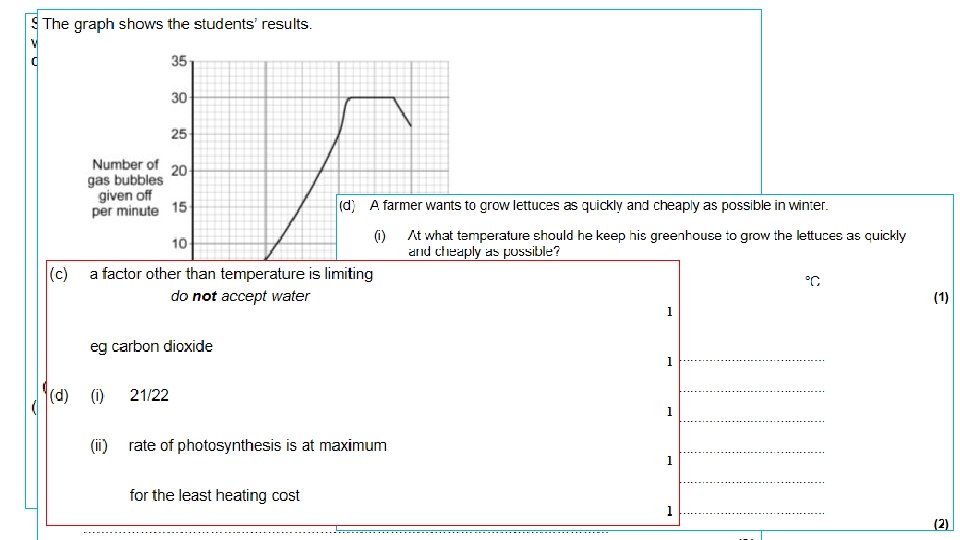
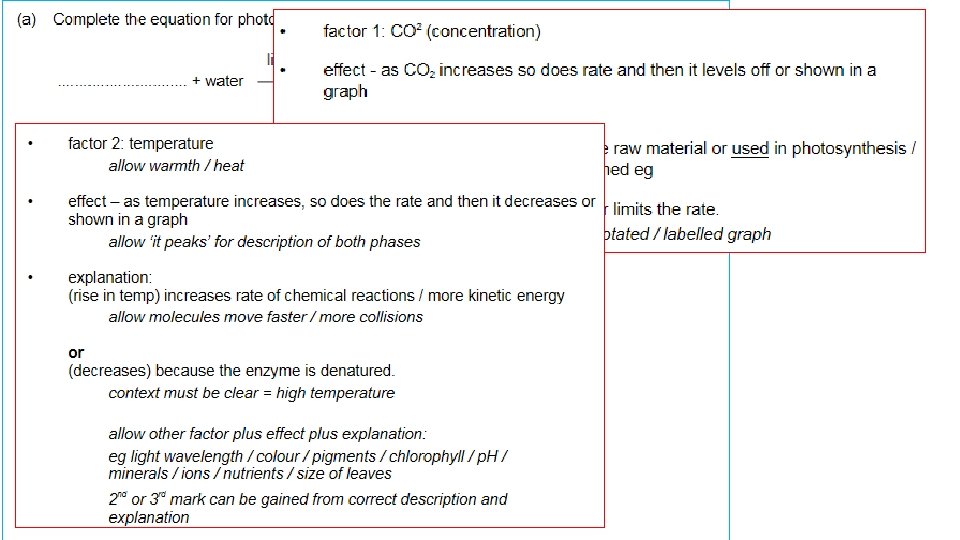
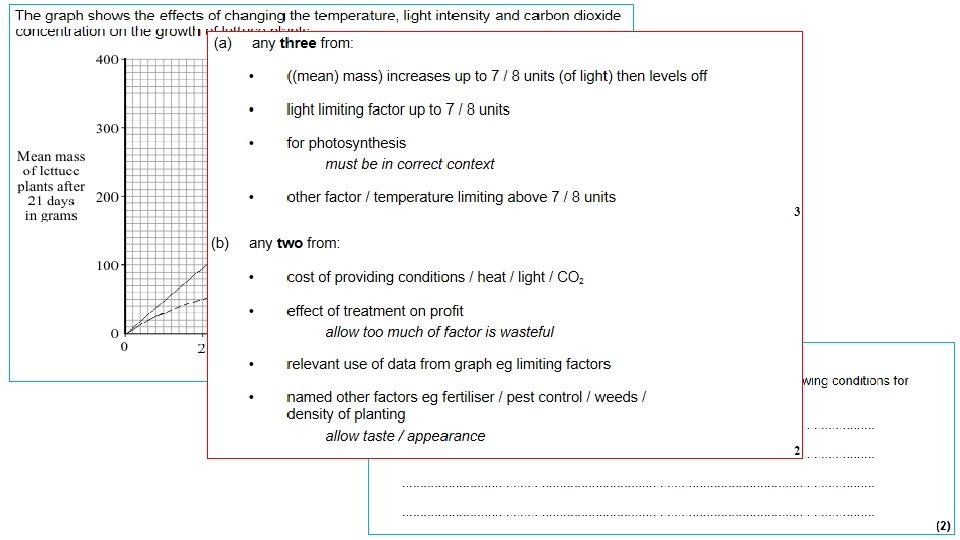
What are limiting factors? The law of limiting factors states that: At any given moment, the rate of a physiological process is limited by the factor that is at its least favourable value. This factor is called a limiting factor because it limits the rate at which the process can take place. Changing the levels of other factors will not alter the rate of the process. Factors that can limit the rate of photosynthesis include: l light intensity l temperature l CO 2 concentration.
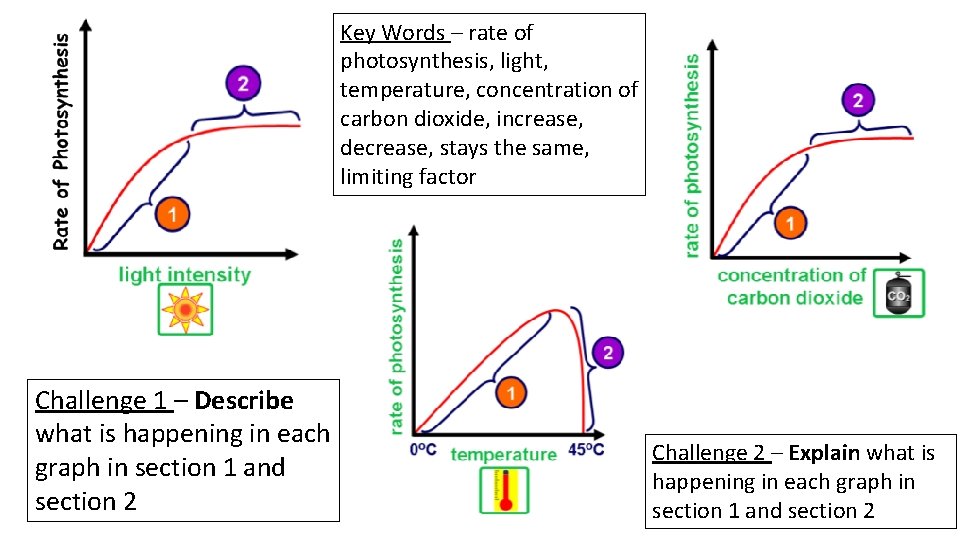
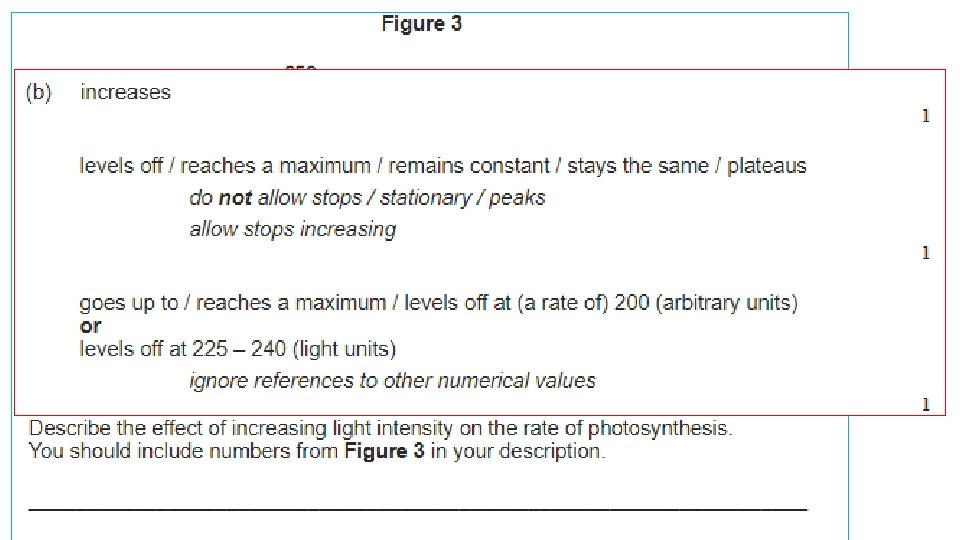
Key Words – rate of photosynthesis, light, temperature, concentration of carbon dioxide, increase, decrease, stays the same, limiting factor Challenge 1 – Describe what is happening in each graph in section 1 and section 2 Challenge 2 – Explain what is happening in each graph in section 1 and section 2
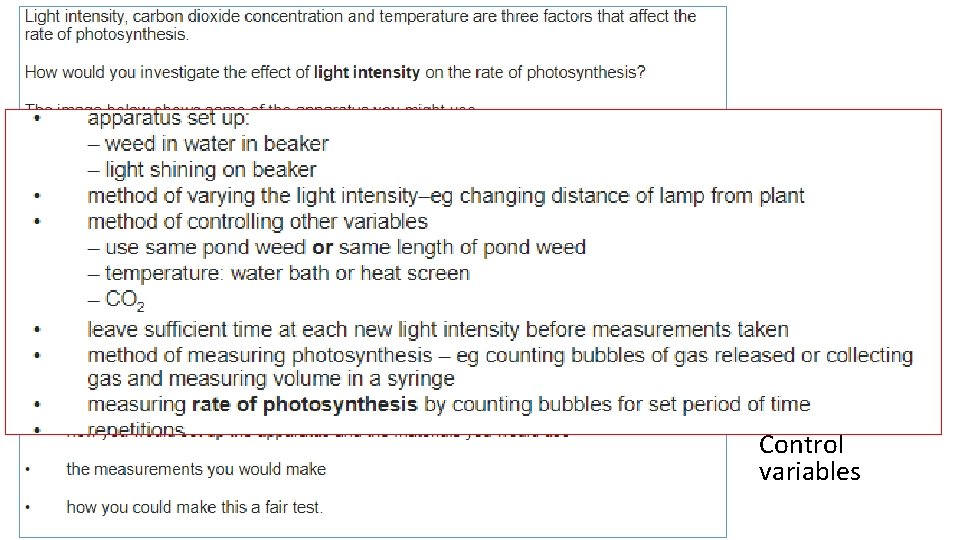
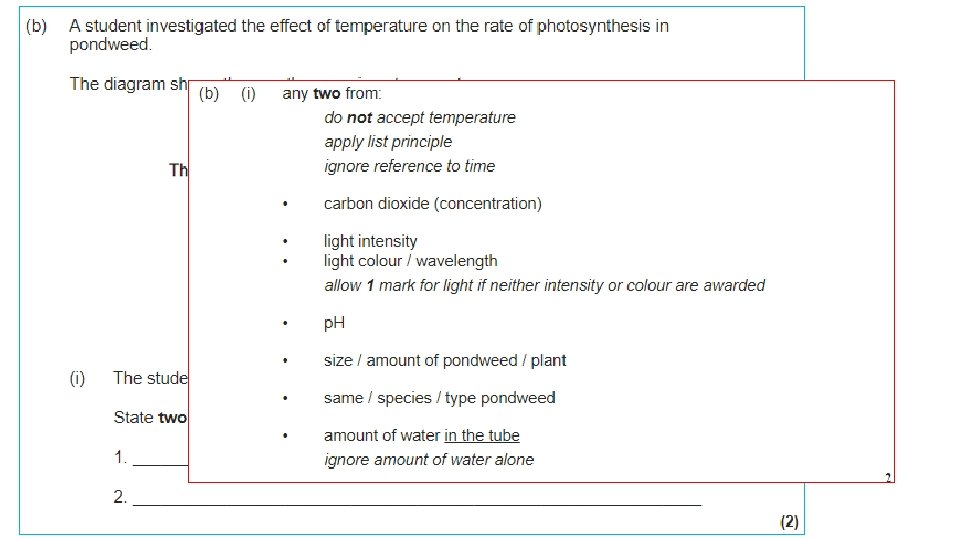
Think about Independent variable Dependent variable Control variables
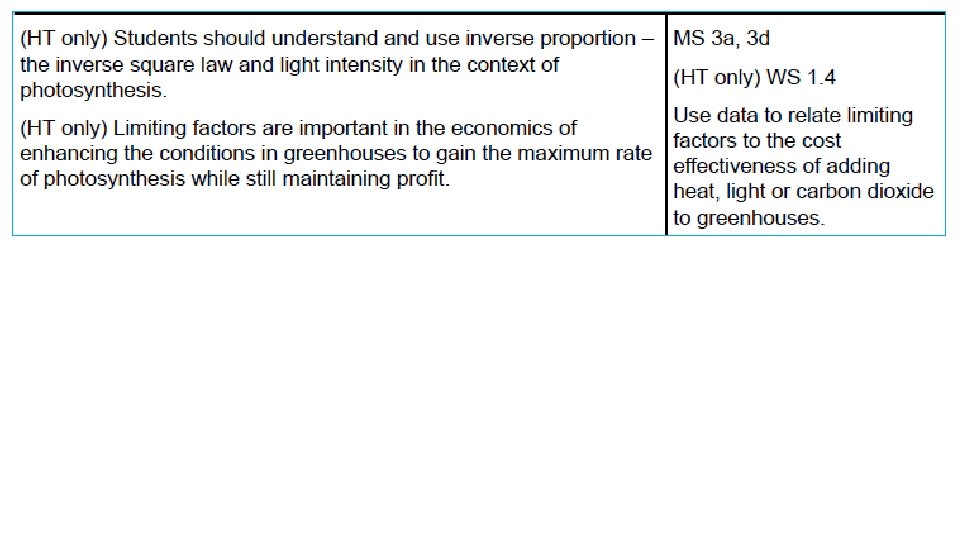
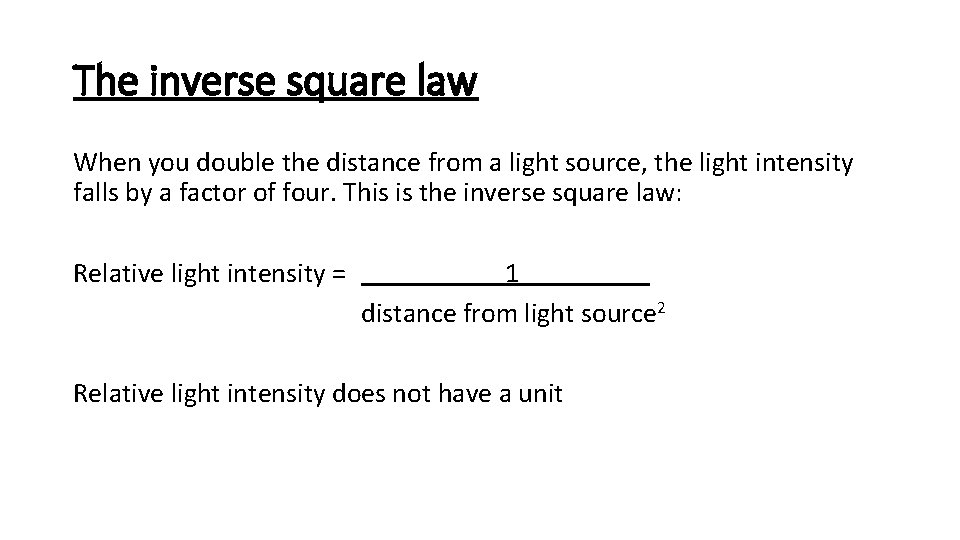
The inverse square law When you double the distance from a light source, the light intensity falls by a factor of four. This is the inverse square law: Relative light intensity = 1 distance from light source 2 Relative light intensity does not have a unit
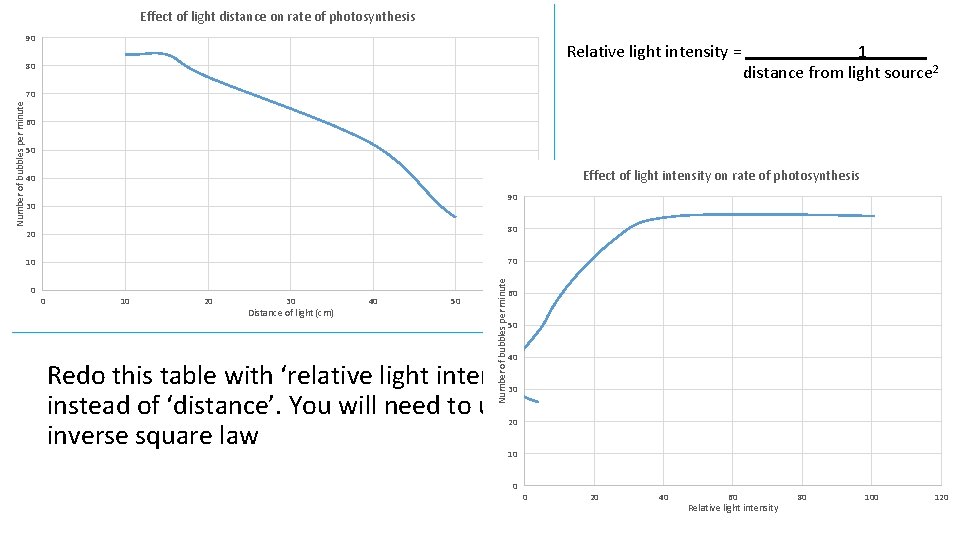
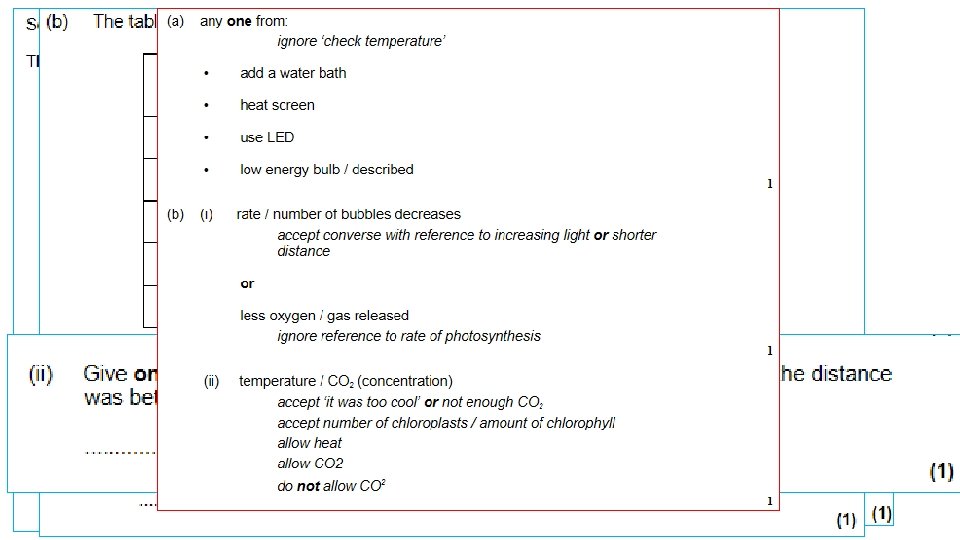
Effect of light distance on rate of photosynthesis 90 Relative light intensity = 80 1 distance from light source 2 Number of bubbles per minute 70 60 50 Effect of light intensity on rate of photosynthesis 40 90 30 80 20 0 0 10 20 30 Distance of light (cm) 40 50 Number of bubbles per minute 70 10 60 60 50 40 Redo this table with ‘relative light intensity’ instead of ‘distance’. You will need to use the inverse square law 30 20 10 0 0 20 RLI Number of bubbles per minute 100 84 44 84 25 76 6. 25 52 4 40 60 Relative light intensity 80 26 100 120
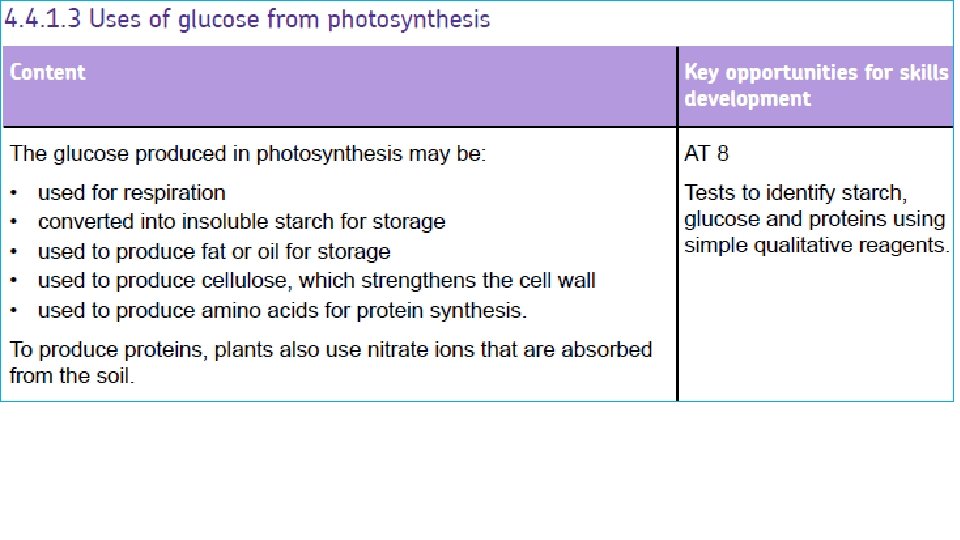
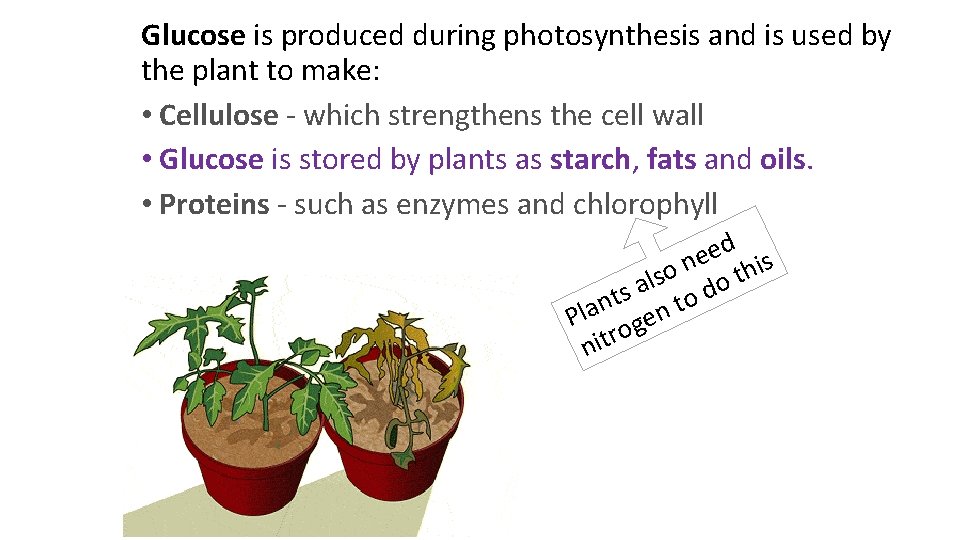
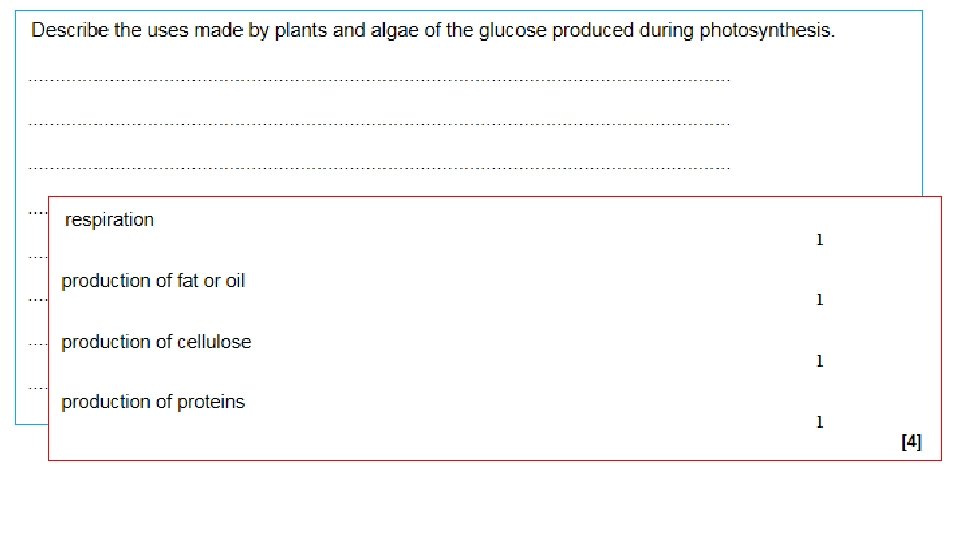
Glucose is produced during photosynthesis and is used by the plant to make: • Cellulose - which strengthens the cell wall • Glucose is stored by plants as starch, fats and oils. • Proteins - such as enzymes and chlorophyll d e e s n i h o s do t l a s t n to a l n P oge nitr
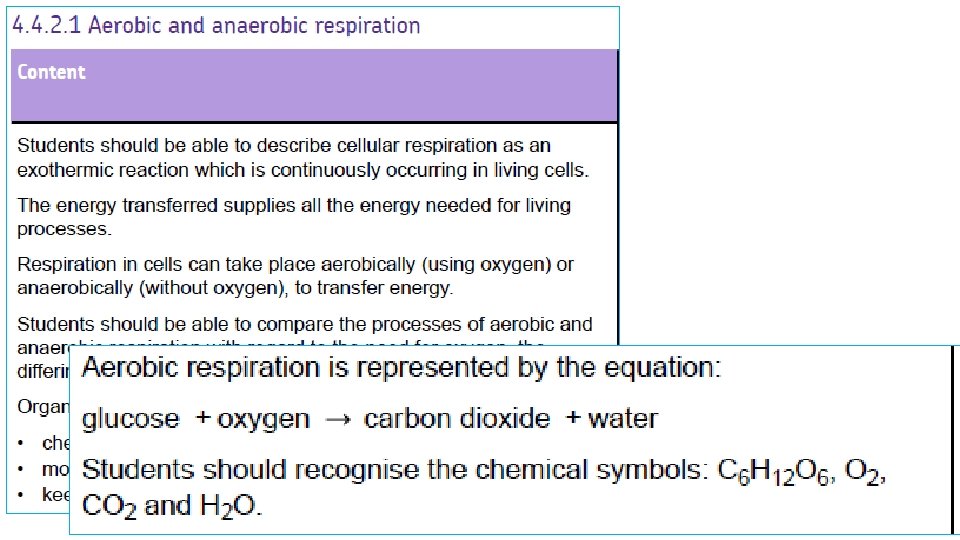
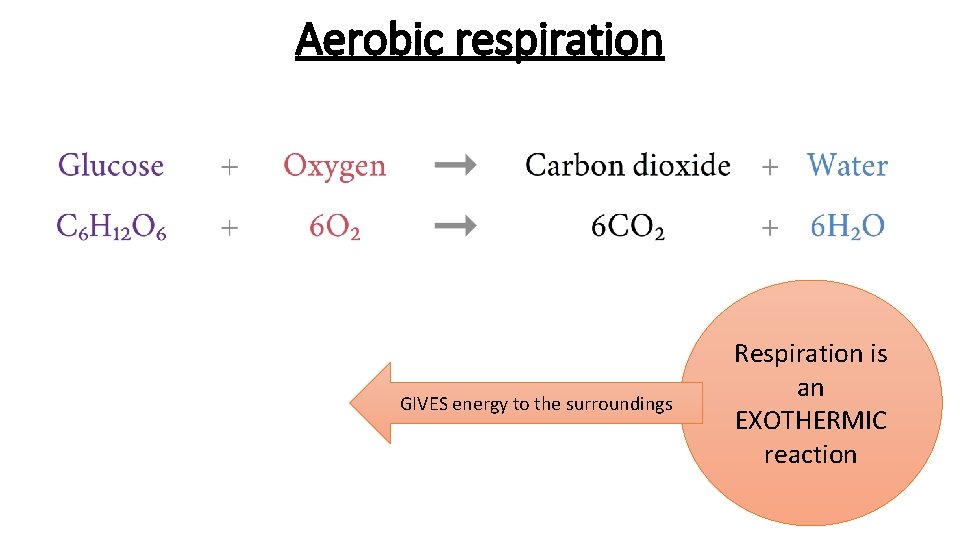
Aerobic respiration GIVES energy to the surroundings Respiration is an EXOTHERMIC reaction
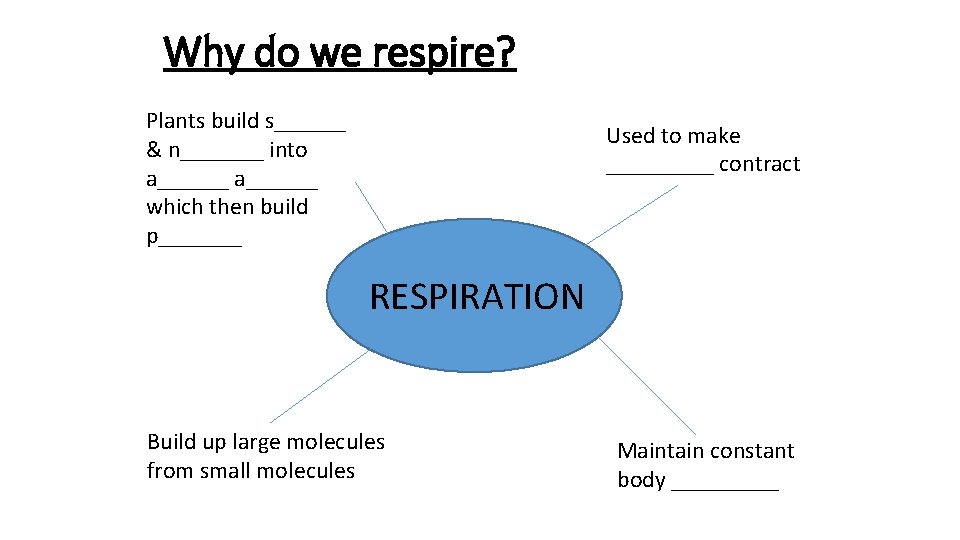
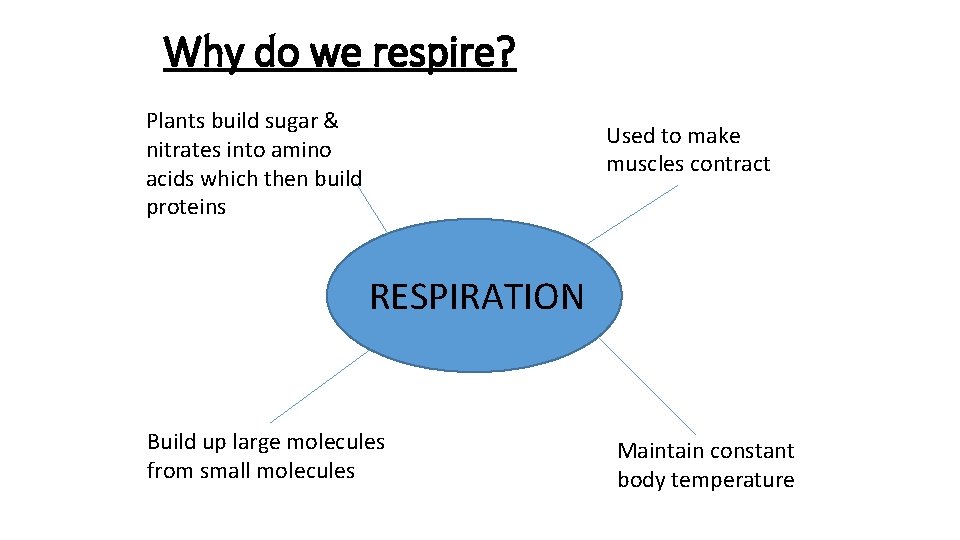
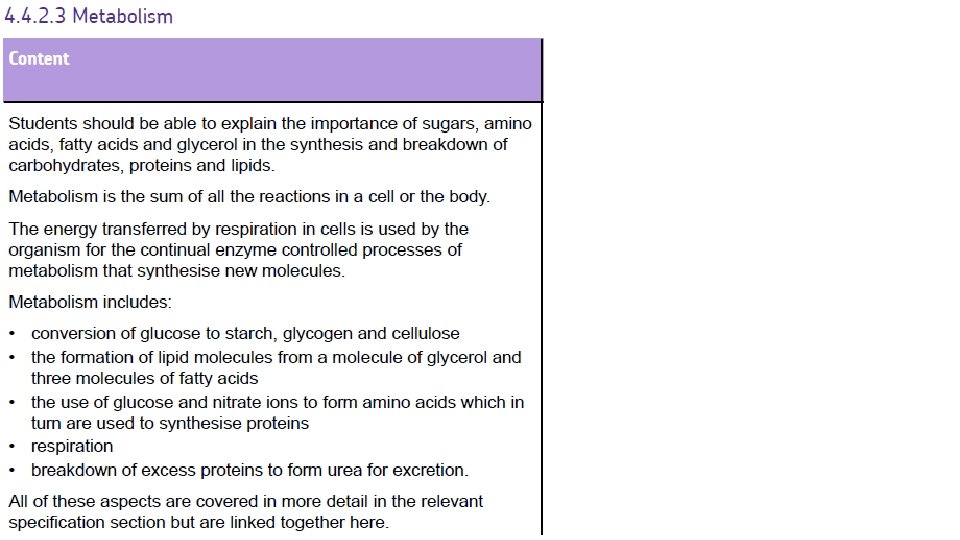
Why do we respire? Plants build s______ & n_______ into a______ which then build p_______ Used to make _____ contract RESPIRATION Build up large molecules from small molecules Maintain constant body _____
Why do we respire? Plants build sugar & nitrates into amino acids which then build proteins Used to make muscles contract RESPIRATION Build up large molecules from small molecules Maintain constant body temperature
Anaerobic “Anaerobic = Without Oxygen” O 2
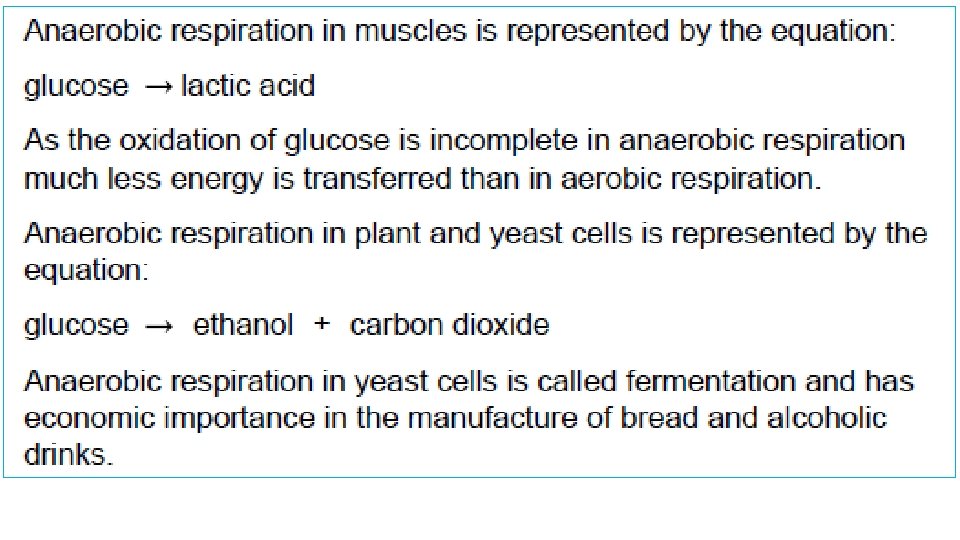
Anaerobic Respiration • The incomplete breakdown of glucose. • Releases less energy than aerobic respiration. • Temporary process.
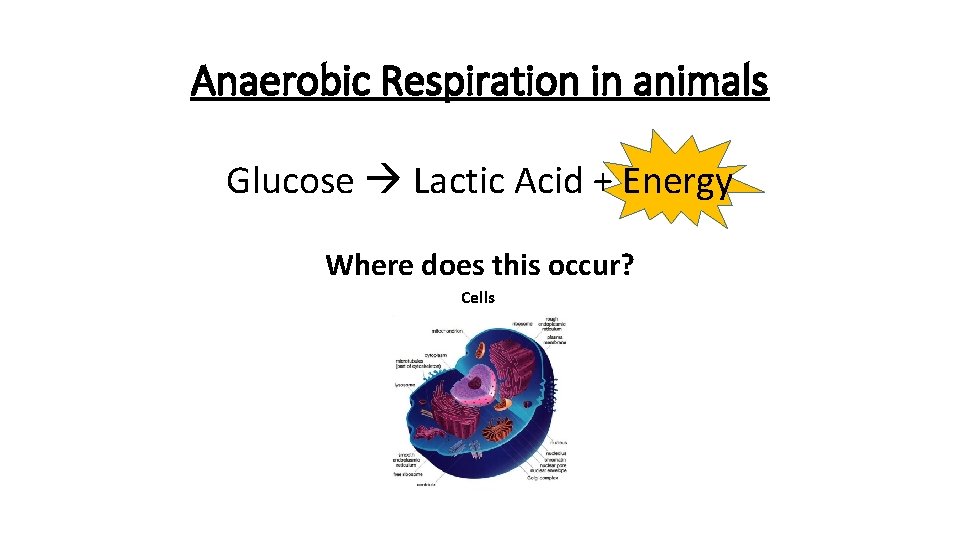
Anaerobic Respiration in animals Glucose Lactic Acid + Energy Where does this occur? Cells
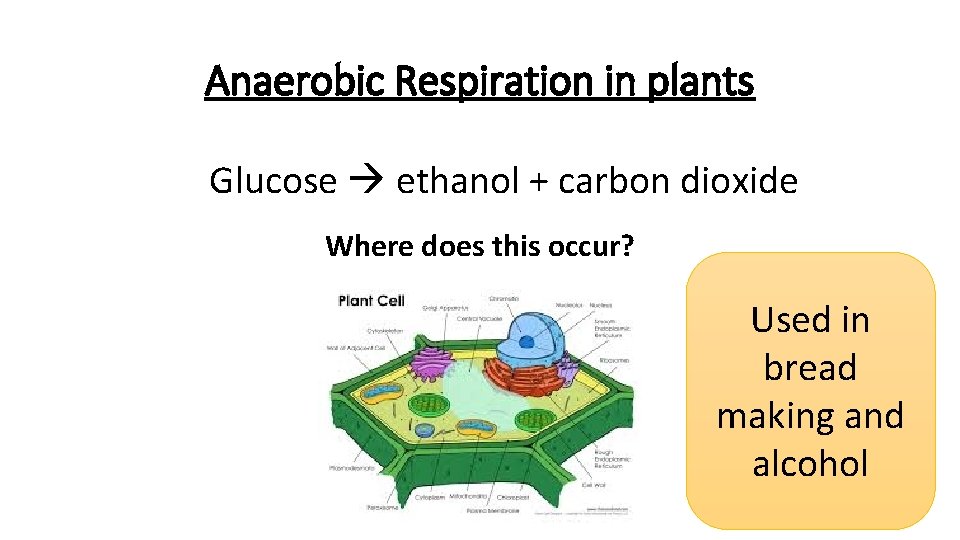
Anaerobic Respiration in plants Glucose ethanol + carbon dioxide Where does this occur? Used in bread making and alcohol
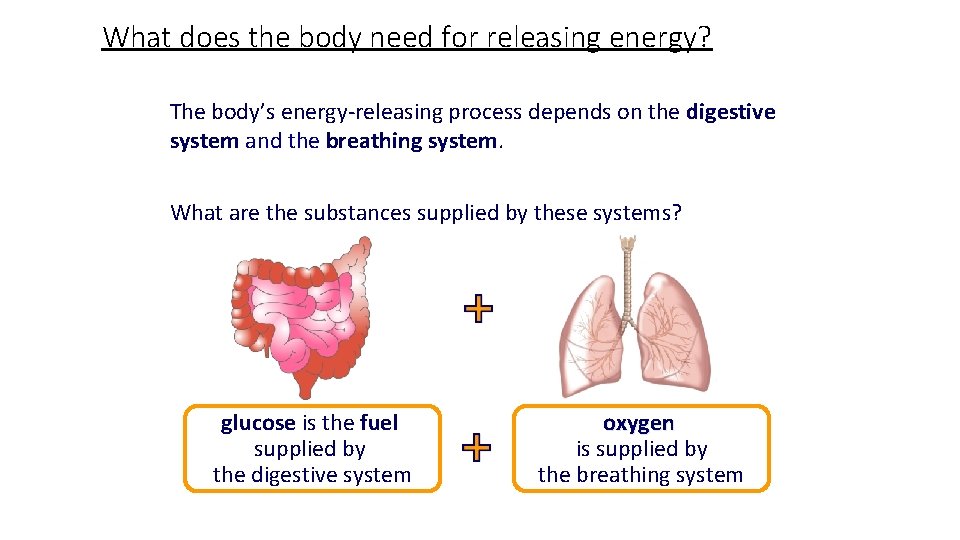
What does the body need for releasing energy? The body’s energy-releasing process depends on the digestive system and the breathing system. What are the substances supplied by these systems? glucose is the fuel supplied ? by the digestive system oxygen is supplied by ? the breathing system
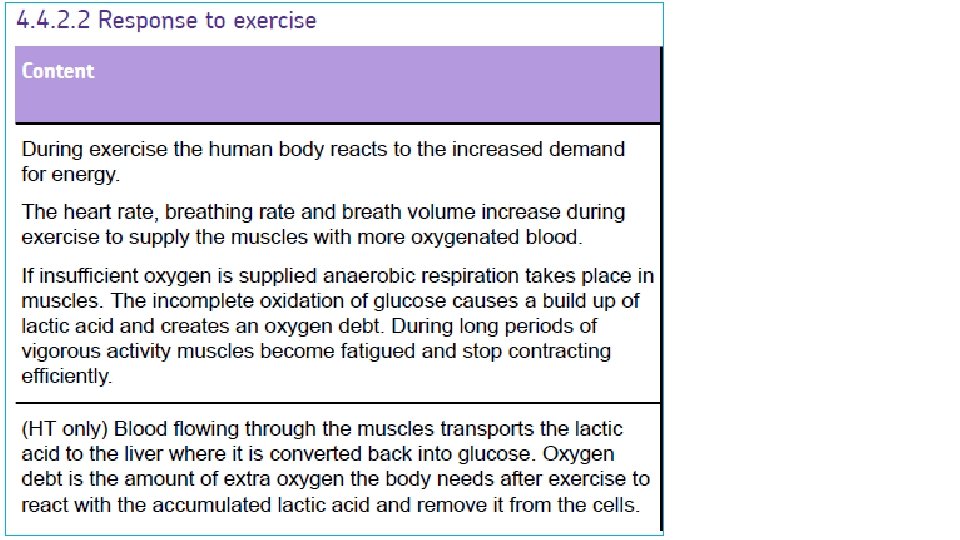
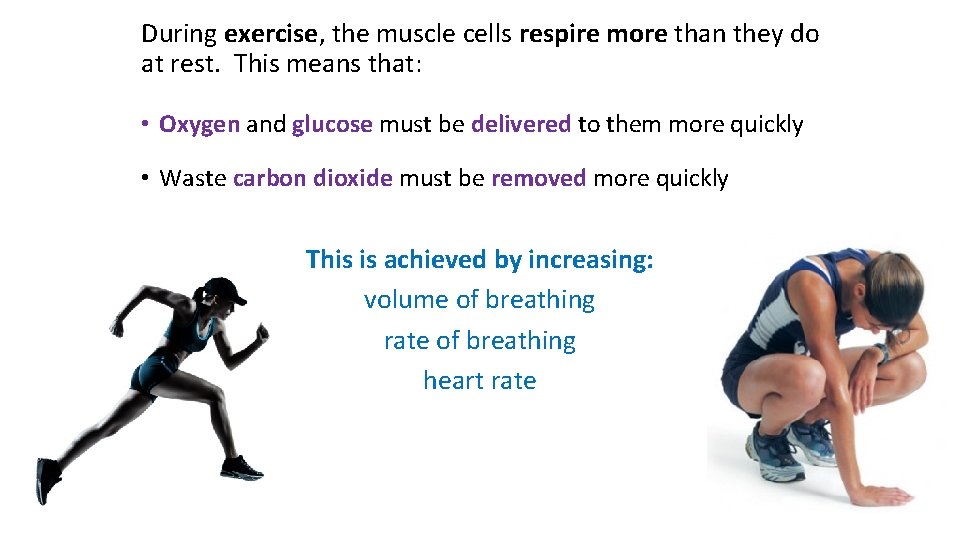
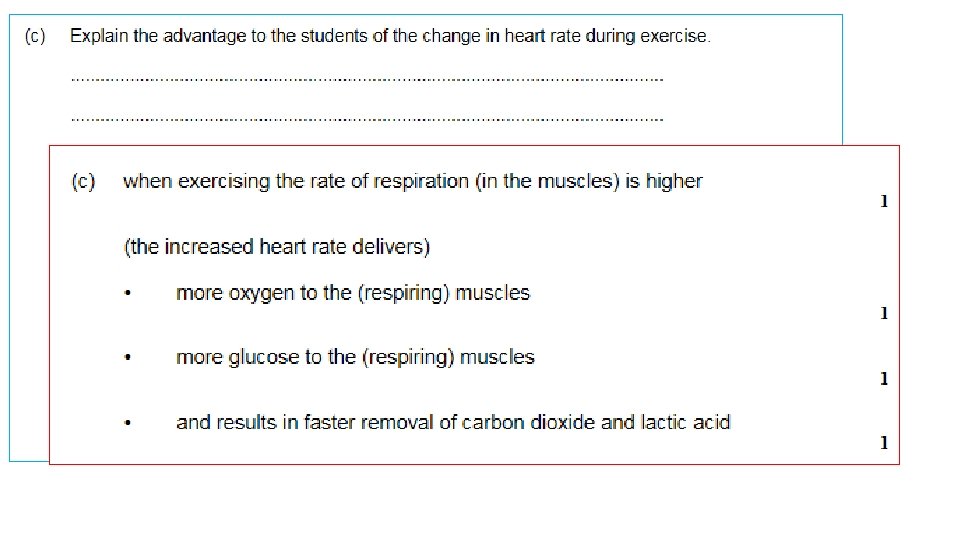
During exercise, the muscle cells respire more than they do at rest. This means that: • Oxygen and glucose must be delivered to them more quickly • Waste carbon dioxide must be removed more quickly This is achieved by increasing: volume of breathing rate of breathing heart rate
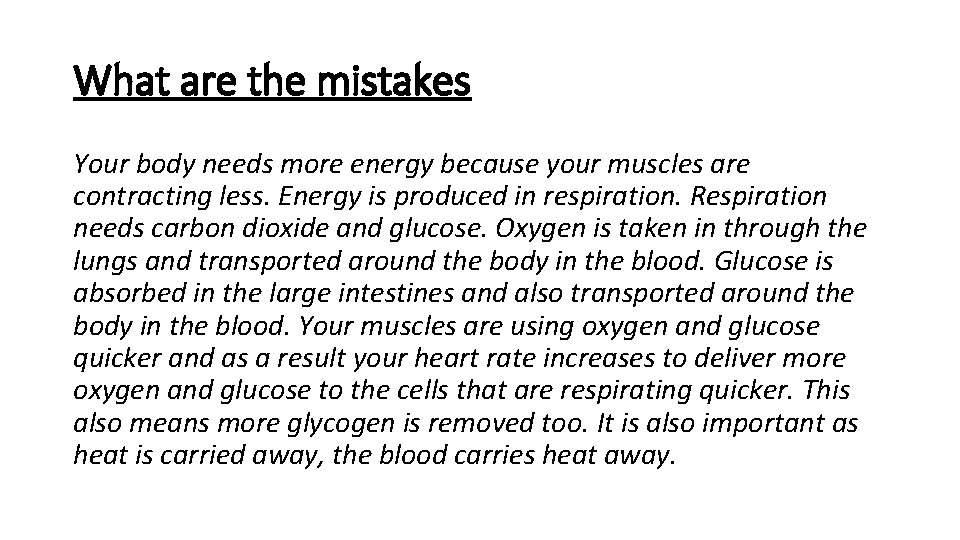
What are the mistakes Your body needs more energy because your muscles are contracting less. Energy is produced in respiration. Respiration needs carbon dioxide and glucose. Oxygen is taken in through the lungs and transported around the body in the blood. Glucose is absorbed in the large intestines and also transported around the body in the blood. Your muscles are using oxygen and glucose quicker and as a result your heart rate increases to deliver more oxygen and glucose to the cells that are respirating quicker. This also means more glycogen is removed too. It is also important as heat is carried away, the blood carries heat away.
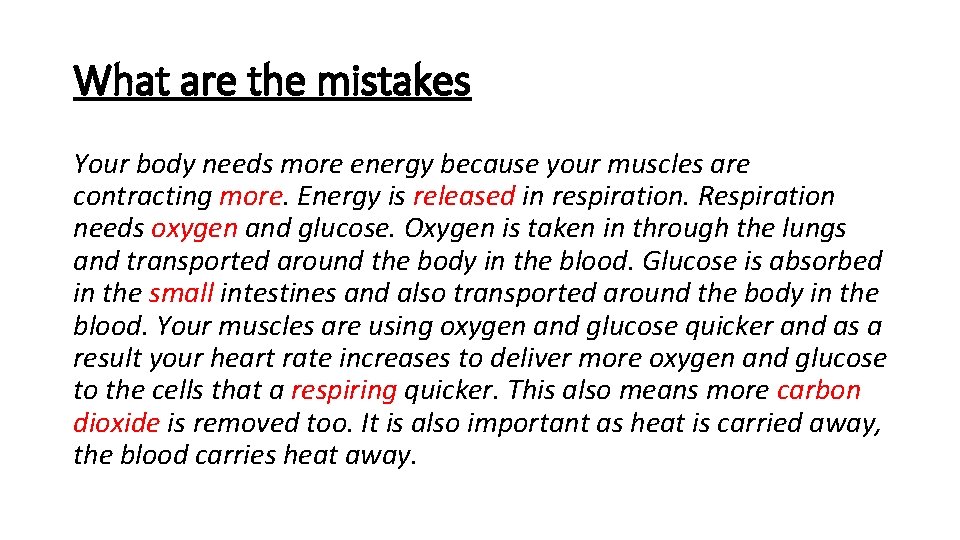
What are the mistakes Your body needs more energy because your muscles are contracting more. Energy is released in respiration. Respiration needs oxygen and glucose. Oxygen is taken in through the lungs and transported around the body in the blood. Glucose is absorbed in the small intestines and also transported around the body in the blood. Your muscles are using oxygen and glucose quicker and as a result your heart rate increases to deliver more oxygen and glucose to the cells that a respiring quicker. This also means more carbon dioxide is removed too. It is also important as heat is carried away, the blood carries heat away.
Recovery What do you think is needed to get rid of lactic acid? O 2
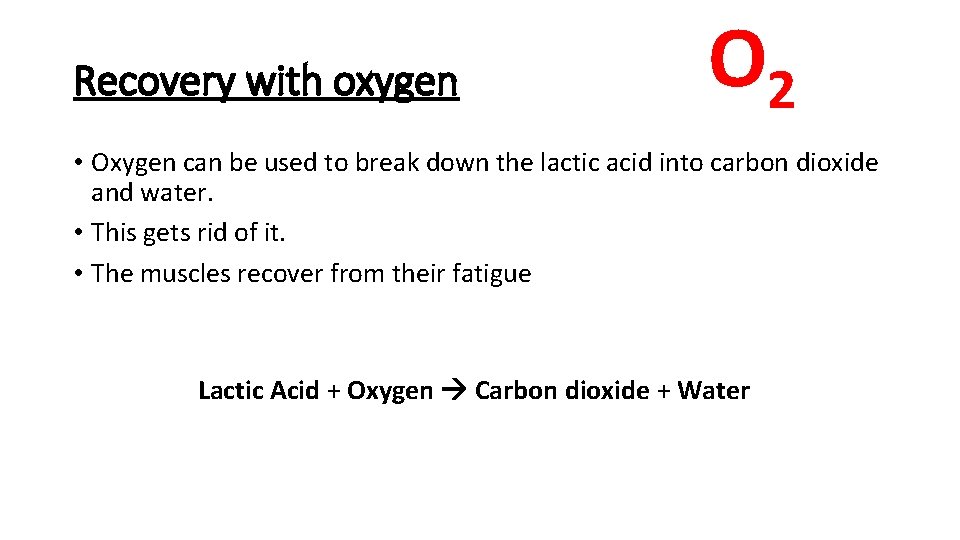
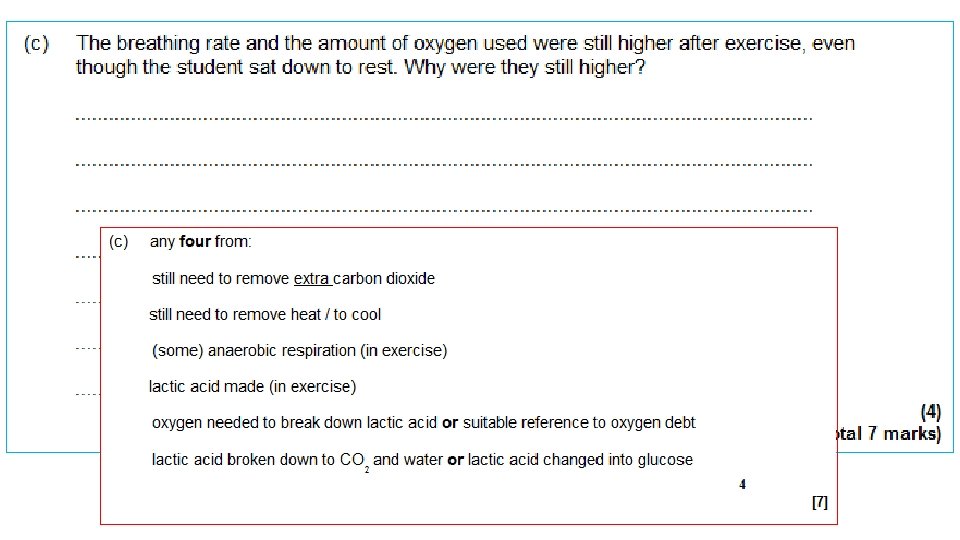
Recovery with oxygen O 2 • Oxygen can be used to break down the lactic acid into carbon dioxide and water. • This gets rid of it. • The muscles recover from their fatigue Lactic Acid + Oxygen Carbon dioxide + Water
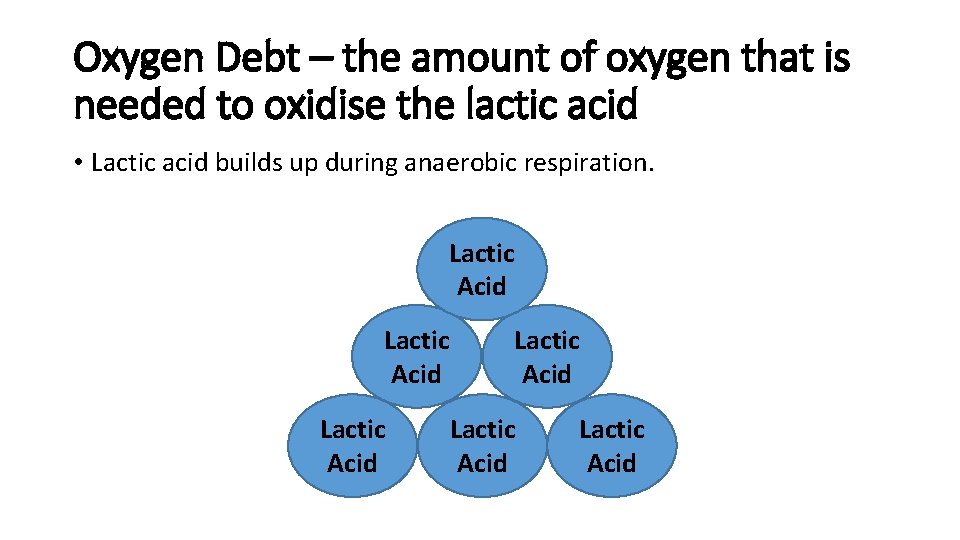
Oxygen Debt – the amount of oxygen that is needed to oxidise the lactic acid • Lactic acid builds up during anaerobic respiration. Lactic Acid Lactic Acid
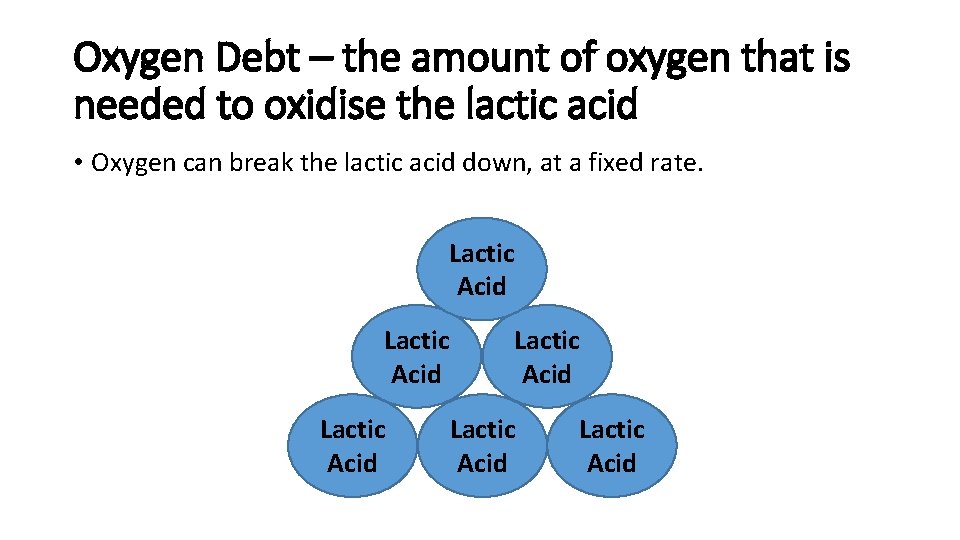
Oxygen Debt – the amount of oxygen that is needed to oxidise the lactic acid • Oxygen can break the lactic acid down, at a fixed rate. Lactic Acid Lactic Acid
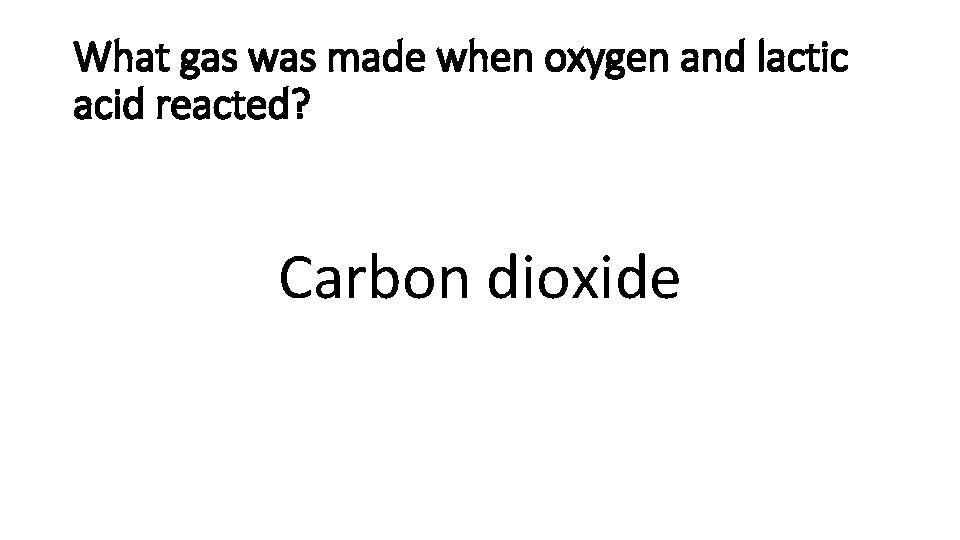
What gas was made when oxygen and lactic acid reacted? Carbon dioxide
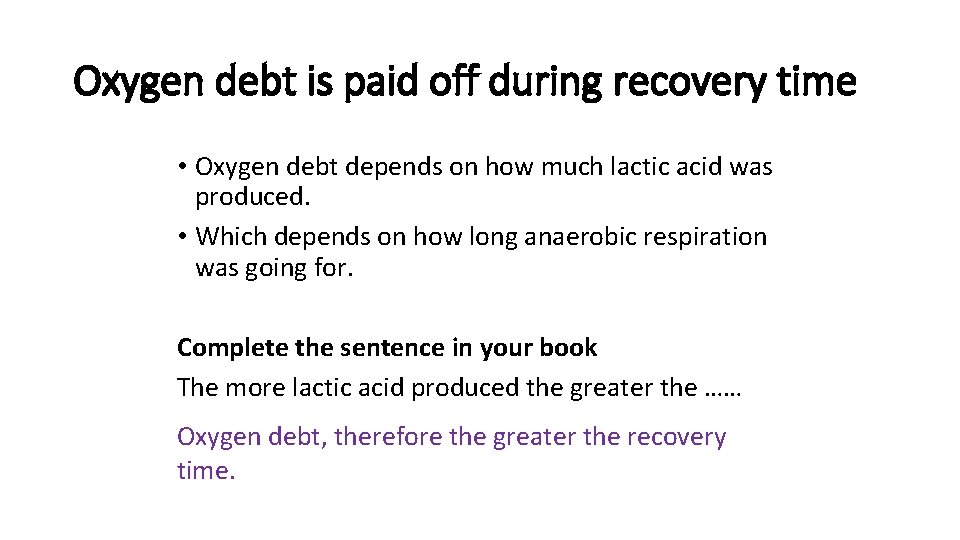
Oxygen debt is paid off during recovery time • Oxygen debt depends on how much lactic acid was produced. • Which depends on how long anaerobic respiration was going for. Complete the sentence in your book The more lactic acid produced the greater the …… Oxygen debt, therefore the greater the recovery time.