
Photosynthesis sunlight Carbon dioxide water absorbed by chlorophyll
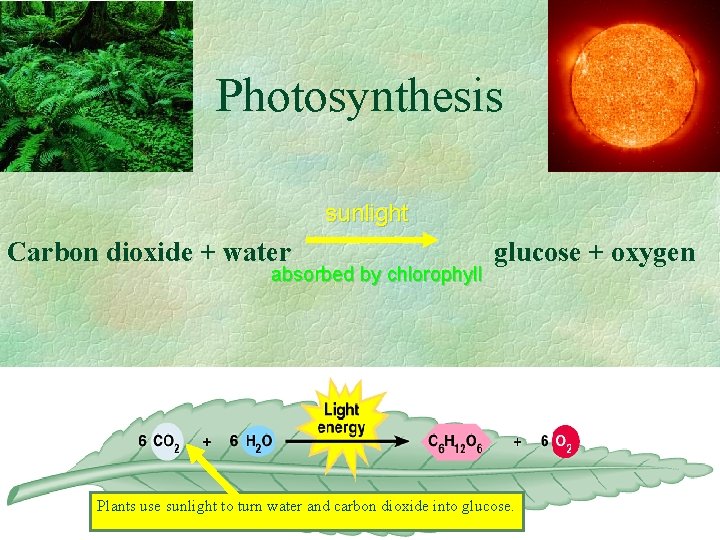
Photosynthesis sunlight Carbon dioxide + water absorbed by chlorophyll glucose + oxygen Plants use sunlight to turn water and carbon dioxide into glucose.
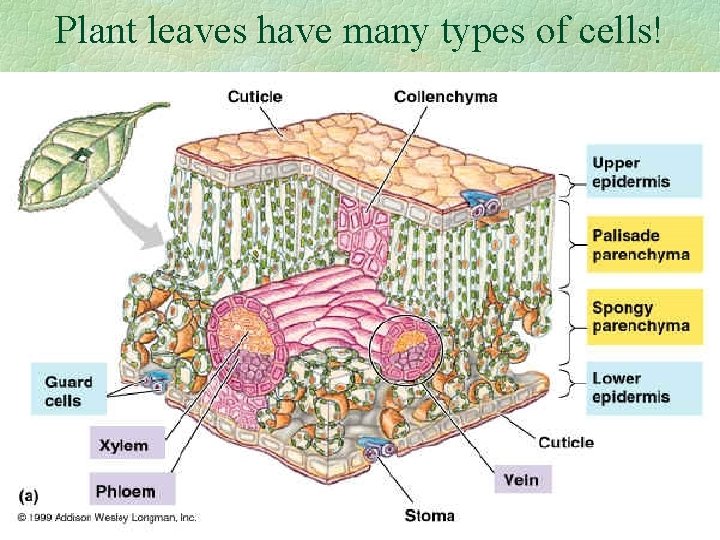
Plant leaves have many types of cells!
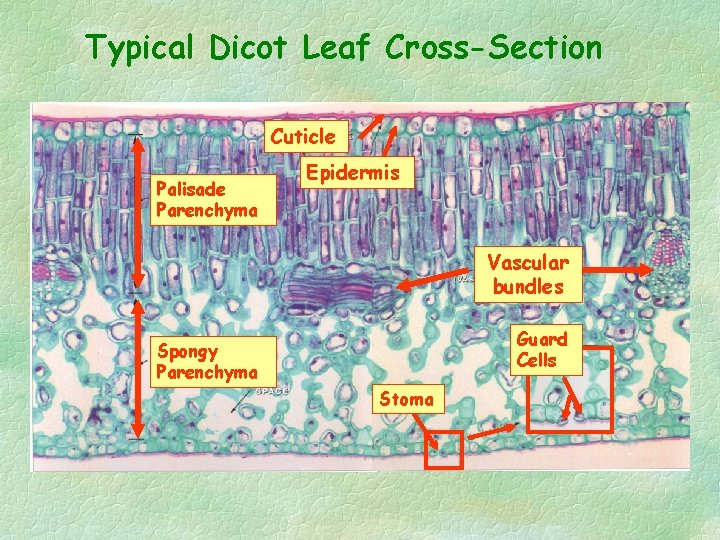
Typical Dicot Leaf Cross-Section Cuticle Palisade Parenchyma Epidermis Vascular bundles Guard Cells Spongy Parenchyma Stoma
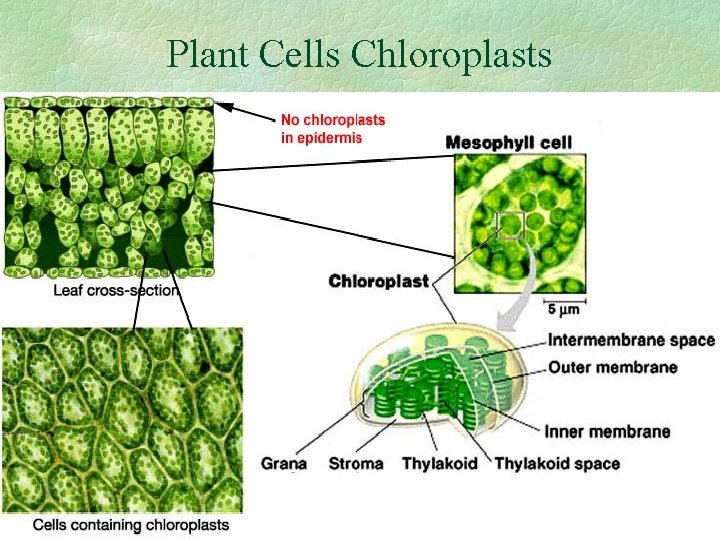
Plant Cells Chloroplasts
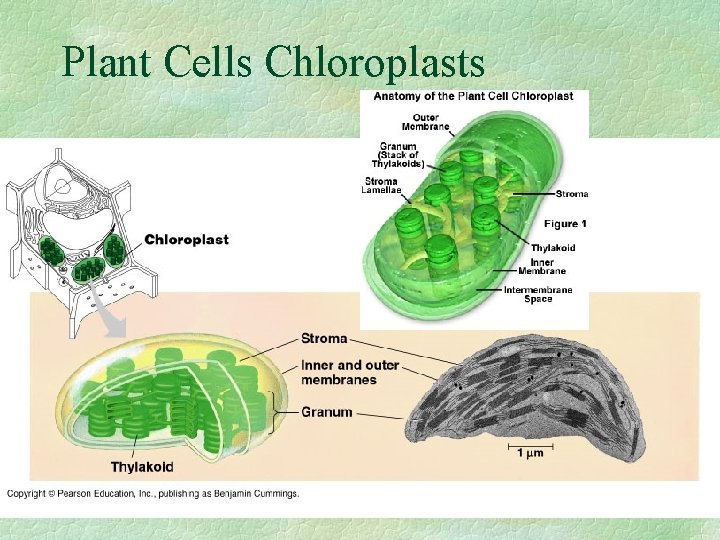
Plant Cells Chloroplasts
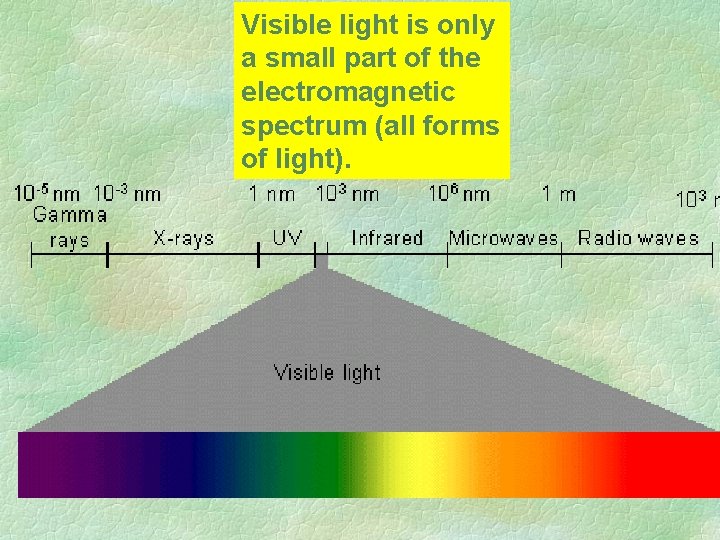
Visible light is only a small part of the electromagnetic spectrum (all forms of light).
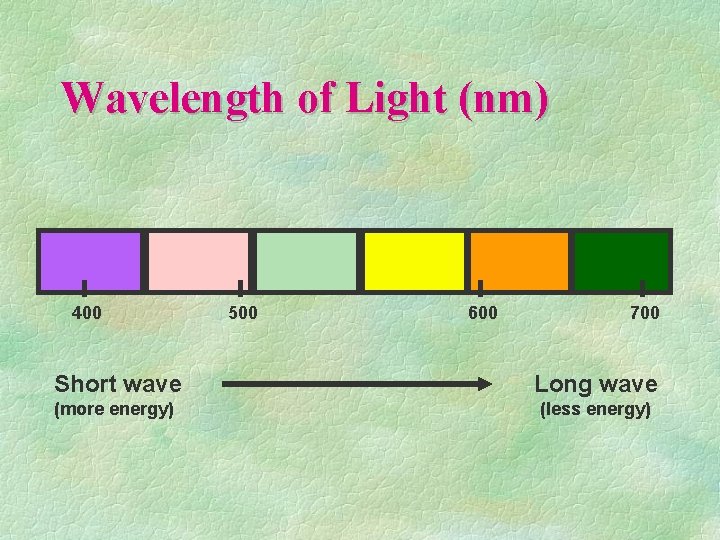
Wavelength of Light (nm) 400 500 600 700 Short wave Long wave (more energy) (less energy)
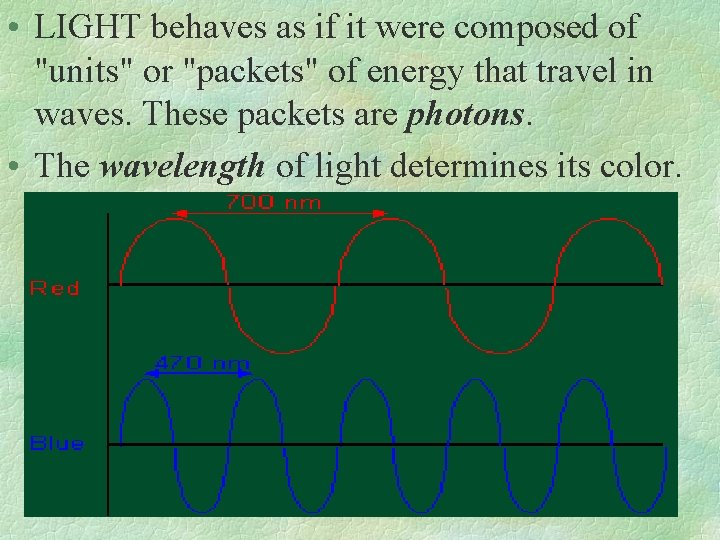
• LIGHT behaves as if it were composed of "units" or "packets" of energy that travel in waves. These packets are photons. • The wavelength of light determines its color.
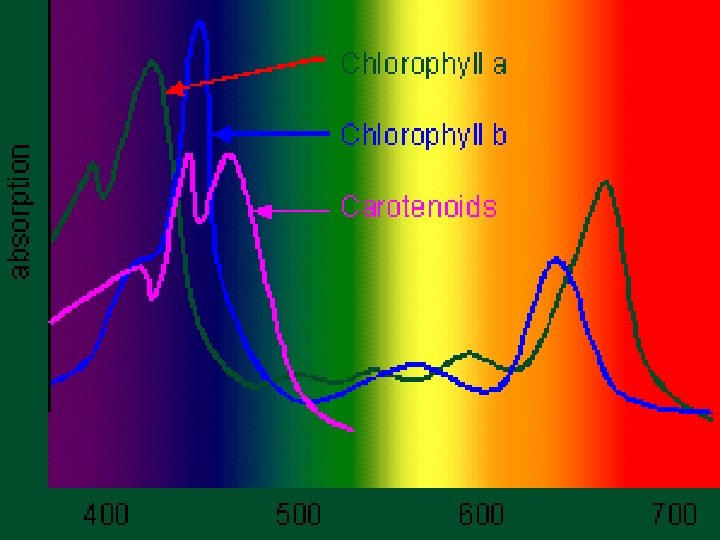
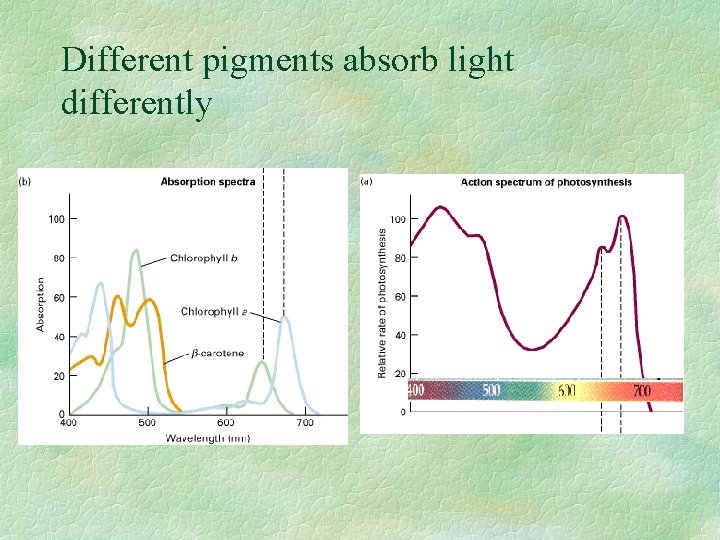
Different pigments absorb light differently
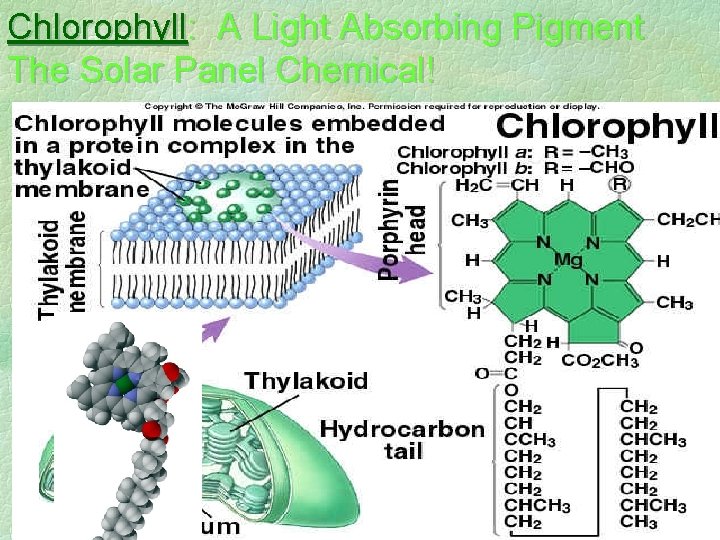
Chlorophyll: A Light Absorbing Pigment The Solar Panel Chemical!
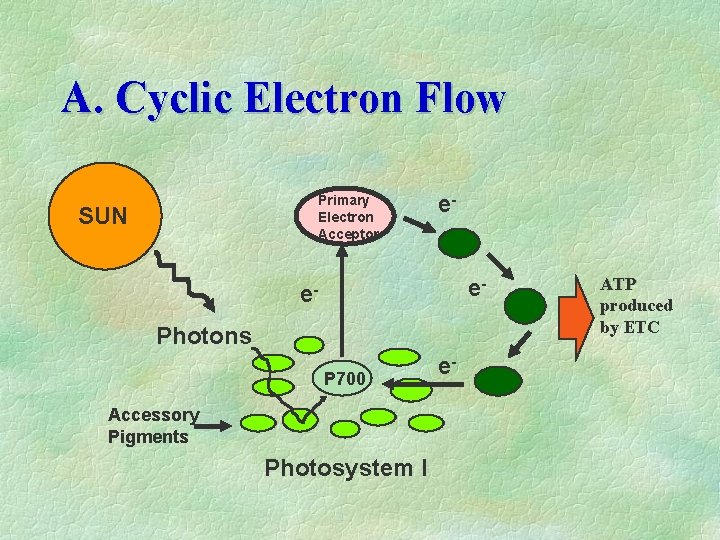
A. Cyclic Electron Flow Primary Electron Acceptor SUN ee- e. Photons P 700 Accessory Pigments Photosystem I e- ATP produced by ETC
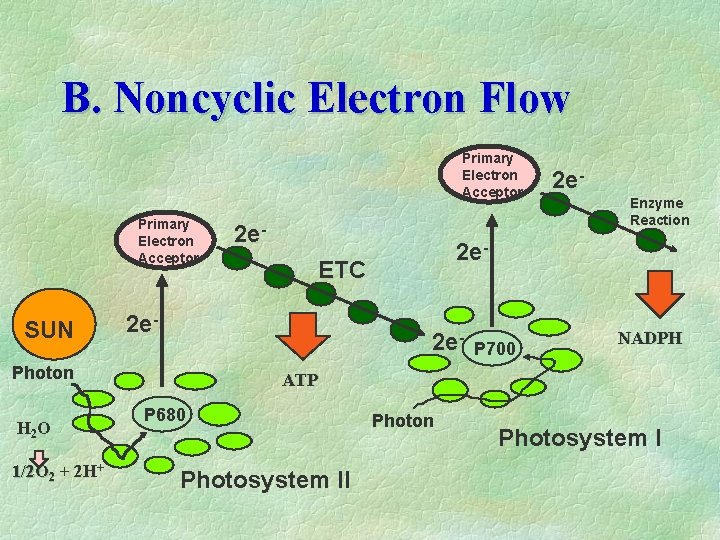
B. Noncyclic Electron Flow Primary Electron Acceptor SUN 1/2 O 2 + 2 H+ Enzyme Reaction 2 e- ETC 2 e- Photon H 2 O 2 e- P 700 NADPH ATP P 680 Photosystem II Photon Photosystem I
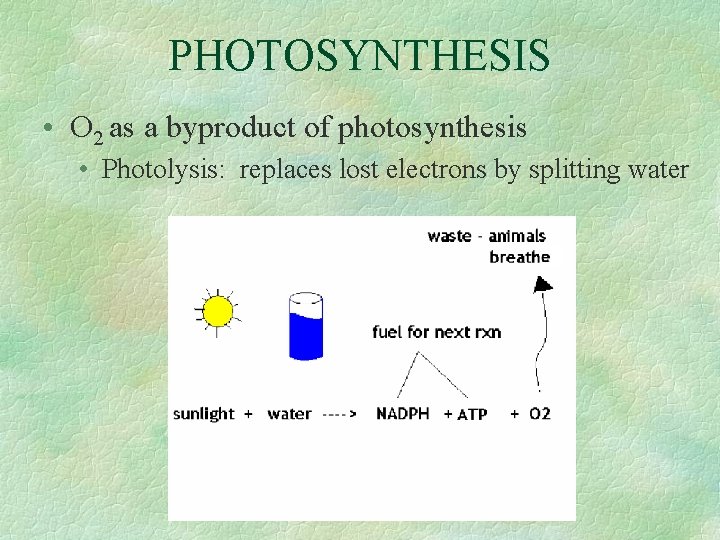
PHOTOSYNTHESIS • O 2 as a byproduct of photosynthesis • Photolysis: replaces lost electrons by splitting water

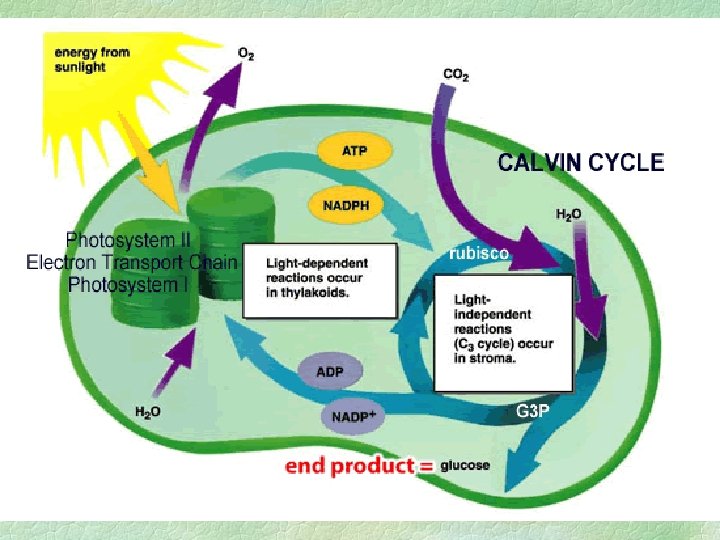
Sun Light energy transfers to chlorophyll. • At each step along the transport chain, the electrons lose energy. Chlorophyll passes energy down through the electron transport chain. Energized electrons provide energy that splits H 2 O H+ NADP+ oxygen released to ADP bonds P forming ATP NADPH for the use in light-independent reactions
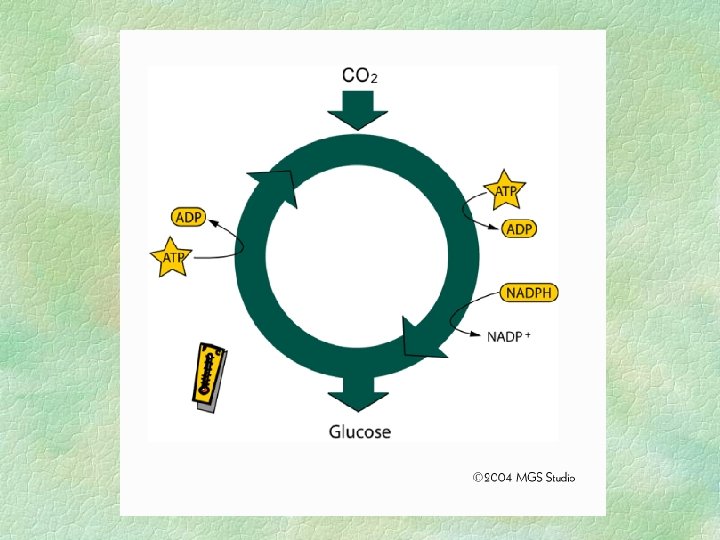
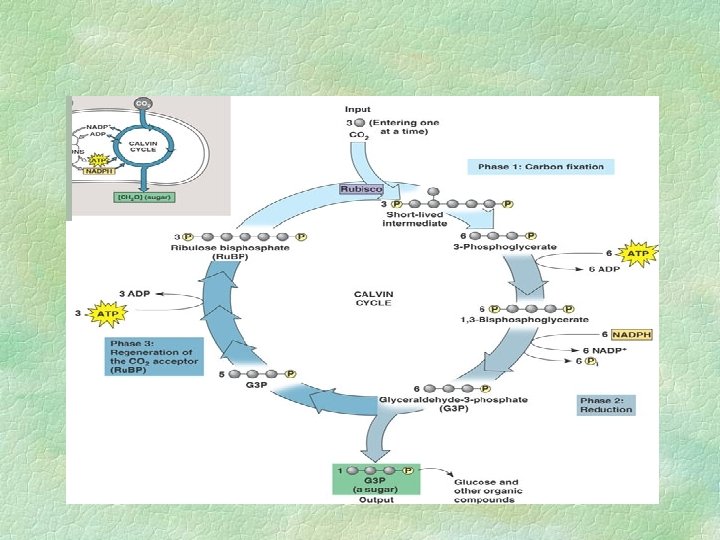
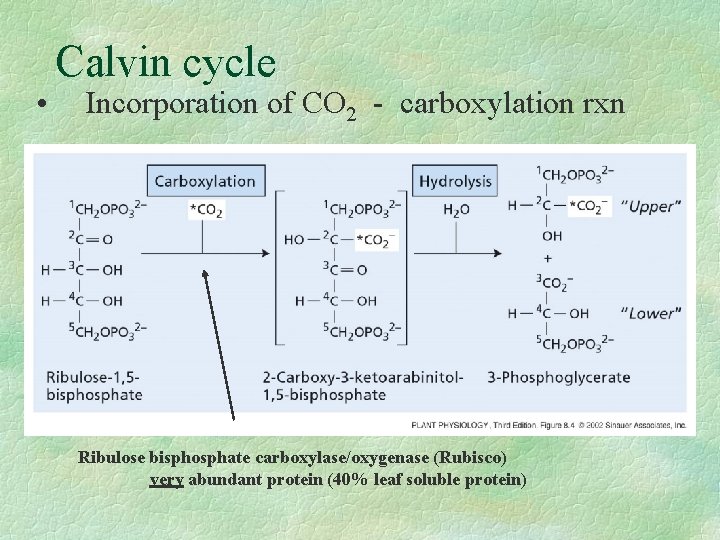
• Calvin cycle Incorporation of CO 2 - carboxylation rxn Ribulose bisphosphate carboxylase/oxygenase (Rubisco) very abundant protein (40% leaf soluble protein)
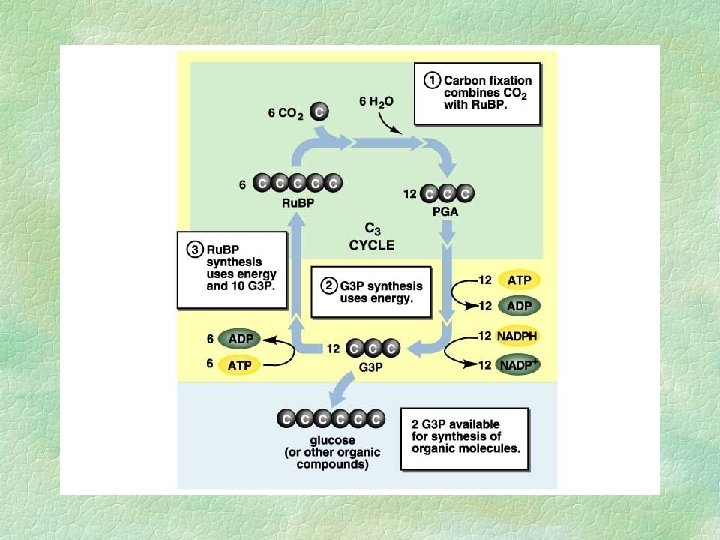
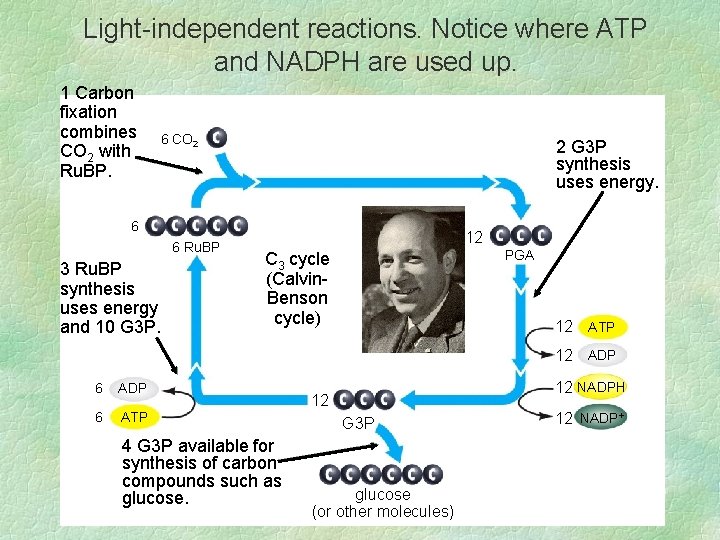
Light-independent reactions. Notice where ATP and NADPH are used up. 1 Carbon fixation combines CO 2 with Ru. BP. 6 CO 2 2 G 3 P synthesis uses energy. 6 6 Ru. BP 3 Ru. BP synthesis uses energy and 10 G 3 P. 12 PGA C 3 cycle (Calvin. Benson cycle) 12 ATP 12 ADP 6 ATP 4 G 3 P available for synthesis of carbon compounds such as glucose. 12 NADPH 12 G 3 P glucose (or other molecules) 12 NADP+
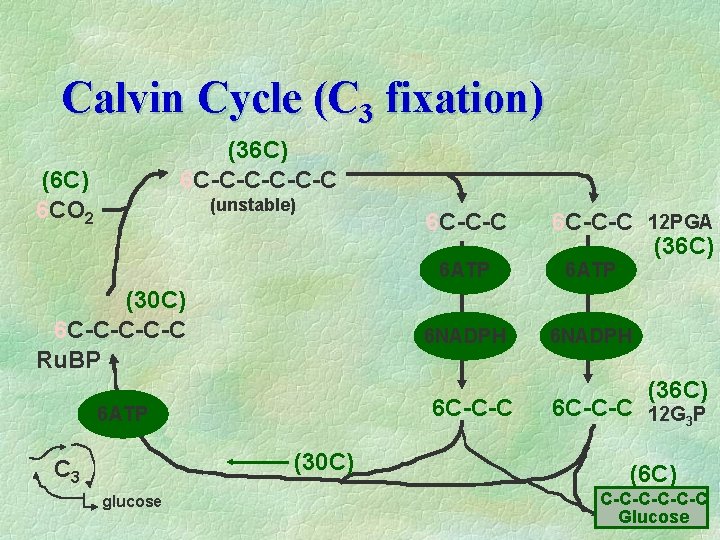
Calvin Cycle (C 3 fixation) (36 C) 6 C-C-C-C (6 C) 6 CO 2 (unstable) (30 C) 6 C-C-C Ru. BP (30 C) glucose 6 C-C-C 12 PGA (36 C) 6 ATP 6 NADPH 6 C-C-C 6 ATP C 3 6 C-C-C (36 C) 6 C-C-C 12 G 3 P (6 C) C-C-C-C Glucose
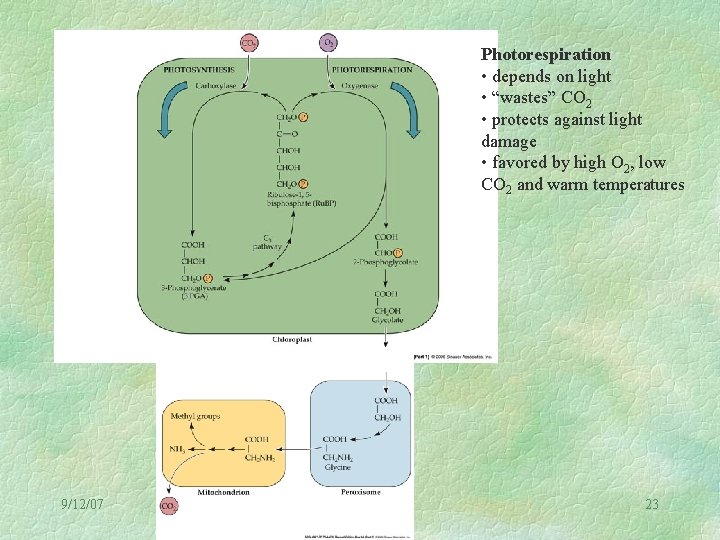
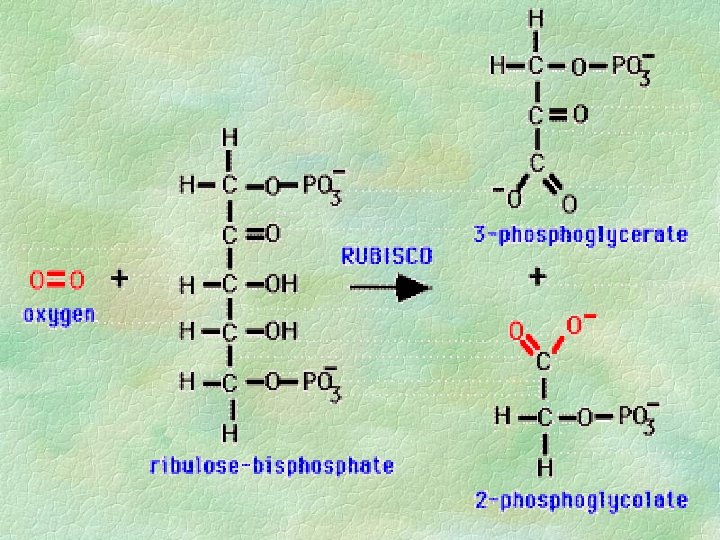
Photorespiration • depends on light • “wastes” CO 2 • protects against light damage • favored by high O 2, low CO 2 and warm temperatures 9/12/07 23
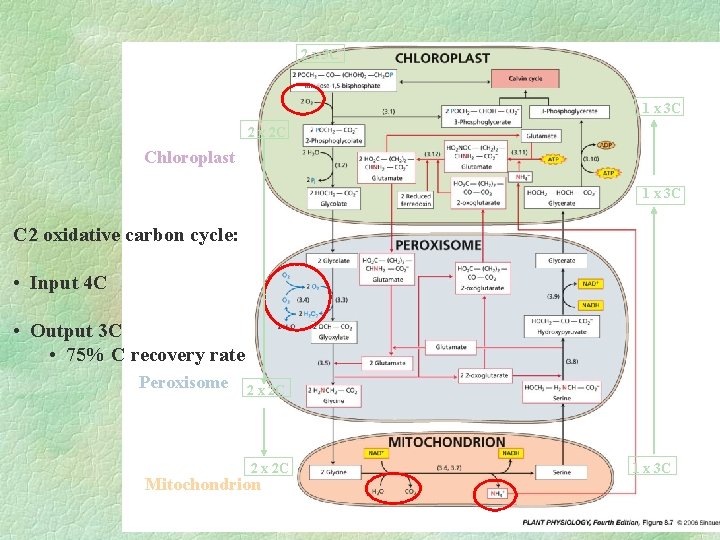
2 x 5 C 1 x 3 C 2 x 2 C Chloroplast 1 x 3 C C 2 oxidative carbon cycle: • Input 4 C • Output 3 C • 75% C recovery rate Peroxisome 2 x 2 C Mitochondrion 1 x 3 C
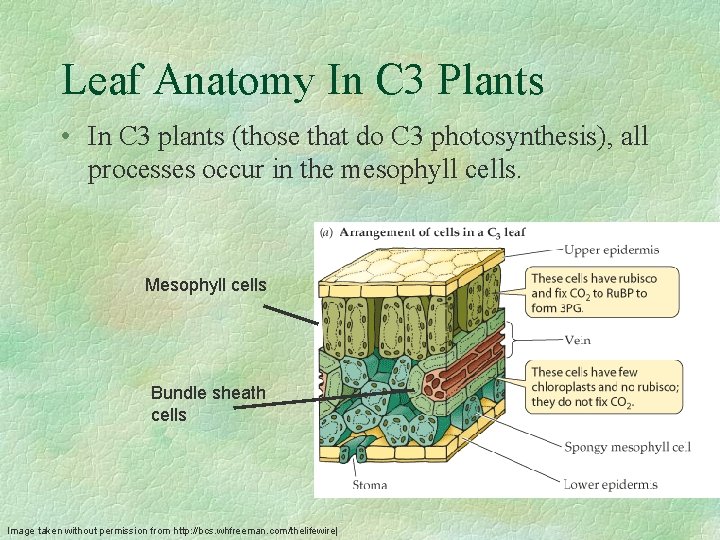
Leaf Anatomy In C 3 Plants • In C 3 plants (those that do C 3 photosynthesis), all processes occur in the mesophyll cells. Mesophyll cells Bundle sheath cells Image taken without permission from http: //bcs. whfreeman. com/thelifewire|
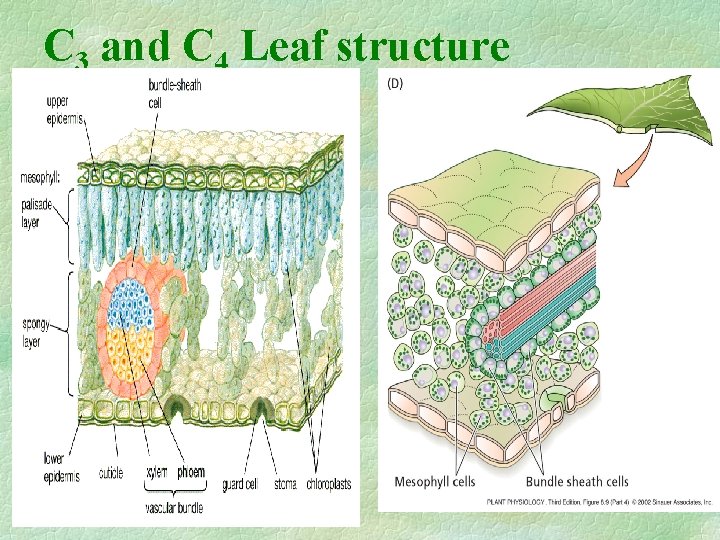
C 3 and C 4 Leaf structure
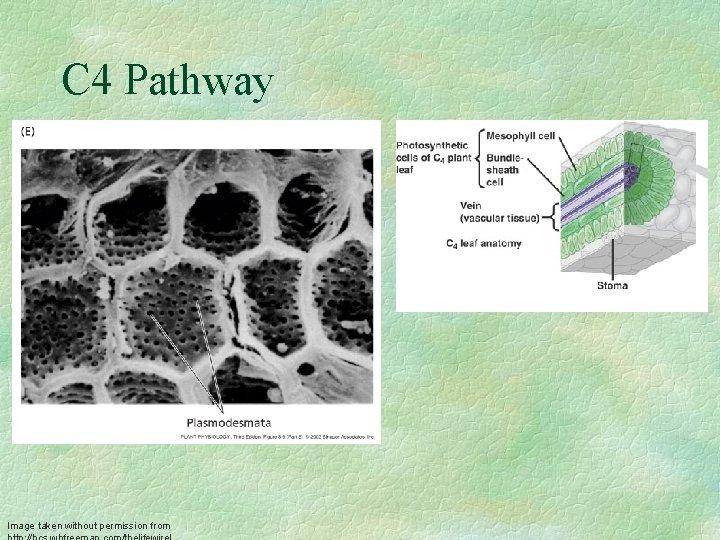
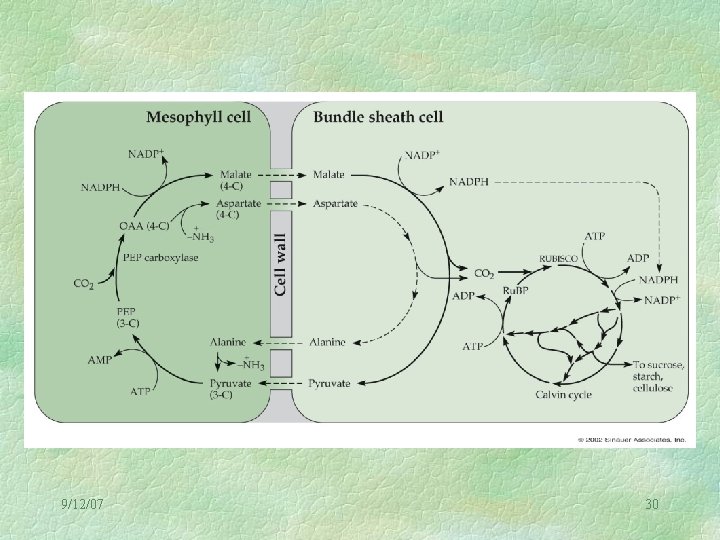
C 4 Pathway Image taken without permission from
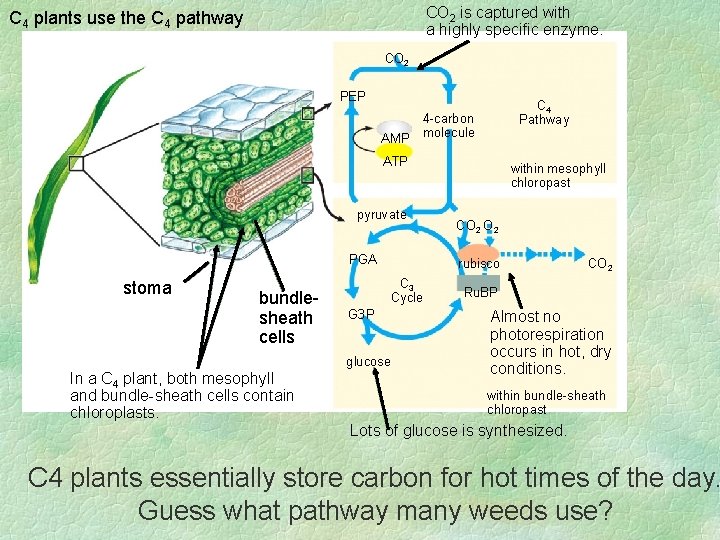
CO 2 is captured with a highly specific enzyme. C 4 plants use the C 4 pathway CO 2 PEP AMP C 4 Pathway 4 -carbon molecule ATP pyruvate PGA stoma bundlesheath cells CO 2 rubisco C 3 Cycle G 3 P glucose In a C 4 plant, both mesophyll and bundle-sheath cells contain chloroplasts. within mesophyll chloropast CO 2 Ru. BP Almost no photorespiration occurs in hot, dry conditions. within bundle-sheath chloropast Lots of glucose is synthesized. C 4 plants essentially store carbon for hot times of the day. Guess what pathway many weeds use?
9/12/07 30
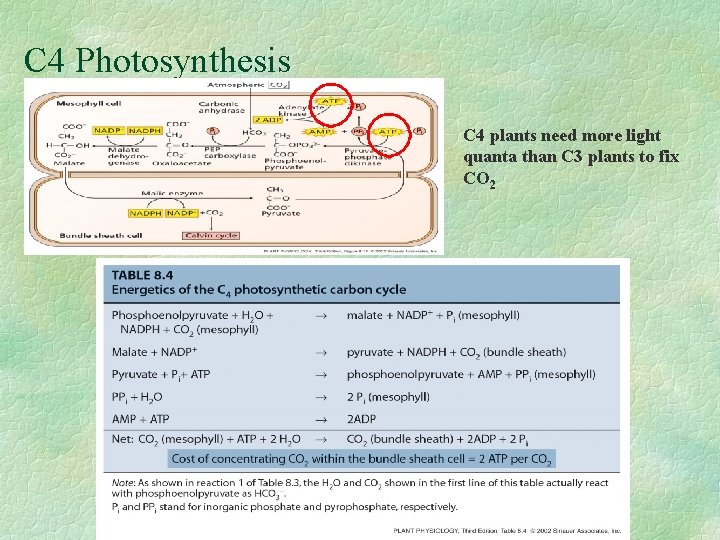
C 4 Photosynthesis C 4 plants need more light quanta than C 3 plants to fix CO 2
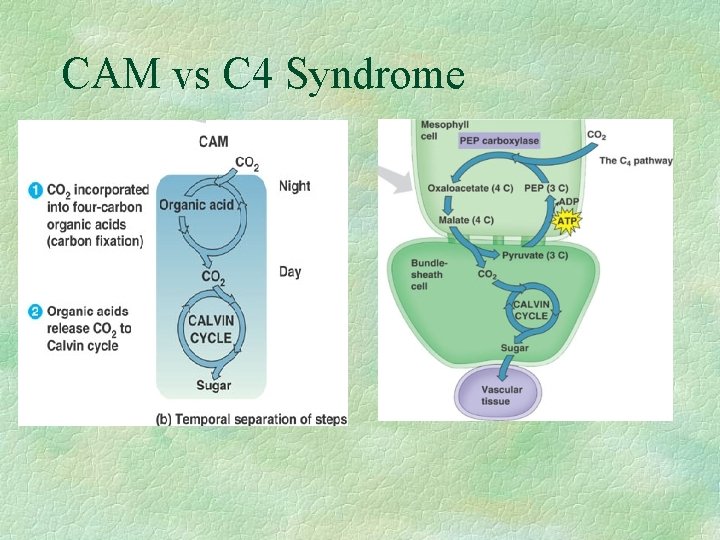
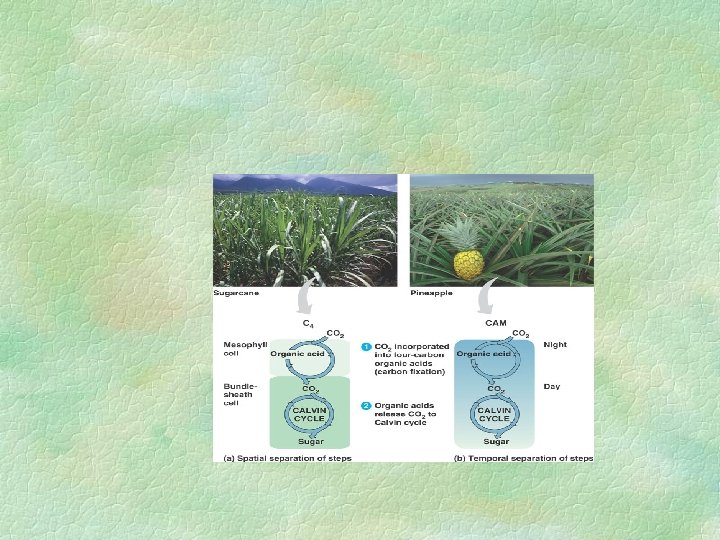
CAM vs C 4 Syndrome
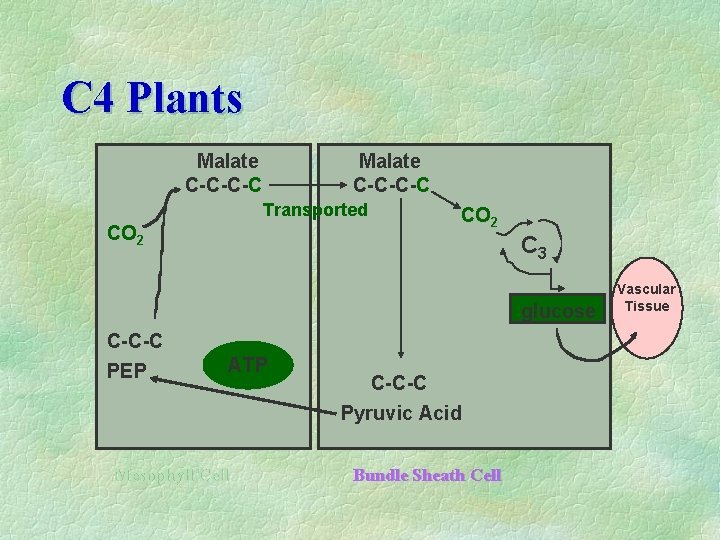
C 4 Plants Malate C-C-C-C Transported CO 2 C 3 glucose C-C-C PEP ATP Mesophyll Cell C-C-C Pyruvic Acid Bundle Sheath Cell Vascular Tissue
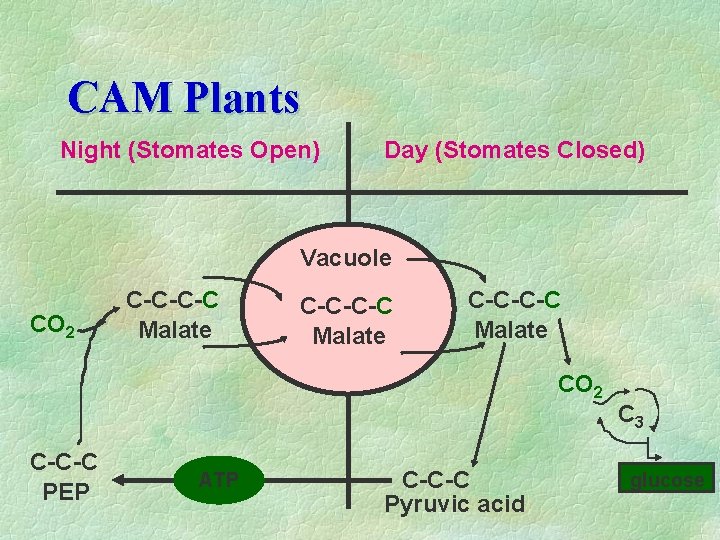
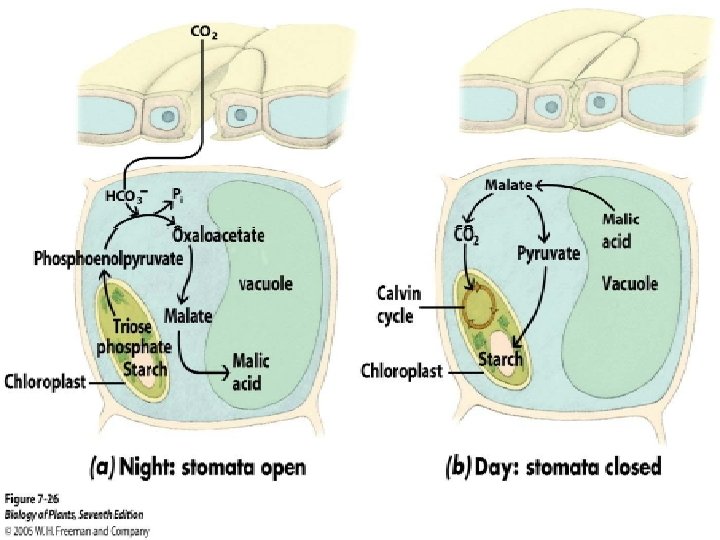
CAM Plants Night (Stomates Open) Day (Stomates Closed) Vacuole CO 2 C-C-C-C Malate CO 2 C-C-C PEP ATP C-C-C Pyruvic acid C 3 glucose
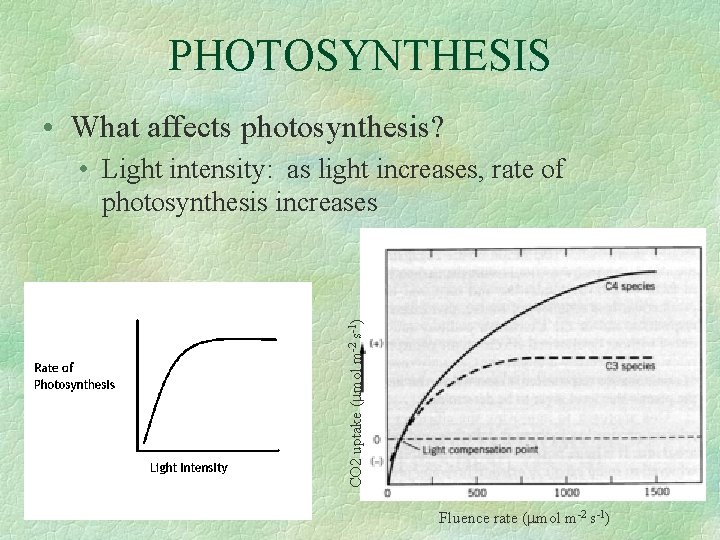
PHOTOSYNTHESIS • What affects photosynthesis? CO 2 uptake (mmol m-2 s-1) • Light intensity: as light increases, rate of photosynthesis increases Fluence rate (mmol m-2 s-1)
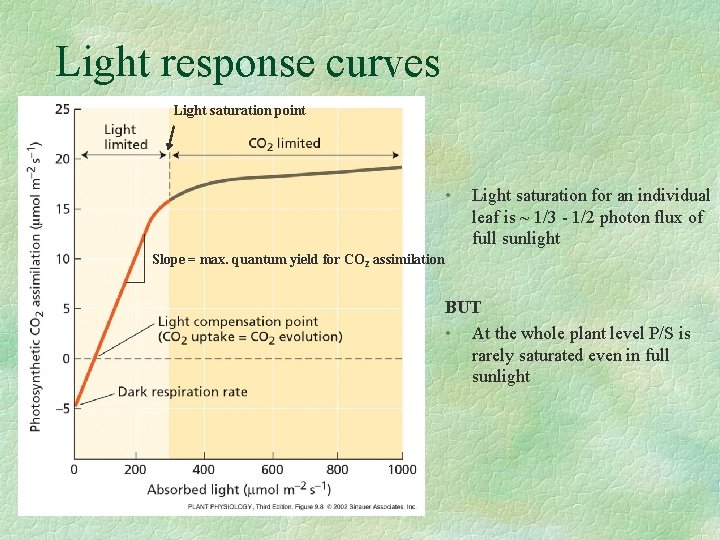
Light response curves Light saturation point • Light saturation for an individual leaf is ~ 1/3 - 1/2 photon flux of full sunlight Slope = max. quantum yield for CO 2 assimilation BUT • At the whole plant level P/S is rarely saturated even in full sunlight
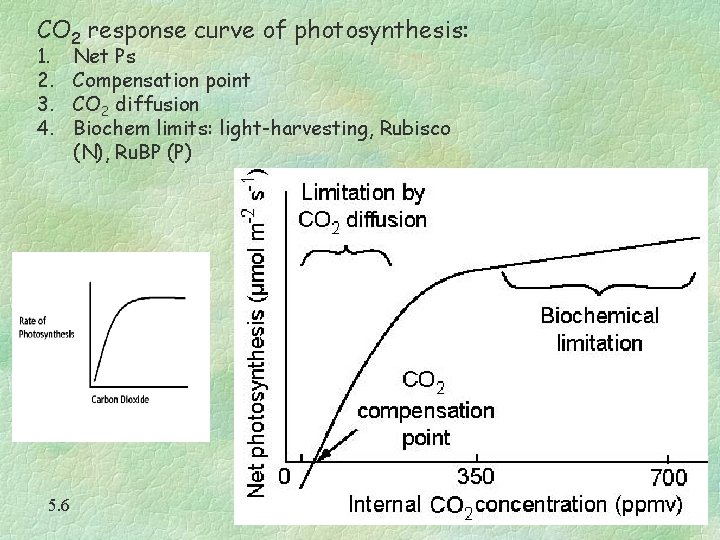
CO 2 response curve of photosynthesis: 1. 2. 3. 4. 5. 6 Net Ps Compensation point CO 2 diffusion Biochem limits: light-harvesting, Rubisco (N), Ru. BP (P)
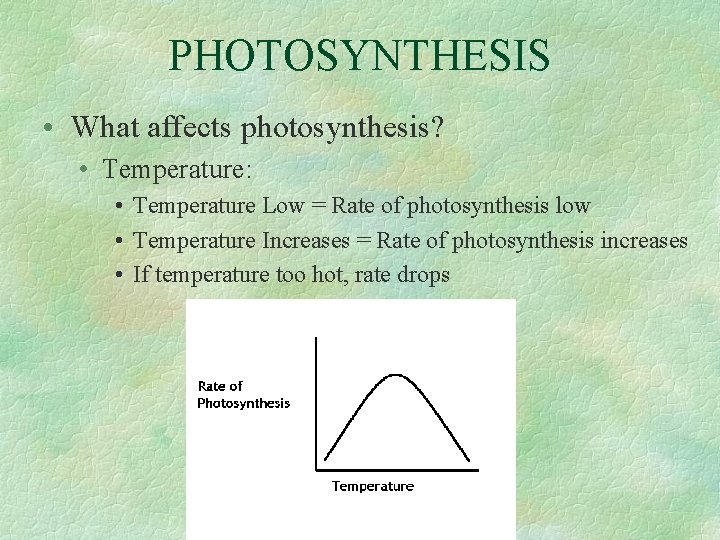
PHOTOSYNTHESIS • What affects photosynthesis? • Temperature: • Temperature Low = Rate of photosynthesis low • Temperature Increases = Rate of photosynthesis increases • If temperature too hot, rate drops
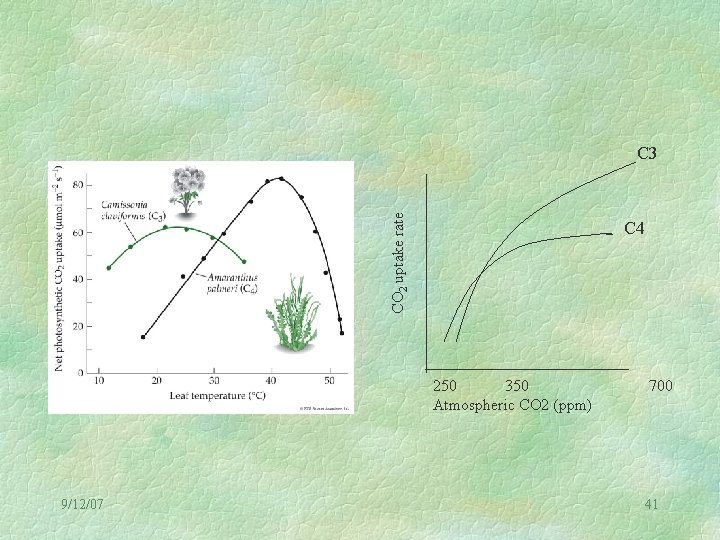
CO 2 uptake rate C 3 C 4 250 350 Atmospheric CO 2 (ppm) 9/12/07 700 41
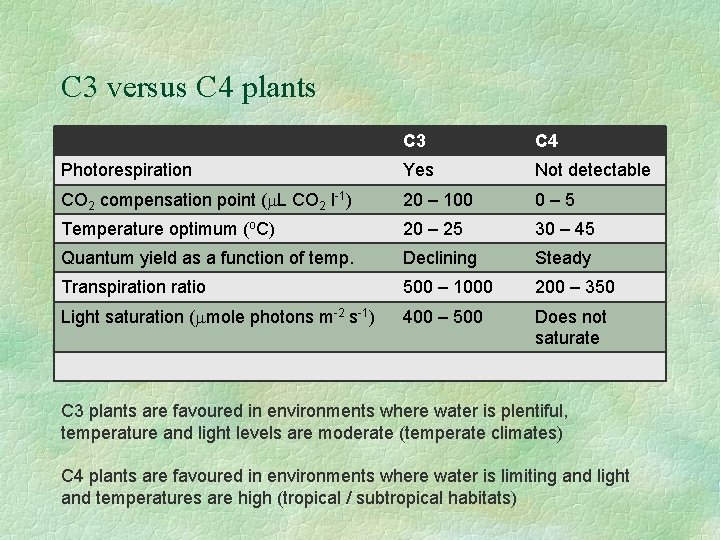
C 3 versus C 4 plants C 3 C 4 Photorespiration Yes Not detectable CO 2 compensation point (m. L CO 2 l-1) 20 – 100 0– 5 Temperature optimum (o. C) 20 – 25 30 – 45 Quantum yield as a function of temp. Declining Steady Transpiration ratio 500 – 1000 200 – 350 Light saturation (mmole photons m-2 s-1) 400 – 500 Does not saturate C 3 plants are favoured in environments where water is plentiful, temperature and light levels are moderate (temperate climates) C 4 plants are favoured in environments where water is limiting and light and temperatures are high (tropical / subtropical habitats)
- Slides: 42