
Photosynthesis Review Chapter 8 Plants look green because
Photosynthesis Review Chapter 8
Plants “look green” because they reflect _______ green wavelengths of light. absorb reflect Photosynthesis in plants takes place inside which organelle? chloroplasts
pigment is a molecule (like A _________ chlorophyll or carotinoids) that absorbs energy from light Name the green pigment used by plants for photosynthesis Chlorophyll
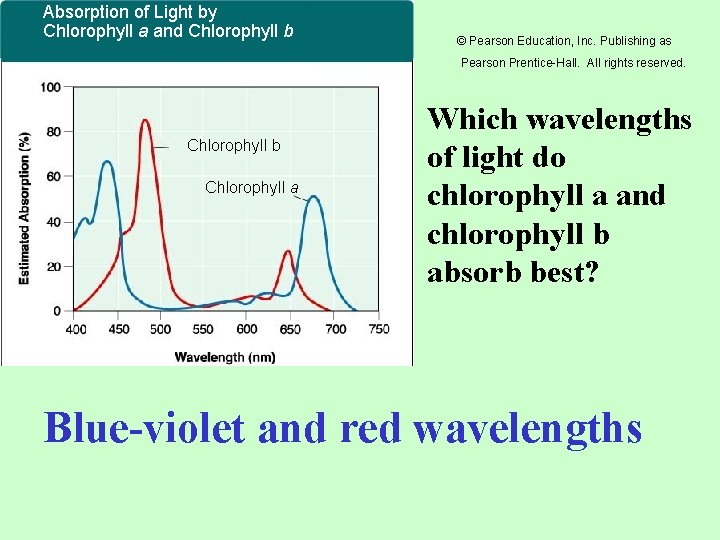
Absorption of Light by Chlorophyll a and Chlorophyll b © Pearson Education, Inc. Publishing as Pearson Prentice-Hall. All rights reserved. Chlorophyll b Chlorophyll a Which wavelengths of light do chlorophyll a and chlorophyll b absorb best? Blue-violet and red wavelengths
From where to land plants get the carbon dioxide needed for photosynthesis? atmosphere Name the 2 energy and electron carriers produced during the light dependent reactions. NADPH & ATP
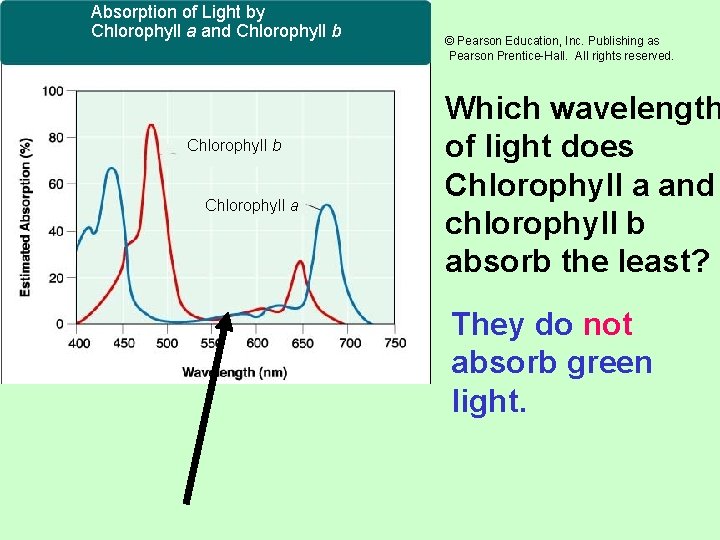
Absorption of Light by Chlorophyll a and Chlorophyll b Chlorophyll a © Pearson Education, Inc. Publishing as Pearson Prentice-Hall. All rights reserved. Which wavelength of light does Chlorophyll a and chlorophyll b absorb the least? They do not absorb green light.

Use chemical symbols and numbers to write the chemical equation for photosynthesis 6 CO 2 6 H 2 O ______+______ C 6 H 12 O 6 6 O 2 _____ + _____
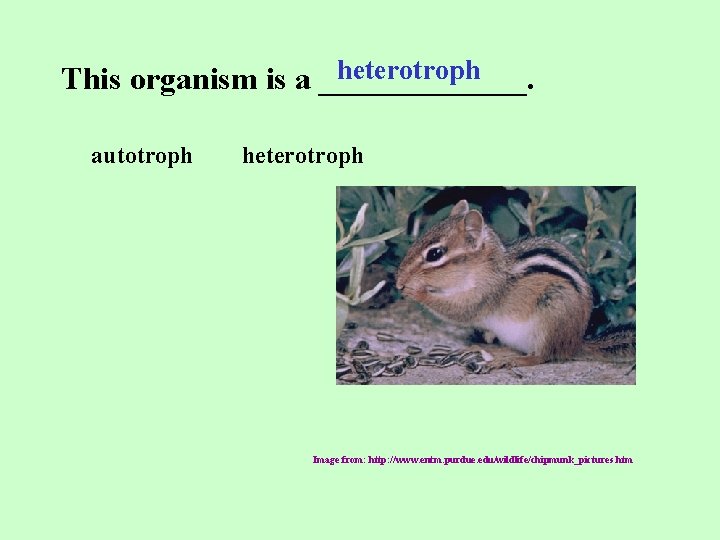
heterotroph This organism is a _______. autotroph heterotroph Image from: http: //www. entm. purdue. edu/wildlife/chipmunk_pictures. htm

#1 Photosynthesis #2 Name the 2 sets of reactions that make up photosynthesis: Light-Dependent Reactions #1 is called __________. #2 is called ________. Calvin Cycle (or Light-independent Reactions)
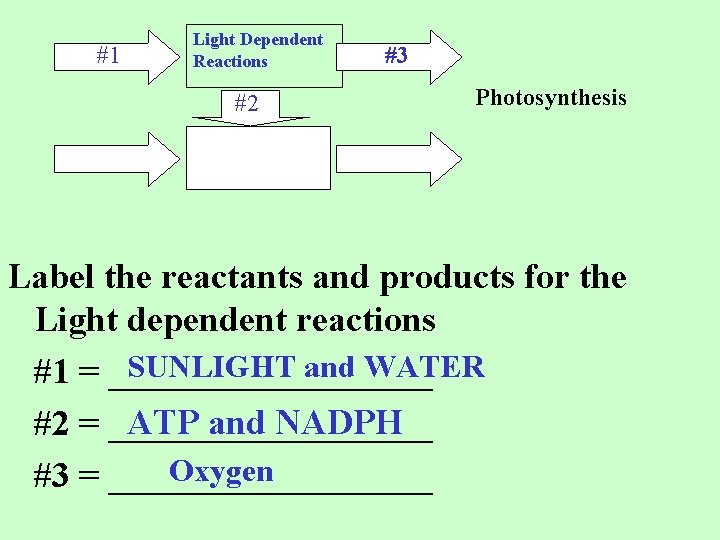
#1 Light Dependent Reactions #2 #3 Photosynthesis Label the reactants and products for the Light dependent reactions SUNLIGHT and WATER #1 = _________ ATP and NADPH #2 = _________ Oxygen #3 = _________
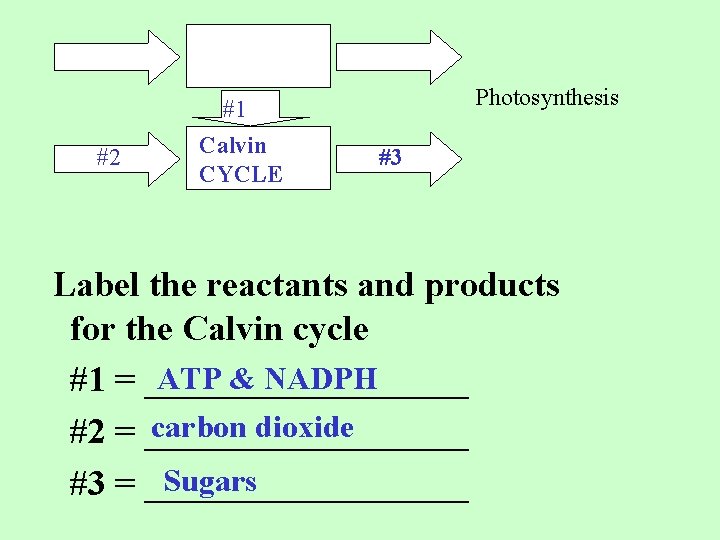
Photosynthesis #1 #2 Calvin CYCLE #3 Label the reactants and products for the Calvin cycle ATP & NADPH #1 = _________ carbon dioxide #2 = _________ Sugars #3 = _________
The clusters of proteins in the thylakoid membrane that collect light are called ________ PHOTOSYSTEMS Where does the Calvin cycle happen? In the stroma
TRUE or FALSE The Calvin cycle requires light. FALSE: It is light INDEPENDENT A protein that helps chemical reactions happen faster in living things is called enzyme an ________
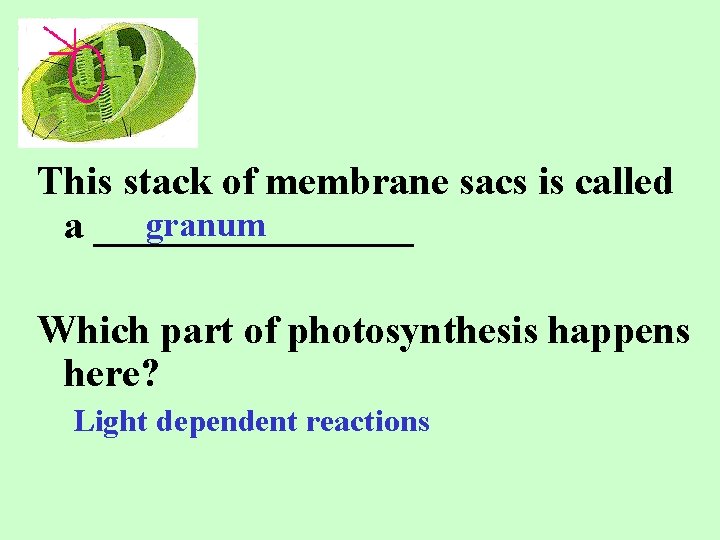
This stack of membrane sacs is called granum a ________ Which part of photosynthesis happens here? Light dependent reactions
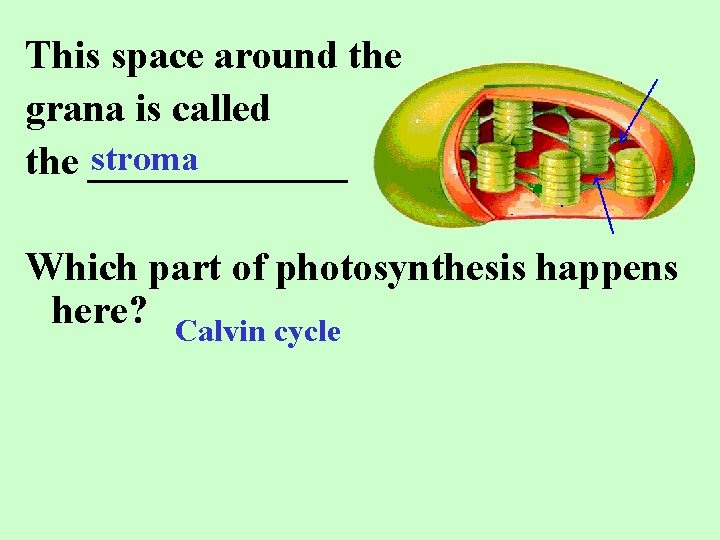
This space around the grana is called stroma the _______ Which part of photosynthesis happens here? Calvin cycle
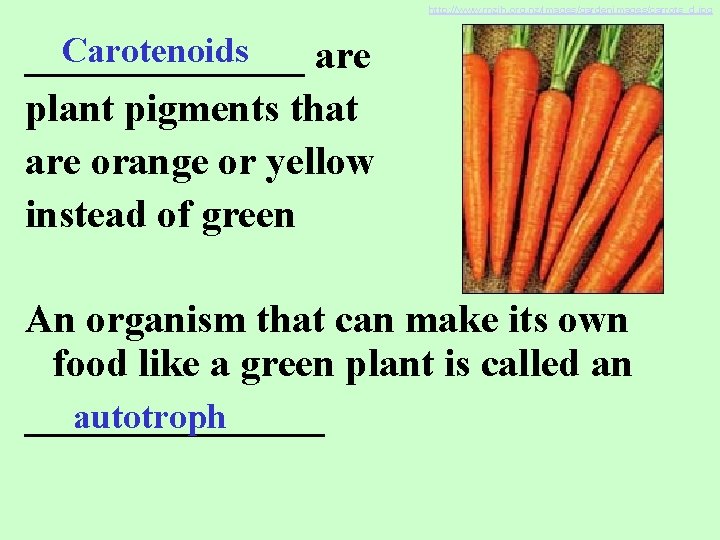
http: //www. rnzih. org. nz/images/gardenimages/carrots_d. jpg Carotenoids _______ are plant pigments that are orange or yellow instead of green An organism that can make its own food like a green plant is called an autotroph ________
Molecules that interact in a chemical reaction that are written on the left side of a chemical equation are called ________ reactants An organism that CAN’T make its own food and must get its energy from consuming other organisms heterotroph
Reactions of photosynthesis that use light energy to produce ATP and NADPH Light-dependent reactions Large protein that adds a P to ADP to make ATP synthase
An organism like a green plant that can make its own food AUTOTROPH Molecule made of ribose, adenine, and 3 phosphates used by living things to store and release energy ATP
Pigments that are yellow or orange not green carotenoids Clusters of light collecting proteins found in the thylakoid photosystems membrane Space surrounding the thylakoids inside a chloroplast stroma
Process by which plants use sunlight to convert water and carbon dioxide (CO 2) into oxygen (O 2) and glucose PHOTOSYNTHESIS Stack of thylakoid membranes GRANUM (pl. GRANA)
The change in shape of a protein at extremes of temperature or p. H denaturing 6 carbon sugar molecule that is the main product of photosynthesis and is used as the fuel burned by cells glucose
Reactions of photosynthesis in which energy from ATP and NADPH is used to build high energy sugar molecules Calvin cycle Negatively charged particle found circling the nucleus of an atom electron
Cell organelle containing thylakoid stacks where photosynthesis happens chloroplast In which part of photosynthesis is oxygen produced? Light-dependent reactions
Molecules that are produced during a chemical reaction that are written on the right side of a chemical equation products Another name for the Calvin cycle Light independent reactions
Where do the carbon atoms come from that end up in glucose made by the Calvin cycle? Carbon dioxide Which gas that we need is given off during photosynthesis? oxygen
Where does the OXYGEN come from that ends up in glucose after the Calvin cycle? Carbon dioxide Where to does the ATP and NADPH produced during the light-dependent reactions go next? They are used by the Calvin cycle to make sugar
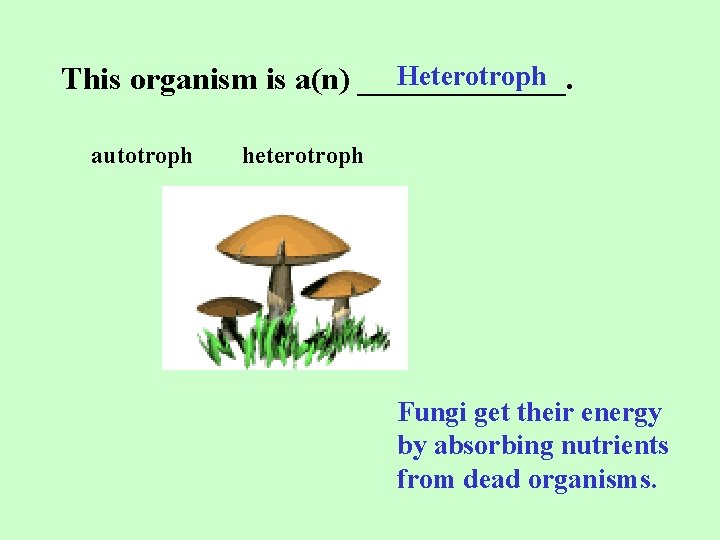
Heterotroph This organism is a(n) _______. autotroph heterotroph Fungi get their energy by absorbing nutrients from dead organisms.
Name 2 factors that can affect the rate of photosynthesis. Temperature, availability of water, and light intensity What do you think would happen to the rate of photosynthesis on a cloudy day? It would be slower than on a sunny day
How many phosphate groups are in a molecule of ADP? 2 Write the equation for changing ADP into ATP. ADP + energy → ATP
What compounds are formed from carbon dioxide during the Calvin cycle? sugars (glucose) Which part of photosynthesis can continue at night? Calvin cycle
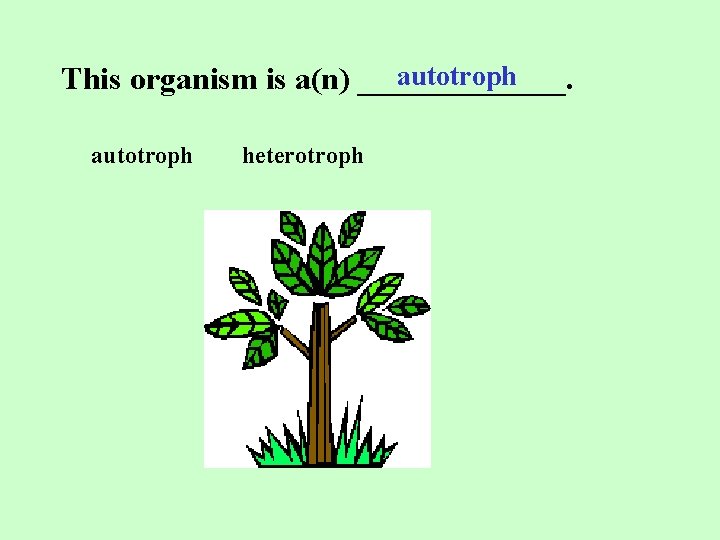
autotroph This organism is a(n) _______. autotroph heterotroph
Tell which molecule the H in NADPH originally comes from. NADPH Comes from H 2 O when water is split
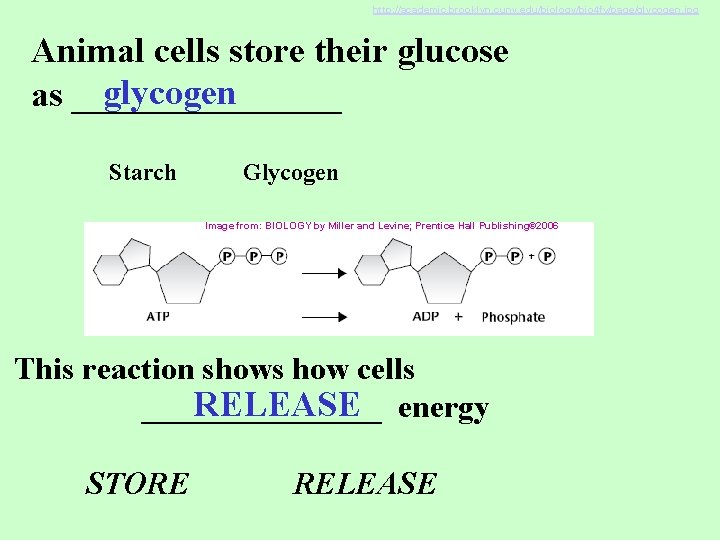
http: //academic. brooklyn. cuny. edu/biology/bio 4 fv/page/glycogen. jpg Animal cells store their glucose glycogen as ________ Starch Glycogen Image from: BIOLOGY by Miller and Levine; Prentice Hall Publishing© 2006 This reaction shows how cells RELEASE energy ________ STORE RELEASE
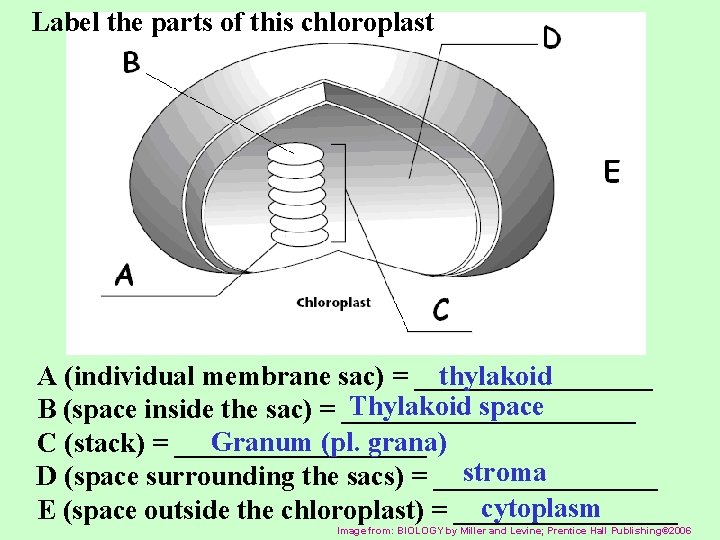
Label the parts of this chloroplast A (individual membrane sac) = _________ thylakoid Thylakoid space B (space inside the sac) = ___________ Granum (pl. grana) C (stack) = _________ stroma D (space surrounding the sacs) = ________ cytoplasm E (space outside the chloroplast) = ________ Image from: BIOLOGY by Miller and Levine; Prentice Hall Publishing© 2006
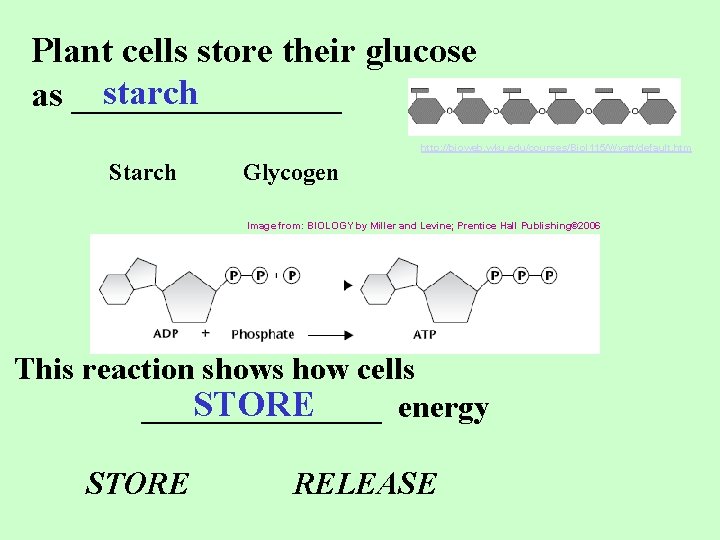
Plant cells store their glucose starch as ________ http: //bioweb. wku. edu/courses/Biol 115/Wyatt/default. htm Starch Glycogen Image from: BIOLOGY by Miller and Levine; Prentice Hall Publishing© 2006 This reaction shows how cells STORE ________ energy STORE RELEASE

Name this molecule used to store and transport energy ATP-adenosine triphosphate Label the parts of this molecule adenine A = ___________ Ribose sugar B = ___________ Phosphate groups C = ___________ Image from: BIOLOGY by Miller and Levine; Prentice Hall Publishing© 2006
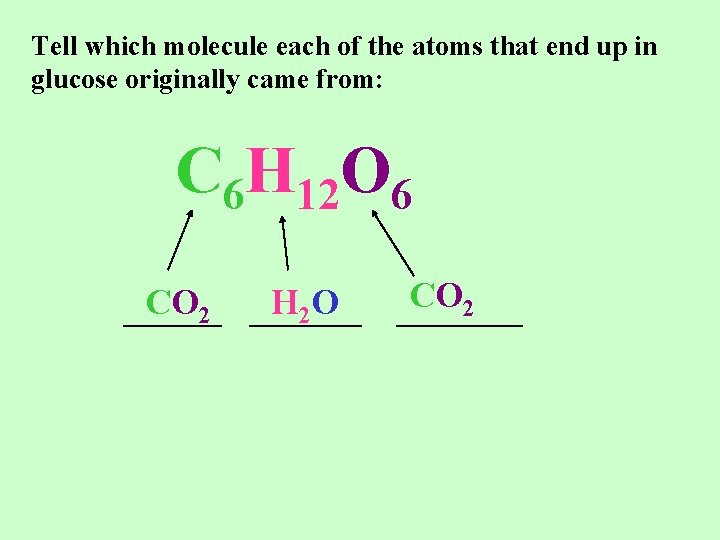
Tell which molecule each of the atoms that end up in glucose originally came from: C 6 H 12 O 6 CO 2 _______ H 2 O ____ CO 2 _____
What are the reactants in the LIGHT REACTIONS? WATER Which TWO high energy carriers are produced in the LIGHT REACTIONS? ATP & NADPH
What are the reactants in the LIGHT INDEPENDENT REACTIONS? ATP & NADPH & CO 2 What are the products of the LIGHT REACTIONS? ATP & NADPH & O 2
What are the products in the LIGHT INDEPENDENT REACTIONS? glucose How many phosphates are attached to an ATP molecule? 3
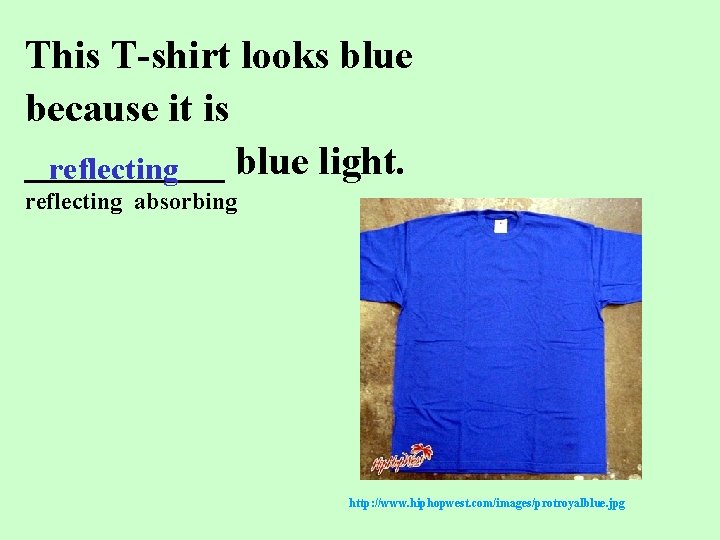
This T-shirt looks blue because it is _____ blue light. reflecting absorbing http: //www. hiphopwest. com/images/protroyalblue. jpg
- Slides: 42