
Photosynthesis Questions What is photosynthesis What is required


- Slides: 17
Photosynthesis
Questions What is photosynthesis? What is required for photosynthesis? Which organism can photosynthesise?
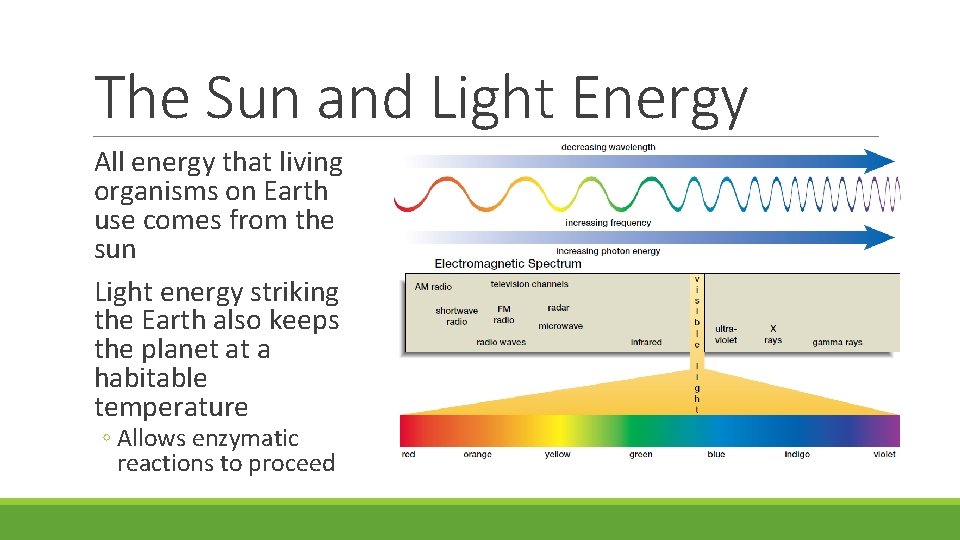
The Sun and Light Energy All energy that living organisms on Earth use comes from the sun Light energy striking the Earth also keeps the planet at a habitable temperature ◦ Allows enzymatic reactions to proceed
The Sun and Light Energy Light falling on plants allows photosynthesis – this is the basis of ALL food chains on Earth Light energy is used by plants in their chloroplasts to produce organic molecules (Glucose) which is stored by plants as starch
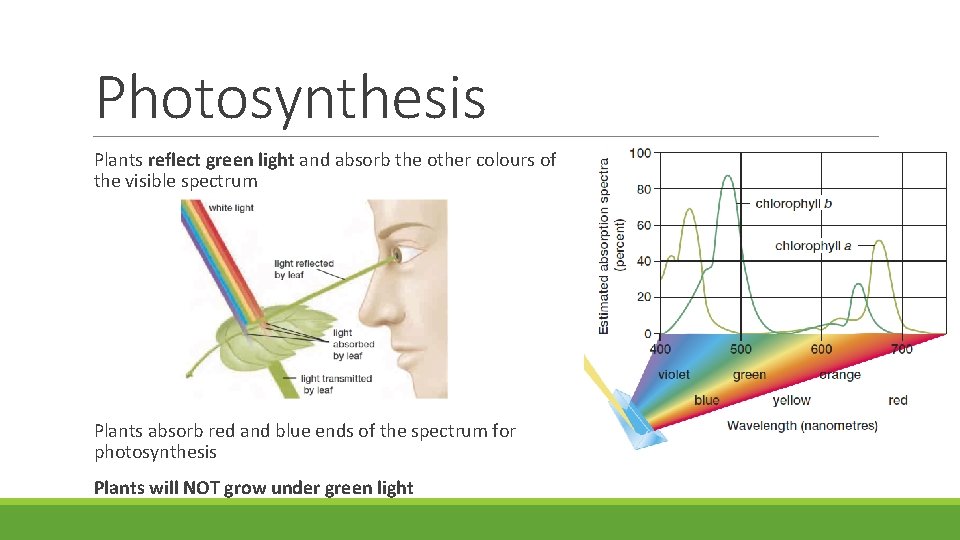
Photosynthesis Plants reflect green light and absorb the other colours of the visible spectrum Plants absorb red and blue ends of the spectrum for photosynthesis Plants will NOT grow under green light
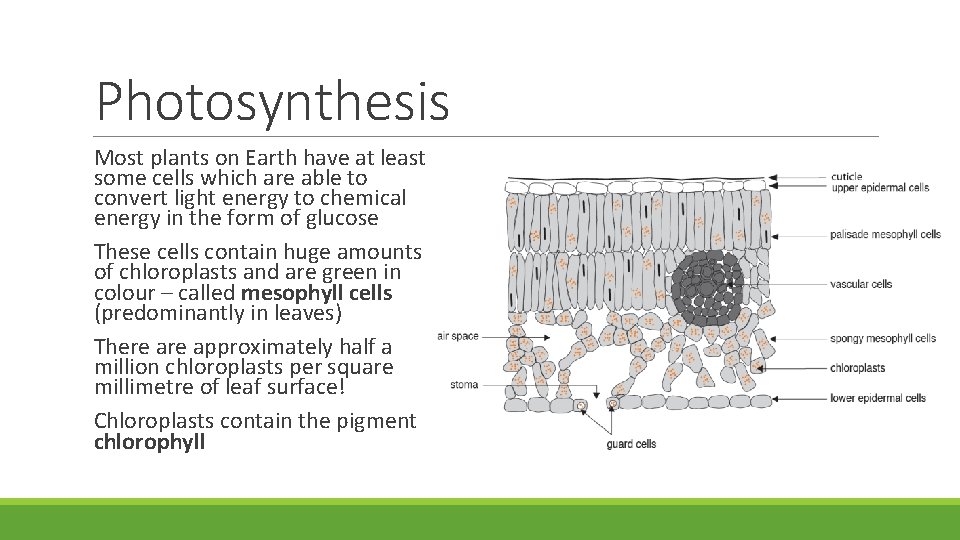
Photosynthesis Most plants on Earth have at least some cells which are able to convert light energy to chemical energy in the form of glucose These cells contain huge amounts of chloroplasts and are green in colour – called mesophyll cells (predominantly in leaves) There approximately half a million chloroplasts per square millimetre of leaf surface! Chloroplasts contain the pigment chlorophyll
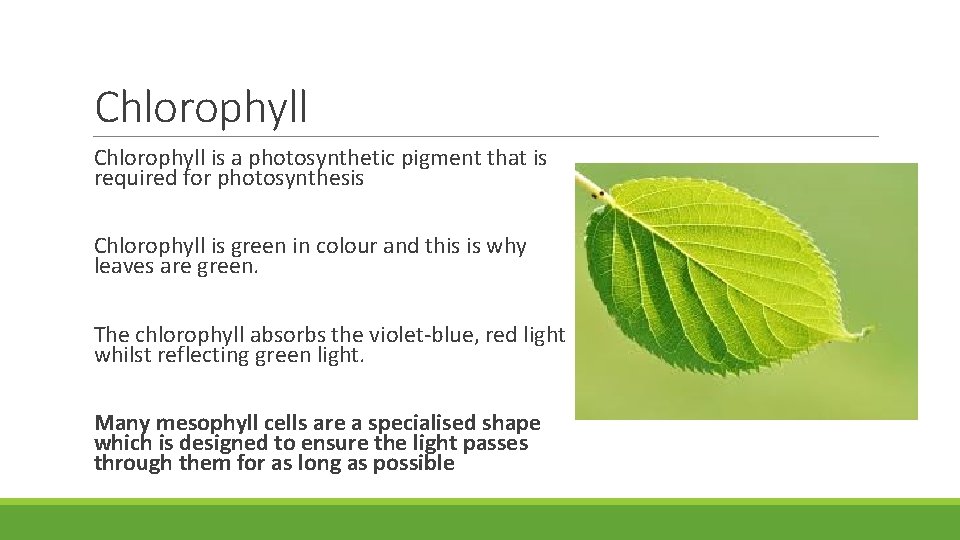
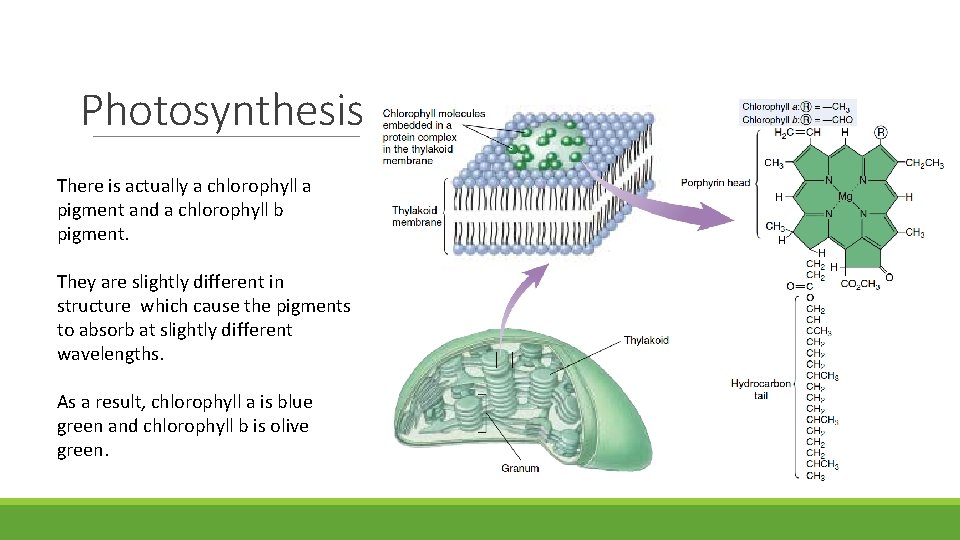
Chlorophyll is a photosynthetic pigment that is required for photosynthesis Chlorophyll is green in colour and this is why leaves are green. The chlorophyll absorbs the violet-blue, red light whilst reflecting green light. Many mesophyll cells are a specialised shape which is designed to ensure the light passes through them for as long as possible
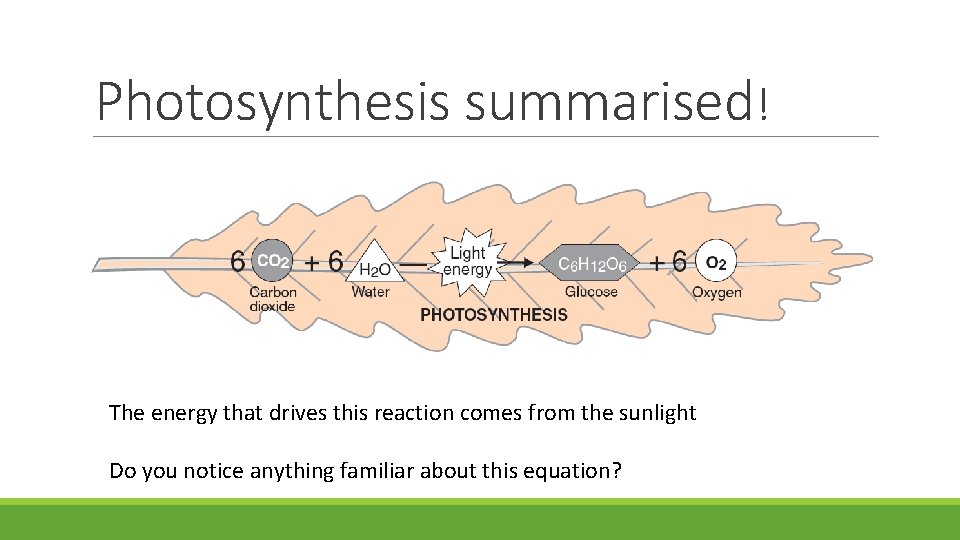
Photosynthesis – What is needed! Carbon dioxide and water is needed, along with sunlight Oxygen and glucose are produced http: //www. youtube. com/watch? v=8 u_hwwzt. Rq. I http: //www. youtube. com/watch? v=C 1_uez 5 WX 1 o
Photosynthesis There is actually a chlorophyll a pigment and a chlorophyll b pigment. They are slightly different in structure which cause the pigments to absorb at slightly different wavelengths. As a result, chlorophyll a is blue green and chlorophyll b is olive green.
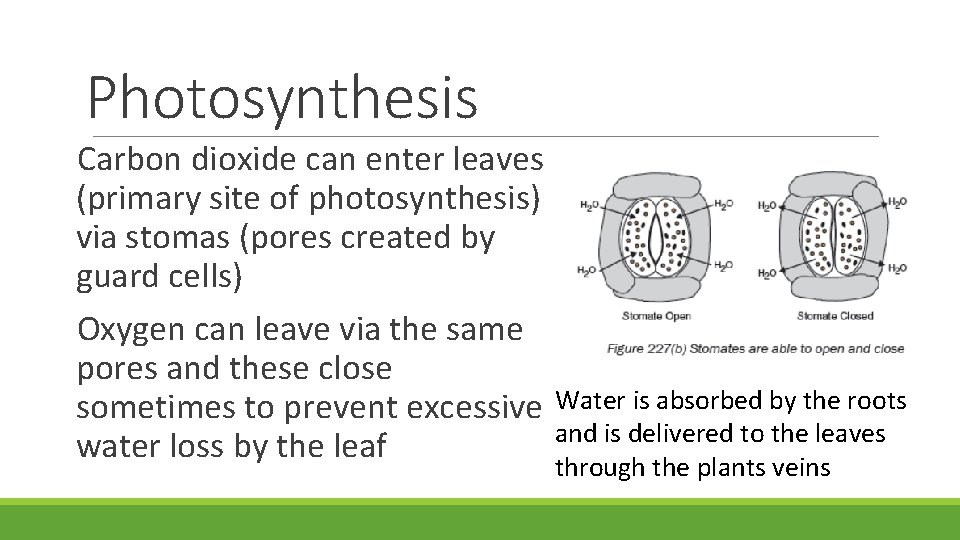
Photosynthesis Carbon dioxide can enter leaves (primary site of photosynthesis) via stomas (pores created by guard cells) Oxygen can leave via the same pores and these close sometimes to prevent excessive water loss by the leaf Water is absorbed by the roots and is delivered to the leaves through the plants veins
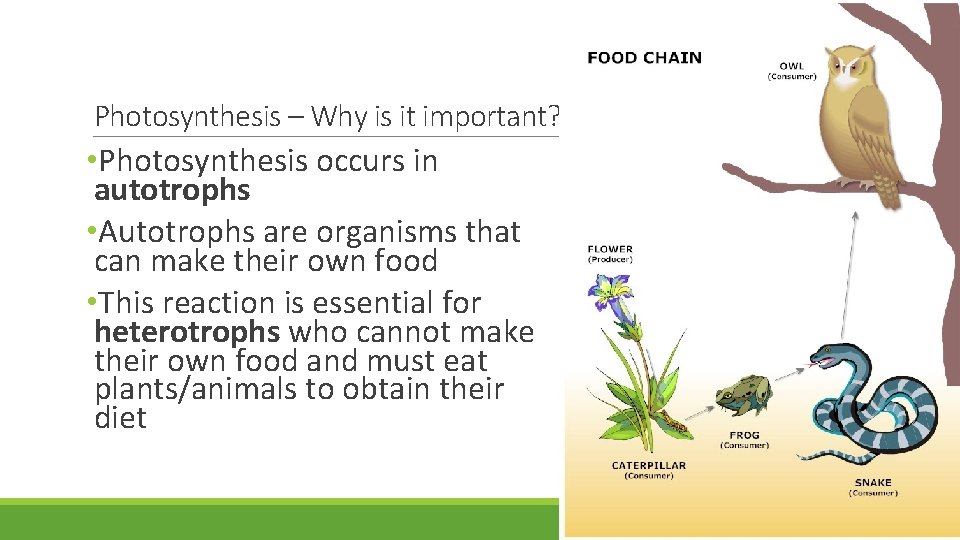
Photosynthesis – Why is it important? • Photosynthesis occurs in autotrophs • Autotrophs are organisms that can make their own food • This reaction is essential for heterotrophs who cannot make their own food and must eat plants/animals to obtain their diet
Photosynthesis summarised! The energy that drives this reaction comes from the sunlight Do you notice anything familiar about this equation?
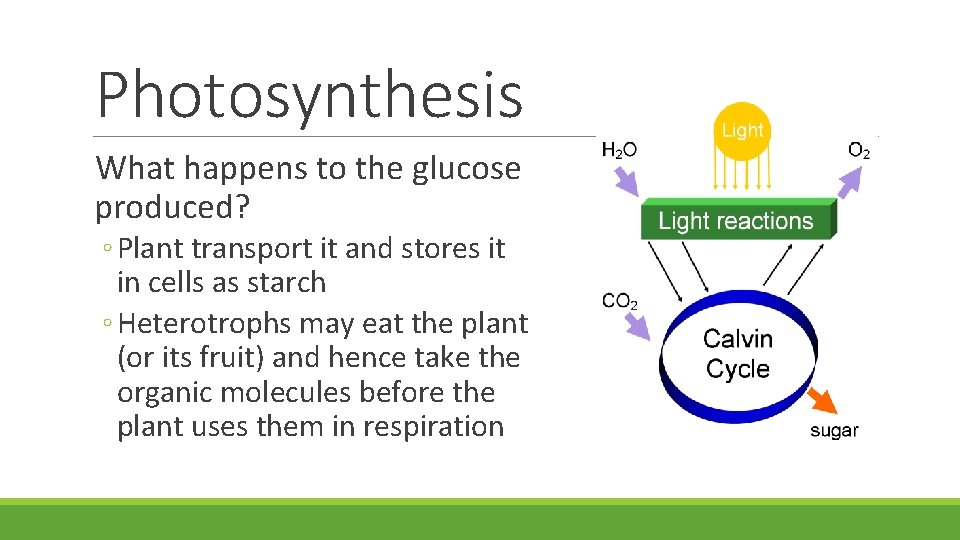
Photosynthesis What happens to the glucose produced? ◦ Plant transport it and stores it in cells as starch ◦ Heterotrophs may eat the plant (or its fruit) and hence take the organic molecules before the plant uses them in respiration
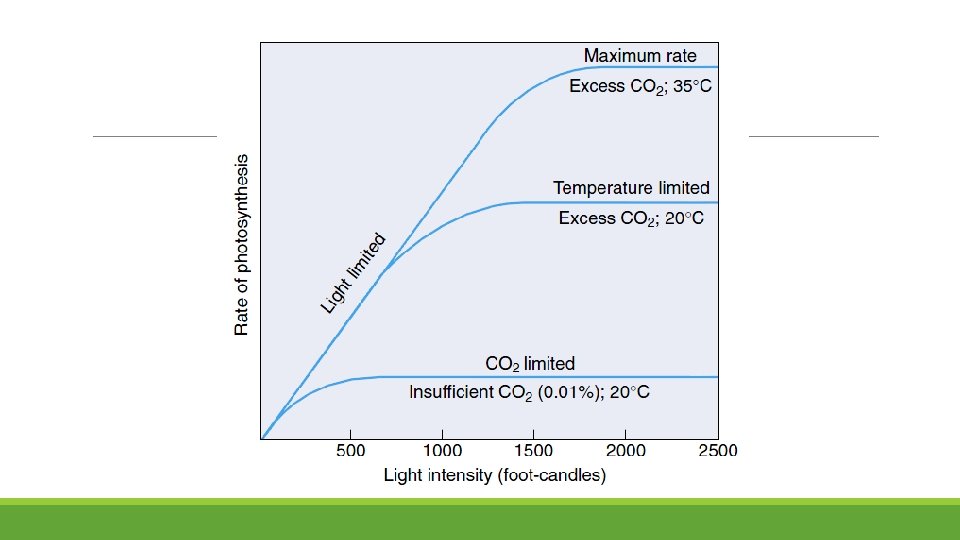
Photosynthesis Rate of photosynthesis impacted by the following factors (called limiting factors): ◦ Amount of carbon dioxide ◦ Temperature (higher, generally faster to a point) ◦ Light intensity ◦ Wavelengths of light
Photosynthesis - Clickview
Questions Complete Questions 1 – 18 in your workbook.