
Photosynthesis Process that turns suns energy into glucose
- Slides: 16
Photosynthesis • Process that turns sun’s energy into glucose: food for plant • Organelle responsible for photosynthesis: CHLOROPLASTS
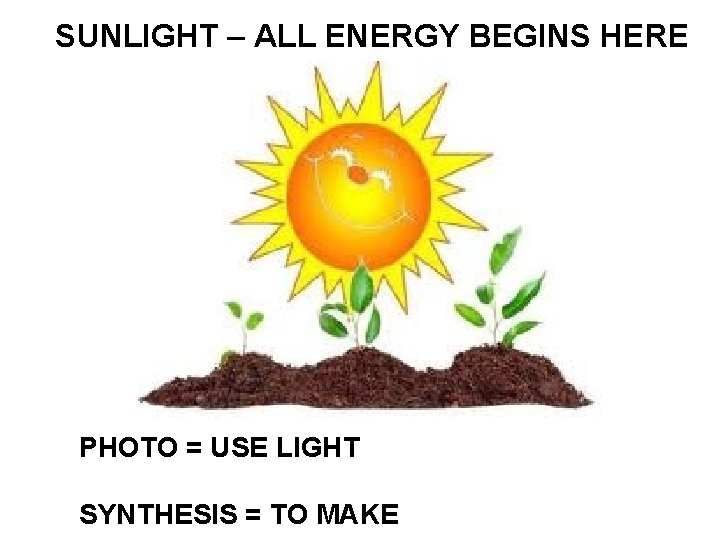
SUNLIGHT – ALL ENERGY BEGINS HERE PHOTO = USE LIGHT SYNTHESIS = TO MAKE
What are the 3 things needed for a plant to survive? 1. 2. 3. These 3 things are the REACTANTS in the photosynthesis equation!
What are the 2 things plants give off? 1. 2. These 2 things are the PRODUCTS in the photosynthesis equation
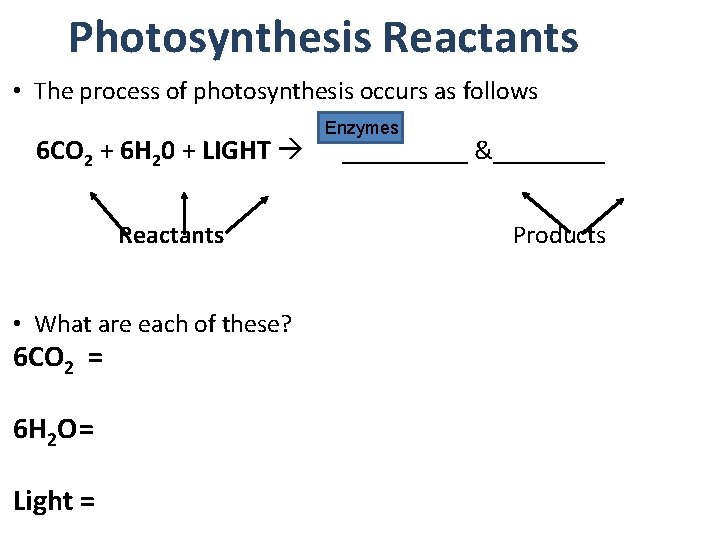
Photosynthesis Reactants • The process of photosynthesis occurs as follows 6 CO 2 + 6 H 20 + LIGHT Enzymes _____ &____ Reactants Products • What are each of these? 6 CO 2 = 6 H 2 O= Light =
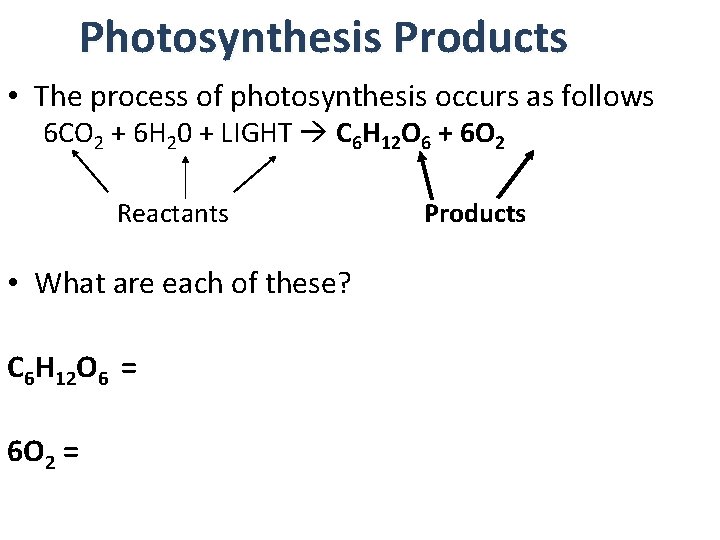
Photosynthesis Products • The process of photosynthesis occurs as follows 6 CO 2 + 6 H 20 + LIGHT C 6 H 12 O 6 + 6 O 2 Reactants • What are each of these? C 6 H 12 O 6 = 6 O 2 = Products
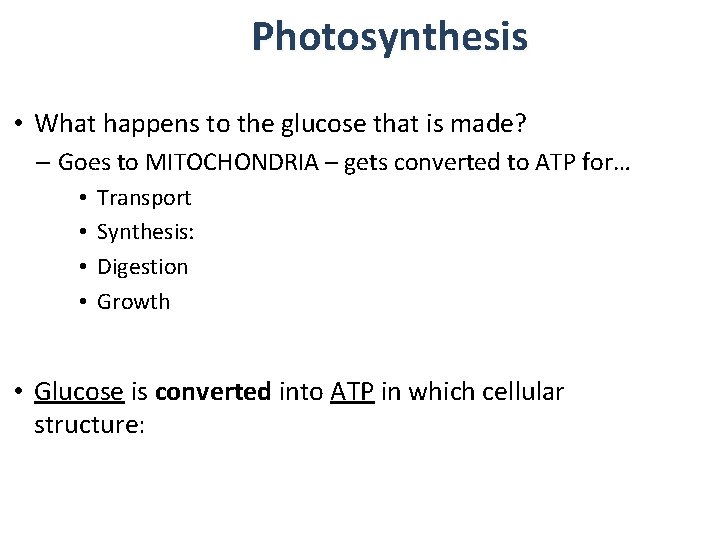
Photosynthesis • What happens to the glucose that is made? – Goes to MITOCHONDRIA – gets converted to ATP for… • • Transport Synthesis: Digestion Growth • Glucose is converted into ATP in which cellular structure:
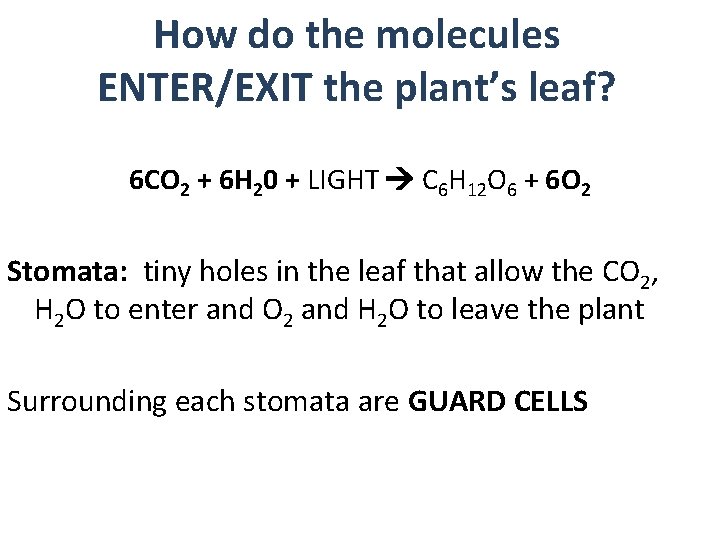
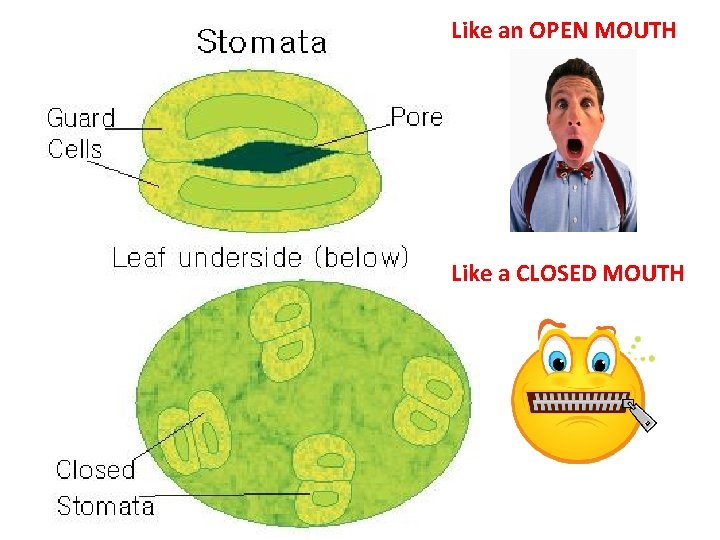
How do the molecules ENTER/EXIT the plant’s leaf? 6 CO 2 + 6 H 20 + LIGHT C 6 H 12 O 6 + 6 O 2 Stomata: tiny holes in the leaf that allow the CO 2, H 2 O to enter and O 2 and H 2 O to leave the plant Surrounding each stomata are GUARD CELLS
Like an OPEN MOUTH Like a CLOSED MOUTH
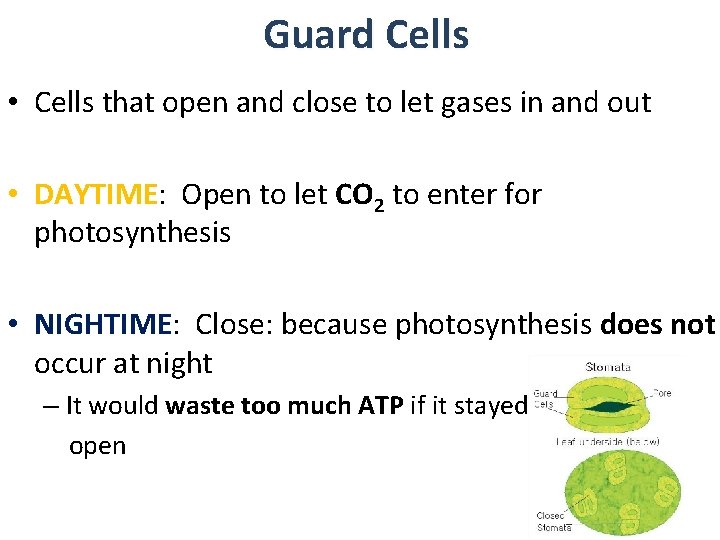
Guard Cells • Cells that open and close to let gases in and out • DAYTIME: Open to let CO 2 to enter for photosynthesis • NIGHTIME: Close: because photosynthesis does not occur at night – It would waste too much ATP if it stayed open
What else do GUARD CELLS do? • Transpiration: Process that allows water to leave plant leaf only when plant cells are too FULL of WATER
Questions: • What is the process where plants are allowing water to leave the leaf? • What is the process where plants make glucose? • What cells allow molecules like carbon dioxide, oxygen, and water to enter/exit the plant?
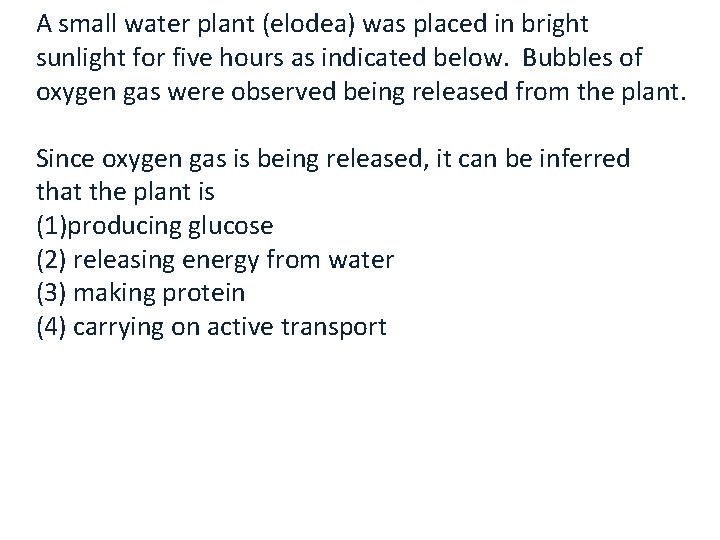
A small water plant (elodea) was placed in bright sunlight for five hours as indicated below. Bubbles of oxygen gas were observed being released from the plant. Since oxygen gas is being released, it can be inferred that the plant is (1)producing glucose (2) releasing energy from water (3) making protein (4) carrying on active transport
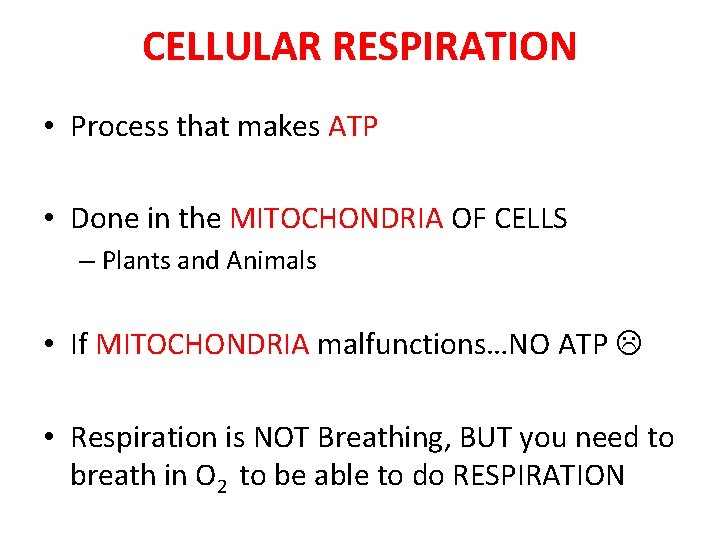
CELLULAR RESPIRATION • Process that makes ATP • Done in the MITOCHONDRIA OF CELLS – Plants and Animals • If MITOCHONDRIA malfunctions…NO ATP • Respiration is NOT Breathing, BUT you need to breath in O 2 to be able to do RESPIRATION
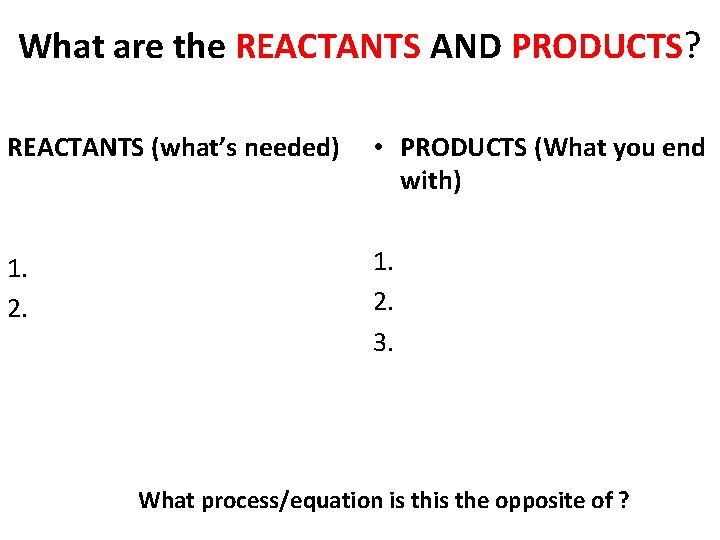
What are the REACTANTS AND PRODUCTS? REACTANTS (what’s needed) • PRODUCTS (What you end with) 1. 2. 3. What process/equation is the opposite of ?
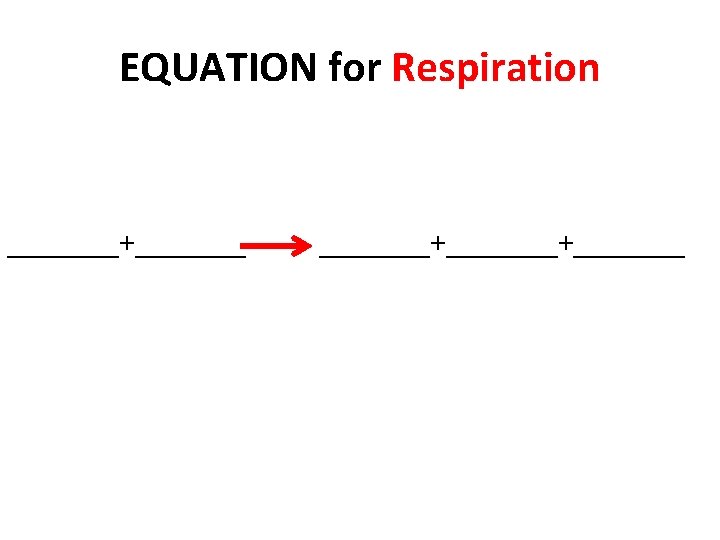
EQUATION for Respiration _______+_______+_______