
Photosynthesis Plants as producers Autotrophic nutrition Require an


- Slides: 35
Photosynthesis
Plants as producers • Autotrophic nutrition – Require an energy source to synthesize molecules • Photoautotrophs: use light energy • Chemoautotrophs: use inorganic substances such as Fe, S, NH 3
Consumers of the biosphere • Heterotrophic nutrition – Acquire organic compounds from compounds produced by other organisms – Decomposers: decompose and feed on organic litter (fungi, bacteria) – Depend on photoautotrophs for food and oxygen
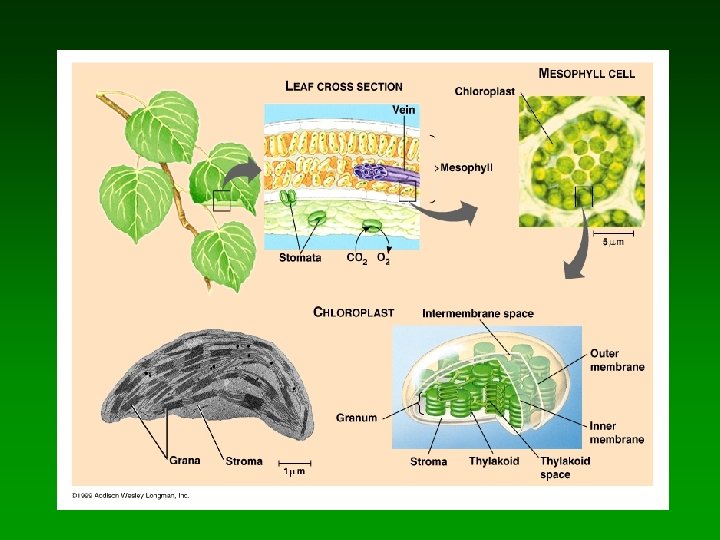
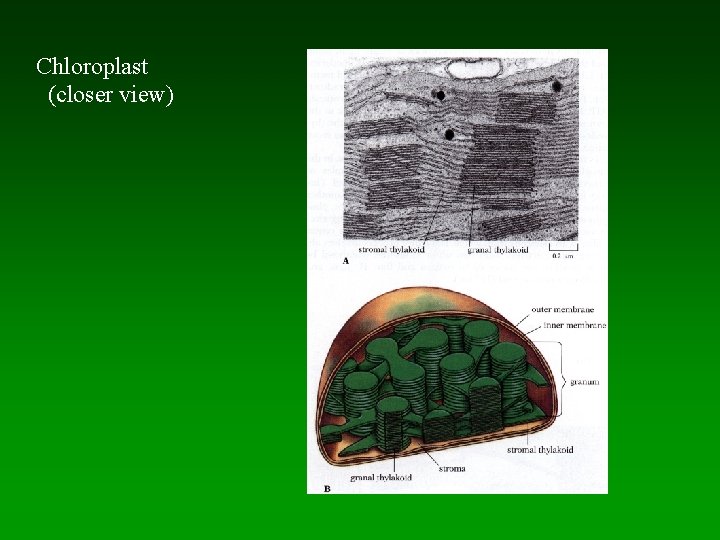
Chloroplasts • Chlorophylls a, b, c, d – Primarily in cells of the leaf mesophyll – Also in bundle sheath cells (larger than normal chloroplasts) • Stomata in lower/upper/both epidermis • Chloroplast anatomy – Three compartments divided by membranes • Intermembrane space • Thylakoid space; thylakoids stacked into grana; chlorophyll located in thylakoid membranes • Stroma: viscous fluid outside thylakoids
Chloroplast (closer view)
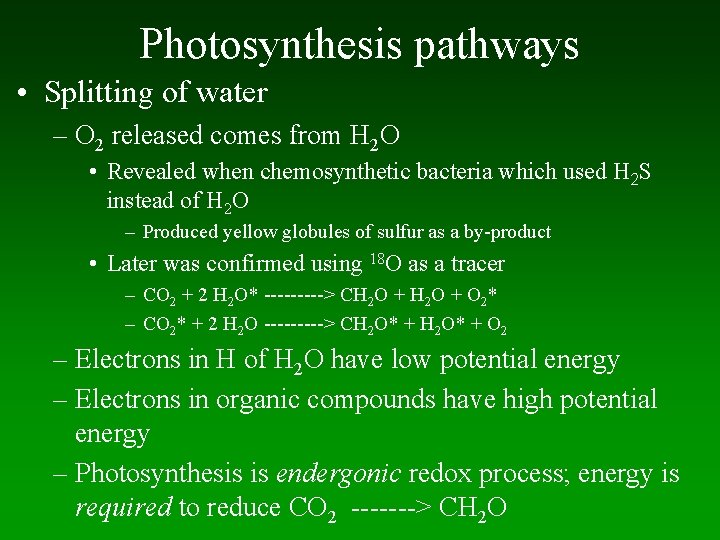
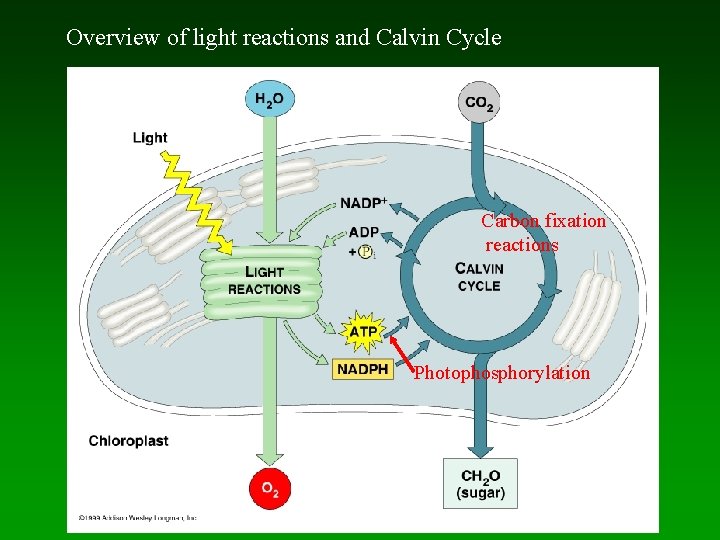
Photosynthesis pathways • Splitting of water – O 2 released comes from H 2 O • Revealed when chemosynthetic bacteria which used H 2 S instead of H 2 O – Produced yellow globules of sulfur as a by-product • Later was confirmed using 18 O as a tracer – CO 2 + 2 H 2 O* -----> CH 2 O + O 2* – CO 2* + 2 H 2 O -----> CH 2 O* + O 2 – Electrons in H of H 2 O have low potential energy – Electrons in organic compounds have high potential energy – Photosynthesis is endergonic redox process; energy is required to reduce CO 2 -------> CH 2 O
• Light energy “boosts” potential energy of electrons as they are moved from water to sugar • The “boost” occurs in the light-dependent reactions
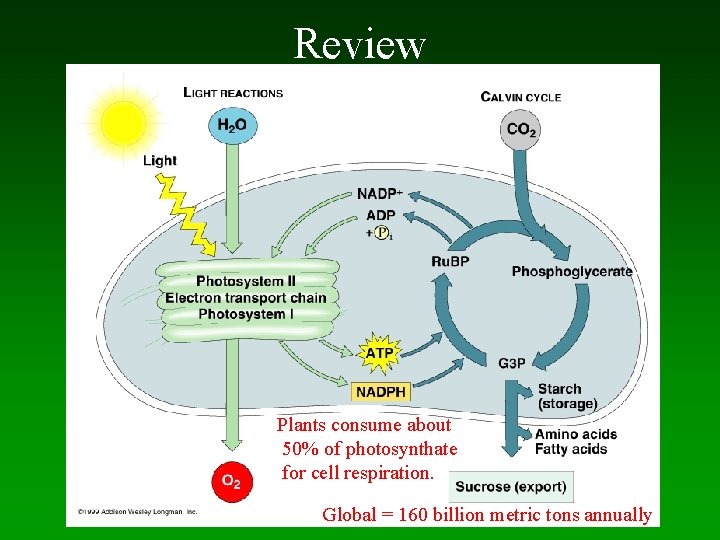
Overview of light reactions and Calvin Cycle Carbon fixation reactions Photophosphorylation
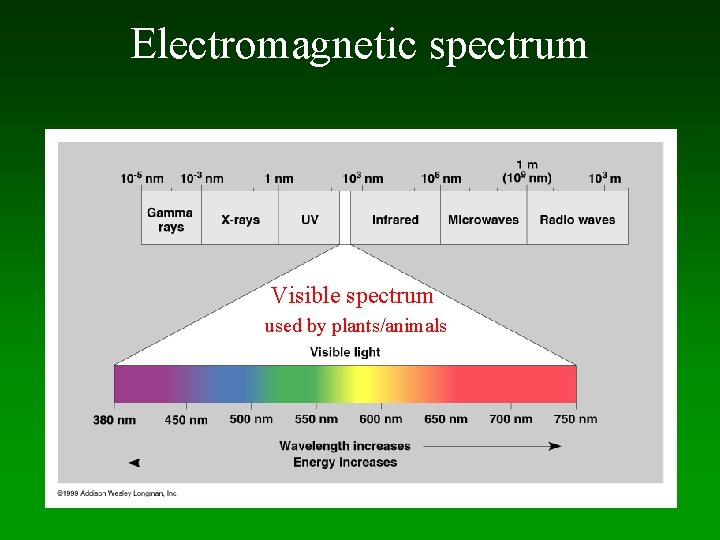
Electromagnetic spectrum Visible spectrum used by plants/animals
Light properties • Electromagnetic energy – Travels in rhythmic waves (disturbances of electric and magnetic fields) • Wavelength = distance from crest to crest = l – Measured in nm (nanometer = 10 -9 meter) – Spectrum = less than 1 nm ----> more than 1 km • Most invisible to human eye • Visible = 380 nm to 750 nm • Photosynthesis occurs in this same range of l. – Also consists of discrete particles(quanta) called photons • Photons contain energy inversely proportional to l. – Photon of violet is almost 2 X energy of red photon – Blue and red are most absorbed/useful to photosynthesis
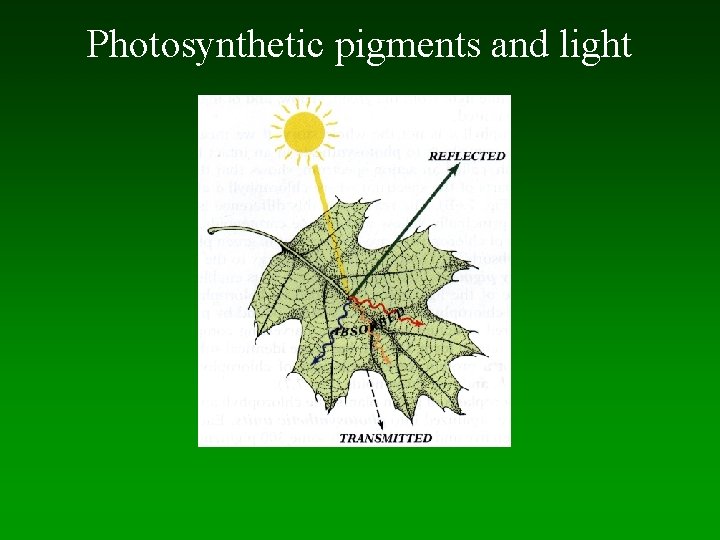
Photosynthetic pigments and light
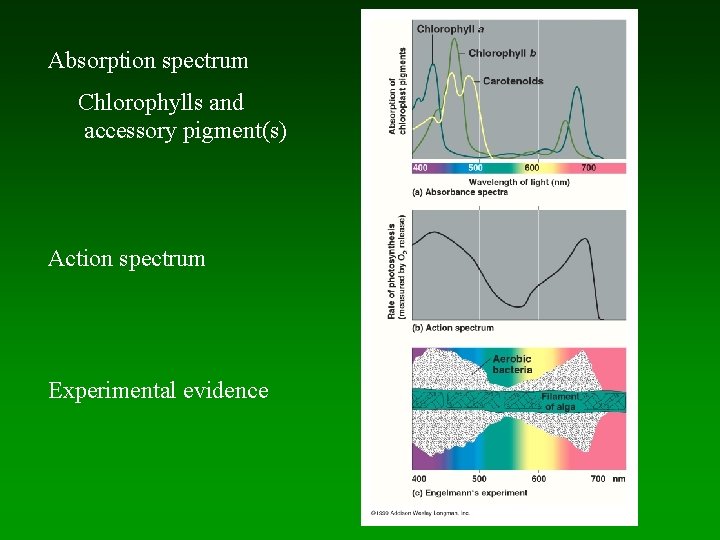
Absorption spectrum Chlorophylls and accessory pigment(s) Action spectrum Experimental evidence
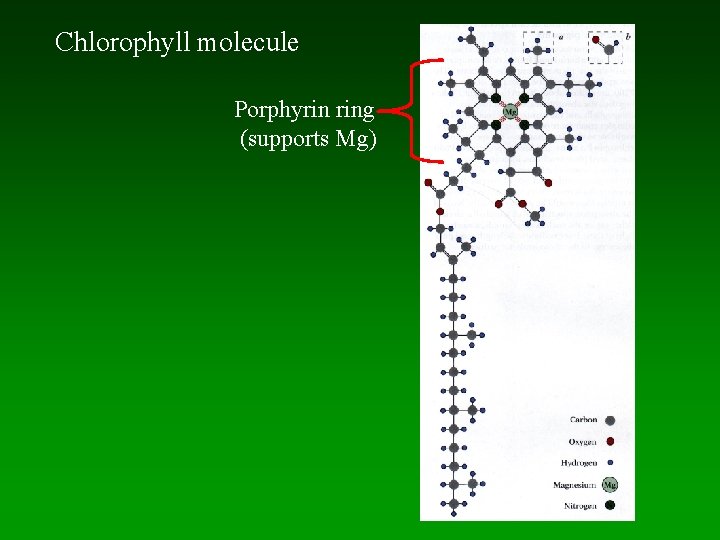
Chlorophyll molecule Porphyrin ring (supports Mg)
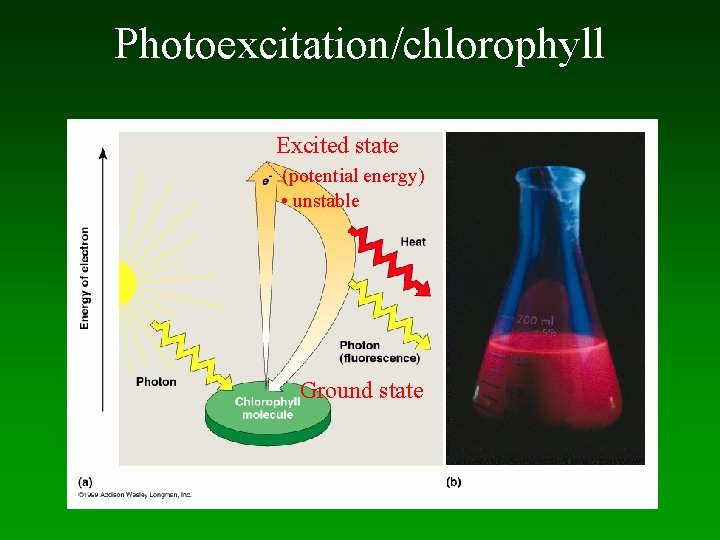
Photoexcitation/chlorophyll Excited state (potential energy) • unstable Ground state
Fate of photoexcited electrons • Nearby primary electron acceptor molecules trap excited electrons – Chlorophyll becomes photo-oxidized and electron acceptor becomes reduced – Without a primary electron acceptor, isolated (plain) chlorophyll fluoresces red and dissipates heat
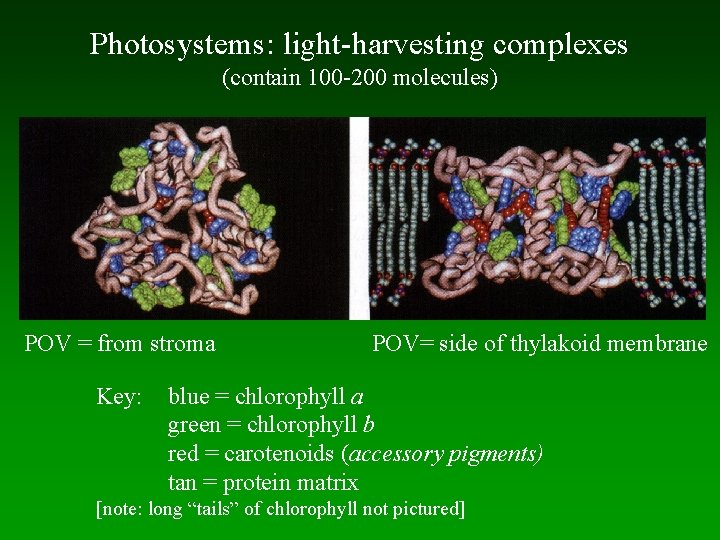
Photosystems: light-harvesting complexes (contain 100 -200 molecules) POV = from stroma Key: POV= side of thylakoid membrane blue = chlorophyll a green = chlorophyll b red = carotenoids (accessory pigments) tan = protein matrix [note: long “tails” of chlorophyll not pictured]
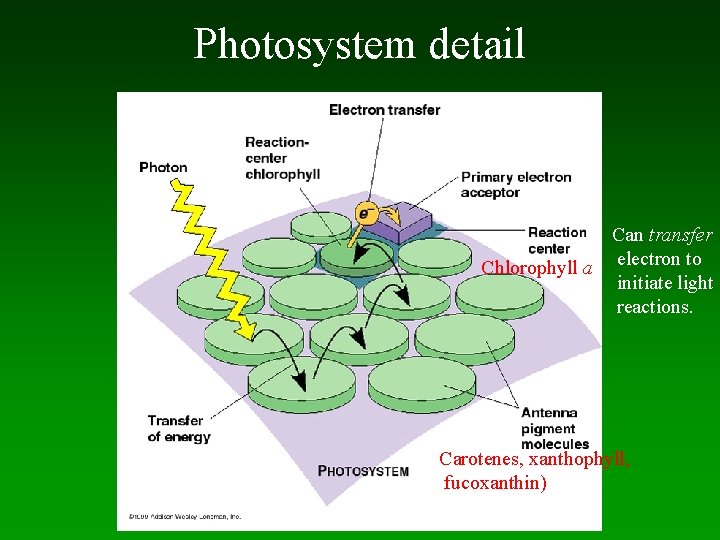
Photosystem detail Can transfer Chlorophyll a electron to initiate light reactions. Carotenes, xanthophyll, fucoxanthin)
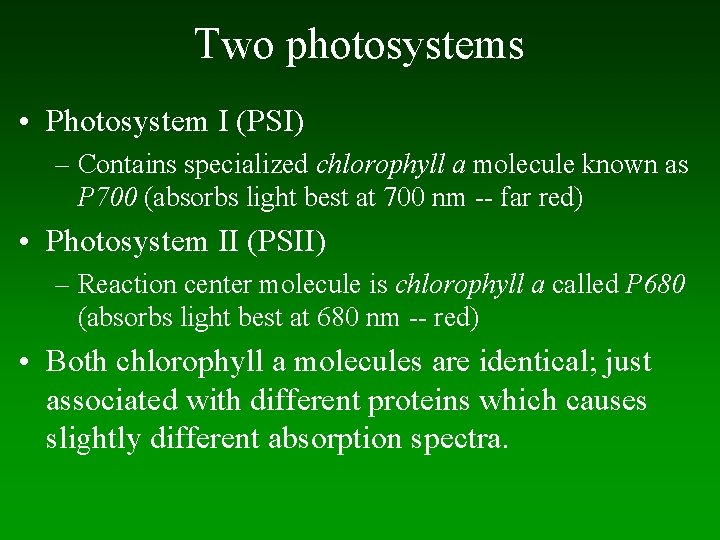
Two photosystems • Photosystem I (PSI) – Contains specialized chlorophyll a molecule known as P 700 (absorbs light best at 700 nm -- far red) • Photosystem II (PSII) – Reaction center molecule is chlorophyll a called P 680 (absorbs light best at 680 nm -- red) • Both chlorophyll a molecules are identical; just associated with different proteins which causes slightly different absorption spectra.
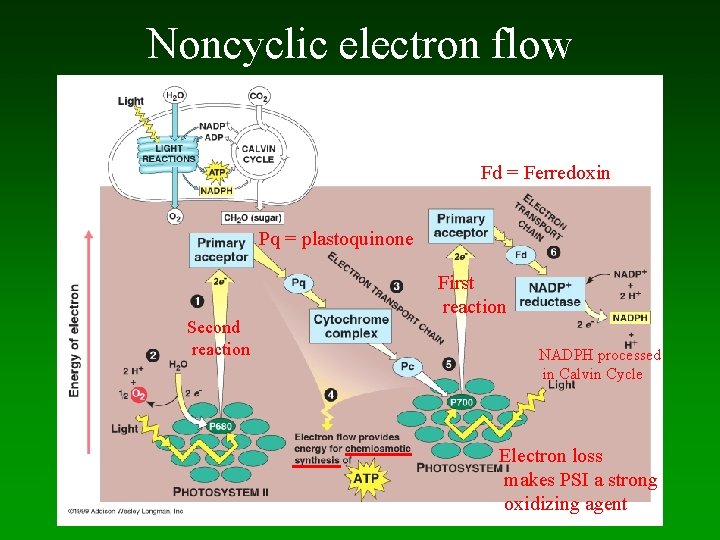
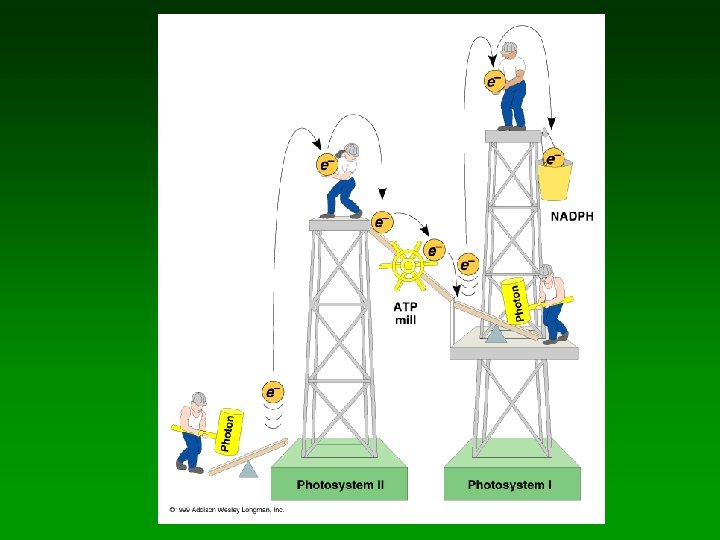
Noncyclic electron flow Fd = Ferredoxin Pq = plastoquinone Second reaction First reaction NADPH processed in Calvin Cycle Electron loss makes PSI a strong oxidizing agent
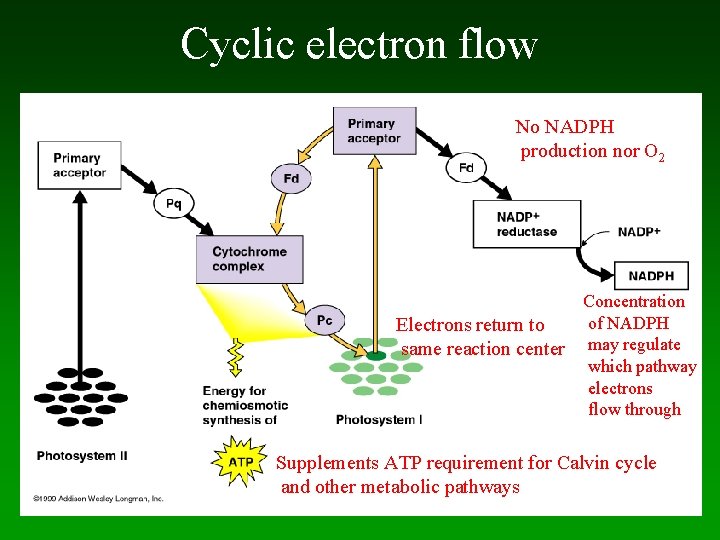
Cyclic electron flow No NADPH production nor O 2 Electrons return to same reaction center Concentration of NADPH may regulate which pathway electrons flow through Supplements ATP requirement for Calvin cycle and other metabolic pathways
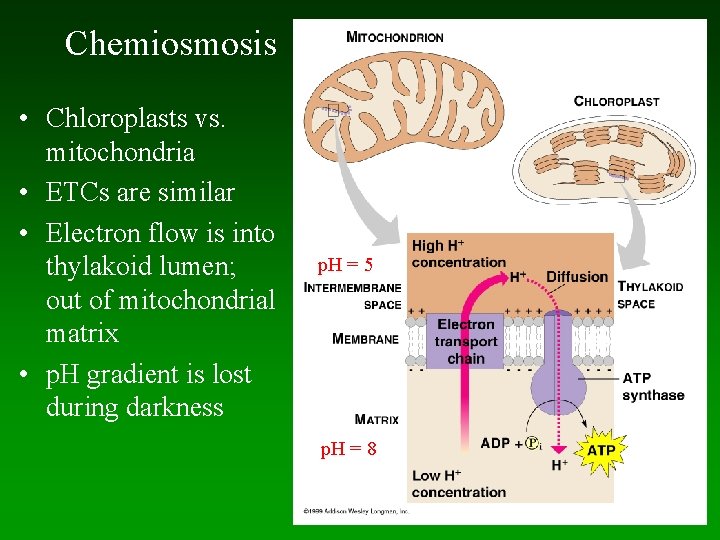
Chemiosmosis • Chloroplasts vs. mitochondria • ETCs are similar • Electron flow is into thylakoid lumen; out of mitochondrial matrix • p. H gradient is lost during darkness p. H = 5 p. H = 8
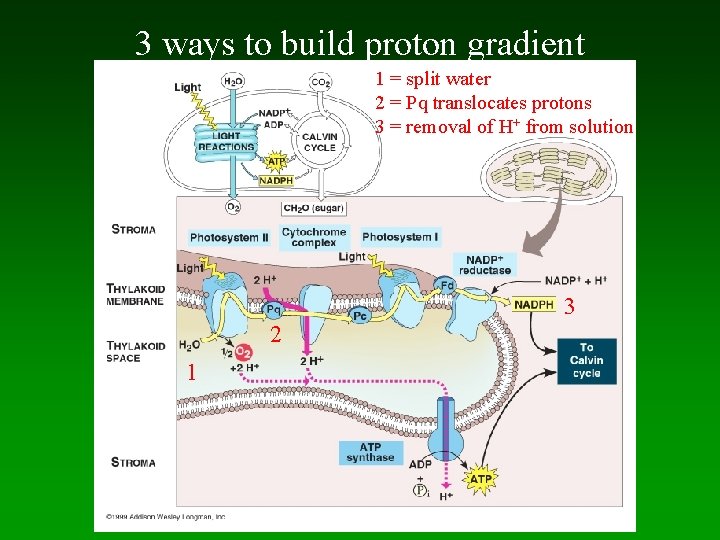
3 ways to build proton gradient 1 = split water 2 = Pq translocates protons 3 = removal of H+ from solution 3 2 1
Light reactions (animated)
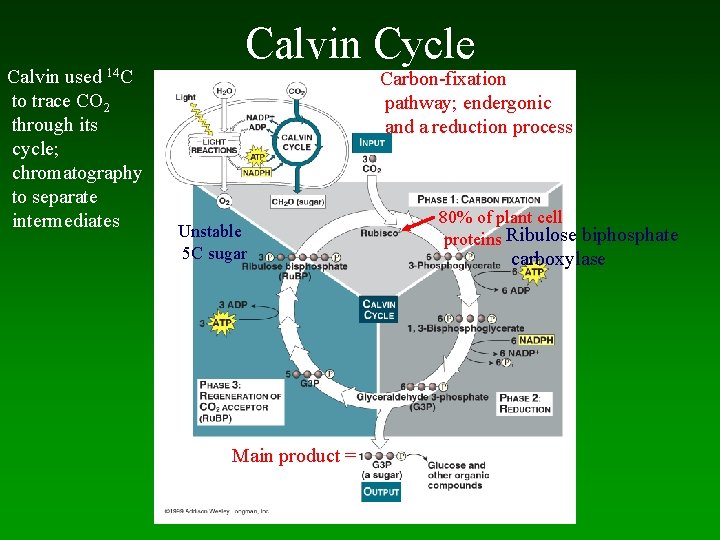
Calvin used 14 C to trace CO 2 through its cycle; chromatography to separate intermediates Calvin Cycle Carbon-fixation pathway; endergonic and a reduction process Unstable 5 C sugar Main product = 80% of plant cell proteins Ribulose biphosphate carboxylase
Calvin Cycle (animated)
Photorespiration • Metabolic pathway that consumes O 2, produces CO 2, doesn’t produce ATP, and reduces photosynthesis • Promoted by hot, dry, bright days – Plants close stomata (prevents dehydration); deplete CO 2 – Active site of rubisco can accept either CO 2 or O 2, so it can work equally well in “reverse” of normal photosynthesis – Occurs if O 2 concentration is higher than CO 2 in leaf’s air spaces • Called “photo” respiration because reactions occur during light hours when leaf reduces amount of CO 2 and raises the amount of O 2
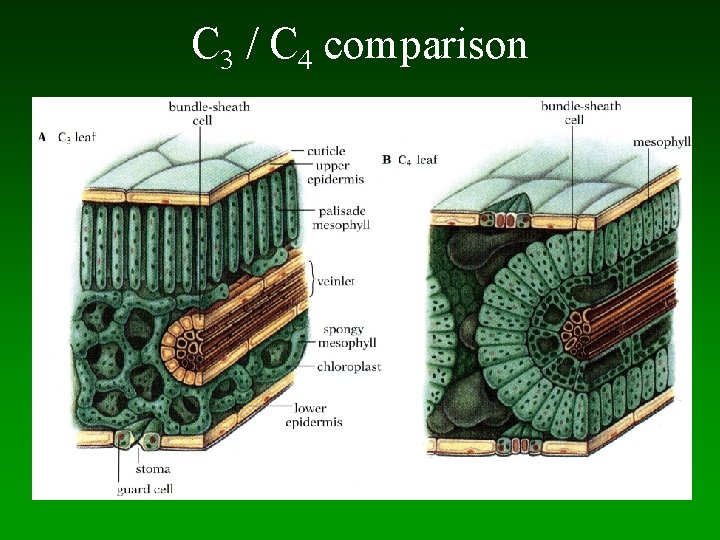
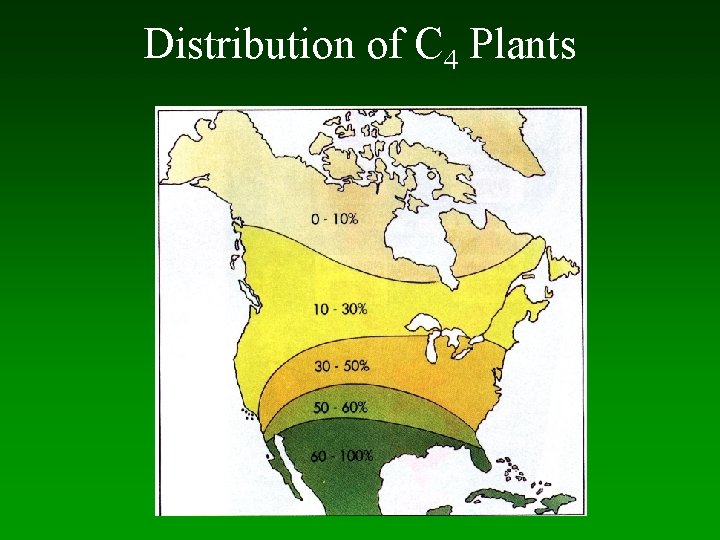
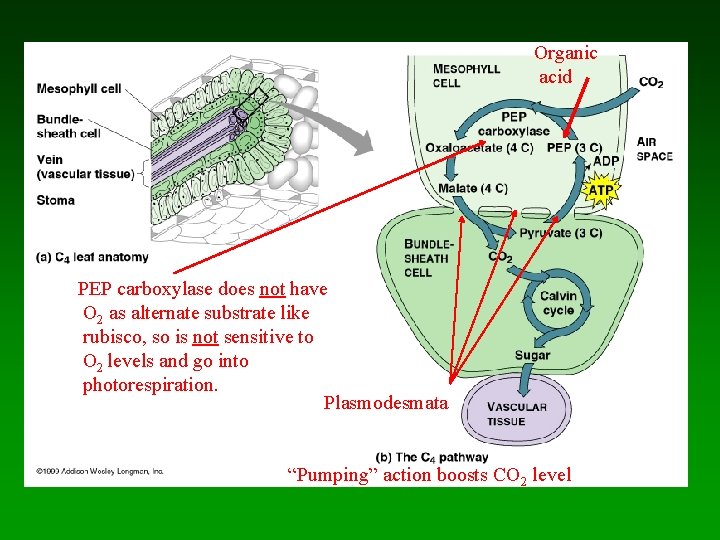
C 4 Plants • Plants which produce G 3 P as first stable product are C 3 plants – e. g. rice, wheat, soybeans, most familiar trees and decorative plants in yards – C 3 plants cease photosynthesis when CO 2 levels fall below 50 ppm (normal atm. = 330 ppm); also are not efficient even when level is 200 -300 ppm. • C 4 plants occur in hot, arid, bright (tropical) locations; function very well in low CO 2 levels and are very efficient in making product; i. e. corn is superior to beans in making photosynthesis products • C 4 plants have reactions which precede Calvin cycle; “boost” internal levels of CO 2; counteract effects of photorespiration.
C 3 / C 4 comparison
Distribution of C 4 Plants
Organic acid PEP carboxylase does not have O 2 as alternate substrate like rubisco, so is not sensitive to O 2 levels and go into photorespiration. Plasmodesmata “Pumping” action boosts CO 2 level
CAM photosynthesis • Another adaptation to counteract photorespiration • Occurs in succulent plants in arid conditions • Stomata close during day/open during nighttime – CO 2 is absorbed and incorporated into a variety of organic acids • Crassulacean Acid Metabolism (CAM) • Acids are stored in vacuoles of mesophyll cells until daylight • During daylight normal Calvin Cycle occurs to make sugars
Review Plants consume about 50% of photosynthate for cell respiration. Global = 160 billion metric tons annually
End