
Photosynthesis PhotosynthesisWhat Do We Already Know Pass the
- Slides: 39
Photosynthesis
Photosynthesis—What Do We Already Know? • Pass the Pen
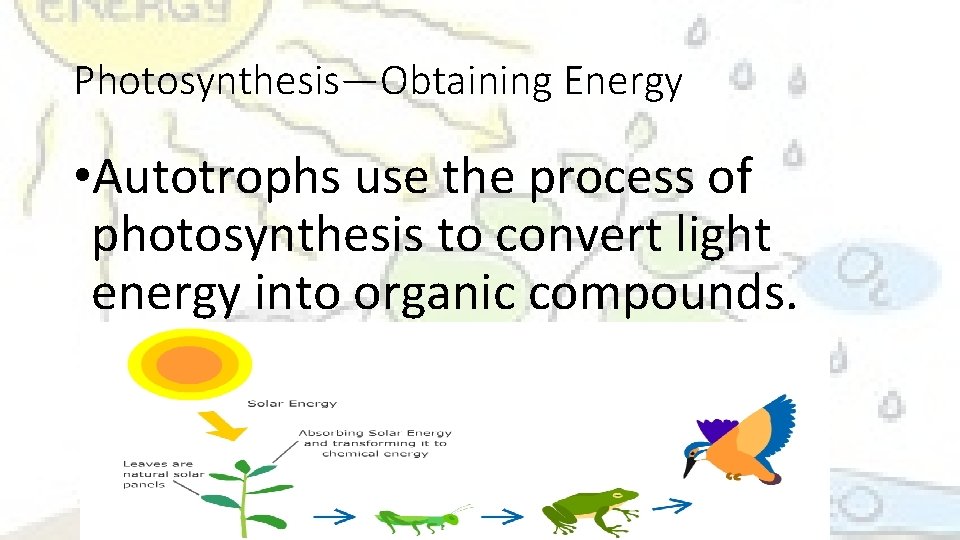
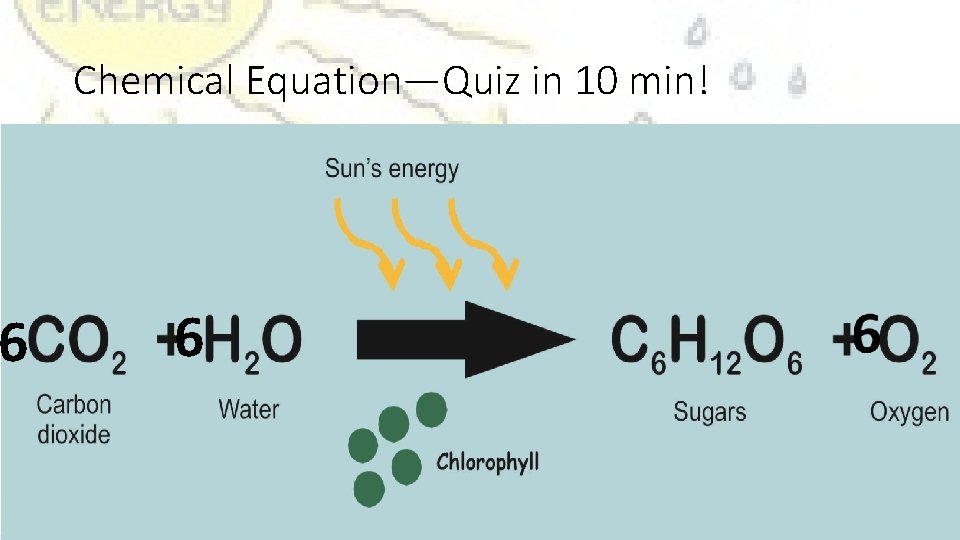
Photosynthesis—Obtaining Energy • Autotrophs use the process of photosynthesis to convert light energy into organic compounds.
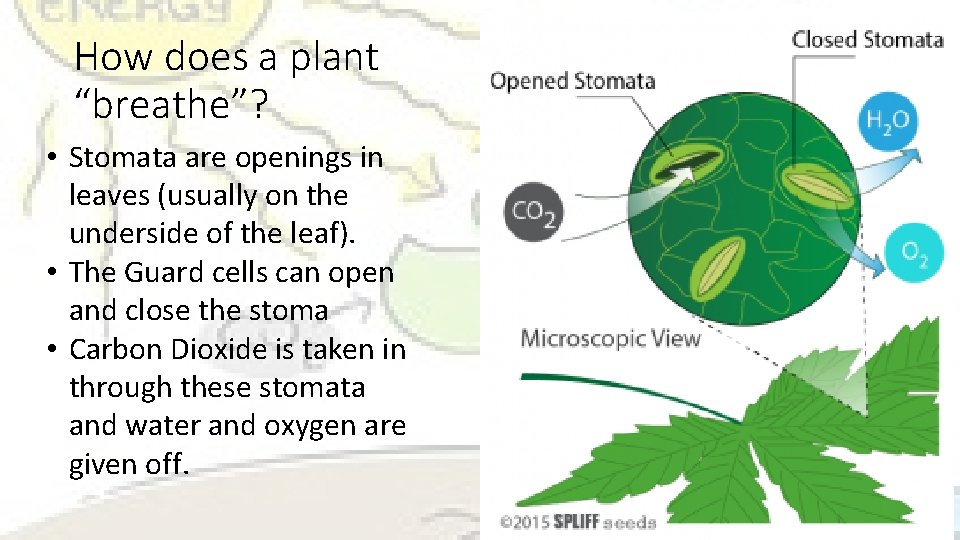
How does a plant “breathe”? • Stomata are openings in leaves (usually on the underside of the leaf). • The Guard cells can open and close the stoma • Carbon Dioxide is taken in through these stomata and water and oxygen are given off.
6 Chemical Equation—Quiz in 10 min! 6
Photosynthesis Brain Pop
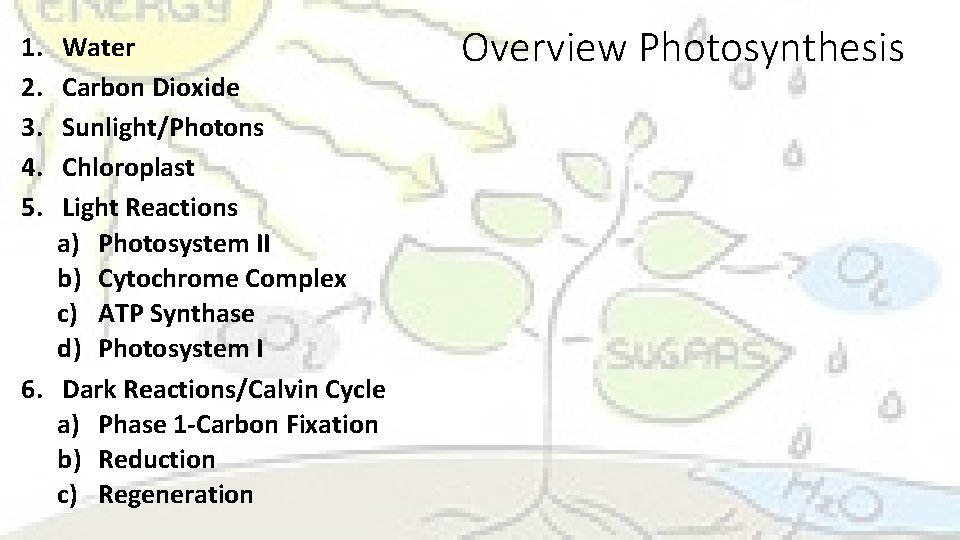
1. 2. 3. 4. 5. Water Carbon Dioxide Sunlight/Photons Chloroplast Light Reactions a) Photosystem II b) Cytochrome Complex c) ATP Synthase d) Photosystem I 6. Dark Reactions/Calvin Cycle a) Phase 1 -Carbon Fixation b) Reduction c) Regeneration Overview Photosynthesis
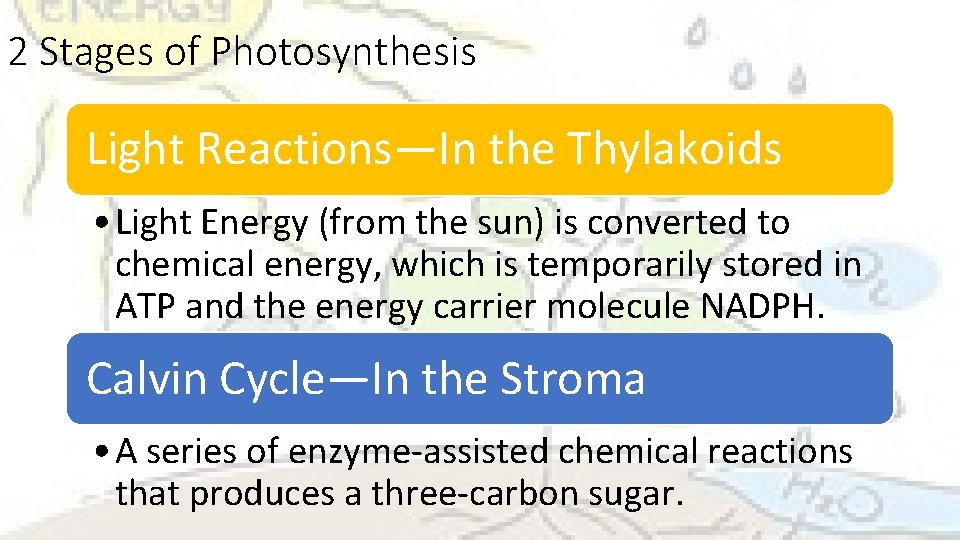
2 Stages of Photosynthesis Light Reactions—In the Thylakoids • Light Energy (from the sun) is converted to chemical energy, which is temporarily stored in ATP and the energy carrier molecule NADPH. Calvin Cycle—In the Stroma • A series of enzyme-assisted chemical reactions that produces a three-carbon sugar.
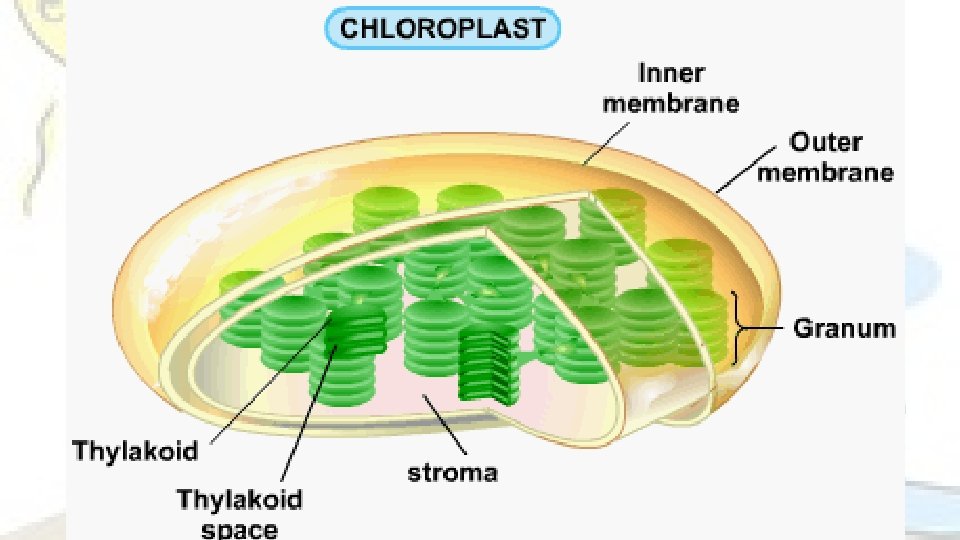
Inside a Chloroplast • Photosynthesis takes place inside a chloroplast • The chloroplast contains saclike membranes called THYLAKOIDS • THYLAKOIDS are arranged in stacks called GRANA • The Chlorophyll is inside thylakoids • The STROMA is the region outside of the thylakoids
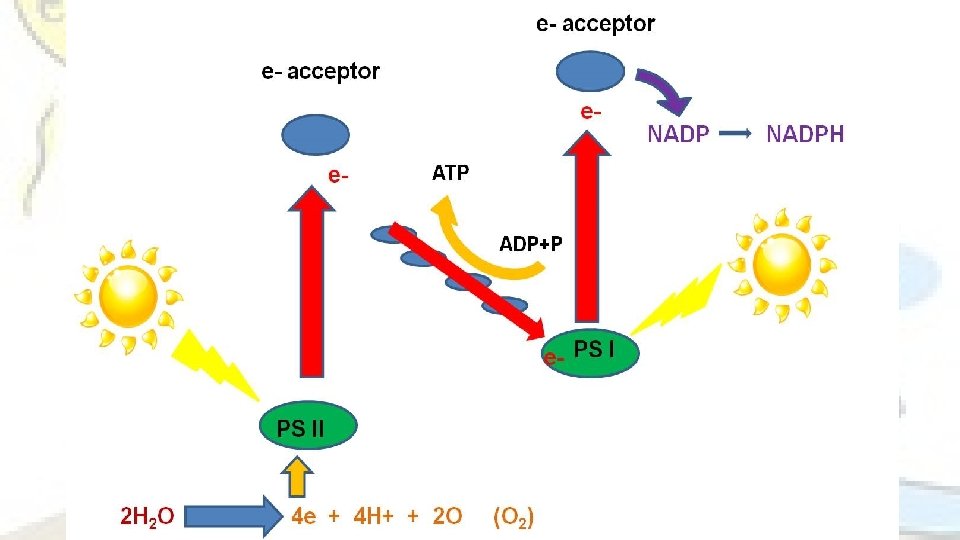
Light Reactions The first stage of photosynthesis is the LIGHT REACTIONS. 1. Light is absorbed by the chloroplasts 2. Light Energy is converted to Chemical Energy (stored in ATP and NADPH). This occurs in Photosystem II
Light Reactions Continued 3. Oxygen is given off during this reaction— Water is split! Oxygen is given off, Hydrogen ions remain and will be used later, and electrons are now available! --Leaf Demo-Note--Chlorophyll in the chloroplast contains pigments (compounds that absorb light) that absorb a lot of blue and red light but reflect green light (giving plants their green color. )
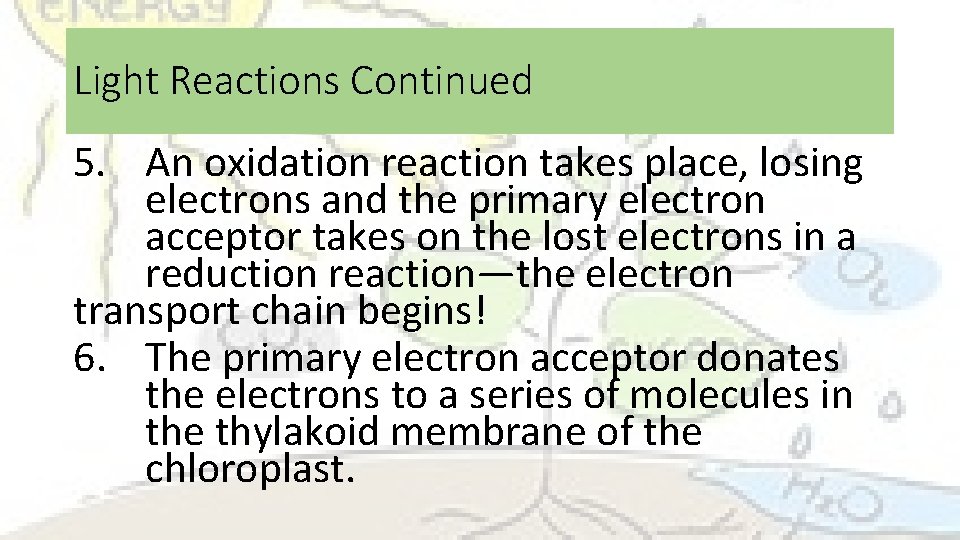
Light Reactions Continued 5. An oxidation reaction takes place, losing electrons and the primary electron acceptor takes on the lost electrons in a reduction reaction—the electron transport chain begins! 6. The primary electron acceptor donates the electrons to a series of molecules in the thylakoid membrane of the chloroplast.
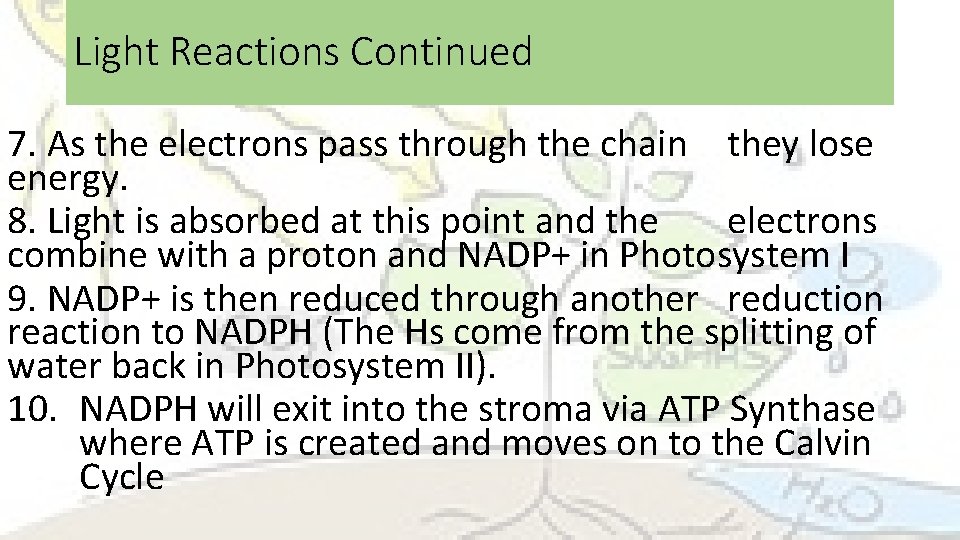
Light Reactions Continued 7. As the electrons pass through the chain they lose energy. 8. Light is absorbed at this point and the electrons combine with a proton and NADP+ in Photosystem I 9. NADP+ is then reduced through another reduction reaction to NADPH (The Hs come from the splitting of water back in Photosystem II). 10. NADPH will exit into the stroma via ATP Synthase where ATP is created and moves on to the Calvin Cycle
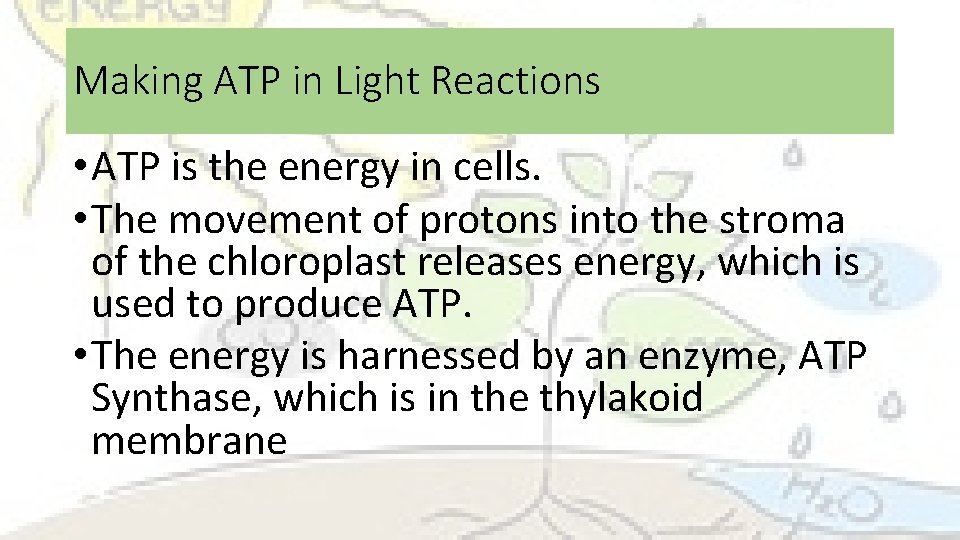
Making ATP in Light Reactions • ATP is the energy in cells. • The movement of protons into the stroma of the chloroplast releases energy, which is used to produce ATP. • The energy is harnessed by an enzyme, ATP Synthase, which is in the thylakoid membrane
Draw it out!
Photosynthesis—Light Reactions Video Clip
Light Reactions Video Clips • Add to your summary if you need to! http: //www. mhhe. com/biosci/bio_animations/02_MH_Photosynthesis _Web/
INTERACTIVE • 100 -200 Words • Summarize the LIGHT REACTIONS of photosynthesis
Light Reaction Diagram and Review • With a partner (or in a group of 3 if needed), explain your diagram. • Then switch.
Dark Reactions/Calvin Cycle • In the second set of reactions in photosynthesis plants use the energy that was stored in ATP and NADPH during the light reactions to produce sugars. • Most common way this is done is called the CALVIN CYCLE.
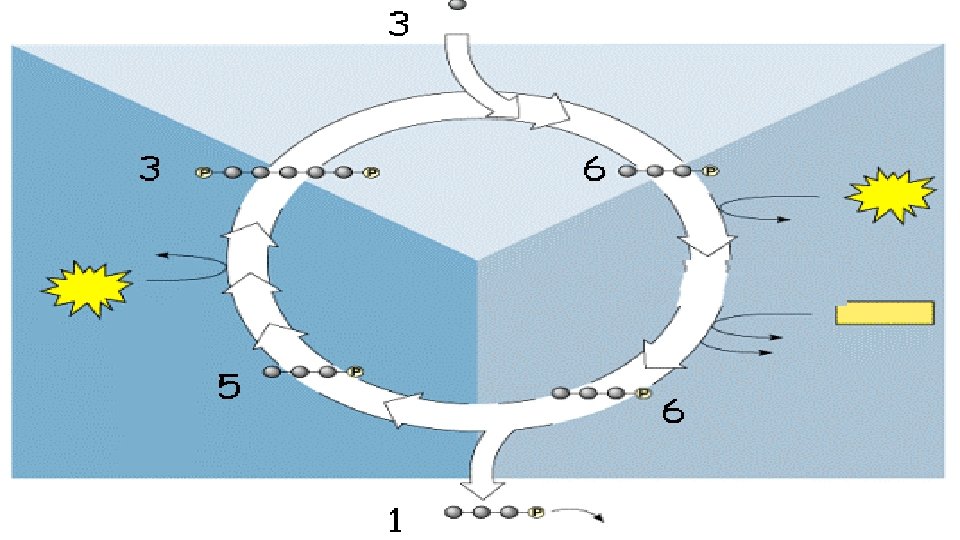
Calvin Cycle • A series of enzyme-assisted chemical reactions that produce a 3 -Carbon Sugar. • Occurs in the STROMA of the chloroplast.
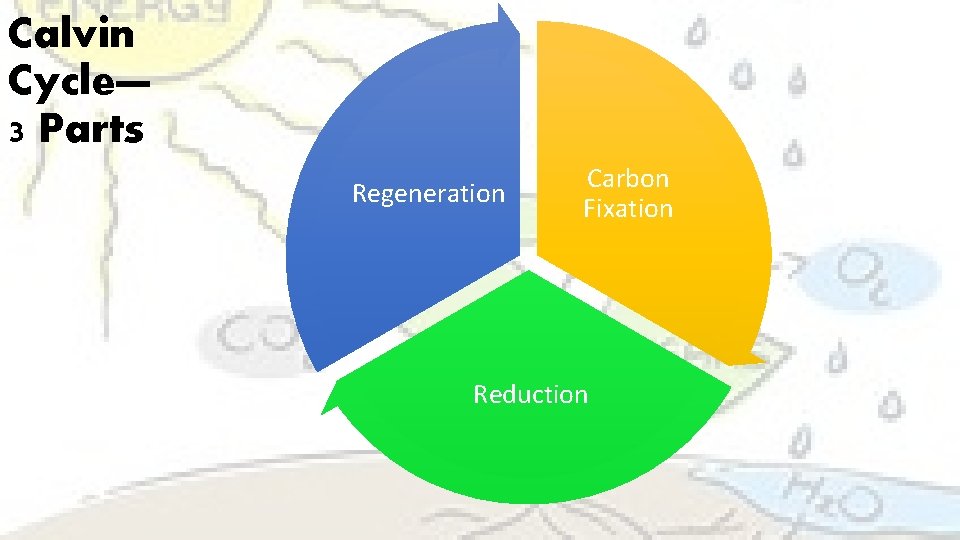
Calvin Cycle— 3 Parts Regeneration Carbon Fixation Reduction
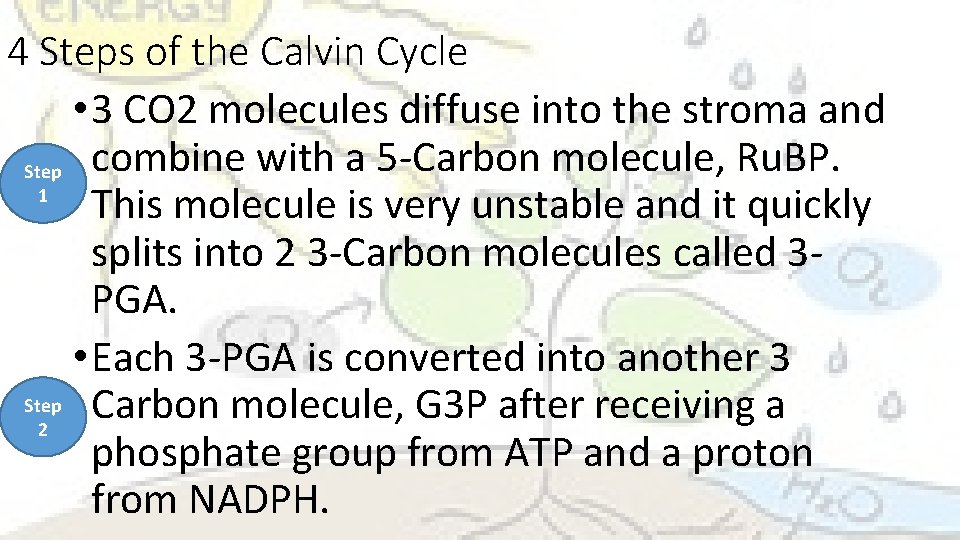
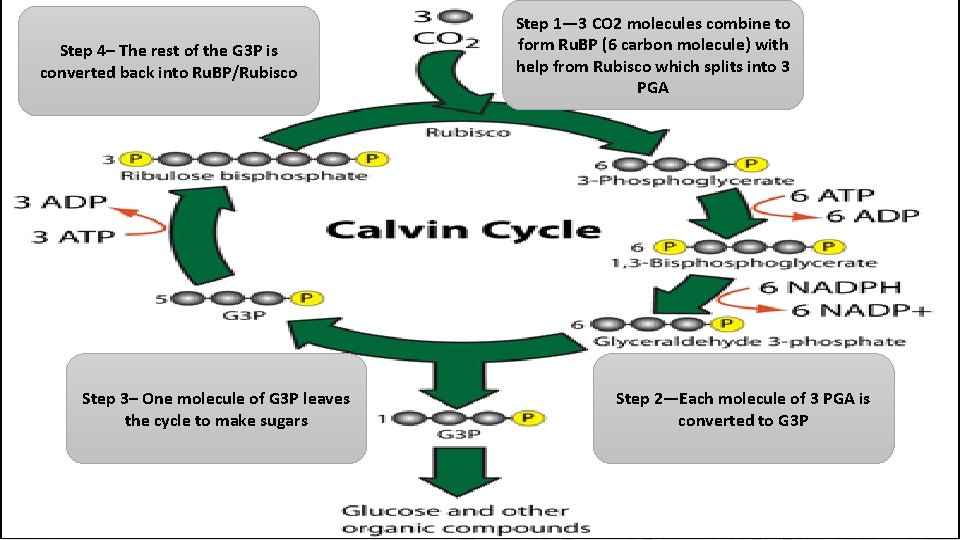
4 Steps of the Calvin Cycle • 3 CO 2 molecules diffuse into the stroma and Step combine with a 5 -Carbon molecule, Ru. BP. 1 This molecule is very unstable and it quickly splits into 2 3 -Carbon molecules called 3 PGA. • Each 3 -PGA is converted into another 3 Step Carbon molecule, G 3 P after receiving a 2 phosphate group from ATP and a proton from NADPH.
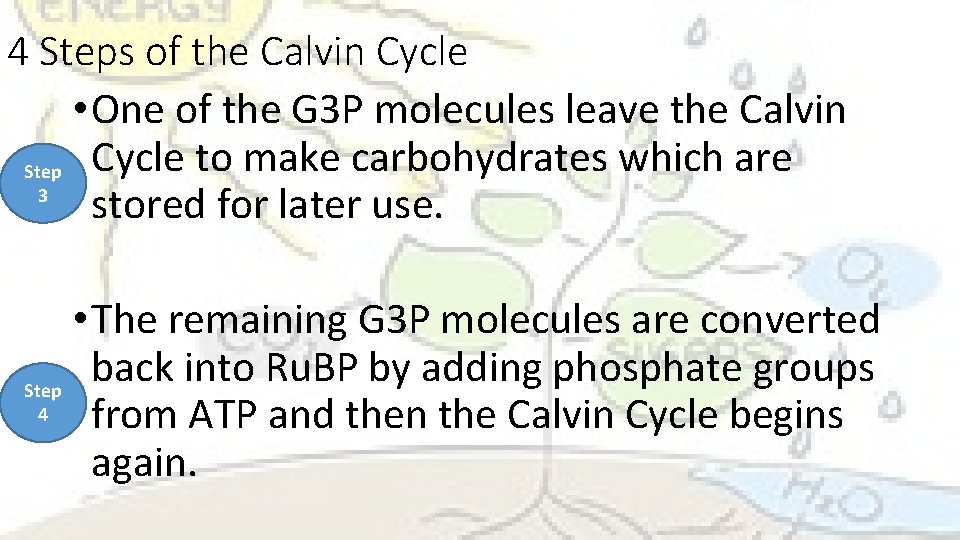
4 Steps of the Calvin Cycle • One of the G 3 P molecules leave the Calvin Step Cycle to make carbohydrates which are 3 stored for later use. • The remaining G 3 P molecules are converted back into Ru. BP by adding phosphate groups Step 4 from ATP and then the Calvin Cycle begins again.
Step 4– The rest of the G 3 P is converted back into Ru. BP/Rubisco Calvin Cycle Step 3– One molecule of G 3 P leaves the cycle to make sugars Step 1— 3 CO 2 molecules combine to form Ru. BP (6 carbon molecule) with help from Rubisco which splits into 3 PGA Step 2—Each molecule of 3 PGA is converted to G 3 P
Calvin Cycle Song!
Calvin Cycle Video Clip
Calvin Cycle Draw it out! Explain it to a neighbor!
Calvin Cycle • 100 -200 Words • Summarize the Dark Reactions of photosynthesis
INTERACTIVE
Photosynthesis Group Quiz
CFA Photosynthesis
Photosynthesis Case Study
Photosynthesis: How is it Important to Medicine? Lab
Design your own Photosynthesis Lab!
Photosynthesis Children’s Book
Vocabulary 1. 2. 3. 4. 5. 6. 7. 8. Photosynthesis 9. Light Reactions 10. Thylakoids 11. Grana 12. Stroma Photosystem Primary electron acceptor Electron transport chain Pigment Chloroplast Calvin cycle Carbon fixation