
Photosynthesis Photosynthesis Solar energy is captured Energy is
- Slides: 21
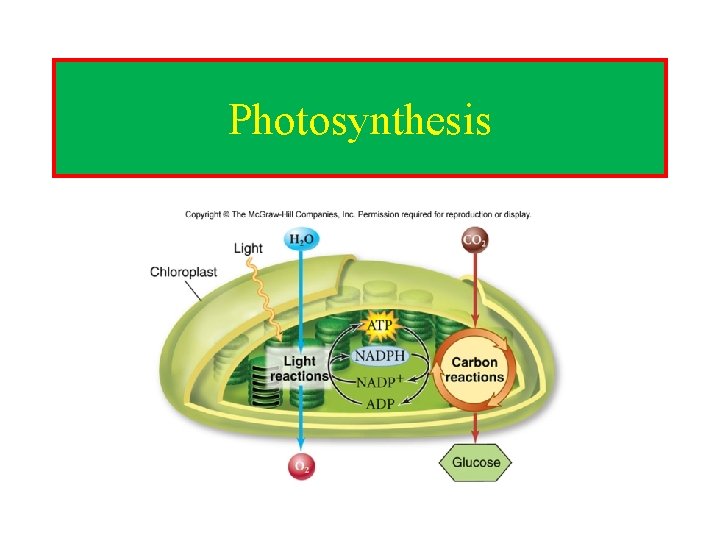
Photosynthesis
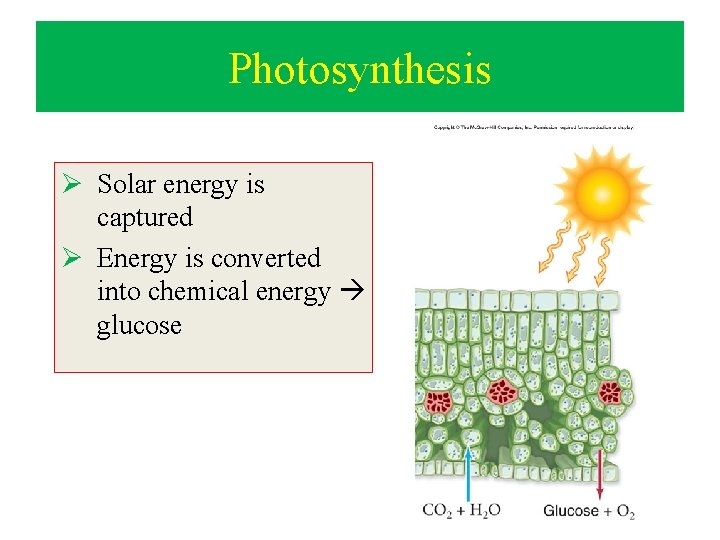
Photosynthesis Ø Solar energy is captured Ø Energy is converted into chemical energy glucose
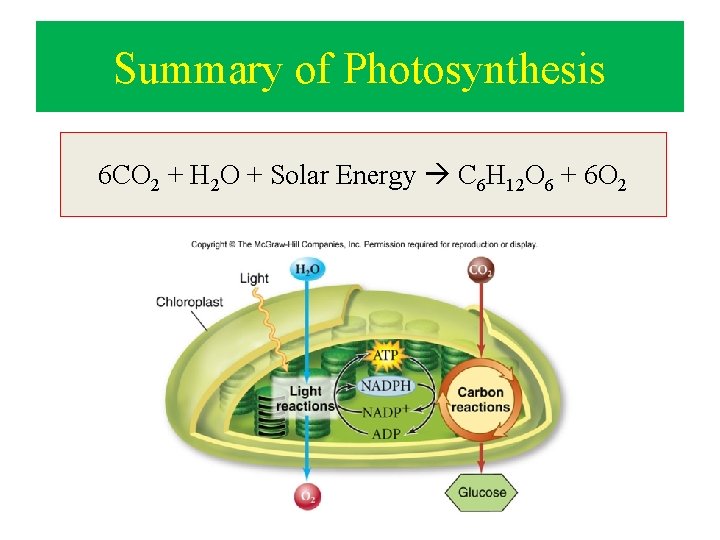
Summary of Photosynthesis 6 CO 2 + H 2 O + Solar Energy C 6 H 12 O 6 + 6 O 2
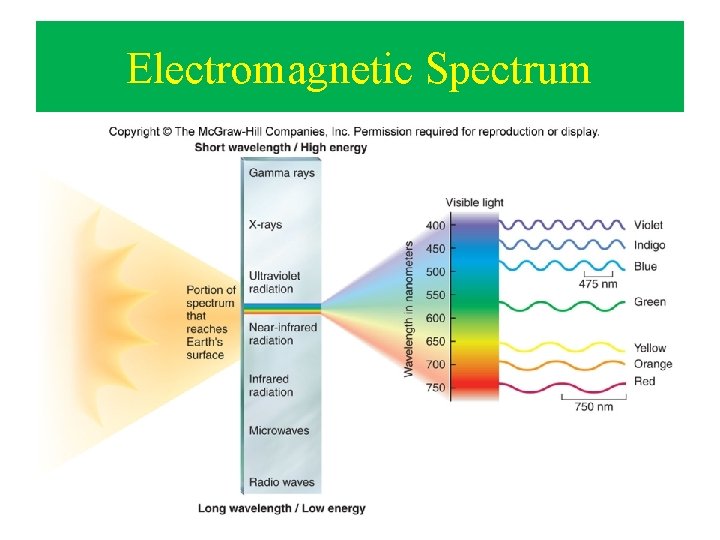
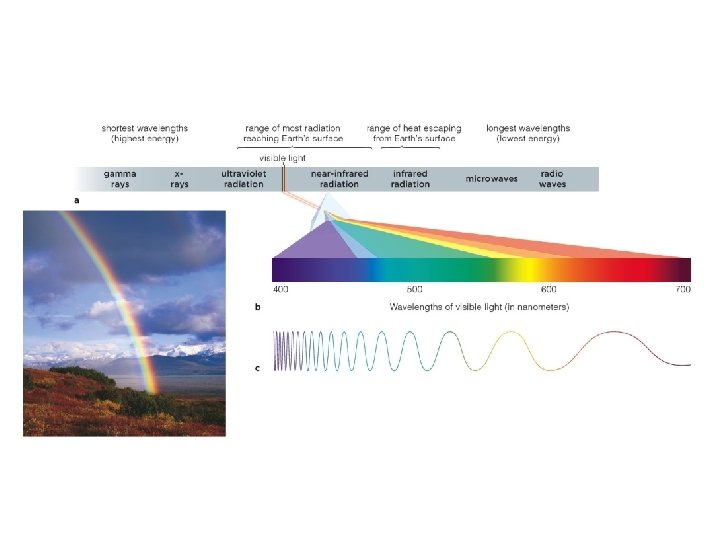
Electromagnetic Spectrum
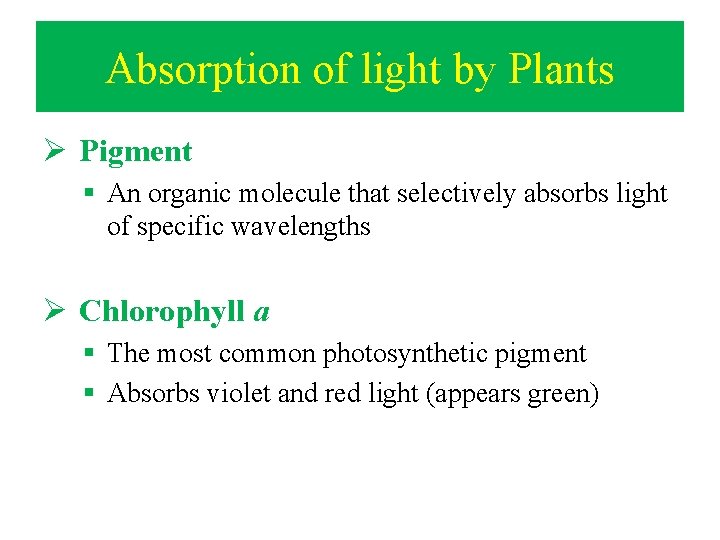
Absorption of light by Plants Ø Pigment § An organic molecule that selectively absorbs light of specific wavelengths Ø Chlorophyll a § The most common photosynthetic pigment § Absorbs violet and red light (appears green)
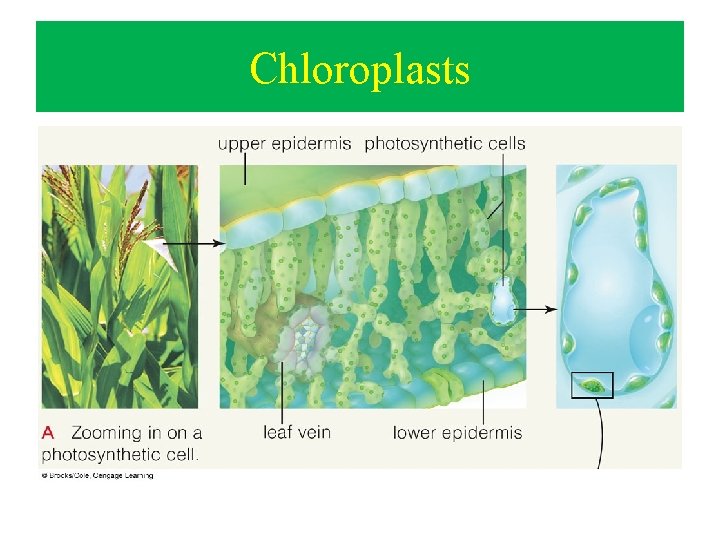
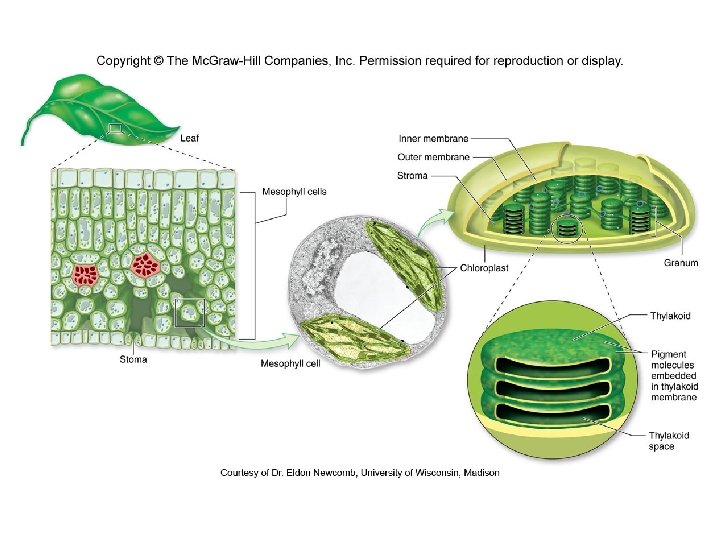
Chloroplasts
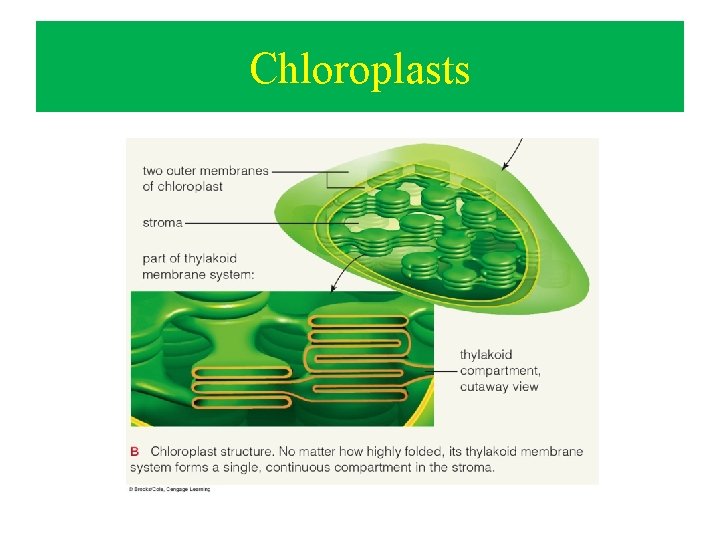
Chloroplasts
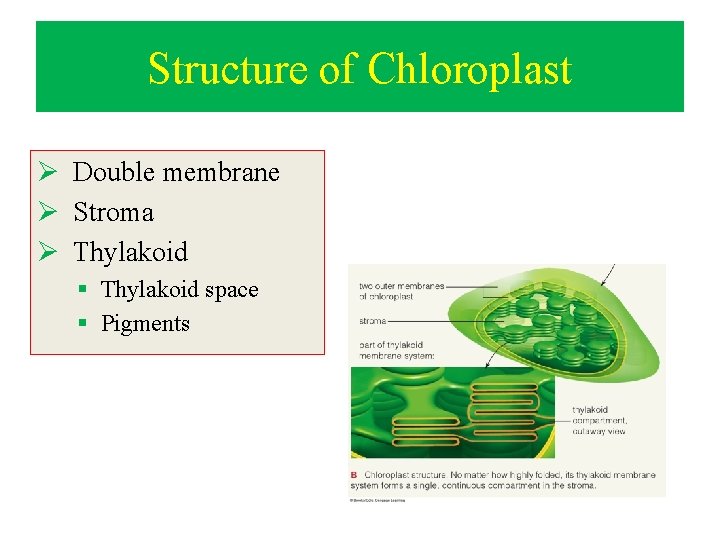
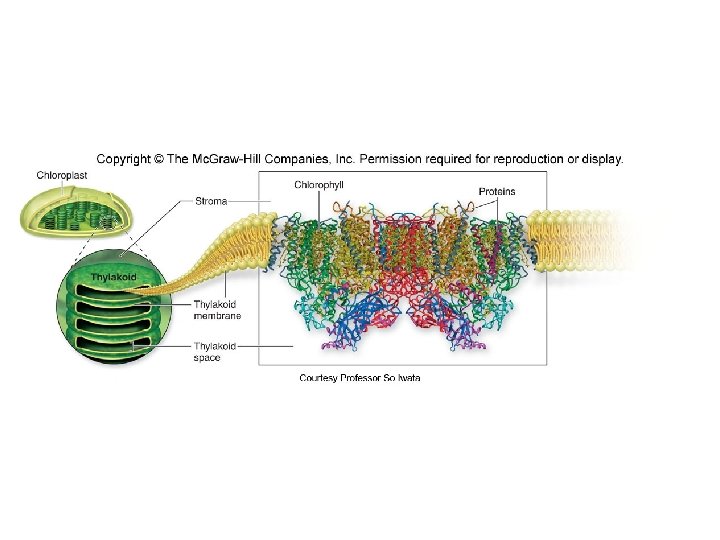
Structure of Chloroplast Ø Double membrane Ø Stroma Ø Thylakoid § Thylakoid space § Pigments
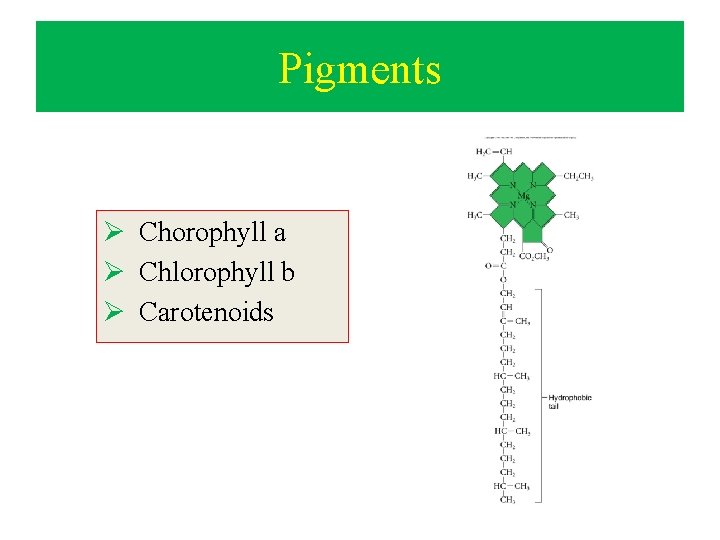
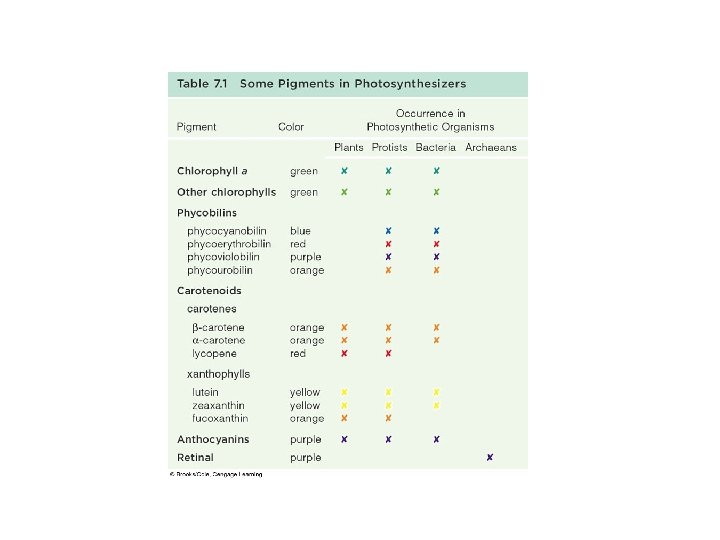
Pigments Ø Chorophyll a Ø Chlorophyll b Ø Carotenoids
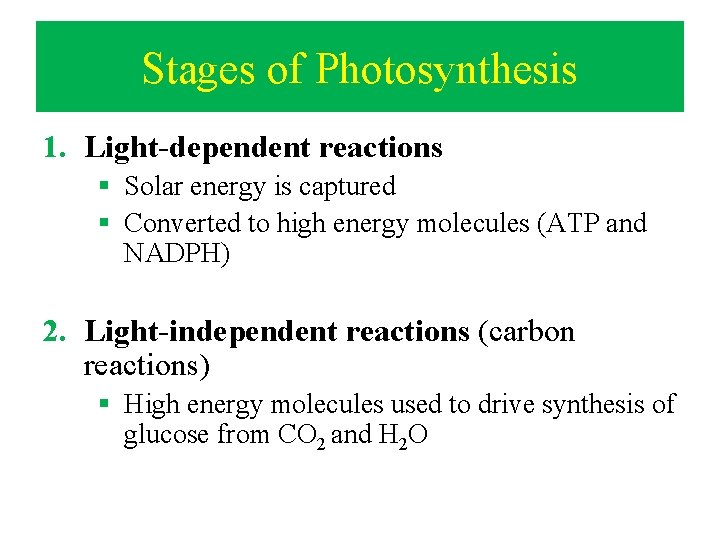
Stages of Photosynthesis 1. Light-dependent reactions § Solar energy is captured § Converted to high energy molecules (ATP and NADPH) 2. Light-independent reactions (carbon reactions) § High energy molecules used to drive synthesis of glucose from CO 2 and H 2 O
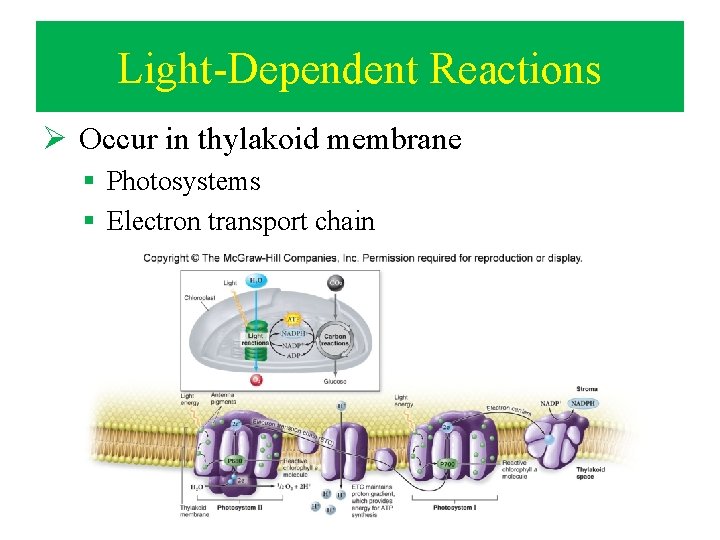
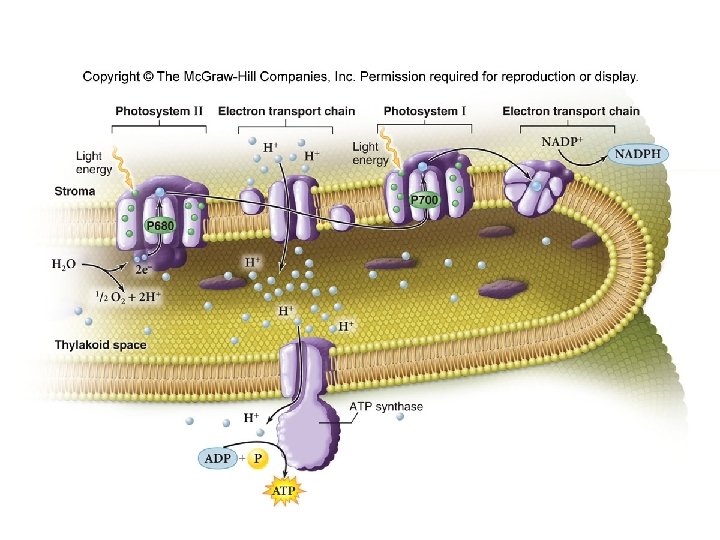
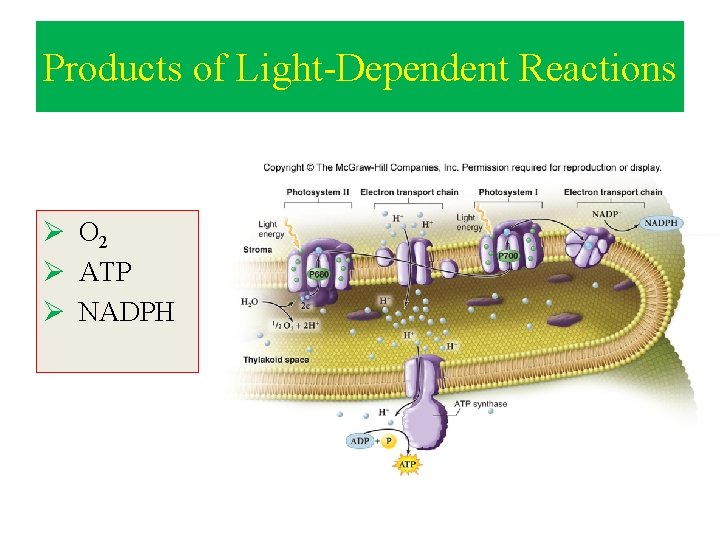
Light-Dependent Reactions Ø Occur in thylakoid membrane § Photosystems § Electron transport chain
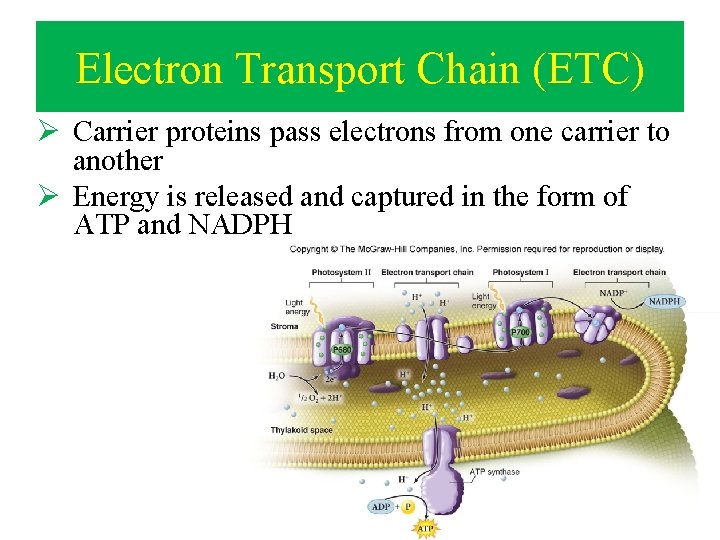
Electron Transport Chain (ETC) Ø Carrier proteins pass electrons from one carrier to another Ø Energy is released and captured in the form of ATP and NADPH
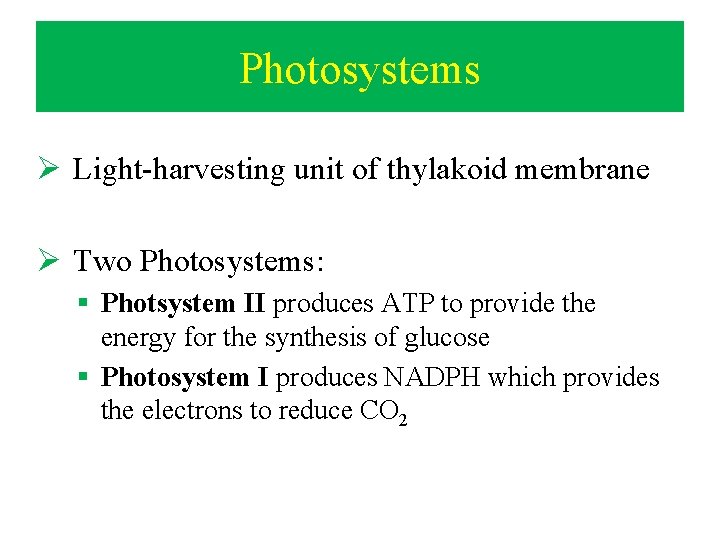
Photosystems Ø Light-harvesting unit of thylakoid membrane Ø Two Photosystems: § Photsystem II produces ATP to provide the energy for the synthesis of glucose § Photosystem I produces NADPH which provides the electrons to reduce CO 2
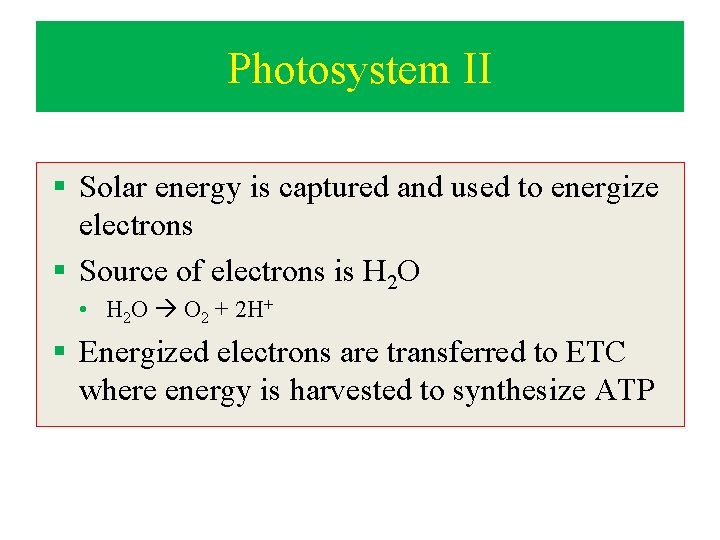
Photosystem II § Solar energy is captured and used to energize electrons § Source of electrons is H 2 O • H 2 O O 2 + 2 H+ § Energized electrons are transferred to ETC where energy is harvested to synthesize ATP
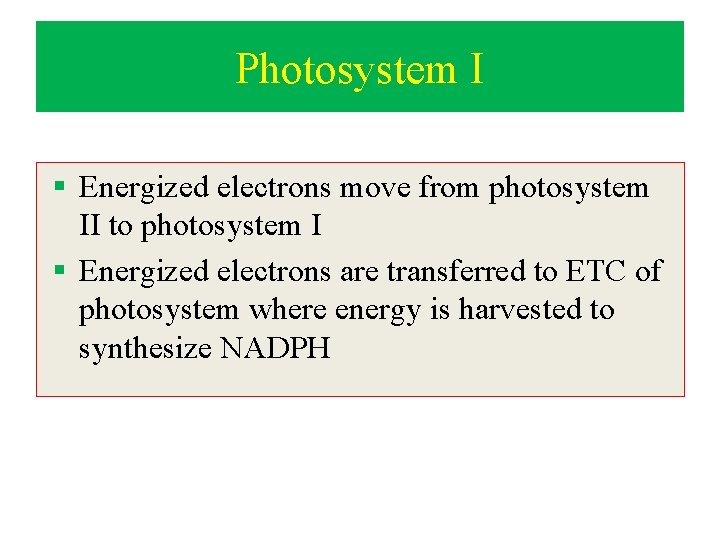
Photosystem I § Energized electrons move from photosystem II to photosystem I § Energized electrons are transferred to ETC of photosystem where energy is harvested to synthesize NADPH
Products of Light-Dependent Reactions Ø O 2 Ø ATP Ø NADPH