
PHOTOSYNTHESIS Photosynthesis Process that uses light energy photons

- Slides: 24
PHOTOSYNTHESIS
Photosynthesis • Process that uses light energy (photons), Carbon Dioxide and water (H 2 O) to produce (glucose). SUN photons 6 CO 2 + 6 H 2 O C 6 H 12 O 6 + 6 O 2 glucose
Question: • Where does photosynthesis take place?
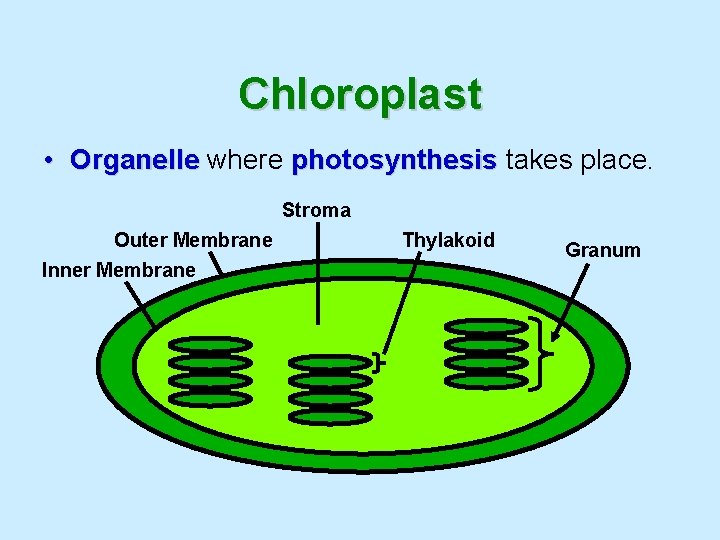
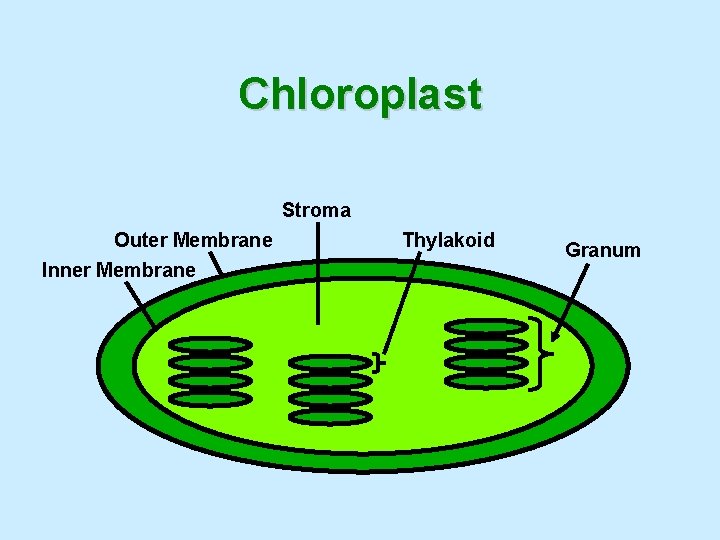
Chloroplast • Organelle where photosynthesis takes place. Stroma Outer Membrane Inner Membrane Thylakoid Granum
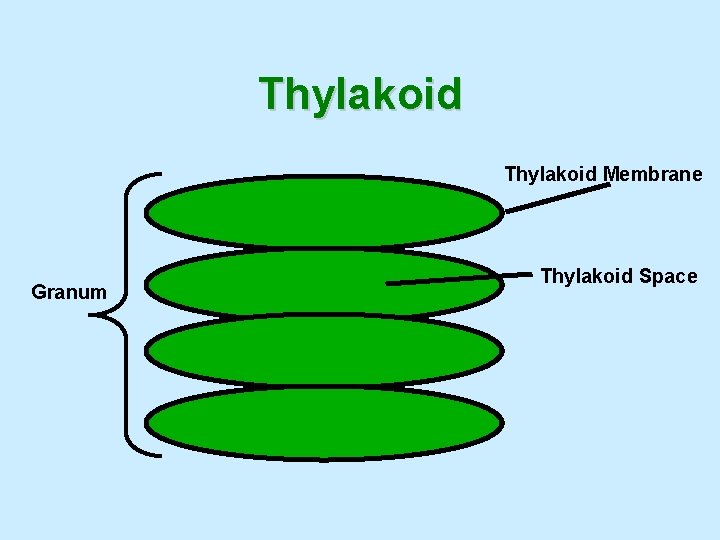
Thylakoid Membrane Granum Thylakoid Space
Question: • Why are plants green?
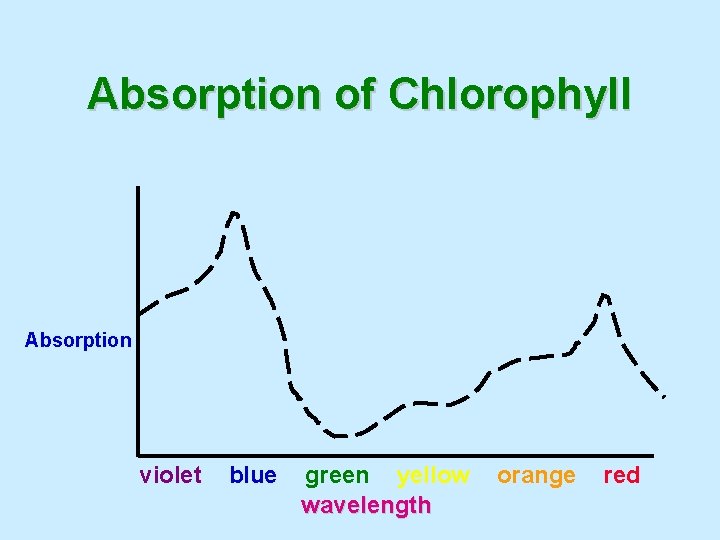
Chlorophyll Molecules • Located in the thylakoid membranes • Chlorophyll pigments harvest energy (photons) by absorbing certain wavelengths (blue-420 nm and red-660 nm are most important). • Plants are green because the green wavelength is reflected, reflected not absorbed
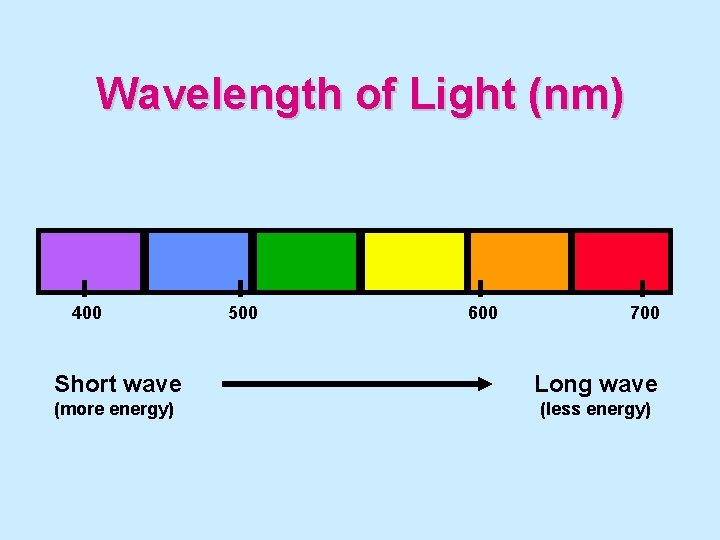
Wavelength of Light (nm) 400 500 600 700 Short wave Long wave (more energy) (less energy)
Absorption of Chlorophyll Absorption violet blue green yellow wavelength orange red
Question: • During the fall, what causes the leaves to change colors?
Fall Colors • In addition to the chlorophyll pigments, there are other pigments present. • During the fall, the green chlorophyll pigments are greatly reduced revealing the other pigments • Carotenoids are pigments that are either red or yellow
Breakdown of Photosynthesis • Two main parts (reactions). 1. Light Reaction or Light Dependent Reaction Produces energy from solar power (photons) in the form of ATP and NADPH
Breakdown of Photosynthesis 2. Calvin Cycle or Light Independent Reaction or Carbon Fixation or C 3 Fixation Uses energy (ATP and NADPH) from light rxn to make sugar (glucose).
1. Light Reaction (Electron Flow) • Occurs in the Thylakoid membranes • During the light reaction, reaction there are two possible routes for electron flow A. Cyclic Electron Flow B. Noncyclic Electron Flow
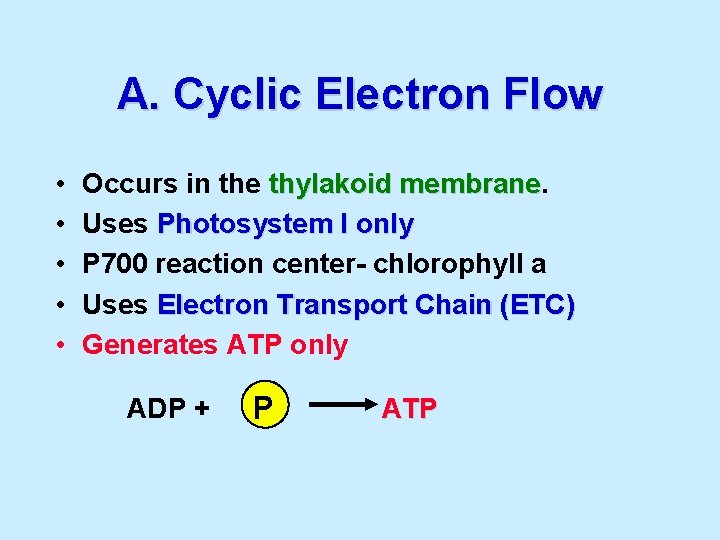
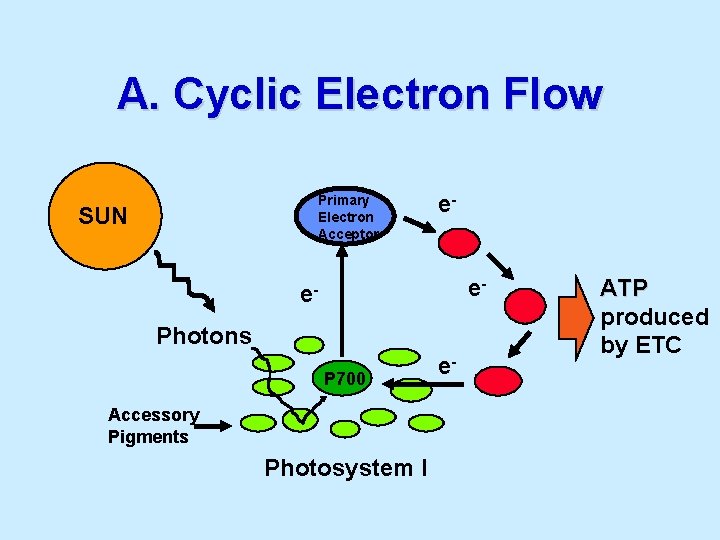
A. Cyclic Electron Flow • • • Occurs in the thylakoid membrane Uses Photosystem I only P 700 reaction center- chlorophyll a Uses Electron Transport Chain (ETC) Generates ATP only ADP + P ATP
A. Cyclic Electron Flow Primary Electron Acceptor SUN ee- e. Photons P 700 Accessory Pigments Photosystem I e- ATP produced by ETC
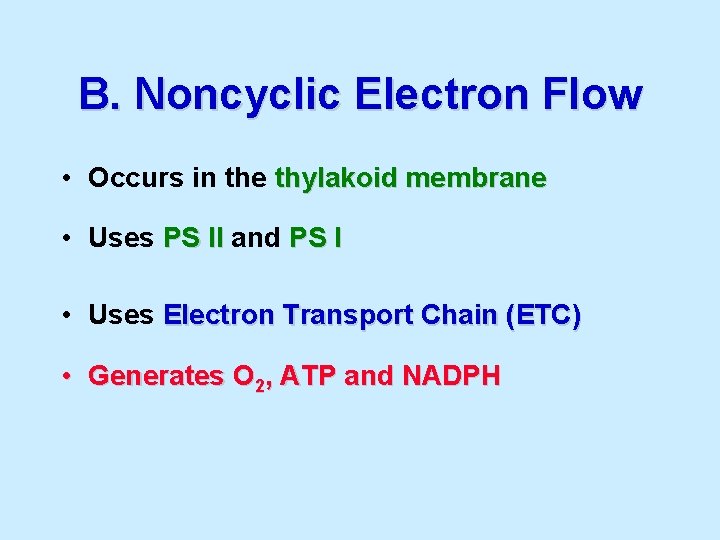
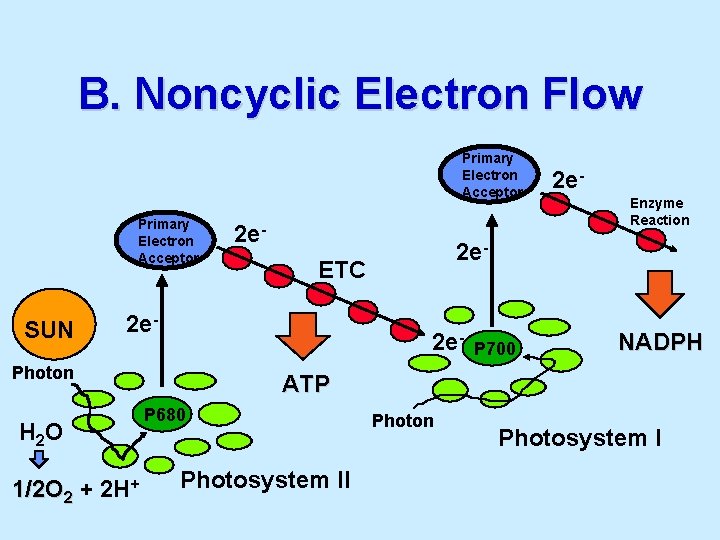
B. Noncyclic Electron Flow • Occurs in the thylakoid membrane • Uses PS II and PS I • Uses Electron Transport Chain (ETC) • Generates O 2, ATP and NADPH
B. Noncyclic Electron Flow Primary Electron Acceptor SUN 2 e- Photon H 2 O 1/2 O 2 + 2 H+ Enzyme Reaction 2 e- ETC 2 e- P 700 NADPH ATP P 680 Photosystem II Photon Photosystem I
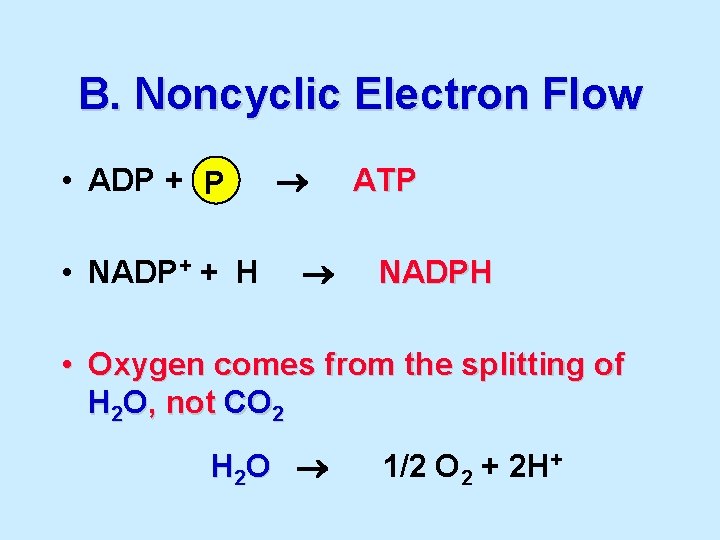
B. Noncyclic Electron Flow • ADP + P • NADP+ + H ATP NADPH • Oxygen comes from the splitting of H 2 O, not CO 2 H 2 O 1/2 O 2 + 2 H+
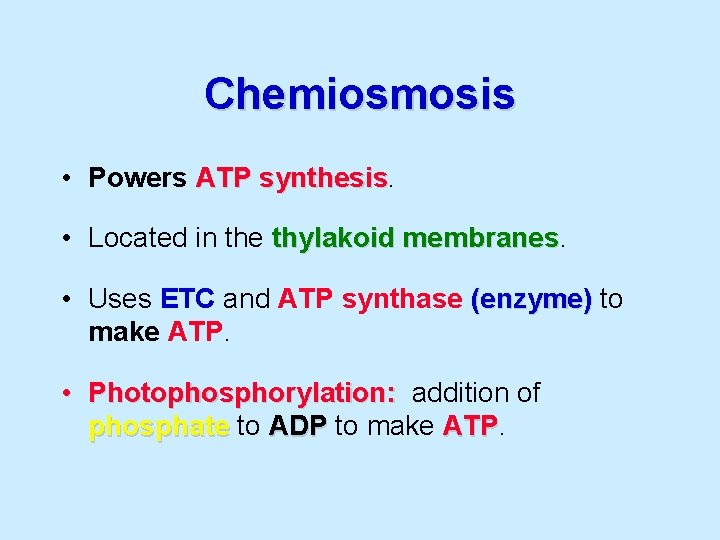
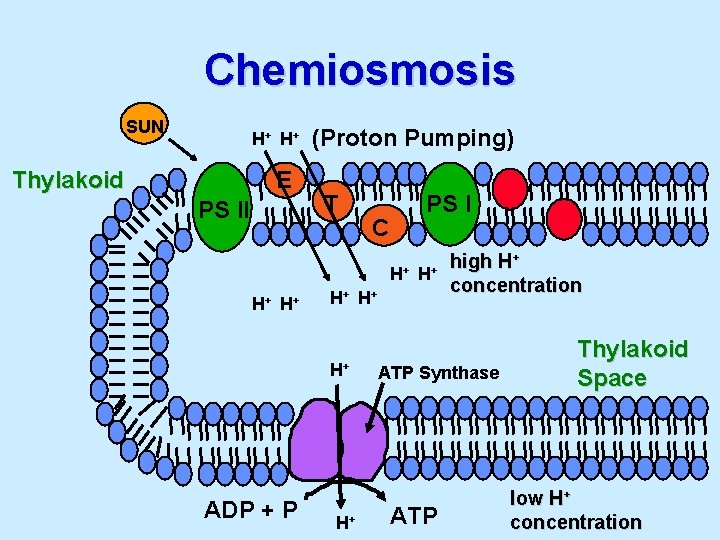
Chemiosmosis • Powers ATP synthesis • Located in the thylakoid membranes • Uses ETC and ATP synthase (enzyme) to make ATP. • Photophosphorylation: addition of phosphate to ADP to make ATP
Chemiosmosis SUN H+ H + Thylakoid E PS II (Proton Pumping) T PS I C H+ H+ H + H+ ADP + P H+ H+ high H+ concentration ATP Synthase ATP Thylakoid Space low H+ concentration
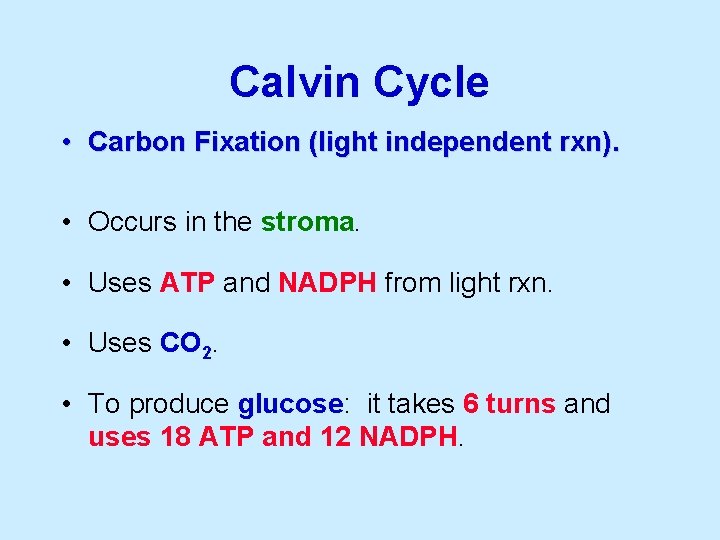
Calvin Cycle • Carbon Fixation (light independent rxn). • Occurs in the stroma. • Uses ATP and NADPH from light rxn. • Uses CO 2. • To produce glucose: it takes 6 turns and uses 18 ATP and 12 NADPH.
Chloroplast Stroma Outer Membrane Inner Membrane Thylakoid Granum
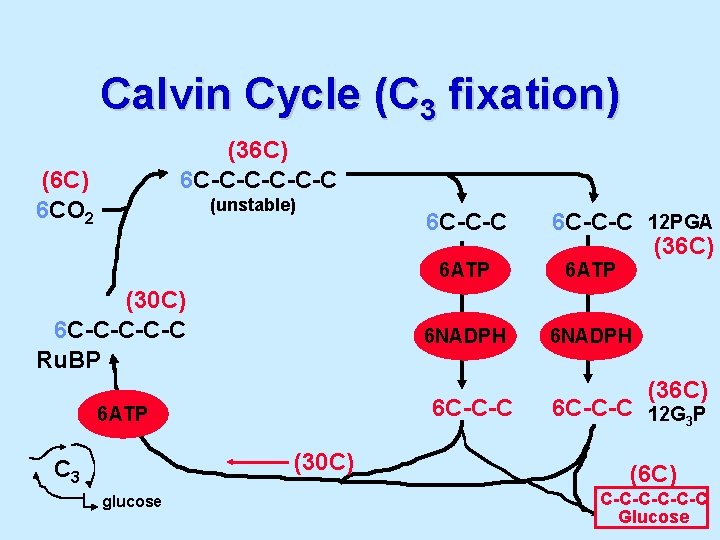
Calvin Cycle (C 3 fixation) (36 C) 6 C-C-C-C (6 C) 6 CO 2 (unstable) (30 C) 6 C-C-C Ru. BP (30 C) glucose 6 C-C-C 12 PGA (36 C) 6 ATP 6 NADPH 6 C-C-C 6 ATP C 3 6 C-C-C (36 C) 6 C-C-C 12 G 3 P (6 C) C-C-C-C Glucose